Category: ISE 2026

  • AV Over IP Moves From Experiment to Infrastructure

    AV Over IP Moves From Experiment to Infrastructure

    For years, AV over IP has been one of the most talked-about transitions in the professional AV industry. But if the conversations at ISE 2026 were any indication, the discussion is changing. The question is no longer whether AV should run on the network. The real conversation now is about what happens when AV becomes fully integrated into the IT infrastructure that already runs the organization.

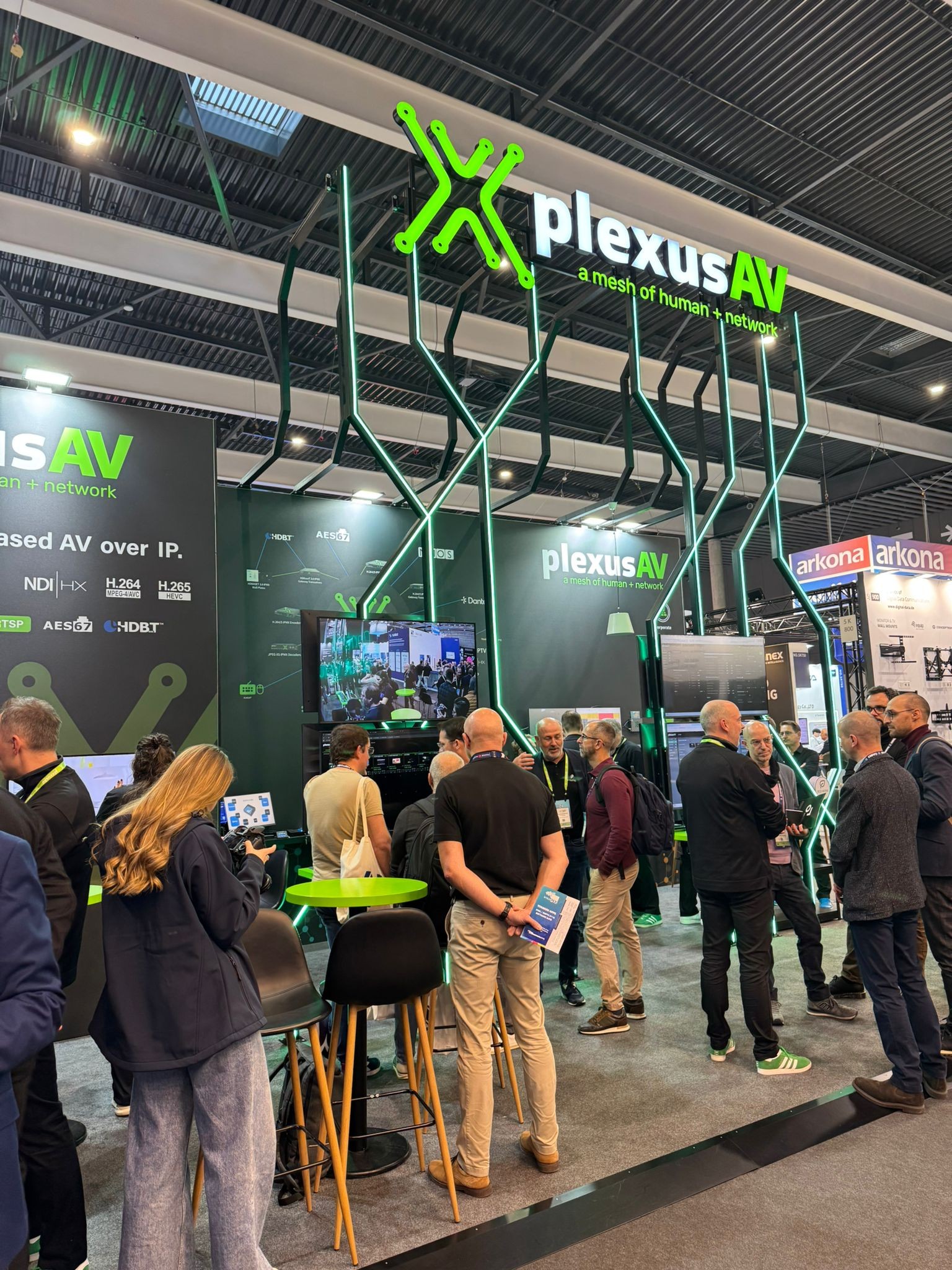
    That shift was a recurring theme across the show floor and in vendor briefings, including discussions with AV over IP manufacturer Plexus. Their message echoed a broader industry reality: AV is no longer a guest on the network. It is becoming part of the network itself.

    And that change has implications not just for technology vendors, but for the IT and AV decision-makers responsible for designing and maintaining modern collaboration environments.

    The End of AV as a “Guest” System

    Historically, AV systems often operated as isolated technology stacks. Integrators deployed proprietary signal distribution platforms, control systems ran on separate networks, and IT teams were frequently asked to make exceptions for AV gear that did not behave like traditional network devices.

    That model is fading quickly. Increasingly, organizations are consolidating technology oversight under IT departments. In many enterprises, AV now reports into the same teams responsible for networking, cybersecurity, and infrastructure architecture.

    The result is a different set of expectations.

    “AV is no longer a guest on the network,” Steven Cogels from Plexus noted. “IT teams expect these systems to follow the same rules as everything else running on their infrastructure.”

    That means AV devices must support the same security models, interoperability standards, and management practices used across enterprise IT environments. For integrators and manufacturers alike, that shift forces a fundamental rethink of how AV systems are designed.

    Why Standards Are Back in the Conversation

    As AV systems move deeper into IT infrastructure, the question of interoperability becomes impossible to ignore. For decades, much of the AV industry operated within proprietary ecosystems. Walled gardens was the pretty name we gave them. Vendors built vertically integrated platforms where encoders, decoders, control systems, and software management tools all came from the same manufacturer. The approach simplified deployment but often locked customers into a single vendor’s roadmap.

    That model works poorly in an IT-driven environment.

    Enterprise IT teams expect infrastructure components to interoperate across vendors. Networking equipment, servers, and storage platforms operate on open standards that allow organizations to mix technologies while maintaining compatibility.

    AV over IP is now moving in the same direction.

    A major driver behind that transition is IPMX (Internet Protocol Media Experience), a standard developed through the AIMS Alliance that builds on the broadcast industry’s SMPTE ST 2110 standard for transporting professional media over IP networks.

    While ST 2110 has been widely adopted in broadcast environments, IPMX adapts that technology for the unique needs of the Pro AV market. That includes support for compressed and uncompressed video, compatibility with existing network infrastructure, and the ability to operate across a wide range of AV deployment scenarios.

    At ISE 2026, vendors highlighted a new milestone: the growing number of products that have completed interoperability testing and certification processes within the IPMX ecosystem.

    Those milestones may seem incremental, but they represent a meaningful shift for the AV industry. For the first time, vendors are demonstrating real-world interoperability between AV over IP products built by different manufacturers.

    Interoperability Moves From Theory to Reality

    Standards efforts in AV have historically struggled to gain traction. The industry has seen multiple attempts to create universal interoperability frameworks over the years, many of which stalled before reaching widespread adoption.

    The challenge is simple: standards only matter if products actually work together. IPMX appears to be crossing that threshold.

    Manufacturers participating in the ecosystem have spent several years testing implementations and validating interoperability through industry plugfests and certification events organized by the AIMS Alliance.

    According to vendors involved in those efforts, the certification process now includes dozens of products that have successfully completed interoperability testing.

    From a technical standpoint, that means systems built around the standard can exchange video, audio, and control signals across vendor boundaries. From a market standpoint, it represents something just as important: proof that standards-based AV infrastructure can function in real deployments.

    For IT leaders accustomed to open networking environments, that development aligns AV technology more closely with the rest of the enterprise technology stack.

    A Different Competitive Landscape

    One question often raised when standards enter the conversation is how vendors differentiate themselves in an interoperable ecosystem. If multiple manufacturers build products that speak the same protocol, what separates one platform from another?

    The answer, according to vendors building IPMX-based systems, lies above the standard itself.

    IPMX defines how media moves across the network. It does not dictate how products implement features, management tools, or operational workflows. Manufacturers still compete on performance, feature sets, ease of deployment, system flexibility, and the broader ecosystem surrounding their products.

    In practice, that competition may actually accelerate innovation.

    When vendors can no longer rely on proprietary lock-in, they must differentiate through better products and faster development cycles. Features, usability, and real-world deployment flexibility become the primary battleground.

    For end users and integrators, that dynamic can be beneficial. Standards-based ecosystems create the possibility of mixing components from multiple vendors while still allowing manufacturers to innovate on top of shared protocols.

    The Real Driver: IT Governance

    The deeper reason behind the rise of standards-based AV may not be the technology itself. It may be the organizational structure driving purchasing decisions. In many enterprises, AV decisions are increasingly made or heavily influenced by IT departments.

    That changes how systems are evaluated.

    Instead of focusing primarily on AV-specific features, buyers are asking questions about network architecture, security models, monitoring tools, and lifecycle management. Standards-based systems fit naturally into that framework.

    For organizations that already manage complex IP infrastructure, adopting AV technologies built on familiar networking principles reduces operational friction. It allows AV systems to integrate into existing monitoring platforms, follow established security policies, and scale using the same infrastructure used by other enterprise services. In other words, AV stops being a special case.

    It becomes another application running on the network.

    The Road Ahead

    None of this means the transition is complete. Proprietary AV over IP platforms remain widespread, and many organizations will continue deploying them for years. The AV industry tends to move incrementally, and the installed base of existing systems ensures that change happens gradually.

    But the direction of travel is becoming clearer.

    The combination of IT governance, network-native architectures, and emerging interoperability standards is pushing AV toward a more open and flexible future. For IT leaders responsible for collaboration infrastructure, that future looks increasingly familiar.

    AV systems are beginning to behave like the rest of the network.

    And once that happens, the conversation shifts from whether AV belongs on the network to how effectively it can operate there.


  • Jabra at ISE 2026: Headsets and Large Room Video

    Jabra at ISE 2026: Headsets and Large Room Video

    At ISE 2026, Jabra delivered a clear message to enterprise IT leaders: we have solutions for all your communications needs.

    The company used its ISE presence to reinforce a broader shift. From personal collaboration devices to a scalable room portfolio that now stretches from individual users to large conference spaces. Strategically, it represents something larger: platform expansion without added complexity.

    For IT decision-makers managing hybrid environments across dozens or hundreds of rooms, that positioning matters.

    Evolve3: Enterprise Headsets with AI-Driven Voice Isolation

    On the personal side, Jabra introduced its new Evolve3 series, including the Evolve3 85 and Evolve3 75 models. The headline feature is a boomless design powered by a deep neural network trained on more than 60 million voice samples. You can watch a video of it here. 

    Unlike traditional headsets that rely on a physical boom mic, Evolve3 uses AI-driven voice isolation to identify and lock onto the primary speaker. In demonstrations at ISE, Jabra placed users inside a noisy booth environment while nearby voices spoke at close proximity. The headset isolated the intended speaker while suppressing surrounding conversation.

    The implication is straightforward: consistent call quality without user training.

    Additional enterprise-focused considerations include:

    • Replaceable batteries to extend lifecycle and support sustainability goals
    • Fast charging, delivering roughly one hour of usage per minute of charge
    • Microsoft Teams and Zoom certification

    The design shift toward a slimmer, more consumer-forward profile also reflects an important hybrid reality. Employees are moving between corporate offices, airports, home offices, and shared spaces. Devices must perform at enterprise levels without looking like call-center hardware.

    This is where Jabra’s hearing-technology heritage through its parent company, GN Group, becomes relevant. The AI foundation powering ClearVoice originated in GN’s hearing division, bringing medically influenced voice modeling into enterprise UC hardware.

    For IT leaders standardizing on a single headset platform, the Evolve3 is less about incremental improvement and more about lifecycle and reliability management.

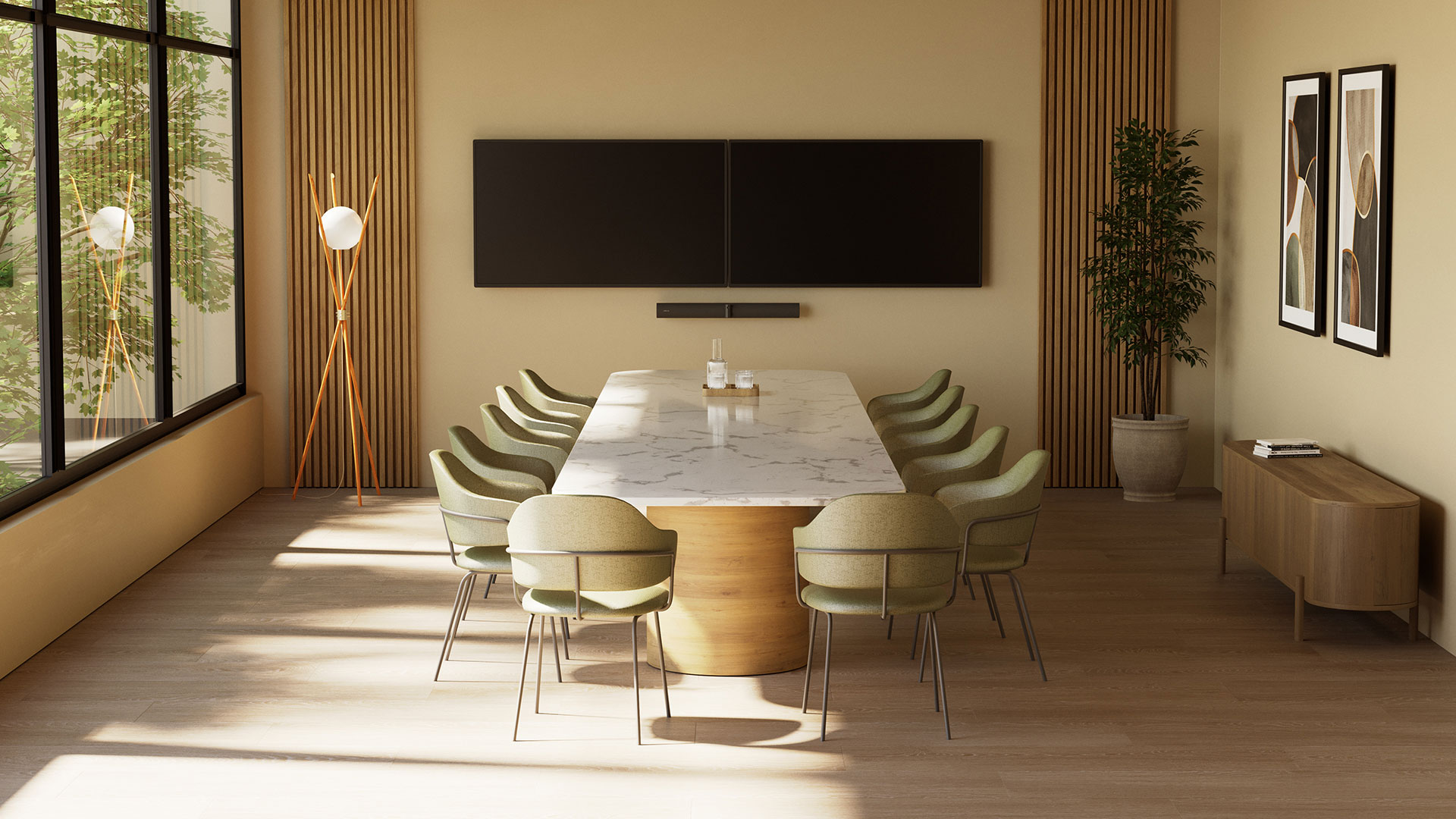
    PanaCast 55: From Medium Room to Modular Large Room

    The bigger story at ISE was room scale.

    Jabra expanded its PanaCast lineup with the PanaCast 55, a revision of its medium-room PanaCast 50 VBS designed to support modular expansion .

    Historically, Jabra focused on small and medium rooms. Large-room deployments often required a different vendor or more complex DSP-based systems. That gap created friction for IT teams trying to standardize.

    The PanaCast 55 closes that gap without introducing programming complexity.

    Modular Audio Expansion

    Jabra introduced a new “Speaker Mic” extension device that combines microphones and speakers in a single unit . Unlike traditional extension microphones that only improve pickup, this unit also distributes far-end audio down the table.

    Key technical elements include:

    • Structured cabling (Cat6) for up to 30 meters of reach
    • Power delivered over USB-C from the video bar
    • Automatic self-calibration to prevent feedback or echo

    For IT, the value proposition is simplicity. There is no external DSP programming layer, no advanced commissioning process, and no ongoing audio tuning requirements. The system self-calibrates at boot .

    That simplicity reduces support overhead over the lifecycle of the room.

    Multi-Camera Video with Huddly Partnership

    For video scaling, Jabra partnered with Huddly to integrate Huddly Crew cameras into the system .

    Organizations can deploy one, three, or five cameras depending on room size . The cameras automatically discover and calibrate themselves , eliminating manual configuration.

    In active speaker mode, the system composites the Huddly close-up feed with a wide 180-degree PanaCast view as picture-in-picture . That maintains room context while delivering focused speaker framing.

    The deeper strategic shift, however, is platform control.

    Jabra rebrands the Huddly units as Jabra Crew Cam devices and manages them directly within Jabra Plus, its cloud-based management platform . Firmware updates and device monitoring occur within a single management environment.

    For IT teams already juggling multiple control dashboards, consolidating device management reduces operational sprawl.

    Android in the Large Room

    Perhaps the most significant architectural move is operating system choice.

    The PanaCast 55 runs on Android using Microsoft’s Device Ecosystem Platform (MDEP) . Android has been common in smaller rooms, but large-room multi-camera systems have traditionally leaned Windows-based due to flexibility and ecosystem maturity. By bringing Android into larger, scalable deployments, Jabra is betting on simplicity over customization.

    For enterprise IT leaders, that trade-off often makes sense. Android-based room systems generally offer:

    • Reduced patching complexity
    • Simplified management
    • Lower long-term support burden

    Combined with self-calibrating audio and auto-discovered cameras, the result is a large-room system that behaves more like a managed appliance than a traditional AV install.

    From Device Vendor to Platform Provider

    ISE 2026 marked a shift for Jabra. The company that built its reputation on headsets is now furthering their collaboration ecosystem spanning personal devices, medium rooms, and scalable large-room deployments.

    For enterprise IT decision-makers, the value proposition is consistency:

    • Unified management through Jabra Plus
    • Modular expansion without DSP programming
    • AI-driven personal devices built on hearing-technology foundations
    • Android-based room systems aligned with Microsoft Teams and Zoom

    In hybrid enterprise environments, scale and supportability matter more than feature density.

    At ISE 2026, Jabra positioned itself not as a peripheral vendor, but as a collaboration platform provider.

    To see all of AVNation’s ISE 2026 coverage, visit our dedicated page.


  • Airtame at ISE 2026 Highlights the Shift to Software-Defined Meeting Rooms

    Airtame at ISE 2026 Highlights the Shift to Software-Defined Meeting Rooms

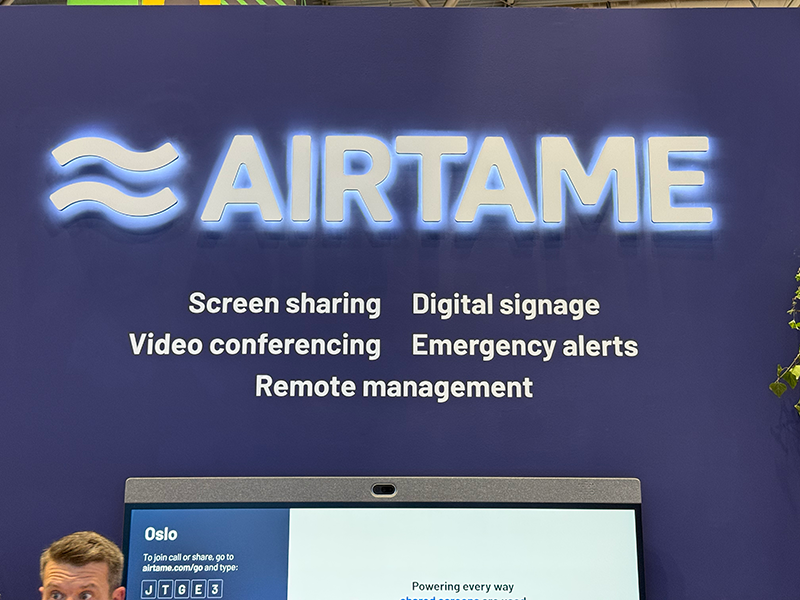
    At Integrated Systems Europe 2026, Airtame reinforced a growing reality across enterprise collaboration environments: the meeting room is increasingly defined by software, not hardware.

    While many manufacturers continue to compete on devices, Airtame’s message centered on platform flexibility. With updates across its Airtame 3 hardware lineup and expanded software availability running on third-party collaboration and signage devices, the company demonstrated how wireless collaboration and digital signage can operate as adaptable services rather than fixed room systems.

    For enterprise IT and AV managers tasked with supporting diverse room types across multiple locations, that flexibility is becoming essential.

    Decoupling Collaboration From Dedicated Hardware

    Traditional meeting room deployments have long relied on purpose-built hardware tied to specific collaboration platforms. While effective initially, those environments can become difficult to scale or adapt as organizational needs evolve.

    At ISE 2026, Airtame positioned its platform as an alternative approach.

    Airtame software now runs not only on its own Airtame 3 devices but also across Windows and Android environments, enabling deployment directly on existing hardware infrastructure. Demonstrations showed Airtame operating on platforms including Neat collaboration devices, SMART displays, and Amazon Signage hardware.

    This shift allows organizations to extend wireless presentation and signage capabilities without introducing additional standalone devices into every space.

    For enterprise environments managing lifecycle refresh cycles, reducing hardware dependency translates directly into lower long-term operational complexity.

    Platform Flexibility for Enterprise Deployment

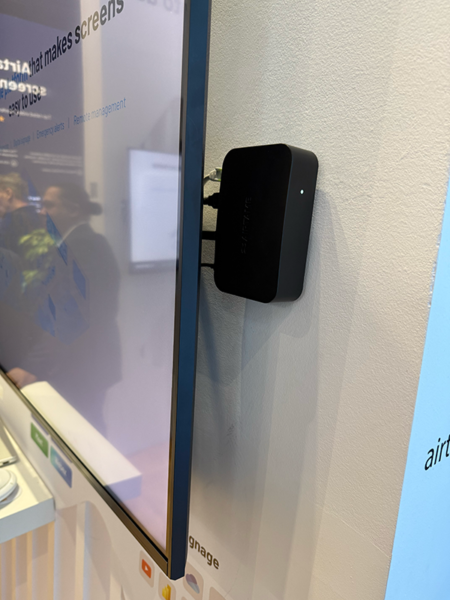
    Airtame 3 at ISE 2026
    Airtame 3 at ISE 2026

    One of Airtame’s strongest differentiators at ISE was its hardware-agnostic strategy.

    Rather than requiring organizations to standardize around a single manufacturer ecosystem, Airtame enables collaboration functionality to move with the organization’s broader technology decisions. Displays, collaboration bars, or signage endpoints can become Airtame-enabled through software deployment rather than infrastructure replacement.

    This approach aligns closely with enterprise IT expectations, where flexibility and interoperability increasingly outweigh proprietary feature sets.

    As collaboration platforms continue evolving, software-defined room capabilities provide insurance against rapid technology change. Rooms can adapt through updates rather than redesign.

    Subscription-Based Management and Predictability

    Supporting this model is Airtame’s subscription structure, which shifts collaboration technology toward a service-oriented operational model.

    Organizations can select deployment tiers based on usage needs, including Core plans beginning at approximately $120 per screen annually and Hybrid configurations designed for more advanced collaboration and signage workflows. Multi-year subscription options further support predictable budgeting and lifecycle planning, with education-focused pricing also available.

    While subscription licensing is now common across enterprise software, its growing adoption within meeting room infrastructure reflects a broader convergence between AV and IT operational models.

    Technology is no longer purchased once and left unchanged. It is continuously updated, managed, and optimized.

    Supporting Hybrid Work Without Added Complexity

    Hybrid work environments continue to challenge enterprise technology teams. Rooms must support in-person collaboration, remote participation, and shared content workflows without increasing user friction.

    Airtame’s demonstrations emphasized simplicity at the user level while maintaining centralized administrative control. Wireless content sharing, digital signage, and room communication tools operate within a unified management framework accessible remotely by IT teams.

    The result is a collaboration experience that remains consistent regardless of room size or hardware configuration.

    For organizations scaling collaboration across regional offices or global campuses, consistency often proves more valuable than advanced feature depth.

    The Enterprise Takeaway

    Airtame’s presence at ISE 2026 reflected one of the clearest industry trends emerging across the show floor: meeting rooms are transitioning from hardware-defined environments to software-managed platforms.

    By expanding Airtame beyond dedicated devices and enabling deployment across existing collaboration hardware, the company is positioning wireless collaboration as infrastructure rather than an accessory.

    For enterprise AV and IT leaders, the appeal lies in adaptability. Systems can evolve alongside organizational needs without requiring wholesale hardware replacement.

    In an industry increasingly focused on operational efficiency, Airtame’s strategy suggests that the future meeting room may not be built around a specific device at all, but around the software layer that connects everything together.

    To catch all of AVNation’s ISE 2026 coverage, visit our dedicated page.


  • Biamp at ISE 2026 Focuses on Simplifying Enterprise Meeting Room Deployment

    Biamp at ISE 2026 Focuses on Simplifying Enterprise Meeting Room Deployment

    At Integrated Systems Europe 2026, Biamp’s message was not about adding another device to the rack. Instead, the company focused on something enterprise IT teams increasingly value: reducing complexity across the entire meeting room lifecycle.

    Rather than treating audio, control, and room management as separate disciplines, Biamp demonstrated how its ecosystem built around Tesira processing and Impera control can deliver a fully integrated meeting environment designed for scalability, consistency, and long-term operational efficiency.

    For organizations managing dozens or even thousands of rooms, that distinction matters.

    Moving Beyond Device-Based Design

    Enterprise meeting spaces have evolved rapidly over the past five years. Standardized collaboration platforms such as Microsoft Teams Rooms and Zoom Rooms solved user experience challenges, but they also introduced new operational burdens for IT departments responsible for deployment, monitoring, and support.

    Biamp’s ISE presence addressed this reality directly.

    Through live demonstrations, the company showed how Tesira DSP platforms combined with Impera room control create a unified foundation for conferencing spaces. Instead of stitching together multiple manufacturers’ solutions for audio processing, control interfaces, and automation, Biamp positioned its platform as a cohesive system designed to function as a single operational environment.

    The result is less integration overhead during deployment and fewer variables for IT teams to troubleshoot once rooms go live.

    Operational Simplicity at Scale

    For enterprise technology managers, the challenge is rarely building one exceptional conference room. The challenge is maintaining hundreds of functional ones.

    Biamp’s approach emphasizes repeatability. By standardizing signal processing, control logic, and room behavior within one ecosystem, organizations can replicate meeting room designs across campuses or global offices without rebuilding workflows each time.

    This consistency translates into measurable operational benefits:

    • Faster room commissioning
    • Reduced support tickets
    • Simplified training for internal IT staff
    • Predictable user experiences across locations

    At ISE, Biamp highlighted how centralized configuration and management tools allow IT teams to maintain visibility into room performance while minimizing the need for on-site intervention. In enterprise environments where support resources are stretched thin, remote management increasingly becomes the deciding factor in platform selection.

    Tesira as the Enterprise Backbone

    Tesira remains central to Biamp’s enterprise strategy. Long recognized for audio processing in complex environments, the platform continues to evolve beyond traditional DSP roles.

    At ISE 2026, demonstrations reinforced Tesira’s position as infrastructure rather than accessory. Audio processing, USB connectivity for conferencing platforms, and networked AV workflows operate within a framework designed to integrate seamlessly into IT-managed networks.

    For AV and IT convergence teams, this approach aligns with broader industry trends seen across the show floor: AV systems behaving more like managed network services than standalone technical installations.

    By treating audio infrastructure as part of the enterprise technology stack, Biamp helps organizations move closer to standardized deployment models familiar to IT operations.

    Impera Control and the Unified Room Experience

    Complementing Tesira, Impera control solutions played a key role in Biamp’s end-to-end meeting room narrative.

    Control systems often introduce complexity when sourced separately from core AV infrastructure. Biamp’s integrated control strategy reduces that fragmentation by allowing automation, device control, and user interaction to operate within the same ecosystem as audio processing.

    From a user perspective, this delivers intuitive room operation. From an IT perspective, it reduces integration dependencies and long-term maintenance challenges.

    The combination supports a growing enterprise priority: delivering frictionless meeting experiences without increasing backend management demands.

    Designing for the Reality of Hybrid Work

    ISE 2026 reinforced an ongoing shift toward software-defined collaboration environments. Hardware still matters, but its value increasingly lies in how effectively it supports platform-driven workflows.

    Biamp’s demonstrations reflected this shift by focusing less on individual products and more on outcomes. Meeting rooms must work reliably regardless of location, platform, or user familiarity. Achieving that consistency requires systems that are predictable, centrally managed, and easy to scale.

    For enterprise organizations navigating hybrid work policies and distributed teams, operational simplicity is no longer a convenience. It is a requirement.

    The Enterprise Takeaway

    Biamp’s presence at ISE 2026 underscored a broader industry movement away from loosely connected AV components toward integrated operational platforms.

    By aligning Tesira processing with Impera control under a unified ecosystem, Biamp is targeting one of the most pressing concerns facing enterprise AV and IT leaders: how to deliver high-quality collaboration spaces without increasing system complexity.

    In an era where meeting rooms are expected to function as reliable business infrastructure, the winners may not be the companies adding the most features, but those removing the most friction.

    Biamp’s strategy suggests that the future of enterprise AV may be defined less by equipment specifications and more by how easily organizations can deploy, manage, and scale collaboration technology worldwide.

    To see all AVNation’s ISE 2026 coverage, visit our dedicated coverage page.


  • Peavey at ISE 2026: Networked Installed Sound

    Peavey at ISE 2026: Networked Installed Sound

    Peavey at ISE 2026 centered its message on a clear priority: scalable, networked installed sound designed for institutions that demand reliability and simplicity.

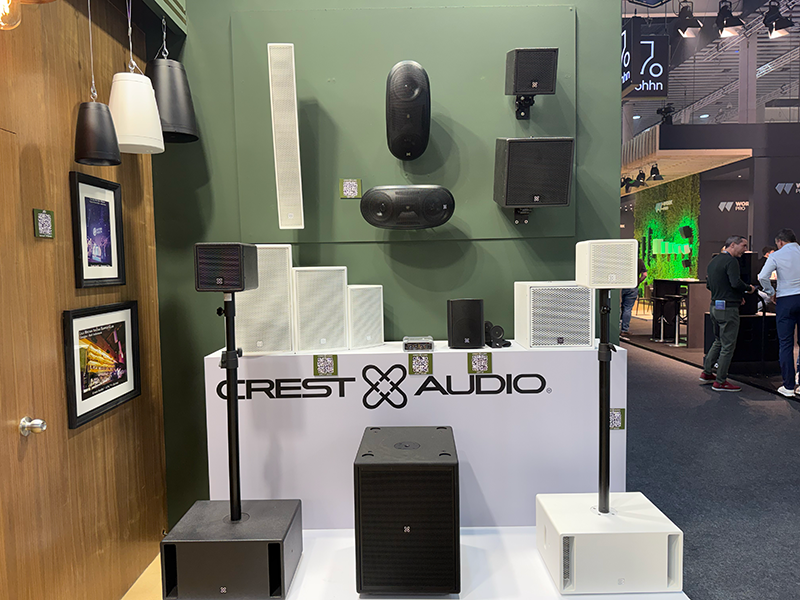
    Through its commercial portfolio and the integration of Crest Audio technologies, Peavey Electronics presented a cohesive ecosystem built for higher education and houses of worship.

    The emphasis was not on spectacle. It was on infrastructure.

    PoE+ Amplification Meets Dante Networking

    One of the most significant introductions came from Crest Audio’s CIP Series, a PoE+ powered amplifier platform designed to simplify distributed audio deployments.

    By leveraging Power over Ethernet, the CIP Series reduces the need for local power infrastructure while maintaining performance levels up to 103 dB SPL. For integrators and campus AV teams, that shift matters.

    In higher education and worship environments, distributed audio is common:

    • Overflow rooms
    • Breakout classrooms
    • Chapel extensions
    • Fellowship halls
    • Student centers

    PoE+ amplification allows these systems to be deployed using standard network cabling, reducing installation complexity and increasing flexibility in retrofits.

    The integration of Dante networking further strengthens the proposition. Audio routing becomes IP-based, scalable, and centrally managed. Instead of isolated analog zones, institutions gain a network-aware audio layer aligned with broader IT standards.

    For universities and churches increasingly collaborating with campus IT departments, that alignment reduces friction and accelerates project approval cycles.

    Designing for Modern Institutional Audio

    Installed sound in 2026 is no longer just about loudspeakers and mixers. It is about ecosystem cohesion.

    Peavey’s approach at ISE demonstrated a deliberate strategy: combine networked amplification, DSP processing, and control into a unified framework that institutions can scale across buildings.

    The benefit for higher education is operational consistency. When a campus standardizes on a networked platform, training becomes simpler. Troubleshooting becomes centralized. Expansion becomes predictable.

    For houses of worship, where volunteer operators often support systems, simplification is equally critical. A networked backbone with predictable behavior reduces the learning curve and improves service continuity week after week.

    Rather than pushing highly complex architectures, Peavey’s messaging emphasized accessibility without sacrificing performance.

    Bridging Installed and Streaming Environments

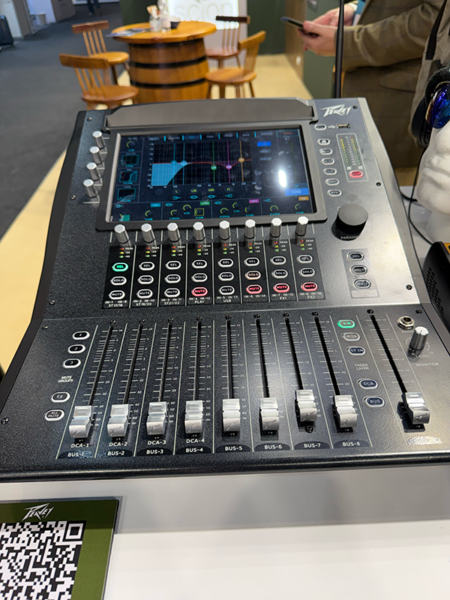
    Peavey streaming board
    Peavey streaming board

    While installed sound dominated the booth narrative, Peavey also acknowledged the continued importance of hybrid communication environments.

    The Unity Series online and podcast mixer integrates built-in DSP with two-, six-, and eight-microphone input configurations, complete with phantom power, automixing, and feedback suppression.

    For universities running campus podcasts or hybrid classrooms, and for houses of worship streaming services online, this integrated approach reduces the need for layered external processing.

    The strategic importance here is not just convenience. It is workflow consolidation.

    Institutions can bridge installed sound and streaming environments without deploying entirely separate ecosystems. That continuity simplifies support models and lowers total cost of ownership.

    Ecosystem Thinking: Peavey and Crest Together

    What made Peavey’s presence particularly relevant was how clearly it framed its portfolio as a multi-brand ecosystem anchored by Peavey and Crest Audio.

    Rather than presenting isolated product lines, the company positioned its technologies as interoperable components of a broader installed sound architecture:

    • Networked amplification
    • Integrated DSP
    • Dante-based audio distribution
    • User-friendly control

    For higher education and worship buyers, ecosystem thinking reduces risk.

    Institutions often struggle when mixing disparate vendor solutions that do not communicate seamlessly. By aligning amplification and control under a unified strategy, Peavey and Crest offer a more cohesive deployment path.

    This is especially valuable in phased construction or renovation projects common across campuses and church campuses alike.

    Strategic Implications for Higher Education and Worship

    Both higher education and houses of worship share similar pressures:

    • Limited capital budgets
    • Growing demand for hybrid participation
    • Increased reliance on IT-managed infrastructure
    • Need for simple day-to-day operation

    Peavey’s ISE 2026 portfolio addressed these pressures through practical engineering decisions.

    PoE+ amplification reduces infrastructure cost and complexity. Dante integration aligns audio systems with network standards. Integrated DSP reduces external processing requirements. Simplified mixer platforms bridge installed and streaming environments.

    None of these moves are flashy. All of them are pragmatic.

    In a market where many conversations revolve around immersive experiences and AI-driven features, Peavey focused on the fundamentals of reliable sound reinforcement.

    Installed Sound as Infrastructure

    The larger takeaway from Peavey at ISE 2026 is that installed audio is increasingly treated as infrastructure, not equipment.

    Network-based amplification, centralized routing, and DSP integration bring audio systems closer to IT-managed services. That shift changes how institutions plan, deploy, and maintain their environments.

    For higher education and worship leaders evaluating upgrades in 2026, the question is less about individual hardware features and more about long-term manageability.

    Peavey’s strategy reflects that reality.

    By combining Crest’s networked amplification with Peavey’s broader installed sound portfolio, the company is positioning itself as a practical partner for institutions that need dependable, scalable audio systems designed to work day after day.

    At ISE 2026, that message was clear: installed sound is evolving. And for higher education and houses of worship, the future is networked, simplified, and infrastructure-ready.

    To see all of AVNation’s ISE 2026 coverage, visit our dedicated page.

  • Kramer at ISE 2026: Building a Unified AV Ecosystem

    Kramer at ISE 2026: Building a Unified AV Ecosystem

    At ISE 2026, Kramer presented one of the most comprehensive and strategically aligned showcases on the show floor. Rather than focusing on isolated product launches, Kramer emphasized how its expanding portfolio fits into a broader, unified ecosystem designed to simplify deployment, management, and long-term ownership for IT and AV decision-makers.

    With nearly 200 products introduced and a clearly articulated “8 Domains” framework, Kramer’s presence reflected a deliberate shift toward platform thinking—connecting infrastructure, collaboration, control, and management into a cohesive operating environment.

    The “8 Domains” Strategy

    A central theme of Kramer’s ISE 2026 presentation was its “8 Domains” approach, which organizes the company’s portfolio into interconnected functional areas, including AVoIP, connectivity, audio, control, collaboration, and furniture.

    This structure is more than marketing taxonomy. For system designers and enterprise technology leaders, it provides a roadmap for building end-to-end AV environments using components designed to work together. By aligning hardware, software, and physical infrastructure under a common framework, Kramer aims to reduce the friction that often arises when systems are assembled from multiple vendors.

    For large organizations managing multi-site deployments, this consistency can translate into simpler procurement, standardized configurations, and more predictable lifecycle management.

    Panta Rhei: The Intelligence Layer of the Ecosystem

    ISE 2026 Kramer AI
    ISE 2026 Kramer AI

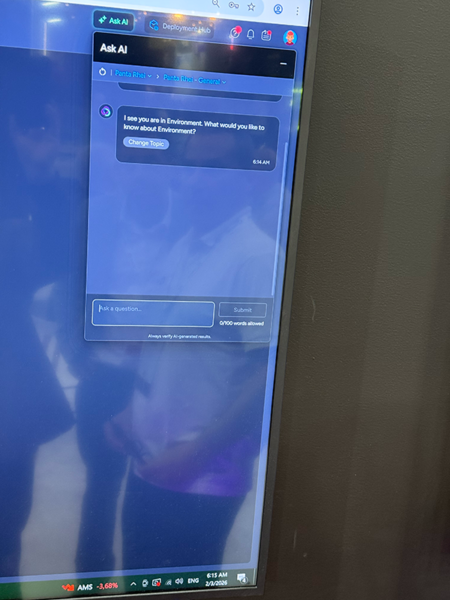
    At the center of Kramer’s ecosystem strategy is Panta Rhei, its cloud-based management and orchestration platform. At ISE 2026, Kramer demonstrated expanded AI-driven capabilities that position Panta Rhei as more than a traditional monitoring tool.

    Key capabilities include:

    • Natural language interaction, allowing users to query system status and documentation
    • Access to product manuals and configuration data through the platform
    • Centralized monitoring of Kramer and third-party devices
    • Proactive uptime management and alerting

    For IT managers responsible for hundreds or thousands of endpoints, this approach addresses a persistent challenge: visibility. By consolidating operational data and documentation into a single interface, Panta Rhei reduces dependence on fragmented tools and manual troubleshooting processes.

    The platform’s ability to manage third-party devices further reflects Kramer’s recognition that most enterprise environments remain heterogeneous. Rather than forcing full vendor lock-in, the company is positioning itself as an orchestration layer within mixed infrastructures.

    AVoIP and Multiview

    Kramer also used ISE 2026 to highlight advances in its AV-over-IP portfolio, including support for up to 19 multiview sources within a single platform. Demonstrations showed Kramer systems interoperating with partner technologies, including ZeeVee, reinforcing the company’s emphasis on open, standards-based deployments.

    For organizations migrating from traditional matrix switching to IP-based distribution, this flexibility reduces transition risk. Multiview capabilities are particularly relevant in command-and-control, broadcast, and operations centers, where multiple data streams must be monitored simultaneously.

    By integrating these capabilities into its broader ecosystem, Kramer positions AVoIP not as a standalone upgrade, but as a foundational layer within its unified architecture.

    Audio: Unified Design for Speech and Coverage

    Kramer’s audio portfolio received significant attention, particularly its all-weather and architectural speaker lines. The company emphasized system-wide management of ceiling and wall-mounted speakers, supported by Dante, PoE, and PoE+ connectivity.

    Design features such as magnetic grilles and speech-optimized tuning reflect Kramer’s focus on practical performance in conferencing and collaboration environments. For enterprise and education users, intelligibility remains the primary metric of success, often outweighing raw audio output.

    Centralized management of these audio systems through Kramer’s platform further supports consistent performance and simplified maintenance across large deployments.

    Ashton Bentley: Furniture as a Strategic Asset

    Kramer’s treatment of Ashton Bentley Technology as a separate business unit highlights an increasingly important dimension of AV system design: physical infrastructure.

    Ashton Bentley’s Cisco and Microsoft-certified furniture solutions are engineered to integrate directly with collaboration platforms and AV hardware. By maintaining this division as a distinct entity, Kramer reinforces its commitment to purpose-built environments rather than generic furniture retrofits.

    For organizations standardizing meeting spaces at scale, certified furniture reduces deployment variability and shortens installation timelines. It also supports Kramer’s broader strategy of delivering “complete room” solutions, particularly for small and mid-sized collaboration spaces.

    Value Engineering: Right-Sized Systems, Lower Waste

    Throughout its ISE presence, Kramer consistently emphasized cost efficiency and right-sized design. The company positioned its growing portfolio as a way for end users to pay for what they need—without being forced into oversized systems or unused features.

    This approach reflects a shift toward value engineering rather than feature maximization. For IT and AV leaders facing constrained budgets and heightened ROI scrutiny, this philosophy aligns with current procurement realities.

    By offering modular, interoperable components across domains, Kramer enables integrators and end users to tailor solutions to specific use cases while maintaining architectural consistency.

    Reliability and Proactive Operations

    Another recurring theme was operational reliability. Kramer showcased proactive uptime monitoring, system health reporting, and automated alerts designed to minimize unplanned downtime.

    In enterprise and institutional environments, the cost of AV failure is increasingly measured in lost productivity and disrupted workflows. By embedding monitoring and diagnostics into its ecosystem, Kramer aims to shift system management from reactive support to preventive maintenance.

    This capability is particularly relevant for distributed organizations, where on-site technical staff may be limited.

    Why It Matters

    Kramer’s ISE 2026 showcase was notable for its strategic coherence. Rather than highlighting individual products in isolation, the company presented a unified operating model for modern AV environments.

    For decision-makers, this approach offers several tangible advantages:

    • Reduced integration complexity through aligned product domains
    • Centralized visibility and control via Panta Rhei
    • Flexible AVoIP and multiview architectures
    • Consistent audio and collaboration performance
    • Integrated physical and digital infrastructure
    • Improved lifecycle and uptime management

    Together, these elements support more predictable deployments and lower long-term ownership costs.

    Looking Ahead

    As enterprise AV systems continue to converge with IT infrastructure and cloud-based management, vendors will increasingly be evaluated on ecosystem maturity rather than individual hardware specifications.

    Kramer’s ISE 2026 presentation demonstrated a clear commitment to this direction. By structuring its portfolio around interconnected domains and anchoring it with an intelligent management platform, the company is positioning itself as a long-term infrastructure partner rather than a component supplier.

    For organizations planning scalable, manageable, and financially sustainable AV environments, Kramer’s ecosystem strategy offers a compelling framework for future deployments.

    To see all the AVNation ISE 2026 coverage, visit our dedicated page.


  • ADI at ISE 2026 Focuses on Operational Simplicity

    ADI at ISE 2026 Focuses on Operational Simplicity

    At Integrated Systems Europe 2026, ADI’s presence reflected a shift that is quietly reshaping the AV industry. Distribution is no longer just about product availability. Increasingly, it is about enabling integrators and enterprise technology teams to deploy, monitor, and support complete systems at scale.

    Rather than spotlighting individual hardware launches, ADI focused its ISE messaging around ecosystem integration, remote management, and operational visibility. Through the introduction of Episode Pro Audio solutions and expanded OvrC monitoring capabilities, the company demonstrated how commercial AV deployments can move from installation-driven projects toward service-driven operations.

    For IT and AV managers responsible for ongoing system performance, that distinction is significant.

    A Commercial Audio System Designed for Repeatability

    One of ADI’s primary highlights at ISE 2026 was the continued expansion of Episode Pro Audio, including the Episode Business Music Solution (EBMS), aimed squarely at commercial environments.

    Historically, background music and distributed audio systems have required integrators to assemble solutions from multiple manufacturers. That approach often created compatibility challenges and limited long-term service visibility.

    EBMS addresses that issue by delivering a tightly integrated commercial audio ecosystem consisting of DSPs, amplifiers, mixers, and control interfaces engineered to operate together as a unified platform. The system is designed specifically for small-to-medium commercial deployments such as corporate offices, hospitality spaces, retail environments, and shared enterprise facilities.

    The strategic takeaway is less about speakers or amplification and more about deployment consistency. By standardizing system architecture, integrators and enterprise teams gain predictable performance across multiple locations without redesigning audio infrastructure for each project.

    In enterprise environments managing regional or global offices, repeatability directly impacts operational cost.

    Audio as Part of a Larger Ecosystem

    ADI positioned Episode Pro Audio not as a standalone offering but as part of its broader “Better Together” ecosystem strategy.

    At ISE, demonstrations emphasized how commercial audio integrates alongside networking, control, automation, and power management solutions already familiar to many integrators through ADI and Snap One portfolios. The goal is to simplify specification while reducing interoperability risks that traditionally emerge when systems span multiple vendors.

    For AV and IT decision-makers, this ecosystem approach mirrors broader enterprise technology trends seen across ISE 2026: fewer isolated devices and more unified operational platforms.

    Remote Monitoring Moves to the Forefront

    Perhaps the most enterprise-relevant demonstration from ADI centered on OvrC remote management, showcased alongside Access Networks infrastructure and the Power Insights dashboard.

    Remote monitoring has evolved from convenience to necessity. Distributed organizations increasingly expect AV systems to be monitored with the same proactive visibility applied to IT networks.

    ADI’s Power Insights capability extends this philosophy by giving integrators and technology teams visibility into device health, power status, and network-connected systems through a centralized cloud interface. OvrC enables remote troubleshooting and issue resolution without requiring on-site service visits, reducing downtime and operational expense.

    For enterprise support teams managing hundreds of endpoints, eliminating truck rolls is no longer simply an efficiency gain. It becomes a scalability requirement.

    Supporting the Shift to Managed AV Services

    A recurring theme across ISE 2026 was the industry’s transition toward managed services. ADI’s booth reinforced how distributors are increasingly enabling that transition rather than simply supplying equipment.

    By combining standardized hardware platforms like Episode Pro Audio with cloud-based monitoring through OvrC, ADI effectively supports integrators moving toward recurring service models. Systems can be deployed once and continuously supported through remote diagnostics, firmware updates, and performance monitoring.

    From an enterprise perspective, this aligns AV infrastructure more closely with IT operational models, where uptime, analytics, and lifecycle management matter as much as initial installation quality.

    The Enterprise Takeaway

    ADI’s showing at ISE 2026 highlighted an important evolution in the AV ecosystem. The company is positioning itself not just as a distribution partner, but as an operational enabler for commercial technology deployments.

    Through Episode Business Music Solution and expanded OvrC monitoring capabilities, ADI demonstrated how commercial AV systems can be easier to deploy, simpler to manage, and more predictable to support over time.

    As enterprise organizations continue consolidating AV and IT responsibilities, platforms that reduce complexity across deployment and maintenance cycles will increasingly define purchasing decisions.

    At ISE 2026, ADI’s message was clear: the future of commercial AV may depend less on individual products and more on how effectively entire systems can be deployed, monitored, and maintained long after installation is complete.

    Visit our dedicated coverage page to catch all of AVNation’s ISE 2026 news.


  • VuWall at ISE 2026: Turning Complex Control Rooms into Unified Systems

    VuWall at ISE 2026: Turning Complex Control Rooms into Unified Systems

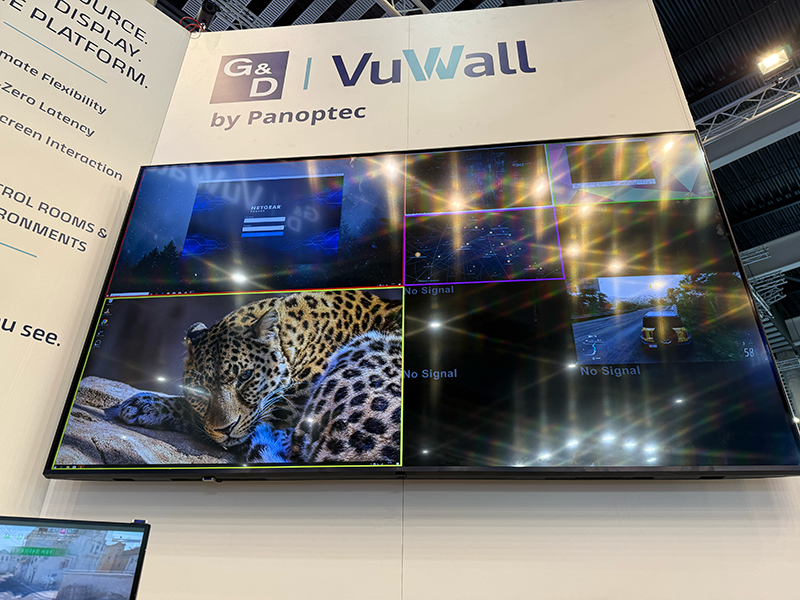
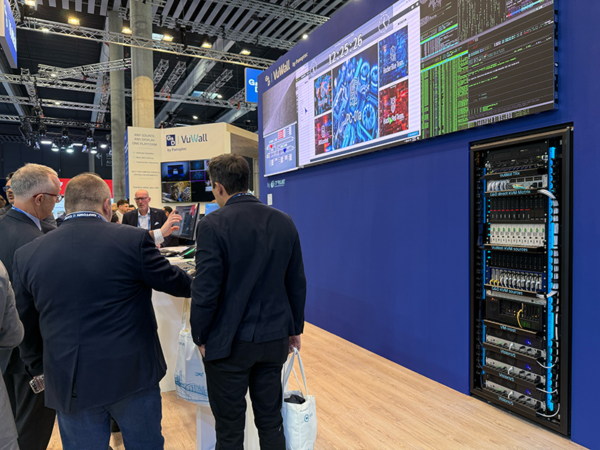
    At ISE 2026, VuWall reinforced its position as one of the few vendors addressing a long-standing challenge for IT and AV managers: how to unify KVM control, video wall management, and operator workflows into a single, reliable ecosystem.

    Rather than presenting isolated point products, VuWall’s showcase focused on reducing operational complexity across control rooms, enterprise command centers, broadcast environments, and security operations. The company demonstrated how its expanding platform can simplify system design, deployment, and long-term support. Key priorities for decision-makers managing mission-critical AV infrastructure.

    One Platform for KVM and Video Wall Control

    ISE 2026 VuWall desktop
    ISE 2026 VuWall desktop

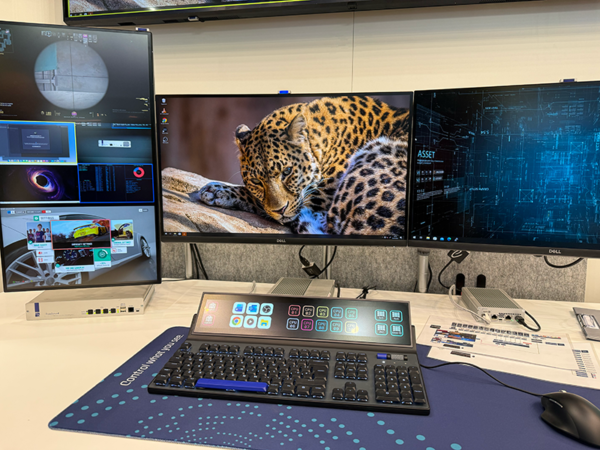
    A central theme of VuWall’s ISE presence was full ecosystem integration. Many organizations still manage KVM systems and video walls as separate environments, often using different vendors, interfaces, and support contracts. This fragmentation increases training time, troubleshooting complexity, and risk.

    VuWall addressed this through its tight integration with KVM technologies, enabled by its VisionVS architecture and management software. By bridging KVM and visualization workflows, operators can route, monitor, and control sources and displays through a unified interface. For IT and AV leaders, this translates into fewer platforms to maintain and a more predictable operational environment.

    TRx: Centralized Management for Growing Systems

    VuWall’s TRx centralized management platform continues to mature as the backbone of its ecosystem. At ISE 2026, the company highlighted enhancements that strengthen interoperability across its product portfolio.

    For system administrators, TRx serves as a single control layer for:

    • Source routing and display management
    • User permissions and workflows
    • Layout creation and recall
    • System monitoring and diagnostics

    In practical terms, this helps organizations scale control room deployments without multiplying administrative overhead. As environments expand from one facility to many, centralized management reduces configuration errors and shortens response times when issues arise.

    VisionVS: Bridging Operators and Visualization

    ISE 2026 VuWall demo
    ISE 2026 VuWall demo

    VisionVS was another focal point of the VuWall showcase. Designed as a dual-encoding solution, it enables the same source to feed both operator workstations and video walls simultaneously.

    This approach eliminates the need for parallel systems and duplicate hardware. For IT managers, this means:

    • Lower infrastructure costs
    • Reduced latency between operator and wall displays
    • Improved security through unified routing
    • Simplified redundancy planning

    In environments such as transportation monitoring, security operations, and broadcast production, this alignment between operator and visualization layers supports faster decision-making and more consistent situational awareness.

    PAK ONE: Extending Control Beyond the Main Wall

    VuWall also emphasized the growing role of smaller, distributed visualization endpoints with the introduction of PAK ONE, its compact decoder designed for single-display use.

    PAK ONE enables “personal video walls” in offices, control desks, and remote workspaces while remaining fully integrated into the VuWall ecosystem. For organizations moving toward hybrid operations or decentralized monitoring, this provides a consistent user experience without deploying full video wall processors in every location.

    Because PAK ONE is already shipping, integrators and end users can immediately incorporate it into existing and new projects, extending VuWall’s reach beyond traditional control room cores.

    Unified Interfaces for Operators

    Beyond hardware, VuWall’s demonstrations emphasized workflow. Through integration with partner technologies and its management platform, operators can access sources, layouts, and controls through a consistent interface.

    For operations teams, this reduces learning curves and minimizes errors in high-pressure environments. For IT and AV managers, it simplifies onboarding, documentation, and long-term training investments.

    Partner Ecosystem and Deployment Confidence

    VuWall also used ISE 2026 to recognize its global network of integrators and distributors. For decision-makers, this partner ecosystem is more than symbolic. It reflects the company’s emphasis on certified deployment, regional support, and consistent system performance.

    Strong partner relationships are especially important for complex control room projects, where system reliability depends as much on implementation as on product capability.

    Why It Matters to You

    VuWall at ISE 2026 had presentation was less about individual product launches and more about system coherence. For organizations planning new control rooms or upgrading existing facilities, the company’s approach offers several tangible benefits:

    • Reduced integration complexity through unified KVM and visualization control
    • Lower operational risk with centralized management
    • Improved scalability for multi-site environments
    • Greater flexibility with distributed endpoints
    • Simplified training and support structures

    By focusing on interoperability and lifecycle management, VuWall positioned itself as a long-term platform provider rather than a collection of hardware components.

    Looking Ahead

    As control rooms continue to converge with IT infrastructure and cybersecurity requirements, the ability to manage visualization and operator workflows through a unified ecosystem will become increasingly important. VuWall’s ISE 2026 showcase demonstrated a clear commitment to this direction.

    For IT and AV managers evaluating future-proof visualization strategies, VuWall’s integrated approach offers a compelling model: fewer silos, clearer workflows, and systems designed to evolve with organizational needs.

    To see all AVNation’s ISE 2026 coverage, visit our dedicated page.


  • Harman Pro at ISE 2026: Platform Expansion and Precision

    Harman Pro at ISE 2026: Platform Expansion and Precision

    ISE 2026 reinforced a trend we saw across the show floor: manufacturers are thinking less in terms of standalone products and more in terms of complete, scalable platforms. At the Harman Pro at ISE 2026 that philosophy was front and center.

    Under its JBL Professional banner, Harman introduced two major developments that matter directly to AV and IT decision makers: a significant expansion of its system processing and loudspeaker ecosystem, and a full refresh of its Intellivox beam-shaping column loudspeakers.

    Together, the announcements signal a continued push toward tightly integrated, networked audio systems designed for real-world architectural and enterprise environments.

    Expanded System Architecture from JBL Synthesis

    While JBL Synthesis has long been known for performance-driven loudspeaker systems, the expansion announced at ISE 2026 positions the platform more clearly as a complete, scalable architecture.

    The update includes nine new custom loudspeaker models along with three new processing and amplification platforms. For integrators, the bigger story is not the individual SKUs. It is the consolidation of loudspeaker, DSP, and amplification under a unified system approach.

    Key integration takeaways:

    • Timbre-matched loudspeaker families allow for consistent voicing across zones and room types.
    • Updated processing platforms support immersive formats and network-centric system design.
    • Rack-ready amplification and processing simplifies deployment in commercial and institutional environments.

    For enterprise and higher education environments, this matters because system consistency reduces commissioning friction. When loudspeaker voicing, DSP tuning, and amplifier control live inside a defined ecosystem, design time decreases and performance becomes more predictable.

    In a year where software and control integration dominated ISE, Harman’s expansion reinforces the importance of tightly coupled hardware and processing layers. For AV teams supporting multi-room deployments, repeatability and centralized management are becoming as important as raw acoustic performance.

    Intellivox: Precision for Intelligibility

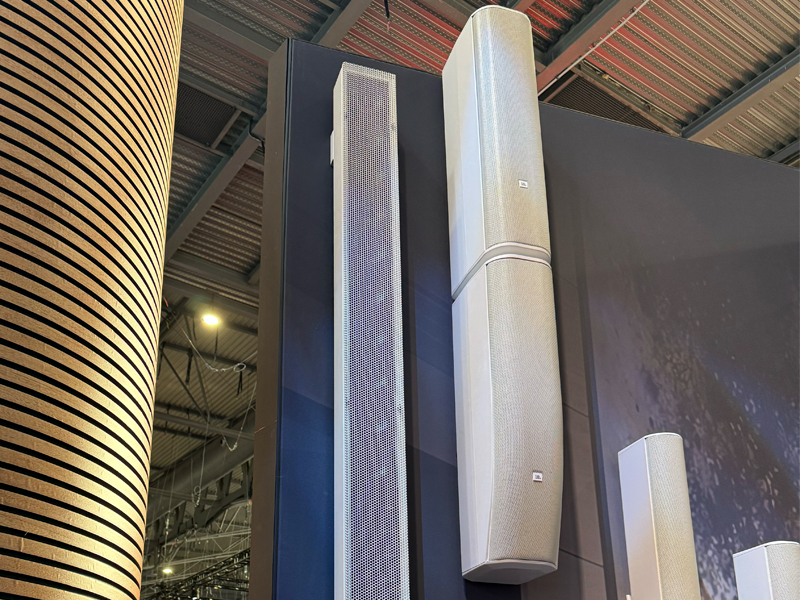
    On the professional side, Harman refreshed its JBL Intellivox line with 13 new active digital beam-shaping column loudspeakers.

    For integrators working in reverberant or architecturally challenging spaces, Intellivox has always been about control. The updated models continue that focus while modernizing connectivity and system flexibility.

    Highlights include:

    • Integrated Dante networking, aligning with IT-centric AV infrastructure strategies.
    • Digital beam shaping control, allowing precise vertical directivity and improved speech intelligibility.
    • Architecturally friendly form factors, including custom color and recessed installation options.

    For corporate, higher education, houses of worship, and public sector spaces, speech intelligibility remains a primary driver of user satisfaction. Beam shaping reduces reliance on heavy acoustic treatment and minimizes spill into reflective surfaces, which directly impacts clarity.

    The integration of Dante is particularly important. AV and IT managers increasingly expect audio endpoints to behave like networked devices, not isolated analog components. With Dante onboard, Intellivox becomes part of the broader AV-over-IP conversation rather than a standalone specialty solution.

    What It Means for You

    ISE 2026 made one thing clear: the future of professional AV is defined by ecosystem thinking.

    Harman’s announcements show a dual-track strategy:

    1. Platform consolidation in processing and amplification, creating more predictable system architectures.
    2. Precision control at the edge, particularly in acoustically difficult spaces.

    For decision makers, the ROI conversation centers on three factors:

    • Design efficiency – Pre-aligned system components reduce engineering time.
    • Deployment consistency – Scalable ecosystems make multi-site rollouts more manageable.
    • Operational alignment with IT – Dante and network-ready platforms ensure audio systems fit modern infrastructure standards.

    In an era where AV increasingly lives inside the IT stack, Harman’s ISE 2026 presence was less about incremental product refreshes and more about reinforcing an integrated systems strategy.

    For AVNation’s audience of IT and AV leaders, the takeaway is straightforward: when evaluating audio solutions in 2026 and beyond, the question is no longer just “How does it sound?” It is “How does it integrate?”

    Harman clearly intends to answer both.

    To see all our ISE 2026 coverage, visit our dedicated site. 


  • VIZRT at ISE 2026: Broadcast-Grade Production Into Zoom

    VIZRT at ISE 2026: Broadcast-Grade Production Into Zoom

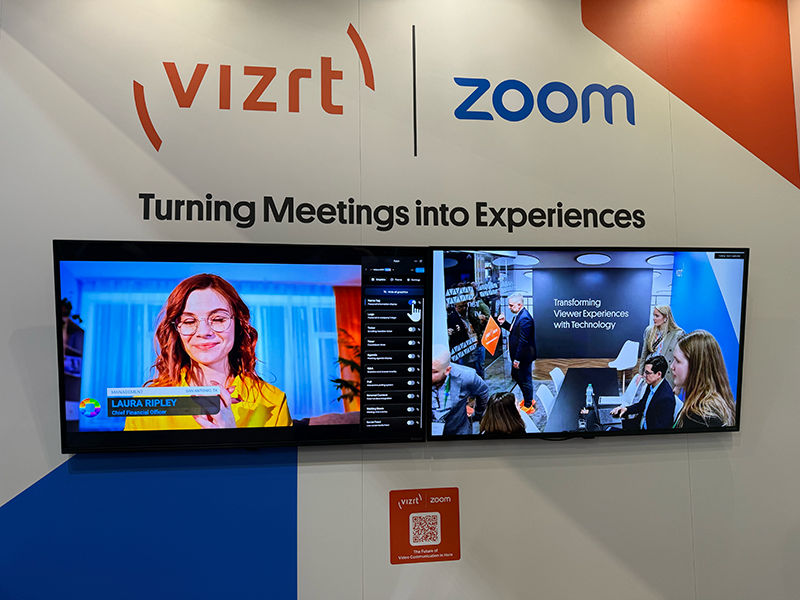
    At Integrated Systems Europe 2026, Vizrt made a clear statement: professional live production is no longer confined to control rooms. It is moving directly into collaboration platforms, and specifically into Zoom.

    The company showcased new tools designed to interactive-fy the Zoom experience by layering professional-grade graphics, augmented reality, and live production control into environments that IT teams already manage and support. For enterprise buyers, one of the most significant details is that this solution becomes available on February 20 and is sold directly through Zoom.

    Turning Zoom Into a Production Platform

    ISE 2026 Vizrt Zoom production
    ISE 2026 Vizrt Zoom production

    The headline development from Vizrt at ISE was the deeper integration between its production tools and Zoom environments, including Zoom Rooms. Instead of positioning Zoom as a simple conferencing layer, Vizrt presented it as the foundation for broadcast-level experiences.

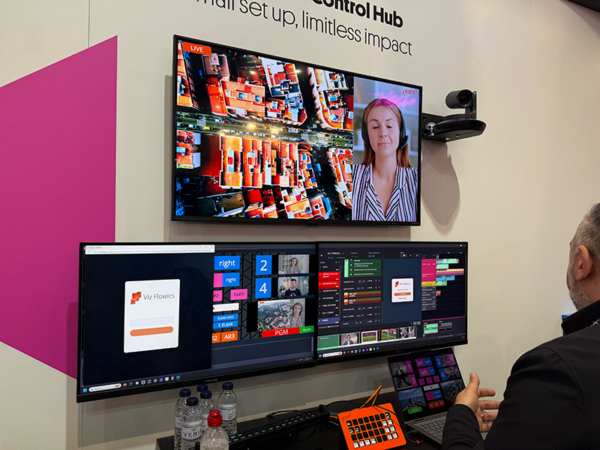
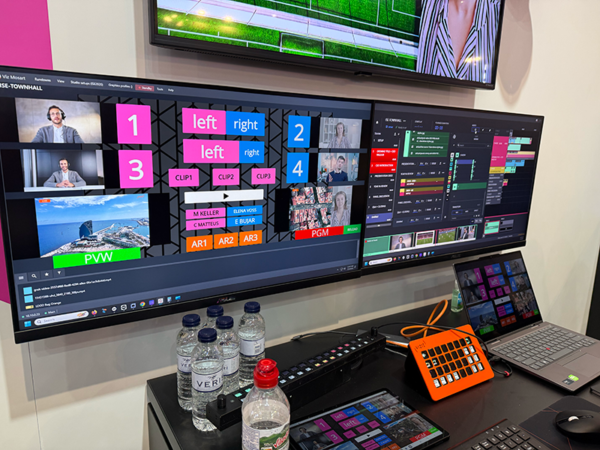
    Demonstrations focused on web-native HTML5 graphics, triggered lower thirds and transitions, AI-powered keying, multi-input switching, instant replay, and AR tools layered directly into Zoom-based workflows. For higher education, corporate communications, and live events teams, this signals a shift away from static hybrid meetings toward dynamic, branded, interactive productions.

    This approach is particularly relevant for organizations producing live sports, esports, campus programming, or executive town halls. Vizrt illustrated how a single operator can manage switching, graphics, replays, and distribution through Zoom, creating professional results without traditional production crews.

    Simplifying Live Production Workflows

    One of the strongest themes in Vizrt’s presentation was operational efficiency. The company emphasized that a single person can now manage multi-input live switching, instant replay, graphics insertion using HTML5 templates, augmented reality enhancements, and transitions powered by its AI keyer.

    For IT managers and AV directors, this represents a meaningful shift in how live production is resourced and supported. Reduced staffing requirements, lower operational complexity, fewer specialized systems, and tighter integration with existing collaboration infrastructure all translate into lower barriers to adoption.

    In higher education environments, particularly in athletics and media departments, this model opens the door to student-led productions that still meet professional standards. In corporate environments, it enables communications teams to produce high-quality internal and external broadcasts without relying on external vendors.

    Professional Graphics Inside Collaboration Environments

    ISE 2026 Vizrt virtual production
    ISE 2026 Vizrt virtual production

    Historically, broadcast-quality graphics required dedicated hardware and separate production chains. Vizrt’s message at ISE was that professional graphics should now exist natively inside collaboration workflows.

    By leveraging HTML5-based graphics, organizations gain greater flexibility in template management, cloud deployment, and branding consistency across distributed teams. Lower thirds, triggered graphics, and branded transitions can now be embedded directly into Zoom-powered environments rather than added downstream.

    For enterprise communications teams, this elevates the visual quality of investor briefings, leadership updates, and product announcements while minimizing the need for additional infrastructure.

    AR, AI Keying, and Virtual Participation

    Vizrt also highlighted its augmented reality capabilities and AI-powered keying as core components of this new workflow. These technologies enable clean background removal, seamless AR overlays, and more immersive presentation environments.

    The company also demonstrated scenarios in which remote participants appear as virtual or VR-based guests within production scenes. Rather than presenting audiences with grids of video windows, producers can place participants into cohesive, visually unified environments.

    For IT leaders, this raises important strategic questions about how far collaboration platforms can be extended beyond traditional meeting use cases and into immersive communication experiences.

    Commercial Alignment Through Zoom

    The decision to sell this solution directly through Zoom is strategically significant. Procurement and licensing structures often determine whether new technologies gain traction, and Vizrt’s alignment with Zoom simplifies adoption for organizations already standardized on the platform.

    For enterprise buyers, this model reduces vendor complexity, streamlines purchasing processes, and aligns live production investments with broader collaboration strategies. Rather than introducing a standalone production system, Vizrt is positioning its tools as an extension of existing enterprise infrastructure.

    Implications for AV and IT Decision Makers

    The broader takeaway from Vizrt at ISE 2026 presence is that collaboration platforms are rapidly evolving into full-scale production environments.

    In higher education, this enables athletics departments, campus media teams, and hybrid learning programs to deliver broadcast-style experiences without building traditional studios. In corporate IT environments, it allows executive communications, global town halls, and product launches to incorporate dynamic, branded, interactive elements inside familiar platforms. For enterprise AV teams, it represents a move from simply enabling connectivity to creating compelling, content-driven spaces.

    While technical considerations remain around network capacity, processing requirements, system integration, and security governance, Vizrt’s approach aligns with one of the dominant trends from ISE 2026: software-driven, platform-centric workflows replacing hardware-heavy production stacks.

    VIZRT at ISE 2026

    Vizrt is no longer positioning itself solely as a provider of broadcast graphics engines. At ISE 2026, the company presented a vision in which professional production tools are embedded directly into enterprise collaboration platforms.

    By integrating multi-input switching, instant replay, HTML5 graphics, augmented reality, and AI-powered keying into Zoom workflows, Vizrt is betting that the future of live production lives inside systems organizations already trust and manage.

    For AV and IT decision makers, the central question is no longer whether collaboration platforms can support professional production. It is whether their organizations are ready to treat collaboration as content.

    To see all of our ISE 2026 coverage, visit our dedicated page.