Category: ISE

  • Panasonic Connect at ISE 2026: Display and Projection Innovation

    Panasonic Connect at ISE 2026: Display and Projection Innovation

    Panasonic Connect at ISE 2026 delivered a message that resonated strongly with higher education and enterprise decision-makers: innovation does not always mean disruption. Sometimes, it means refinement, modularity, and long-term reliability.

    For universities and large institutional buyers navigating shrinking budgets, expanding hybrid learning models, and growing expectations for immersive learning spaces, that approach matters.

    Rather than chasing short-term trends, Panasonic Connect used ISE 2026 to reinforce its position as a long-term partner in display and projection infrastructure.

    Engineering Continuity in a Changing Market

    Much of the industry conversation around Panasonic in recent years has centered on structural changes following its acquisition by ORIX Corporation. At ISE 2026, however, the company’s ProAV presence suggested operational stability and technical continuity.

    The focus was not on reinventing the brand. It was on strengthening core competencies in projection, LED, and large-format visualization.

    For higher education institutions, this consistency reduces risk. Procurement cycles often span multiple fiscal years. Facilities teams need confidence that platforms adopted today will remain supported, serviceable, and upgradeable tomorrow.

    Panasonic’s booth and product lineup reflected that reality.

    Single-Chip RGB: Precision Without Complexity
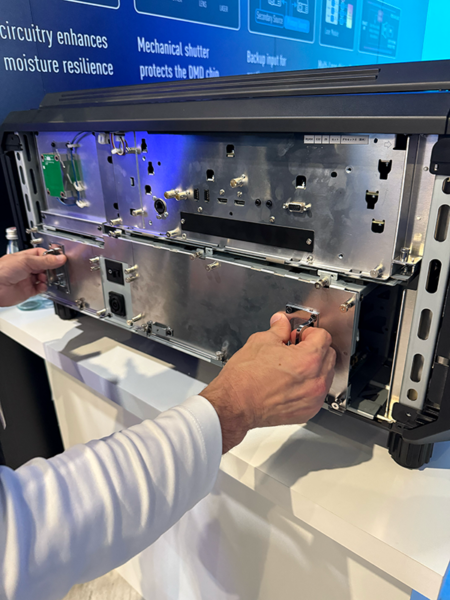
    Panasonic projector
    Panasonic projector

    One of the most notable technical highlights was Panasonic’s continued development of single-chip RGB laser projection.

    While traditional high-end visualization has often relied on three-chip architectures, Panasonic is leveraging single-chip designs combined with three-chip-class lenses to balance image quality, cost efficiency, and operational simplicity.

    For lecture halls, auditoriums, and visualization labs, this approach offers several advantages:

    • High color accuracy and brightness
    • Reduced system complexity
    • Lower long-term maintenance overhead

    In higher education environments, where AV systems must serve multiple departments and user skill levels, simplified architectures translate into fewer service calls and greater uptime.

    The emphasis here is not on headline-grabbing specifications. It is on dependable performance in real-world academic settings.

    RQ45K: Modularity as a Strategic Advantage

    Another centerpiece of Panasonic’s ISE 2026 presence was the RQ45K projector platform and its modular design philosophy.

    Unlike fixed-configuration projectors, the RQ45K allows users to customize and upgrade key components by swapping modules. This enables institutions to tailor projection systems to specific applications, whether for immersive simulation, large-format visualization, or advanced research environments.

    From a strategic perspective, modularity delivers three major benefits:

    1. Lifecycle Extension
      Institutions can upgrade components without replacing entire systems.
    2. Application Flexibility
      One platform can support multiple use cases across campus.
    3. Budget Optimization
      Capital expenditures can be spread across upgrade cycles.

    For higher education buyers managing long-term infrastructure plans, this approach aligns closely with multi-year capital planning and sustainability goals.

    Mevix LED: All-in-One DVLED for Learning Spaces
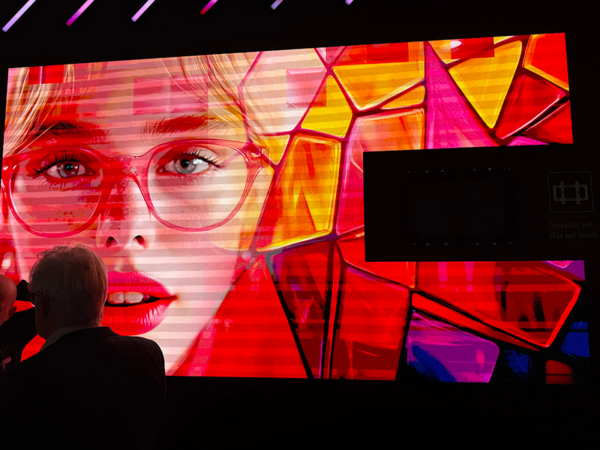
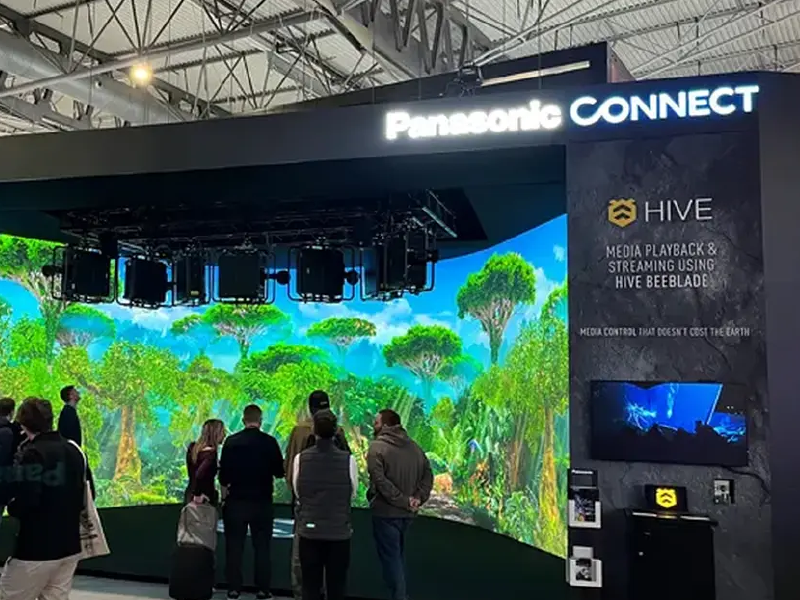
    Panasonic wall
    Panasonic wall

    Panasonic’s expansion into direct-view LED continued at ISE 2026 with the Mevix 165-inch all-in-one DVLED wall.

    With a 1.2 mm pixel pitch, 800-nit brightness, and modular 55-inch panels, the system targets institutions looking to deploy large-format displays without the complexity of traditional LED installations. Shipping beginning in April further reinforced Panasonic’s intent to move from showcase to deployment.

    For universities, these systems open new possibilities:

    • Active learning classrooms
    • Collaborative research environments
    • Simulation and visualization labs
    • Digital signage and campus communications

    The all-in-one approach lowers installation and commissioning barriers, making LED more accessible beyond flagship facilities.

    This reflects a broader industry shift. As LED becomes more turnkey, it is increasingly viewed as a viable alternative to projection and tiled LCD walls in academic environments.

    Designing for Long-Term Ownership

    Across projection and LED platforms, a consistent theme emerged: design for long-term ownership.

    Panasonic’s product strategy emphasized serviceability, upgrade paths, and ecosystem compatibility. Rather than positioning individual products as isolated solutions, the company framed them as components within a broader visualization infrastructure.

    For higher education buyers, this matters more than feature lists.

    Institutions must consider:

    • Service contracts
    • Parts availability
    • Staff training
    • Integration with existing systems
    • Long-term vendor relationships

    Panasonic’s ISE 2026 portfolio addressed these concerns directly by prioritizing standardization and maintainability.

    Strategic Alignment with Higher Education Needs

    What made Panasonic’s presence particularly relevant for higher education was how closely it aligned with evolving campus requirements.

    Modern learning environments demand:

    • Hybrid teaching support
    • High-visibility content delivery
    • Reliable lecture capture and presentation systems
    • Flexible space utilization

    Large-format displays, modular projection, and scalable LED walls all support these objectives.

    More importantly, they do so without forcing institutions into experimental or unproven platforms.

    Panasonic’s approach reflects an understanding that higher education values innovation, but only when it is accompanied by predictability.

    Innovation Through Refinement

    At ISE 2026, Panasonic Connect did not attempt to redefine ProAV. Instead, it refined it.

    Single-chip RGB projection improves efficiency without sacrificing quality. Modular projectors extend system lifecycles. All-in-one LED lowers adoption barriers. And platform consistency supports institutional planning.

    For enterprise and higher education decision-makers, this represents a pragmatic vision of innovation.

    It is not about chasing every new technology wave. It is about delivering dependable, upgradeable, and scalable visualization systems that support teaching, research, and collaboration over the long term.

    That strategy positions Panasonic Connect not just as a technology provider, but as an infrastructure partner for the next generation of learning environments.

    To see all of AVNation’s ISE 2026 coverage, visit our dedicated page.
  • ISE 2026 Recap: Why the Industry Went Software-First

    ISE 2026 Recap: Why the Industry Went Software-First

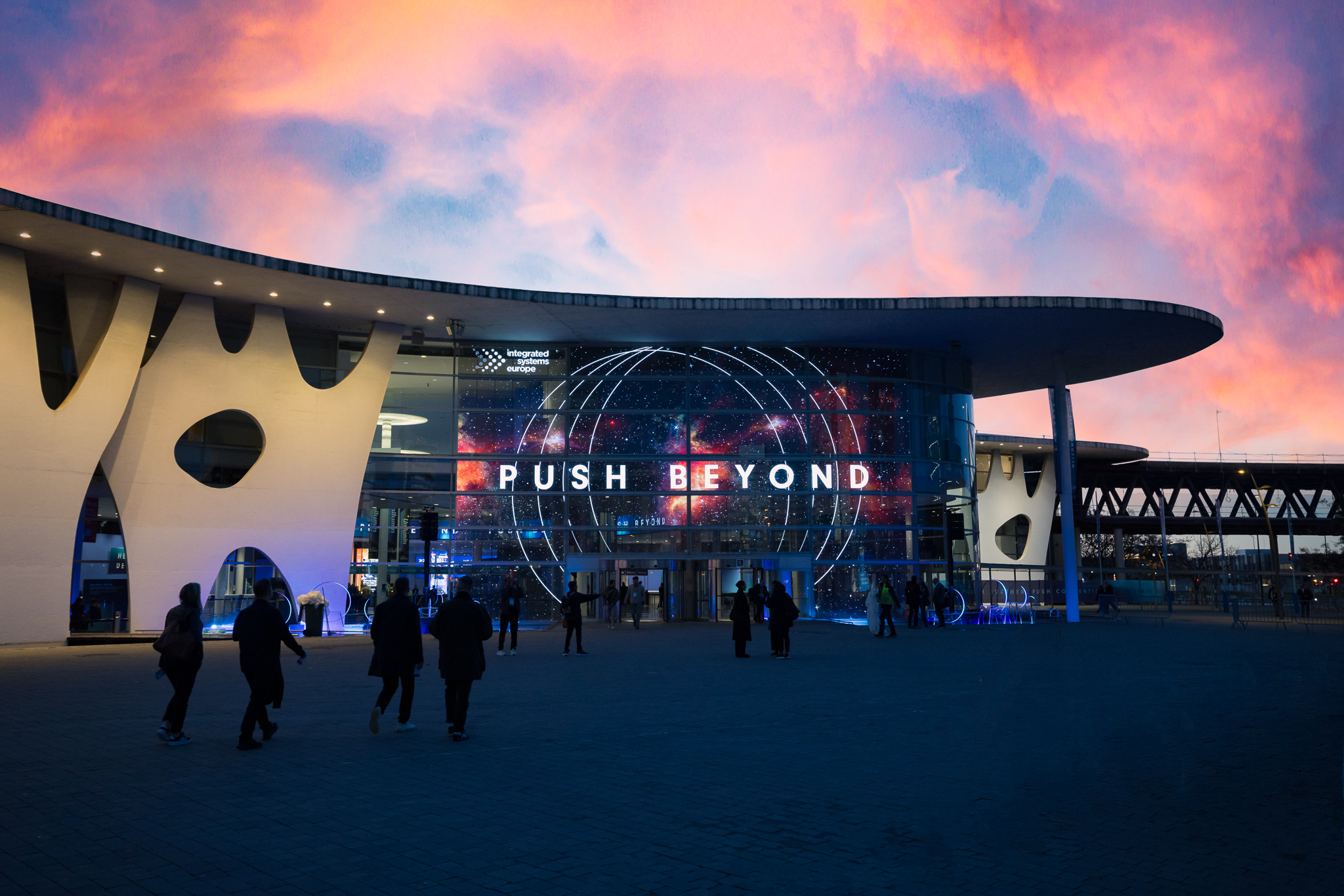
    Integrated Systems Europe 2026 did not just break records. It clarified the direction of the industry. ISE 2026 showed that AV is now all about software. The energy, the people, the announcements all prove, yet again, why this is my favorite show of the year.

    Yes, the numbers were headline-worthy: 92,170 visitors, 1,751 exhibitors, and the largest show floor in ISE history at 101,000 square meters. (ISE 2026) For context, the first show in Barcelona clocked in at 43,000. But the bigger story for IT and AV decision makers was what those exhibitors chose to lead with. ISE 2026 felt software-forward in a way that is now impossible to ignore.

    This year’s most meaningful announcements and conversations were less about “the box” and more about the layer above it: management, automation, security, analytics, workflows, AI assistance, and interoperability. Hardware still mattered, but more often as an endpoint in a platform strategy rather than the star of the booth.

    AV is being sold like IT now

    ISE has been a barometer for AV and IT convergence for years. In 2026, the convergence was less philosophical and more operational:

    • Centralized management is table stakes, not premium.
    • Security posture is becoming a buying requirement, especially for RFPs and regulated environments.
    • AI is shifting from “feature” to “workflow accelerator.”
    • Ecosystems are winning mindshare over one-off products.

    Even show programming reinforced the shift, with dedicated attention on cybersecurity and broadcast workflows, plus the continued expansion of education-focused programming. (ISE 2026) For decision makers, this points to a simple reality. Your AV strategy is now inseparable from your software, network, and security strategy.

    5 takeaways that matter

    1) “Software-forward” is really “lifecycle-forward”

    The clearest value conversation at ISE was not CapEx. It was OpEx.

    Platforms that reduce service tickets, automate monitoring, simplify updates, and standardize deployments are now the ROI story. When vendors talk about remote management, policy control, and visibility, what they are really selling is a reduction in:

    • downtime
    • reactive support
    • truck rolls
    • room-to-room inconsistencies
    • training burden

    If your organization is still buying AV primarily as a collection of devices, you are likely paying for it later in labor.

    2) Cybersecurity is no longer optional, it is procurement language

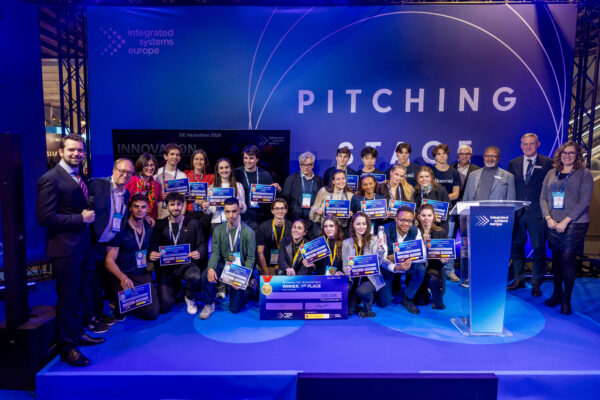
    ISE 2026 Hackathon
    ISE 2026 Hackathon

    ISE’s Cybersecurity Summit messaging aligns with what many teams are already experiencing: cybersecurity has become business-critical, tied to compliance, public tenders, and long-term trust. (ISE 2026)

    The shift for buyers: you cannot treat security as an integrator detail or a post-install checklist item. Security now belongs in scoping, vendor selection, and acceptance criteria.

    ROI framing: avoiding one incident is obvious value, but the day-to-day ROI is faster approvals and fewer deployment delays when security requirements are addressed up front.

    3) AI is being positioned as an operator, not a novelty

    ISE 2026 conversations around AI were less about “look what it can do” and more about practical assistance. This includes configuration support, monitoring insights, automation, and user experience improvements.

    Decision-makers should pressure-test AI claims with one question: What work does this remove for my team? If the answer is vague, it is marketing. If the answer is specific (less time to deploy, fewer tickets, faster troubleshooting), it is operational value.

    4) Broadcast and Pro AV are colliding in the middle

    The Broadcast AV Summit and related show-floor emphasis are a signal: broadcast-grade workflows, low-latency production thinking, content pipelines, and media management are increasingly relevant to enterprise and education.

    Corporate and campus teams are building internal studios, streaming classrooms, event capture workflows, and hybrid production environments. The “broadcast” conversation is no longer reserved for broadcasters. Especially as companies with broadcast DNA are showing up at ISE like Blackmagic and Ross Video.

    ROI framing: content reuse. When capture and production workflows are designed correctly, a single event can fuel internal comms, training, recruitment, and external marketing.

    5) The show is bigger because the scope is bigger

    ISE’s record attendance and exhibitor footprint matters because it reflects a broader market reality. AV is now the infrastructure behind collaboration, learning, and content. That means AV decisions are increasingly cross-functional. Whether IT, facilities, security, comms, or academic leadership (in higher ed) all are influencing design and direction.

    What this means by vertical

    Corporate: platforms win, not point solutions

    Corporate buyers are optimizing for consistency at scale. The winners are systems that can be deployed widely and managed centrally. They do this with policy controls and meaningful telemetry.

    If you are responsible for spaces, your next “upgrade” is less likely to be a single device refresh. It’s more likely to be a platform decision. How you standardize, manage, secure, and support the entire room fleet.

    You need to define your enterprise room baseline like an IT standard. This includes management, identity, logging, update policies, and security requirements.

    Higher education: the “congress” signals the stakes

    ISE continues to treat education as a first-class conversation. The EdTech Congress ran alongside the show and education programming, emphasizing models, strategy, and deployment realities. (avnation.tv)

    Higher ed teams live at the intersection of constrained staffing and high expectations. Hybrid learning, lecture capture, active learning spaces, and student experience pressure all drive design decisions. The software-forward trend matters here because the biggest pain is not installing a room. It is supporting 200 rooms.

    ROI framing for higher ed: fewer support tickets during peak teaching hours, consistent faculty experience, and the ability to scale without scaling headcount at the same rate.

    In broadcast workflow is the product

    Broadcast-focused programming at ISE reinforces a shift many AV teams are already feeling. The value is increasingly in the workflow, not the widget. For broadcast buyers (and for corporate and campus teams doing broadcast-style work), the differentiator is interoperability and reliability across the production chain. From acquisition, switching, transport, control, monitoring to distribution.

    Smart move coming out of ISE: treat production environments like mission-critical systems. Document workflows, failure points, redundancy expectations, and escalation paths.

    Your checklist after ISE

    If ISE 2026 was software-forward, your post-show actions should be, too.

    1. Audit your management layer
    • What platforms are you using to monitor and manage rooms today?
    • Where are you blind?
    • What is manual that should be automated?
    1. Move security requirements into the AV spec
    • Standardize password policies, certificate needs, logging, update cadence, and segmentation expectations.
    • Require vendors and integrators to document security posture at handoff.
    1. Create an “AV lifecycle cost” model
      Track the hidden costs: tickets, downtime, training hours, truck rolls, and refresh cycles. Use that model to justify platform investments that reduce operational load.
    2. Align AV with IT governance
      If AV is on the network, it needs the same governance. That includes change management and asset lifecycle tracking.

    ISE 2026 made the new job description obvious

    ISE 2026 was a record-breaking show. But the bigger signal is that the AV leader’s role is evolving fast. The modern AV decision is less “what hardware do we like?” and more “what platform can we operate securely, consistently, and at scale?”

    And that is exactly why this year felt software-forward.

    To see all of AVNation’s coverage visit our dedicated ISE 2026 page.

  • Samsung at ISE 2026: Advancing Display Innovation

    Samsung at ISE 2026: Advancing Display Innovation

    Samsung at ISE 2026 reinforced its leadership in professional display technology through a showcase that emphasized innovation, scalability, and practical enterprise application. Backed by a record number of industry awards, Samsung’s presence served as both validation of its market position and a clear statement of its long-term strategy.

    Rather than focusing on individual products in isolation, Samsung demonstrated how advanced display hardware, content platforms, and device management tools are converging to support modern corporate and command-and-control environments.

    Spatial Signage: Reimagining Visual Engagement

    ISE 2026 Samsung spacial signage
    ISE 2026 Samsung spacial signage

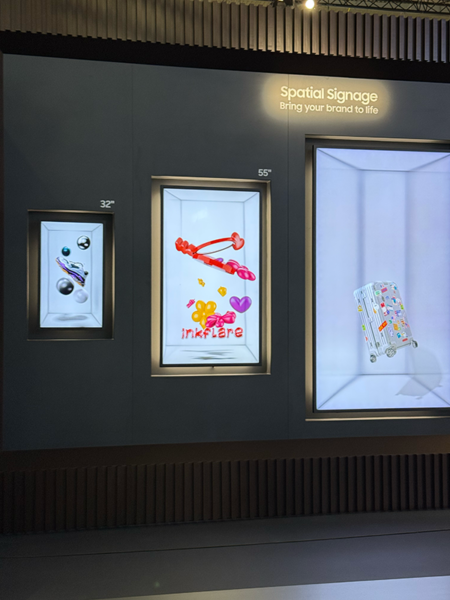
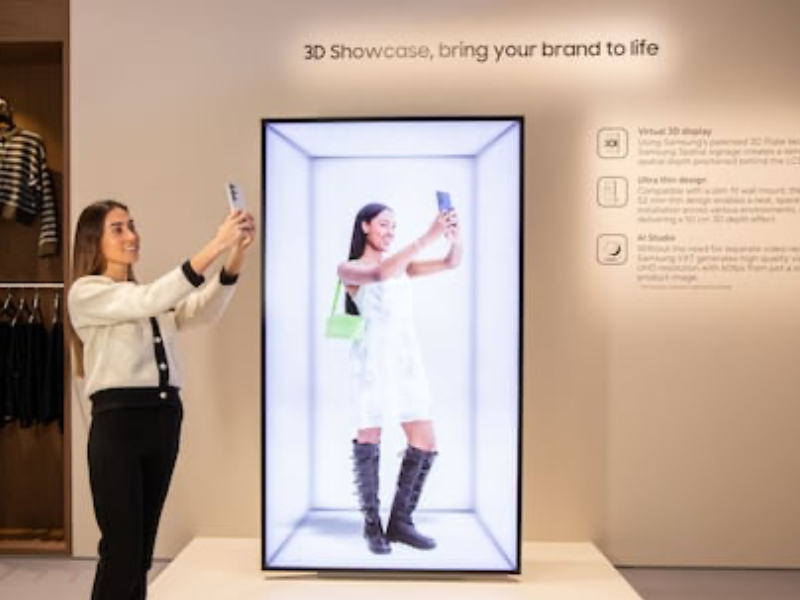
    One of the most visible innovations at Samsung’s booth was its spatial signage technology, designed to deliver a three-dimensional visual effect without the need for specialized glasses.

    Powered by CMS UXT, the platform converts conventional 2D content into immersive 3D-style presentations. For enterprises and public-facing organizations, this capability opens new opportunities for high-impact communication without significantly increasing content production costs.

    From an operational standpoint, spatial signage is particularly relevant for:

    • Corporate lobbies and experience centers
    • Executive briefing rooms
    • Training and simulation spaces
    • High-visibility information displays

    By enabling 3D-style visualization through software rather than custom hardware, Samsung lowers the barrier to adoption and makes immersive signage more accessible to mainstream deployments.

    Color E-Paper: Energy-Efficient Information Displays

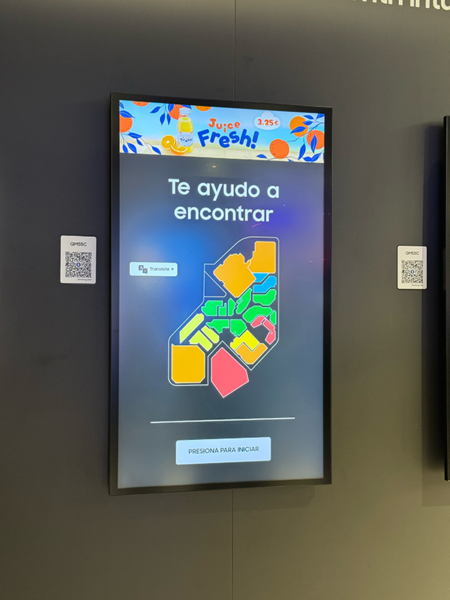
    Samsung also highlighted its EM13DX color e-paper display, which represents a different kind of innovation: ultra-low power visual communication.

    The 32-inch display weighs approximately 2 kilograms and can be managed through Samsung’s dedicated e-paper application. Designed for static or semi-static content, the platform consumes minimal power while maintaining high visibility.

    For corporate and institutional users, this technology is well suited for:

    • Wayfinding and directory signage
    • Room scheduling displays
    • Policy and safety communications
    • Temporary information boards

    In facilities where energy efficiency and maintenance costs are critical, color e-paper provides an alternative to traditional LCD and LED signage. It also aligns with sustainability initiatives that are increasingly influencing procurement decisions.

    VXT and AI-Driven Content Creation

    Samsung’s VXT platform continued to evolve at ISE 2026, positioning itself as both a content management system and a creative enablement tool.

    A notable enhancement is AI-assisted content generation, which allows users to create video and visual assets using natural language prompts. Instead of relying exclusively on external agencies or in-house designers, organizations can rapidly generate compliant, branded content for internal and external displays.

    For IT and AV leaders, this reduces:

    • Content production bottlenecks
    • Dependency on specialized creative resources
    • Delays in updating critical messaging

    When integrated with Samsung’s display hardware, VXT supports faster communication cycles and greater consistency across enterprise environments.

    The Wall All-in-One: Scalable Premium Visualization

    Samsung’s The Wall All-in-One microLED platform remains a cornerstone of its high-end display strategy. At ISE 2026, Samsung emphasized ease of deployment and system integration alongside visual performance.

    Designed for environments that require continuous operation and exceptional clarity, The Wall is increasingly deployed in:

    • Network operations centers
    • Executive command rooms
    • Security and surveillance hubs
    • Corporate visualization suites

    By simplifying installation and configuration, Samsung reduces the traditional complexity associated with large-format LED systems. This makes premium visualization more viable for organizations that may not have specialized LED expertise in-house.

    Display Infrastructure for Critical Operations

    A significant portion of Samsung’s showcase focused on command-and-control applications. Through combinations of LED walls, professional LCD displays, and centralized management software, Samsung demonstrated how its ecosystem supports real-time situational awareness.

    Use cases include:

    • Transportation monitoring
    • Utilities and infrastructure management
    • Corporate security operations
    • Emergency response coordination

    In these environments, reliability, redundancy, and clarity are paramount. Samsung’s portfolio enables organizations to build multi-layered visualization systems that can adapt to evolving operational needs.

    VXT Device Management: Enterprise-Scale Control

    Beyond content and hardware, Samsung continues to invest in device lifecycle management. VXT’s device management capabilities allow administrators to monitor, configure, and update displays remotely.

    Key benefits include:

    • Centralized firmware updates
    • Performance and uptime monitoring
    • Policy enforcement
    • Reduced on-site maintenance

    For enterprises managing hundreds or thousands of endpoints, these tools are essential for maintaining consistency and minimizing support costs. They also align Samsung’s display infrastructure more closely with IT governance frameworks.

    Awards as Strategic Validation

    Samsung’s record-setting performance in ISE 2026 award categories served as external validation of its technical and design leadership. While not the primary focus of the company’s messaging, these recognitions reinforced confidence among partners and end users evaluating long-term investments.

    For decision-makers, such recognition reduces perceived risk when standardizing on a single vendor for mission-critical deployments.

    Why It Matters for You

    Samsung’s ISE 2026 presentation highlighted a mature, platform-oriented approach to enterprise displays. Rather than competing solely on panel specifications, the company is building an integrated ecosystem that spans creation, delivery, management, and visualization.

    For corporate and command-and-control leaders, this approach delivers tangible advantages:

    • Advanced visualization through spatial and LED technologies
    • Lower operational costs via energy-efficient displays
    • Faster messaging with AI-assisted content tools
    • Scalable infrastructure for critical operations
    • Centralized governance through device management

    Together, these capabilities support predictable deployments and long-term operational stability.

    Looking Ahead

    As display systems become more tightly integrated with enterprise IT and operational workflows, vendors will increasingly be judged on ecosystem depth rather than hardware performance alone.

    Samsung’s ISE 2026 showcase demonstrated a clear commitment to this direction. By combining immersive display technologies, intelligent content platforms, and enterprise management tools, the company is positioning its professional display portfolio as a foundational layer for modern organizational communication and control.

    For organizations investing in next-generation visualization environments, Samsung’s innovation-led strategy offers a compelling blueprint for scalable, resilient, and future-ready deployments.

    To see all of AVNation’s ISE 2026 coverage, visit our dedicated page. 
  • Dante at ISE 2026: Audinate Doubles Down on Security

    Dante at ISE 2026: Audinate Doubles Down on Security

    At Integrated Systems Europe 2026, Dante at ISE 2026 was less about celebrating longevity and more about defining the next phase of AV-over-IP.

    As it marks two decades of innovation, Audinate used its presence at ISE to position the Dante platform not just as an audio networking standard, but as a secure, enterprise-ready AV infrastructure layer.

    For enterprise buyers, that distinction matters.

    The conversation has shifted. AV-over-IP is no longer an experiment. It is production infrastructure. And production infrastructure must be secure, manageable and interoperable at scale.

    Security Is Not a Feature. It Is the Foundation.

    In our conversation at the show, Josh Rush emphasized that security is no longer optional in enterprise AV deployments. It has to be built in at multiple levels.

    Dante’s approach is layered:

    • Network-level security that aligns with enterprise IT policies
    • Device-level authentication and management
    • Stream-level protection, including encryption

    That last piece is increasingly important. Encryption has historically been inconsistent across AV-over-IP ecosystems. At ISE 2026, Audinate highlighted growing adoption of encrypted Dante streams, including implementations with manufacturers such as Sennheiser and its conferencing bar solutions.

    The significance is not just that encryption exists. It is that encryption is becoming normalized.

    For enterprise buyers navigating cybersecurity audits, Zero Trust frameworks and internal compliance requirements, that shift reduces friction between AV and IT. Instead of defending why AV devices are exceptions to policy, technology managers can align Dante endpoints and streams with broader network security standards.

    In other words, Dante is evolving from “AV protocol” to “enterprise-grade network service.”

    One Platform, One Pane of Glass

    ISE 2026 Dante wall
    ISE 2026 Dante wall

    Security alone is not enough. Scale requires visibility.

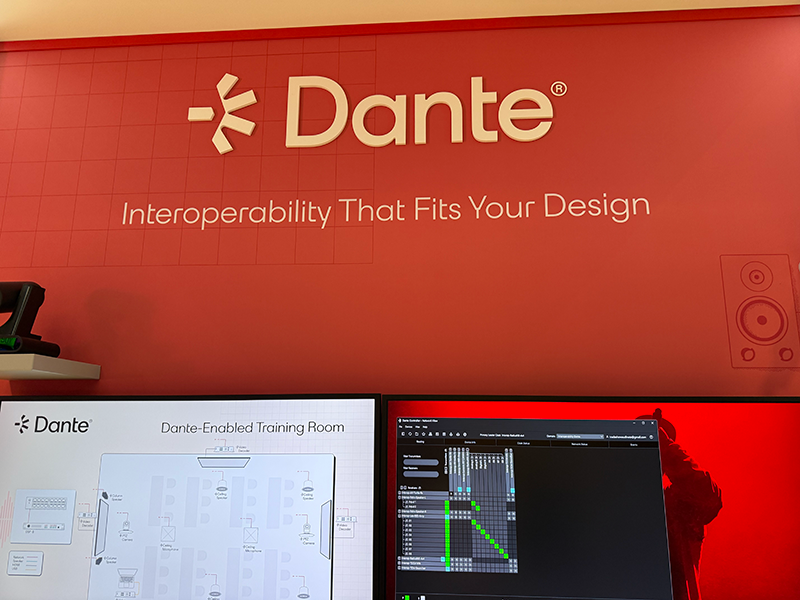
    Audinate’s messaging at ISE focused heavily on platform cohesion. The Dante ecosystem now extends beyond routing audio streams. It encompasses device discovery, management, monitoring and control.

    A key example is Dante Director, which moves device and domain management into a centralized, cloud-enabled environment. The goal is simple but powerful: one pane of glass for managing Dante-enabled devices across locations.

    For enterprises with distributed campuses, multi-building headquarters or global offices, that matters.

    Instead of managing isolated AV networks in each room or facility, technology teams can logically organize devices, define access permissions and maintain control policies across domains.

    From a governance standpoint, this mirrors how IT departments already manage switches, servers and endpoints. The closer AV behaves like IT infrastructure, the easier it is to justify, budget and scale.

    AV-over-IP Is Maturing

    The broader theme at ISE 2026 was the maturation of AV-over-IP. What began as an audio transport technology has expanded into video, control and data.

    At the show, Audinate reinforced that Dante is not just about moving signals. It is about enabling a platform that manufacturers can build on.

    More manufacturers are implementing encryption. More devices are shipping with deeper Dante integration. And more enterprise buyers are specifying network-based AV as the default, not the exception.

    This is where the security narrative becomes strategic.

    When AV-over-IP first gained traction, the focus was flexibility and scalability. Now the focus is resilience. Enterprise stakeholders are asking:

    • Can it be segmented?
    • Can it be encrypted?
    • Can it be centrally managed?
    • Can it align with corporate security policy?

    Audinate’s message at ISE was that the answer to all four is increasingly yes.

    Control Is the Next Layer

    Looking forward, control and remote management are becoming the next major battleground in AV infrastructure.

    Audinate signaled continued investment in expanding remote management capabilities, increasing device visibility and enabling broader control across manufacturer ecosystems. The idea is to reduce the operational overhead of large-scale AV networks.

    For enterprise buyers, operational efficiency is often more important than raw feature sets. The cost of truck rolls, on-site configuration and manual troubleshooting adds up quickly across dozens or hundreds of rooms.

    A secure, remotely manageable Dante environment lowers that operational burden. It also makes AV teams more strategic. Instead of reacting to outages, they can proactively monitor performance and maintain policy compliance.

    This trend reflects a larger industry movement. As AV integrates more deeply with enterprise networks, it inherits the expectations placed on IT systems: uptime, auditability, encryption and centralized control.

    Twenty Years In, Still Platform-Focused

    ISE 2026 also marked a symbolic milestone. Two decades after its founding, Audinate is no longer introducing a disruptive newcomer technology. It is stewarding an ecosystem.

    Dante’s value proposition has evolved:

    • From audio transport to AV platform
    • From room-level routing to enterprise-scale domains
    • From convenience to compliance

    For enterprise decision-makers, that evolution reduces risk. Established ecosystems with broad manufacturer support and maturing security frameworks provide confidence in long-term deployments.

    The takeaway from Dante at ISE 2026 was not flashy demos or radical reinvention. It was steady, strategic progression.

    Security is becoming standardized. Encryption adoption is accelerating. Device management is centralizing. And AV-over-IP is behaving more like enterprise IT infrastructure every year.

    For organizations investing in network-based AV in 2026 and beyond, that is exactly the direction they want to see.

    For all of AVNation’s coverage of ISE 2026, visit our dedicated coverage page.

  • Netspeek at ISE 2026 Made Me Say “Wow”

    Netspeek at ISE 2026 Made Me Say “Wow”

    At ISE 2026, Netspeek delivered one of the most practical and forward-looking demonstrations on the show floor. In an industry where “AI-powered” is often more promise than reality, Netspeek showed what applied artificial intelligence looks like when it is designed specifically for AV operations.

    The result was a showcase that made a strong case for how room support, troubleshooting, and system reliability could be fundamentally reshaped in the coming years.

    From Reactive Support to Intelligent Room Management

    ISE 2026 Netspeak demo
    ISE 2026 Netspeak demo

    For most AV operations teams, support still revolves around reacting to problems after users report them. A room fails, a ticket is submitted, and technicians begin diagnosing the issue remotely or on site.

    Netspeek’s ISE 2026 demonstrations suggested a different model: one where rooms are continuously evaluated, problems are identified automatically, and users are guided through solutions in real time.

    At the center of this approach is Lena, Netspeek’s AI-powered troubleshooting and operations assistant.

    Room Check and Personas

    One of the most compelling features on display was Netspeek’s “Room Check” capability, supported by configurable room personas.

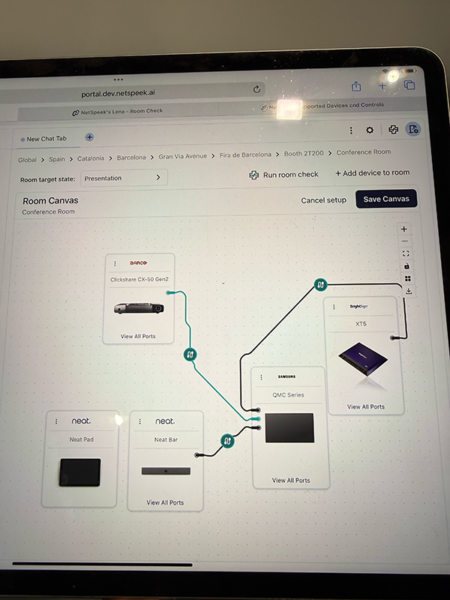
    Instead of treating every space the same, Netspeek enables organizations to define how different room types should behave. A boardroom, training space, huddle room, and broadcast studio each have distinct technical and operational requirements. Room personas allow Lena to understand those differences.

    When a Room Check is triggered, the system evaluates:

    • Device connectivity
    • Signal paths
    • Peripheral status
    • Network conditions
    • Configuration alignment

    If an issue is detected, Lena can automatically attempt corrective actions or guide the user through the fix. For operations managers, this represents a major shift from static monitoring toward adaptive, context-aware diagnostics.

    Natural Language Troubleshooting in Practice

    ISE 2026 Netspeak
    ISE 2026 Netspeak

    Lena’s natural language interface was another highlight of the Netspeek booth. Rather than navigating complex dashboards or documentation, users can interact with the system conversationally.

    During demonstrations, operators and end users asked direct questions about room performance and received actionable responses. This is not limited to generic troubleshooting. Lena is trained to understand AV-specific workflows and terminology, allowing it to function as a specialized support agent.

    In one example, a faulty HDMI connection was introduced into the system. Lena identified the issue and presented clear remediation options to the person in the room, without requiring escalation to technical staff.

    For AV operations teams, this has direct implications for reducing first-level support volume and empowering users to resolve basic issues independently.

    Knowledge Access and Embedded Documentation

    Another practical capability demonstrated at ISE was Lena’s access to system documentation and configuration data. The platform can surface information typically buried in manuals, setup guides, and internal knowledge bases.

    Instead of searching PDFs or internal wikis, technicians and users can ask Lena for relevant instructions or specifications. This shortens resolution times and reduces reliance on institutional knowledge that often resides with a few senior staff members.

    By centralizing operational knowledge inside the AI layer, Netspeek addresses one of the most persistent challenges in enterprise AV: knowledge continuity.

    Moving Toward Persistent Intelligence

    Netspeek also previewed upcoming enhancements that will give Lena persistent memory capabilities, scheduled for release later in 2026.

    With memory enabled, Lena will be able to:

    • Retain historical context about rooms and systems
    • Learn from past incidents and resolutions
    • Adapt recommendations over time
    • Build profiles of recurring issues

    For operations managers, this means troubleshooting becomes progressively more accurate and less repetitive. Instead of treating each incident as isolated, the platform develops institutional memory.

    This evolution positions Lena as more than a chatbot. It becomes an operational intelligence layer embedded within the AV environment.

    Log Analysis and Service Integration

    Looking ahead, Netspeek outlined plans to enable automated download and interpretation of system logs from connected devices. This capability is expected to integrate with enterprise service platforms such as ServiceNow.

    Once implemented, this will allow Lena to:

    • Collect diagnostic logs automatically
    • Analyze fault patterns
    • Attach structured data to service tickets
    • Recommend remediation steps before escalation

    For large organizations, this integration is significant. It connects AV operations directly into broader IT service management workflows, supporting unified reporting, compliance, and incident tracking.

    Rather than operating as a siloed support function, AV becomes part of the enterprise service ecosystem.

    Why This Matters for AV Operations Managers

    Netspeek’s ISE 2026 showcase stood out because it focused on day-to-day operational realities rather than abstract innovation.

    For AV operations leaders, the platform addresses several persistent pain points:

    • High ticket volumes driven by simple issues
    • Limited visibility into room health
    • Dependence on senior technicians
    • Inconsistent documentation access
    • Slow escalation workflows

    By combining room personas, AI diagnostics, conversational interfaces, and service integration, Netspeek is building a system designed to reduce operational friction.

    The emphasis is not on replacing technicians, but on amplifying their effectiveness. Routine issues are handled automatically or with guided assistance, allowing staff to focus on higher-value work.

    From Monitoring Tool to Operations Platform

    Traditionally, AV monitoring platforms have focused on alerting: something breaks, and the system notifies support. Netspeek’s approach extends far beyond that model.

    At ISE 2026, the company demonstrated how AI can move AV management toward:

    • Preventive maintenance
    • Self-healing environments
    • User-assisted remediation
    • Knowledge-driven support
    • Integrated service workflows

    This represents a shift from passive monitoring to active operations management.

    Looking Ahead

    Netspeek’s ISE 2026 presentation offered a glimpse into how AI-driven AV support may function in mature enterprise environments. With memory, log analysis, and service platform integration on the roadmap, the company is building toward a comprehensive operational intelligence system.

    For organizations managing large room portfolios, hybrid work environments, and distributed campuses, this approach aligns with growing expectations for reliability and responsiveness.

    More importantly, it reflects a practical application of AI focused on measurable outcomes: fewer disruptions, faster fixes, and more efficient support teams.

    At ISE 2026, Netspeek did more than talk about artificial intelligence. It showed how AI can be embedded into everyday AV operations in ways that directly improve performance. That is what made this showcase stand out. And why it truly deserved the “wow” reaction.

    To see all of AVNation’s ISE 2026 coverage, visit our dedicated page.
  • ISE 2026: Collaboration Built for IT and Higher Ed Leaders

    ISE 2026: Collaboration Built for IT and Higher Ed Leaders

    Integrated Systems Europe (ISE) has long been a must-attend event for AV professionals. But in 2026, the message from show leadership is clear: the center of gravity is shifting toward enterprise IT and higher education technology leadership. As collaboration platforms, conferencing, digital signage, and control systems increasingly live on the network, ISE is leaning hard into the reality that AV is no longer a standalone discipline. It’s infrastructure.

    “AV/IT convergence is transforming how people communicate, collaborate, and share information, creating smarter and more connected environments,” said Mike Blackman, Managing Director at Integrated Systems Events. “Collaboration platforms, video conferencing, digital signage, and control systems are now routinely deployed on enterprise networks, streamlining management and reducing costs.”

    That shift is familiar territory for CIOs, network architects, and campus technology leaders. The difference is that ISE 2026 is intentionally designed to help them navigate it faster, more efficiently, and with better decision support than the typical “walk the floor and hope you find what you need” trade show experience.

    Convergence isn’t a trend. It’s the operating model.

    For enterprise IT and higher ed IT/AV teams, convergence isn’t theoretical. It’s what drives daily decisions around governance, scalability, security, and user experience consistency across hundreds (or thousands) of spaces.

    ISE 2026 is positioning itself as a show where those cross-functional realities are acknowledged from the beginning, not treated as an exception. Blackman noted that IT teams are more directly involved in AV projects than ever, while AV professionals are being pushed to build stronger networking and security skills. The result is “a more unified, cross-disciplinary workforce.”

    That matters because the stakes have changed. AV is no longer just about performance in the room. It’s about performance across the organization: uptime, monitoring, policy alignment, access control, compliance, vendor risk, and lifecycle management.

    Cybersecurity moves from “IT problem” to “business-critical expectation”

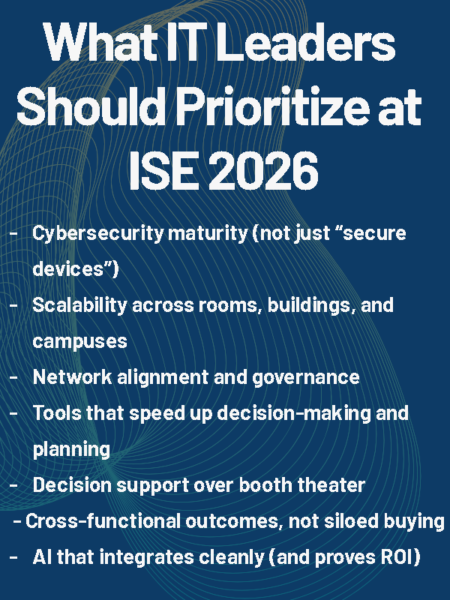
    What to prioritize at ISE 2026
    What to prioritize at ISE 2026

    One of the most significant additions to the ISE 2026 program is the CyberSecurity Summit: Securing the Future of Integrated AV Technologies, scheduled for Thursday, 5 February, 09:00–12:00 CET in CC5.1.

    Cybersecurity isn’t being positioned as a specialty track. It’s being framed as a baseline competency for anyone deploying integrated AV systems in real environments.

    “Cybersecurity has become a business-critical issue,” Blackman said, “influencing regulatory compliance, access to public tenders, and long-term trust, particularly in sectors such as healthcare, transport, education, and government.”

    For higher education, that line hits particularly hard. Campus networks are complex, open by design, and under constant pressure from device sprawl. For enterprise leaders, the reality is just as pressing: AV endpoints represent an expanding attack surface, and the risk posture of “one more unmanaged device category” isn’t acceptable anymore.

    ISE’s goal with the summit is straightforward: deliver real-world priorities that attendees can translate into action.

    “The Summit tackles real-world threats and priorities, helping delegates leave with a clear, adaptable roadmap for their own organizations.”

    AI scheduling built for busy IT decision makers

    Trade shows reward people with time. But CIOs, architects, and campus leaders rarely have it.

    ISE 2026 is addressing that directly with a new AI-powered scheduling tool on the ISE website designed to reduce planning friction and improve relevance for senior decision makers navigating a massive show floor.

    “We spent months speaking directly with relevant professionals to understand their priorities, particularly around scalability, security, and seamless integration across complex environments,” Blackman said. “That feedback shaped many of our design decisions for 2026, ensuring the show is highly practical and efficient for senior technology leaders with limited time.”

    The tool works by having attendees enter their company and job title, then surfacing sessions, exhibitors, and show features that map to that role.

    “By simply entering your company and job title, the tool highlights the sessions, exhibitors, and features most relevant to your role,” Blackman said, “making it much easier to focus on what truly matters and not miss key opportunities on the show floor.”

    For IT and campus leaders, that approach is less about “AI wow factor” and more about solving a real operational problem: prioritization.

    Decision support, not just demos

    ISE has also made changes meant to help attendees move beyond momentary product impressions and toward real-world evaluation.

    “End users often struggle to evaluate emerging technologies on a crowded show floor,” and ISE 2026’s response is to provide more structured context: curated show floor organization, guided tours, and realistic showcases that align to actual implementation challenges.

    Among the additions:

    • Technology Zones to compare solutions in context rather than chasing booth-to-booth conversations
    • Show Floor Tours built around themes including collaboration, cybersecurity, and smart campus solutions
    • Realistic feature areas like Connected Classroom and Innovation Park to evaluate how systems translate into environments, not just spec sheets

    “We’ve focused on helping visitors evaluate technology in context,” Blackman said. “These tours give IT and campus leaders the context and insight needed to assess scalability, and long-term value.”

    That’s a key distinction. Most shows provide discovery. ISE 2026 is leaning toward decision support: helping leaders connect technical capability to outcomes like long-term maintainability and operational fit.

    EdTech Content and the Connected Classroom return

    Higher education continues to carry unique pressures: hybrid teaching expectations, student experience demands, limited staffing, and a constant need to do more with infrastructure already in place.

    ISE 2026 is reinforcing its higher ed relevance with the EdTech Congress, now co-hosted with EduTech Cluster and Fira de Barcelona, taking place 4–5 February 2026 alongside ISE at the Palau de Congressos.

    Additionally ISE is hosting the EduTech Summit on 3 February. This one day event gives attendees the tools they need to put AV technology to work for their faculty and students.

    “Organizations and institutions are under pressure to support hybrid models, deliver consistent user experiences, and do all this securely and at scale,” Blackman said.

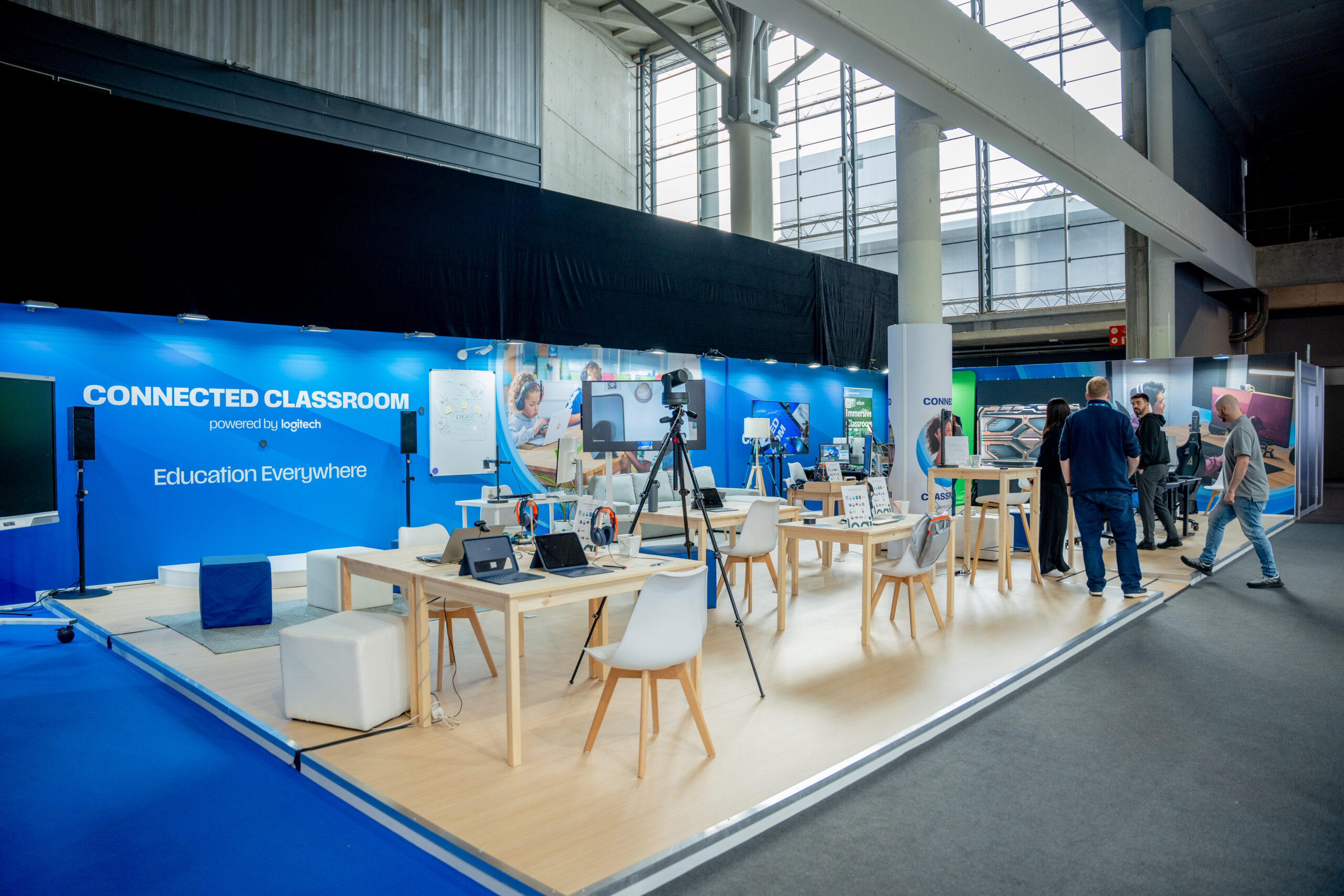
    Also returning is the Connected Classroom, powered by Logitech, a feature that continues to gain traction because it demonstrates practical design choices rather than theoretical concepts.

    “It showcases how classrooms can be designed to support hybrid teaching and active learning,” Blackman said, “using technology that is intuitive for both educators and students.”

    For campus leaders, these kinds of environments matter because they bridge the gap between AV planning and teaching outcomes. They also create a more realistic foundation for evaluating products and workflows, especially when “hybrid” is no longer a special case. It’s simply class.

    Real AI innovation vs AI-washing

    AI will be everywhere at ISE 2026, just like every other technology event in 2026. But the problem for enterprise and higher ed leaders isn’t whether AI exists. It’s whether it delivers measurable value, integrates with existing systems, and reduces operational load without introducing new risk.

    Blackman acknowledged the challenge directly: “AI is everywhere right now, but we know it can be hard for attendees to separate genuine innovation from marketing hype.”

    ISE is addressing that through its Megatrends program, with AI positioned as one of the major themes.

    “Rather than simply showing what’s possible, the programme focuses on how AI delivers tangible benefits, integrates into existing workflows, and addresses operational challenges,” Blackman said.

    For IT and campus teams, that’s the right filter. The ROI question isn’t “is this smart?” It’s “does this reduce friction without adding overhead?”

    Integrated Teams: IT, AV, security, facilities, and beyond

    One of the most common shifts in 2025 and moving into 2026 is that organizations are no longer sending “the AV person” to evaluate systems. They’re sending cross-functional teams: IT, AV, facilities, security, and media production all need visibility and input.

    ISE 2026 is adapting to that.

    “Collaboration is the name of the game at ISE 2026,” Blackman said. “Recognizing that organisations now send cross-functional teams, we’ve designed the show to give each discipline a clear path while encouraging shared exploration.”

    That includes combining structured paths (zones and tours) with shared touchpoints like Innovation Park that naturally encourage interdisciplinary discussion, not siloed buying decisions.

    The Spark for Mike Blackman

    While cybersecurity and enterprise relevance will draw many IT and higher ed teams to ISE, Blackman’s most enthusiastic answer came when talking about a brand-new show floor addition: Spark.

    “I’m really excited for attendees to experience Spark for the very first time on the show floor,” he said. “Designed as a European hub where creativity and technology converge, Spark offers a focused conference and tech showcase for creative professionals, technologists, and decision-makers.”

    The concept is positioned as an immersive, innovation-oriented experience, with Blackman describing it as “a launchpad for new perspectives, partnerships, and possibilities.”

    For IT leaders, Spark may not be the first stop on the agenda. But it could be one of the more interesting bridges between technical infrastructure decisions and creative outcomes, especially as immersive environments, experience design, and new forms of storytelling increasingly rely on enterprise-grade networks and security frameworks.

    (You can explore Spark here: https://www.iseurope.org/spark/ )

    Register free with AVNation’s code

    AVNation readers can secure FREE registration for ISE 2026 using the registration code: avnation

    To follow along with all our coverage from ISE 2026, visit our dedicated landing page.

  • ISE’s Connected Classroom, powered by Logitech, returns to showcase the technologies reshaping education globally – and to make a genuine impact

    ISE’s Connected Classroom, powered by Logitech, returns to showcase the technologies reshaping education globally – and to make a genuine impact

    ISE 2026 will once again feature the Connected Classroom, powered by Logitech, returning after a strong debut last year. Located in Hall 2, the immersive showcase demonstrates how integrated AV and collaboration technologies are transforming education worldwide. Through hands-on zones designed for different learning environments, visitors can experience practical solutions that support hybrid teaching, active learning, content creation, and immersive AR/VR experiences, making classrooms more engaging, flexible, and inclusive for both teachers and students.

    Beyond showcasing innovation, the Connected Classroom reflects ISE’s broader commitment to social impact. In partnership with Logitech, a significant portion of the showcased technology will be donated to UNICEF’s Giga initiative and the ITU, helping connect classrooms globally. For the AV and IT community, the project highlights how technology can drive real change, not just on the show floor, but in classrooms around the world.

    Integrated Systems Europe (ISE) has announced that Connected Classroom, powered by Logitech, is back for its second year at ISE 2026. This engaging 120 sqm immersive showcase in Hall 2 features four interactive zones, each tailored to different educational needs.

    The debut of Connected Classroom at ISE 2025 attracted considerable attention from visitors who enjoyed getting hands-on with technology within the immersive classroom setting. The idea was sparked by Jason Whitcomb, founder at Kinetic Culture, and product marketing expert, Jeff Boggess. ISE, in partnership with Logitech, then brought the concept to life at ISE.

    “The Connected Classroom began as a coffee chat with Mike Blackman and a shared belief that the AV community could leave a positive and lasting mark on Barcelona and beyond. From that conversation grew something far greater than a showcase at ISE, it became a bridge between industry innovation and classrooms around the world.” commented Jason Whitcomb.

    Shaping the Future of Learning

    At ISE 2026, the Connected Classroom will demonstrate how integrated AV and collaboration technologies directly benefit both teachers and students. From simplifying lesson delivery and enabling seamless hybrid teaching to fostering active, social learning, the showcase highlights how technology can enhance engagement and accessibility in every type of classroom. Visitors can experience hands-on solutions such as Logitech’s Rally Camera Streamline Kit and Reach for video-enabled learning, Mevo for student content creation, and MX Ink for immersive AR/VR exploration. With collaborative furniture, interactive displays, and streaming tools, the Connected Classroom offers a clear vision of how technology can make learning more dynamic, inclusive, and effective.

    As returning headline sponsor, Logitech sees the project as both an innovation platform and an opportunity to understand evolving educational needs. “Education is one of the most exciting growth areas for Logitech,” said Gaurav Bradoo, Head of Product & Portfolio at Logitech. “The Connected Classroom allows us to show how our solutions support teachers and empower students across diverse learning environments. The conversations we have here provide meaningful insight into how education is changing globally, insights that continue to influence our product development.”

    A Lasting Legacy

    In addition to highlighting emerging EdTech innovations, Connected Classroom demonstrates ISE’s ongoing commitment to social responsibility, with a substantial portion of its featured technology being donated to the International Telecommunication Union (ITU) [1] and UNICEF’s Giga project, whose goal is to get every classroom in the world online. Following ISE 2025, over 30 pieces of Logitech equipment from the Connected Classroom were donated to Giga’s Connectivity Center to help stakeholders advance their digital transformation journeys in education.

    Mike Blackman, Managing Director of Integrated Systems Events, said: “Connected Classroom is far more than a showcase of what’s possible with technology, it’s also a commitment to making a difference. By donating to the Giga programme, we are helping ensure that children everywhere have access to the tools they need to learn, grow and thrive. This legacy is at the heart of what ISE stands for.”

  • Why AV/IT Managers Should Join the Technology in Practice Tour at ISE 2026

    Why AV/IT Managers Should Join the Technology in Practice Tour at ISE 2026

    As the global AV and IT community heads to Barcelona this February, one question rises above the noise: How do you cut through the chaos of 1,400+ exhibitors and focus only on the technologies that actually matter to your organization?

    For 2026, AVNation and AV Buyers Club are bringing back one of the most practical and end-user-focused experiences at the show. The Technology in Practice Tour, sponsored by EVONA 2030. It remains the only free, live, guided show-floor tour built specifically for AV and IT managers, and it’s designed to help you make better technology decisions in less time.

    Apply Here

    A Curated Walk Through the Show Floor

    The Technology in Practice Tour takes you directly to 10 selected booths chosen not for hype, but for real-world relevance. If you’re responsible for systems performance, long-term lifecycle planning, security, or user experience, this tour is built for you.

    This year’s tour highlights include exhibitors representing categories such as:

    • AI-Driven UC Solutions – smarter conferencing, automated meeting intelligence, and tools that reduce support tickets.
    • AV over IP & Networked Media – next-generation distribution, switching, and standards-based workflows.
    • Control & Automation – platforms that simplify programming, speed up deployment, and scale across campus and enterprise environments.
    • Audio Systems & DSP – intelligibility improvements, beamforming advancements, and networked audio that plays well with IT.
    • Displays, Projection & Visualization – energy-efficient displays, LED innovations, and solutions for hybrid meeting and learning spaces.
    • Space Management & Analytics – occupancy, usage metrics, and the tools IT teams rely on for planning and support.

    Each stop on the tour is intentionally selected to help tech managers understand how a product actually solves a problem. Not just how it looks in a booth demo. You’ll get direct time with product experts, the opportunity to ask deployment-level questions, and unbiased context for where these solutions fit into your ecosystem.

    Led by People Who Speak Your Language

    This isn’t a sales tour. It’s a practical, technical, boots-on-the-ground walkthrough led by Steph Beckett from AV Buyers Club and me, representing AVNation. Steph and I break down what matters, translate the jargon, and help you figure out whether a product is a fit for your environment or simply not worth your time. You’ll hear directly from the manufacturers and their experts. This tour is for the IT and AV manager, the front-line support, the end-users. Your workflows, your security requirements, your constraints, and your long-term plans.

    Built for You.  Not Integrators, Not Manufacturers

    The AV industry already has plenty of events aimed at vendors and channel partners. The Technology in Practice Tour is deliberately different. It’s designed around the needs of:

    • Campus AV/IT teams
    • Enterprise IT departments
    • Facilities and operations leaders
    • Government and public-sector technology managers
    • Corporate tech decision-makers

    And because the tour is free, there’s no barrier to participating. You just reserve your spot and join us on the show floor.

    Leave With Insights You Can Put to Work Immediately

    Every conversation, every demo, and every question on this tour is chosen with one purpose: to give you actionable clarity on the technologies shaping your next 12–36 months.

    It’s a two-hour commitment that saves you days of wandering and wondering. Plus at the end we’re giving you a free lunch. No waiting in a long cue. We’ll take you to a quite spot off the show floor and feed you before sending you on your way.

    Join Us at ISE 2026

    If you’re attending ISE this year and want a focused, high-signal way to engage with the show floor, this is it. There are only 20 spots for the tour. Secure your spot now by clicking this link and walk the show floor with purpose, clarity, and a team dedicated to helping AV/IT professionals make better technology decisions.

  • ISE 2024 Recap:  The Higher Education Perspective

    ISE 2024 Recap: The Higher Education Perspective

    Higher ED take on ISE 2024

    To open this 20th ISE, Mike Blackman, Managing Director of Integrated Systems Europe, spoke at a press briefing, recapping how far they have come in the last 20 years.  The first show was in Geneva with only 120 exhibitors… fast forward to this year in Barcelona where there were 1408.  He reiterated the theme of the show, “Your Destination for Innovation”.  He was not exaggerating.  I had the chance to experience the latest innovations that will help shape campus AV technology in the coming years.  ISE 2024 allowed me to see cutting-edge products firsthand, collaborate with industry experts, gather intelligence on emerging trends, and build relationships – all crucial for making informed strategic decisions that can help advance my institution’s classroom technology initiatives.

    Classroom Technology

    Vaddio ISE 2024 award
    Vaddio ISE 2024 award

    Walking the extensive ISE show floor, through eight halls, I was impressed by the sheer breadth of vendors that have products that fit the needs of higher ed. The big names in professional AV all have new offerings – from projectors and control systems to lecture capture and collaboration solutions.  I was equally impressed by some of the smaller companies that either brought new twists to typical tech or gave us elegant solutions to problems we had.  There were plenty of impressive displays of technology that may not be immediately applicable in classrooms but may still have a place on our campuses, like transparent LED and set-ups for immersive experiences. Even though many of the North American Higher Ed reps that most of us are familiar with were not in attendance, there were plenty of engineers and product managers present to discuss potential implementations.

    ISE 2024 vs. InfoComm

    ISE differs from InfoComm in that there is not as much of a focus on education sessions tucked away in rooms away from the show floor.  Instead, there are plenty of sessions held on the show floor in places like the AVIXA Xchange Live area and the Influencer Hub.  Both of these were great areas to take a break and listen to industry luminaries talk about topics relevant today and reveal emerging AV trends.  Iffat Chaudhry, a finalist for AVNation’s AV Pro of the Year, spoke about “Understanding Privilege” and “Mental Health Matters”.  Amelia Kallman, Futurist and host of XR Star Podcast conducted a session on “Trends, Technologies & the Future”, much of which involved AI.  There was also a session led by Steven Ooms about “How EdTech Can Enhance Social and Emotional Learning in the Classroom” among others.

    Networking with my counterparts at ISE 2024 who manage AV technology at universities internationally provided invaluable insight as well.  There were certainly plenty of networking opportunities between the women in AV, education technology managers, and Higher Ed specific meet ups and happy hours, as well as after-hours gatherings.  It has become evident that there will be a continued effort to increase the opportunities and elevate the experience for the higher education technology manager.

    Immersive Experiences

    AVNation ISE2024 transparent display
    AVNation ISE2024 transparent display

    Barcelona itself captivates visitors with its vibrant blend of art, architecture, culture, and cuisine. The blend of the new and the old, like Gaudí’s masterpieces, stand as icons while the city’s dynamic energy pulses through lively streets, tapas bars, and buzzing nightlife – creating an unforgettable Mediterranean metropolis.

    In just four overloaded days of back-to-back demos, presentations, networking, and discussions, I left ISE armed with a wealth of knowledge that will help drive strategic planning and decision-making for future projects. Staying ahead of the trends highlighted at the show enables me to deliver world-class technical facilities, simplify operations, and power experiences that continue to position my institution as a leader in education. ISE 2024 was truly a career-defining annual event for higher education AV professionals like myself. I look forward to the opportunity to attend again in the future and hope to see even more of my peers there.

  • Christie Debuts Next Gen 0.75 MicroTiles at ISE 2024

    Christie Debuts Next Gen 0.75 MicroTiles at ISE 2024

    Christie Digital, the provider of AV solutions, content management, and image processing technologies, has introduced a range of innovative products and immersive experiences at
    ISE 2024, showcasing their commitment to pushing the boundaries of AV technology.

    During an interview with AVNation, Arlonna Seymour, representing Christie Digital, highlighted the company’s latest offerings, including the immersive projection experience powered by the 1DLP series HS 4K 30s. This immersive display, enveloping customers with projection on four walls and the floor, demonstrates the power and versatility of Christie Digital’s solutions in creating captivating environments.

    Seymour also showcased the MicroTiles LED, a series that continues to evolve, with the introduction of the 0.75 MicroTiles LED. Demonstrating flexibility, high resolution, and minimal installation requirements, the MicroTiles exemplify the breadth of applications for which they are perfect.

    In addition to hardware innovations, Christie Digital emphasized the importance of user experience with the Pandora’s Box Cloud Management Software, which provides centralized control over displays and integrates seamlessly with existing management systems and communication channels.

    To know more about Christie Digital’s innovative solutions and immersive experiences, visit christiedigital. Stay updated with AVNation.tv for more from ISE 2024 and the AV industry!