At ISE 2026, Kramer presented one of the most comprehensive and strategically aligned showcases on the show floor. Rather than focusing on isolated product launches, Kramer emphasized how its expanding portfolio fits into a broader, unified ecosystem designed to simplify deployment, management, and long-term ownership for IT and AV decision-makers.
With nearly 200 products introduced and a clearly articulated “8 Domains” framework, Kramer’s presence reflected a deliberate shift toward platform thinking—connecting infrastructure, collaboration, control, and management into a cohesive operating environment.
The “8 Domains” Strategy
A central theme of Kramer’s ISE 2026 presentation was its “8 Domains” approach, which organizes the company’s portfolio into interconnected functional areas, including AVoIP, connectivity, audio, control, collaboration, and furniture.
This structure is more than marketing taxonomy. For system designers and enterprise technology leaders, it provides a roadmap for building end-to-end AV environments using components designed to work together. By aligning hardware, software, and physical infrastructure under a common framework, Kramer aims to reduce the friction that often arises when systems are assembled from multiple vendors.
For large organizations managing multi-site deployments, this consistency can translate into simpler procurement, standardized configurations, and more predictable lifecycle management.
Panta Rhei: The Intelligence Layer of the Ecosystem
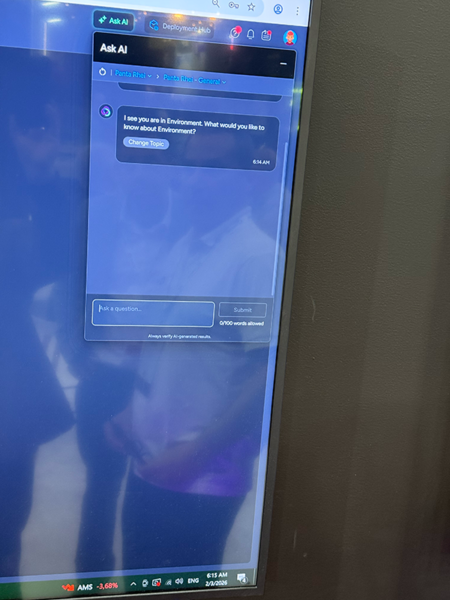
At the center of Kramer’s ecosystem strategy is Panta Rhei, its cloud-based management and orchestration platform. At ISE 2026, Kramer demonstrated expanded AI-driven capabilities that position Panta Rhei as more than a traditional monitoring tool.
Key capabilities include:
- Natural language interaction, allowing users to query system status and documentation
- Access to product manuals and configuration data through the platform
- Centralized monitoring of Kramer and third-party devices
- Proactive uptime management and alerting
For IT managers responsible for hundreds or thousands of endpoints, this approach addresses a persistent challenge: visibility. By consolidating operational data and documentation into a single interface, Panta Rhei reduces dependence on fragmented tools and manual troubleshooting processes.
The platform’s ability to manage third-party devices further reflects Kramer’s recognition that most enterprise environments remain heterogeneous. Rather than forcing full vendor lock-in, the company is positioning itself as an orchestration layer within mixed infrastructures.
AVoIP and Multiview
Kramer also used ISE 2026 to highlight advances in its AV-over-IP portfolio, including support for up to 19 multiview sources within a single platform. Demonstrations showed Kramer systems interoperating with partner technologies, including ZeeVee, reinforcing the company’s emphasis on open, standards-based deployments.
For organizations migrating from traditional matrix switching to IP-based distribution, this flexibility reduces transition risk. Multiview capabilities are particularly relevant in command-and-control, broadcast, and operations centers, where multiple data streams must be monitored simultaneously.
By integrating these capabilities into its broader ecosystem, Kramer positions AVoIP not as a standalone upgrade, but as a foundational layer within its unified architecture.
Audio: Unified Design for Speech and Coverage
Kramer’s audio portfolio received significant attention, particularly its all-weather and architectural speaker lines. The company emphasized system-wide management of ceiling and wall-mounted speakers, supported by Dante, PoE, and PoE+ connectivity.
Design features such as magnetic grilles and speech-optimized tuning reflect Kramer’s focus on practical performance in conferencing and collaboration environments. For enterprise and education users, intelligibility remains the primary metric of success, often outweighing raw audio output.
Centralized management of these audio systems through Kramer’s platform further supports consistent performance and simplified maintenance across large deployments.
Ashton Bentley: Furniture as a Strategic Asset
Kramer’s treatment of Ashton Bentley Technology as a separate business unit highlights an increasingly important dimension of AV system design: physical infrastructure.
Ashton Bentley’s Cisco and Microsoft-certified furniture solutions are engineered to integrate directly with collaboration platforms and AV hardware. By maintaining this division as a distinct entity, Kramer reinforces its commitment to purpose-built environments rather than generic furniture retrofits.
For organizations standardizing meeting spaces at scale, certified furniture reduces deployment variability and shortens installation timelines. It also supports Kramer’s broader strategy of delivering “complete room” solutions, particularly for small and mid-sized collaboration spaces.
Value Engineering: Right-Sized Systems, Lower Waste
Throughout its ISE presence, Kramer consistently emphasized cost efficiency and right-sized design. The company positioned its growing portfolio as a way for end users to pay for what they need—without being forced into oversized systems or unused features.
This approach reflects a shift toward value engineering rather than feature maximization. For IT and AV leaders facing constrained budgets and heightened ROI scrutiny, this philosophy aligns with current procurement realities.
By offering modular, interoperable components across domains, Kramer enables integrators and end users to tailor solutions to specific use cases while maintaining architectural consistency.
Reliability and Proactive Operations
Another recurring theme was operational reliability. Kramer showcased proactive uptime monitoring, system health reporting, and automated alerts designed to minimize unplanned downtime.
In enterprise and institutional environments, the cost of AV failure is increasingly measured in lost productivity and disrupted workflows. By embedding monitoring and diagnostics into its ecosystem, Kramer aims to shift system management from reactive support to preventive maintenance.
This capability is particularly relevant for distributed organizations, where on-site technical staff may be limited.
Why It Matters
Kramer’s ISE 2026 showcase was notable for its strategic coherence. Rather than highlighting individual products in isolation, the company presented a unified operating model for modern AV environments.
For decision-makers, this approach offers several tangible advantages:
- Reduced integration complexity through aligned product domains
- Centralized visibility and control via Panta Rhei
- Flexible AVoIP and multiview architectures
- Consistent audio and collaboration performance
- Integrated physical and digital infrastructure
- Improved lifecycle and uptime management
Together, these elements support more predictable deployments and lower long-term ownership costs.
Looking Ahead
As enterprise AV systems continue to converge with IT infrastructure and cloud-based management, vendors will increasingly be evaluated on ecosystem maturity rather than individual hardware specifications.
Kramer’s ISE 2026 presentation demonstrated a clear commitment to this direction. By structuring its portfolio around interconnected domains and anchoring it with an intelligent management platform, the company is positioning itself as a long-term infrastructure partner rather than a component supplier.
For organizations planning scalable, manageable, and financially sustainable AV environments, Kramer’s ecosystem strategy offers a compelling framework for future deployments.
To see all the AVNation ISE 2026 coverage, visit our dedicated page.

Tim Albright is the founder of AVNation and is the driving force behind the AVNation network. He carries the InfoComm CTS, a B.S. from Greenville College and is pursuing an M.S. in Mass Communications from Southern Illinois University at Edwardsville. When not steering the AVNation ship, Tim has spent his career designing systems for churches both large and small, Fortune 500 companies, and education facilities.
- Tim Albright

- Tim Albright

- Tim Albright

- Tim Albright