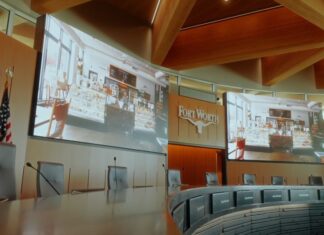
A conference room camera stops working minutes before an important meeting. The display is on, the microphone is connected, and the equipment appears functional. Yet the conferencing platform refuses to recognize the camera. Is it a hardware failure, a network issue, or a software update gone wrong?
For employees waiting to start their meeting, the cause hardly matters. They need the room to work. But for the teams responsible for fixing it, the answer is becoming increasingly complicated.
As audiovisual systems become more dependent on enterprise networks, cloud platforms, and software, traditional AV failures are turning into IT challenges. This shift is changing how organizations approach troubleshooting, accountability, and managed services.
AV Is No Longer an Isolated System
Traditional AV systems often operated as relatively independent installations. Displays, microphones, control processors, and conferencing equipment were installed and maintained by AV specialists. When something failed, troubleshooting typically began with the hardware.
That model has changed.
Modern meeting rooms depend on enterprise networks, cloud collaboration platforms, and software-driven devices. Technologies such as AV-over-IP, Microsoft Teams Rooms, and Zoom Rooms have made AV performance increasingly dependent on IT infrastructure.
A network configuration change can interrupt a conferencing system. A firmware update can introduce compatibility issues. An authentication failure can prevent devices from connecting to essential services.
These dependencies mean AV equipment can be fully functional while the overall system remains unusable.
For enterprises managing multiple offices and meeting spaces, the consequences extend beyond a single room. A network or platform issue can disrupt several locations simultaneously, creating a broader operational problem.
AV reliability now depends as much on the infrastructure supporting the equipment as on the equipment itself.
Why AV Problems Are Becoming Harder to Diagnose
The convergence of AV and IT has made troubleshooting more complicated.
Consider a meeting room camera that repeatedly disconnects during video calls. The immediate assumption might be defective hardware. However, the underlying issue could involve network instability, outdated firmware, software compatibility, or device configuration.
Replacing the camera may restore nothing.
The same challenge applies to networked displays, audio systems, and control platforms. A device may appear online while failing to perform as expected.
Multiple vendors add another layer of complexity. A typical collaboration room may combine hardware and software from several manufacturers, each with different update schedules, configurations, and support requirements.
When problems arise, identifying the root cause can take longer than repairing the visible symptom.
This is where traditional break-fix support becomes less effective. Restoring functionality without investigating the underlying issue can lead to repeated failures, unnecessary service calls, and prolonged downtime.
Organizations need better visibility across AV devices, networks, and software environments to understand what is failing and why.
The Bigger Challenge: Who Owns the Problem?
Technology is only part of the issue. Responsibility is becoming equally complicated.
AV teams traditionally manage room technology and user experience. IT departments oversee networks, cybersecurity, and enterprise software. Facilities teams may remain responsible for physical meeting spaces.
Today, those responsibilities frequently overlap.
When a conferencing system loses network connectivity, who investigates first? Who manages firmware updates? Who handles an issue involving both room hardware and collaboration software?
Without clear ownership, support tickets can move between departments while employees wait for a resolution.
The challenge becomes more significant across distributed organizations, where IT teams may lack specialized AV knowledge and AV technicians may have limited access to enterprise network systems.
Neither team can effectively manage the entire environment independently.
Organizations need documented responsibilities, shared troubleshooting procedures, and clear escalation paths. The objective is not to transfer every AV responsibility to IT but to create a coordinated support model.
The real problem is not always the technology failure. It is the lack of clarity around who is responsible for resolving it.
Why AV Managed Services Must Evolve
As AV environments become more interconnected, reactive maintenance alone is no longer sufficient.
Waiting until a meeting room fails can disrupt schedules, reduce productivity, and undermine confidence in workplace technology. Repeated issues also create additional workloads for internal support teams.
This is why AV managed services are shifting toward proactive monitoring and preventive maintenance.
Remote monitoring can help identify disconnected devices, recurring errors, and performance issues before they escalate. Diagnostic tools provide visibility into device status, firmware versions, and network connectivity, helping support teams narrow down potential causes.
Preventive maintenance also becomes more important. Firmware management, configuration backups, scheduled health checks, and lifecycle planning can reduce avoidable failures.
However, monitoring alone does not guarantee reliability.
Organizations still need established processes for responding to alerts, coordinating with IT, and resolving problems efficiently.
For example, when a conferencing system repeatedly disconnects, a managed services team should investigate whether the problem originates from the AV endpoint, network infrastructure, or collaboration platform. If necessary, the team should coordinate with internal IT specialists rather than treating the issue as an isolated equipment failure.
This approach shifts the focus from repairing individual devices to maintaining overall system performance.
Experienced AV integration and managed services partners can support this transition by connecting audiovisual expertise with enterprise IT requirements, without replacing the organization’s internal technology teams.
Cybersecurity Makes AV an IT Responsibility, Too
As AV devices become part of enterprise networks, cybersecurity becomes another shared responsibility.
Cameras, control processors, conferencing appliances, and digital signage systems are connected endpoints. They require appropriate authentication, access controls, firmware maintenance, and network policies.
Unmanaged devices can create security visibility gaps. Outdated firmware, default credentials, and poorly configured network access may introduce unnecessary risks.
At the same time, security changes implemented without considering AV requirements can disrupt system functionality.
Organizations need AV, IT, and cybersecurity teams working together to balance protection with operational reliability.
Including AV endpoints in enterprise asset inventories, maintenance schedules, and security reviews is an important starting point.
AV security can no longer be treated as an afterthought during installation or maintenance.
What IT Leaders Should Expect From AV Managed Services
For IT leaders overseeing connected AV environments, the priority should be reliable performance without unnecessary operational complexity.
Five capabilities deserve attention:
Centralized visibility: Organizations should know which AV devices are deployed, where they are located, and whether they are functioning properly. Monitoring across locations helps identify recurring issues.
Clear accountability: AV teams, IT departments, and service providers need defined responsibilities for troubleshooting, maintenance, and escalation.
Proactive maintenance: Firmware updates, configuration management, and scheduled system checks should be handled systematically rather than only after failures.
Measurable performance: Metrics such as system availability, recurring incidents, and mean time to resolution help organizations evaluate support effectiveness.
IT-aligned support: AV managed services should operate within enterprise networking, cybersecurity, and change-management policies.
These priorities reflect a broader shift in how organizations evaluate AV support. Closing tickets matters, but preventing recurring disruptions and maintaining dependable meeting experiences are more meaningful measures of success.
AV Reliability Is Now a Shared Responsibility
AV and IT are no longer separate operational environments. As meeting rooms and collaboration systems become more dependent on enterprise infrastructure, maintaining reliable AV experiences requires closer coordination between technical teams.
The challenge is not simply managing more complicated equipment. It is establishing the visibility, accountability, and support processes needed to keep connected environments functioning.
Proactive managed services can help bridge that gap by combining AV expertise with preventive maintenance, remote diagnostics, and coordinated IT support.
The question is no longer whether an AV problem belongs to AV or IT. It is whether both teams can resolve it before it disrupts the business.
- AVNation Staff

- AVNation Staff

- AVNation Staff

- AVNation Staff