Category: Loudspeakers

  • L-Acoustics A Series Wins Unprompted Fan Praise at Houston’s Shell Energy Stadium

    L-Acoustics A Series Wins Unprompted Fan Praise at Houston’s Shell Energy Stadium

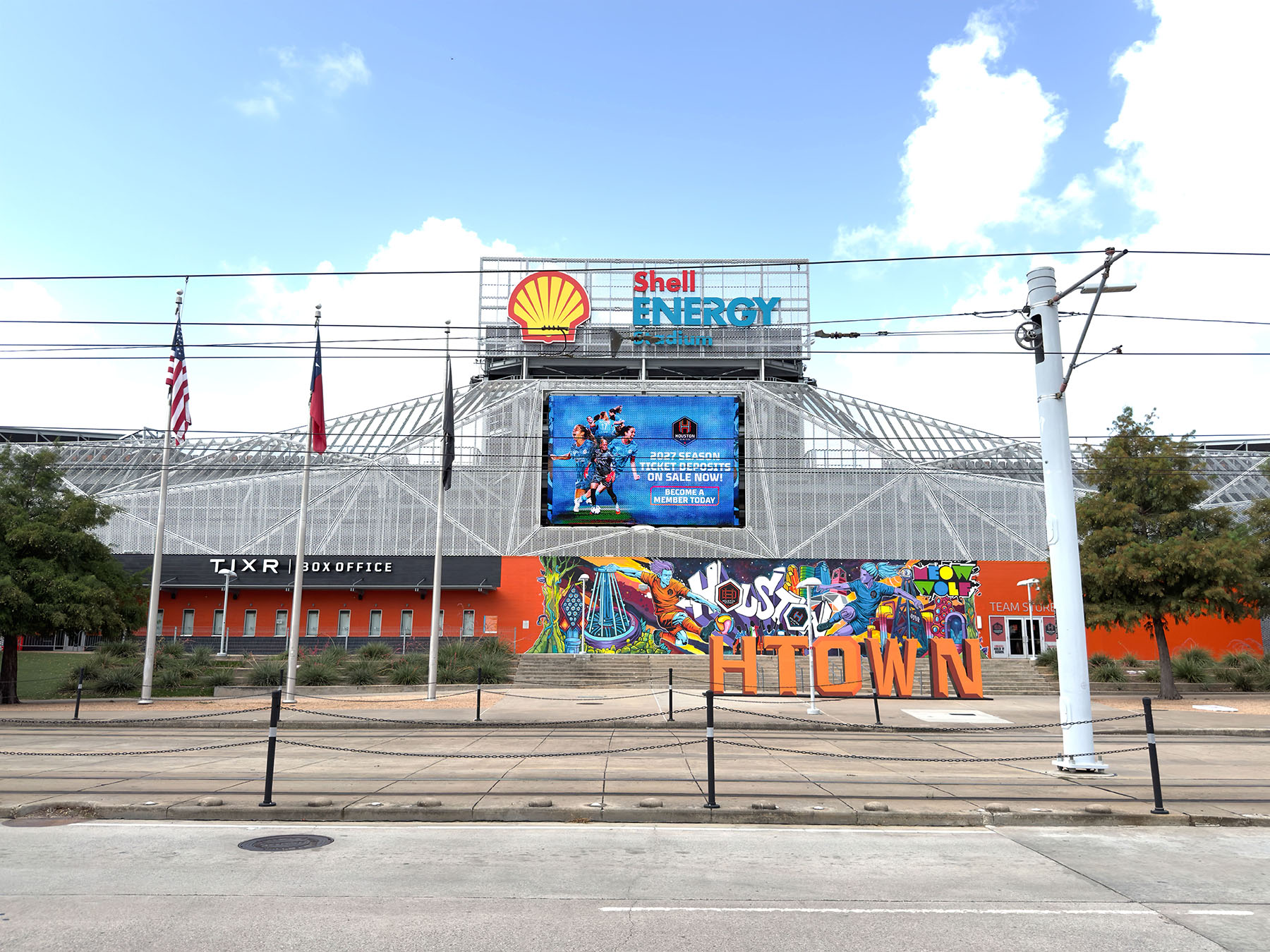
    In much of the world, soccer fandom is the permanent weather. In the United States it arrives in waves, and the 2026 FIFA World Cup was the biggest wave yet: 48 teams, 104 matches, 39 days, and a final in July that Spain took from Argentina with an extra-time winner. Houston was one of the host cities and it spent the summer at full voice. But this city’s soccer does not pack up when a tournament does. It runs every week, in front of four different sets of supporters, at Shell Energy Stadium, where since earlier this year it has been carried by a new L-Acoustics A Series loudspeaker system designed and installed by LD Systems, a Clair Global brand.

    Opened in 2012 and designed by Populous, the 20,656-seat ground was the first soccer-specific stadium in Major League Soccer built in a city’s downtown district. Four teams now share it: Houston Dynamo FC, twice MLS Cup champion and US Open Cup winner in 2018 and 2023; the Houston Dash of the National Women’s Soccer League, who took the 2020 NWSL Challenge Cup; the Texas Southern University Tigers college football team; and the Houston Gamblers of the United Football League.

    The building has been improving since the day it opened, starting with LEED Silver certification and, in January 2023, a decarbonization package bundled into the Shell Energy naming-rights deal: venue-wide LED lighting, rooftop solar, renewable electricity, and sub-metering that shows staff where the 4.2 million kilowatt hours a year actually go. The club wants to halve its Scope 1 and Scope 2 emissions by 2026 against a 2018 baseline. Scope 2 is purchased electricity, which means the PA counts alongside the floodlights.

    Higher Energy, Better Coverage, and a Good Neighbor Downtown
    The system it replaced dated to the 2012 opening and had been on the club’s list for years. The new system arrived inside a wider investment round; in October 2025, majority owner Ted Segal committed to a full overhaul of the stadium’s sound system, part of more than 30 million dollars put into the building since 2021. “They’ve wanted to do a new PA for quite a while,” says Matt Rhodes, LD Systems Sales Engineer. “There had been updates to dasher boards and video walls and things like that, but now audio was high on the list.”

    The brief was ambitious from the first conversation. The general manager wanted higher energy and better coverage than the outgoing vocal-reinforcement system could give him. “He basically told me, ‘I want to make sure that we get a noise complaint from the police from my neighbors,’” Rhodes recalls. “He was joking, of course, but it underscored their desire to bring greater impact to the fan experience.”

    Behind the joke was a real design target. Shell Energy Stadium sits in downtown Houston with East Downtown on its doorstep, so the brief was never simply more level, it was more level exactly where the fans are. That put intelligibility in the stands and control everywhere else on the same list—on the pitch, where the officials’ calls have to cut through, and past the walls, where the venue is a neighbor.

    LD Systems had two more boxes to tick, and both worked in the venue’s favor. The existing cabling infrastructure could carry the new system, which kept the budget down and kept new copper out of an occupied building. And management wanted the coverage without any major structural modification, which is precisely the kind of problem A Series is shaped for.

    Two Ends of the Bowl That A15i Had to Reach
    “The east and west bowl seats were fairly easy because they have these big overhangs, but getting good coverage on the north and south sides from a design standpoint was definitely a challenge,” Rhodes says. Neither end offers an overhang to fly from, the corner throws are long, and one end holds a standing supporters’ and band section that is loud in its own right and sits at an angle no single well-aimed array serves cleanly. “That’s always been a huge gap for them,” he says. Above the north seats, the main video display, roughly 34 feet high by 73 feet wide, takes much of the space an array would otherwise want.

    Using L-Acoustics Soundvision modeling software, LD Systems mounted enclosures to the scoreboard structure itself and fired additional A Series arrays from the southeast and southwest corners back toward it, closing the gap without adding steel. “That was a specific request from management, that we provide solid coverage there without adding any type of major structure modification,” Rhodes says. “And the A Series was exactly the right choice for that in terms of size, power, and coverage.”

    Anthony DiDonato, LD Systems Project Engineer, notes that A Series propagates plenty of upper-frequency energy while keeping it tightly directed. Each A15i uses Panflex for horizontal directivity control, while vertical coverage is fixed by the enclosure: 30 degrees for A15i Wide, 10 degrees for A15i Focus. “The vertical directionality of A Series is excellent, and Soundvision showed us exactly what was going to happen, and it just worked,” he says. “That let us keep the sound highly intelligible for the fans, but also keep it off the field where it can become a distraction for players and others on the sidelines. That’s crucial for hearing the officials’ calls in the PA system.”

    Ninety-Six A15i and 16 KS21i on Twelve Amplified Controllers
    L-Acoustics A Series won the job on the pairing that decides most of them, performance against price. “We could achieve everything they wanted with A Series, getting the performance that we were looking for at a price they were happy with,” Rhodes says.

    Main bowl coverage on the east and west sides of the stadium comes from 16 hangs of four A15i Wide, interspersed with eight pairs of down-firing KS21i subwoofers. The north seating area adds four smaller arrays of one A15i Focus over one A15i Wide above and around the video display, while the south end sports three arrays of four A15i Wide flown from a canopy that extends out over the central seats. The four corner seating areas are covered by arrays of two A15i Focus over one A15i Wide. In total, the system comprises 84 A15i Wide, 12 A15i Focus, and 16 KS21i, collectively driven by ten LA12X and two LA4X amplified controllers.

    Using only a dozen amplified controllers to cover the entire bowl, added to the reused cabling and an untouched roof structure, gives the stadium a full-scale PA upgrade that sits lightly on the energy budget it is working to shrink.

    Fans Heard It Before They Knew About It
    The venue often runs DJs before, during, and after matches, and the flown KS21i give that material both low-end impact and tonality. “The previous system was more of a vocal-reinforcement type of setup, and now it’s much more music-friendly,” DiDonato says.

    The clearest verdict came from people nobody had told. “We heard a ton of unsolicited comments about how much better the sound is from people that had no idea that there even was a new sound system in there. Fans, who are not technical people, said to us, ‘Wow, it sounds so much better this season,’” Rhodes relates. “To get that kind of feedback was really cool. It just makes us feel like, okay, this system truly has made a great, positive impact on the fan experience.”
  • 1920 Battle of Warsaw Museum Deploys HARMAN Professional Immersive Audio System

    1920 Battle of Warsaw Museum Deploys HARMAN Professional Immersive Audio System

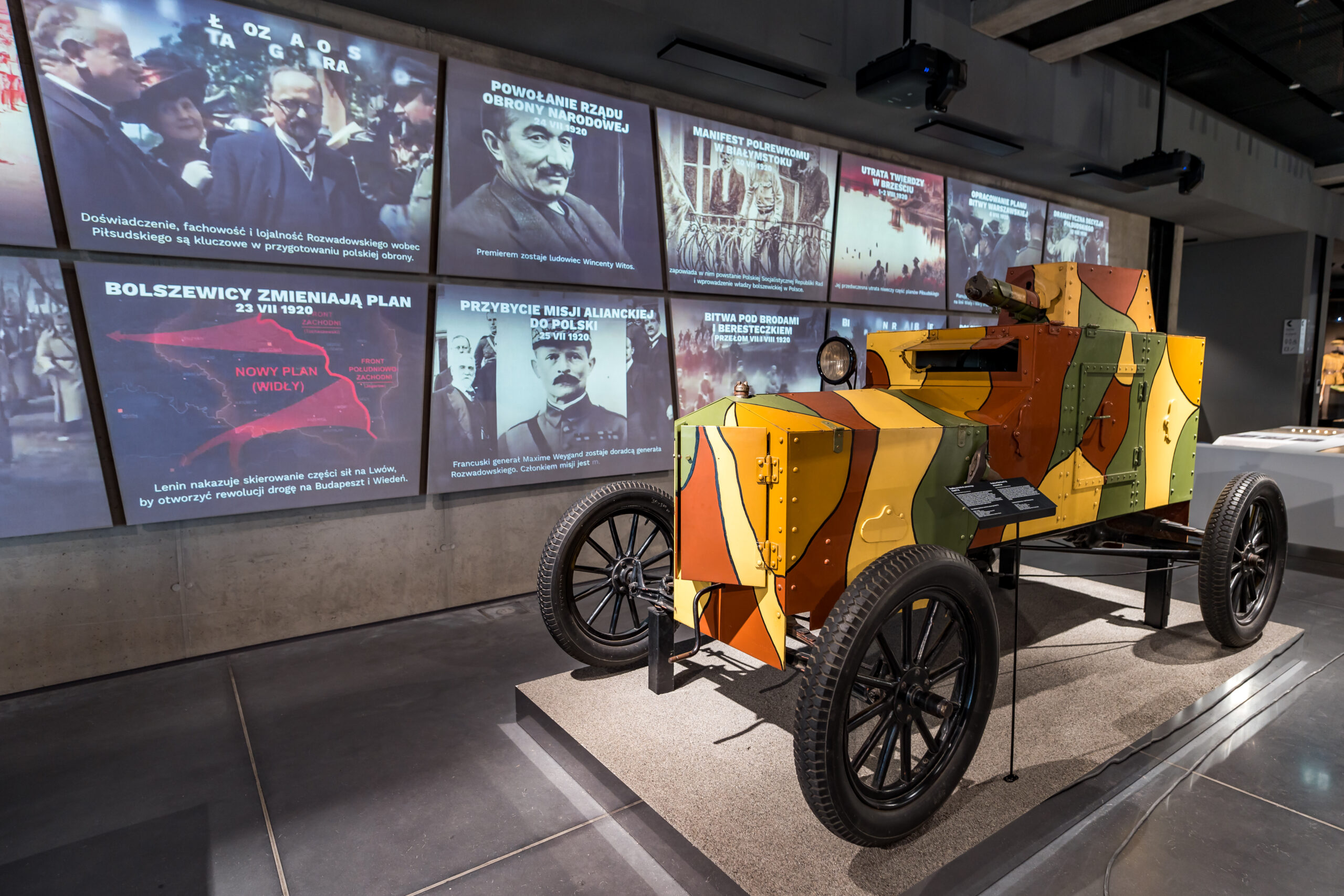
    The 1920 Battle of Warsaw Museum has completed a large-scale immersive AV installation designed to recreate the atmosphere of one of Poland’s defining historical conflicts. Located within the newly constructed Polish Army Museum pavilion, the system integrates a complete HARMAN Professional ecosystem—featuring FLUX::, JBL, Crown, BSS, Soundcraft, AKG and AMX—to support interactive exhibitions, multimedia storytelling and live cultural programming.

    At the core of the installation is FLUX:: SPAT Revolution, a spatial audio platform that shifts the experience from traditional playback to immersive storytelling. Selected early in the design phase, the system allowed the project team to develop and refine spatial sound environments well in advance of installation. With SPAT Revolution, the team was able to test, evaluate and optimize soundscapes remotely—streamlining onsite commissioning while maintaining a cohesive creative vision.

    “One of the key advantages of FLUX:: SPAT Revolution was the ability to complete most of the spatial design work before arriving on site,” said Mateusz Nawrocki of ESS Audio, the system integrator. “We collaborated closely with the composer, building and reviewing spatial mixes in advance using binaural previews. This approach not only saved significant time during installation but also ensured the final sound experience was already well defined and aligned before deployment.”

    The FLUX:: system also enables designers to position and move sound objects dynamically throughout the exhibition, recreating battlefield elements such as aircraft movement, cavalry charges, explosions and shifting troop positions. Rather than being constrained by fixed loudspeaker playback, the system provides the flexibility to shape how sound behaves within each space, helping overcome acoustic challenges while maintaining realism and clarity.

    FLUX:: SPAT Revolution also proved essential in addressing architectural challenges within the museum. In areas where the loudspeakers are predominantly installed in the ceilings, it allowed audio elements to move convincingly across the visitor space rather than appearing to originate from above, creating a more immersive and natural listening experience.

    “SPAT Revolution is very easy to integrate with video playback and other show-control systems, making it a practical tool for multimedia installations,” Nawrocki explained. “Besides creating realistic soundscapes, its high-quality reverbs and spatial processing let us change the acoustic feeling of a room. We can make a space sound larger, more intimate, or more atmospheric, depending on the artistic vision, without changing the physical installation.”

    Outside of the FLUX:: system, the museum entrance hall features two JBL CBT 1000 column loudspeakers, four JBL CBT 70J + 70JE-1 column speakers, ten JBL AC16 compact loudspeakers and four JBL Control SB2210 subwoofers arranged in two half-ring configurations. One ring incorporates CBT models for consistent, even coverage, while the second integrates AC16 loudspeakers divided across four themed rooms, supporting both dynamic and static audio scenes.

    In the main exhibition hall, the system incorporates 14 JBL Control HST loudspeakers, six JBL CBT 70J-1 column speakers and four JBL Control SB2210 subwoofers, delivering consistent sound as part of a programmed audio experience that runs independently within the exhibition environment. Supplementary JBL Control Series models, including Control 25-1, Control 60PS/T and Control 67P/T loudspeakers, provide localized reinforcement for specific exhibits, while Crown DSi amplifiers ensure stable and consistent amplification across all zones. System routing, tuning and distribution are managed through BSS BLU-101 and BLU-160 processors with Dante integration, enabling reliable performance across multiple exhibition areas.

    The installation also includes a multi-functional performance space equipped with a JBL SRX900 Series system, featuring 14 JBL SRX906 line arrays, and four JBL SRX915 subwoofers. Additional JBL 9300 Cinema Surround Series loudspeakers provide distributed coverage, supporting lectures, presentations and cultural programming. Si Series Soundcraft mixing consoles enable flexible live sound operation, while ten AKG microphones support speech and event use.

    System control and distribution are managed through AMX solutions, including NMX encoders and decoders, VARIA touch panels and TPControl integration, enabling centralized management of presets, routing and system operation across both exhibition and performance spaces.

    “In our exhibition, visitors can feel as if they are standing in the middle of a battlefield,” said Nawrocki. “This creates a much stronger emotional connection and helps them imagine the fear, tension, uncertainty, and determination that people experienced. Instead of simply observing the exhibition, they become part of it for a moment.”

    With the installation complete, the 1920 Battle of Warsaw Museum now offers a sound-driven interpretive experience that enhances historical understanding while supporting education, commemoration and cultural engagement. By combining immersive spatial audio with flexible system design, the integrated HARMAN Professional solution positions the museum as a contemporary destination for both remembrance and public interaction.

  • ReelWorks Denver Becomes the Second Venue in the Americas to Install L-Acoustics DJ

    ReelWorks Denver Becomes the Second Venue in the Americas to Install L-Acoustics DJ

    Housed in the historic 1940s Goldberg Brothers Tinners factory, which produced most of Hollywood’s metal film reels during the studio system’s Golden Age, ReelWorks Denver has spent more than two decades reinventing itself. Its owners bought the building in 2001 and ran it for years as a warehouse and event space before converting it, after the pandemic, into the independent, 2,000-capacity concert venue and event space it is today, at the heart of Denver’s vibrant River North (RiNo) Art District.

    The venue already billed itself as a fully immersive experience, with 360° 3D projection-mapped walls and intelligent lighting, but it was held back by a house sound system dating to 2007, adequate for corporate events, yet no match for the concerts its team wanted to host. To close that gap, ReelWorks brought in local integrator Brown Note Productions, and the result puts the venue at the leading edge of live electronic music: an L2D spatial loudspeaker system paired with L-Acoustics DJ, the first complete solution for turning ordinary stereo mixes into true, three-dimensional spatial audio, live. With it, ReelWorks becomes only the second venue in the Americas, after The Breakbeat in Chico, California, to make L-Acoustics DJ a permanent centerpiece, both installations delivered by Brown Note.

    “We had completely outgrown what that old room could do,” recalls ReelWorks Denver Director of Operations Basil Osman. “It was fine for corporate events, but the moment we set our sights on hosting real concerts, we knew we needed to be operating on a completely different level.”

    L-Acoustics DJ Builds Momentum in the Americas
    Introduced by L-Acoustics in 2025, L-Acoustics DJ is the first complete solution to transform standard stereo DJ mixes into a true spatial audio experience, live. At its core, the company’s proprietary Source Separate technology uses low-latency machine learning to split any stereo track into discrete stems—its beats, basslines, melodies, and vocals—and routes them straight into a spatial mix engine, so a DJ can position and move each element anywhere in the room in real time. Unlike other stem separators, it does so without disrupting a DJ’s existing gear or workflow.

    For Brown Note, ReelWorks marked a second L-Acoustics DJ project, following the company’s installation at The Breakbeat in Chico, California, the first permanent L-Acoustics DJ deployment in the Americas.

    For Osman, it only took a single demo. “I was very curious to check out L-Acoustics DJ, and next thing I knew, I was on a flight to California to experience the system for myself,” he recalls. “When I heard it, I thought it was absolutely groundbreaking tech. All it took was one listen. The L-ISA Processor part of it was just mind-blowing, and I couldn’t say no. It was fantastic.”

    L2D and Soundvision Shape a Full-Room Spatial Design
    With the decision made, Brown Note turned to L-Acoustics Soundvision acoustic simulation software to model a system that would carry that immersive experience across the entire room. The design centers on three L2D arrays flown left-center-right above the main stage. The L Series’ compact format preserves sightlines, while the dedicated center array gives DJs a discrete channel to anchor vocals and pinpoint key elements, and L2D’s cardioid directivity keeps energy off the DJ booth so the artist hears exactly what they are playing. Low-end reinforcement comes from eight KS28 subwoofers in a cardioid configuration flanking the stage, for tight, even bass across the floor.

    Surround coverage then wraps the room for full immersion. Two mid-room arrays of two A15i Focus over one A15i Wide flank the dance floor, complemented by two rear-room arrays of three A15i Focus over one A15i Wide, with two additional arrays of three A15i Wide handling VIP and entry side-fills. The rear balcony carries its own left and right hangs of an A15i Focus over an A15i Wide and has been pre-wired to extend the room’s surround imaging with additional L-Acoustics A Series and/or X Series enclosures, a deliberate move to future-proof the venue as its programming grows.

    Up front, the DJ performance space adds its own immersive layer, with two A15 Focus over two KS21 subs per side—dubbed “Texas headphones”—and two X12 for surround foldback.

    Amplification and processing run on L-Acoustics LA7.16i and LA12X amplified controllers, with the L-Acoustics DJ ecosystem driven by the L-ISA Processor II core and managed across the network with LA Network Manager.

    L2D and A Series Deliver a Seamless Immersive Field
    “L2D was essential to this system,” says Matt Bauer, Senior Integration Project Manager at Brown Note Productions. “The compact arrays preserved sightlines, the LCR arrangement drives the immersive imaging, and the cardioid behavior keeps energy off the DJ booth so the artist can hear exactly what they are doing.” Pairing L2D’s output with the surrounds was just as deliberate. “L2D has plenty of horsepower, so the surround system has to keep up, and A15 made perfect sense,” he adds. “It has the full-range performance and output to match L Series, and with Panflex and the install versions, we could set five degrees between enclosures to focus energy into the far throw.”

    L-Acoustics DJ Brings ReelWorks Into the Future
    “ReelWorks Denver is completely 360° projection mapped, and we have a state-of-the-art VJ rig, so while we run visuals on the walls, we can now match the audio and move it around the room, creating a fully immersive experience for every concertgoer who walks in,” says Osman. “I believe we have the most advanced sound system in the region with L-Acoustics DJ and L2D. It’s aurally the perfect fit with what’s happening here visually, and I just love this system. It’s so clear and crisp; it hits you in all the right places.”

    For all the science and engineering under the hood, the payoff for artists is immediacy. “With L-Acoustics DJ, we just let the customer jump right into it,” says Bauer. “It drops straight into their existing workflow, so we can hand it to a DJ, tell them to play around with it, and they are off and running.”

    What that ease unlocks, he says, is the scale of the experience. “ReelWorks has already wowed roomfuls of people who had never experienced electronic music this way, and we are just now on the precipice of creating some truly magical experiences that will make lifetime memories. With L-Acoustics, we are setting the standard for electronic music and clubs, and it has been a joy making this dream come true for our customer.”

  • Premium Audio, Invisible Design: How SoundTube Elevated ICONIX Fitness in Nashville

    Premium Audio, Invisible Design: How SoundTube Elevated ICONIX Fitness in Nashville

    Building a Fitness Experience Worthy of Music City

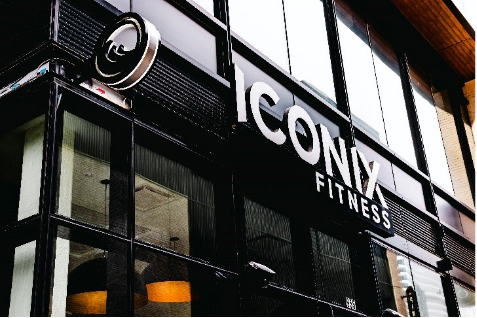
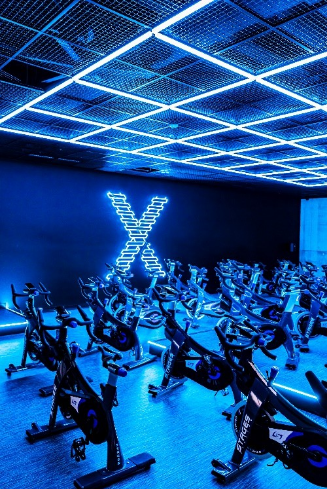
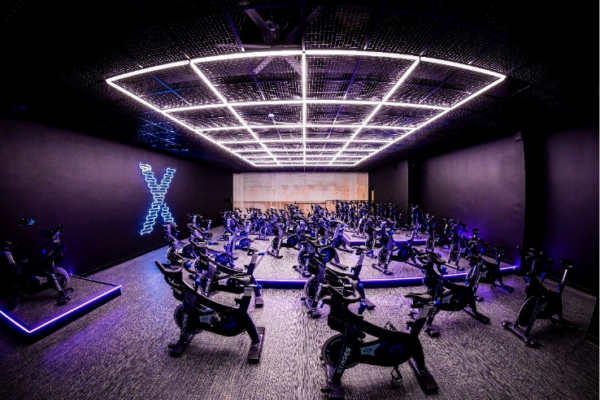
    When ICONIX Fitness set out to create its flagship Nashville location, the goal was much more ambitious than building another fitness center. Located in the heart of Music City, the 25,000-square-foot facility was designed to deliver a premium member experience where architecture, lighting, technology and music work together seamlessly.

    For JAG Warner Productions, the challenge was to create an audio system that complemented the building’s modern aesthetic while delivering the energy and clarity expected in a world-class fitness environment.

    “The gym was being built in Music City and had to reflect that accordingly,” said Zac Bender of JAG Warner Productions. “The speakers needed to disappear into the architecture while delivering the kind of sound quality people expect in a premium fitness environment.”

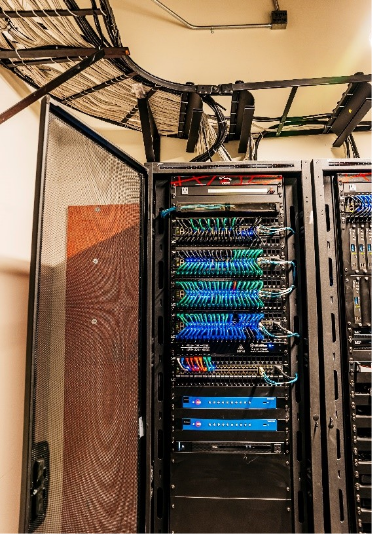
    The completed installation features 154 SoundTube loudspeakers deployed across 14 independently controlled audio zones, creating consistent, high-quality music and paging throughout the facility while allowing staff to route virtually any source to any space.

    Today, the audio system quietly enhances every workout while providing an immersive listening experience without ever drawing attention to itself.

    The Challenge

    Premium fitness facilities present unique acoustic and architectural challenges.

    Unlike entertainment venues where loudspeakers often become part of the visual experience, ICONIX Fitness required an audio system that blended into the architecture while delivering exceptional music reproduction and crystal-clear speech intelligibility.

    The building’s nearly 360 degrees of exterior glass, combined with white treated ceilings and open workout areas, created a highly reflective environment where excessive playback levels could quickly reduce intelligibility and increase listener fatigue.

    At the same time, the client established several non-negotiable objectives. The system needed to deliver consistent, high-quality music throughout the facility while maintaining excellent speech intelligibility for announcements and instructor communication. Just as important, the loudspeakers had to preserve the building’s clean architectural aesthetic, provide the flexibility to combine or separate workout spaces through independent audio zones, and deliver long-term reliability with minimal maintenance requirements.

    Designing for Coverage Instead of Volume

    Rather than relying on fewer high-output loudspeakers, JAG Warner Productions designed a densely distributed audio system that positioned each sound source closer to listeners.

    This approach allowed the system to operate at lower overall volume while producing more uniform coverage throughout the facility. By reducing the distance between each loudspeaker and its listeners, reflections from the building’s extensive glass surfaces were minimized, resulting in improved intelligibility, lower ambient noise and a more comfortable listening experience.

    “It might seem like a high speaker count,” Bender explained, “but every single one played an important role.”

    “Projects like ICONIX Fitness demonstrate the value of designing the system before a single loudspeaker is installed,” said Sarah Chauvin, CTS, Director of Sales Engineering & Training at SoundTube. “Our complementary design services provides direct and relative SPL modeling that helps integrators select the right loudspeaker models, determine optimal placement and achieve consistent coverage throughout the space. By validating the design in advance, we remove guesswork and help ensure the finished system performs as intended.”

    The final design strategically placed speakers throughout the building, ensuring balanced music coverage in every workout area while giving staff complete flexibility to combine or separate spaces as programming changes throughout the day.

    The result is an audio experience that feels effortless. Members simply hear great sound everywhere they go.

    Why SoundTube

    JAG Warner Productions has specified SoundTube products since 2020 because of their combination of acoustic performance, installation efficiency and long-term reliability.

    For ICONIX Fitness, SoundTube delivered a combination of performance, aesthetics and support that aligned perfectly with the project’s objectives. Patented BroadBeam® technology provided wide, uniform coverage with exceptional intelligibility for both music and spoken announcements, while the architecturally friendly loudspeaker designs blended seamlessly into the facility’s modern aesthetic. Installer-focused mounting hardware, dependable lead times and responsive technical support helped keep the project on schedule, and SoundTube’s comprehensive portfolio of pendant, ceiling, subwoofer and Dante®-enabled loudspeakers gave JAG Warner Productions the flexibility to specify the ideal solution for every space.

    In addition, SoundTube Design Services provided access to application engineering, loudspeaker layout assistance and product selection support, helping optimize system performance from design through installation.

    “Between the support, lead times, installation ease, product quality and acoustical performance, SoundTube continues to be the right product for quality dispersed invisible audio sources,” Bender said.

    System Design & Product Selection

    Rather than designing around the fewest possible loudspeakers, JAG Warner Productions engineered the system around coverage, intelligibility and aesthetics. Each SoundTube model was selected to meet the acoustic and architectural requirements of its specific space, creating a seamless listening experience throughout the 25,000-square-foot facility.

    RS800i Open-Ceiling Pendant Speakers

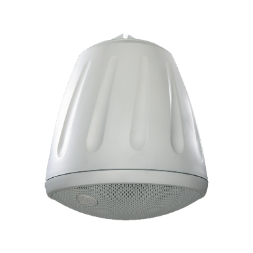
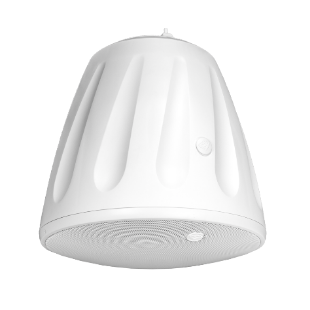
    The RS800i is an 8-inch coaxial pendant loudspeaker featuring SoundTube’s patented BroadBeam® Ring high-frequency technology, which provides exceptionally wide dispersion and remarkably consistent coverage. Unlike conventional pendant speakers that require tighter spacing, BroadBeam technology enables more uniform audio throughout open-ceiling environments while maintaining excellent intelligibility and musical detail.

    Installed throughout ICONIX Fitness’ primary workout spaces, the RS800i allowed JAG Warner Productions to position sound closer to listeners, reducing overall playback levels while creating a more natural listening experience. Its contemporary pendant design blends seamlessly with exposed ceilings and modern architectural elements, making it an ideal solution for premium commercial environments.

    Why It Was Selected: The RS800i was selected for its ability to deliver wide, uniform coverage using SoundTube’s patented BroadBeam® technology, allowing loudspeakers to be positioned closer to listeners for improved clarity and a more natural listening experience. Its clean pendant design blended seamlessly into the open-ceiling architecture while providing the excellent music reproduction and speech intelligibility required throughout the facility.

    RS1201 Open-Ceiling Subwoofers


    The RS1201 is a 12-inch open-ceiling subwoofer designed specifically for distributed commercial audio systems. It features SoundTube’s exclusive SuperT™ Low-Loss Transformer, allowing the subwoofer to operate efficiently on 70V/100V constant-voltage systems while preserving the low-frequency performance typically associated with low-impedance designs.

    For designers and integrators, SuperT technology eliminates the need for separate low-impedance amplifier channels or complex system architecture. Instead, impactful bass can be distributed throughout the facility using the same distributed audio infrastructure, reducing installation complexity while delivering the energy expected in today’s premium fitness environments.

    Strategically deployed throughout the workout areas, the RS1201 provides powerful, controlled bass reinforcement that enhances the member experience without visually dominating the exposed ceiling.

    Why It Was Selected: The RS1201 was chosen because its SuperT™ Low-Loss Transformer delivers impressive low-frequency performance on a distributed 70V/100V system without requiring separate low-impedance amplification. This simplified the system design while providing the powerful, controlled bass expected in a premium fitness environment, all within an architectural form factor that virtually disappears into the exposed ceiling.

    IPD-CM82-BGM Dante® In-Ceiling Speakers

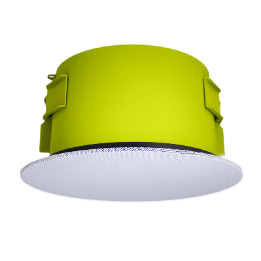
    Installed throughout offices, wellness areas and locker rooms, the IPD-CM82-BGM combines an 8-inch coaxial in-ceiling loudspeaker with integrated Dante® network audio, creating a complete endpoint for distributed audio systems.

    By incorporating Dante directly into the loudspeaker, the IPD-CM82-BGM reduces infrastructure requirements while providing centralized routing, simplified commissioning and exceptional flexibility. Staff can easily route virtually any audio source to any of the facility’s 14 independently controlled zones.

    Why It Was Selected: The IPD-CM82-BGM simplified the system architecture by combining premium loudspeaker performance with integrated Dante® networking. Native network audio supported the project’s requirement for flexible routing, allowing virtually any source to be assigned to any of the facility’s 14 independently controlled audio zones while reducing infrastructure and simplifying installation.

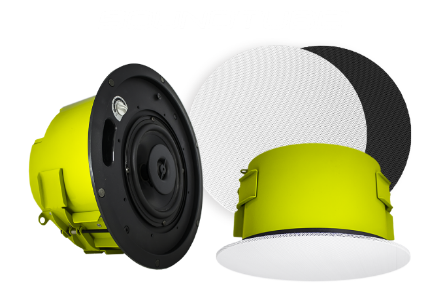
    CM62 BAA/TAA Compliant Ceiling Speakers


    Installed in the facility’s saunas and shower areas, the CM62 is a 6.5-inch weather-resistant coaxial ceiling speaker engineered for high-humidity commercial environments.

    Manufactured in Lenexa, Kansas, the CM62 is BAA and TAA compliant, making it an excellent solution for government, military and other projects requiring U.S.-manufactured products. It features a polypropylene woofer with rubber surround, a 1-inch silk dome tweeter and SoundTube’s patented BroadBeam® Ring technology, delivering excellent midrange clarity and smooth off-axis performance.

    A magnetic steel grille provides a refined appearance while simplifying installation and maintenance. The speaker also incorporates an easy-access multi-tap transformer, transformer bypass capability and a tuned bass port for enhanced musicality.

    Installation Efficiency

    SoundTube’s installer-focused design helped streamline one of the project’s largest phases.

    Rigging hardware was shipped on top of each loudspeaker carton, allowing the JAG Warner Productions team to pre-rig every loudspeaker before construction reached its final stages. Approximately one week was spent preparing the suspension hardware before the loudspeakers were safely repacked and stored until installation.

    “The pre-rig process made the final installation seamless. We spent about a week pre-rigging everything, then returned months later and mounted the entire system in less than three days.” 
    — Zac Bender, JAG Warner Productions

    Combined with dependable lead times and responsive technical support, the installer-friendly design helped keep the project on schedule from start to finish.

    Complete System

    SoundTube

    • 74 × RS800i Pendant Speakers
    • 19 × RS1201 Open-Ceiling Subwoofers
    • 56 × IPD-CM82-BGM Dante® In-Ceiling Speakers
    • 5 × CM62 BAA/TAA Compliant Ceiling Speakers

    Electronics

    • Q-SYS Server Core X-20R
    • Powersoft Unica Series Amplifiers
    • Attero Tech I/O Interfaces
    • Shure ANX Series RF Package
    • Aurora Video Distribution

    Additional Loudspeakers

    • Void Acoustics Airten V3
    • Void Acoustics Venu 212 V2
    • Void Tri Motion

    SoundTube Simple

    Beyond innovative loudspeaker technology, SoundTube partners with consultants, designers and integrators throughout every stage of a project.

  • Are Amplifiers Dead? What PoE Ceiling Speakers Change

    Are Amplifiers Dead? What PoE Ceiling Speakers Change

    Audio-Technica added a Dante-enabled version to its ATSP-30 ceiling speaker line this month, according to InAVate. The new ATSP-30DP joins the existing ATSP-30LP model and targets small and midsize meeting rooms. Both models mount flush in the ceiling and ship in pairs, one active and one passive. Audio-Technica built the line around its ATDM SmartMixer platform. A pair of speakers can join a full networked audio system over standard Cat5e cable. Onboard DSP handles EQ, delay, and presets. Integrators can plan a room first with Audio-Technica’s Speaker Layout Tool or EASE modeling software.

    The announcement raised a bigger question on a recent episode of AVWeek. A ceiling speaker can now run over standard network cable and pull power from the same switch. Does a separate amplifier still earn its place in the rack? Host Patrick Norton put it directly.

    “Are amplifiers dead if we can run power over Ethernet speakers anywhere?” Norton asked.

    Listen to the full episode of AVWeek 778 – Click Here

    The case for going all-in on the network

    George Tucker, an event staging technical specialist at Corporate Audiovisual Services, said the answer depends entirely on the room. “It’s Dante controlled, so you have complete access to these units,” Tucker said. He pointed to the control that access gives an integrator over every speaker on the network. A networked speaker reports its own status, so a tech can catch a problem without walking the building.

    Tucker described the payoff in practical terms. A tech watching the system remotely can see that a speaker is offline. The dashboard can also show that someone flagged the volume as too loud. That kind of metadata turns a guessing game into a quick fix.

    Tucker said that visibility would have saved him time earlier in his career. He was working at Crestron and a couple of integration firms then. “It would make diagnosing a problem remotely so much easier,” he said. Norton added that the wiring gets simpler too, since fewer dedicated speaker runs need pulling through a ceiling.

    BC Hatchett, director of classroom technology at Vanderbilt University, agreed the appeal is real. “It goes back to what you’re going to use it for,” he said. In a hard-to-reach spot, a networked speaker can skip an expensive new cable run altogether. That works as long as the existing network already reaches that spot.

    Where amplifiers still win

    However, both panelists drew a hard line at scale. Tucker uses self-powered speakers for smaller events without hesitation. Large crowds change the math. Graduations and big ballrooms need an amplifier to drive a full speaker array across the room. Built-in power alone can’t cover that kind of distance or fill that much space with even coverage.

    Fidelity raises a second limit. Tucker said a standalone amplifier, paired with a separate EQ, gives a cleaner signal chain. It’s also more controllable than an all-in-one unit. Serious listeners notice the difference most. Tucker put his own loyalty on the line with a joke about it. “You’ll take my McIntosh from me with my cold, dead hands,” he said, referring to the well-known amplifier brand.

    Hatchett flagged a practical constraint too. Every network switch has a limited PoE power budget. That budget gets split across every connected device on the switch. A speaker that needs real output can outrun what the switch has left to give it. Cameras, access points, and other gear are often already drawing power too. Hatchett checks that math before every install, not after.

    Running a new low-voltage drop isn’t free either. Hatchett estimated the cost at $500 to $600 per drop, once his team brings in licensed installers. Weighed against that, a PoE speaker on existing cable can look far cheaper. That holds true right up until the switch runs out of power to give it.

    A tool, not a replacement

    Neither panelist called amplifiers obsolete. Hatchett summed up the panel’s consensus. “Are amplifiers dead? No,” he said. “But it is a cool screwdriver to keep in the toolbox.”

    That framing fits the ATSP-30DP itself. Audio-Technica built the speaker for small and midsize rooms, not stadiums or ballrooms. It solves a real installation headache in those spaces. It doesn’t pretend to replace what an amplifier does at scale.

    The broader shift toward networked audio, through Dante and similar protocols, has already reshaped plenty of wiring decisions. Choices that once lived on the truck now live on the switch. This speaker is one more data point in that trend, not a verdict against amplifiers.

    Buyers weighing PoE speakers against a traditional amp setup should start with the room, not the spec sheet. A huddle room and a graduation stage have almost nothing in common, and the right answer changes with each one.

  • L-Acoustics K2 Brings Consistent Clarity to Monte de Dios, the Caribbean’s Largest Church

    L-Acoustics K2 Brings Consistent Clarity to Monte de Dios, the Caribbean’s Largest Church

    When Ministerio Internacional Monte de Dios opened the doors of its new home in Santo Domingo on July 17, 2026, it did so as the largest Christian church in the Caribbean. More than a decade in the making, the new worship space rises from a 45,000-square-meter campus in Santo Domingo Norte, its semicircular auditorium built to seat nearly 8,000 worshipers around a central stage. Led by Pastors Dr. Miguel and Montserrat Bogaert, the ministry had steadily outgrown one home after another, and its leaders were determined that the new building be matched by sound worthy of its scale: every seat, from the front row to the far end of the arc, had to receive the same clear speech and the same full-range music.

    That was a demanding brief for a room of this size and shape. Church management set a benchmark of no more than 3 dB of level variation between any two seats in the house, an exacting target for even coverage across a nearly 180-degree audience. Speech intelligibility was the first priority, but the music had to carry equal weight. “Monte de Dios has a very dynamic service. The band stays on stage the whole time, and there is a lot of energy, not necessarily loud, but very dynamic,” says Jonathan Del Villar, CTO and Managing Partner at Wholestage, an L-Acoustics Certified Provider Distributor (CPd) for the Dominican Republic. “The low end is an especially important element. They wanted their members and visitors to feel the band and the drums.”

    To reach that standard, the choice of L-Acoustics came naturally; Miguel Bogaert Jr., son of the founding pastor and closely involved in the church’s technology decisions, is a longtime follower of the brand. “The church intentionally wanted to create a worship space that provided a high-fidelity experience,” says Del Villar. Wholestage designed the system and brought in locally-based integrator SoundVideoLight (SVL), which has 15 years of audio-visual experience in the region, to handle the installation alongside the church’s lighting, rigging, and show-control infrastructure.

    Church leadership “really did its homework,” Del Villar notes, studying how comparable congregations across the region had solved the same problem, among them Pastor Carlos Enrique “Cash” Luna’s 12,000-seat Casa de Dios in Guatemala City. “Sound is one of the most important elements of the worship experience, and the pastors were aware of that from the start,” he says. “Their standards were high because they are in tune with what other successful churches around the region are doing.”

    Designing a Church Sound System around K2 with Soundvision
    With the brief set, Wholestage designed the church sound system around L-Acoustics K2, modeling coverage in L-Acoustics Soundvision to confirm even level and intelligibility across the full arc before a single enclosure was flown. L-Acoustics supported the design at every stage.

    “We had strong support from L-Acoustics throughout the entire project. Josh Maichele, Global Application Lead for House of Worship, was heavily involved, especially during the design stage,” Del Villar says. It was Maichele who proposed a flown end-fire and cardioid configuration for the KS28 subwoofers. “It is an almost 180-degree seating area, so this was a very effective way to ensure there were no low-end cancellations anywhere in the auditorium,” he explains.

    Final calibration was carried out with L-Acoustics M1 and P1 against the Soundvision predictions, with L-Acoustics Application Engineer Alex Soto on-site alongside the Wholestage and SVL teams, the latter being led by SVL Operations and Project Manager Pedro Abreu.

    The main system comprises 48 K2 flown as four arrays of 12, paired with a central cluster of 16 KS28 subwoofers in two hangs of eight, set in the combined end-fire and cardioid arrangement. Eight X8 provide front-fill and hangs of one A15i Focus over two A15i Wide per side deliver side-fill, while two X12, one per side, serve as delays. Onstage, four X15 HiQ act as monitors. The K2 mains are granularly driven by 192 channels of LA7.16i amplified controller power, for paramount consistency over the audience, and the KS28 subwoofers are powered by a dozen LA12X amplified controllers. Del Villar also specified three DiGiCo Quantum338 consoles for front-of-house, monitor, and broadcast mixes.

    K2 Holds Every Seat to Within 3 dB
    The result is a room where the 3 dB target holds from the first row to the last, and where the low end is felt as clearly as it is heard. “They wanted their members and visitors to feel the band, the drums, and with this system, they really do,” Del Villar says. On its opening weekend, an auditorium of worshipers, joined by Dominican President Luis Abinader, heard both the music and the message land with the same clarity in every seat. “L-Acoustics has become the standard for houses of worship because it lets you hear the truth,” Del Villar adds.

  • Louisiana Performance Venue Upgrades to Crest Audio Versarray Pro System

    Louisiana Performance Venue Upgrades to Crest Audio Versarray Pro System

    Located in the heart of Lafourche Parish, the Warren J. Harang Jr. Municipal Auditorium is one of southern Louisiana’s premier live entertainment venues. With seating for more than 4,500 guests when configured for floor seating, the venue regularly welcomes concerts, cultural events, graduations and community gatherings, placing significant demands on its audio infrastructure.

    For large community venues that host such a broad range of events and performances, sound reinforcement must deliver consistent performance regardless of what’s happening on stage. That was the challenge facing the Municipal Auditorium in Thibodaux, Louisiana, when it set out to replace its long-serving first-generation Crest Audio Versarray system with a modern solution capable of meeting today’s production expectations.

    Having relied on Crest Audio’s original Versarray system for many years, the venue chose to continue its partnership with the brand by investing in the latest generation Versarray Pro platform.

    The project began more than eighteen months before installation when Hoffman Music was approached to design a replacement system. While the project timeline was extended as the venue prioritised a significant upgrade to its air conditioning infrastructure, planning continued to ensure the new audio system would be ready once work could begin. Working alongside Hacksaw Productions and HellFire Rigging, the decision was made to remain with a Crest Audio system.

    James ‘Hacksaw’ Dugas, owner of Hacksaw Productions, commented: “Here at Hacksaw Productions, Crest Audio sound reinforcement is well known to us and we have experienced it on tour. Their new Versarray Pro product line is so versatile and easy to work with that it makes perfect sense to utilize it in a venue such as the Municipal Auditorium. It’s just so versatile – from speech and community gatherings to full blown concerts it just sounds great.”

    The resulting design centered around 20 Crest Audio Versarray Pro 112 line array modules, complemented by six suspended flying Versarray Pro 215 subwoofers and two floor-mounted Versarray Pro 218 subwoofers to deliver exceptional low-frequency performance throughout the auditorium. The system was carefully engineered to provide powerful, even coverage across the entire audience area while offering the headroom required for today’s demanding touring productions.

    Before shipment, every loudspeaker underwent detailed inspection, programming and testing by the Crest Audio engineering team, ensuring the system would perform exactly as designed once installed.

    The project was a collaborative effort involving multiple departments across Crest Audio. From engineering and quality assurance through to logistics and warehouse operations, every stage of the project was coordinated to deliver one of the most versatile Versarray Pro installations completed to date.

    “This installation has been a true team effort,” explained Scott Hoffmann, from Hoffman Music. “From inspecting and programming every cabinet before it left the factory to coordinating logistics and supporting the installation, everyone played an important role in making this project a success.”

    Beyond delivering dramatically increased output and coverage, the installation also represents an important milestone for Crest Audio. Typically, the Versarray line has proved popular with live event, stadium and concert applications. To see and hear this latest deployment demonstrates the scalability of the platform for major performance venues while reinforcing the confidence that existing Versarray customers continue to place in the brand’s next-generation technology.

    By combining proven line array performance with modern system design, the new installation ensures Warren J. Harang Jr. Municipal Auditorium is equipped to support the next generation of concerts, touring productions and community events with powerful, consistent audio for every seat in the house.

    Chris Goodwin from Crest Audio said: “We at Crest Audio were honored to work with Hoffman Music, Hacksaw Productions, HellFire LLC riggers and the great city of Thibodaux, La. in designing and providing the Versarray Pro system for the Warren J. Harang Auditorium.”

    Reflecting on the initial discussions surrounding the project’s potential, he added: “I remember when Scott Hoffmann first approached me about this project, he said “They want it loud but clear, they want power but they also want control, can we do this?” My reply: “We can build a system that will knock a hole through a brick wall for them and will drive like a Porsche 911”. While working on this system I often referred to it as ‘A Big Beautiful Beast’. Well, the Big Beautiful Beast has been awoken in Thibodaux!”

    Final word goes to Kevin Clement, Mayor of Thibodaux, Louisiana, who spoke of his delight on hearing the new project up and running in the communal hub of his town: “This installation has completely transformed the auditorium, providing exceptional sound quality with incredible clarity for every event. Whether it is a concert, rodeo, Mardi Gras event, graduation, community function, or a special performance, our visitors will immediately notice the difference. This investment ensures that the Harang Auditorium continues to be a premier venue for our community and the region. We are thrilled to partner with Crest Audio and thank them sincerely for their expertise, attention to detail and professionalism.”

  • Audio Feed Delivers Eight Stages of Funktion-One Sound at Gottwood Festival

    Audio Feed Delivers Eight Stages of Funktion-One Sound at Gottwood Festival

    Audio Feed supplied eight stages of Funktion-One sound for the latest edition of Gottwood Festival. Described as a mystical party hidden in the woods, the four-day event brings together a programme of house, techno, minimal and disco with a close-knit crowd and a charming location. Set in the grounds of Carreglwyd, a privately owned estate on Anglesey, it is beautiful, remote and a place where sound is fundamental to the experience.

    For the Bournemouth-based audio specialist, led by Oz Jefferies, Gottwood has become a long-running and technically demanding project. Audio Feed first supplied the festival’s Funktion-One systems in 2019 and has returned every year since, developing a close working relationship with the organising team.

    “It’s been a journey for sure,” said Jefferies. “They’re a fantastic client and we’ve built a great relationship with them. There are only a handful of festivals that put the correct amount of emphasis on sound and Gottwood is definitely one of them.”

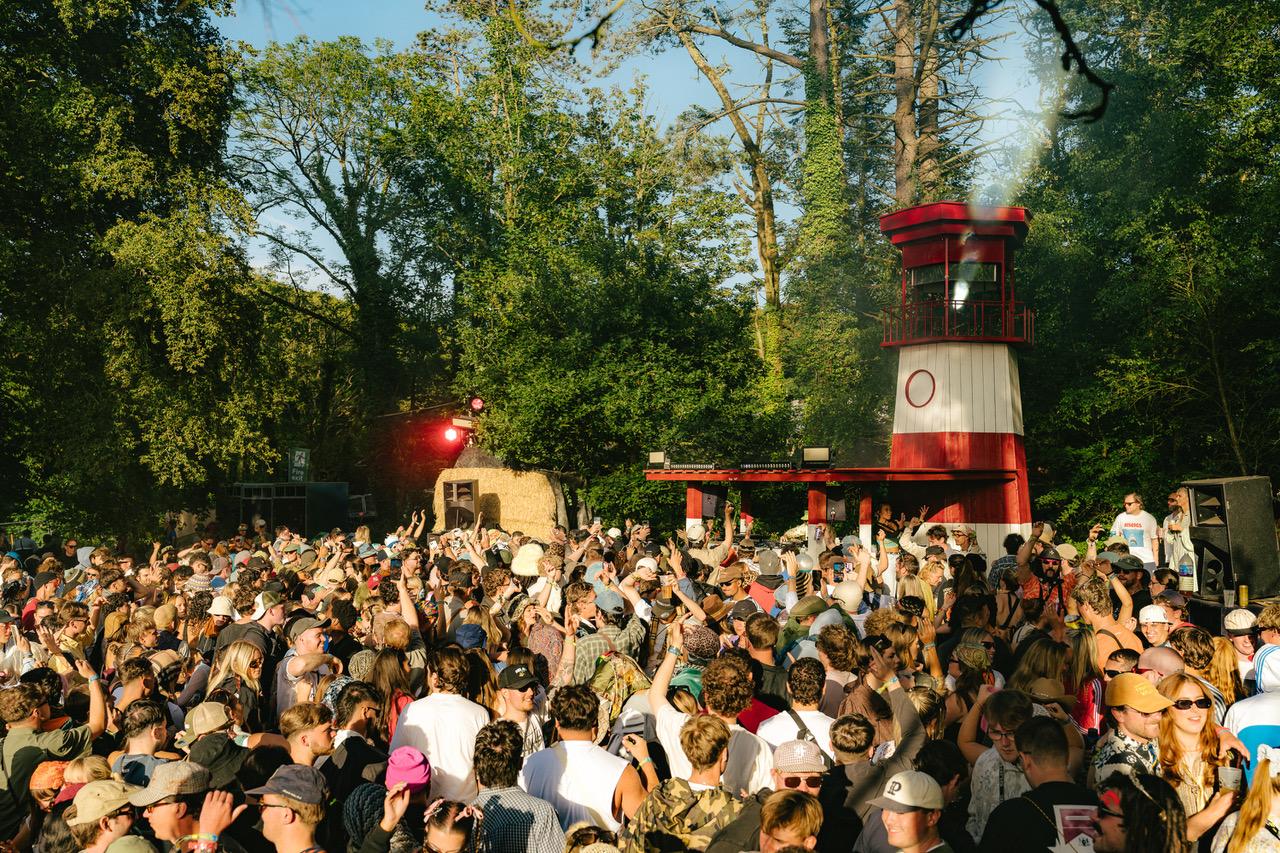
    Audio Feed supplied Funktion-One systems for Tree House, The Barn, Boxford, Walled Garden, Ricky’s Disco, Wellness, Lighthouse and The Curve. The deployment included Evolution X, Evolution 2, F-Series, Bass Reflex and infrabass systems, with each stage designed to deliver a deeply engaging dancefloor experience while controlling offsite noise.

    Between them, the eight Funktion-One stages demonstrated the depth of Audio Feed’s inventory and the versatility required to deliver a multi-stage festival under strict noise restrictions. The 2026 event introduced an expanded operating format, with a 24-hour licence allowing music to run for an extended period across the weekend. The festival opened on Thursday evening, then again from 11am on Friday until 3am on Monday morning. Digby Neill, Co-Founder of Gottwood, said: “We went into this year’s festival with full confidence in the team around us – especially Oz and Audio Feed. They understand the site, they understand the restrictions, and they know how to get the best out of the Funktion-One systems.”

    A historical noise complaint and the proximity of nearby residences mean there’s added pressure to getting the sound right. “After 11pm, we need to measure no higher than 45dB at the closest residences which are around 600 metres away while ensuring the level is good in the audience areas. That has meant a lot of work with the local authorities and Audio Feed over the years, experimenting with stage positions, orientations and speaker setups.”

    The scale of the operation was considerable. According to Jefferies, the festival required around 92 pieces of DJ equipment, alongside loudspeaker systems, control, amplification and crew to keep multiple stages running around the clock. Audio Feed had just 36 hours to install the systems before running them continuously across the weekend.

    “It’s a challenging environment,” said Jefferies. “You’re installing all of the stages in a day and a half, running around the clock for three days then packing it all down afterwards. It’s important to have a supportive, collaborative relationship with everyone involved and we have that at Gottwood. There’s a great working relationship and that’s definitely something we love about it.”

    Audio Feed’s response to the strict noise restrictions has been to use four-point Funktion-One systems wherever appropriate, creating contained sound fields that reduce the distance between audiences and loudspeakers, lowering the overall level required. “We’ve been quite successful with four-points over the years,” explained Jefferies. “They work and people love them from an immersive point of view; the surround-sound effect.”

    Neill agreed: “The four-point configurations work really well for us. They allow us to focus the energy where the crowd is and control offsite noise much more effectively.”

    For Jefferies, the success of a four-point system depends on careful measurement and time alignment. That process becomes more complex on a festival site, where system positions need to work with the variables of the environment. “It’s challenging when you’re in a field, you’ve got trees, bars, front-of-house booths, marquee poles and things like that in the way,” said Jefferies. “It does take quite a long time and it can be quite frustrating, but the hard work pays off when you listen to it.”

    That dedication is appreciated by both the audiences and the production team. Production Manager Angus James said: “Everyone enjoys the sound of Funktion-One and we have a great relationship with Oz and the Audio Feed team – they do a fantastic job.”

    Gottwood returns for its 16th year in June 2027, with early bird tickets already sold out. Neill said: “At around 10,000 people, I think we’ve hit our sweet spot and really found our groove. Now we’ll look at how we can make it even better.”

  • Compact L-Acoustics L2D Brings Immersive L-ISA Sound to Every Seat at Wave Church, Drawing the Congregation Closer

    Compact L-Acoustics L2D Brings Immersive L-ISA Sound to Every Seat at Wave Church, Drawing the Congregation Closer

    Wave Church doesn’t do anything small. The multi-site church’s Virginia Beach headquarters is an 80,000-square-foot center built around a 2,500-seat worship auditorium. Serving a broad congregation across a calendar that runs from weekend worship to conferences and concerts, the church wanted production sound to match its ambition.

    The room itself was the obstacle. The sanctuary is essentially a 180-degree space, wide across the seating and low in trim height, and the church’s previous mono system left dead spots and uneven coverage. The team’s desire was to not only resolve the coverage compromises, but also increase imaging throughout the venue. Every system they had weighed over the years carried the same penalties: many more conventional boxes, recurring line-of-sight conflicts with the architecture, and steep costs. Adding immersive capability on top looked harder still.

    “One of the big issues we’ve long struggled with is achieving a stereo image in a room with a wide layout and low trim height,” says Wave Church Production Director Steve “Tig” Tignor.

    For the upgrade, Wave Church turned to HouseRight, a house-of-worship AVL specialist, and to an L-Acoustics L-ISA immersive configuration built on L Series loudspeakers. The turning point was the L2D array: its compact form factor delivered the output and clarity the room demanded without the bulk that had caused the sightline problems, finally putting both true stereo and immersive sound within reach.

    “The production style at Wave Church is highly dynamic and creative,” says Tony Alany, HouseRight’s Church Relations contact. “In my early conversations with Tig and the team at Wave, balancing that style with satisfying all of the challenges of trim height, volume targets, and coverage were never quite possible with any of the available products at the time—until the release of the L Series. When I saw its reveal event, I knew it was the key to what Wave was looking for. Within three days, I had arranged a trip up to NYC to see the product in person, and there was no turning back. Once they had settled on L2D, L-ISA was clearly the next conversation, which gave them a much wider palette to work with.”

    L2D at the Heart of the Design
    The installation centers on a Scene system of five L-Acoustics L2D arrays. An Extension system adds four arrays of three A10i Focus over one A10 Wide, two on each side of the main Scene hangs, while out-fills comprise four A15i Focus over one A15i Wide behind the far left and right Scene arrays. Low end comes from nine KS28 subs flown centrally in three cardioid-configured hangs behind the middle Scene array. Out in the house, a dozen X12 serve as delays for the upper stadium seating areas, with eight more X12 spread out across the stage lip as spatialized front-fills. L-Acoustics LA7.16i amplified controllers drive the Scene and Extension arrays, out-fills and delays, while LA12X drive the subs and front-fills, and an L-ISA Processor II handles the auditorium’s object-based mix.

    Tuning the Delays to Keep Every Seat in the L-ISA Zone
    The room’s wide geometry shaped how the system was configured, and the priority was to keep every listener inside the L-ISA zone, including a ring of seating around the back of the space that the layout made awkward to serve. Rather than simply adding level there, HouseRight used L-ISA to match the front-fills at the front of the room with the rear arc of X12 as imaging delays, carrying the spatial placement that defines the rest of the room all the way to the back row.

    “The challenge was getting coverage everywhere and keeping everybody within the L-ISA zone in what is essentially a 180-degree room,” says Alany. “The rear arc of X12 gives us that spatial imaging in the back, so every seat in the house gets the effect.”

    A True Spatial Experience for Most of the Room
    The result reset what the room could do. Where the old mono system had left dead spots, the L2D arrays now deliver a true spatialized image to greater than approximately two thirds of the room, while the remainder of the space is getting a mono experience superior to a stereo or traditional mono system. The immersive layer from L-ISA sits on top of that. For Tignor, the wide sonic imaging is the headline.

    “L2D gave us the power and impact we needed in a much smaller form factor, which resolved our line-of-sight issues,” he says. “Going from mono with dead spots to true spatial for most of the room was a night-and-day difference. The immersive sound is wonderful, but that panoramic image is probably my favorite thing about the system.”

    The system also solved a long-standing practical headache. The front-of-house position has always sat slightly off-center, another function of the architecture. With object-based mixing, that no longer carries a penalty: engineers place each sonic element on the stage plane and the system delivers it evenly to every seat.

    “If we had gone with a standard left-right line array, we would have had to rearrange the entire auditorium and spend hundreds of thousands of dollars to move front of house to the center,” Tignor recalls. “With L-ISA, an off-center mix position simply doesn’t matter.”

    L-ISA as a Creative Tool
    Beyond coverage, L-ISA has changed how the church’s team creates, giving them a far wider canvas of placement, texture, and movement to draw a congregation in.

    “I’m a music producer and was a pastor for years, and I always approached worship the way I would a record, engaging people with dynamic palettes, panning, and reverbs that make it personal,” says Alany. “Now Wave Church gets to do that with a live system, for thousands of people in the same space.”

  • Biamp Delivers Architecturally Integrated Audio System for Premium Adelaide Office Tower

    Biamp Delivers Architecturally Integrated Audio System for Premium Adelaide Office Tower

    Biamp, a leading provider of professional audiovisual solutions, has delivered a sophisticated background music system for 30 Pirie Street, a premium office tower in Adelaide, Australia. Working with Australia-based integrator Professional Technology Partners (PTP), Biamp offers an architecturally sensitive audio solution that enhances the building’s welcoming atmosphere, masks unwanted noise, and operates with minimal intervention—critical requirements for the state-of-the-art property owned by Quintessential.

    “The challenge was balancing first impressions with conversation clarity,” said Chad Penley, General Manager, Professional Technology Partners. “In the foyer and atrium, we needed music that felt welcoming but didn’t dominate. In the bike storage, we had to mask mechanical noise while keeping speech intelligible. And everywhere, the speakers had to blend seamlessly with the premium architecture.”

    PTP selected a comprehensive solution from Biamp to address these requirements across four distinct zones: the main Pirie Street foyer, the atrium, the rear entrance off Rundle Mall, and the bike storage area. The system features Biamp Voltera D-series amplifiers and Tesira DSP for processing and distribution, Desono pendant speakers in the atrium for architectural integration, and Desono in-ceiling speakers throughout other areas for discreet coverage. An Apprimo touch panel provides concierges with intuitive control, while Biamp Workplace automation handles day-to-day operation.

    The Biamp Workplace platform proved essential for minimizing operational complexity. The system automatically adjusts throughout the day based on pre-programmed schedules, requiring virtually no staff intervention. When concierges do need to adjust, the Apprimo touch panel presents just three simple volume sliders—one for each zone—that automatically reset to default levels each morning.

    “Biamp Workplace was the game-changer,” said Penley. “It handles everything automatically—music starts and stops on schedule, volumes adjust throughout the day, and the system resets itself every morning. The concierge team doesn’t need training or technical knowledge. They just have three sliders if they want to tweak anything, and even those reset daily so nothing gets left in the wrong state.”

    The completed system delivers crystal-clear, zoned background music that enhances 30 Pirie Street while addressing the building’s acoustic challenges. The architecturally sensitive speaker placement maintains the building’s sophisticated aesthetic, while the automated operation ensures reliable performance with minimal staff involvement. The networked Biamp infrastructure also provides Quintessential with flexibility to expand or modify the system as tenant needs evolve.