Category: Loudspeakers

  • Liberty Collective Elevates Its Audio with AtlasIED Atmosphere

    Liberty Collective Elevates Its Audio with AtlasIED Atmosphere

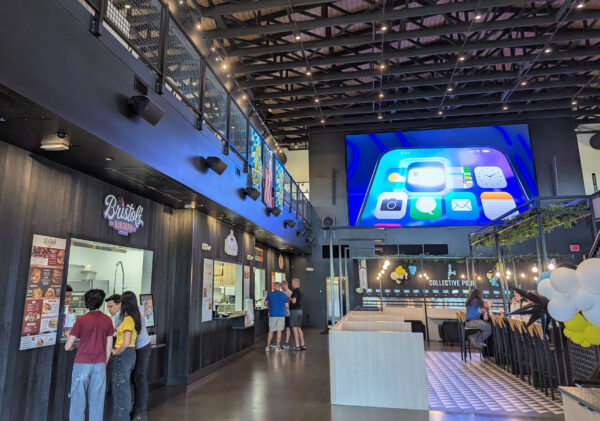
    Ohio’s Liberty Collective is an 18,000-square-foot entertainment complex designed to bring people together. It combines a vibrant atmosphere with a strong sense of local pride, offering an experience that is both welcoming and inspiring. The facility features five distinct restaurant concepts spread across two floors, along with a coffee and breakfast bar, an ice cream shop, and three bars, including a 30-tap self-pour beer wall. Indoor and outdoor seating is available on both levels, with a second-floor deck and first-floor patios leading out to five sand volleyball courts.

    The owners were working with Tom Kaper, owner of TECServices, to design and deploy the multitude of video displays throughout the building. Kaper contacted local integrator ICOMM Communications to help with the audio system. The building is approximately 160 feet long and 100 feet wide, with a very high ceiling and a large open area between the two floors. The architecture made audio intelligibility very challenging.

    “I’m an AtlasIED fan, and I’ve been working with their products for about 15 years,” said Ken Sargent, owner of ICOMM Communications. “Liberty Collective’s system is almost entirely used for background music, so AtlasIED’s Atmosphere platform came to mind immediately.”

    In turn, ICOMM Communications contacted Andy Black, McFadden Sales’ territory sales manager for Southwest Ohio and Kentucky, to assist with the installation. McFadden Sales has represented professional AV and audio technology brands since its founding in 1938, building long-term partnerships with manufacturers such as AtlasIED.

    “While the Cincinnati market has a few other venues with food courts, this one stands out as a true food hall-style destination,” said Black. “However, it’s larger than similar concepts and incorporates outdoor space. The inside design was gorgeous, but very acoustically challenging. A lot of work went into the design phase to come up with an audio solution that would suit the architecture.”

    “I’m an AtlasIED fan, and I’ve been working with their products for about 15 years.”
    — Ken Sargent
    Owner of ICOMM Communications

    AtlasIED’s Atmosphere platform is a state-of-the-art audio control system designed to enhance communication and improve the ambiance in public spaces. Simple to deploy and use but powerful in capabilities, Atmosphere combines digital audio processors, amplifiers, graphical user interfaces, programming software, and controls to set a new operational and performance standard for digital audio systems.
    An Atmosphere AZM8 was well-suited for the venue’s needs. The AZM8 is an eight-zone digital signal processor and the heart of an Atmosphere audio control system. A built-in message player, virtual wall controllers, learning ambient noise sensing, Tilter Filter™, auto-gain, GPIO, room combine, and more make the AZM8 a processing powerhouse. Two zones (east/west) were configured on each floor, while outside, separate zones were created for each side of the building.

    Programming is simple via an on-board web interface optimized for common use cases. The control interface is device-agnostic, responsive, and meticulously designed to deliver an ideal user experience without sacrificing design freedom. In addition to Ethernet, built-in Wi-Fi allows tablets and other control devices to connect directly to the AZM8 via rights-based access.

    A combination of the 800-watt DPA804, 1200-watt DPA1202, 2400-watt DPA2402, and 4800-watt HPA4202 amplifiers powers the loudspeakers installed throughout the venue. AtlasIED’s multiple-channel amplifiers are engineered to support 25V/70V/100V distributed systems as well as low impedance systems, making them versatile for a wide range of installations.

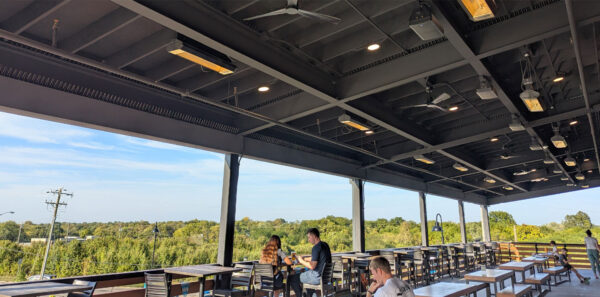
    The building has garage doors that can open during warm weather, so wind inside the building can be considerable, making pendant loudspeakers problematic. Instead, ICOMM Communications proposed installing surface-mount loudspeakers much closer to the listeners to reduce intelligibility issues. After exploring options, Sargent chose the AtlasIED 2-way SM82T loudspeakers based on their sound quality and commercial-grade durability. The largest of the SM Series at 16½ inches tall, the 30-watt loudspeaker features a high-efficiency woofer and 1-inch high-frequency compression drivers.
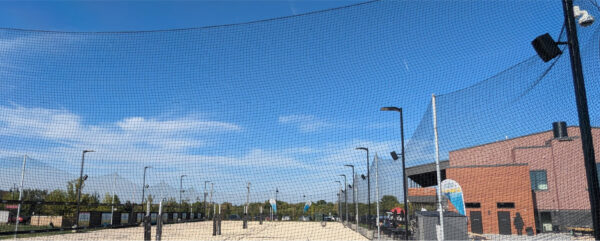
    Outside, 12 AtlasIED AS-8T loudspeakers were mounted on light poles surrounding the volleyball courts, and “they sound great.” The AS-8T is a two-way, compact surface-mount loudspeaker that delivers a consistent, accurate broadband frequency response, both on- and off-axis. Equipped with a low-insertion-loss 60W transformer for 70V or 100V distributed applications, the durable, scuff-resistant, high-impact ABS enclosure with UV inhibitor is weather-resistant (IP55) for consistent performance in adverse conditions.

    ALA20T column line-array loudspeakers flank the enormous, 25-foot-wide LED video screen that dominates the wall behind one of the bars. The 66-inch tall loudspeakers combine twenty 3″ full-range drivers and six 3/4″ high-frequency tweeters, delivering maximum pattern control performance in a minimum footprint and making them ideal for applications that require exceptional speech intelligibility.

    Newly completed, the entertainment venue has already proved to be a hit in the community, thanks in part to the superior sound Atmosphere delivers. By mounting the SM82T loudspeakers at the proper intervals and locations throughout the building’s interior, ICOMM Communications overcame the venue’s acoustic challenges.

    “With a product catalog as extensive as AtlasIED’s, it’s fantastic to have a wide selection of highquality indoor and outdoor loudspeakers. The audio experience is exceptional both inside and out.”
    — Ken Sargent,
    Owner, ICOMM Communications

    “The coverage feels really even as you walk through the space, which means you’re not having to overdrive the loudspeakers to fill the room,” said Black. “That’s especially hard to pull off in a large, reverberant space like this, so I was genuinely impressed by how good it sounded.”

    “With a product catalog as extensive as AtlasIED’s, it’s fantastic to have a wide selection of high-quality indoor and outdoor loudspeakers. The audio experience is exceptional both inside and out,” said Sargent. “AtlasIED’s products are reliable, and their team is very knowledgeable. If someone doesn’t know the answer to a question, they will find it out quickly. I truly enjoy working with them.”
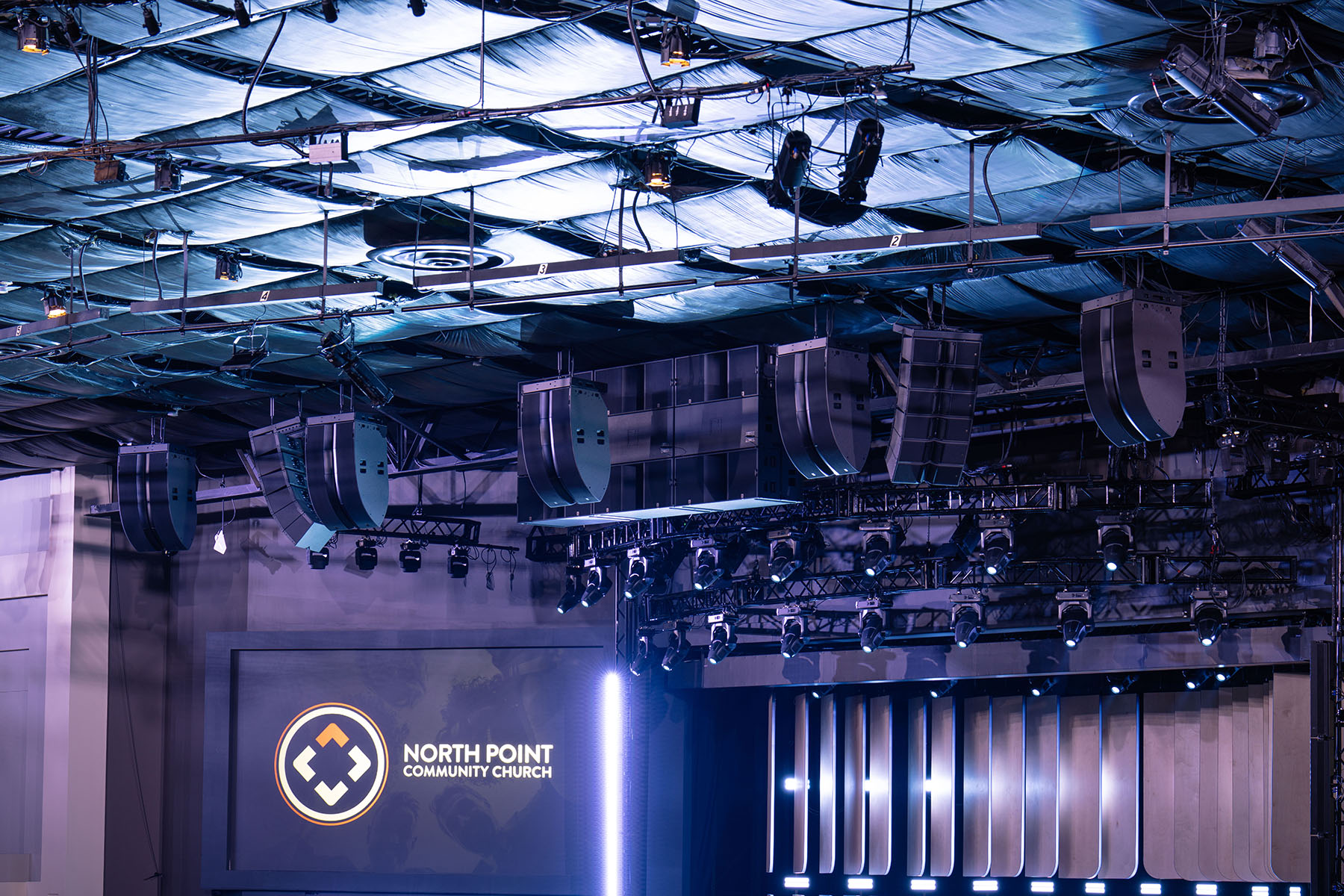
  • North Point Community Church Strengthens Connection and Message Clarity with L-Acoustics L-ISA and First House of Worship Deployment of Source Intelligence™

    North Point Community Church Strengthens Connection and Message Clarity with L-Acoustics L-ISA and First House of Worship Deployment of Source Intelligence™

    For North Point Community Church, one of the largest congregations in the United States, creating an engaging and uniformly consistent worship experience for every audience member has always been of paramount importance. The non-denominational church in Alpharetta, Georgia, reportedly serves 43,830 people weekly across eight Atlanta-area campuses, and at that scale, keeping the congregation’s attention on the stage—and the message—rather than on speaker clusters, is not a given. North Point addressed that challenge head-on in early 2026 with the installation of an L-Acoustics L-ISA Hyperreal Sound system, deployed by Clark, an L-Acoustics Certified Provider integrator that has served every North Point campus since the central Alpharetta location opened in 1999.

    North Point is also the world’s first house of worship to deploy L-Acoustics Source Intelligence™, a proprietary real-time voice-separation technology that runs as a licensed application on the L-ISA Processor II. Source Intelligence continuously identifies the voice in a microphone signal and removes everything else—PA bleed, stage noise, room reverb—delivering clearer vocals and significantly more gain before feedback, without altering the tonality of the input.

    “What’s taken place at this location with L-ISA is to have made the audio into a consistent spatial experience, no matter where you sit in the room—literally, all the way from the first row to the back, to the far right or left extreme of the auditorium,” says JB Bowling, Chief Operating Officer and Principal at Clark, which has installed all three sound systems the venue has had since it opened. “No matter where you are, you’re getting the same low frequency, high frequency, and just a great experience that is immersive, clear, and beautiful.”

    Selling L-ISA: A Demonstration Does the Work
    To fully convey the quality of the experience to the North Point team, Clark brought them to a Dallas church of similar size where it had previously installed another L-ISA system, this one using five Scene arrays of one L-Acoustics L2 over one L2D. Clark also brought in a DiGiCo Quantum Range audio console, similar to the Quantum5 found at North Point, through which their own front-of-house engineers and audio supervisors could listen—mixing music and other tracks recorded in their home church—to give them a preview of what the L-ISA experience would be with familiar program material. It didn’t take long to convince them.

    “They brought in some of their tracks, built a mix, and then we spent a couple of hours just walking in the space and listening,” he recalls. “There are obviously the creative aspects of what an immersive system allows you to do, which are awesome and that they got a taste of. But I think what really sold the L-Acoustics system specifically was the consistency of no matter where you go in the room, you’re just getting a similarly great experience.”

    Four Ranges Round Out the Rig: L, K, A, and X Series
    The main Scene system is comprised of five hangs of L2D, flanked by four Extension arrays of four A10i Focus, two per side. Nine KS28 subs in three cardioid hangs of three are flown behind the center L2D array, and complemented by 17 SB15m “punter” subs spread out in an arc under the curved stage. Spaced out on the steps above the ground subs, plus across the face of the stage thrust, are 17 compact X6i coaxial enclosures used to provide spatialized front-fill.

    Two out-fill arrays of six Kara IIi each are flown between the Scene 1/2 and 4/5 L Series arrays to address the far left and right seating areas, with an X8 firing at both of the room’s front corners for additional fill. A single X12 flown per side out in the house also provides additional fill for the far back corners of the balcony. LA7.16i amplified controllers drive all of the MF/HF devices, while LA12X drive all of the subs, and an L-ISA Processor II controls the room’s object-based mix. Additional components include a P1 processor and LS10 Milan-AVB switches.

    Resolving Difficult Room Geometries
    “This is a good-sounding room, acoustically, but it does have its geometric challenges,” says Bowling, noting the width of the rectangular auditorium at more than 50-percent broader than its depth, stage to back wall. That, he says, would have been a barrier for most conventional PA systems, but not for L-ISA. “More than 80 percent of the seats are fully in the L-ISA immersive sweet spot; we only needed a few fills to reach the remaining few seats at the edge,” he says. “For music and for spoken word, the sound of the system is fantastic. No matter where you’re sitting, you’re right in the middle of the experience.”

    Better Connections for Music and Message
    Luke Roetman, North Point Ministries’ Production Applications Director who is in charge of all of the campuses’ audio systems, loves the immersive, inclusive effect that the L-ISA system imparts to worship there. “It’s been just unbelievable,” he says. “I mean, with a full band playing you feel fully immersed in the sound in the room. We have dozens of large rooms in our organization with large stereo PAs, but this is the first time where if I close my eyes, I don’t feel like I can even point to a speaker. I feel like the sound is coming from the stage, but I can’t tell you where it’s coming from because it feels like I’m just immersed in it.”

    Roetman points out that the immersive effect is dually applicable to spoken word and music, bringing both communicators and musicians into a new level of engagement with the audience. “It’s as though there’s no longer a space between them,” he explains, creating a degree of connection that’s impossible to achieve through conventional left-right sound system designs. “When we’ve got a worship leader standing in the very middle of the stage, it sounds like their voice is coming from the middle, instead of off to the side out of a single line array, as it would with a typical stereo sound system. L-ISA shifts your attention back to the stage instead of toward a speaker cluster. It keeps the focus on the speaker, and by extension, on the message. And that’s what church is all about.”

    Source Intelligence Clears the Stage for Cleaner Vocals and More Gain
    In a large, acoustically complex house of worship—multiple vocalists, a full band, headset microphones working in front of the PA—the benefits of Source Intelligence are immediate and practical. “It’s impressive how much more gain-before-feedback it gives us on headset microphones and how much it cleans up drum bleed in vocal microphones without altering the tonality of the input,” says Roetman. “It allows us to get the gain we want out of the mic without worrying about either feedback or other stage noise that can impact the mix.”

    Fully integrated into the L-Acoustics system workflow, Source Intelligence gives front-of-house engineers mixing on an L-Acoustics PA a groundbreaking new tool to clean up vocals from noisy stages and allow performers to move freely across any stage configuration, including in front of the PA, without risking feedback or sacrificing vocal clarity. Once installed, Source Intelligence requires no threshold setting, no ongoing adjustment, and no changes to the existing console workflow or signal routing. End-to-end latency is less than 8.5 ms over MADI, whether processing is active or bypassed, so that automation and snapshot changes never affect system timing. Full PSU, network audio, and DSP redundancy are standard through the L-ISA Processor II platform.

    “Source Intelligence brings a new level of clarity to the message and the music,” he adds. “Combined with the immersiveness of the L-ISA system, we now have a truly breathtaking sound system that makes a real difference in how our visitors experience connection here.”

  • AtlasIED Introduces Atlas+Fyne Premium Pendant Loudspeakers at InfoComm 2026

    AtlasIED Introduces Atlas+Fyne Premium Pendant Loudspeakers at InfoComm 2026

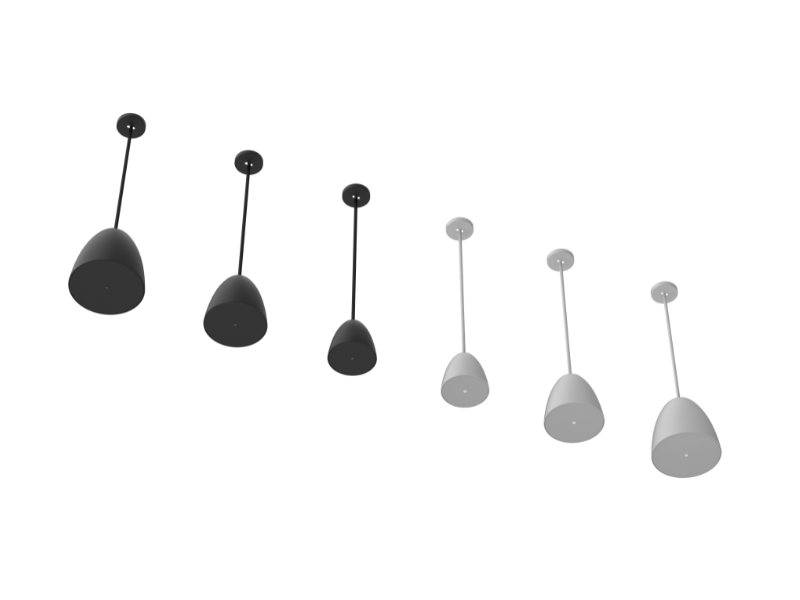
    AtlasIED has expanded its Atlas+Fyne IsoFlare Series with a new range of premium pendant loudspeakers, set to be showcased at InfoComm 2026. Designed for spaces with high or open ceilings, the new speakers combine high-quality audio performance with a modern architectural design, making them suitable for hospitality, retail, corporate, and other commercial environments where both sound quality and aesthetics are important.

    The new FP Series includes 4-inch, 6-inch, and 8-inch pendant models, a high-ceiling version with narrow dispersion, and an 8-inch subwoofer for enhanced low-frequency performance. Featuring 70V/100V transformer support, weather-resistant IP44-rated enclosures, and consistent voicing across the Atlas+Fyne product range, the new additions provide integrators with greater flexibility for delivering uniform audio experiences across different spaces.

    AtlasIED, a recognized leader in the commercial audio and security industries, announced the addition of new premium pendant loudspeakers to the Atlas+Fyne IsoFlare™ Series, which will be featured at InfoComm 2026.

    Engineered specifically for applications with high or open ceiling spaces, the Atlas+Fyne IsoFlare pendant loudspeakers deliver superior, design-forward performance that seamlessly integrates into modern architectural spaces. And they sound as good as they look! With this latest addition, venues with varying loudspeaker demands, whether ceiling, surface, or pendant, benefit from the complete Atlas+Fyne lineup, delivering uniform point-source performance and consistent voicing across all spaces.

    Featuring low-insertion-loss transformers suitable for 70V or 100V applications, the pendants’ durable construction includes a weather-resistant, IP44-rated enclosure. The FP range incorporates 4”, 6”, and 8” models, along with a separate 8” model with narrow dispersion, specifically for higher ceilings, and an 8” subwoofer model for extended bass performance. They combine exceptional performance with a refined aesthetic, making them ideal for open environments where visual appeal matters.

    Available in black and white, the launch will feature:

    • FP-4T 4″ Premium IsoFlare Pendant Loudspeakers
    • FP-6T 6″ Premium IsoFlare Pendant Loudspeakers
    • FP-8T 8″ Premium IsoFlare Pendant Loudspeakers
    • FP-8THC 8″ Premium IsoFlare Pendant Loudspeakers for High Ceilings
    • FP-8ST 8″ Premium IsoFlare Pendant Subwoofers

    “The Atlas+Fyne series has been exceptionally well received since its launch,” said Graham Hendry, VP of Loudspeakers Strategy at AtlasIED. “The introduction of these pendant loudspeakers presents new opportunities for integrators, and we look forward to hearing how this addition enhances our customers’ experiences.”

  • L-Acoustics L Series Concert Sound System Takes Echostage Into the Future

    L-Acoustics L Series Concert Sound System Takes Echostage Into the Future

    Washington, D.C. has a side that never makes the school trip itinerary. Electronic dance music (EDM) has a rich, often overlooked history in the nation’s capital, with an underground scene that flourished decades ago, blending house, breaks, and garage across local clubs and parties. Alongside D.C.’s signature go-go music, the area also nurtured a next-generation electronic scene in the ’90s and early ’00s, with artists like Adam Freeland and Evil Nine helping lay the groundwork for some of the city’s most celebrated EDM venues.

    Topping that venue list is Echostage, a 30,000+ square-foot converted warehouse in Washington, D.C.’s Langdon neighborhood, redesigned as a premier EDM destination. Upon opening in 2012, the 3,000-capacity hybrid nightclub and concert hall quickly became a defining force in nightlife and live entertainment, consistently ranking among the world’s best venues, including DJ Mag’s #1 venue in the United States and #8 globally. In 2020, Insomniac entered into a partnership with Echostage, Project GLOW Fest, and Club GLOW, helping to elevate the venue’s national presence. Since then, Echostage has continued to host some of the biggest names in music, including Tiësto, Avicii, Mau P, Fisher, Subtronics, Calvin Harris, Lorde, Sam Smith, Disclosure, Kaytranada, Chris Lake, Solomun, Black Coffee, and David Guetta.

    Echostage’s Next Stage is Artist-Driven
    For a venue built on world-class bookings, the sound system has to keep pace with the artists and their fans who walk through the door, and Echostage was ready to make that move. That meant L-Acoustics, says Pete Kalamoutsos, CEO at Club GLOW and Owner of Echostage, CTRL, and Insomniac Events’ Project GLOW Festival. “Every year we do our best to elevate the Echostage experience, and our new L-Acoustics L Series sound system—one of only a handful of permanent installations in the United States—creates one of the greatest live listening environments in the world,” he says.

    Marc Chauvin, CTO of Showtime Sound, which designed and installed the new sound system, wholeheartedly agrees: “If you look at the EDM world, L-Acoustics is now what’s expected. It’s in all of the top clubs, and Echostage needed that for the riders of the artists who perform there. The venue’s production manager, Matt ‘Gonzo’ Gonzalez, was really a driving force behind this system’s selection. He knows exactly what artists are looking for, and there was never a question about what was going to go in—L-Acoustics was it from the start.”

    L Series, Supported by K and A Series, Rounds Out the Rig
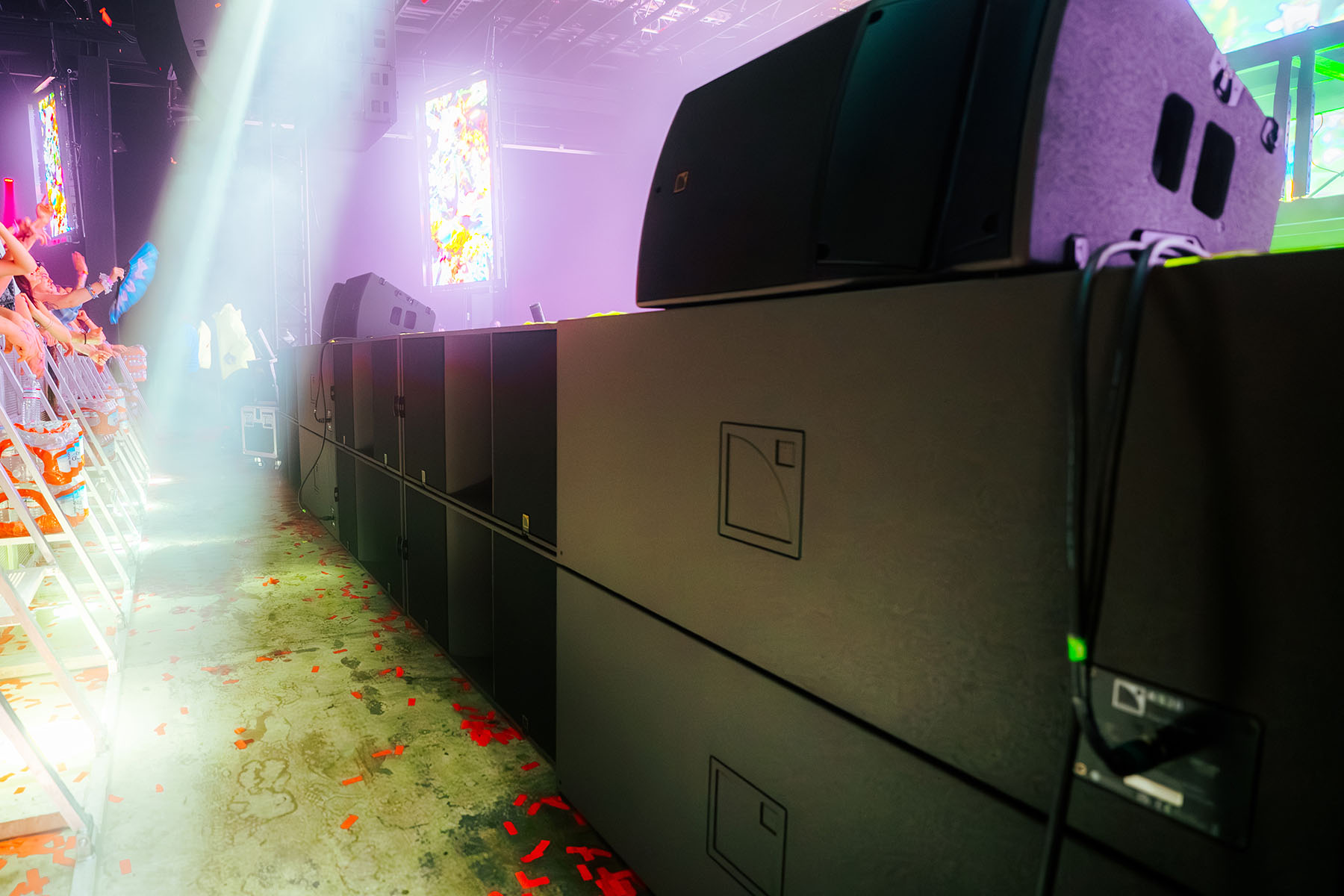
    Echostage’s new loudspeaker design features compact-yet-powerful left and right mains of one L-Acoustics L2 over one L2D, with each array backed by a hang of four KS28 subs flown in a cardioid configuration. The low end is bolstered by 16 more KS28 in eight stacks of two, lined across the face of the stage. One A15 Focus over two A15 Wide are flown per side as out-fill arrays, while two more pair of A15 Wide are positioned atop the ground subs for front-fill. LA7.16i amplified controllers power all L and A Series enclosures, while LA12X drive the subs. A second system for stage monitoring consists of three Kara II over a KS21 sub on each side of the stage. These are powered by three LA12X and one LA4X.

    L2/L2D is the Future of Sound Reinforcement
    Speaking after the debut weekend for the system, which featured shows by Galantis and KSHMR, Gonzalez praised the results. “The pattern control was impressive. This room really isn’t acoustically treated, and it was notable how much less energy and, by extension, how much less excitation of room modes was needed to make it sound full and impactful.”

    As importantly, Gonzalez says the L Series install represents a new chapter in both the club’s technical evolution and in live sound technology. “You can sit back and take in the fact that technology is really moving on,” he says. “We see these big turning points every 10 or 15 years, these big technological markers, and L Series is clearly one of them. The fact that this system went up so quickly and that it is so consistent is fascinating. It’s been an eye-opening experience. We’ve seen the future, and with L-Acoustics, we’ve now heard it, too.”

  • Benum Delivers Seamless Funktion-One Sound for Red Bull Back2Beyond in Stockholm

    Benum Delivers Seamless Funktion-One Sound for Red Bull Back2Beyond in Stockholm

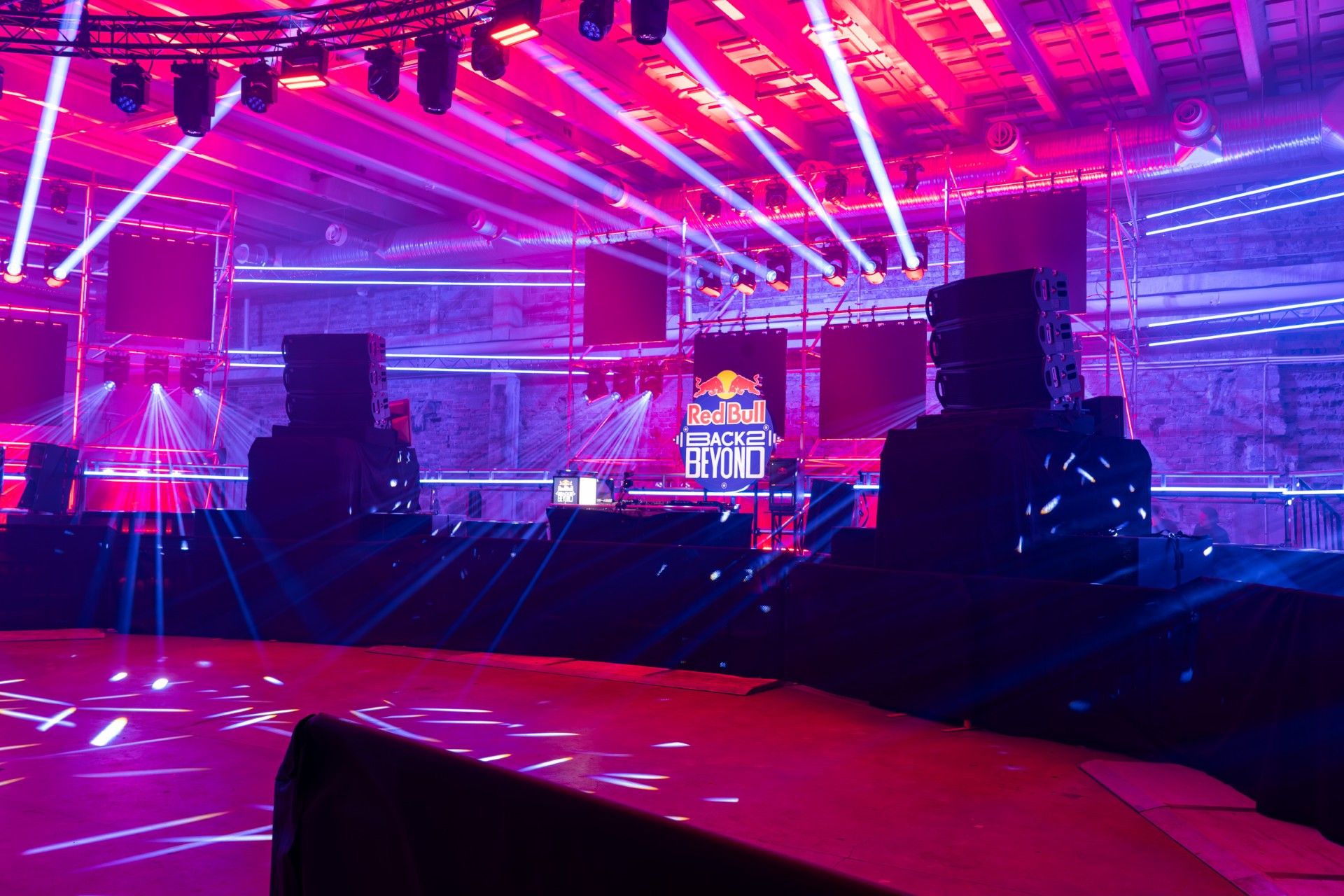
    When Red Bull brought its Back2Beyond concept to the Banankompaniet warehouse in Stockholm at the end of March, the production challenge extended beyond a typical system design. To realise the event’s rotating, multi-stage format, NaNaNa Produktion partnered with Benum Sweden who deployed a Funktion-One Vero VX system. Curated by Swedish DJ and producer Axel Boman, the event featured DJ Tennis, Jimi Jules and Jennifer Loveless for a series of rotating B2B sets, including several first-time collaborations.

    The event design, developed by Simon Ahlgren and Albin Davidsson of NaNaNa Produktion, centred on three stages arranged in a U-shape. Artists performed in a continuous back-to-back sequence, with each set blending into the next as the focus shifted around the room. This required a sound system that could maintain clarity and impact while facilitating controlled movement of sound between performance areas.

    Benum Douglas Poppelman designed a four-point Vero VX system, which enabled each stage to operate with its own perceived left-right set-up. Funktion-One’s Live Sound Engineer Will Wright supported throughout and went out to Stockholm for set-up and delivery of the event. Through careful alignment and panning between stacks during transitions, the audio team achieved a continuous sonic handover that followed the movement of the artists.

    “The choice of Vero VX for this application came down to the need for a high-tier system to cover a big audience area with a relatively small footprint due to sightlines, without compromising on sonic quality,” explained Benum’s Product Manager Mats Mattson

    The system balanced technical performance with visual considerations. The final configuration for the central stages comprised two ground stacked arrays, each with three Vero VX enclosures above six F124 subwoofers, together with flown clusters of three Vero VX and ground-stacked F221 subwoofers in the outer positions. The result was consistent coverage and substantial headroom throughout the venue and a controlled and even response across the audience.

    The outer stages were equipped with Evolution X and BR218 monitor systems, while the central stage had Evolution 2 with BR115 subwoofers. In the foyer, Red Bull’s own Evolution 6 and F121 system maintained sonic consistency with the main space.

    “The transitions between stages were absolutely seamless,” said Mattson. “Everything looked so clean and the sound was amazing – very crisp, without distortion. It was an effortless feeling with lots of ‘air’ and headroom and, as is typical with Funktion-One systems, it didn’t hurt your ears even at high SPL.”

  • L-Acoustics Introduces L1 and CS1: The Future of Large-Scale Live Sound

    L-Acoustics Introduces L1 and CS1: The Future of Large-Scale Live Sound

    L-Acoustics has introduced its new flagship live sound system, L1, along with the companion CS1 cardioid subwoofer, setting a new benchmark for large-scale concert and stadium audio. Powered by the company’s patented PULS technology, the system delivers extremely high SPL, improved clarity, and advanced low-frequency control while reducing unwanted noise spill in large venues. The technology has already been used on major tours and events including Bruno Mars, Harry Styles, Coachella, and Ultra Music Festival.

    Designed for faster deployment and improved operational efficiency, the L1 system significantly reduces rigging time, cabling, and overall system weight compared to traditional large-format line arrays. Combined with the new Autofilter algorithm and advanced cardioid architecture, L1 and CS1 provide sound engineers with greater control, cleaner coverage, and consistent audio performance across complex venues. The products are currently in pilot deployment with selected partners, with wider availability planned for early 2027.

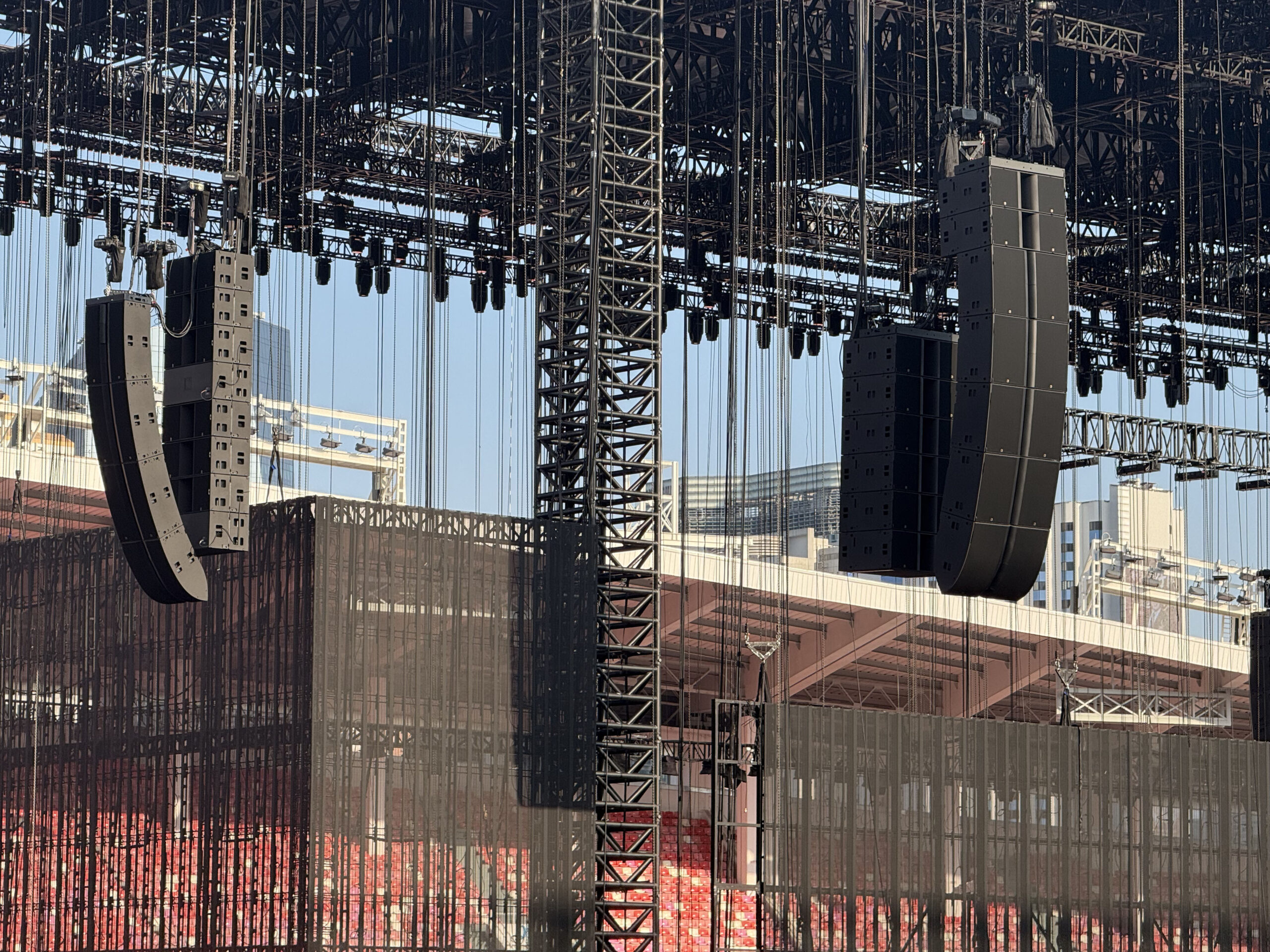
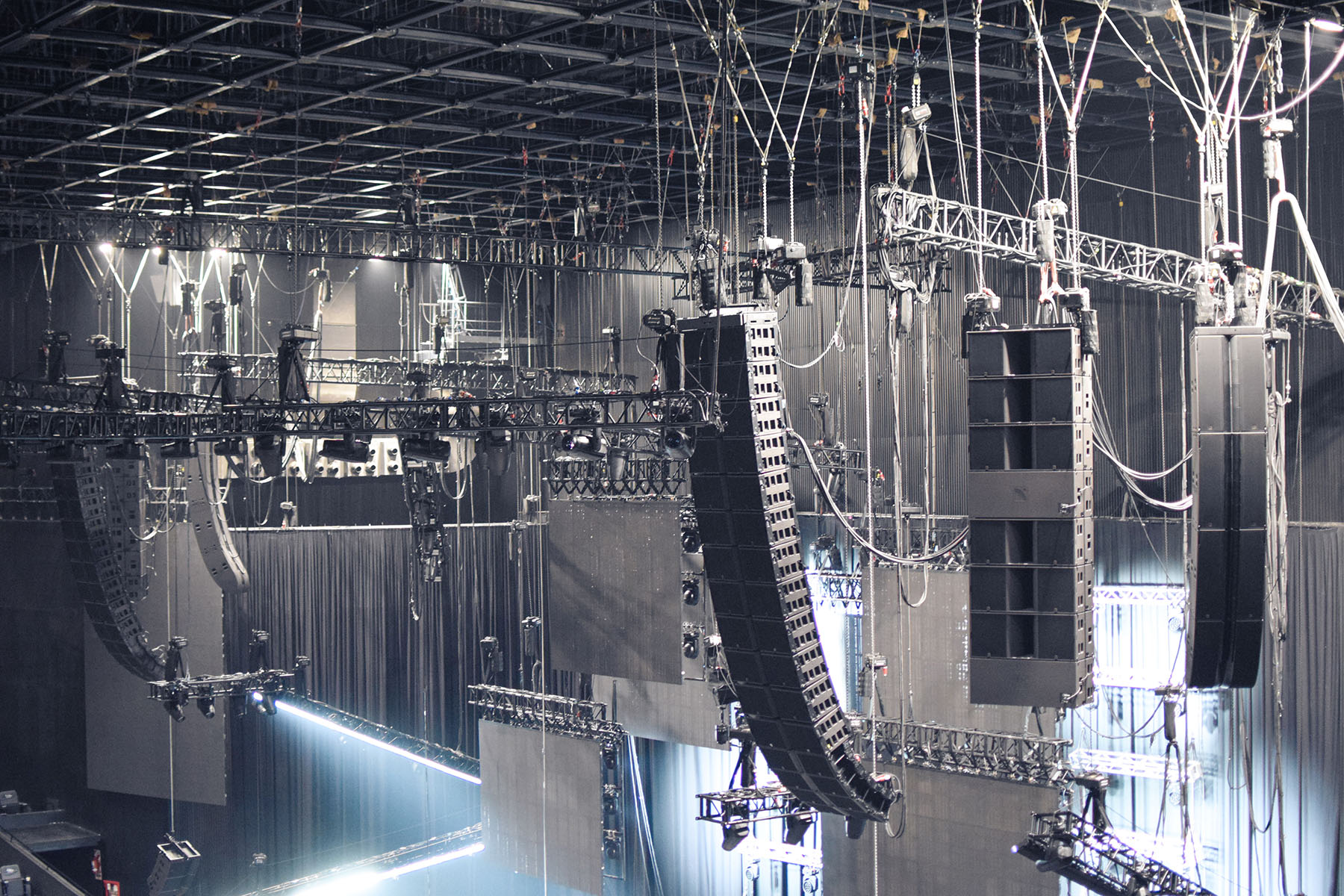
    L-Acoustics today unveiled L1, the flagship of the L Series, and its companion cardioid subwoofer, CS1. Built on L-Acoustics patented Progressive Ultra-Dense Line Source (PULS) technology, L1 sets a new absolute reference for stadium sound systems that has already been entrusted to the world’s biggest stages.

    L1 has been deployed on Bruno Mars’ The Romantic tour with Clair Global, for Harry Styles’ Together, Together tour with Solotech, and on Joker Xue’s world tour with MRT, as well as a debut at the Brit Awards in London with Britannia Row, a Clair Global company. CS1 delivered the low end on the main stages of Coachella Valley Music and Arts Festival with RAT Sound, and Ultra Music Festival with Unreal-Systems/AgorA.

    L1 and CS1 also mark their first permanent installation at the Hollywood Bowl, deployed in a white architectural finish, and the venue where the company officially unveils the new technology, alongside the new L-Acoustics Source Intelligence™ audio processing platform at Keynote 2026. The event featured a performance by The War on Drugs.

    L1 Breaks Every Performance Benchmark for Line Array Systems
    Where previous large-format systems made incremental gains, L1 achieves a categorically higher concentration of transducers in an efficient form factor. Each enclosure integrates two 18″ low-cardioid (LC) transducers side-mounted for frontal energy and rear rejection, four front-facing 15″ low-frequency drivers, eight 8″ mid-frequency drivers, and six coaxial 4″+2.5″ HF compression drivers. This HF coaxial configuration, new to the L Series, increases SPL and long-throw capabilities.

    The result is a maximum SPL of 160 dB per enclosure, across a full bandwidth of 35 Hz to 20 kHz, yielding best-in-class SPL per size, per kilogram, and per square meter. The companion wide vertical coverage L1D element matches this transducer architecture with a progressive 60-degree vertical coverage pattern for nearfield zones, achieving 155 dB SPL.

    “L1 represents the highest expression of power, bandwidth, and pattern control ever achieved in line array technology,” said Germain Simon, Director of Product Management, Loudspeakers at L-Acoustics. “With PULS taken to its ultimate expression, we have broken every performance benchmark we set for large-format line source. L1 is a genuine turning point for the industry.”

    L1 and CS1 Integrated Cardioid Technology Transforms Noise Management
    For large productions in urban environments, multi-stage festivals, and noise-sensitive venues, low-frequency spill is one of the most persistent engineering challenges. The L1 system addresses it at the design level.

    The side-mounted 18″ LC transducers enable L-Acoustics patented cardioid low-frequency architecture, delivering up to 18 dB of rear rejection between 20 and 250 Hz, and more than 26 dB of rejection below 80 Hz. Low-frequency energy is concentrated on the audience; spill behind the array is minimized at source. Sound designers choose between cardioid mode for maximum rear rejection, or supercardioid for extended rejection to the sides.

    CS1 extends the same principle to the sub-bass range. With four 21″ transducers in a cardioid topology, CS1 delivers peak SPL up to 150 dB and extends bandwidth down to 25 Hz. At Coachella and Ultra Music Festival, where neighboring stage interference is a constant pressure on production engineers, CS1 delivered the sub-bass power and impact those shows demand while preserving acoustic integrity across the site.

    The new-generation Autofilter algorithm extends this control into three dimensions. Working within L-Acoustics Soundvision software, it shapes the low-frequency beam of an L1 array to rival—and in many configurations surpass—the low-frequency control of a much longer conventional professional sound system of equivalent power, down to 20 Hz, with no added latency. A single click within the standard workflow applies it. The result is greater tonal balance stability across the venue and noticeably less low-frequency spread from front to back.

    Horizontal directivity is managed by two Panflex modules per enclosure, offering 70- and 90-degree symmetrical patterns plus an 80-degree asymmetrical mode. L1D extends options to 110- or 70-degree symmetrical and 90-degree asymmetrical for nearfield coverage. Vertical control is built into the pre-shaped progressive geometry of L1, with 0.8-degree inter-element coupling for long-throw festival formats and 5 degrees for arenas and complex audience profiles.

    L1 System: Three Times Faster to Deploy
    For touring productions, the economics of deployment carry as much weight as acoustic performance. A configuration of two CS1, four L1, and one L1D delivers the acoustic performance of a 21-element K1 standard rig, with 66% fewer rigging actions, fewer lifts, fewer cables, and a smaller physical footprint that integrates cleanly with stage and video structures. The weight savings are equally significant. Five enclosures do the work of fifteen and weigh 20% less when rigged. A main hang of four L1 and one L1D weighs 1,263 kg, where a comparable K1 system would require 15 boxes at 1,590 kg overhead to match the same performance.

    The auto-locking rigging system requires no external pins. A single SC32 cable connects the amplified controller to each enclosure. Each L1 enclosure is driven by a dedicated LA7.16 amplified controller with 16 discrete channels of DSP and amplification—one per acoustic element—enabling Autofilter and cardioid management to operate at individual element resolution across the entire hang. The LA7.16 mounts in the LA-RAK III touring rack: 48 channels of amplification in 9U, Milan-AVB-ready, delivering more than 60,000 watts per rack.

    The Verdict from the Engineers Running the Shows
    Across pilot deployments, the response from FOH engineers has been consistent. “This system makes a stadium sound a lot smaller than it is. Controlling the low end with a full cardioid PA pretty much eliminates the usual stuff rolling around these giant spaces. Once you add the finest mids and highs I’ve ever heard, the room just disappears,” said Sean “Sully” Sullivan, sound engineer for Bruno Mars.

    “Mixing on L1 feels like driving a top-tier supercar. It’s unbelievably responsive and powerful, giv-ing me the freedom to push the mix further than ever,” said Jun Zhang, sound engineer for Joker Xue. “Even when I pushed it to the limit, the vocals stayed silky and clear, with none of the harshness I’ve heard with other systems. And that gives me so much more confidence in my mix.”

    L1 and CS1 are currently in pilot phase with a select group of L-Acoustics certified partners. Availability for qualified partners is planned for early 2027.

  • Kramer to showcase expanded speaker family at InfoComm 2026 in first US appearance

    Kramer to showcase expanded speaker family at InfoComm 2026 in first US appearance

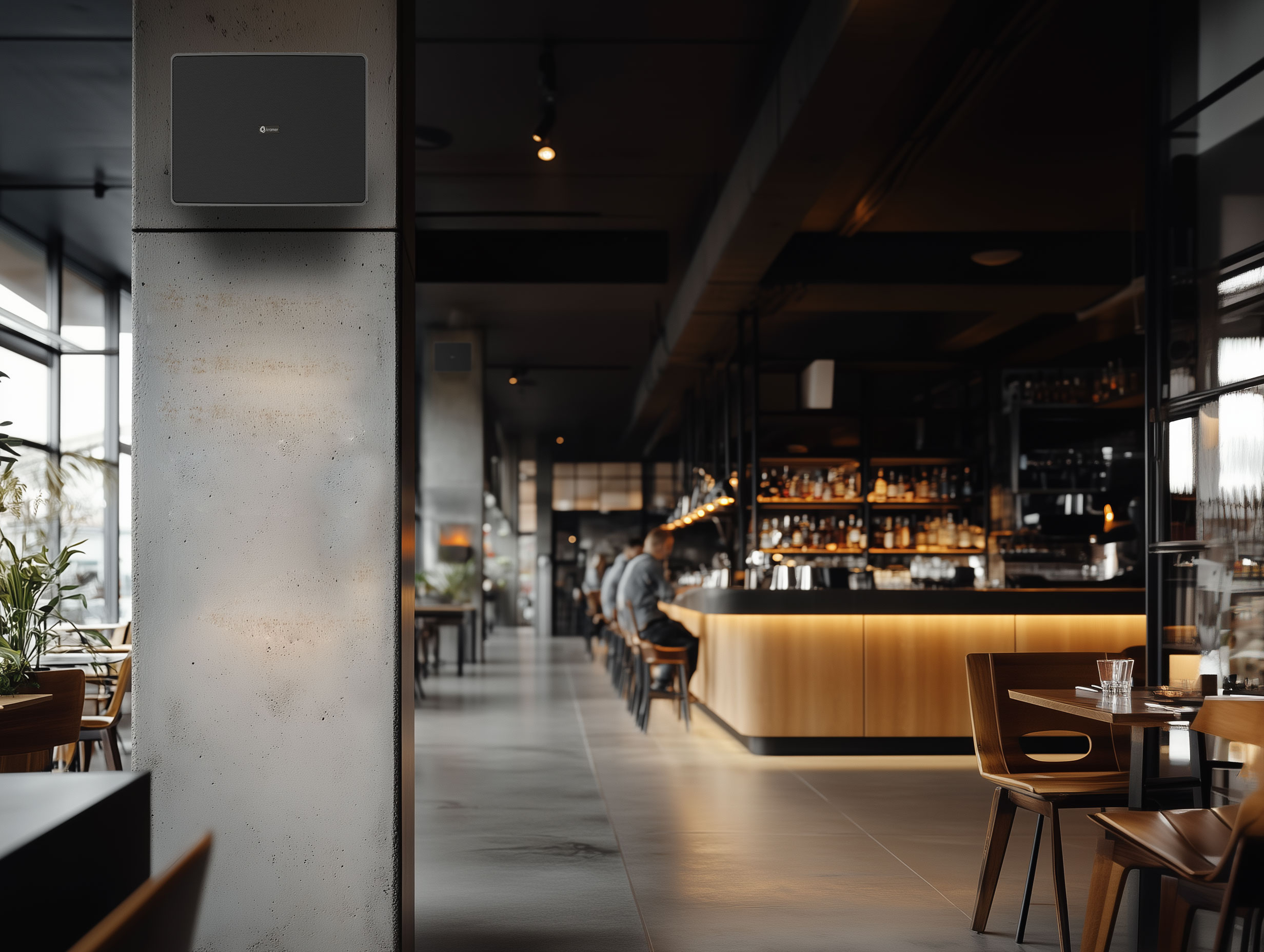
    Kramer is bringing its expanded installed-audio speaker portfolio to the U.S. for the first time at InfoComm 2026, giving AV integrators a more unified speaker family for commercial projects. The lineup includes ceiling, pendant, wall-mounted, and all-weather speakers designed for meeting rooms, classrooms, hospitality venues, retail spaces, and open-ceiling environments. Kramer says the goal is to help integrators simplify deployments while maintaining consistent audio performance across different room types.

    A key highlight of the portfolio is the PoE-powered Dante speaker models, which deliver both power and audio through a single network cable to reduce installation complexity and eliminate the need for local amplifiers. The range also includes features such as front-access wiring, standardized mounting systems, and centralized configuration software to make setup faster and more efficient. The speakers are part of Kramer’s wider installed-audio ecosystem, alongside its DSPs, amplifiers, and management solutions for larger AV system deployments.

    Kramer will present its expanded installed-audio speaker portfolio in the United States for the first time at InfoComm 2026, supporting U.S. integrators with a broader family of ceiling, pendant, wall-mounted and all-weather loudspeakers for common commercial environments.

    Following its international debut earlier in the year, the speaker line arrives at InfoComm as integrators look for more practical ways to simplify deployment, maintain consistency across room types and support both passive and networked audio designs.

    “For many integrators, the challenge is not choosing a single speaker. It’s building a practical family they can use across meeting rooms, classrooms, hospitality spaces and open-ceiling environments without starting from scratch every time,” said Dorit Bitter, Chief Product & Technology Officer at Kramer.

    The portfolio has been designed with flexibility at its core. It includes a comprehensive selection of ceiling, wall-mounted and pendant loudspeakers, available in multiple sizes and performance levels to suit a wide range of applications – from small meeting rooms through to open commercial spaces.

    At the heart of the range are the PoE-powered Dante models, which deliver both power and audio over a single network cable, removing the need for local amplification and significantly simplifying system architecture.

    The ceiling speaker lineup spans compact and mid-size models engineered to deliver exceptional speech intelligibility and smooth, consistent background music reproduction. Designed for quick integration into suspended or hard ceilings, these speakers offer wide, even dispersion that minimizes hot spots and drop-offs – ensuring clear communication across meeting rooms, classrooms and retail environments. For integrators, this translates into fewer units required to achieve uniform coverage, reducing both system cost and installation time while maintaining a clean, unobtrusive aesthetic that blends seamlessly into interior designs.

    Pendant variants extend this performance into open-ceiling and architecturally exposed spaces, where traditional ceiling speakers are not practical. Suspended at optimal listening height, these models deliver controlled, downward-directed coverage that maintains clarity and intelligibility even in acoustically challenging environments such as high ceilings, atriums and modern retail spaces.

    Wall-mounted models complete the range by providing higher output and more focused coverage for areas that demand greater impact and control, such as hospitality venues, public areas and larger commercial spaces. With optimized dispersion patterns and increased SPL capability, these speakers allow integrators to direct sound exactly where it is needed – minimizing spill into adjacent zones while maintaining consistent tonal balance.

    Installation and commissioning have been designed with integrators in mind. Features such as front-access wiring on ceiling models, consistent mounting systems and centralized speaker configuration software reduce on-site complexity, shorten setup time and support more repeatable deployments.The loudspeaker range is part of Kramer’s broader installed audio ecosystem, including DSPs, amplifiers and management tools for larger system designs.

  • Movistar Arena Buenos Aires Invests in L-Acoustics K Series and L Series for Argentina’s Premier Concert Venue

    Movistar Arena Buenos Aires Invests in L-Acoustics K Series and L Series for Argentina’s Premier Concert Venue

    Nestled in the vibrant Villa Crespo district beside Buenos Aires’ Estadio Don León Kolbowski football stadium, Movistar Arena stands as Argentina’s largest dedicated concert venue and the country’s second-largest indoor arena. Since opening in 2019 under the management of ASM Global, the 15,000-seat facility has built a reputation as the go-to destination for international touring productions in South America. To uphold that standing, the arena recently upgraded its production infrastructure with a new L-Acoustics K and L Series concert sound system, supplied and integrated by local Certified Provider Distributor (CPd) EXOSOUND.

    An Arena Purpose-Built for Live Music
    “Although we can accommodate sporting, theatrical, and corporate events, this arena was specifically designed to host large-scale live music concerts and is almost exclusively used for that purpose,” says Movistar Arena Buenos Aires Production Manager Gustavo Perezlindo, who has served the venue in that role from its start. “In 2025, we hosted approximately 260 concerts, and we’re already projecting to reach 280 this year, so we maintain a very ambitious schedule of international, regional, and local productions here.”

    That busy show roster is quite diverse, including not only recent pop tour stops by Sting, Rod Stewart, and Kylie Minogue, but upcoming performances from artists of many genres. Shows by Dream Theatre, Jonas Brothers, Martin Garrix, Rosalía, Rubén Blades, Fatboy Slim, Helloween, 5 Seconds of Summer, Robbie Williams, Zayn, Die Toten Hosen, Eros Ramazzotti, and Rush are on the venue’s concert calendar, and all are currently expected to use the new L-Acoustics sound system.

    “Movistar Arena’s management was already well acquainted with L-Acoustics before the retrofit. “From the beginning, we had K1 and K2 in here through an external contractor,” Perezlindo recalls. “Based on that system’s strong rider acceptability and the consistent audio quality we’ve enjoyed over the past six years, it was a straightforward decision to stay with the brand and purchase our own L-Acoustics system.”

    Working in Concert with a Range of X Series, A Series, K Series and L Series
    Perezlindo worked closely with EXOSOUND Commercial Director Julio Levinsonas and L-Acoustics Latin America Application Project Engineer Alex Soto on the final Soundvision design. The arena’s new loudspeaker setup now features left and right main arrays of 12 L-Acoustics K1 over four K2, paired with out-fill arrays of three L2 over one L2D per side. Flown behind each of the K1 arrays are eight KS28 subs hung per side in a cardioid configuration, bolstered by 16 more ground-based KS28 in eight stacks of two across the stage face. For front-fill, 20 Kara II are positioned in ten stacks of two across the stage lip.

    Out in the house, four L Series hangs supply delay reinforcement to the upper bowl seating areas. Lower underbalcony sections are addressed by ten A10i Wide, five per side. Thirty-four compact X6i coaxial systems further provide audio to the arena’s suites, rounded out by five A10i found in the VISA Lounge at the back of the bowl. Down at the stage, two A15 Focus over one A15 Wide flown per side, plus one KS28 per side on the deck, serve as full-range side-fills, with a collection of X15 HiQ available for use as onstage monitor wedges.

    Ten LA-RAK II AVB loaded with 30 LA12X amplified controllers drive all K1, K2, KS28, and A15 enclosures, while seven LA-RAK III AVB loaded with 21 LA7.16 amplified controllers power the L Series and Kara II. Three more LA7.16i drive the X6i and A10i suite speakers, with two LA4X serving the lower underbalcony A10i Wide systems. The entire system is run over a Milan-AVB network “for reliability and robustness,” Perezlindo describes, with redundant P1 processors and LS10 AVB switches utilized on the front end.

    The Right Team and Tools for the Project
    “With the assistance of logistics specialists Grupo Operadores, we were able to import the equipment from France and install and calibrate the system with L-Acoustics’ support on schedule,” says EXOSOUND’s Levinsonas. “The new system delivers consistent fidelity and coverage throughout the venue. Whether audiences are in the upper bowl, under the balconies, or in the suites, VISA Lounge, or Club Casino, they experience the same uniform sound quality. With this investment, Movistar Arena has reinforced its commitment to providing touring productions with a world-class technical platform and positioned itself as one of the best equipped large-format venues in Latin America.”

  • L-Acoustics L-ISA Turns Broadway Play Dog Day Afternoon Into a Cinematic Sound Experience

    L-Acoustics L-ISA Turns Broadway Play Dog Day Afternoon Into a Cinematic Sound Experience

    When director Rupert Goold and sound designer Cody Spencer began planning Dog Day Afternoon for Broadway, their starting point was a play, not a musical. No songs, no score to carry the story. But the 1975 Sidney Lumet film it is based on has one of the most recognizable sonic identities in cinema history: the relentless pulse of a New York summer, a crowd that grows angrier by the hour, and a climax that drops from the sky. Spencer’s challenge was to bring all of that into the August Wilson Theatre on 52nd Street and make a live audience feel it. His answer was L-Acoustics L-ISA Immersive Hyperreal Sound, and a speaker system that raised more than a few eyebrows.

    Starring Jon Bernthal and Eben Moss-Bachrach, Dog Day Afternoon tells the true story of Sonny Wortzik’s 1972 Brooklyn bank robbery, a botched heist that turned into an hours-long standoff with police and a media circus. The play uses music strategically throughout: 1970s classic rock dropped with cinematic precision, a crowd participation sequence built around the infamous Attica! chant, and a helicopter descent that closes the show. None of it is incidental. Spencer designed the entire sound world with the same care a film sound supervisor would bring to a feature. The system he built to deliver it is, as PRG Vice President of Audio David Strang puts it, the size of your average musical.

    “I remember Cody telling me what he was imagining, and I thought: That’s fantastic—you’re going to be the first person to put a musical-scale speaker system into a Broadway play,” says Strang, whose company provided the sound reinforcement for the production.

    Spencer was unequivocal about why the scale was necessary. “I wanted the music to be big and full, not just heavy on the low end or oversaturated,” he explains. “I needed it to feel like you’re watching a film, where the music drops in and fills the whole room. That’s what led me to L-Acoustics and L-ISA.”

    Designing the Sonic Architecture of a Street Siege

    Spencer initially sketched a conventional left-right-center configuration with some playback. Then the conversations with Goold pushed the concept further. The set rotates between the interior of the bank and the street outside, and Goold wanted the crowd, which is gathered just beyond the doors, and invisible to the audience, to be a constant presence. As the perspective

    shifts from inside to outside, sound filters open and close, drawing the audience into the sonic point of view of the characters. At one point, the audience itself becomes the crowd.

    “With L-ISA, I knew I could make every seat in the house feel like the crowd is just on the other side of that wall,” Spencer says. “I’ve used it enough to trust it completely.”

    Beyond the crowd, Spencer built up subliminal low-frequency tension throughout the show, seeding the soundscape with random New York street sounds that blend with the actual ambient noise that sometimes drifts into the theater from West 52nd Street. The 1970s rock tracks accumulate in intensity toward the helicopter finale, designed to land as a full physical event. Even sub coverage was an explicit priority, something Spencer says he had never before tackled to this degree.

    Four L-Acoustics SB10i were mounted to the underbalcony ceiling to ensure consistent low-frequency extension across the room. “I spent a lot of time with L-Acoustics system engineers on this,” Spencer says. “We developed a tuning approach so the SB10i deliver a small amount of sub energy on their own, and when combined with the mains they maintain exactly the same level as you move under the balcony. The coverage is seamless.”

    L-Acoustics Soundvision was central to the design process. Spencer used it to model sub coverage on the vertical plane, an unconventional application, but one that gave him the acoustic data he needed before a single cabinet was hung.

    A Scene System Built for Object-Based Immersion with L-ISA A Series

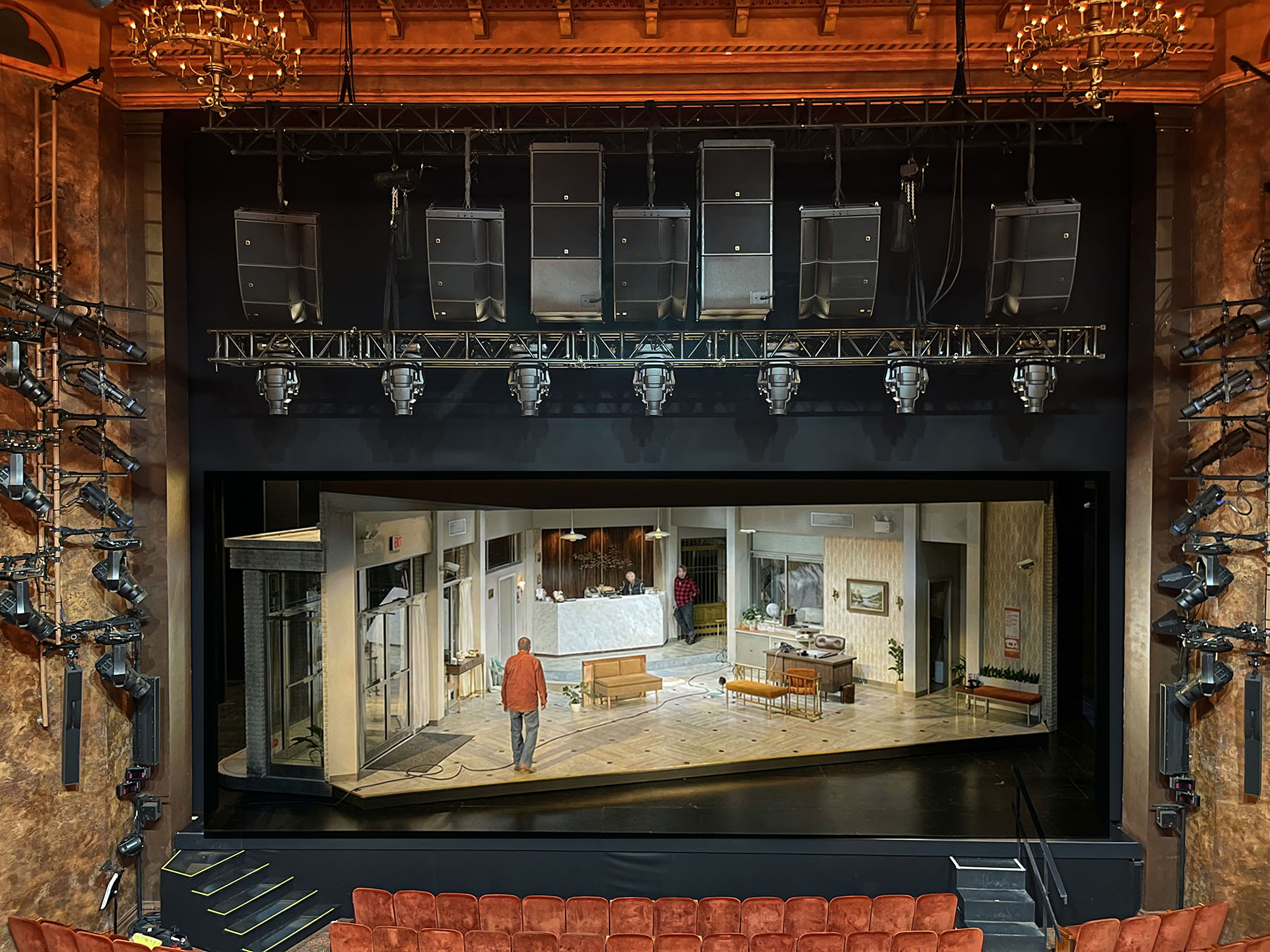
    The main system is built around a split L-ISA Scene configuration of five A Series arrays, each comprising a single A15 Focus over two A15 Wide, flown over the stage lip. A second tier of five A Series arrays, this time one A10 Focus over one A10 Wide, provide spatial delays to the front mezzanine.

    Two cardioid subwoofer hangs of three SB18 flank the center A Series array in the main Scene system. These are complemented by the four ceiling-mounted SB10i. Seven ultra-compact X4i run along the stage lip, with two colinear Syva systems positioned as orchestra sources. The under-mezzanine delays comprise eight X4i, seven X8, and seven 5XT, with seven additional X8 handling mezzanine delays in the balcony. Four 5XT serve as near-fills and mezzanine fills.

    The surround system is extensive: eight Syva and 34 X8 provide discrete immersive coverage across multiple seating zones spanning the full orchestra and both mezzanine levels. On stage, a pair of X8 and one 5XT reinforce stage sources directly, while two X12 flown above the deck give performers monitoring. The entire system is driven by an L-ISA Processor II, with object-based mix control managed via an L-ISA Controller paired to a DiGiCo SD10T console at front of house.

    Strang notes that Spencer’s use of the Syva deserves particular attention. “He’s blending different parts of the system together using the Syva in ways I hadn’t seen before,” he explains.

    L-ISA Immersive Hyperreal Sound: Clarity, Control, and the Cody Spencer Method

    Spencer came to L-ISA through a deliberate creative progression. His first use of the technology was on Broadway Bounty Hunter, and he subsequently brought it to Here Lies Love—the first time L-ISA was deployed on Broadway. He won the 2024 Tony Award for Best Sound Design of a Musical for The Outsiders, deploying L-ISA to place the audience inside the world of the Greasers and the Socs. With Dog Day Afternoon, he is applying the same approach to the specific demands of a play.

    Because Dog Day Afternoon is a comedy with densely layered dialogue, Spencer leaned harder on close-miking than he typically would for a straight play. L-ISA’s object-based processing gave him the ability to isolate each voice and assign it to a specific speaker or group of speakers, increasing clarity without losing naturalism. “I can give an individual speaker to a single mic, and that isolation gives you a lot more clarity in scenes where multiple people are talking,” he says.

    He also credits recent advances in L-ISA, specifically the new source trims feature, with making the process faster. “I can finesse the levels in every fill, delay, and zone to make sure the coverage is complete,” Spencer explains. “Music, sound effects, and vocals are the three main groups, and the goal is that every seat has the same sonic experience. L-ISA gives you the tools to actually achieve that, not just aim for it.”

    A Full Score

    The production’s climax is a test of everything the system can do. The Attica! sequence draws the audience into the scene, the sound places them on the street outside the bank with the crowd surrounding them. When the helicopter arrives, L-ISA renders it as a physical presence overhead, with the sub hangs and ceiling-mounted SB10i combining to create a sensation that has been causing genuine double-takes in the house.

    “The Attica! moment is when you realize the system is doing exactly what we designed it to do,” Spencer says. “The audience isn’t watching a crowd, they’re inside one. And when the helicopter comes in at the end, people genuinely look up. That’s the whole point: you’re not sitting in a theater watching a film happen. You’re in it.”

    For Spencer, the working relationship with L-Acoustics is as important as the technology itself. “L-Acoustics listens to what I’m doing and helps my team develop faster ways to work,” he says. “What we’re doing is genuinely complicated and having that support makes it possible to push the creativity further during previews rather than just keeping up with it.”

  • Harrods Installs Concert-Grade L-Acoustics Sound in Its New Cinema Luxe Lounge — the Same Brand Trusted by the World’s Biggest Artists

    Harrods Installs Concert-Grade L-Acoustics Sound in Its New Cinema Luxe Lounge — the Same Brand Trusted by the World’s Biggest Artists

    The brand that powers Adele’s Las Vegas residency and the Philharmonie de Paris has arrived at Harrods. L-Acoustics, the world’s leading professional sound system manufacturer, is now the audio centerpiece of the new Cinema Luxe Lounge on the Fifth Floor of Harrods in Knightsbridge, brought to life through a collaboration with The Faraday Club, luxury home cinema interior specialists Cinema Luxe, and award-winning smart home integrator IndigoZest.

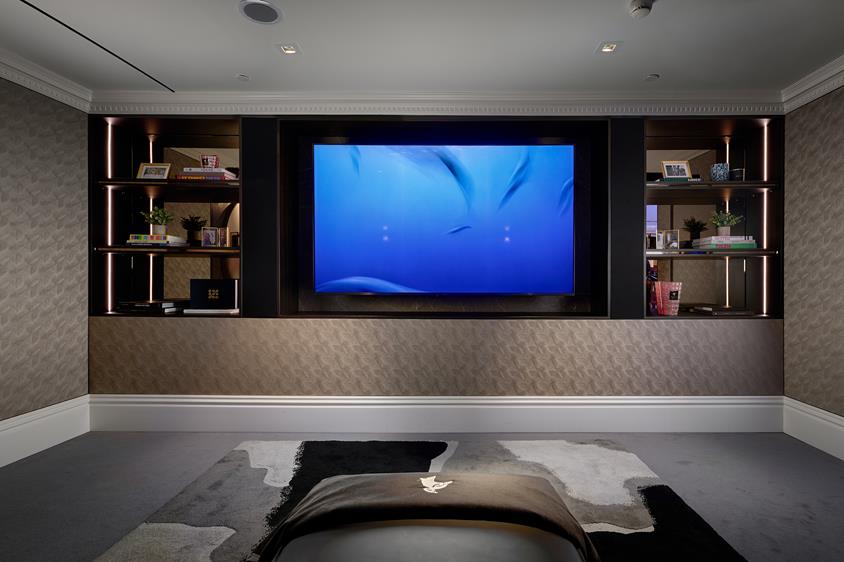
    The Cinema Luxe Lounge is a fully realized living environment, designed by Cinema Luxe with the same material quality and attention to detail as a high-end private residence, where visitors can experience how reference-level technology feels when it is woven into a home. At its heart is a Dolby Atmos compliant L-Acoustics Sound System, here adapted for the residential environment and delivered with the same sonic precision L-Acoustics brings to arena tours and major festivals.

    Every element of the room has been selected to reflect the best in residential entertainment. Cinema Luxe conceived and constructed the space, while IndigoZest, one of the UK’s most awarded CEDIA-certified smart home integrators with showrooms in Chelsea, Amersham and Harrods itself, handled the system integration. Alongside the L-Acoustics audio system, the room incorporates Control4 smart home automation, motorized QMotion blinds and Studio Vellari cinema seating: a precisely curated suite of technologies that, taken together, sets the benchmark for the residential category.

    “Exceptional sound has the power to completely transform how we experience a space, and that is especially true in the home, where clients increasingly expect the same emotional connection and technical excellence they encounter in the world’s finest entertainment environments,” says Nick Fichte, Global Business Development Lead, Hospitality, Home & Yacht at L-Acoustics. “The Cinema Luxe Lounge at Harrods is an opportunity to demonstrate how immersive audio can become an integral part of luxury living, delivering not just performance, but atmosphere, comfort, and a deeper connection to content. Ultimately, it is about creating moments where people feel fully connected to what they are hearing.”

    Through The Faraday Club’s collaborative model, visitors can explore how bespoke entertainment systems can be designed and installed within private residences, with IndigoZest providing consultation, specification, and installation services for residential projects.

    “The Faraday Club was created to bring together brands that share a commitment to craftsmanship, innovation, and extraordinary experience,” says Tim Garman, Co-Founder of Faraday Club. “The Cinema Luxe Lounge reflects that philosophy by allowing visitors to encounter luxury technology not as a collection of products, but as a carefully composed environment where every detail contributes to how the space is felt and enjoyed.”

    The Cinema Luxe Lounge also marks a significant public platform for The Faraday Club — a curated collective of luxury audio, visual, and custom installation brands whose shared mission is to redefine how premium entertainment technologies are discovered and experienced by private clients.

    “At Harrods, we are continually exploring new ways to present innovation within a luxury context,” adds Alexandra Holder, Harrods Buying Manager for Home, Toys & Technology. “The Cinema Luxe Lounge offers our customers an opportunity to experience how advanced entertainment technology can be seamlessly integrated into beautifully designed residential environments, reflecting the growing demand for immersive experiences within the home.”