Category: Business

  • Platinum Tools launches Fiber Optic Cleaner line

    Platinum Tools launches Fiber Optic Cleaner line

    NEWBURY PARK, Calif. Platinum Tools®, the leader in solutions for the preparation, installation, hand termination, and testing of wire and cable, is proud to announce the launch of its Fiber Optic Cleaner line. The two new color-coded cleaners are available in 1.25mm (p/n FC125) and 2.50mm (p/n FC250) sizes.

    Platinum Tools Fiber Optic cleaner in use

    “These new, easy-to-use, pen-style cleaners have been designed to work with virtually all common fiber optic sizes and connector types, allowing you to clean connectors and ports for the best possible optical performance,” explained Sean Rothermel, Platinum Tools product manager. “With two sizes with two color-coded tips for easy identification, all you need to do is push to effortlessly clean ports or connectors. It really is that simple.”

    Additional features and specifications include:

    • Silk thread provides more than 900 cleanings and advances automatically after each use for particle-free connections
    • Single push cleans with ease
    • Unique two-position cap cleans ports and connectors with the same device
    • Weight: only 2 ounces
    • Length: Under nine inches (225mm)
    • Blue tip = 1.25mm size for LC & MU connectors
    • White tip = 2.50mm size for SC, FC, and ST connectors
    • MSRP for both sizes: $87.50

    For additional pricing and more information on Platinum Tools and its complete product line, please visit www.platinumtools.com., call 800-749-5783, or email info@platinumtools.com.

  • Sound Sense creates The Dark Night

    Sound Sense creates The Dark Night

    Anand, India –  The Sound Sense team knew ‘The Dark Night’ project in Anand, India, was one that would test its creative skills when a local business owner called about his needs.

    The high-end electronics and home appliances showroom owner wanted a unique, discrete, world-class home cinema set-up with a large screen and a seating capacity for seven people. The cinema set-up would require audio and video calibration and one-touch control.

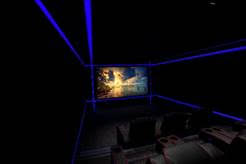
    The Dark Night Theater
    The Dark Night

    The theater space, intended to be the owner’s work respite, is conveniently located adjacent to the store showroom and office.  The existing room structure needed updates to make it a viable theater space.  And noise isolation was a top priority while still providing an outstanding cinema experience.

    “We faced a few challenges with the room design,” said Ankur Bhatt, Founder & Director of Sound Sense. “Our first obstacle was the structural planning. The entry to the cinema set-up was from the rear, center of the room. The placement of the steps leading to the room needed to be worked out as the steps immediately followed the door opening.  We selected curved steps to allow for enough space between the doors and the step landing.

    “Our next challenge was noise isolation. The home cinema room, located on the first floor of the client’s showroom, was adjacent to the client’s office space and was on the floor above the showroom’s demo floor. We carried out floor isolation to restrict all sound emanating from the home cinema. Additionally, we used door seals and automatic specialized drop-down door seals.”

    The in-wall loudspeakers also played a role in abating noise. Phase Technology’s CI Custom Install 3-way in-wall speakers were selected for the high-end theater audio for their high-quality sound and noise isolating properties.  The patented CI 120 and CI 130 use a hybrid in-wall enclosure design that lowers the transmission of sound into an adjacent room while keeping the bass output at levels close to an infinite baffle design. With this design, a speaker with the same size rear enclosure will have bass output that extends up to one octave lower than a comparable speaker.

    “The goal for this installation was to offer the client the best cinematic experience and to project the director’s intent in every way possible,” continued Bhatt. “We attended an HAA training course in Mumbai, India approximately four years ago, where MSE Audio’s Phase Technology speakers were being used for audio calibration. That’s when we became hooked on the brand and have been using various Phase Technology speakers in our demo rooms and client installations ever since.

    “We tend to stick to the Custom Install line of Phase Tech, including the CI-130, CI-70X, CI-7.3X and the Power FL-12 subwoofer. These speakers are helpful in discrete installations. Their on-axis and off-axis response is unique and enhances the overall experience of the set-up. And, because of the technology used in these in-wall and in-ceiling speakers, they produce a more controlled sound that helps with noise isolation.”

    The Dark Night includes a Crestron DALI digital addressable lighting interface lighting system. The Sound Sense team used the DALI system to outline the theatre walls to create low-level lighting for a striking view of the darkened room.

    “Our client was quite pleased with the theater. High-quality, reliable product solutions are the topmost priority of every AV integrator,” Bhatt concluded. “The Phase Tech speakers used in this installation offer superlative sound and resonance recognizable by even the untrained ear. With our experience using Phase Tech speakers over the past few years, we can vouch for their consistency and reliability in terms of quality output and technical performance over time.”


  • Poly hires new CEO and President, Dave Shull

    Poly hires new CEO and President, Dave Shull

    Shull joins after heading up Tivo, The Weather Channel, and Dish

    SANTA CRUZ, Calif., – August 17, 2020 – Plantronics, Inc. (NYSE: PLT) (“Poly” or the “Company”), a global communications company that powers meaningful human connection and collaboration, today announced the appointment of Dave Shull as President, Chief Executive Officer and a member of the Company’s Board of Directors (the “Board”), effective September 8, 2020. Mr. Shull succeeds Robert Hagerty, who has served as Interim Chief Executive Officer since February 2020. Mr. Hagerty will continue in his role as Chairman of the Board, and resume his membership on the Nominating and Governance and Strategy Committees, as well as his role as Chair of the Mergers and Acquisitions Committee. Marv Tseu will continue in his role as Vice Chairman of the Board.

    “Dave is a technology veteran whose global operations and telecommunications expertise, together with his extensive leadership experience and fresh insights, make him an outstanding leader for Poly,” said Mr. Hagerty. “Poly’s rich technology history, diverse end markets ranging from offices and call centers to consumers, and proven focus on excellence in innovation mean that we have a tremendous opportunity ahead of us. The addition of an enthusiastic, creative thinker like Dave is, in the Board’s view, a recipe for long-term success and growth. On behalf of the Board, I am pleased to welcome Dave to the Poly family.”

    “The COVID-19 pandemic has changed the world for all of us – especially how we interact and connect with others, both professionally and personally,” said Mr. Shull. “Poly has been leading the world for decades in connecting teams wherever and however they want. Its world-class audio, video, and software engineers are focused on creating the best communication endpoints that sound great and deliver amazing video, and are also consistently reliable and manageable for the most demanding users. We expect the fundamental shift to remote work and to the cloud will endure well beyond the pandemic, and the market opportunities created by the work-from-anywhere revolution are significant and exciting. This is a pivotal time in Poly’s history, and I am excited to lead this talented team during this transformational period.”

  • Creating genuine equity through equity intelligence

    Creating genuine equity through equity intelligence

    The Loop Lab’s Founder and Executive Director Chris Hope outlines his vision to create an intersection between communities of color, the tech economy, and workforce development

    Over the next few months, I will be sharing my experience and thoughts regarding equity with you, but first would like to share a little about my background. I am originally from Atlanta, Georgia, and moved to the greater Boston area for school. My career focuses have largely been in the sciences and in advancing equity. I received my Masters from Harvard Divinity School, and I currently hold a CTS in the pro AV industry. I am the Founder and Executive Director of The Loop Lab.

    While at Harvard Divinity School I interned as a minister at my church, Pentecostal Tabernacle in Cambridge, Massachusetts. Part of my ministry and internship there included helping with AV and organizing community events. The church is located in the center of the most impoverished neighborhood in the city. In my role, I mentored several young adults from the neighborhood and would invite them to the studio to record their music and to learn more about AV. I identified an opportunity to help these youths by helping them connect their passion in AV and music to meaningful and prosperous careers. Soon, I began to talk with city officials about funding a formal program where students could receive free workforce development and training into the industry.

    My vision was to create an intersection between communities of color, the tech economy, and workforce development. This vision is being realized through The Loop Lab. The Loop Lab was created to create more viable workforce pipelines into the Pro AV industry, and to stimulate more diversity in the industry by empowering womxn and people of color to enter careers in the AV industry through job training and job placement. Implicit bias and discrimination exists in almost every aspect of American society, and in every industry, but is especially obvious in the AV industry.

    A glance at a companywide photo at a typical AV company, would yield images of mostly white men over the age of 40. People of color are grossly underrepresented in the tech industry and often left out of work opportunities. For example, the immigrant labor workforce makes up 39.8% of the MA workforce, but are overwhelmingly underemployed in building and maintenance jobs.  

    Beyond lack of diversity in the workforce, underrepresented people who do work in the industry face additional challenges, such as lower promotion rates, lower pay rates, higher instances of building security following them around during installation or work visits, dealing with higher levels of scrutiny on field job due to a perception of stereotypical laziness.

    In the past year, AV organizations such as AVIXA, have expressed a genuine desire to address disparity and biases in the industry. AV companies are starting to learn that increasing diversity in their industry will enrich the AV experience, allow for diverse perspectives, and serve a broader population. In addition to The Loop Lab, I have created a company called Equity Intelligence, formed to help companies and organizations like AVIXA recognize, control, and handle systemic, structural and interpersonal unfairness judiciously and empathetically, identify specific growth areas, form action steps, implement trainings and initiatives aimed at advancing equity and inclusion.

    In 2020 it is clear that we have a long road ahead of us. But I believe that through our collective will power, we can usher in a new horizon of equity and progress through the dark and stormy clouds of ignorance.

    For more information on The Loop Lab, visit www.TheLoopLab.org.

    “Equality is treating everyone the same. But equity is taking differences into account, so everyone has a chance to succeed.Jodi Picoult, Small Great Things

  • Resimercial Rises Again

    Resimercial Rises Again

    Crestron is beginning to market some of their commercial solutions into the residential market, indicating a further push of resi-mercial

    When the worldwide pandemic took hold, we all headed home. Working from home (WFH) took on an entirely new meaning. The impact of working, and kids’ learning, from home were felt immediately in our networks as well as the technology we were able to bring from the office. No one thought to grab a high-performance microphone, or video camera, or display.

    Some technology companies have given stipends to their employees to outfit their WFH setup. However, these engineers and creatives haven’t put together a unified communications system. They will buy what their friends tell them to buy. The AV industry, though, has an opportunity here. Though, in the US, it may seem foreign.

    What these new home-bound workers need is commercial audiovisual gear installed in a home office or dedicated space. Take dad out of the kitchen and mom off the back deck and give them proper equipment. Crestron is beginning to market some of their commercial solutions into the residential market. Call it, a further push of resi-mercial.

    Crestron mercury WFH
    Crestron mercury WFH

    This week the company began outreach to their home dealers on this chance to offer higher-end connectivity. The space isn’t completely unfamiliar with the channel. A number of residential dealers have been working in light commercial since the housing crisis twelve years ago. With this new push though, Crestron is giving dealers some new tools.

    “Microsoft Teams hosted 2.7 billion meeting minutes” says VP of Residential for Crestron, John Clancy. “Zoom grew from 10 million daily users to 300 million in just a few weeks. People are thinking about how to conference from home.”

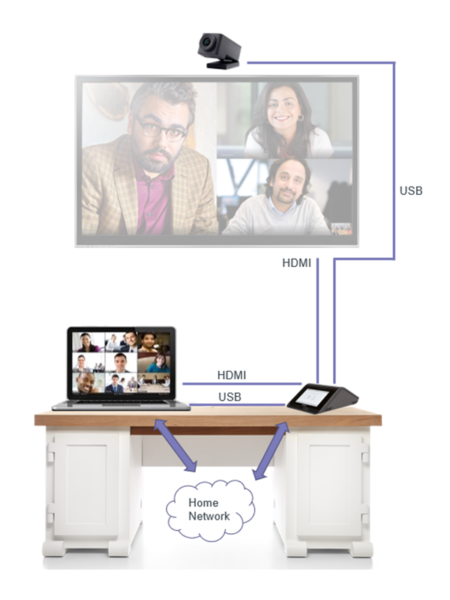
    Products the company already had that were situated for home conferencing are ones already being used in offices today. Crestron’s Mercury is an award-winning conferencing system that can be easily ported to the home office or den. The same can be said of AirMedia, the wireless content delivery system. Then Crestron unveiled two new systems that is squarely geared for WFH. The first is HomeTime. This is a camera and videoconferencing kit that can be installed behind a display in either a family room, den, or in a dedicated office.

    Crestron Inidcator
    Crestron Inidcator

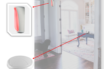
    The second piece is the Indicator. A status light is installed outside a dedicated space in your home. The wireless control button lives on your desk and you indicate whether you are on a call, busy, or can’t be disturbed by turning the indicator on or off.

    As many have said, WFH is indeed our “new normal”. What is also a shift that will likely stay is leveraging the products we all see at InfoComm on the commercial AV side for residential workstations. Crestron’s move here makes sense as we gear up for Virtual CEDIA Expo next month. What is unknown is whether it will be the residential dealers who introduce commercial into their clients’ homes or commercial AV integrators who see residential as the next opportunity. Regardless, commercial AV products are in the home to stay.

  • Bridging the digital divide with social activism in AV

    Bridging the digital divide with social activism in AV

    The pandemic has unmasked the technological inequalities plaguing the U.S., but there are ways the AV industry can get plugged in and help to bridge that gap

    In a June 2020 Opinion column in The Washington Post, Katrina vanden Heuvel highlighted the myriad ways that the COVID-19 pandemic has brought the digital divide once again into full focus. Pulling together impediments — from the FCC decisions in relation to telecom monopolies to the societal ills that disproportionately affect low-income and rural Americans as well as U.S. households of people of color — to internet access and by extension technologies critical to moving through the current crisis, vanden Heuvel firmly states, “The United States has failed in the equitable delivery of this public good. The disparity will almost certainly lead to further inequity. No American should suffer the indignity of searching for Internet. Starbucks WiFi is not a social safety net.”

    Within the AV industry, there is a segment of AV professionals attempting to bridge this digital divide by actively engaging their communities and serving as architects of solutions that go beyond the provision of hardware by seeing the problem as a social justice issue. Recently, Integrate Baltimore, a technology non-profit led by AV pro Ernie Beck that seeks to connect Baltimore’s students and professionals with opportunities and access to the AV/IT industry, formed a partnership with the Baltimore Digital Equity Coalition (a consortium of 50 organizations that formed in the wake of COVID-19 to offer “a rapid response” to the lack of digital access in the community) to distribute 2,000 devices that will offer digital access as the pandemic continues to impede access to online learning and telehealth services.

    “At the outset of this pandemic it was estimated that somewhere near 70,000 households in Baltimore City lacked access to an internet-connected device,” Beck says. “The Baltimore City Public School System (BCPSS) has certainly jumped into action purchasing close to 20,000 Chromebooks as of July, but as you can see, that doesn’t fully address the need. The 2,000 devices number is in part based on the demand of requests the coalition partners are getting. Some coalition partners have hundreds of device requests from surveying the communities. We are in a stockpiling mode until we reach a critical donation mass, at which point we will distribute to the community through our City-based coalition partners. Donations will be based on a few factors: age, purpose, date of original request, type of request (i.e., multiple devices or just one). Part of the reasoning behind waiting to distribute is to see where the remaining needs are. The BCPSS is focusing heavily on student age children, but who is taking care of the adult learners, veterans, at risk young adults? That’s the type of questions we are hoping to answer and steer our distribution efforts towards.”

    During a recent discussion on AVNation’s AVWeek podcast, Chris Hope, the executive director of The Loop Lab in Boston, a non-profit workforce development program dedicated to bringing adults of color and women into the AV industry, underscored why the digital divide is just as much a social justice issue as much as it is a technology one. Invoking two great congressmen and civil rights activists, Elijah Cummings and John Lewis, both of whom have left rich histories of advocacy and resistance in the wake of their recent passings, Hope urged listeners to get in touch with their state representatives.

    “People like the late great Elijah Cummings and people like John Lewis, who really advanced this in policy, write to your local senator, write to your local congresswoman and congressman about the need for more funding in education, especially in the fact that we’re now living in a time where you need a computer, you need tech gear to have access to classes,” Hope says. “I am appalled when I hear these stories from educators saying that they don’t even have enough equipment for their children to be able to attend school online. That is unacceptable. That should be deplorable.”

    Hope later sets a tasks for the AV industry: “I think that people within the AV industry really have to take the mantle of this and say, ‘How can we create more access?’ whether through finances, volunteering, as some of these organizations [where] it might make even more sense to provide some [of these] services. If you have the tech services that you can give, maybe you can do in-kind service provision. But either way, there’s always something that folks can do. The bigger question then becomes is, is this something that you really feel is a human right? Which I believe access to technology is a human right in the 21st century. But if you feel like this is a human right, there has to be, as Dr. King says, a fierce sense of urgency to have people move into action, however they do so within their own realm.”

    Hope is not alone is his thinking. Beck echoes him when he tells AVNation that he believes that we need to treat the internet as a public utility, especially as “we have built our entire economy around the internet; from online learning, to working, to paying bills, to telemedicine, to entertainment, it’s an intrinsic part of our societal fabric.”

    “What the pandemic has exposed is not only food insecurities of many households who relied on getting meals from public schools/facilities, but information insecurity,” Beck continues. “I believe if the U.S. wanted to, on a federal, state, and city level, they could prioritize funding of grass-roots organizations that are in the field doing the work. They could put more pressure on big telecom companies to provide low-cost high-speed internet services for low-income individuals. They could make sure every student has access to a laptop so when they’re sick or need to quarantine they don’t fall behind. Political candidates at every level of elected office would ideally make digital equity a cornerstone of their campaigns.”

    Integrate Baltimore, the Loop Lab, and Baltimore Digital Equity Coalition are great organizations for AV professionals to turn to if they want to engage with the problem of and activism around not only bridging, but also systemically dismantling, the digital divide, which seems to be growing even as it is under a microscope. Monetary and devices donations are a great start, as Beck and Hope suggest, as wells as volunteering time to these organizations and many others in satellite channels (i.e., IT, networking, telehealth, etc.) by offering your time as a mentor or simply as a driver to get devices in the hands of those that most need them. Beck believes we can all take it a step farther.

    “It takes dedicated professionals volunteering their time and expertise to non-profit organizations, many of who don’t have the financial means to hire a professional,” Beck says. “Donating money is great, but many professionals in these markets are extremely adept at solving complex challenges through technology. If our companies within the industry made social intrapreneurship an important part of the company culture, and setup frameworks for community involvement, we would see a profound impact. Once companies get started community initiatives, employees report having increased sense of teamwork, career fulfillment, connection to the community, and generally have a more positive outlook on the company culture.”


  • Integrate bets on a well-planned virtual program

    Integrate bets on a well-planned virtual program

    Integrate, Australia’s premier AV integration show, is going virtual with purpose and in partnership with AVIXA

    Launched to address the lack of a B2B professional trade show for the AV industry in Oceania, Australia and New Zealand, Integrate was first held in 2009 and has become an annual event in the region. But, like many of AV’s global conferences, meetings and live events, Integrate had to make the difficult decision to go virtual back in March, making its organizers among the first in the industry to acknowledge the potentially devastating impact of the novel coronavirus pandemic.

    “As a team, we started to look virtual options, initially, we considered rolling out weekly content for an hour or so. What we soon realized was that there was quite a lot of content being launched and we were a little uncertain of format, etc.,” says Soren Norgaard, commercial manager and event manager, for Integrate organizer, Diversified Communications Australia. “Integrate has had a longstanding association partner in AVIXA and they had also just launched their InfoComm Connected program, which ran successfully on what would have been the InfoComm dates in June this year.”

    Integrate will go virtual from August 19 – 21, 2020, in partnership and collaboration with AVIXA, and on the original dates of the in-person event in another cue it has taken from IC2020 — a decision Soren says communicates the Integrate brand to the broader AV community and ensures that the organization stays connected to its core audience in the AV channel and end-user groups.

    “We went live with the launch of the registration on the 28 of July and so far, we have had a very positive reaction,” Norgaard says. “We don’t have a long lead in to the series but it will be fairly focused and concentrated and hopefully not a saturation of information. We hope that the participants will enjoy the content and discussions that we are providing, but also importantly allow participants to engage in our live chat forum and hopefully take the discussion further offline. After all, industry events are all about engagement and connecting with like-minded people.”

    One of the advantages of virtual events, as we have all have come to learn, is the access international AV professionals will have that might have been more difficult to achieve in person. Integrate always had international representation, Norgaard says, but hosting Integrate online digitally opens these borders.

    “There is still going to be the time zone considerations depending on where you are in the world,” Norgaard explains. “Here are some examples of time scales. If you are on the west coast of the U.S. the program starts 17:00 local time. If you are on the east coast it is a bit later at 20:00. If you are in Europe you can log into the afternoon sessions first thing in the morning. But if it is all too hard with the time thing the sessions will be recorded and can be viewed when convenient.”

    Integrate has a broad, appealing program line up that will engage the AV channel and AV professionals. For Norgaard, three sessions stand out as essential: Emerging Trends — What the Industry is Going to Look Like After 2020 (hosted by AVNation’s Tim Albright and Tim Stackpool, Australian TV and radio professional), Mental Health in AV Today, and Day 3’s The Future of Security and Government, which takes a look at the AV aspects of infrastructure and operations in those areas.

    Integrate 2021 will be held in Melbourne, Australia, from August 24 – 26.

    “The August date for 2021 is looking more and more promising given that COVID-19 is looking like it will be with us for at least the first quarter of 2021,” says Norgaard. “It will be interesting to see how the virtual take up will be received, but I can see that there very may be a virtual component is years to come to complement the physical show.”

  • Learn From Home Connections: How Steve Met Tammy

    Learn From Home Connections: How Steve Met Tammy

    Steve Greenblatt and Tammy Fuqua of Control Concepts recount how AVNation’s Spring Learn From Home Summit brought them into a working partnership

    We at AVNation love a feel-good story, especially during hard times like we are experiencing in the present moment. This past spring, we developed and delivered one of the first virtual events for the AV industry with our Learn From Home Summits for the residential and commercial integration sectors. The idea was and continues to be to connect all of us in this beautifully evolving field to stay in touch with each other and keep our community fortified with ideas, experiences, and the inspiration we have grown so used to at our in-person events. So, it was with real joy that AVNation learned that LFH actually brought together two people in search of each other’s experience and know-how.

    Tammy Fuqua, and active and enthusiastic member of the AVIXA Women’s Council, has been a sales management expert in the public and private sector of the AV industry since 2001. Starting out at a small CD/DVD duplicator as the sales administrator, she has since held sales management positions at Christie Digital, Epson and most recently, at an UK interactive flat panel company. When she was laid off at the end of February, Fuqua decided to take some time off to chart a different course for her career.

    Tammy Fuqua
    Tammy Fuqua, Account Manager, Control Concepts

    “While I was off work, it was all about keeping up with the industry trends and getting as involved as possible to keep myself relevant to the AV community,” Fuqua says. “Now that I am back to work, this philosophy still holds true, only now I am bringing my new company into it. It is tough though with so many changes.  I listen to podcast, join virtual conferences, like LFH Summit, and network heavily to stay in the know.”

    Fuqua’s road to Control Concepts started during AVNation’s Learn From Home Summit, where she was a panelist during the “Branding Yourself During a Crisis With AVIXA Women’s Council” session this past April.

    “It has been absolutely vital to my career development,” Fuqua says of AVIXA’s Women’s Council. “In the past four years I have built a network of women and yes, men, by being involved with this dynamic group. It was incredibly empowering for me to surround myself with so many like-minded women in the industry and men supporting us. I can honestly say I would not be where I am in my career without connecting with AWC.

    “I tell Brandy Alvarado, AWC president, quite often I want to be just like her when I grow up – helping women change the AV industry to be more inclusive when it comes to women.  Now, as a leader of a local group, I am helping with that.  When I lost my job, I was inundated with job opportunities by AWC members. It reassured me that I had a network of people looking out for me. They got my back and in return, I got theirs!”

    It was during that Learn From Home panel discussion as an attendee that Steve Greenblatt, president of Control Concepts based in Fairfield, NJ, first encountered Fuqua.

    “I wanted to connect with Tammy after hearing her on the LFH Summit because she mentioned she was recently available and had experience in an account manager role,” Greenblatt says. “We had been looking for account manager prior to the pandemic. Due to the uncertainty of business, I wasn’t sure if we were in the position to hire at the time. However, I thought it would be valuable to connect and see if I could provide help either within or outside of our organization.”

    Fuqua’s involvement with AVIXA’s Women’s Council was of importance to Greenblatt, who is also a supporter and advocate for the organization. He reached out to her via Linkedin to introduce himself and to begin a conversation about her possibly joining Control Concepts. A short time later Fuqua interviewed for the job.

    Steve Greenblatt, President, Control Concepts

    “Tammy’s people skills, passion and commitment to the AV industry, cultural fit, and ability to promote our brand were the key elements that helped ensure she would be a quality candidate for the role,” Greenblatt says.  “Additionally, after speaking with Tammy’s references, I felt convinced that she had what it took to succeed in this role and on our team. I felt that Tammy’s past experience provided a crescendo that prepared her to make the leap from the tangible role of selling hardware products and solutions to the more dynamic and varied area of software and services.”

    In her new role as account manager at Control Concepts, Fuqua is charged with fostering relationships with AV manufacturers and software providers to help the Control Concepts make their products easier for programmers and integrators to implement through the availability of modules, drivers, and middleware for various control platforms and operating systems.

    “This is a future growth area for our business that will contribute to making products more robust, making projects more efficient, reducing programming time, minimizing troubleshooting requirements, increasing system reliability, and enhancing client satisfaction,” says Greenblatt.

    Fuqua has set out on the new course that she was hoping to develop in February during her time off. She says she joined Control Concepts first and foremost because the company works as a team as well as the great reputation that Greenblatt has in the AV industry. “I believe in his goals and vision for the company and our module/driver development,” she adds. “I liked that we are a small company with big goals and even bigger values. Lastly, it was important to me, as the account manager, that I could bring my skillset to the company to help grow the business and develop the already existing relationships.”

  • Workforce: Staying connected during the COVID-19 pandemic and beyond

    Workforce: Staying connected during the COVID-19 pandemic and beyond

    Exterity’s CEO Colin Farquhar details the role digital signage and IP video will continue to play in our ever changing work culture

    The COVID-19 crisis has truly altered the way the world of work operates. Even as lockdown regulations are starting to be relaxed, the changes we have seen in the last few months will have an enduring impact on work culture and shape of offices going forward. It has become patently clear that remote working, social distancing and new approaches to existing office spaces will combine to redefine what’s ‘normal’ for a long time to come.

    The first and most obvious change reshaping work has been the near-instant acceleration in remote working strategies, where possible. Nonetheless, despite the vast number of communication tools available in the digital age, many businesses, government departments and other organizations view physical and face-to-face interaction in offices as central to their normal work culture — firm in the belief it fosters closeness, collaboration, communication and creativity. As lockdowns eases, many organizations are faced with the practical challenges of balancing a hybrid approach that incorporates a measure of homeworking along with radically revamped workplaces.

    Social distancing and ‘stop the spread’ measures implemented both by government and business leaders will play a significant role in determining how organizations operate as the pandemic evolves, so it is imperative that employees are equipped with the right tools to ensure they can stay up-to-date with the latest news, announcements, training and policies. For businesses trying to keep scattered workforces engaged, hospitals ensuring healthcare staff are kept safe and well-informed, and places of education still teaching from a safe distance, IP video-based technologies — including the secure delivery of content to any device and facility-wide digital signage — play a key role in ensuring that vital communications reach people wherever they are.

    A clear example of the importance of effective communications is in the banking and finance industry, which has been significantly impacted by COVID-19 due to falling interest rates, fluctuating markets, rising unemployment, government interventions, tax changes and stagnant consumer and business activity. IP video technology has, of course, been employed by many businesses in this sector, even before the crisis, as it enables live and on-demand streaming of meetings, presentations across multiple rooms or even disparate offices to ensure everyone is abreast of vital information firsthand. For instance, Thomson Reuters, the world’s leading source of news and information for professionals in the financial services, media and corporate markets, has an IP video system deployed that delivers broadcast-quality TV and video to over 300 displays in conference rooms and lecture theaters as well as 2,500 screens and desktops around its London headquarters. This enables staff to keep up to speed with the latest news around the world as events, such as critical developments related to coronavirus, unfold in real time – as well as recorded and internal content. This level of IP-enabled information-sharing is now more widespread and crucial than ever.

    Staying connected during the COVID-19 pandemic and beyond
    Within office spaces that have stayed open through the crisis or reopening when lockdown conditions ease, digital signage throughout premises is critical for informing staff of what is expected of them, the latest government advice, what actions the organization is taking, and other important information.

    Other organizations facing pressure to open as soon as safely possible include schools and universities. With the need to respect social distancing, manage reduced class sizes and provide support for health and wellbeing all top priorities, effectively communicating with students and staff quickly and clearly across campuses is essential as educational institutions start to open. To help, eye-catching graphics and text, complemented by videos or live TV, can be displayed on screens in lobbies, common areas, cafeterias, lecture halls, libraries, labs, hallways and everywhere in-between. The New England Institute of Technology is a prime example of how an integrated IP video and digital signage system improves communication, with live TV and video channels delivered directly to students’ residency, as well as digital signage in communal areas across the entire campus — all of which can now be instantly put to good use when campus life resumes with more complex communication requirements.

    During this coronavirus outbreak, it has been paramount for healthcare workers to have access to training and information about the latest developments — from government guidelines and updates on the spread of the virus and potential treatments, to information on protective equipment and other ways they can guard themselves against COVID-19. IP video technologies can play a significant role in keeping people connected and updated on the situation as it changes. French pharmaceutical giant Sanofi, which is involved in the development of vaccines and innovative drugs, offers a good example of how IP video technologies are used in the healthcare sector across a number of remote facilities. Sanofi deployed an IPTV system to provide staff across its Paris offices with quick and easy access to internal communications, as well as news from medical, business and news channels to keep everyone well-informed of the latest healthcare situations and developments.

    For those employees who have no choice but to go out to work, digital signage and IP video are key tools in keeping them well informed during their working day. More than ever, people will be anxious for information on matters that might not previously have seemed important, such as how deliveries are handled, visitor management, onsite security, which entrances and exits to use, cleaning schedules and even where they can wash their hands and get hand sanitizer. Safety instructions on things such as social distancing, moving within and between buildings and which restrooms to use will also be of keen interest. Within office spaces that have stayed open through the crisis or reopening when lockdown conditions ease, digital signage throughout premises is critical for informing staff of what is expected of them, the latest government advice, what actions the organization is taking, and other important information. Other benefits of digital signage include the ability to easily schedule or update signage screens remotely in real-time and add more screens to the network.

    Employing technologies such as digital signage or IP video — as fast and secure delivery of communications to mobile devices – is central to maintaining ‘business as usual’ as we all work together to manage the coronavirus pandemic and its aftermath. For both those working remotely and those who must return to onsite working, IP technology plays a vital role in ensuring people feel confident, comfortable and effectively communicated to, as we embrace the post-lockdown reality that we find ourselves facing.

    Colin Farquhar is CEO and Founder of Exterity, a leading vendor of digital signage and IP video solutions, based in Scotland, U.K.

  • Innovating the virtual AV trade show

    Innovating the virtual AV trade show

    With hybridity seemingly the path most considered for future industry shows, virtual iterations have inspired manufacturers and integrators to rethink the traditional trade show model

    That 2020 started off as an inspirational year — with many of us setting new goals in line with entering a brand-new decade — only to tumble us all into the worst pandemic in more than a hundred years, will be rightfully examined ad infinitum for the foreseeable future. As the AV industry, both residential and commercial, reckon with the economic impact of pandemic-induced business disruption and closures, our industry organizations were quick to re-examine their in-person events and trade shows and came up with the next best thing: virtual stagings of those events utilizing many of the technologies we often pitch to our end users and clients. This pivoting, as it is so often called, was rightful praised and appreciated, especially by a confined global audience hungry for the engagement that in-person events are meant to offer.

    AVIXA and CEDIA, both of which have opted for virtual events this year, were not alone in seeing the opportunity to capture a larger, global audience with this model. Soon, many manufacturers, several of whom had plans to have physical booths at the big annual trade shows, were announcing their own online events, including exclusive product showcases and educational webinars for how to best pitch and use their products during and after the crisis. Among them are Crestron with Crestron Next, which debuts this fall, Atlona’s AtlonaComm 20 and Planar’s Virtual Product & Technology Showcase, both of which were held in June, and Savi’s Savi.Connect event, which will debut next month.

    “Hosting your own event is a chance to brand and own the virtual experience,” says Paul Richards, Author and Director of Business Development, PTZOptics and HuddleCamHD, stagers of the upcoming Presence Summit, a full-day presentation of workshops and sessions to help team leaders effectively utilize video communications. “It’s also a great opportunity to associate your existing brand with influencers and thought leaders of your choosing. Hosting your own event means nearly limitless customizability. When virtual events first came about, organizers presented a virtual show floor that merely mimicked a real show experience with avatars representing attendees ‘walking’ around. I’m honestly not a fan of that approach because mimicking a face-to-face event simply doesn’t translate well to virtual events. Instead, virtual events should reinvent the event space and explore what is possible with communication technologies. The simpler and more interactive and engaging your event is, the more attendees will take away from the event, which in most cases also means the better the ROI.”

    “Atlona knew when Mobile World Congress in Barcelona cancelled that this would not be a good spring, or even summer, for trade shows,” says Garth Lobban, director of marketing for Atlona. “The impact of the novel coronavirus was quickly felt globally, even as we were onsite at ISE. Come March, in-person gatherings and events were either postponed or cancelled. We pivoted to accommodate the new customer engagement realities from webinars to Teams/Skype/Zoom meetings. By late March, we drew up a “Plan B” in case we lost InfoComm in June. Creating our own virtual event appeared to be the best way to engage our customers, communicate our message, present our new technologies, and offer informative programming.”

    Lobban adds that by producing their own event, Atlona has flexibility to manage the marketing triangle — create awareness and drive customer interaction with the ultimate goal of closing the deal — with minimal noise and competitive distraction.

    “We also have direct scheduling capability so that end users and our partners — a critical aspect of our sales effort — could directly schedule business meetings and booth tours, using video meeting technology, between their customers and our regional sales reps, system engineers, or product marketing staff,” Lobban says. “It’s at these meetings and tours, with the virtual booth as a backdrop, that the sales team can close the deal; whether it’s to schedule a demo or get the PO — just as we do at an in-person trade show.”

    Deeper customer engagement was also the impetus for Savi.Connect, as the company’s CEO, John Dorsey notes, even though Savi also felt it was important to participate in InfoComm Connected in June with a physical booth (built in the company’s warehouse) and panel participation to stay connected with the industry. That same booth will be employed during SAVI.Connect to eschew canned videos and presentations.

    “Ultimately, we decided to host our own SAVI-branded event, SAVI.Connect on August 26, because we felt it was the best way to closely replicate the “one-on-one” feel that an in-person demo at a trade show may provide,” Dorsey adds. “We’ve seen throughout the years that expressing the true value of this technology often comes down to witnessing it live at work. Hosting our own virtual event is the most impactful way that we can reveal and introduce a radically new product line to the market. It creates an opportunity to connect with our core audience with less overall noise than at a virtual trade show, while still providing one-on-one, hands-on demos on a smaller, more easily accessible scale.”

    Dorsey is on to something. During a recent Digital Signage Digest podcast episode, where the conversation inevitably turned to whether we all will be comfortable attending trade shows in the next 12 months, Artmedia Corp.’s CEO, Eugene Ababio, revealed that before the pandemic he had slowed down on attending trade shows because he was able to get a lot of the information he was seeking online.

    “I find a lot of my information sometimes before it even hits InfoComm or any of the trade shows,” Babio says. “I find a lot of my information on Google, where else? What you’re needing, check out manufacturer websites. They’re all anxious enough to make people aware of their new products, do whatever they’re planning on showing at the trade shows. It’s all readily available, honestly. So, because of that — I know a lot of people go for a lot of reasons for the parties, for the drinks, for the free stuff or the connections — but honestly, I used to go because I wanted to find new products and innovative products, but you can find a lot of that online.”

    As conversations about if and how we will return to the trade show floor in 2021 continue to swirl, there is also a parallel discussion about what that should look and feel like, especially with the overwhelmingly good attendance achieved by InfoComm Connected and smaller, localized virtual events like Almo Pro AV’s E4v and AVNation’s own Learn From Home Summits. Of course, confinement fatigue should not be underestimated; a captive audience will have its own demands as more people adjust to living and working online and the advantages and limitations of that kind of engagement continue to be dissected. The obvious answer to the trade show question is a hybrid event, especially for international AV industry members for whom travel is both physically and economically prohibitive.

    “I’m a huge fan of virtual events, and I’ve made no light of this,” says Frank Padikkala, an AV engineer at integration firm, Diversified, during a recent episode of AVNation’s AVWeek podcast. “I’m of the opinion that this should eventually replace all trade shows. I’m being a little hardcore there, but I feel there is an opportunity here that we have missed out on many years. And I might be one of those positive guys right now who is trying to find the best out of COVID-19, but I think this has forced us to change our perspective and actually look into sales through virtual events as an alternative. I feel there’s a huge market for it.”

    Padikkala goes on to say that the biggest winner in an all-virtual event is the end user, especially those outside of the U.S. and developing markets, with the AV integration industry also scoring big with the global introduction of our technologies to end users who would otherwise not know about or have access to them.

    “It is not practical at all for some of these people to ever get on a plane,” Padikkala adds. “Or a person like myself; I’m an engineer. If a corporate company, anyone for that matter, I’m not representing my own, but in general, if they were to pick a totem pole who gets to go to a trade show, the engineer would probably be at the bottom of it because, well, I mean the big companies will contact them. Crestrons the Sonys, all these people are going to come to the engineers, but who needs to see it? The salespeople; the people who are upfront in front of clients. But, what if I do want to see it? And that, my friend, COVID-19 has given me the opportunity to take part in Crestron and AVIXA.”

    Padikkala’s idea might seem outrageous, but in a time when “normal” is constantly evolving, drastically remaking the trade show model might not be as crazy as it seems. It’s a vision he has shared before and argues, along with Babio, that the AV industry in particular has the technology and the chops to hack and innovate the traditional trade show model — an idea that runs alongside the ongoing remaking of our entire world, in general.

    “We’ve been so stuck on keeping things the way they are,” Padikkala says during DSD. “We don’t realize there’s a whole other universe out there that we could have been using. And this could have been done five years ago, four years ago. Sure, the technology needs to evolve. Sure, there are shortcomings. Sure, it’s not going to be as … especially the social component, of a live show. Yeah, it’s not going to be there, but why not? As a design engineer, I deal with two things that I always hold dear to my heart. It’s kind of my guiding principles. I like to innovate and I like to be inclusive. And these two things are answered perfectly by technology. It’s so much easier than to make a trade show floor inclusive. It’s easier to do a virtual trade show for it, make it inclusive than it is a live show.”

    Change is slow and familiarity often wins because its comfortable, but integrators, manufacturers and industry organizations agree that live trade shows are still necessary and vital, even as we collectively examine ways to refresh our approach and as Padikkala outlines, expand inclusivity. Both Atlona and Savi think the hybrid model makes sense, with Dorsey noting that it opens the doors to wider exposure for some of the tech that often emerges from our industry, while Lobban is clear that Atlona’s virtual events are adjunct to in-person shows once we all can safely return to the show floor.

    2020 is decade-defining year, and while we all missed InfoComm’s showfloor and are gear up for a lively, online staging of CEDIA 2020, industry organizations like AVIXA are listening. AVIXA’s Joé Lloyd perhaps sums up this ongoing conversation best when she outlines what AVIXA is taking away from engagement on the subject: “Well, I think we learned that there’s more to be done to bring the person who’s sitting behind the computer screen, into the room with us and how do we engage everyone together? But it’s not one or the other. If anybody saw during InfoComm Connected … I talked a little bit about how everybody can wear a crown. We can, it is our job to not only educate our buyer, but to educate our partners. And we all have to do that together in the ecosystem.”