Category: Corp

  • Dodd Technologies Deploys Upgraded Riedel Artist System at Record-Breaking U.S. Swim Trials

    Dodd Technologies Deploys Upgraded Riedel Artist System at Record-Breaking U.S. Swim Trials

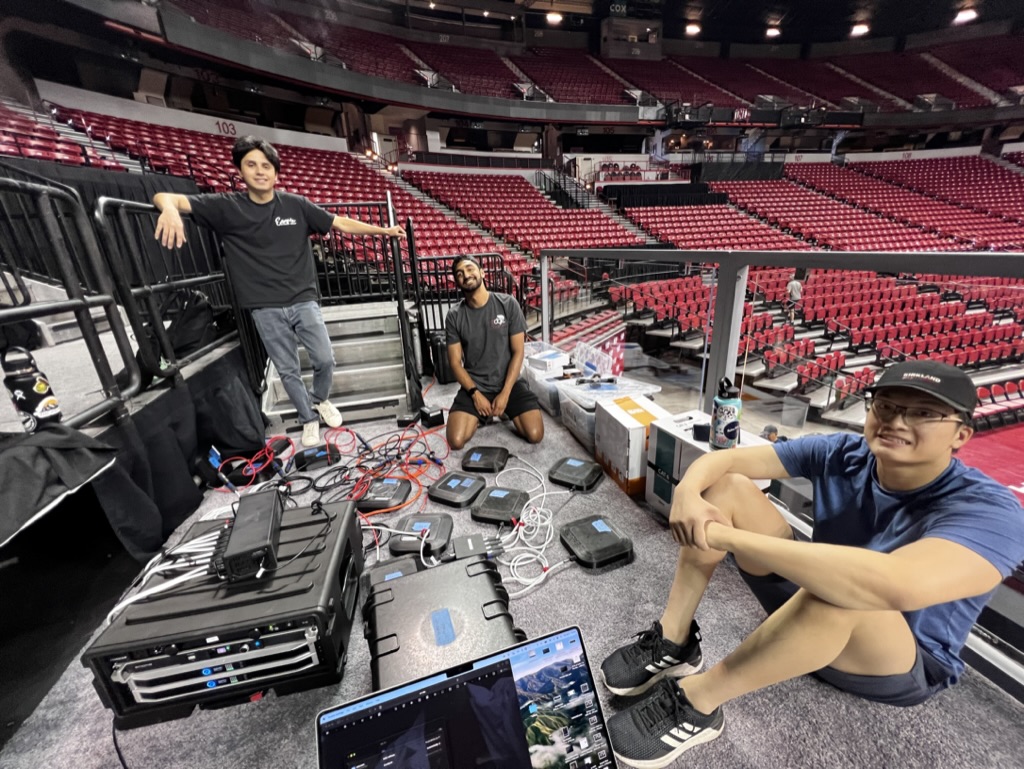
    Riedel Communications is pleased to announce that its intercom technology was instrumental once again at the U.S. Team Swimming Trials held in Indianapolis. As athletes competed for a place in the 2024 world championship events in France, Dodd Technologies used the upgraded Artist-1024 digital intercom matrix, along with Bolero wireless intercom and SmartPanel interfaces. This state-of-the-art setup ensured seamless coordination of the high-stakes event, delivering flawless broadcast and streaming experiences for fans around the globe.

    From June 15-23, as elite swimmers competed at the purpose-built pool at Lucas Oil Stadium, Dodd relied on its Riedel systems — as well as the stadium’s built-in Riedel gear — to ensure flexible, reliable communications. This setup was crucial for managing an in-house show of exceptional sophistication and scale.

    Dodd Technologies covered the swim trials four years ago in Omaha using a Riedel intercom system. This summer, with an Artist-1024 in place of its previous Artist-32 systems, the event production company successfully managed communications across a larger team and the larger, more complex setting of Lucas Oil Stadium, which earned the title of world’s largest aquatic arena. The event itself garnered a record number of attendees, drawing 20,689 fans plus a total viewership of more than 285,000.

    “Given our experience at past trials, we’ve become accustomed to the flexibility and the speed at which we can deploy Artist and Bolero — and how we can alter the Riedel intercom system to the specific needs of the event as they arise,” said Caleb Cassler, audio engineer at Dodd Technologies. “Integrating the Artist system with the giant system already in place took a matter of minutes, and because we didn’t have to spend time solving technical issues, we could focus on refining the comms system to operate exactly as needed.”

    Cassler’s team was able to connect their Artist-1024 to both the in-house Artist/Bolero system and the broadcaster’s OB truck with ease. With the Artist-1024 serving as the backbone of all communications, Dodd Technologies effectively increased the scale and functionality of its intercom system in a smaller footprint. Scale proved essential due to the sheer size of the stadium and the number of people needed on comms across that space to support the event. In addition to providing clear audio despite the densely crowded airspace, Bolero offered the benefit of water resistance, a useful factor for team members working around wet humans all day.

    “The RF spectrum in downtown Indy, where the trials were held, is extremely challenging,” added Cassler. “With all the productions, including outside concerts, there are tons of channels — and we were in a stadium! But with Bolero, I didn’t have to worry about my wireless comms at all. It was delightful.”

    “It was exciting to participate in the U.S. Swimming Trials once more alongside our excellent partner, Dodd Technologies,” said James Skupien, Regional Sales Manager, North Central U.S., at Riedel Communications. “By upgrading their system to an Artist-1024, they gained the scalability and flexibility to integrate seamlessly with both in-house and external systems, creating a single, accessible solution. Just as important, they are able to design larger and more complex systems, achieving the same high-quality audio clarity and reliability, but with a smaller footprint and less setup time.”

  • Bogen Communications Nyquist E7000MCR Empowers Interoperability at San Jacinto Unified School District

    Bogen Communications Nyquist E7000MCR Empowers Interoperability at San Jacinto Unified School District

    San Jacinto Unified School District is home to more than 9,000 students, 400 teachers, and 500 staff members. The district is located within Riverside County, California, the fourth-most populous county in the state, and spans from the greater Los Angeles area to the Arizona border. The San Jacinto Unified School District and its schools have an obligation to provide a safe and secure environment for students, teachers, and staff. With nearly 20 different facility sites in the district, San Jacinto Unified School District must provide clear and open communications in times of crisis.

    Recently, San Jacinto Unified School District invested in a new intercom system to support San Jacinto Elementary School, one of the first elementary schools established in the district. San Jacinto Elementary is home to over 600 students from kindergarten through fifth grade. San Jacinto Unified School District selected Time and Alarm Systems, a full-service low-voltage integrator specializing in K12, higher education, and military. For over 40 years, Time and Alarm Systems has specialized in fire alarm and life safety, surveillance, access control, data networks, and audio-visual systems solutions.

    “San Jacinto Elementary’s current audio system was outdated and delivered many challenges,” said Nathan Kane, IT project manager for Time and Alarm Systems. “Their system lacked a few important features for today’s educational environments, such as zone paging and interoperability with other systems in the district, including their VoIP intercom systems and security systems. The system was aging and deteriorating. The lack of features caused frustration across all staffing levels.”

    Time and Alarm Systems selected Bogen Communications Nyquist E7000MCR to enable increased audio functionality at San Jacinto Elementary. The Nyquist E7000MCR is a pre-assembled solution based on the Nyquist E7000 system. The full-featured Nyquist E7000MCR leverages existing facility wiring, 25-Volt speakers, and call switches to create a plug-and-play solution for legacy paging and intercom systems.

    “It was important that San Jacinto Elementary’s existing speaker and speaker wires remained in place,” noted Kane. “We replaced the intercom with Bogen Communications’ E7000MCR. The E7000MCR was the perfect solution for this installation because it arrived pre-assembled. It allows for quick and seamless installation. Additionally, it allows San Jacinto Unified School District to integrate the elementary school’s intercom with other district systems. The E7000MCR’s future-proof design enables expanded functionality as San Jacinto Elementary’s needs shift. The additional features, such as audio distribution with other school sites, support district-wide communication without investing in new technologies at San Jacinto Elementary.”

    Scott Hepler, national training manager for Bogen Communications, added, “The Nyquist E7000MCR arrives pre-assembled from our factory. The customer and license information is pre-loaded into the device at the factory. By pre-assembling the E7000MCR, our dealers and integrators can expedite on-site installation times. The Nyquist E7000MCR features Bogen Communications’ 7.0 software, which includes new features, such as a 72-hour backup bell schedule without any connection to the network.”

    Bogen Communications’ Nyquist 7.0 software emphasizes ease of use via its highly intuitive user interface. It empowers mission-critical performance through automated server failover capabilities and powerful scripted automated action sequences, known as Routines. The 7.0 update delivers simplified system configuration and a highly automated upgrade process to enable customers to quickly deploy important new features.

    The final result was a success overall. Bogen Communications’ Nyquist E7000MCR has provided San Jacinto Elementary with new features to support campus-wide safety and communication. Kane added, “We’ve been a Bogen Communications dealer for nearly 40 years. The respect we’ve received from Bogen Communications has allowed us to grow our business and expand our relationship with Bogen Communications. It’s a business relationship that we truly value.”

    Scott Hay, IT manager for Time and Alarm Systems, added, “Bogen Communications has a history of reliability and technical excellence. They’ve been around for a long time and we’ve worked with them for a long time. They’re committed to excellence, customer service, and technical support. They’re constantly thinking of their customers and their long-term product innovation.”

    Bogen Communications’ Nyquist E7000MCR is a software-centric, state-of-the-art, IP-based paging and intercom solution that leverages the latest software technologies and third-party integrations. Designed to support existing building infrastructure, the Nyquist E7000MCR leverages existing speaker cabling and can support a virtually unlimited number of audio sources, end-points, and zones.

  • Newark Airport’s Terminal A — the Centerpiece of an Airport-wide Renaissance

    Newark Airport’s Terminal A — the Centerpiece of an Airport-wide Renaissance

    The brand-new, state-of-the-art Terminal A is now open. The one million square foot facility with 33 gates represents the largest single investment in New Jersey in the Port Authority’s history. The terminal boasts 21st-century technology, inspiring public art, world-renowned retailers, and locally inspired concessions. Complementing the public art program is an immersive digital journey that captivates passengers with the Garden State’s renowned landmarks, art, and innovations through a series of permanent large-scale multimedia installations designed to prioritize the New Jersey sense of place that is distinct to the aesthetic and design of Terminal A.

    Replete with all the bells and whistles, Terminal A at the New Jersey transit hub received the World’s Best New Airport Terminal Award by Skytrax, the preeminent industry ratings firm. Completed in 2023, Newark’s Terminal A now joins LaGuardia’s Terminal B as the only two airport terminals in North America awarded the highest Skytrax rating. The terminal served 15 million passengers in its first year, greatly outperforming yearly passenger totals from the previous Terminal A, and part of what makes Terminal A stand out is the crystal clear audio served from AtlasIED’s GLOBALCOM communications platform.

    When the Port Authority began planning the renovations for Terminal A, they turned to long-term integration partners MKJ Communications to help design the complex paging system that would serve the massive complex. MKJ had previous experience outfitting airport terminals as part of LaGuardia Terminal B’s AV overhaul and was well-suited to tackle a project of Terminal A’s scale.

    “Airports generally have very high noise floors,” said Ylli Dika, Project Manager for MKJ Communications. “From travelers to vehicles to machinery, it adds up to significant audio fatigue in a short amount of time. We knew we needed a system that would provide the necessary audibility and intelligibility for sharing critical travel announcements, which is why we recommended GLOBALCOM.”

    MKJ’s implementation team chose the AtlasIED TitanONE T112 smart mainframe power amplifiers to provide signal automation, processing, and amplification in a single modular solution. When fully populated with amplifier cards, it offers 12 main channels of amplification and two backup channels for redundancy. If an amplifier card fails, the digital signal processing is automatically switched to the backup amplifier card.

    The T112 is also equipped with SystemAssured™ Supervision for entire system monitoring and fault detection to ensure worry-free 24/7 operation. It incorporates AtlasIED’s patented smart technology called AlwaysHEAR™, which ensures that the audio levels are automatically adjusted to the perfect sound level. 48 TitanONE T112s were used to power over 2300 in-ceiling, pendant, and surface mount loudspeakers installed throughout the terminal.

    Paging throughout Terminal A is initiated from any of the 120 Dante-enabled AtlasIED IED570DDT-H digital communication stations deployed at the gates, ticket counters, and central operations. The devices have a fully programmable touchscreen user interface and a handheld microphone. The handheld microphone assembly contains an omnidirectional electret condenser microphone cartridge that eliminates the proximity effect of creating a “boomy” sound when a user speaks close to a microphone.

    The Port Authority also wanted to integrate the GLOBALCOM platform with the airport fire evacuation and alarm system to better coordinate communication activities with passengers. Whenever a fire alarm is triggered in the terminal, the paging system is muted with the exception of the fire command mic station in central operations. MKJ used IP-1522LR logic/relay modules to integrate the fire alarm and paging systems together. The PoE-powered programmable relay device can be used for a wide variety of remote control and automation applications and is equipped with two electro-mechanical relays and two optically isolated inputs.

    “Integrating the fire alarm and paging system was challenging, but the GLOBALCOM platform helped simplify the installation while also making it easy to create and modify paging zones as requirements evolved,” said Dika. “Our partnership with AtlasIED and experience with its products made the installation go smoothly, and we’re very proud of our role in making Terminal A a world-class experience for travelers.”

    Feedback from passengers traveling through Terminal A has been overwhelmingly positive. The attention to detail is evident in every aspect of the terminal — there’s even a children’s lending library curated by a local fifth grader and an indoor playground. Passengers visiting this award-winning terminal can hear audio and receive instructions from airport personnel with clarity, reducing travel-related stress and helping terminal operations run smoothly and safely.

  • Science Museum of Virginia Delivers Sound Journeys Through the Cosmos and Beyond with JBL Professional

    Science Museum of Virginia Delivers Sound Journeys Through the Cosmos and Beyond with JBL Professional

    The Science Museum of Virginia recently finalized upgrades to the projection, lighting and audio systems at both its Richmond and Danville planetariums, marking a significant enhancement in the overall audience experience.

    Nestled within Richmond’s historic Broad Street Station building, the Science Museum of Virginia invites visitors of all ages to embark on a journey of curiosity and discovery. Spanning an impressive 223,000 square feet, the museum offers interactive exhibitions that delve into wellness, innovation and the physical sciences. Among its prominent features is The Dome, a five-story planetarium theater equipped with cutting-edge technology to transport guests through a myriad of immersive experiences, from traversing America’s national parks and venturing into the depths of the ocean with great white sharks to exploring the mysteries of dark matter at a particle physics laboratory and embarking on cosmic expeditions in search of the elusive ninth planet.

    As part of its renovations, the Science Museum of Virginia sought to modernize The Dome—as well as the planetarium at its affiliate location Danville Science Center—to offer visitors enhanced immersive audio experiences. Collaborating closely with HARMAN Professional Solutions, Jamie Gorman of Acuity Audiovisual spearheaded the design and installation of a cutting-edge planetarium audio solution, leveraging JBL Professional CBT Series loudspeakers.

    “The Science Museum Planetarium projects presented a unique and exciting opportunity for our integration team,” said Jamie Gorman, Principal, Acuity Audiovisual. “While immersive planetarium audio is not our specialty, partnering with HARMAN Professional’s engineering afforded us access to expert resources for optimizing our design and delivering an awesome audio experience for Science Museum patrons.”

    The challenge of creating an immersive experience within a planetarium necessitated speaker devices capable of reaching the maximum percentage of seated patrons from each location. Gorman identified JBL CBT loudspeakers as the ideal choice due to their wide horizontal coverage, linear frequency response and high SPL output. In the case of side surround locations, Gorman utilized horizontally angled CBT columns to ensure perpendicular coverage to the audience seating, surpassing the capabilities of traditional cinema surround speakers. Additionally, Gorman integrated CBT1000E low-frequency extensions for the front L-C-R channels, yielding enhanced vertical directivity and improved volume consistency from the front to the rear of the planetarium.

    Gorman integrated smaller JBL CBT70J-1 and CBT70JE-1 loudspeakers at the Science Museum of Virginia’s affiliate Danville Science Center planetarium to ensure an immersive audio experience tailored to the venue’s dimensions. Gorman equipped both facilities with AE Series subwoofers renowned for their capacity to reproduce very low frequencies. Additionally, Gorman strategically placed JBL SCS surround speakers at overhead locations in both planetariums, further enhancing the enveloping effect and creating a truly immersive auditory environment.

    By routing the audio tracks directly from the audio servers’ Dante outputs to Crown DCi Series amplifiers, Gorman’s signal chain remains in the digital format from start to finish, ensuring minimal loss of signal integrity. This meticulous approach to audio transmission plays a crucial role in preserving the fidelity of the sound throughout the immersive experiences at the planetariums.

    The end results of these upgrades were met with enthusiastic reception and the feedback has been overwhelmingly positive. With over 90,000 guests annually visiting the two planetariums, and a diverse range of show programming available, the newly JBL loudspeaker systems ensures that each guest can fully immerse themselves in the awe-inspiring sights and sounds of the cosmos, enhancing their overall experience at the Science Museum of Virginia.

  • Sounds Like a Slam Dunk: EDGE Sound Research Scores with LEA Professional at Las Vegas Sports Arena

    Sounds Like a Slam Dunk: EDGE Sound Research Scores with LEA Professional at Las Vegas Sports Arena

    It’s nothing but net for Valtteri Salomaki and Ethan Castro, founders of EDGE Sound Research. The duo is making waves in the pro AV and pro sports worlds with their cutting-edge audio technology called Embodied Sound™. Salomaki and Castro aim to bring sound not only to the ears of their listeners but to their entire bodies. They recently performed a high-profile audio installation at the VIP experience for a multipurpose Las Vegas arena and turned to an equally innovative company, LEA Professional, to deliver completely immersive sound to the guests.

    From an early age, Castro held a special interest in audio. Born with conditions that would eventually leave him hard of hearing at a young age, he had to rely on how the audio felt instead of how it sounded and would hug his father’s loudspeakers to ensure he could feel every vibration. Now, Castro possesses a Ph.D. in digital composition, with research focused on combining hearing and feeling to create a new form of audio reproduction that everyone can experience. When he met Salomaki and shared his research, it was clear that the two were bound to create something amazing.

    “We take the audio from the game that gets picked up by the broadcast, and we provide it in our sections of a venue,” Salomaki said. “That way, a fan can hear and feel everything from the dribbles to the shots, the swooshes, everything that makes them feel like an actual player in the game versus a spectator. Our ultimate goal is to redefine how personalized and curated a sports experience can be.”

    During games, emotions run high in the arena. The thrill of every point is felt throughout the crowd. To bring that excitement to everyone in the VIP section, EDGE Sound Research needed to specify an amplifier that was as innovative and powerful as their philosophy. This made LEA Professional the perfect match.

    “Before we standardized on LEA Professional’s technology, we had to use two to three different pieces of equipment that would take up an entire rack,” said Castro. “To be able to have everything in a 1U rack space was the game changer that we needed. It’s sleek, it’s easy to control, and we can do it remotely with reliability we can trust.”

    To ensure every guest feels like they’re on the court, EDGE Sound Research specified multiple LEA Connect Series 354 amplifiers. The 354 is a 4-channel amplifier with 350 watts per channel. As part of the Network Connect Series, the world’s first Internet of Things- (IoT) enabled professional-grade amplifiers, it is perfectly suited for installations of all sizes, making it the ideal fit for the exclusive courtside deck.

    “LEA is right in that sweet spot where we have the power requirements, the channel counts, and the super-efficient architecture,” said Castro. “We no longer require a separate DSP unit or monitoring tool to determine uptime and ensure performance remotely. LEA’s excellent SharkWare and Cloud solutions give us all the control we need both on deployment and remote monitoring of all aspects of the system after we leave. The LEA Cloud takes care of that and provides us with unmatched efficiency and ease of use.”

    EDGE Sound Research has deployed LEA Professional amplifiers in several exciting applications with no plans of stopping soon. The duo is building their full audio experience around LEA as the amplifier part of the tech stack, and they plan to utilize more capabilities to build out personally curated experiences in the future.

    “EDGE Sound Research is the definition of innovative. Salomaki and Castro completely reimagined the typical audio experience, and the results are outstanding,” added Scott Robbins, Vice President of Sales at LEA Professional. “Our amplifiers are a great match for the EDGE Sound Research philosophyWe share the idea that it’s never time to stop pushing the envelope and experimenting with how we can do better and reach more people in a way they’ve never heard or felt before.”

  • Flyover in Chicago Takes Off With Help From FLUX:: SPAT Revolution and JBL Professional

    Flyover in Chicago Takes Off With Help From FLUX:: SPAT Revolution and JBL Professional

    At its Spring 2024 opening, Flyover in Chicago became the newest of Flyover Attractions’ immersive indoor flying rides, joining existing installations in Las Vegas; Vancouver, Canada; and Reykjavik, Iceland, that transports guests to the planet’s most epic places through exhilarating flying journeys.

    Located within Chicago’s landmark waterfront Navy Pier, the multi-sensory experience, which incorporates leading drone technologies along with impressive aerial shots and first-person narratives, showcases the city from perspectives never seen before. Flyover’s signature Chicago journey is shown on an impressive 65-foot spherical screen with flight motion seats engineered to swoop, dip and turn, giving guests the feeling of flight. The attraction transports 61 guests at a time, with complete sensory immersion using wind, mist and scents, as fliers hang suspended.

    The breathtaking ride employs a massive number of audio sources, which are controlled and dynamically spatialized by the advanced audio object and Wave Field Synthesis features of FLUX:: SPAT Revolution immersive audio software, then played through a highly customized system of JBL loudspeakers in a nearly spherical configuration. The FLUX:: software and JBL Professional loudspeakers are supplemented with Crown amplifiers, BSS loudspeaker processing, and control systems from HARMAN Professional, who also supplied extensive support and expertise to the project.

    Designing and building an attraction like Flyover is a highly complex undertaking, so the thrilling sonic world of Flyover Chicago is the work of a team of experts from several companies working closely together.

    Immersive Entertainment

    An extensive presentation occurs primarily in its own immersive theatre, which features a 10-foot diameter, circular “lollipop” screen in the center (serving guests on both sides), plus an elliptical screen wrapping 360 degrees around the audience. Sound designer/mixer Tim Archer of Masters Digital programmed SPAT Revolution to control the soundtrack, which plays through a system designed by Wels, Austria-based Kraftwerk Living Technologies (KLT), who also designed the main flight ride audio system.

    Speakers are placed behind the perforated screens, with each side of the venue featuring the same speaker configuration: eight JBL COL800 column loudspeakers inside the lollipop facing out (for a total of 16 cabinets), and six JBL AC18/26 compact two-way loudspeakers behind the wraparound screen (for a total of 12). Low-frequency support is provided by four ceiling-mounted JBL ASB6115 subwoofers.

    Crucially, these are not arrays in which every loudspeaker receives the same signal; SPAT Revolution sends a discrete signal to each loudspeaker in order to implement Wave Field Synthesis and other reproduction techniques. Still, a source such as dialogue may need a large contribution of speakers for coverage or perceived sound size reasons, a situation which can create its own problems.

    “When you’ve got eight speakers that are not in a simple array and all are receiving the same content, how do you get away with not having comb filtering?” asks Archer. “The answer is that you run the signal through SPAT. I pop one track of dialogue into SPAT and WFS spreads it across the eight columns. And you can be almost around the side of the lollipop before you lose the character of the sound; it’s extremely wide. WFS is killer. It’s a game changer.”

    A ring of 10 more AC18/26s mounted above the audience (five on each side of the room) acts as the primary source for presenting the music from composer Elliott Wheeler.

    The Main Flight Ride

    For the flight ride, guests are seated on one of three separate moving platforms which are vertically “stacked” in the room. Presenting realistic, well-balanced sound to every guest was the biggest challenge facing both Archer and KLT’s Philipp Hartl, responsible for Sales/Lead Audio System Design & Optimisation.

    “There are three platforms, and that’s critical. We’re talking about people above, in the middle, and below,” reveals Archer. “That is probably the main thing that makes this mix so unique: traditionally, we are all based in the idea that the person mixing is on the same plane as the rest of the audience. You normally don’t have people located on three different planes.

    “But at Flyover Chicago you do, so the guests are having three different experiences. Since everybody doesn’t have the same visual perspective, they should not get the same audio perspective.”

    Complicating things further was the sheer number of moving elements, which defined a massive mix process. “I am sitting down with just over a thousand tracks, about six hundred for music and about four hundred and change for sound effects,” Archer reports. Handling this tremendous load required SPAT Revolution to work side-by-side with a second immersive audio system from Encircled Audio.

    With the platforms in constant motion, object audio was the only way to place a source and have each person hear it properly. Two guests viewing the same visual element from different platforms need separate mixes that accurately localize the sound for their positions, while the platforms continue to move. Traditional multichannel mixes simply cannot accomplish this. For this reason, localization in SPAT Revolution is not viewed in terms of routing sounds into loudspeakers, but, rather, sending them to “pan points” or virtual speakers to synthesize artificial wavefronts.

    What’s more, some musical events relate to visual elements, necessitating moving music sources through space, too. “I’ve got a trumpet player on top of the Wrigley Building, and when the camera flies by him, his trumpet sound has got to whip past us,” Archer details. “Every single thing in the mix moves.” To facilitate this, composer Wheeler and his engineer went to the trouble to deliver the music to Archer already in the form of a SPAT Revolution session.

    In his sound system design, Hartl faced the same issue of trying to supply sound appropriately to three continuously moving platforms. “As a practical matter, it’s not possible to achieve the exact same coverage at every seat on each platform,” Hartl explains, “so one of the really tricky things was to find a middle way to tune the speakers that minimized the amount of compromise made at any individual seat.”

    Hartl used 34 JBL AM7215-series high power two-way loudspeakers, deployed in four different vertical layers, plus four JBL ASB7128 dual 18-inch subwoofers to furnish prodigious amounts of low-frequency effects. As in the pre-show theatre, SPAT Revolution rendered a different signal feed for each loudspeaker. To ensure clear rear localization, a pair of JBL Control 23-1 ultracompact speakers is mounted on each seat back.

    Once the content was generated and the system tuned, the presentation was implemented in a show control system for playback by Miami-based Smart Monkeys.

    Teamwork is Key

    Bringing such an immensely complex project to a successful conclusion involves plenty of tweaking and problem-solving. As a central contributor to the project, HARMAN gave close support to all the teams involved, with Flux’s Hugo Larin being particularly deeply involved in the design and programming of the immersive audio. “Hugo’s involvement was what got the show across the line,” compliments Eric Sambell, Flyover’s Global Director of Construction and Entertainment. “He was knowledgeable and really jumped in, even with issues that weren’t directly involved with SPAT, like some aspects of design and workflow. It was a really great value-add.”

    Teams from Flyover and all of the vendors reported tremendous cooperation and support from all parties, which made a difficult, stressful project actually fun. “It was great to see the different companies work together and not against each other, which was the case at Flyover,” enthuses Hartl. ”We learned from each other, and that was the best thing which could have happened there.”

    Archer was just as impressed. “The spirit of collaboration started right with the management of Flyover, who assembled teams of people that could and would work together.”

    In the end, of course, the effort is not about the sophisticated systems or even the teams, but providing the guests an amazing experience, as Sambell highlights. “The technology has to be so good that it disappears, like it isn’t even there, so that guests enjoy a seamless experience from the moment they walk in the door to when they walk out afterwards,” he asserts. “We don’t want guests thinking about the technology or where they are, we just want them to be present in what’s happening.”

  • LEA Professional’s Connect Series Amplifiers Power the Immersive Experience Inside the Avant-garde Sonic Sphere

    LEA Professional’s Connect Series Amplifiers Power the Immersive Experience Inside the Avant-garde Sonic Sphere

    Sonic Sphere is an ever-evolving concert hall for the 21st Century. Conceived in the tradition of German composer Karlheinz Stockhausen’s Kugelauditorium, a nearly spherical concert hall built for the 1970 World Expo in Osaka, Sonic Sphere is the Brainchild of Ed Cooke, a British cognitive science expert and entrepreneur, sound architect Merijn Royaards, and engineering director Nicholas Christie. Since 2021, Cooke and his team have built Sonic Spheres in France, the United Kingdom, Mexico, and the United States, including Burning Man. Each time, the hall has grown bigger; the sphere at The Shed in New York City is the 11th and most advanced sphere, after iterations of increasing size and technical sophistication.

    The result is the first Sonic Sphere to be suspended in air, costing more than $2 million. The infrastructure includes 1,178 steel struts, 3,500 yards of cloth, and 12 structural cables supporting the sphere from the roof. The vast, 65-foot-diameter spherical concert hall has a capacity of roughly 250 people, who sit or lie in netted areas. This revolutionary new architectural space features immersive, 3-D sound and light explorations of music by boundary-pushing artists. Within the sphere, guests are surrounded by 124 meticulously arranged loudspeakers that move sound above, below, through, and around the body. Sound and light waves are sculpted into spatialized, temporal architectures. Together, they create hyperreal and deeply multisensory, shared experiences. To power the immersive experience, the creative team behind the Sonic Sphere turned to the award-winning amplifiers from LEA Professional.

    “We were amazed with the LEA Amplifiers,” said Merijn Royaards, Creative Director at Sonic Sphere. “The footprint of each amplifier was a lot smaller, they perform over and above what we were used to, and they’ve got a really helpful interface and an excellent way of tuning a system, which we were missing very much with our previous solution. And suddenly, many previously difficult or impossible things were easy for us to accomplish.”

    Sonic Sphere installed 31 Connect Series 354D amplifiers to power the immersive audio experience. With 96 kHz-capable Dante and AES67 connectivity options, the IoT-enabled 4-channel 354D provides 350 watts per channel into 2, 4, and 8 ohms, and 70Vrms and 100Vrms. The CS354D includes advanced DSP with 96 kHz linear phase FIR crossover filters, acoustically transparent look ahead RMS and peak limiters, and 32-bit floating-point DSP with built-in sample rate converters. It also supports high-Z (70V or 100V) and low-Z selectable by channel and features two Smart Power Bridge channels.

    The Connect Series delivers an industry-first professional amplifier family to feature cloud connectivity, a revolutionary advancement and a significant benefit for anyone maintaining the systems. With LEA Cloud, AV teams can remotely control and monitor the amplifiers regardless of the location or time of day. Whether from within the sphere or a different continent, controlling the Connect Series amplifiers from afar helps teams work more efficiently, reducing travel and saving time and money.

    “Sonic Sphere really is a laboratory for the senses, where technology and art come alive,“ said Brian Pickowitz, VP of Marketing at LEA Professional. “We’re very proud to have played a role in such a transcendental experience.”

  • SoundTube’s SolidDrive Provides Immersive Audio Experience at Orlando Airport’s Windows On Orlando (WOO) Video Feature

    SoundTube’s SolidDrive Provides Immersive Audio Experience at Orlando Airport’s Windows On Orlando (WOO) Video Feature

    International Airport features an innovative Experiential Media Environment (EME) that aims to create an unforgettable travel experience for passengers. A key component of the EME is the Windows On Orlando (WOO) video feature.

    The Windows on Orlando Video Feature

    The WOO comprises three adjacent panoramic screens that form a 100-foot-long, 32-foot-tall display. It is a 31′ x 33′ triptych video wall with 4′ mirror reveals built into the wall, creating a huge digital window.

    The moving images displayed on the WOO cross the different windowpanes to unveil surprising and compelling visuals of Orlando for arriving passengers, creating anticipation and expectation. For departing passengers, it serves as a lasting impression and memory of their Orlando experience.

    The WOO aims to showcase Orlando in unique ways, displaying content relevant to the locale such as space launches, underwater adventures, and the story of Florida’s transformation from springs and ranchlands to the dawn of theme parks and spaceports.

    Audio Requirements and Goals

    The audio system for the WOO feature was a crucial component to provide an immersive and high-quality experience for passengers. The key audio requirements and goals included:

    • Provide ambient, multichannel audio to complement the visuals on the WOO video screens
    • Ensure high-quality audio distribution and reproduction to match the visual experience
    • Integrate the audio system seamlessly into the glass panel architecture of the WOO feature

    To meet these requirements, the project team selected SoundTube’s SolidDrive SD-1G speakers for the WOO feature. The factors that influenced this decision included that the SD-1G speakers could be discreetly mounted directly onto the glass panels of the WOO, minimizing the visual footprint. In addition, the SD-1G speakers provided a point source audio approach, allowing for precise multichannel audio placement to match the video content. Lastly, SoundTube’s reputation for high-quality, commercial-grade audio products gave the team confidence in the reliability and performance of the speakers.

    Outcome and Client Feedback

    The SoundTube SD-1G speakers are reliable and well-suited for the 24/7 operation of the airport. The audio integration with the visuals on the WOO feature has been praised by the client, creating an immersive and memorable experience for passengers.

    “The unique glass mount product with a commercial high-quality manufacture legacy, made this a simple choice. The SD-1G has been very reliable and is used in a 24/7 operating airport”, said Neil Hahn, Vice President of Hahn Integrated Systems and the Owners Authorized Representative on this project. “This is a unique application because the screens all have multichannel audio feeding these drivers that are attached to the glass panels to protect the features from the passengers. They image very well because of the multi-channel feeds.”

    “The EME system is very complicated with a multi-million-dollar content distribution system. It’s driven with QSC equipment and some Meyer Sound speakers for the moment vault feature due to size constraints.

    My favorite aspect of the project is that I insisted on audio being part of these features during design and the impact it has with the amazing screens and content the airport commissioned. The client was so impressed with the environment it created.

    Overall, the SoundTube SolidDrive audio solution has been a crucial component in delivering the client’s vision for the Experiential Media Environment at the Orlando International Airport’s new South Terminal Complex.”

  • Coastal Source Accentuates Magnificent Landscape and Architectural Features at Landmark Southern California Estate

    Coastal Source Accentuates Magnificent Landscape and Architectural Features at Landmark Southern California Estate

    Outfitting a backyard with weather-hardy tech built to withstand an occasional rain shower is one thing; equipping the outdoor area with products purposely designed and engineered to defy the power and erosion of gale force winds, ocean waves and sea salt is quite another.

    The integration team at Future Automation & Design, based in Redondo Beach, California, understands all too well the importance of choosing the right technology for the severity of the environmental elements.

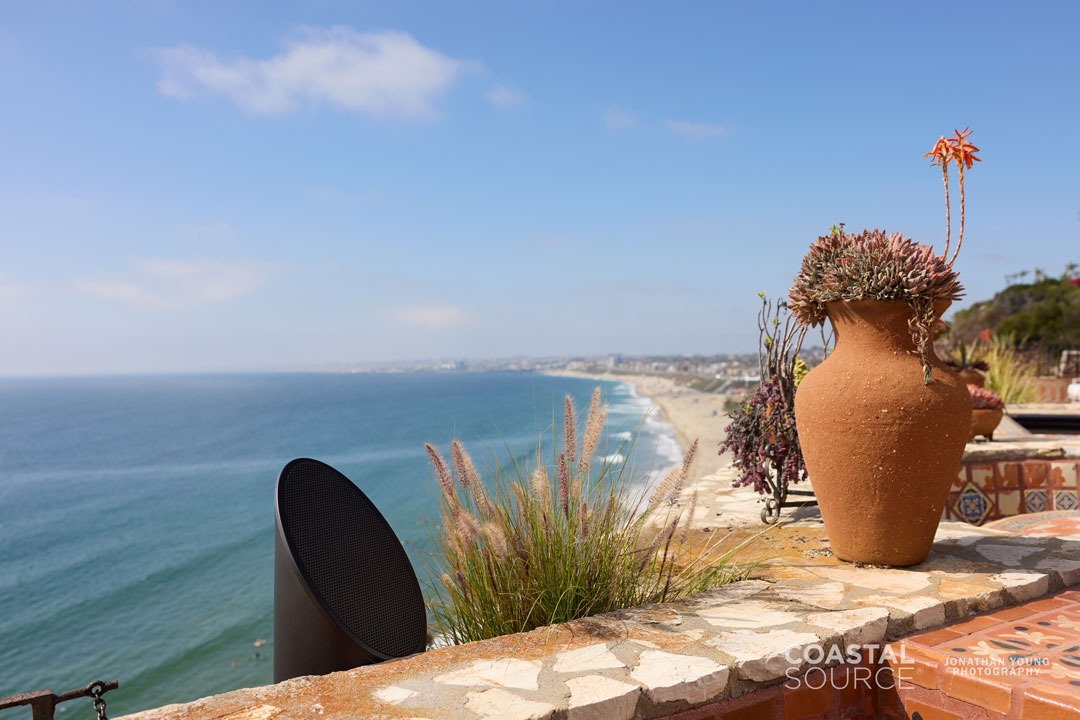
    They recently completed one of their most extensive smart home projects to date, where a combination of more than 600 Coastal Source outdoor light fixtures and speakers would need to stand up to some of the harshest conditions on the California coastline while blending in beautifully with the home’s eye-catching landscape and casting elegant illumination throughout the property.

    Built in 1930, the estate is considered a historic and architectural landmark in Los Angeles county. The estate also has a rich design heritage, having been previously gifted to the landscape architect brothers that designed Palos Verdes Estates in Southern California and Central Park in New York City. Later it was inhabited by art curators and celebrities, even royalty, whose names are not mentioned to respect their privacy. Paying tribute to these iconic design influencers, it was important to the current owner that the new exterior lighting system be as visually stunning as it was durable and functional.

    “Rockslides and erosion are common along the area’s shoreline, which often necessitates frequent modifications to the construction and design of outdoor living spaces so we knew the technology solutions would need to be able to evolve and adapt easily to topography changes,” says Future Automation & Design President and CEO Patrick Coleman. “This homeowner had already made a large investment in cliffside pylons to protect the property from weather and ocean related damage, so the outdoor speakers and lighting solutions needed to be top quality. Because Coastal Source designs and engineers its products to endure the most extreme environments, they were the obvious choice for this extensive, evolving outdoor project!”

    Once the majority of the outdoor improvements were complete, Future Automation & Design quickly buttoned up the schematics and installation of Coastal Source speakers and light fixtures, automating them via a Control4 system with Josh.ai voice control. Every inch of the cliffside estate is beautifully illuminated and blanketed in rich, high-fidelity audio, courtesy of a wide range of fixture designs, including Coastal Source path lighting, uplighting, niche lighting, flush-mount lighting and bollard speakers and subwoofers. The lighting design was so extensive, Future Automation & Design tackled it in several phases, starting with the installation of 210 fixtures in Phase 1, 228 fixtures in Phase 2, 139 fixtures in Phase 3, and finally, 50 fixtures in Phase 4. At least 50 percent of the lighting fixtures had to be retrofitted into existing hardscape, so Future Automation & Design used their retrofit expertise to achieve the best results. Coastal Source speakers were added throughout each step of the ongoing project.

    The owners weren’t opposed to the number of light fixtures and speakers peppering the landscape, patios, gardens and other outdoor areas, but they were unfamiliar with Coastal Source. To demonstrate the superior quality, flexibility, and durability of Coastal’s lighting fixtures and speakers, Coastal Source sent its fully outfitted product van to the client’s home for an in-person preliminary experience and the homeowners were sold.

    “Having so many fixtures and placement options afforded more opportunity to apply our lighting artistry to the residence – to really accentuate the magnificent architectural features and natural beauty of the landscape,” Coleman emphasizes.

    Still, there was no way of getting around the natural transformation of the surrounding terrain caused by wind, waves, and salt air. Future Automation & Design relied on Coastal Source’s patented Coastal Connector™ cabling system to streamline the relocation and addition of fixtures and speakers to adapt and evolve easily as the terrain morphed. “Coastal’s flexible cabling which eliminates the need to cut, splice and waterproof in the field was crucial to this integration,” Coleman remarks. “We didn’t need to trench conduits and the plug-and-play cabling architecture allows the system to grow and change along with the environment.”

    With the Coastal Source lighting and audio systems firmly established, the owners are using their outdoor living spaces more than ever before. For parties, weddings, and other social events, the integration of Coastal Source products into their outdoor spaces has enabled them to enhance their setting with elegant lighting and music.

    “The combination of our lighting expertise and Coastal Source’s wide selection of fixtures let us create an outdoor lighting and audio system that makes the outdoor area an incredible place to entertain,” Coleman added.

    Also vital to the stunning end-result is the seamless integration of Coastal Source audio and lighting with the home’s Control4 automation system and Josh.ai voice-enabled interface. The owners rarely need to interact with the outdoor lighting and audio. The lights activate automatically at sunset and simple commands spoken to a Josh.ai voice assistant handle the delivery of music and more specific lighting requests.

    The addition of Coastal Source light fixtures and speakers helped breathe new life into the magnificent oceanside property. Outdoor areas are more inviting, the scenery more beautiful, and the music and illumination easier than ever to control and customize. Even Mother Nature can’t put a damper on these audible and visual outdoor enhancements, thanks to the rugged yet elegant construction of the Coastal Source products and meticulous design and installation by Future Automation & Design.

  • Texolve Digital Installs Riedel Communications Equipment Across Pittsburgh’s Three Major Sports Venues

    Texolve Digital Installs Riedel Communications Equipment Across Pittsburgh’s Three Major Sports Venues

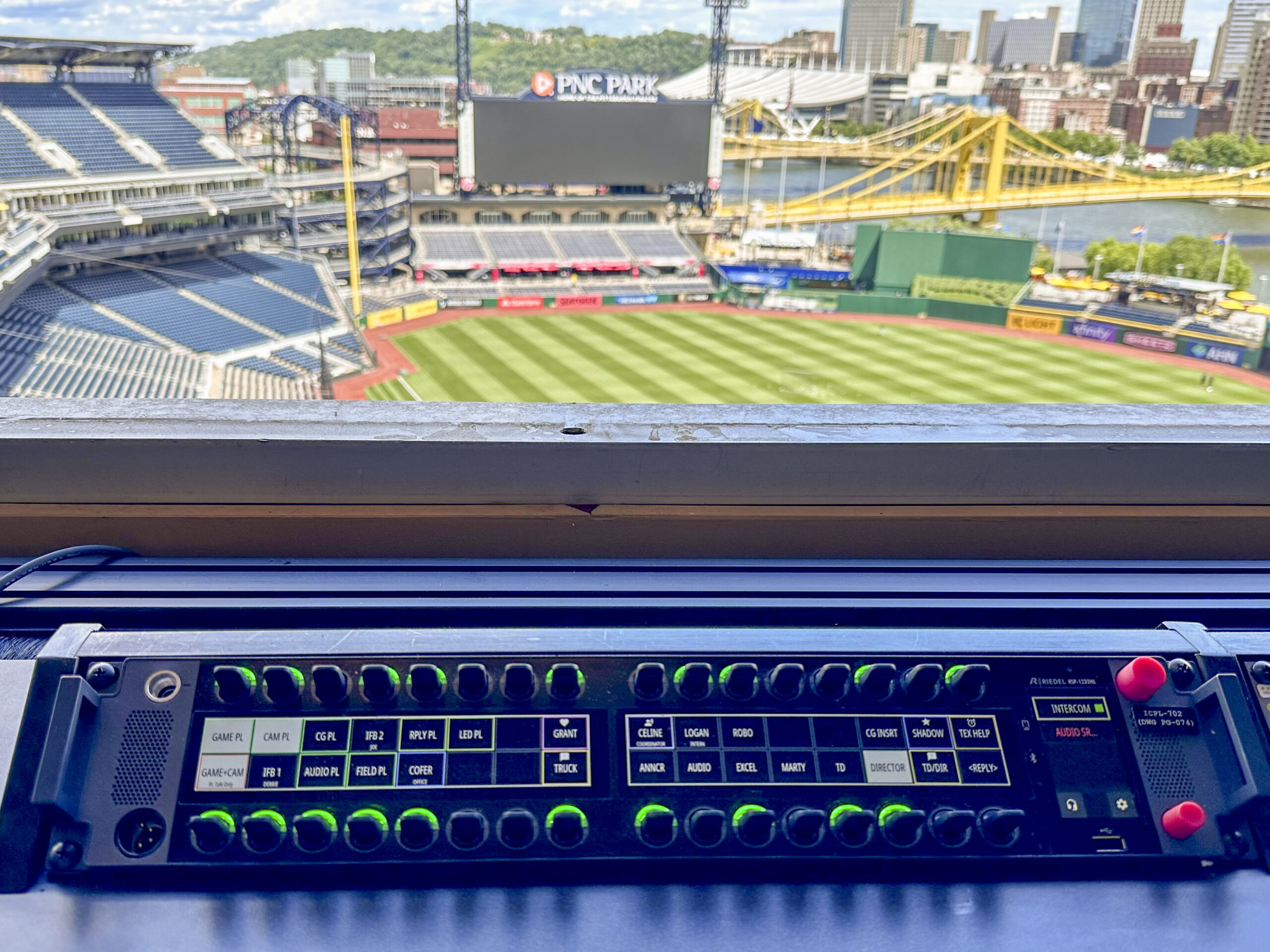
    Riedel Communications today announced that Texolve Digital, a Pittsburgh-based systems integrator and Riedel partner for nearly 10 years, has deployed the company’s cutting-edge intercom and communications solutions across Pittsburgh’s three major sports venues: PNC Park, home of the Pittsburgh Pirates; PPG Paints Arena, home of the Pittsburgh Penguins; and Acrisure Stadium, home of the Pittsburgh Steelers. This comprehensive deployment marks a significant milestone in standardizing and enhancing communications infrastructure for the city’s professional sports teams, ensuring that all three stadiums now benefit from seamless and reliable communications for game-day operations and live event productions.

    “We’ve had nothing but good experiences with the Riedel systems and with Riedel itself, and that dates back to systems we are replacing at the venues that already had Riedel,” said Brian Geubtner, Business Manager at Texolve Digital. “All three venues share freelance operators, so it’s important for the products to not only remain consistent but also offer clarity, reliability, and ease of use. Riedel was the clear-cut choice, and we have received nothing but good feedback on the intercom, which is great for us as we have supported the system after its installation. We’re proud to have partnered with Riedel to bring cutting-edge communications solutions to these premier sports venues.”

    Both PNC Park and PPG Paints Arena received a complete intercom system upgrade from top to bottom, with 9-10 Bolero antennas, 10-20 Bolero wireless beltpacks, 30-35 Riedel SmartPanels of various sizes, and four-wire interfaces installed at each location, as well as an Artist 1024 matrix frame, allowing from 16 to 1024 ports at each park. Acrisure Stadium received an all new intercom system comprising 11 Bolero antennas, eight Bolero beltpacks, 35 SmartPanels of different sizes, four-wire interfaces, and Riedel’s Connect Trio for phone connections.

    The Riedel systems have notably improved operations by expanding coverage into previously inaccessible areas, such as tunnels and underground spaces where announcers and teams may travel. This enhanced reach has allowed broadcasters and production teams to capture a greater variety of content, improving the overall fan experience both in-stadium and for viewers at home.

    “Communication is the backbone of a successful production,” said Chris Burns, Executive Producer of Live Stadium Events for the Pittsburgh Steelers. “Bolero’s ability to navigate our stadium’s concrete and steel and still provide a clear signal gives us the confidence to go anywhere to improve our presentation for both fans and sponsorship.”

    “We’ve found Bolero to be an invaluable asset,” said Jon Cofer, Director of Ballpark Productions for the Pittsburgh Pirates. “The reliability of Bolero is unquestionable, providing excellent reception throughout our ballpark, and its ability to access six different channels is a standout feature that we love. It’s not just functional, but also incredibly easy to work with. In fact, it’s so user-friendly that we’ve transitioned most of our on-field staff to Bolero beltpacks instead of traditional radios. The sound quality is top-notch, ensuring clear communication with our staff no matter where they are in the ballpark. Overall, the Bolero has been a major contributor to our scoreboard team’s success.”

    Texolve Digital has been a partner with these three local sports teams and venues over the past decade. Since 2022, Texolve Digital has been particularly busy with these three projects, which originated from bids released by Wrightson, Johnson, Haddon & Williams (WJHW) and venue upgrades that occurred within a two-year period. As a small team of experienced engineers, the company delivers service and support during and after project completion, whether through event engineering, system maintenance, support, or equipment upgrades.

    “It’s exciting to see our solutions deployed across Pittsburgh’s major sports venues,” said Dover Mundt, Regional Sales Manager for the Mid-Atlantic U.S. at Riedel Communications. “As a resident of Pennsylvania and a fan of our state’s professional sports teams, I am thrilled to see how Riedel’s technology enhances the game-day experience for both the teams and the fans. Texolve has been a reliable partner in these projects, and the company’s innovation and expertise have been essential to delivering systems that meet the unique needs of each stadium.”