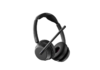
Hybrid collaboration is no longer a pandemic workaround. It is a permanent feature of enterprise meeting culture. And as conference rooms hit their natural refresh cycle, the buying conversation is shifting. Audio quality and platform manageability now lead the discussion, often ahead of camera specs.
That shift is the bet behind Shure’s IntelliMix Bar Pro. The product is the company’s first all-in-one collaboration bar certified for medium and large Microsoft Teams Rooms. Shure announced it in February.
The new hybrid reality
Return-to-office policies vary widely across the enterprise. Some companies have pulled everyone back five days a week. Others remain fully remote. Most have settled somewhere in between. Yet regardless of office policy, hybrid collaboration persists. Clients dial in. Vendors join remotely. Co-workers in other offices need to participate.
Tyler Troutman, senior manager of collaboration ecosystem and engagement at Shure, framed it bluntly. “You need hybrid collaboration just to work with customers,” he said. Troutman himself works remotely from California for a company headquartered in the Chicago area.
The result is a new buying pattern. After the scramble of 2020 and 2021 to get rooms online quickly, the second wave is different. Enterprises are refreshing those spaces with more intention. Two questions dominate that refresh, according to Troutman. How does the room sound? And how does the IT team manage it after install?
Security gets the first conversation
For the IT manager evaluating an AV device, network security comes before features. Troutman acknowledged the shift directly. AV teams used to deploy devices on isolated networks. Today those same devices typically share infrastructure with email, file servers, and core business systems. The threat model changed accordingly.
The IntelliMix Bar Pro runs on the Microsoft Device Ecosystem Platform, or MDEP. MDEP is a secure Android-based foundation that Microsoft maintains for Teams Rooms hardware and similar collaboration devices. Microsoft handles operating system updates and security patches. Shure handles the audio and video stack on top.
That division of labor matters more than it sounds. Firmware updates have long been a friction point in AV deployments. Customers tend to schedule those firmware visits around convenience rather than threat timelines. With MDEP, OS-level patching moves to Microsoft’s regular update cadence. IT teams already trust that pipeline because they use it elsewhere.
The management story extends past the OS. Shure exposes the device through ShureCloud, the company’s monitoring platform. From there, alerts can flow into existing IT systems. Troutman pointed to ServiceNow as the most common integration partner. Specific conditions can trigger tickets automatically through a cloud-to-cloud connection. Examples include a low microphone battery, an offline device, or an unplugged network cable.
That changes the support posture from reactive to proactive. AV teams know about problems before users report them.
What’s in the bar
Beneath the IT story, the IntelliMix Bar Pro is a sizable hardware bet. The device combines several components in a single front-of-room form factor. Those include an integrated camera array, microphone array, onboard compute, speakers, and a PoE+ switch. Microsoft Teams Rooms is the supported platform at launch. There is no Zoom version.
The camera system is where Shure made one of its more distinctive choices. Most all-in-one bars cluster their cameras in the center of the device. Shure took a different approach. The IntelliMix Bar Pro carries four 4K cameras across the bar. Two sit in the center and two sit at the outer edges, tilted inward.
The result is a combined 135-degree field of view. The IntelliMix View framing system uses those angles to better capture people at the far ends of long conference tables. That addresses a common complaint with center-clustered bars. People on the sides often look pinched or distant.
Framing Up
Three framing modes launch with the product. Group framing tracks everyone in the room and adjusts as participants come and go. Active speaker mode gives each talker an individual on-screen frame, up to four at once. Participant mode locks in dedicated frames for up to four people in the room. If a fifth person walks in, the system rolls back to group framing.
Audio remains the foundation. The bar uses Shure’s Microflex Advance array technology, refined over a decade of ceiling-array deployments. Onboard IntelliMix processing handles noise reduction and voice isolation. According to Shure, that processing also feeds cleaner transcripts to AI tools like Microsoft Copilot.
Troutman framed the AI quality argument in plain terms. “Bad input equals bad output,” he said. Poor audio creates poor transcripts. Poor transcripts feed weaker meeting summaries and worse downstream decisions. The audio in a small huddle room matters as much as the audio in a C-level boardroom.
A crowded market
The all-in-one bar category is no longer the white space it was three years ago. Logitech, Poly, Yealink, Crestron, and Neat all sell well-regarded competitors. Shure arrives late to a market where most enterprise teams have already deployed something.
Troutman rested Shure’s answer on a single argument. Survey after survey, he said, names poor audio as the top conference room pain point. Audio is also where Shure has built its reputation. Shure’s pitch to IT and AV teams centers on audio quality. That variable, the company argues, most differentiates one bar from another.
Bad audio doesn’t just frustrate participants. It also degrades the AI features companies are spending money to deploy. Transcripts, summaries, translations, and action items all depend on clean input.
The timing of the refresh cycle helps the argument. Companies hastily equipped many rooms during 2020 and 2021. Those rooms are due for replacement now. Teams that bought on speed the first time around have time on the second.
What to watch
A few open questions remain. Shure has not disclosed pricing. The product is Teams Rooms only at launch. That closes the door for enterprises standardized on Zoom for the moment. Shure has also indicated that more announcements are coming.
For now, the IntelliMix Bar Pro is available through Shure dealers. Shure offers remote demos and try-before-you-buy options to qualified enterprise customers. The Shure booth at InfoComm 2026 will run live demonstrations.
For IT and AV teams planning a 2026 refresh, the IntelliMix Bar Pro is worth a look on two fronts. The MDEP and ShureCloud combination tries to make AV hardware feel like the rest of the IT estate. And the audio engineering, if it lives up to Shure’s reputation, addresses an old pain point. Surveys keep flagging it year after year.

Tim Albright is the founder of AVNation and is the driving force behind the AVNation network. He carries the InfoComm CTS, a B.S. from Greenville College and is pursuing an M.S. in Mass Communications from Southern Illinois University at Edwardsville. When not steering the AVNation ship, Tim has spent his career designing systems for churches both large and small, Fortune 500 companies, and education facilities.
- Tim Albright
- Tim Albright

- Tim Albright

- Tim Albright