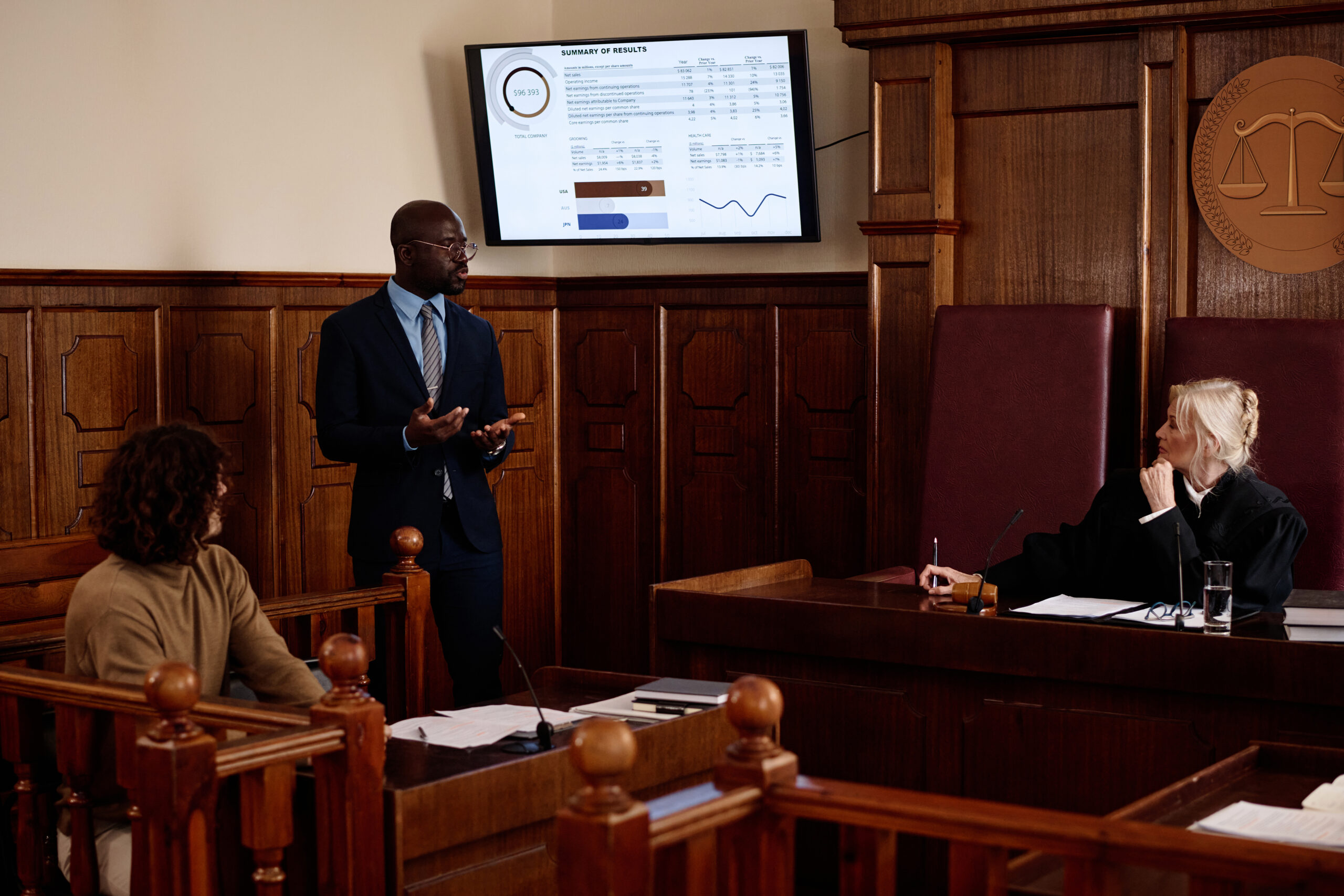
The courtroom has quietly become one of the most complex AV environments around.
Remote testimony. Virtual arraignments. Attorneys joining from different locations. Defendants appearing from correctional facilities. Public access extending beyond the courthouse walls. Hybrid proceedings are no longer temporary workarounds. In many jurisdictions, they are becoming part of how justice operates.
For the AV industry, that creates a unique challenge.
Because a courtroom is not simply another meeting space with better microphones and a conferencing platform. The technical expectations are different, the security requirements are higher, and the consequences of failure reach far beyond an awkward video call.
Hybrid justice demands AV systems built for operational reality.
Courtrooms Aren’t Conference Rooms
The AV industry has spent years perfecting hybrid collaboration technology. But justice environments follow a different playbook.
Different Users, Different Stakes
Corporate meeting rooms are designed for productivity and collaboration. Courtrooms are designed for legal process, procedural accuracy, and public accountability.
A failed executive meeting may waste time. A failed courtroom hearing can delay proceedings, disrupt legal workflows, or create challenges for accessibility and documentation.
That changes how Facilities Directors, Security Managers, and IT teams evaluate technology.
The question is not simply whether a platform supports hybrid meetings. It is whether the system can reliably support legal proceedings under real-world courtroom conditions.
Hybrid Workflows Meet Judicial Reality
Modern courtrooms often support judges, attorneys, witnesses, court reporters, clerks, jurors, and remote participants all within the same environment.
Some users need open access. Others require restricted communication. Some interactions must be recorded. Others must remain secure.
Balancing those demands turns hybrid courtroom technology into far more than a standard AV deployment.
Security Is Not Optional
Security is not an added feature in justice environments. It is foundational.
Protecting Proceedings in High-Security Environments
Hybrid proceedings introduce new layers of risk. Remote testimony, digital evidence, and connections to correctional facilities all create operational and cybersecurity considerations.
Key questions quickly emerge:
- How are remote participants authenticated?
- How is sensitive testimony protected?
- Who controls access to proceedings?
- How are recordings stored and secured?
Every networked device, control system, collaboration platform, and AV endpoint becomes part of a larger security conversation.
When AV and IT Governance Collide
Justice AV projects increasingly sit at the intersection of AV, IT, cybersecurity, and compliance.
That means integrators and technology teams are no longer discussing hardware alone. They are helping organizations manage operational risk, governance policies, and long-term security requirements.
In high-security environments, technology decisions cannot happen in silos.
Audio Still Makes or Breaks the Experience
The AV industry loves talking about cameras, AI tracking, and video innovation. Courtrooms offer a reminder that audio still carries enormous weight.
Why Intelligibility Matters in Legal Settings
Every participant depends on clear communication.
Judges need to hear testimony accurately. Attorneys need clear dialogue. Court reporters rely on intelligible speech. Remote participants need balanced, reliable audio.
Hybrid environments make those requirements harder to manage.
Room acoustics, microphone placement, DSP tuning, echo cancellation, and signal routing all become critical parts of the user experience.
Bad audio in a meeting room is frustrating. Bad audio in a courtroom can affect comprehension, documentation, and procedural accuracy.
In justice environments, audio quality is not a nice-to-have. It is operational infrastructure.
Digital Evidence Gets More Complicated in Hybrid Spaces
The shift to hybrid proceedings changes more than communication. It changes how information is presented and controlled.
Visibility, Control, and Chain of Trust
Evidence workflows increasingly involve digital documents, surveillance footage, recorded interviews, and multi-source media content.
Now add remote participants to the equation.
Can everyone see the evidence clearly? Can access remain controlled? Can the record accurately reflect what was presented?
These questions create significant AV implications.
Display systems need flexibility and clarity. Content sharing must remain secure. Routing workflows need to support multiple users without creating visibility or security gaps.
What feels routine in enterprise collaboration becomes considerably more complex inside a courtroom.
Ease of Use Matters More Than Feature Lists
Sophisticated systems still need to work for the people running the room.
Technology Court Staff Can Actually Operate
Courtrooms move on schedules. Hearings begin on time. Staff responsibilities extend well beyond managing AV systems.
Judges, clerks, and courtroom personnel should not need advanced technical training to start proceedings or troubleshoot workflows.
That is why usability remains a major buying driver for justice organizations.
Facilities and IT leaders often prioritize:
- Simplified room controls
- Fast startup workflows
- Minimal training requirements
- Centralized monitoring and support
- Reliable long-term service models
The technology can be incredibly powerful behind the scenes. But if users avoid it or struggle to operate it, the system is not delivering value.
Building Courtrooms for the Long Haul
Justice environments rarely operate on short technology cycles.
Infrastructure decisions often need to remain viable for years, sometimes decades.
Designing for Compliance, Flexibility, and Change
Hybrid courtroom systems must support current operational needs while preparing for future shifts in technology, accessibility standards, and security expectations.
That means asking important questions early:
Can the infrastructure scale?
Can platforms adapt to evolving workflows?
Can facilities modernize without rebuilding entire systems?
These conversations are becoming increasingly important as hybrid justice continues to evolve.
For AV professionals, designing courtroom technology is not simply about solving today’s challenges. It is about building systems prepared for tomorrow’s operational demands.
The Future of Hybrid Justice Requires Purpose-Built AV
Hybrid court proceedings are reshaping expectations around how justice is delivered.
But successful courtroom technology requires more than cameras, displays, and collaboration software. It requires secure system design, reliable audio, intuitive operation, and infrastructure built for long-term change.
For the AV industry, the justice market presents a growing opportunity, but also a demanding one.
Success comes from recognizing that courtrooms are not corporate meeting spaces with stricter rules. They are specialized environments with unique operational realities.
And in hybrid justice, AV is doing more than enabling communication.
It is helping support the integrity of the judicial process itself.
- AVNation Staff

- AVNation Staff

- AVNation Staff
- AVNation Staff