The AV industry thrives on the people who power it—those who innovate, adapt, and push boundaries. That’s exactly what Kameesha Jones has done throughout her career. From a background in music to navigating Broadway productions, university AV management, and large-scale event production, her journey as women in AV is one of resilience, passion, and a relentless drive to lift others up along the way.
Kameesha’s entry into AV was anything but conventional. Starting as a musician with a degree in music technology, she found herself facing a common reality—how to make a living in a creative field. Law school wasn’t the right fit, so she pivoted, earning a master’s in music production and management at Florida International University.
It was during her time interning at the Adrienne Arsht Center in Miami that she stumbled upon the world of AV. Working behind the scenes on Broadway productions like The Lion King and The Bodyguard, she quickly realized that audio-visual technology was much more than just cables and consoles—it was the backbone of live experiences.
From there, she worked her way through museums, universities, and live event spaces, eventually landing in New York, where she took on roles at NYU, off-Broadway theaters, and even the Metropolitan Museum of Art. Each step in her career required a willingness to learn, whether it was picking up new technical skills, pushing through grunt work, or navigating the high-stakes world of live productions.
Surviving and Thriving as Women in AV
Like many in the AV industry, Kameesha’s career took a hit when COVID shut down live events. But instead of waiting for the industry to recover, she took the opportunity to upskill, diving into AVIXA certifications and learning more about the broader AV landscape.
This adaptability is a critical lesson for IT and AV decision-makers. The industry is evolving at a rapid pace, with hybrid work, AI-driven automation, and digital transformation reshaping how AV is designed and deployed. The professionals who succeed are the ones who continuously evolve, much like Kameesha did.
The Power of Mentorship in AV
One of the most powerful themes in Kameesha’s journey is her commitment to mentorship. She didn’t have a guide when she entered the industry—no one to tell her which certifications mattered, how to structure her resume, or where the real career opportunities were.
Now, she’s making sure others don’t have to navigate the industry alone.
She mentors high school students, helping them see that AV isn’t just a job—it’s a career with real earning potential. For college students, she connects them with apprenticeships and internships, making sure they get the experience needed to stand out. And for early-career professionals, she’s a sounding board, offering career advice and advocating for fair pay.
This kind of mentorship isn’t just nice to have—it’s essential for the future of the industry. As seasoned AV professionals near retirement, there’s a pressing need to bring in the next generation, ensuring that institutional knowledge doesn’t disappear. IT and AV leaders need to recognize the value of mentorship within their own organizations, actively working to build a pipeline of skilled professionals.
Why IT and AV Leaders Should Take Notice
Kameesha’s journey underscores some key takeaways for anyone responsible for AV in their organization:
AV is an intentional career path, not just a fallback. Many professionals, especially younger ones, still stumble into AV rather than actively choosing it. The industry must do a better job of positioning itself as a viable and lucrative career option.
Upskilling and adaptability are non-negotiable. Whether it’s new technology, emerging trends like AI, or evolving workplace expectations, AV professionals must continuously learn and adapt.
Mentorship is the key to workforce development. The industry needs a structured approach to developing talent, from high school programs to entry-level career development.
Diversity and inclusion matter. Kameesha’s role as a DEI advocate highlights an ongoing challenge in AV—ensuring that opportunities exist for all, regardless of background. Leaders must be intentional about creating inclusive spaces and career paths.
Intentionally Forging Ahead
For Kameesha, 2025 is all about being intentional. She’s making every move count—whether it’s mentoring the next generation, advocating for DEI in AV, or expanding her technical expertise.
For AV and IT decision-makers, the takeaway is clear: The future of the AV industry depends on people like Kameesha—those who are willing to learn, lead, and invest in the next generation. The question is, what are we doing to support them?
Let’s make sure AV remains a thriving, innovative, and welcoming industry for years to come.
As artificial intelligence reshapes the technology landscape, IT directors face an increasingly complex challenge: managing the rapid proliferation of AI-enabled products while maintaining cohesive, efficient systems. Everyone in your company brings you products that are supposed to be AI, but are they really? There are some truly remarkable solutions on the market. While you can find AI solutions from specialty vendors, the strategic advantage of partnering with a full-stack provider has never been more apparent.
The New Reality of AI Product Innovation
The integration of AI capabilities into existing products has accelerated at an unprecedented pace. From smart cameras with advanced recognition capabilities to collaborative robots with natural language processing, AI is no longer a future prospect but a present reality transforming every aspect of enterprise technology. This surge in AI-enabled products presents both opportunities and challenges for IT infrastructure management.
For IT directors and those responsible for the UC and AV spaces, the pressure to adopt these innovations while maintaining system stability and security has intensified. The ability of enhanced capabilities must be weighed against the practical challenges of integration and long-term sustainability.
The Specialty Vendor Challenge
Specialty vendors, focusing exclusively on specific product categories, often argue that their narrow focus enables them to deliver superior solutions. While this specialized expertise can result in impressive individual products, it frequently creates significant challenges for enterprise IT environments.
The reality is that single-product focus often comes at the cost of system-wide compatibility. IT directors increasingly find themselves managing a complex web of vendors, each with their own support systems, update cycles, and integration requirements. It’s on your shoulders to make all these various products work together.
This fragmentation can lead to increased system complexity and maintenance overhead. Since these are generally niche products, there are compatibility issues between different vendors’ AI implementations. This federated vendor structure also means multiple support channels and service agreements to manage. A fragmented approach to AI brings higher risk of security vulnerabilities at integration points as well as escalating costs for specialized integration solutions. Which is why relying on a full-stack provider is a wise investment.
The Full-Stack Provider Advantage
A full-stack provider offers a comprehensive ecosystem of solutions designed to work together seamlessly. When you are considering which AI feature set to incorporate next, a full-stack vendor will bring an integrated solution as a foundation. This integrated approach delivers significant advantages for IT directors managing complex enterprise environments.
When all components come from a single provider, integration becomes nearly automatic. AI features work cohesively across products, sharing data and insights without requiring custom integration work. This native compatibility extends to future products and updates, ensuring long-term stability and scalability.
A full-stack provider can implement comprehensive security measures across their entire product line, eliminating vulnerable integration points between different vendors’ solutions. This unified approach to security is particularly crucial as AI systems often handle sensitive data and critical operations.
Strategic Considerations for IT Directors
When evaluating AI-enabled solutions, IT directors should consider several key factors. The first is the cost of integration. While specialty vendors might offer attractive initial pricing, the total cost of ownership often increases significantly when accounting for integration, maintenance, and potential compatibility issues. A full-stack solution typically provides better value over time.
Second would be system reliability and the ease of scaling the system. As AI capabilities evolve, the ability to scale and adapt becomes crucial. What is possible today is only the beginning. As the capabilities evolve, so should your solution. Full-stack providers can ensure that new features and capabilities integrate smoothly with existing infrastructure, reducing the risk of system disruptions.
Another piece to consider is the ease of support and maintenance. Consolidated vendor relationships generally lead to more efficient problem resolution and system maintenance. When issues arise, having a single point of contact who understands the entire system can significantly reduce downtime and troubleshooting complexity.
Setting the Standard for Full-Stack Integration
Companies like Cisco, Apple, and Crestron have been built around the idea of being full-stack providers. Cisco has created an ecosystem that supports the networking needs of schools and corporations around the world. Apple provides end-to-end solutions for creatives as well as corporate needs. The DNA that built Crestron centers around control and inter-system integration. Feedback drives these companies’ comprehensive testing and validation up and down their entire product ecosystem.
That customer feedback feeds into the customer experience. The ease of use of an iPhone, the standardization of a Cisco switch, or Crestron’s long-term commitment to backward compatibility and system longevity. These commitments and company philosophies continue to drive innovation.
Moving Forward with Confidence
The speed of innovation increases every year. Sometimes every month. Staying on top of those changes is a challenge. That’s why relying on a standard like a full-stack provider is helpful for not just today’s projects, but the ones you don’t even know about yet.
The integration of AI into enterprise systems represents both an opportunity and a challenge for IT directors. There are the known models and then the ones that are coming from all corners of the universe. Some have been vetted, and others are not safe at all.
While specialty vendors may offer cutting-edge features in specific areas, full-stack providers, like Crestron, typically deliver better long-term value and reliability. Crestron has also done the hard work on understanding how collaboration tech can be the foundation for AI systems. You can download their AI-Readiness Guide. Get in touch with a full-stack provider that has tried and true AI integrated into their solution. That way you are ready for today, and tomorrow’s, needs.
When it comes to live events, success lies in creating an unforgettable experience for your audience. Whether you’re organizing a corporate conference, a concert, or a sports event, understanding the foundational elements of event production is key to delivering excellence. In this article, we break down the basics of live events—from audio and video to lighting and accent pieces—and why they are essential for a seamless production.
Setting the Stage: The Foundations of Event Design
Every successful event starts with clear goals and a thoughtful design. Begin by identifying the purpose of the event and understanding your audience. Are you hosting a corporate presentation? A dynamic concert? A sports awards ceremony? The answers to these questions shape the technical and creative elements of your production.
The venue sets the stage for the entire experience. Consider the size, layout, and technical infrastructure of the space. Evaluate its acoustics, power availability, and rigging capabilities. A well-suited venue minimizes technical challenges and enhances the audience’s experience.
Audio: The Backbone of Every Live Event
High-quality audio is essential for any live event. Without clear sound, even the most visually stunning production can fall flat. Audio ensures your message, music, or performance reaches every corner of the venue.
Equip your event with the right microphones—whether they’re handheld, lapel, or headset. Pair them with high-performance speakers that provide even audio coverage. For larger events, line array systems may be necessary to ensure clarity.
Behind the scenes, mixers and signal processors play a critical role in balancing levels and enhancing sound quality. A skilled audio technician can troubleshoot issues like feedback or echoes, ensuring a flawless performance.
Visuals that Engage and Impress
In today’s visually driven world, video plays a critical role in capturing and holding audience attention. Whether it’s a keynote presentation or a live concert, visuals can elevate your event to new heights.
LED walls, projectors, and monitors are essential tools for showcasing content. Choose the right solution based on your venue and audience size. Consider factors like resolution and brightness to ensure a crisp and vivid display.
For large events, live camera feeds can enhance visibility for the audience and provide content for streaming or recording. Pre-produced graphics and videos add polish and professionalism, ensuring your messaging is impactful.
Lighting: Setting the Mood and Enhancing Visibility
Lighting does more than illuminate—it sets the tone and atmosphere of your event. Proper lighting ensures presenters and performers are visible, while creative lighting design enhances the overall experience.
Spotlights and stage lighting ensure clarity for presenters and performers. Emergency and backup lighting are also critical for safety and reliability.
Use uplighting, washes, and color effects to transform your space and match the event’s theme. Advanced control systems allow for dynamic lighting changes, synchronizing effects with music or performance cues.
Accent Pieces: Adding Flair to the Event
While audio, video, and lighting form the core of a live event, accent pieces add the finishing touches that bring everything together.
Pipe and drape systems are versatile tools for creating backdrops, dividing spaces, or hiding unsightly areas. They’re a cost-effective way to add a professional look to your event.
Incorporate branding, thematic decor, or experiential elements to make your event memorable. Consistency in design—from physical decor to digital displays—reinforces your message and creates a cohesive experience.
Building the Team: Qualified Labor is Key
Even the best equipment is only as good as the team operating it. Skilled professionals are essential for the seamless execution of your event.
Audio engineers, video technicians, lighting designers, and stagehands work together to ensure every element functions perfectly. Hiring experienced professionals minimizes risks and maximizes quality.
Project managers coordinate the many moving parts of event production, ensuring timelines are met and problems are resolved quickly. Their expertise keeps the production on track.
Timeliness: Planning and Execution
Planning and timing are crucial to a successful event. Rehearsals and equipment testing are non-negotiable to prevent last-minute surprises. Allow ample time for setup and rehearsals. Test all audio, video, and lighting systems to identify and resolve issues in advance. Stick to a detailed schedule to keep the event running smoothly. Having a contingency plan for unexpected challenges is always a good idea. After the event, take down equipment efficiently and review the production process to identify lessons for future events.
Making an unforgettable event
Audio, video, lighting, and accent pieces are the cornerstones of a successful live event. When combined with a skilled team and thoughtful planning, these elements create an exceptional audience experience. For robust, scalable AV solutions that ensure your event’s success, contact a trusted AV provider and start crafting unforgettable moments today.
Artificial Intelligence (AI) is revolutionizing industries across the board, and the judicial system is no exception. Court IT systems, traditionally reliant on manual processes and legacy technologies, are undergoing a paradigm shift as AI-based solutions promise to enhance efficiency, accuracy, and security. However, with great promise comes great responsibility. For facilities directors, security managers, and IT directors tasked with overseeing court operations, the integration of AI presents both opportunities and risks that must be carefully navigated.
Opportunities: Transforming Courtroom Operations
Streamlined Case Management: AI-powered platforms can automate routine administrative tasks such as case scheduling, document management, and notifications. Natural Language Processing (NLP) can quickly analyze legal documents, saving countless hours for court clerks and enabling faster case resolutions.
Enhanced Security and Surveillance: Advanced AI-driven surveillance systems, featuring facial recognition and behavioral analysis, bolster courtroom security. These systems can identify unauthorized individuals or potential threats in real time, ensuring compliance with strict operational security requirements.
Intelligent Transcription and Translation: Courtrooms often face challenges related to language barriers and maintaining accurate records. AI-based transcription services, coupled with real-time translation capabilities, ensure that proceedings are accurately documented and accessible to diverse stakeholders.
Predictive Analytics for Case Outcomes: AI algorithms can analyze historical case data to predict potential outcomes, assisting judges and lawyers in preparing for proceedings. While these predictions do not dictate decisions, they provide valuable insights that improve judicial efficiency.
Improved Accessibility: AI-powered tools can cater to individuals with disabilities by offering real-time transcription for the hearing impaired or AI-generated summaries for those with visual impairments. Such inclusivity not only adheres to legal compliance standards but also enhances public trust in the judicial system.
Risks: The Double-Edged Sword of AI
Data Security and Privacy Concerns: The integration of AI into court IT systems introduces potential vulnerabilities. AI platforms require access to sensitive data, making them prime targets for cyberattacks. Facilities directors and IT teams must ensure that AI solutions are compliant with data protection laws and incorporate robust encryption protocols.
Bias in Algorithms: AI systems learn from historical data, which may contain inherent biases. When applied to legal proceedings, these biases can perpetuate systemic inequalities. Security managers must work closely with developers to audit and refine AI models, ensuring fairness and transparency.
Complexity in Implementation: While AI systems promise ease of use, their initial implementation can be daunting. Court IT directors must invest in training programs for staff to ensure seamless adoption of new technologies.
Dependence on AI: Over-reliance on AI may inadvertently reduce human oversight in critical decision-making processes. Courts must strike a balance between leveraging AI’s capabilities and maintaining the human element that is essential to justice.
Regulatory Compliance: Courts operate within a labyrinth of legal requirements. AI systems must adhere to these regulations, and any deviation could result in legal repercussions. IT directors must prioritize compliance when evaluating AI vendors.
Decision-Making Drivers for Court IT Leaders
For facilities directors, security managers, and IT directors, the decision to adopt AI hinges on two critical factors:
System Security and Compliance: AI solutions must offer robust security features to protect sensitive legal data and ensure compliance with local and international regulations. Vendors should provide detailed documentation and certifications to demonstrate their adherence to these standards.
Ease of Use and Support: Courtroom technology must be intuitive, minimizing the learning curve for end-users. Comprehensive technical support and training programs are non-negotiable to ensure operational continuity.
Final Thoughts
The adoption of AI in court IT systems is not merely a technological upgrade—it represents a profound shift in how justice is administered. While the opportunities are immense, the associated risks demand meticulous planning and execution. By prioritizing security, compliance, and user-centric design, facilities directors, security managers, and IT directors can harness the transformative power of AI to modernize courtroom operations.
The road to AI integration is fraught with challenges, but for those willing to navigate them, the rewards are unparalleled: a judicial system that is not only more efficient but also more equitable, secure, and accessible.
As digital transformation continues to sweep across industries, courtrooms and correctional facilities remain some of the most demanding environments for implementing secure and efficient AV solutions. While other sectors have largely embraced modern AV technologies, many judicial systems in the United States are shackled by legacy systems that not only impede operational efficiency but also pose significant security risks. For facilities directors, security managers, and IT directors, these challenges underscore the urgent need to modernize.
The Dangers of Outdated Systems
Legacy AV systems were often deployed decades ago, during a time when cybersecurity threats were minimal and courtroom operations were far less reliant on technology. Today, these systems present several critical issues:
Security Vulnerabilities: Legacy AV solutions lack the robust encryption and authentication protocols necessary to protect sensitive judicial proceedings and evidence. This makes them prime targets for cyberattacks, which could result in breaches of confidential information or even disruptions to court operations.
Incompatibility with Modern Standards: Newer AV technologies such as networked audio, high-definition video conferencing, and digital evidence presentation require seamless integration. Legacy systems, built on outdated architectures, struggle to support these capabilities, leading to inefficiencies and workflow bottlenecks.
High Maintenance Costs: Aging hardware often requires frequent repairs and specialized support, draining budgets that could be better allocated toward future-proofed solutions.
Regulatory Non-Compliance: Courts operate under stringent legal and procedural standards. Legacy systems may not align with current requirements for secure data handling, evidence presentation, or accessibility compliance under laws like the Americans with Disabilities Act (ADA).
The Need for Secure AV Solutions in High-Security Environments
Courtrooms and correctional facilities operate in environments where security is paramount. From safeguarding sensitive witness testimonies to ensuring evidence integrity, AV technology must meet the highest standards of security and reliability.
However, many legacy systems fall short in several ways:
Lack of Encryption: Legacy systems often transmit audio and video signals without encryption, exposing them to potential interception.
Inadequate Access Control: Modern AV solutions offer role-based access and multi-factor authentication. These are essential for environments where only authorized personnel should control AV systems.
Minimal Integration with Security Systems: Today’s AV systems can integrate with surveillance, access control, and emergency notification systems to create a unified security ecosystem—a feature missing in legacy setups.
Key Drivers for Modernization
To overcome these limitations, facilities directors, security managers, and IT directors must prioritize modernization efforts that address the following key decision drivers:
System Security and Compliance: Investing in AV systems with advanced encryption, secure network configurations, and compliance certifications ensures adherence to legal requirements and mitigates risks.
Ease of Use and Training: Modern AV solutions feature user-friendly interfaces and automation capabilities, reducing the learning curve for courtroom personnel and minimizing the risk of operational errors.
Scalability and Future-Proofing: The ability to adapt to future technologies, such as AI-driven transcription or immersive telepresence, ensures a long-term return on investment.
Modern AV Solutions to Consider
The transition from legacy systems to cutting-edge AV technology involves several strategic steps:
Networked AV Systems: These systems leverage IP-based protocols to deliver secure, high-quality audio and video while enabling remote monitoring and control. Brands like Extron and Crestron offer robust solutions tailored for courtroom settings.
Video Conferencing Platforms: Tools like Zoom Rooms or Microsoft Teams Rooms, integrated with dedicated AV hardware, provide secure and reliable virtual courtrooms. These platforms ensure compliance with legal standards while offering exceptional user experience.
Digital Evidence Presentation Systems: Advanced tools for presenting evidence electronically—including touch-enabled displays, high-resolution document cameras, and real-time annotation—enhance courtroom efficiency and transparency.
AI-Powered Solutions: AI-driven technologies, such as automated transcription and language translation, are becoming critical in ensuring accessibility and accuracy in judicial proceedings.
Steps Toward Implementation
Modernizing a courtroom’s AV infrastructure requires a phased approach to minimize disruptions and ensure successful adoption:
Assessment and Planning: Conduct a thorough audit of existing systems to identify pain points and opportunities for improvement.
Stakeholder Engagement: Collaborate with judges, clerks, and other end-users to align technology choices with operational needs.
Vendor Selection: Choose AV providers with proven expertise in high-security environments and a track record of compliance with legal and procedural standards. Implementation and Training: Roll out new systems in phases, providing extensive training to ensure seamless adoption.
Conclusion
Legacy AV systems are no longer adequate for the complex, high-stakes environments of courtrooms and correctional facilities. By embracing modern, secure AV technologies, facilities directors, security managers, and IT directors can ensure compliance, enhance operational efficiency, and safeguard sensitive judicial processes. The time to act is now—because in the pursuit of justice, there’s no room for outdated technology.
The landscape of live events and entertainment is undergoing a dramatic transformation. As digital technology continues to evolve, the line between physical and virtual experiences becomes increasingly blurred. This convergence isn’t just changing how fans consume content—it’s revolutionizing how event organizers create, deliver, and monetize experiences.
The Modern Sports & Entertainment Decision Maker
Today’s event organizers face a complex challenge: delivering compelling experiences that satisfy both in-person and virtual audiences. Venue managers, marketing directors, and fan experience managers share a common mission: creating memorable moments that keep audiences coming back while driving revenue growth through innovative engagement channels.
These decision-makers understand that success isn’t just measured by ticket sales anymore. It’s about creating a comprehensive ecosystem where physical and virtual experiences complement each other, ensuring fans remain connected to their favorite events regardless of their location.
Navigating Current Fan Engagement Challenges
The post-pandemic landscape has introduced new complexities to fan engagement that are reshaping the entire entertainment industry. Physical attendance patterns have shifted dramatically, with many venues still working to recover their pre-pandemic numbers. This transformation extends far beyond simple attendance figures—it represents a fundamental change in how audiences interact with live events.
Traditional attendance models are undergoing a profound evolution as fans increasingly seek flexible options for event participation. The once-standard “one size fits all” approach to ticketing and attendance no longer meets the diverse needs of modern audiences. Today’s fans demand the freedom to engage with events on their own terms, whether that means attending in person, joining virtually, or moving fluidly between both experiences.
The expectation for hybrid experiences has become deeply ingrained in audience preferences. Modern fans anticipate seamless integration between physical and virtual worlds, creating pressure for venues and organizers to deliver sophisticated technological solutions. This shift isn’t merely about providing a digital alternative to in-person attendance—it’s about crafting complementary experiences that enhance both physical and virtual participation.
Perhaps the most significant challenge facing organizations is the delicate balance between technological investment and uncertain returns. While the demand for innovative engagement solutions is clear, the pathway to profitability remains complex. Organizations must carefully weigh the substantial costs of implementing new technologies against potential future revenues, all while operating in a rapidly evolving landscape where audience preferences and technological capabilities continue to shift.
Virtual Technology: The New Frontier of Live Events
The integration of virtual technology into live events has fundamentally transformed the entertainment landscape, opening possibilities for fan engagement and experience enhancement. This technological revolution isn’t just changing how events are presented—it’s reimagining the very nature of audience participation and interaction.
Augmented reality has emerged as a powerful tool for enhancing the in-venue experience, seamlessly overlaying digital content onto the physical world. Fans can now access real-time statistics, player information, and interactive elements that add depth to their viewing experience. Whether it’s seeing virtual first-down lines in football games or accessing instant performance statistics at concerts, AR technology creates a more immersive and informative experience for attendees.
Virtual reality has broken down geographical barriers, enabling remote fans to experience events from premium vantage points previously accessible only to a select few. Through VR technology, viewers can transport themselves to courtside seats, backstage areas, or even onto the field itself. These virtual spaces offer an intimate connection to the event that transcends traditional broadcast limitations, creating premium experiences for remote audiences.
The proliferation of interactive mobile apps has revolutionized the second-screen experience during live events. These applications serve as personal companions to the main event, offering everything from alternative camera angles and instant replays to interactive polls and social media integration. They transform passive viewers into active participants, creating a more engaged and connected audience community.
Making the Business Case for Virtual Integration
For decision-makers, investing in virtual technology isn’t just about following trends—it’s about creating sustainable business growth. Key drivers include new revenue opportunities as well as fan retention and growth.
Subaru Park
Revenue Diversification
The integration of virtual technology has opened entirely new revenue streams for event organizers, fundamentally transforming traditional business models in the entertainment industry. By embracing digital innovations, organizations can now tap into multiple revenue channels that extend far beyond conventional ticket sales and concessions.
Hybrid ticketing models have emerged as a particularly powerful revenue generator, offering unprecedented flexibility in how fans can access and experience events. Organizations can now create tiered virtual access packages that cater to different audience preferences and price points. Premium virtual tickets might include exclusive camera angles, behind-the-scenes content, or interactive features, while basic packages offer standard viewing experiences. This stratified approach allows organizers to capture revenue from audiences who might never attend in person while providing enhanced experiences for those willing to pay for premium access.
Digital merchandise and virtual experiences represent another significant revenue frontier. Virtual goods, from digital collectibles to exclusive content, carry minimal distribution costs while offering high margins. Event organizers can create limited-edition virtual items, exclusive digital memorabilia, and behind-the-scenes content packages that fans can purchase and own. These digital assets often hold particular appeal for younger audiences who value virtual possessions as much as physical ones.
The ability to host simultaneous virtual events alongside physical ones has also created opportunities for geographic market expansion without the traditional overhead costs. Organizations can now monetize their content globally, running parallel virtual experiences that cater to different time zones and cultural preferences while maintaining the core appeal of their events.
Fan Retention and Growth
The integration of virtual technology has revolutionized how organizations build and maintain their fan bases, creating deeper, more sustained relationships with audiences. This transformation goes beyond simple engagement metrics, fundamentally changing how fans interact with and remain connected to their favorite events and venues throughout the year.
Personalization has become the cornerstone of modern fan retention strategies. Through sophisticated data analytics and artificial intelligence, organizations can now create truly individualized experiences that evolve with each interaction. From customized content recommendations to personalized viewing angles during virtual events, these tailored experiences make fans feel uniquely valued and understood. The technology tracks viewing preferences, interaction patterns, and engagement behaviors to continuously refine and enhance each fan’s individual journey.
The traditional limitations of event-based engagement have been eliminated through virtual technology, enabling year-round connection with audiences. Organizations now maintain vibrant digital communities that remain active between live events, offering exclusive content, behind-the-scenes access, and interactive experiences that keep fans engaged regardless of the event calendar. Virtual meet-and-greets, archived content libraries, and interactive training sessions maintain audience interest and investment during off-periods, transforming occasional attendees into devoted community members.
The ability to capture and analyze engagement data has transformed how organizations understand and respond to fan behavior. Real-time feedback mechanisms allow for immediate adjustments to virtual experiences, ensuring that content and interactions remain relevant and engaging. This responsive approach to fan engagement helps organizations identify and address potential drop-off points in the fan journey, maintaining higher retention rates through proactive experience enhancement.
While the benefits are clear, industry leaders must navigate several challenges:
Financial Considerations
There are certainly some upfront capital expenses that need to be considered. The newest most cutting-edge technology isn’t cheap. Teams and stadiums must be willing to get a return on investment (ROI) over the course of years and not months.
Technical Integration
The successful implementation of virtual technology solutions presents complex technical challenges that require careful planning and execution. At its core, technical integration involves more than simply adding new systems—it demands a holistic approach to creating a cohesive technological ecosystem that can reliably deliver enhanced fan experiences at scale.
System compatibility stands as a primary concern for venues and event organizers. Most established venues already operate with sophisticated audio-visual systems, ticketing platforms, and content management solutions. New virtual technology must seamlessly integrate with these existing systems without disrupting current operations. This integration often requires developing custom APIs, middleware solutions, and sophisticated routing systems to ensure all platforms communicate effectively. Organizations must carefully evaluate potential solutions not just for their standalone capabilities, but for their ability to work harmoniously within the existing technical infrastructure.
The demands on network infrastructure present another critical consideration in the virtual technology landscape. High-quality video streaming, augmented reality experiences, and interactive features require robust bandwidth capabilities that can handle massive data throughput. Venues must often undergo significant networking upgrades to support these increased demands, including the implementation of high-capacity WiFi systems, dedicated fiber optic connections, and sophisticated content delivery networks. The challenge extends beyond mere capacity—networks must be designed with redundancy and failover capabilities to ensure uninterrupted service.
Perhaps most crucial is the requirement for rock-solid reliability during peak usage periods. When thousands of fans simultaneously engage with virtual features during key moments of an event, systems must maintain optimal performance without degradation. This necessitates sophisticated load balancing solutions, dynamic resource allocation systems, and extensive failover protocols. Organizations must implement comprehensive monitoring systems that can predict and prevent potential issues before they impact the fan experience, while maintaining backup systems ready to deploy at a moment’s notice.
Embracing the Virtual Future
The fusion of physical and virtual experiences isn’t just an evolution in event production—it’s a revolution in fan engagement. For industry leaders, the question isn’t whether to embrace these technologies, but how to implement them effectively to create meaningful, sustainable growth.
Success in this new landscape requires a balanced approach: maintaining the authenticity of live experiences while leveraging virtual technology to expand their reach and impact. Organizations that master this balance will set new standards for fan engagement in the digital age.
The integration of technology into courtroom proceedings has fundamentally transformed the administration of justice. Sure, courtrooms are generally not seen as the place for cutting edge tech. The gears of justice moving slow and all that. Even before the pandemic, federal and state courts were beginning to incorporate video, audio, and digital technology. Along came COVID and remote connections and Zoom integration accelerated. This guide serves as a resource for judges seeking to understand and effectively utilize modern courtroom technologies. As courts increasingly rely on digital tools for evidence presentation, remote proceedings, and case management, judges need to develop technological competency while maintaining the highest standards of judicial conduct.
The Role of Technology in Modern Courtrooms
Modern courtrooms utilize sophisticated presentation systems that enable attorneys and witnesses to display evidence clearly and effectively. High-definition displays, document cameras, and wireless presentation systems allow for seamless switching between different types of evidence, from documents to multimedia exhibits. These tools enhance juror comprehension and streamline the presentation of complex information, especially in cases involving technical or scientific evidence. Advanced annotation features enable real-time markup of exhibits, while split-screen capabilities allow for side-by-side comparison of documents, photos, or video evidence.
The evolution of evidence presentation technology has significantly impacted trial dynamics and judicial decision-making. Touch-screen interfaces now allow witnesses to interact directly with digital evidence. This means in a digital environment a witness can highlight areas of interest, define parts of an image, or comment on a piece of the image. Integration with court reporting systems ensures that all annotations and demonstrations become part of the official record. These systems support various file formats and resolutions, accommodating everything from traditional paper documents to complex 3D models, making sure that courts can effectively handle evidence across all case types.
Remote Participation Tools
Video conferencing platforms have become essential for ensuring access to justice, and some hijinks. You’ve most likely seen the poor lawyer stuck in the kitty cat filter. These systems must provide reliable audio and video quality while maintaining court etiquette, the cat notwithstanding. Proper camera positioning and lighting for remote participants gives clear visibility, while high-quality audio capture and transmission maintains intelligibility. Screen sharing capabilities assist evidence presentation, and breakout room functionality enables private sidebar conferences. Recording capabilities integrate seamlessly with court record systems.
Electronic Document Management
Digital document systems have revolutionized court operations. Digital exhibit management platforms allow rapid retrieval and presentation of evidence, while ensuring proper authentication and chain of custody. These systems incorporate sophisticated version control mechanisms that track every modification to filed documents, creating an audit trail. Integration with electronic signature platforms and timestamp services provides additional layers of authenticity verification, critical for maintaining document integrity. This is a serious document management and trail system.
Modern court document management systems extend beyond basic storage and retrieval functions. They incorporate advanced search capabilities using optical character recognition (OCR) and metadata indexing, allowing judges and staff to quickly locate specific information across thousands of pages. Access controls makes sure that documents are only available to authorized parties. The systems also assist integration with case management platforms, automatically updating dockets and generating notifications for parties when new documents are filed. Cloud-based implementations provide disaster recovery capabilities and enable secure remote access, ensuring continuity of court operations even during emergencies.
Essential Technologies Judges Should Know About
The modern courtroom relies on an interconnected system of hardware components. Digital audio systems form the backbone of verbal communication, incorporating noise cancellation and automatic gain control. Don’t let the digital part scare you. There’s still plenty of analog components. Even if it’s just the microphones and speakers. These systems use arrays of ceiling-mounted microphones with precise pickup patterns to capture clear audio while minimizing background noise and echo. Digital signal processing is what creates consistent volume levels across different speakers, and feedback suppression prevents disruptive audio issues. Separate audio channels for judge, witness, attorneys, and jury gives control over what each participant hears, particularly crucial during sidebar conversations.
Display technology in courtrooms has evolved to accommodate various viewing angles and distances. Large-format LED displays, typically 75 inches or larger, serve as the primary presentation screens, while smaller monitors are embedded in judge’s benches, witness stands, and attorney tables. These displays have wide viewing angles to make sure there is visibility from any position in the courtroom. Displays are also how you bring in remote participants. Whether it is an accused making an appearance from a jail system or your entire courtroom is remote, seeing as well as hearing those involved is important.
Evidence presentation systems integrate seamlessly with both audio and visual components. Document cameras with 4K resolution capture fine detail in physical exhibits, while HDMI and wireless inputs accommodate digital evidence from laptops and mobile devices. Presentation switchers provide for instant source selection, allowing smooth transitions between different presentation methods. Touch-enabled displays at the witness stand and attorney podiums support real-time annotation.
Recording infrastructure captures proceedings with redundant systems for reliability. Multi-channel digital recorders create separate tracks for each microphone, enabling post-production clarity enhancement if needed. Time-stamping synchronizes audio with the official court record, while automated backup systems prevent data loss. Integration with court reporting software allows for real-time transcription, with audio feeds supporting both in-person and remote court reporters.
Cybersecurity Basics
Protecting court data requires understanding fundamental security concepts. Courts must implement multi-factor authentication and encryption protocols for data at rest and in transit. Regular security audits and updates maintain system integrity. Incident response procedures and access control systems ensure proper data protection and user permissions management.
Digital evidence requires careful tracking from creation to presentation. Hash values serve as digital fingerprints, while audit logs and access records document handling. Digital signature verification and proper storage and backup procedures ensure evidence integrity throughout the process.
Metadata and File Integrity
Keeping track of files is one thing. But your system is already flooded with more files than you can sift through. File metadata provides crucial authentication and content information. Creation and modification timestamps, author and system information, file format specifications, and location data when applicable all contribute to establishing authenticity and context for digital evidence. Plus, metadata can be used to assist others who are searching for that information. Adding things like case number, subjects, or type of case to a file helps in searching data storage in the future.
Managing Technology in Court Proceedings
Effective technology management requires comprehensive preparation and standardization. Pre-trial testing of all systems ensures reliability. This testing can be done manually by your IT or AV staff. Technology exists to also detect when there is a problem with your system before anyone gets to the courtroom. These systems live on your network and run diagnostics daily, weekly, or monthly on your AV system. If a problem is detected the software will then alert your IT team or vendor of choice. Or both.
Backup procedures protect against equipment failure. Clear protocols guide responses to technical issues. Equal access to presentation tools and standard operating procedures assists smooth proceedings.
Ethical Considerations and Legal Frameworks
Judges must ensure technology use doesn’t compromise neutrality. This requires equal access to technical resources and standardized procedures for all parties. Transparent policies govern technology use, while clear guidelines address social media and internet research considerations.
Courts must protect sensitive information through comprehensive data protection policies and regular security assessments. Clear protocols govern the handling of personal data, ensuring compliance with privacy regulations at all times. Depending on your city, county, or state there may be laws that dictate how you handle these.
Technology and the Law
The effective use of courtroom technology requires an ongoing commitment to regular training and updates. Clear policies and procedures provide operational guidance, while strong security measures protect court integrity. Continuous evaluation and improvement ensure systems evolve with technological advancement and court needs.
Judges must embrace technological literacy while maintaining focus on their primary role: ensuring fair and efficient administration of justice.
It used to be that the AV industry was a group of walled gardens. Today, in the historically closed ecosystems of the AV industry, manufacturers are increasingly embracing collaboration and partnerships through APIs (Application Programming Interfaces) to better serve integrators and end users. This transformation, highlighted in a recent State of Control podcast, reflects a growing recognition that seamless integration across different manufacturers’ products is crucial for modern AV solutions.
The pandemic served as a catalyst for this change. As Rich Fregosa of Fregosa Design explains, “When the real fact was that things were not necessarily going as expected from an equipment standpoint, and there was zero physical access to the space, manufacturers were looking at this and went, we need to partner with our dealers better.”
You can listen to A State of Control episode 123 Here:
Evolving Customer Expectations
This shift is driven largely by changing customer expectations. Andrei Vesa from Shure notes, “Products are advancing faster than we can expect. Customers’ expectations are therefore advancing faster than we can expect… they want the best audio, the best video all in one place, high quality, seamless integration.”
Customer feedback plays a crucial role in shaping these partnerships. Shane Roma from Legrand | AV emphasizes this point: “Feedback from our customers is really the biggest one. And that’s really important… It’s no longer ‘Hey, we want to do this conference room and maybe we’ll do this one a year later.’ It’s ‘No, we want a holistic experience across internationally. We want a conference room in London to have the exact same experience in California.’”
Beyond Technical Integration
The industry experts stress that successful partnerships aren’t just about technical integration – they’re about reducing friction for end users. Vesa adds, “If there’s a customer that’s already familiar with the company that they’ve been working with for a long time… but they see that there’s another company out there that maybe specializes in an aspect of their experience… it makes sense from a product and from a customer expectation point of view.”
Engaging with Manufacturers
For integrators and programmers looking to influence product development, Roma encourages active engagement: “Customers be vocal. If you have contacts, whether it’s sales reps or whoever your contacts are, be vocal, ask for that person… more than likely that product manager is going to love to talk to you because getting that customer feedback is what drives these solutions.”
Fregosa emphasizes the importance of constructive engagement: “Partnership is a two way street… Sometimes from integrators, because you’re under stress, you’re under pressures… it’s tough to be proactive when you’re in an echo chamber of negativity.” He suggests that positive feedback and solution-oriented communication can lead to stronger relationships with manufacturers.
The Power of Positive Feedback
The value of positive feedback cannot be understated. As Roma shares, “Nothing makes us happier than, ‘Hey, this thing you did, we love it for X, Y, and Z’ because sometimes we’ll put things out into the world and we don’t know how it was received.”
Looking Ahead
Looking ahead, the trend toward increased collaboration shows no signs of slowing. Vesa concludes, “The communication channel will only get better as we move forward… that feedback kind of allows us to set a net as large as possible and gives us the best chance of creating products and features that work for as many customers as possible.”
The consensus among industry leaders is clear: the future of AV lies in open collaboration rather than closed ecosystems. This collaborative approach enables manufacturers to cast a wider net in addressing customer needs while ensuring their integrations remain robust and forward-thinking.
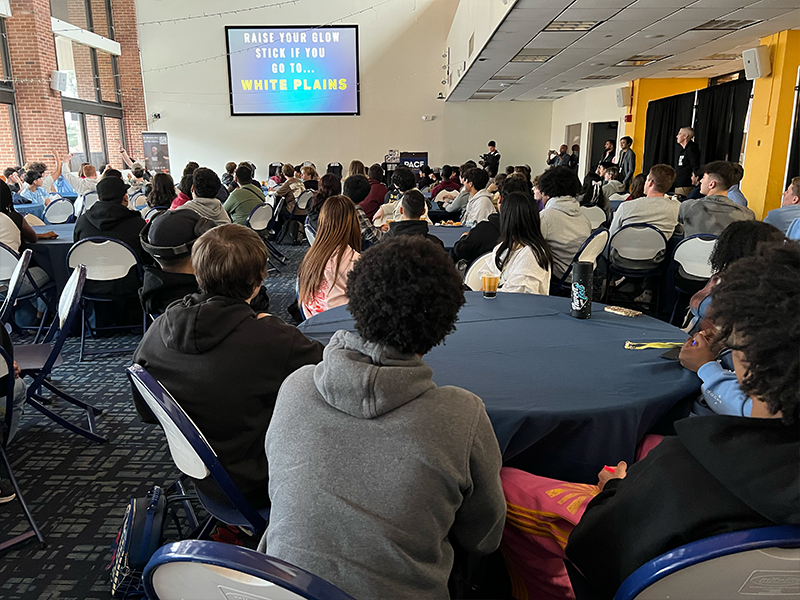
Nearly 150 high school students gathered at Pace University’s Pleasantville campus for the second annual AV Talent Summit — an ambitious effort to get more young people interested in audiovisual careers. The event took place on November 20, supported by NextLVL Learning, is significantly larger than last year’s inaugural summit.
Industry heavyweights like Sennheiser, Legrand | AV, and Q-SYS showed up to talk with the next generation of AV professionals. Students from White Plains, Ossining, and — yes — Sleepy Hollow filled Pace’s Kessel Student Center to hear from industry leaders and learn about career opportunities in the tech sector.
Brandon Beck, Ed.D
The summit kicked off with a keynote from Brandon Beck, Ed.D., who shared a wild story about literally catching on fire while playing with gasoline as a teen (seriously) before turning his life around to become an educator and author. His message to the room of 16-18 year olds? Everyone’s a leader in some capacity, even if they don’t realize it yet.
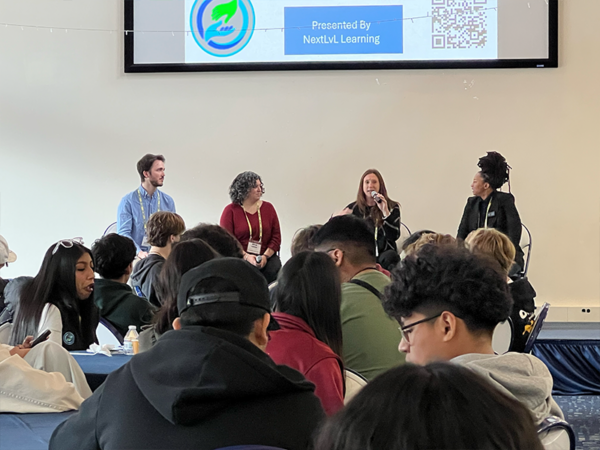
A panel moderated by Alesia Hendley (Sennheiser) and featured Kristin Bidwell of Audiovisual Consulting Team, Erica Carroll of CharBett Strategies and Bradford Terry of Pace Univeristy followed. Their advice was refreshingly direct: network aggressively, build your personal brand, and don’t be afraid to showcase your skills. “If you can sell yourself, you can sell anything,” Hendley told the crowd.
NextLVL Panel
Bidwell shared a story highlighting her career so far; designing the audio at San Francisco 49ers Levi Stadium. “Imagine building something that will be there for years and years,” Bidwell said as she highlighted the unique experiences audiovisual professionals enjoy.
The most interesting moments came during the student panel, moderated by Brittany DiCesare of Control Concepts, where current Pace undergrads made it clear they’re not just looking for jobs — they want actual careers. Full Sail University reps got the room buzzing with talk of esports opportunities, from racing sims to audio engineering programs.
NextLVL Learning, founded by George Chacko and Rich Miller III, organized the event. While some in the industry stress about talent shortages, they’re actually doing something about it.
You face the continuous challenge of maintaining and updating your AV and IT standards to remain competitive and secure. Regular assessment and adjustment of these standards isn’t merely a technical exercise—it’s a strategic imperative that directly impacts business agility, operational efficiency, and market position.
The stakes for proper standardization have never been higher. As organizations increasingly rely on digital infrastructure to drive business value, the ability to effectively assess and adjust AV and IT standards becomes a critical differentiator between market leaders and followers. Companies with complex global operations and diverse technological ecosystems must be particularly vigilant in maintaining standards that both protect their assets and enable innovation.
Security and Compliance Frameworks
At the forefront of AV and IT standards assessment lies security and compliance. Modern enterprises must maintain robust frameworks that align with international standards such as ISO 27001, NIST, and industry-specific regulations. These frameworks must be regularly evaluated to ensure they address emerging threats while maintaining compliance with evolving regulatory requirements. This means continually testing gear that lives on the network. Security standards should cover everything from endpoint protection and network security to identity management and incident response protocols.
Infrastructure and Architecture Standards
The backbone of any enterprise IT operation lies in its infrastructure and architecture standards. These standards govern hardware specifications, network configurations, cloud services utilization, and system interconnectivity. Organizations must regularly assess whether their infrastructure standards support current business needs while providing sufficient scalability for future growth. This includes evaluating standards for:
Cloud service providers
Network capacity
Disaster recovery capabilities
Data Management and Governance
Data drives business decisions. Standards for data management and governance are crucial. Organizations must assess and refine their standards for managing data throughout its lifecycle. A robust classification system must be established to properly categorize and handle different types of data based on sensitivity and business value. Storage protocols need to be clearly defined to ensure data is maintained securely and efficiently across all storage platforms. Organizations should implement comprehensive retention policies that specify how long different types of data should be kept and establish clear procedures for proper data disposal when it reaches the end of its lifecycle.
Data quality management processes must be put in place to ensure the accuracy, completeness, and reliability of data across all systems. Master data management strategies should be developed to maintain consistency of critical business data across multiple systems and departments. Additionally, organizations must implement strong data privacy protections that safeguard sensitive information while ensuring compliance with relevant regulations and standards.
Video Conferencing Infrastructure
Video conferencing standards must address both technical and user experience aspects of virtual meetings. Network bandwidth requirements need to be clearly defined and monitored to ensure consistent performance. Video quality specifications should be established to maintain professional communication standards across all platforms. Organizations must set appropriate latency thresholds and implement monitoring systems to maintain them.
The selection of video codecs should be standardized across the organization to ensure compatibility and optimal performance. Resolution standards must be established that balance quality with network efficiency. Frame rate requirements should be defined to ensure smooth video delivery. Organizations need to implement comprehensive failover protocols to maintain service during technical difficulties. Redundancy requirements must be established and maintained to ensure system reliability.
Picking a favorite video software doesn’t mean excluding everyone else. Design your systems to accept a variety of systems. This could involve a PC with different programs loaded. Other times, you bring connections to the table that allow a meeting to take place from a laptop. Ensure the money you’re investing is going as far as possible.
Meeting Room Technologies
Enterprise meeting room standards must evolve beyond basic audiovisual equipment to create consistent, technology-enabled spaces that support hybrid collaboration. A standardized approach to display systems should be implemented across all meeting spaces. Room control interfaces need to be intuitive and consistent throughout the organization. Acoustic treatments must be specified and implemented to ensure optimal sound quality in all meeting spaces.
Room classifications should be established with clear guidelines for technology requirements at each level. Camera positioning standards need to be developed to ensure optimal video capture in all spaces. Microphone coverage patterns must be carefully planned to provide clear audio pickup throughout meeting rooms. Display configurations should be standardized based on room size and purpose. Room scheduling systems need to be integrated with enterprise calendaring solutions to streamline meeting management.
Communication Platforms Standardization
To prevent communication silos and ensure efficient collaboration, enterprises must establish comprehensive standards for their unified communications platforms. Team collaboration tools must be standardized to promote efficient group work and prevent tool proliferation. Platform governance needs to be clearly defined and consistently enforced. User provisioning processes should be automated and standardized across all communication platforms. Access controls must be implemented to protect sensitive communications while enabling necessary collaboration. Content retention policies need to be established and enforced across all communication channels.
Phased Approach to Changes
Companies and technologies come and go. Consolidation and acquisitions are an ever-present aspect of the IT and AV industries. When that happens, you must look at your existing standard and ensure the long term viability of the companies those standards are based on. Large-scale standards implementation demands a carefully structured approach that begins with a controlled pilot phase in a limited environment. This should be followed by a gradual rollout to non-critical systems to minimize risk. Implementation should proceed department by department to ensure proper training and adoption. Organizations must include buffer periods between implementation phases to allow for adjustment and learning. Comprehensive contingency planning needs to be developed and maintained throughout the implementation process.
Training and Support
Comprehensive training programs should be developed to support standards implementation. Role-based training modules need to be created to address specific user needs. Self-service resources must be made available to support independent learning. Complete documentation should be maintained and easily accessible to all users. Regular office hours need to be established to provide direct support. Support sessions should be offered in multiple formats to accommodate different learning styles. Virtual training options must be provided to support remote workers. Peer champion programs need to be established to provide local support and encouragement.
Emerging Technologies
Organizations must prepare for the integration of artificial intelligence and machine learning into their standard operations. Edge computing requirements need to be anticipated and planned for in infrastructure standards. Quantum-safe security protocols should be evaluated and incorporated into security standards as they mature. Extended reality technologies must be considered in future standards development. Organizations need to assess how blockchain and distributed ledger systems might impact their operations and adjust standards accordingly.
Digital Transformation
Key trends in digital transformation need to be reflected in AV and IT standards through the implementation of composable business architecture approaches. Zero-trust security frameworks must be incorporated into security standards. Customer experience platforms need to be standardized across the organization. Automation and hyper-automation should be leveraged to improve efficiency and consistency. Cloud-native technologies must be evaluated and incorporated into development and deployment standards.
Constantly Ready for Change
The assessment and adjustment of standards represent a critical ongoing process that directly impacts organizational success in the digital age. The complexity of modern enterprise environments demands a balanced approach that combines rigorous technical standards with practical implementation strategies.
As technology continues to drive business transformation, the importance of effective AV and IT standards will only increase. Organizations must take decisive action to assess, adjust, and maintain their standards to ensure long-term success in an increasingly digital world. Those who successfully navigate this challenge will find themselves better positioned to capitalize on new opportunities while maintaining the stability and security their stakeholders expect.