Category: Loudspeakers

  • Snap One Introduces Newly Revamped Episode Surroundscape Landscape Speaker Series, Elevating the Performance and Value of Outdoor Audio Installations

    Snap One Introduces Newly Revamped Episode Surroundscape Landscape Speaker Series, Elevating the Performance and Value of Outdoor Audio Installations

    Snap One, a smart living technology manufacturer and distributor, offers entertainment, connectivity, control, and security solutions to residential and commercial customers worldwide. In 2024, Snap One became part of ADI, enhancing its distribution network and omnichannel shopping experience.

    Snap One has updated its Episode Surroundscape Landscape speaker series to enhance performance, durability, design, and installation flexibility. The new series includes various speaker and subwoofer sizes with mounting options that allow integrators to customize setups for diverse outdoor spaces. Key improvements include IP67 weather resistance and scalability.

    The update addresses customer feedback, emphasizing the need for more resilient outdoor speakers that blend well with surroundings while providing high performance. The product refresh strengthens Snap One and ADI’s presence in outdoor AV, catering to customer demands for durable, flexible, and easily scalable outdoor audio solutions.

    Snap One, now part of ADI, today announced a refresh of the Episode Surroundscape Landscape speaker series that incorporates new high-value features to improve performance, design, as well as installation ease and operation. The new Surroundscape series replaces the original Episode Landscape speakers with familiar model sizes, subwoofers and mounting hardware to suit diverse outdoor environments.

    According to Alexander Zaliauskas, Director of Product Management, Speakers, “We developed this new product line by soliciting feedback from our customers and we incorporated their perspectives to create a more reliable and durable option. As a combined business, Snap One and ADI will continue to work directly with customers to understand what products and solutions they want, when, and how across brands.”

    Key features of the new Episode Surroundscape line include an improved IP67-rated speaker design to better withstand adverse weather conditions that cause water intrusion and UV fading, while blending seamlessly with outdoor environments without sacrificing performance. These updates allow customers to offer end users a higher-quality product that in turn boosts satisfaction.

    Additionally, the line also handles more power and installation options for greater scalability so integrators have more flexibility during the project and can easily add more units to upgrade an install as needed.

    “Our new Surroundscape series is a great option for those looking for a complete line of outdoor speakers that embody all the qualities required for an exceptional listening experience, streamlined installation and long-lasting performance,” added Zaliauskas. “This new series reinforces our brand perception as a key player in the outdoor audio space and is one of the many advantages of being part of ADI as we continue investing in our exclusive brand product lines.”

    The new Surroundscape series features several SKUs including 4-, 6-, and 8-inch speakers; 8-, 10-, and 12-inch burial subwoofers with a 12-inch hardscape version; and stake, surface, and conduit mounts. The Surroundscape series also offers different solutions across a variety of terrains, listening environments, design parameters, and end user expectations.

    The introduction of the newly redesigned Episode Surroundscape speakers adds a powerful, versatile, and attractive landscape speaker offering that complements Snap One and ADI’s increasingly robust suite of outdoor solutions including TVs, lighting, networking and more, to help customers create highly customizable and functional, outdoor entertainment experiences for end users.

  • Peerless and Dirac Announce Strategic Partnership to Empower Home and Pro Audio Manufacturers to More Efficiently Create World-Class Room Correction Systems

    Peerless and Dirac Announce Strategic Partnership to Empower Home and Pro Audio Manufacturers to More Efficiently Create World-Class Room Correction Systems

    Peerless, a 1926-founded subsidiary of Tymphany, is a company in audio components, offering transducers, modules, and software solutions. Dirac, a Swedish company, specializes in digital sound optimization, partnering with manufacturers and streaming services to enhance audio experiences.

    Peerless and Dirac have announced a partnership to integrate Dirac’s advanced Dirac Live Room Correction technology into Peerless’ Flow DSP platform. This integration aims to streamline the process for manufacturers to include high-quality room correction in their audio products for home and professional use.

    The collaboration addresses the need for improved sound quality and faster, more efficient product development. By combining Peerless’ audio expertise with Dirac’s room correction capabilities, the partnership makes high-quality sound reproduction more accessible, efficient, and cost-effective for a broader range of audio brands and OEMs.

    Peerless and Swedish digital audio pioneer Dirac today announced a strategic partnership that promises to revolutionize sound reproduction across the home and pro audio markets. The collaboration merges Peerless’ expertise in acoustics and audio modules with Dirac’s excellence in room correction to enable manufacturers to leverage the Flow DSP platform to seamlessly integrate Dirac Live into their audio products.

    The integration of Dirac’s cutting-edge Dirac Live Room Correction solution into Peerless Flow DSP, as part of the comprehensive X-IN-1 technology suite, offers flexible system, platform, and software licensing models. This empowers audio brands, engineers, and product managers to effortlessly incorporate Dirac Live Room Correction into their offerings using a Peerless-optimized platform combined with the intuitive and flexible Flow Studio DSP design suite. The integration is currently available on select processor architectures, such as Cortex-A, and platforms like Raspberry Pi and Amlogic A113X2. However, it can be expanded to additional platforms as needed to accommodate customer requirements.

    “The acoustic expertise accumulated over Peerless’ nearly 100-year history in making excellent transducers ensures that the drivers themselves deliver premium quality,” said Jyri Pakarinen PhD, Software Business Development Director at Peerless. “When integrated into a final product, such as a soundbar, Flow DSP enables the crucial fine-tuning needed to retain top sound quality as the product leaves the factory. Finally, Dirac Live’s industry-leading multi-phase room correction guarantees the best possible sound in the end user’s home, completing the continuous chain of audio excellence our customers deserve.”

    Dirac Live, now accessible through Peerless’ Flow DSP platform, is the market-leading room correction solution. It automatically addresses common acoustic challenges that all home and professional audio systems have, but hardware alone can’t address – or takes too much time, expertise, or cost to do so.

    The solution is unique in that it corrects for both the magnitude and phase of the entire sound system, including the room itself – resulting in more transparent, balanced sound, tighter bass, improved staging, and enhanced clarity.

    “In recent years, Dirac has accelerated its commercial work within the home and pro audio markets through collaborations with high-volume manufacturers that cater to the mainstream market,” stated Fredric Tapper, Dirac’s VP of Home & Pro Audio. “For this customer segment in particular, time-to-market is critically important, which is why we’ve partnered with Peerless to incorporate Dirac Live into its Flow DSP platform. Through this integration, home and pro audio OEMs will be able to more quickly, seamlessly, and efficiently integrate Dirac Live into their devices, which will further our mission to bring the benefits of premium room correction technology from the few to the many.”

    The Flow DSP platform’s integration of Dirac Live accelerates manufacturers’ time-to-market, improves their audio development efficiency, and optimizes sound quality per dollar. The partnership represents a significant milestone for both companies in their collective mission to scale premium sound reproduction across the home and pro audio markets.

  • Show Imaging Thrills Comic-Con Fans with JBL Professional Sound All Around

    Show Imaging Thrills Comic-Con Fans with JBL Professional Sound All Around

    The roots of Comic-Con in San Diego stretch all the way back to a small gathering in 1970, but the 2024 Comic-Con packed the San Diego Convention Center with well over 135,000 attendees eager to celebrate an entire culture devoted to all things to do with comics and popular arts, from feature films to video games to, obviously, comic books. Comic-Con draws crowds that may wait in line overnight for entry to presentations featuring high-profile actors, directors, and other celebrities, usually promoting new entertainment offerings.

    Aside from the presence of the various comics, toy, and book publishers and manufacturers, Comic-Con’s events represent one of the best opportunities that film and game studios get for directly reaching audiences and firing them up for their latest productions, so the quality standard for video and audio at their events is set extremely high to ensure unforgettable fan experiences. For years, Comic-Con has turned to JBL Professional speakers to provide the high-quality sound needed for everything from panels to screenings. And as the non-profit Comic-Con has grown in size and prominence, the JBL sound systems used have grown in size and sophistication. For the last seven years, San Diego’s Show Imaging has provided these systems for Comic-Con’s major events.

    While Comic-Con uses several rooms at the convention center, it is the presentations in Hall H that often garner the widest attention. Upwards of 6,000 fans pack into Hall H to see and hear panel discussions, clips of upcoming productions, and cast members. One of the big moments at 2024 Comic-Con was an exclusive screening of Marvel’s “Deadpool & Wolverine” a day after its world premiere.

    But the demands of the event pose challenges and complexities to giving every attendee the thrill of a lifetime, and Hall H itself adds yet another series of hurdles to overcome. Show Imaging marshaled a substantial arsenal of loudspeakers to get the job done.

    Hall H presentations commonly involve two types of sound content. First, there is spoken word, such as interviews and commentary, which requires high intelligibility mono sound evenly covering the room. Second, there are soundtracks, which require very dynamic and immersive multichannel delivery.

    “A major challenge of this event is that you have to have a cinema system with a traditional LCR behind the perforated screen for playback, but then you have to deal with panelists and people talking on stage in front of the screen, which obviously you can’t put in the cinema system without causing feedback,” details Elliot Carroll,

    Show Imaging ‘s Director of Audio Services. “So, there’s a cinema system and then a separate corporate system, with speakers that are outside of the screen.”

    The LCR cinema system is three arrays of 10 JBL VTX A12 Dual 12-inch Line Array Loudspeakers. Surround content plays through 12 arrays of five VTX A6 Sub-compact Dual 6.5-Inch Line Array. LFE signals play though a dozen VTX B28 Arrayable Dual-18-inch Subwoofers on either side of the stage, plus a center array of eight B18 Arrayable Single 18-inch Subwoofers.

    The surround speakers, hung above the video walls running down each side of the hall, are suspended from custom trusses designed and built by Show Imaging’s custom fabrication department.

    The basic corporate system is two arrays of 11 VTX A8 Dual 8-inch Compact Line Array Loudspeakers, plus a flown center fill of two arrays with six A8 cabinets. Four delay arrays of six A12 cabinets plus two VTX A12W (wide coverage angle) cabinets on the bottom fly between supplemental video screens for the rear of the room. An array of six A8 cabinets covers the very furthest reach of the room. The SRX712M 12-inch Two-Way Stage Monitors are used onstage.

    The situation becomes more challenging with the need to integrate these separate systems in order to deliver proper coverage to the room for both kinds of sources, and this is where scale comes into play. “The room’s so big you need to use delay speakers, so you have to mix the cinema and corporate systems together for the people hearing the delay speakers,” explains Carroll, “and this gets further complicated by having six sets of surround speakers on each side, which we’ve added in recent years. You end up trying to mix it all in, knowing you’re not in a nice, compact movie theater where everyone can hear every speaker.” Of course, combining signals is not all that is involved in integrating the two systems. Levels must be balanced between them, too.

    But it gets even harder. Not only is Hall H far more capacious than any movie theatre, it is also asymmetrical, in fact, it has a highly irregular pentagonal shape, which creates complications literally from every angle, from simply delivering clear mono coverage to the farthest-field areas, to delay synchronization that is different on each side of the room AND different for the cinema and corporate systems.

    A seat in the middle or rear of the room might be receiving a delayed signal from the corporate system mixed with delayed LCR signals from the cinema system, plus signals from surround speakers. And there’s yet another major factor to consider. “The distances and resulting time differences between arrays at this scale isn’t a few milliseconds, it’s more like 60 milliseconds. So, you really have to adapt,” attests Eric Stahlhammer, who has mixed Comic-Con events in Hall H since 2012. In 2018, Stahlhammer joined the staff of HARMAN (under which JBL Professional is a brand), where he is currently Sr. Global Product Manager for Professional Audio Hardware, DSP, and Software, but he still works Comic-Con every year to keep his hand in on real field work.

    Under these circumstances, calculating delay times that achieve both intelligibility and good imaging becomes a mind-boggling task. And this is not even to mention the need for equalization to compensate for the filtering effect the main screen imposes on the LCR system, or to match the tonality of the large A12s behind the screen to the smaller A6 surround speakers.

    “This is the show that breaks everything because it’s got so many edge cases on so many parts of how we usually do things in this audio business,” Stahlhammer sighs, “but it’s a fun exercise.”

    Such a spectacularly multi-dimensional problem can only be tackled using powerful and highly flexible tools, professes Carroll. “The game changer this year was JBL’s Venue Synthesis software. The key thing with Venue Synthesis is being able to see the coverage of everything in a 3D space, because you can see what the system is doing as a whole. When we’re tuning, we’re just confirming what we already think is going to happen because we can see it in the software. It takes out some of the guesswork and shortens the tuning time. Having Hall H drawn up in Venue Synthesis was helpful to us dialing in the new delay hangs and the surrounds much, much faster than we were able to do in the past. That was huge because it gained us time back onsite.”

    Actual implementation of the delays is done with a delay matrix that allows each feed to be appropriately delayed before signals are combined and distributed. And after all the elaborate calculation and implementation is said and done? “It works really well,” proclaims Stahlhammer. “When it’s timed right and tuned right, the match between the cinema and corporate systems in sound quality, imaging, and level at a given seat is exceptional.”

    As Carroll notes, delivering great sound for Hall H events was, and remains, a major challenge. “It is a lot of moving parts and pieces, for sure, taking place in an environment that demands an extremely high-quality standard,” he emphasizes.

    But JBL Professional tools, properly applied, created a path to success. “The big thing for us is that having tools like Venue Synthesis gives us a more accurate picture of how to redesign the system, as we did this year, to help elevate the fan experience. That’s the goal. We work closely with the studios and craft these technical solutions, but at the end of the day, we want the fans to walk away just wild, right?” concludes Carroll.

  • Worley Sound Becomes L-Acoustics Certified Provider, Supports Mitski’s Tour Evolution with LA7.16-powered K Series Professional Sound System

    Worley Sound Becomes L-Acoustics Certified Provider, Supports Mitski’s Tour Evolution with LA7.16-powered K Series Professional Sound System

    Nashville-based Worley Sound has achieved L-Acoustics Certified Provider (CPr) status, immediately putting its new designation to work on Mitski’s expanded North American tour. The critically acclaimed singer-songwriter’s outing, initially set to conclude in April, grew to include a second leg of dates in August and September, featuring larger venues such as a three-night stand at Merriweather Post Pavilion, Morrison, Colorado’s Red Rocks Amphitheatre, Portland’s Moda Center, two nights at Berkeley’s Greek Theatre, and concluding at L.A.’s Hollywood Bowl. This expansion necessitated a shift from relying on house PAs to carrying a dedicated system, leading to the deployment of a comprehensive L-Acoustics K Series package powered by the new LA7.16 amplified controllers, giving the tour a newly expanded fidelity in these venues of up to 20,000-capacity.

    The tour’s growth mirrors Mitski’s rising popularity and the increasing scale of her performances. “For the first leg of the tour, we were reliant on house PAs, which, despite the inconsistency, tends to be a good way to test drive systems,” explains FOH engineer Patrick Scott, who has been with Mitski since the spring of 2022. “For the first few months, we used just about anything you can put sound through. For the current run, we knew it was time to carry our own PA.”

    The decision to partner with Worley Sound and utilize the L-Acoustics K Series came after careful consideration of the tour’s evolving needs. Scott continues, “Through prior experience and conversations with Worley, we decided on K Series. The main reason people come to these shows is their connection with Mitski. With this system, we’re getting that intimacy and clarity while still having the space in the sound field to show off the arrangements and subtleties of the musicians.”

    The system consists of 32 K2 for mains, 24 K3 for out-fills, and a quantity of Kara II paired with 16 K1-SB and 16 KS28 subs, plus eight A10 front-fills and four A15 stage side-fills. Notably, this marks the first tour to travel with a K Series system driven completely by LA7.16. Subs are driven by LA12X amplified controllers. Two P1 processors and an LC16D drive all the controllers in a redundant Milan-AVB network, with analog as the fallback system. Utilizing the M1 measurement suit capabilities of P1 allows system engineer Eric Rogers to quickly and effectively time and tune the room.

    Rogers, who has also recently been out with ODESZA and Bon Iver, elaborates on the system’s capabilities: “The single box resolution of K Series driven by LA7.16 allows us incredible gains in precision for the SPL target spanning our listening audience. With the high resolution and implementation of the latest auto-filters, the definition in the LF response of the array from top to bottom is quite impressive.”

    The versatility of the L-Acoustics system has proven crucial for accommodating the tour’s diverse venue requirements. “This system scales rather nicely,” Scott notes. “Not only can it scale in size, but we’re also drastically changing acoustic environments from theaters to arenas to sheds, and the system works well in all of these configurations.”

    Monitor engineer Ashoka Kanungo, while not directly in front of the PA each night, appreciates the consistency the new system brings to the tour, with the K1-SB flown behind the K2 to control LF energy. “It’s been very helpful having the same system show to show,” she shares. “When we weren’t carrying PA, I was constantly battling the different sub configurations—there were a lot of center-flown subs—and that impacted the band’s experience onstage. It’s been so much easier having the same setup and Eric as our SE to help with that.”

    For Mitski’s production manager, Nick Hardy, the choice of Worley Sound as their provider was equally important in supporting the tour’s growth. “At the end of 2023, Patrick and I were having conversations and getting audio bids from most of the major players,” says Hardy. “A colleague had great things to say about Tom (Worley) and his approach to audio and business. In our first conversations with Tom, we knew that we wanted to work with Worley. His wealth of knowledge and attention to detail are impeccable.”

    Tom Worley, CEO of Worley Sound, sees the investment in L-Acoustics as a strategic move for his company’s growth. “Having focused primarily on bespoke control packages for the last three years we felt the demand to deliver a full-service audio offering without having to rely on sub-hiring. Adding the K Series system to our inventory not only allows us to compete in a larger market, but also gives us the ability to nurture our clients on a similar growth trajectory. We are delighted to be an L-Acoustics CPr. This strengthens our long relationship with L-Acoustics and reinforces our network in North America and globally.”

    Backed by seven musicians playing a variety of instruments, Mitski presents a multi-faceted show, but from Scott’s perspective, it is largely about dynamics. “There are pin-drop-quiet moments, big anthemic parts, and most stops in between,” he notes. “L-Acoustics’ K Series is really good at transitioning from one dynamic moment to the next and showcasing the detail in each. There is clarity, and a very specific smoothness as well. This tonality is incredibly sympathetic to the approach of the production in the sense that feels timeless rather than overhyped and crispy.”

    As Mitski continues to captivate larger audiences, the partnership between Worley Sound and L-Acoustics ensures that her performances are delivered with the clarity, power, and nuance they deserve, marking a new chapter in her touring career and setting a benchmark for audio quality in live music productions.

  • Two Classics Reunited: The Great Gatsby is Back on Broadway with L-Acoustics dV-DOSC and Kara II Professional Audio Systems

    Two Classics Reunited: The Great Gatsby is Back on Broadway with L-Acoustics dV-DOSC and Kara II Professional Audio Systems

    As The Great Gatsby returns to the Broadway stage, its Jazz Age setting is brilliantly underscored by a sound system that spans L-Acoustics’ own history. Designed by Tony Award-winning Sound Designer Brian Ronan, the system at the Broadway Theatre combines the legendary dV-DOSC line source loudspeakers with the latest Kara II and X Series speakers, demonstrating L-Acoustics’ enduring quality and innovation. The system is designed to bring out the best of both vocal and band for this timeless musical based on the F. Scott Fitzgerald book.

    “This production uniquely showcases the sustainable product design of L-Acoustics,” says David Strang, Vice President of Audio Sales at PRG, which supplied the sound system components, including a DiGiCo Quantum7T front-of-house console. “The dV-DOSC speakers, first introduced in 1999, are still delivering exceptional performance, a testament to the incredible ROI of our L-Acoustics investment.”

    In fact, the “system” for The Great Gatsby is actually two discrete systems—dV-DOSC dedicated to the show’s vocals, and Kara II used to support the band—with some overlap. “The dV-DOSC have a way of putting vocals in a very pleasant place without needing much EQ, which I enjoy,” says Ronan who won the BroadwayWorld Awards Best Sound Design of a Musical category with Gatsby, a trophy that will share shelf space with his Drama Desk Awards in the same category for Anything Goes and Beautiful, and Tony Awards for Best Sound Design of the musicals Book of Mormon and Beautiful. “The vocal tonality is wonderful, and the speech intelligibility is fantastic. They’re a great speaker for vocals. For the band system, I find the Kara II to have a much wider frequency range, which covers all of the instruments nicely in every configuration. They really open up the instruments.”

    “Brian is a brilliant sound designer and we wanted to find him exactly the tools he was looking for,” says Strang, who was able to assemble most of the 50-plus dV-DOSC enclosures that Ronan needed from within PRG’s North American inventories, showcasing the incredible return on investment of their original purchase. PRG’s asset managers were able to source the final few speakers from the company’s Dubai office, which serves the MEA market. They shipped those to New York and the system was ready to go.

    But not everything in this production is old-school: “Brian is also using some of the latest L-Acoustics speakers for this project, including Kara II and X Series, so Gatsby’s system has the best from every era,” says Strang. “It’s not something you see every day, but for someone of Brian’s stature, with whom we’ve built a 25-year relationship, we go to these lengths to make it happen.”

    The Great Gatsby’s sound relies on both the dV-DOSC and Kara II at the system’s core. The proscenium LCR rig comprises dV-DOSC, with ten elements over the proscenium center over the apron, powered by LA8 amplified controllers. A second center cluster is made up of Kiva II speakers to address the balcony. Front-fill and some near-field left coverage are supplied by 5XT coaxials, and an orchestra delay system consists of the company’s X8. Additional orchestra-fill is delivered using X12, powered by LA8, while an array of 5XT provide onstage foldback. Furthermore, a combination of dV-DOSC and Kara II are suspended from a rear truss, reinforcing the 19-piece band.

    Ronan’s goal is to apply the two speaker types for their respective strengths, and then meld them into a single aural experience for the audience. “Because I do like to have a source from the center, as opposed to just left and right, my intent is to try to make it sound like it’s all coming from the orchestra pit, even though it’s not,” he explains. “So on Gatsby, there are three arrays in the center: the middle hang uses dV-DOSC for vocals and the left and right hangs are Kara II, which I then triangulate with the proscenium left and right again, so I can treat them with a different delay time and different EQ, always trying to make it sound like it’s coming from the band. There’s a little overlap on the proscenium side where it’s just dVs, and I want to get some band in there.”

    Just as analog aficionados have found ways to combine tape decks and digital audio workstations for record production, Ronan says he’d like to keep combining the vintage with the modern when it’s appropriate, and L-Acoustics’ depth of technology makes it his primary resource for that. “The dV-DOSC is still the perfect theater box, in my opinion,” he says. “When I can find them and it makes sense, I’ll use them. Fortunately, L-Acoustics has plenty of great speakers that I can choose from to build exactly the perfect system for every show every time.”

  • LeTourneau University’s Belcher Center Gets Great Sound and a Perfect Fit from L-Acoustics K3 Concert Sound System

    LeTourneau University’s Belcher Center Gets Great Sound and a Perfect Fit from L-Acoustics K3 Concert Sound System

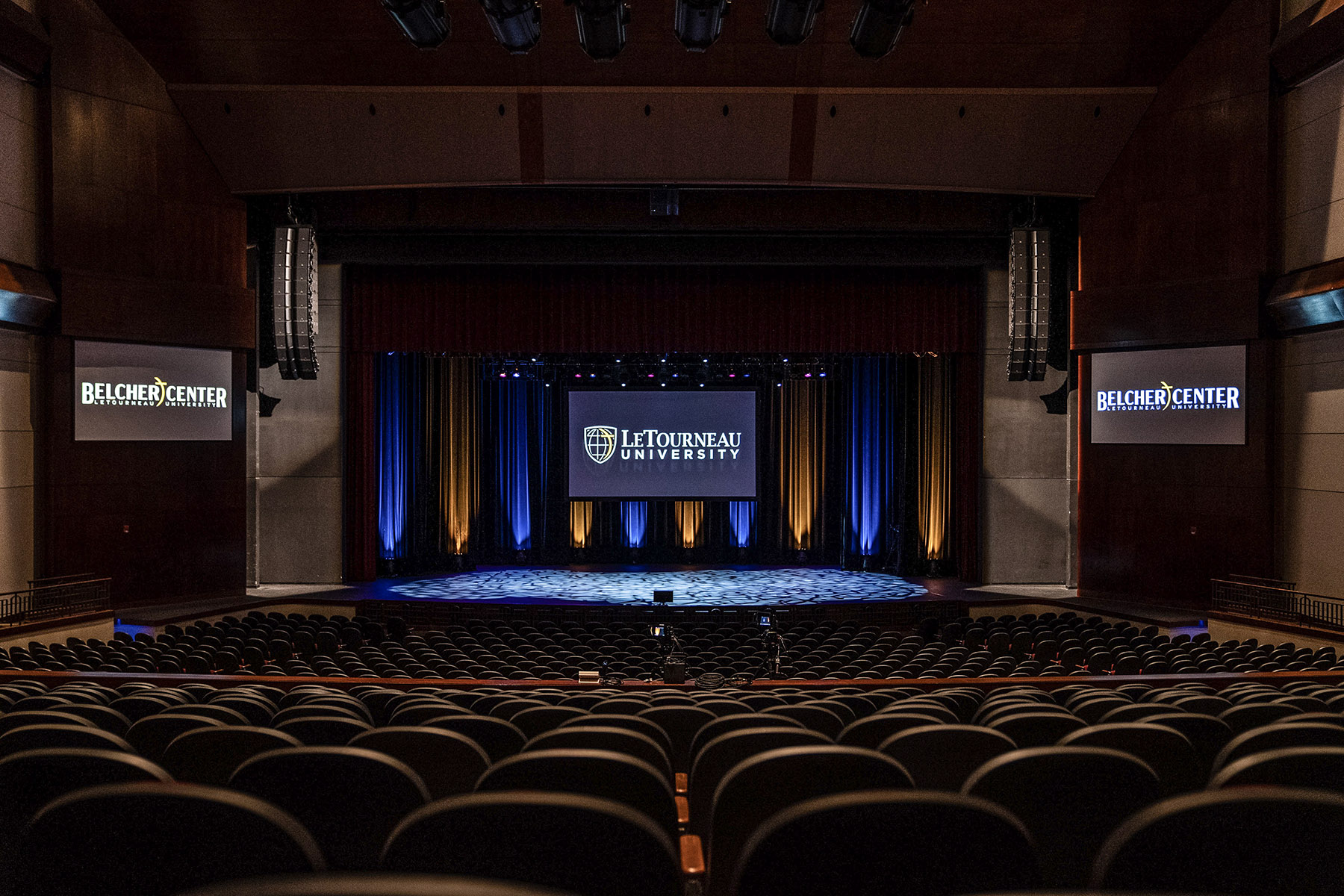
    Nestled in the East Texas town of Longview, the LeTourneau University Belcher Center has garnered high acclaim for its arts and cultural programming since opening in 2007. The 2,011-seat, multilevel venue is one of the most appreciated destinations in the area for all types of productions – including national tours, concerts, lectures, and university chapel – and serves as the home for many arts organizations in Longview and the East Texas area. Recently, Belcher Center experienced a complete AV overhaul, guided by integrator Solotech, which positioned the Center as East Texas’ most sought-after live event destination for the 2024-2025 season and beyond. The centerpiece of that upgrade is a new L-Acoustics K3 sound system.

    “We host dozens of types of events here – from lectures to rock concerts, the venue is always working,” explains Belcher Center Technical Director Anthony “Fro” Horner, further citing the two local symphonies in the area, several dance companies, and the University’s own events, including graduations. “The upgrades to our entire system has given us the leverage we needed to become the best performing arts center in East Texas. Since the upgrade, the caliber of artists and shows we present to our area patrons has increased to a whole new level,” adds Belcher Center Executive Director Cody Bowen.

    The Center also hosts touring companies, such as the annual Nutcracker! Magical Christmas Ballet each fall, and concerts such as LeAnn Rimes and Zack Williams. “Those tours typically carry their own sound, and that was where we really noticed that our previous PA was not up to par. We realized we needed one that would support and complement the nice natural acoustics of this room.”

    Horner and his team reached out to Solotech Business Development Representative Tom Stotler. “Belcher Center’s older center-cluster system forced them to rent extra equipment for many of their productions,” says Stotler. “They requested a new system that could cover every seat in every level of the venue without being overpowering. The new system also had to meet the rider requirements of touring shows.”

    Having heard the power and clarity of L-Acoustics in the center when it was brought in by touring artists, Horner knew that K3 would do all of that, and more.

    Working from a design provided by L-Acoustics using Soundvision software, which Stotler says virtually recreated the facility “down to the foot,” Solotech installed a system comprising left and right hangs of 12 K3 loudspeakers and six KS21 subs per side, with a pair of A15 acting as a center cluster. In addition, there are 14 compact coaxial 5XT arrayed across the front of the stage as front-fills, activated when the orchestra pit is not being used for a performance or event. Four larger X8 are installed per side as side-fills, arrayed to cover the front areas of the second and third seating levels. The system is powered by four LA7.16i and three LA4X amplified controllers, while four more LA4X power eight additional X8 deployable as stage monitors. A P1 processor at FOH drives the system over Milan-AVB.

    The K3 system sounds great and solved several design issues, including having the hangs configured so the lower boxes act as front-fills when the orchestra pit is in use. The compact footprint of the K3 with KS21 flown behind them allows the hangs to be repositioned via an automated lift as needed in a tight area in front of the venue’s 60-foot proscenium arch. Horner describes the barely six-foot clearance to the back of the stage that includes a solid one-foot-thick movable fire wall that also has to fit in there. “The subs are part of the J curve, which is not something you see often,” he says. “But they made it so that everything fits and works perfectly.” Stotler chimes in, “Now, they can get the sound where it’s needed without having to resort to a crazy amount of processing, and the entire PA can be moved as needed, giving the venue even more performance flexibility.”

    Horner says that the switch to K3 has revitalized the venue. “Everyone has noticed how much the experience has improved,” he says. “The new sound system has made Belcher Center even more enjoyable for audiences and performers alike.”

    “Our goal was straightforward: to integrate state-of-the-art sound technology that would elevate every performance and create an impressive experience for the audience,” Stotler adds. “Through our partnership with L-Acoustics, LeTourneau University, and the Belcher Center, I’m proud to say we’ve achieved just that.”

  • Vanderbilt’s FirstBank Stadium Opens College Football Season with a New L-Acoustics K2 Professional Sound System

    Vanderbilt’s FirstBank Stadium Opens College Football Season with a New L-Acoustics K2 Professional Sound System

    “Putting sound into a large college football stadium is always about punching all the way to the other side of the facility, but also sounding good doing it, which is why we landed on the K2,” comments Ben Boeshans, Senior Consultant at Salas O’Brien, which designed and specified the L-Acoustics sound system installed at Nashville’s FirstBank Stadium, just in time for the start of the 2024-25 college football season. “It puts the sound exactly where it’s needed.”

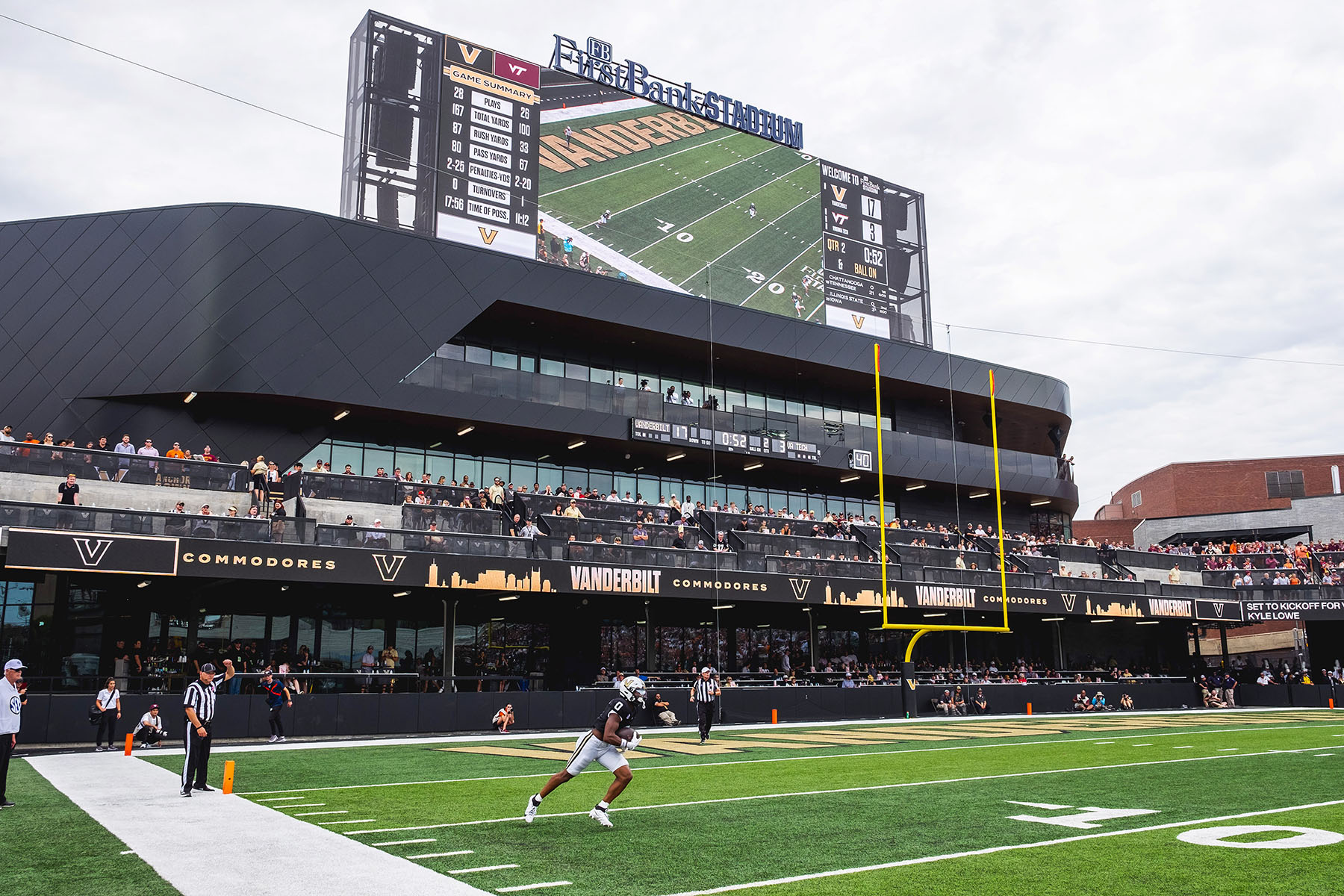
    FirstBank Stadium, home to Vanderbilt University’s Commodores, boasts more “firsts” than its name suggests. Opened in 1922 as Dudley Field, this 40,000-seat venue was the American South’s first stadium built exclusively for college football. The Commodores’ influence extends beyond the field: Their leadership pioneered the modern scoring system, advocating increasing touchdowns from five to six points and reducing field goals from four to three.

    As a concert venue, FirstBank has hosted shows for the Rolling Stones, Luke Bryan, and the Dave Matthews Band, among many others, over the years. As venerable as the venue is, it still needed to have its sound brought into the 21st century, and that process was primarily completed in late August, with the installation of a new L-Acoustics K2 sound system, designed by consultancy Salas O’Brien and installed by Brentwood-based integrator CTS AVL.

    “FirstBank Stadium boasts a rich history that sets it apart,” remarks CTS AVL Vice President of Integration Neal Watson. “While its design may echo other college football venues, recent renovations have significantly enhanced the fan experience. New seating areas were added near the north end zone, where a state-of-the-art PA system is also installed. The primary goal was to ensure excellent sound coverage for all seats, blending the stadium’s storied past with modern amenities.”

    That system now comprises 24 K2 enclosures in left/right arrays in the north end zone, below which are hangs of four A15 speakers per side, deployed as fills for the seating below. Low end is boomed out by 16 KS28 subwoofers. The K2 and A15i are driven at single-box resolution via LA7.16i, and the KS28 subwoofers are driven by LA12X.

    While FirstBank Stadium shares design elements with other college football venues, it stands out through its rich history and thoughtful modernization, embodying the evolving spirit of collegiate athletics. For instance, says Boeshans, throw distance and the amount of volume necessary can make speech intelligibility a challenge. “In stadiums, echoes are your biggest enemy. The key is precision: put sound where you need it, keep it out of where you don’t,” he explains. “This is crucial for referee mics especially. If you’re not careful with aiming and control, you’ll end up blasting sound all over the field – and then you’re toast.”

    The design solution, he says, was to create three independent speaker arrays. “We articulated each array with precision: the top targets the south end zone, while the middle and bottom cover specific seating sections. This deliberate targeting ensures complete coverage without overlap, dramatically improving sound clarity throughout the stadium.”

    The other bit that’s noteworthy, he adds, is that the top two of those arrays are K2 speakers, but the bottom is an A15. “The additional gain output of a K2 was not necessary in this part of the space,” he says. “Fortunately, L-Acoustics gives us the range of options we need to fit the system design perfectly to the project requirements.”

    The Commodores kicked off the season with two impressive and electrifying home victories. The new sound system has amplified this on-field excitement, as Watson enthusiastically notes: “The system sounds fantastic, and the coverage is exceptional. The PA’s great energy synergizes with the team’s performance, creating an electric atmosphere that fires up the crowds. It’s a perfect complement to the Commodores’ winning momentum.”

  • Artcoustic Are Delighted to Introduce Our Discreet Audio Powerhouse – the Sub Ci4-5

    Artcoustic Are Delighted to Introduce Our Discreet Audio Powerhouse – the Sub Ci4-5

    Artcoustic, a Danish company, produces loudspeakers for residential and commercial projects, offering customizable options in various settings like residential music systems, cinemas, offices, and retail spaces, blending acoustic performance with decor-friendly design.

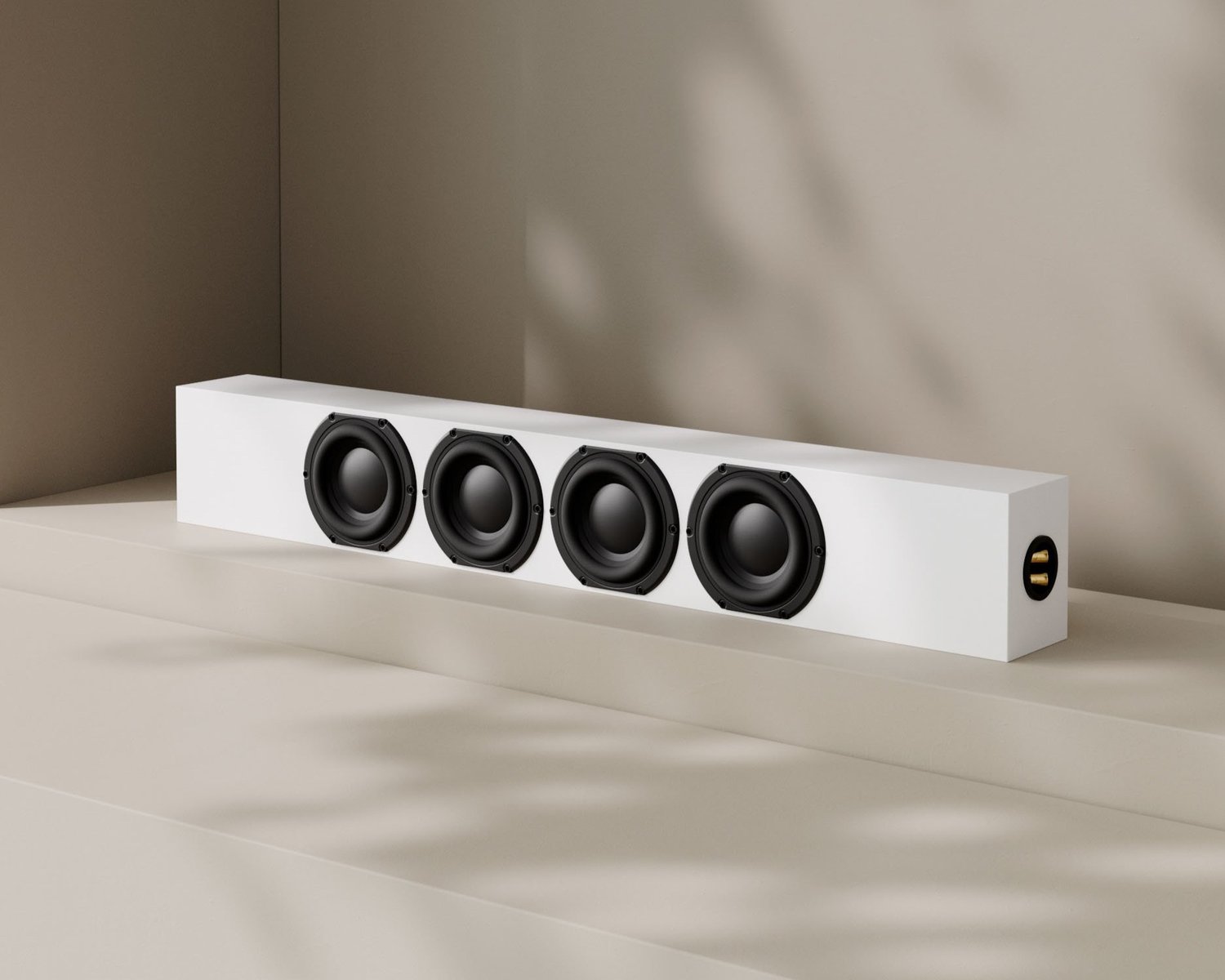
    Artcoustic introduces the Sub Ci4-5, a compact yet powerful subwoofer designed for discreet installations. It delivers exceptional low-frequency performance while blending seamlessly into various environments.

    This subwoofer is ideal for spaces where aesthetics and space-saving are priorities, providing powerful bass without compromising design. Its discreet installation options make it perfect for hidden placements, ensuring both performance and visual appeal.

    Experience powerful bass without sacrificing valuable space. The Sub Ci4-5 is Artcoustic’s latest innovation in discreet audio solutions, designed to deliver exceptional low-frequency performance while seamlessly blending into your environment.

    UNMATCHED POWER IN A COMPACT DESIGN

    Featuring four of our 5 ¼” long-throw woofers and our in-house designed sealed cabinet technology, the Sub Ci4-5 delivers astonishing bass response. It effortlessly reproduces even the most demanding low-frequency signals with exceptional accuracy and power.

    DESIGNED FOR DISCREET INSTALLATION

    The Sub Ci4-5 is the perfect choice for installations where space and aesthetics are paramount. Its compact design allows for discreet placement in a variety of locations, including:

    ~Under sofas or furniture
    ~Mounted on or behind construction beams
    ~Low by floor line

    ELEVATE YOUR AUDIO EXPERIENCE

    The Sub Ci4-5 is more than just a subwoofer; it’s a discreet solution that delivers exceptional bass performance for its size.

    Experience the power of discreet audio without compromising on aesthetics:

    * Powerful 4-driver configuration

    * In-house designed sealed cabinet technology

    * Accurate low-frequency reproduction

    * High power handling

    * Minimal distortion

    * Discreet installation options

    SPECIFICATIONS

    • Operating Range: 40 Hz (-3 dB) to 400 Hz
    • Sensitivity: 90 dB
    • Maximum Power Handling 2 hours of 6 dB crest factor pink noise, 200 Watt RMS (AES Standard)
    • Impedance: 8 ohms nominal
    • Average Peak SPL: 110 dB
    • Weight: 10 kg
    • Dimensions: H: 143 W: 1000 D: 117 mm
    • Cabinet
      • Indoor: Black, White, Optional RAL/NCS
      • Outdoor: IP62 standard colour NCS S 2500-N. Optional IP62 RAL/NCS.
  • L-Acoustics Ai Series Brings Concert-Grade Sound to Eric Church’s Chief’s, Nashville’s Newest Music Destination

    L-Acoustics Ai Series Brings Concert-Grade Sound to Eric Church’s Chief’s, Nashville’s Newest Music Destination

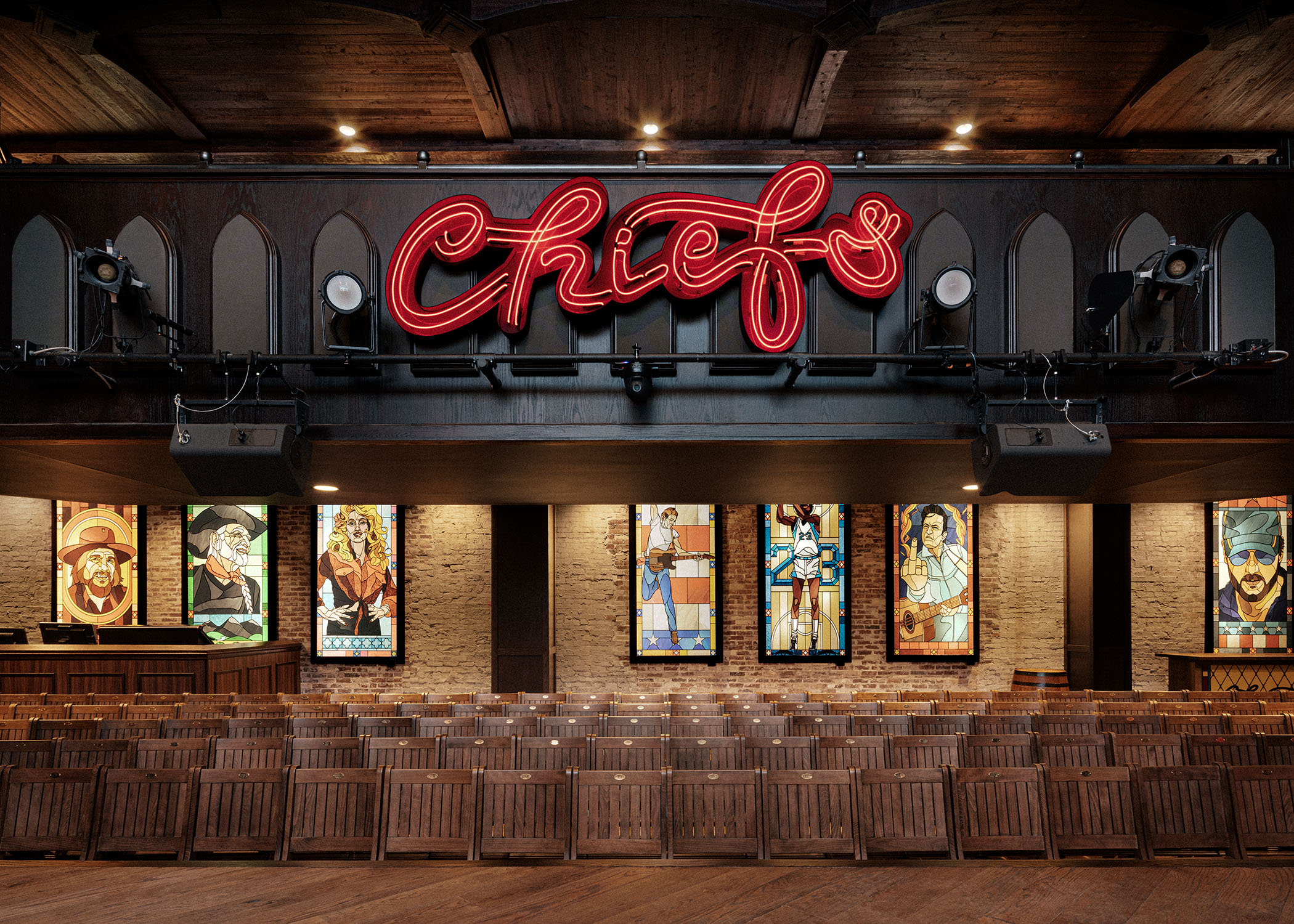
    Chief’s, the brainchild of Eric Church and founder and CEO of AJ Capital Partners, Ben Weprin, joined Nashville’s vibrant Lower Broadway earlier this year. Spread over six stories, the space features Rodney Scott’s Whole Hog BBQ from James Beard Award-winning pitmaster Rodney Scott, a dueling-pianos bar called Friendly Shadows, and a studio for live broadcasting Church’s Outsiders Radio SiriusXM channel. The true centerpiece of the facility is the Neon Steeple, a two-story, intimate ticketed concert venue that was inaugurated with a 19-date residency of shows by Church himself. Notably, that room has already quickly developed a solid reputation for having exceptional sound thanks in large part to an L-Acoustics Ai Series professional sound system installed by Clair Global Integration.

    CGI System Designer Joe Anderson recalls that there were some unique challenges in outfitting the space: “The building’s tall, skinny corner location and reflective surfaces, like stained glass windows and brick walls, required creative solutions,” he explains. “The venue’s multilevel audience area, with fans on the third floor and seated in balcony pews, demanded a versatile sound system, and L-Acoustics’ A10i enclosure emerged as the right choice for this project.”

    The main PA showcases the flexibility and power of the L-Acoustics Ai Series. Each side features one A10i Focus over two A10i Wide, flanked by an A10i Focus over an A10i Wide as side-fills. Dual KS21i subs fly behind the main arrays. The underbalcony benefits from a single A10i Focus over one A10i Wide per side. Four X8 speakers serve as front-fills, while four KS21i subs reside under the stage. For performers, the stage offers up to eight X12 monitor wedges.

    The upstairs piano bar also boasts its own L-Acoustics setup. Eight compact X8 speakers surround the stage, complemented by two SB15m subs above and one more X8 for the FOH booth. Each piano enjoys two X8 stereo monitor wedges. LA4X amplified controllers power all systems, ensuring consistent, high-quality sound throughout the venue.

    Jesse Free, Chief’s production manager, emphasizes the venue’s unique position in Nashville’s music scene. “While our ground floor offers the lively honky-tonk atmosphere visitors expect, our upstairs venue sets us apart,” he says. “Having a professional L-Acoustics sound system immediately signals to musicians and fans that sound quality here is paramount.”

    Anderson adds, “A10i’s compact size and high performance were crucial. It delivers the power and musicality that Eric wanted, allowing us to create a true concert experience in an intimate club setting.”

    Chief’s stands out in Nashville’s evolving entertainment landscape. It combines the city’s renowned musical heritage with cutting-edge sound technology, offering visitors and artists alike an unparalleled audio experience. The studio for Church’s Outsiders Radio SiriusXM channel, with capabilities to host broadcasts from various media partners further cements Chief’s as a multifaceted entertainment destination in the heart of Music City.

    Chief’s exemplifies Nashville’s commitment to pushing the boundaries of live music experiences. By marrying traditional elements like honky-tonk ambiance and innovative dueling-piano bars with professional-grade sound systems, Chief’s contributes to the city’s reputation as a premier music destination.

  • Music Artist Jack White with JBL Professional and Guitar Center Bring New Sound to American Legion Post

    Music Artist Jack White with JBL Professional and Guitar Center Bring New Sound to American Legion Post

    It is commonplace in the town known as Music City to find organizations deeply involved in music. So, it should be no surprise that Nashville’s American Legion Post 82 is one of them. Describing their mission as “Reintegrating Local Veterans Into the Community Through Music,” Post 82 regularly holds music events ranging from open mic nights and songwriter workshops to performances of all kinds.

    When Jack White – Nashville resident, Grammy-winning musician, and owner of recording studio/record label Third Man Records – went looking for a location in which to give an under-the-radar launch performance for his newest album, No Name, Post 82 was suggested, but there was a problem.

    “We were talking about which venues to play in Nashville and the American Legion was mentioned,” recalls Lalo Medina, White’s longtime tour manager. “but somebody told us they didn’t have the greatest PA in that room. So, Jack said, ‘Why don’t we do a fundraiser for them to get a new system and get JBL’s help with it?’ It really wasn’t about putting in a sound system so he could play on it, it was more just putting in a better system for people that go to that place to enjoy, because it is a really cool venue.”

    Mick Beisel, CEO of Vision2 Marketing, facilitated a partnership between JBL Professional and Guitar Center Custom House (GCCH, a Nashville-based collaboration between Guitar Center Professional and Guitar Center’s Audio Visual Design Group, known as AVDG) that resulted in Post 82 acquiring a new sound system consisting of equipment from several HARMAN Professional companies.

    The timing, however, was incredibly tight, reports Greg Glaser, GCCH’s Vice President of Artist Relations. “We literally got involved a week before the show was to take place,” says Glaser, a time frame so short it presented a challenge simply in transporting the equipment to the venue in time. “JBL freighted the equipment directly to the venue and we showed up the next day to install it,” Glaser explains.

    A local JBL support staffer had viewed the small venue (less than250-person capacity) and, working with GCCH, had specified a system based on four JBL SRX910LA two-way active line array cabinets (two for each side of the stage), bolstered by two SRX928S dual 18-inch subwoofers. Audio flows from five AKG D5 supercardioid dynamic microphones on the stage (plus any direct sources) through a Soundcraft Mini Stagebox 32i to a Soundcraft Si Performer 3 digital mixing console. Patrons in the bar area, located in a separate area of the building, get clear sound from a pair of PRX912 powered two-way loudspeakers.

    With time being so short, Glaser called on Ken Ferrel of AVDG to lead the lightning-fast installation. “I’ve been working with Greg on projects for years. Anytime he has an ‘I got to get this done and I need it to happen tomorrow,’ thing, it’s usually me he’s reaching out to,” Ferrel says, laughing. “Custom House is kind of the

    special forces of the Guitar Center organization. We can make stuff happen that people think is impossible. We’re that kind of group where nothing’s too crazy.”

    Before Ferrel could even start putting the new system in, the existing system needed to be removed. Glaser had showed up to pitch in and the vets at Post 82 were eager to help in any way they could. Then it was time to deploy the SRX910LA cabinets.

    “Acoustically it’s not a bad room: there’s ceiling tile, there’s a dance floor, but the rest of the room has carpet. However, it’s a wide, shallow room, so you have issues of coverage out to the sides, which the old system lacked. The people at the post told us that you would go out to the corners of the room and it was like they didn’t have a PA at all. But now, with the 910LAs, it doesn’t matter if they go out to the corners because it’s a wider coverage box. It’s the right box for the room.”

    The main system was ground stacked, with two 910LA cabinets on each side. Once the system was physically in place, configuration was easy, even though tuning the system was about as last minute as it could be, taking place the morning of White’s performance. “The system was super easy to set up. The software was great for configuring it, but I would have to say, honestly, I didn’t touch anything out of the box. Everything was just there. It was my first experience with those particular speakers and I was beyond pleasantly surprised with them; they sounded amazing. It really blew me away what they were getting out of that box.”

    Quality of sound was obviously essential to everyone, but White had one other major requirement. “The most important thing with Jack, about sound, is that he likes it loud,” Medina asserts. “He believes that a quiet rock and roll show is an oxymoron, and it’s something we always try to avoid.”

    Even on short notice, the show sold out the moment it was announced. Showtime came and White debuted six songs from the new album for the small but ecstatic crowd.

    So, was it loud enough for Jack? “It was loud enough,” confirms Medina. “It was plenty loud,” Glaser affirms, “and the system sounded phenomenal. We were backstage and Jack was to-the-moon happy. Tons of people said it was the best the room ever sounded.”

    His work there is done, claims White. “We’re on a mission for purity, we build spaces where nothing is translated, nothing impersonating something that it’s not,” he says. “Live music venues are like churches, they’re sacred spaces that need to give people what they want, something real. JBL gets that and it’s why they are obsessed with translating sound in such a pure way”

    Of course, Post 82 and its members were delighted with the show and the new system, and Ferrel and Glaser were both impressed with the enthusiasm the vets showed in helping get the old system removed and the new one in place. “They were probably the most welcoming group of people I’ve ever met,” Ferrel glows “They were just happy to have us there and happy to have this happening for them. Those guys helping me set things up were volunteers, not trained audio guys at all. But they were ex-military, so they knew how to follow direction and they were hard workers, willing and able to do anything and everything they could to help.

    Glaser emphasizes that close cooperation was the key to the show and the new system coming together so quickly. “This could not have happened if Jack, Custom House, the American Legion post, and HARMAN had not all worked together so tightly on it,” he concludes. “And now I’m really excited to see what this does for the community.”