Category: Microphones

  • Sennheiser Delivers Enhanced Collaboration Experiences with Webex by Cisco

    Sennheiser Delivers Enhanced Collaboration Experiences with Webex by Cisco

    Sennheiser, a brand with over 75 years of experience, focuses on creating audio solutions that impact the future, offers a professional solutions like microphones and streaming technologies.

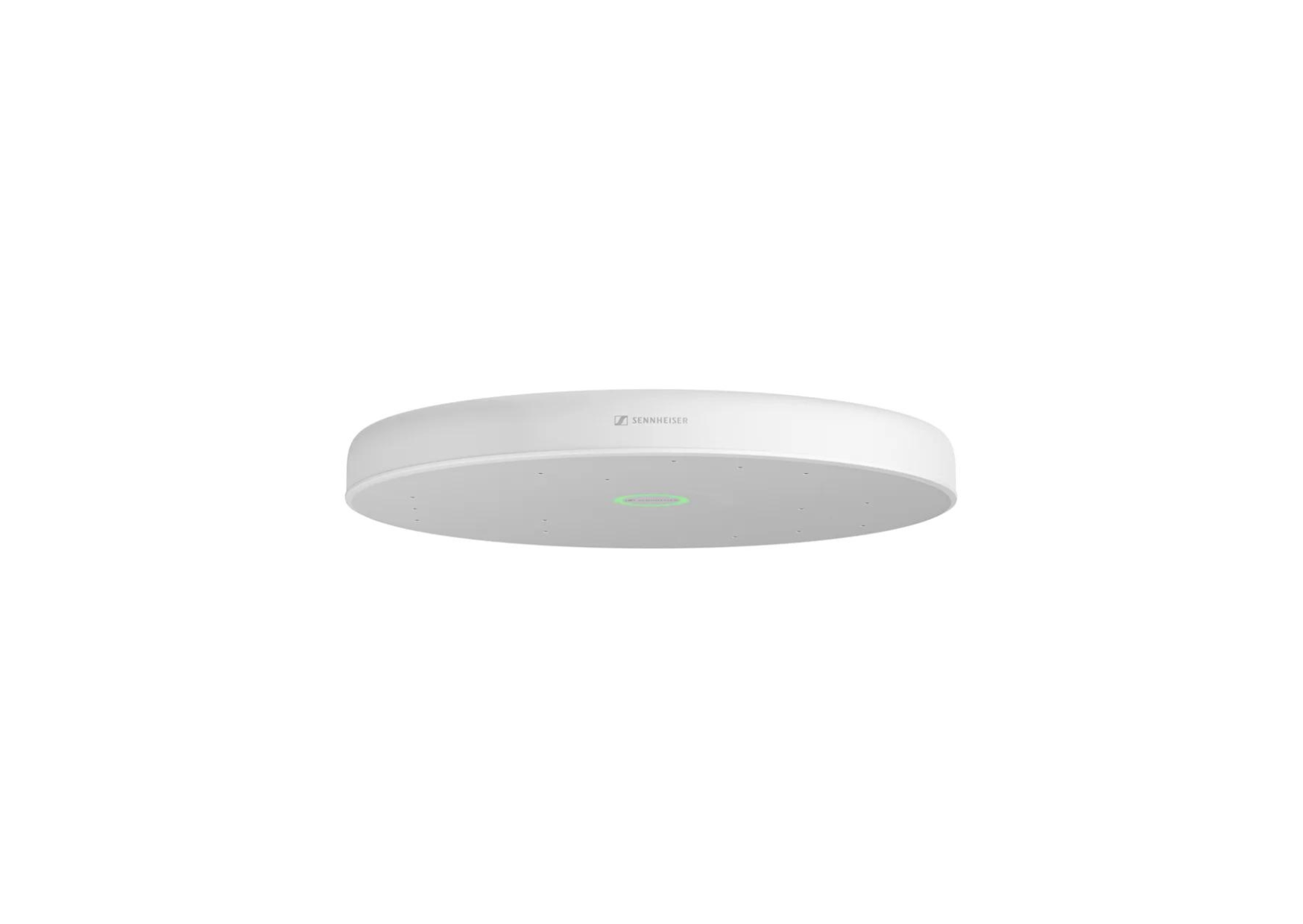
    Sennheiser has introduced an integration for its TeamConnect Ceiling Medium (TCC M) microphone with Cisco Devices, allowing synchronized mute states without additional hardware. This integration leverages IP control, reducing costs and simplifying installation.

    The integration aims to enhance the collaboration experience by streamlining setup, minimizing hardware requirements, and improving system reliability. This aligns with Sennheiser and Cisco’s shared goal to make audio-video solutions as user-friendly and efficient as possible for modern workspaces.

    Sennheiser, the first choice for advanced audio technology that makes collaboration and learning easier, today announced a new integration for Cisco Devices that synchronizes the mute state between Cisco systems and the Sennheiser TeamConnect Ceiling Medium (TCC M). By leveraging IP control, this update builds on the existing integration of audio over AES67 and removes the need for additional hardware.

    The new integration syncs the TCC M ceiling mic with the mute state of the Cisco Devices, without the need for a dedicated control processor, leading to an efficient installation process. Eliminating unnecessary hardware not only cuts deployment costs, but also reduces potential points of failure, resulting in a more reliable system. If the video device cannot update the Sennheiser mute state, a warning will be displayed on-screen.

    “We share a mutual goal with Sennheiser to make our solutions as easy as possible to use together,” said Arnaud Caigniet, Head of Cisco Collaboration Devices Alliances. ​ “Our new macro for the TCC M is yet another example of how we’re working closely with Sennheiser to integrate our products for simple installation and use.”

    The TCC M is designed for permanent installation in medium-size meeting rooms. With this solution, Sennheiser provides an additional design option and greater connectivity to seamlessly include its audibly superior ceiling microphone into wide variety of meeting rooms and teaching spaces. TCC M delivers functionalities like TruVoicelift, Intelligent Noise Control and Exclusion & Priority Zones, all housed within a compact form factor and offered at an attractive price point.

    Cisco Devices are purpose built to help teams collaborate and create together in real time. From local wireless sharing and high-quality video conferencing to intelligent, connected workspaces, Cisco Devices offer rich collaboration experiences to support the needs of workplaces as they evolve. Based on the RoomOS operating system, Cisco Devices deliver a seamless experience in every space and on every device. Its user-friendly interface and lightweight design allow users to initiate or join high-quality video meetings effortlessly, facilitating agile and efficient collaboration.

  • Everything you need to know about microphones in 2024

    Everything you need to know about microphones in 2024

    The world of microphones can be daunting. Whether you’re looking to start a podcast, sing the national anthem, stream on Twitch, or just sound better on Zoom calls, there’s an overwhelming array of options out there. But here’s the thing: you don’t need to be an audio engineer to understand the basics.

    Let’s break it down.

    The big three: your microphone essentials

    At their core, microphones do one thing: convert sound into electrical signals. But how they do it? That’s where the technology and uses get interesting.

    Dynamic mics: the workhorses

    Think of these as the Toyota Camrys of the audio world – reliable, hard to break, and perfect for rough environments. Dynamic mics (the mic you’ve definitely seen at every concert) uses electromagnetic wizardry to handle everything from screaming vocalists to cranked guitar amps without breaking a sweat. No external power needed.

    Condenser mics: the studio stars

    These are the precision instruments of the audio world. They need “phantom power” (basically, electricity through the mic cable) to work their magic, but what you get is crystal-clear audio that captures every nuance. Typically, you’re using these to mic up instruments and “warmer” vocals.

    Ribbon mics: the vintage virtuosos

    Here’s where things get delicate. Ribbon mics use a thin strip of metal to capture sound in a way that’s eerily close to how our ears work. They’re fragile (and often expensive), but nothing else quite captures that warm, natural sound. If you’ve seen video of old-school crooners like Frank Sinatra he’s using a ribbon mic.

    USB mics: plug-and-play simplicity

    The Blue Yeti has become synonymous with easy audio for a reason. These mics skip the complicated audio interfaces and plug straight into your computer. Perfect for podcasting or streaming without the technical headaches.

    The simplicity of just plugging in a USB cable make these mics ideal for video conferencing uses as well. Yes, you can certainly use a built-in mic that came with your laptop. But if you want to really shine in your next call, upgrade the audio with a mic that brings your voice front and center.

    Lavalier mics: the invisible performers

    Those tiny mics you see clipped to speakers’ shirts? They’re engineering marvels that pack professional sound into a package smaller than your thumb. This is more a form factor designation and not audio capture.

    Lav mics can also be used in live theater production. For these, they are typically hidden in the hair or in the costumes. Giving performers the ability to be heard throughout the theater or space is a huge benefit.

    Shotgun mics: the focused listeners

    These are the snipers of the audio world. Point a Sennheiser MKH 416 at your subject, and it’ll capture clear sound while ignoring almost everything else. You have certainly heard these mics, even if you’ve never seen one. Nearly every TV and movie product leverages shotgun microphones. This allows the actors to perform their lines without have individual mics.

    The bottom line

    Here’s the reality: there’s no one-size-fits-all microphone. A mic that’s perfect for recording whispered videos would be terrible for capturing a metal concert. But understanding the basics means you can make an informed choice based on your needs.

    For most people’s everyday use, a solid USB condenser mic hits the sweet spot between quality and convenience. But if you’re planning to record in noisy environments or need something more robust, a dynamic mic might be your better bet.

    The good news? Microphone technology keeps getting better and more affordable. Whether you’re spending $100 or $3000, there’s never been a better time to upgrade your audio game.

  • SCT Unveils RM-3CP and RM-3CP-PRO Microphone Extension Systems for Seamless Integration of Cisco Table Mics with Cisco Codecs and Video Bars

    SCT Unveils RM-3CP and RM-3CP-PRO Microphone Extension Systems for Seamless Integration of Cisco Table Mics with Cisco Codecs and Video Bars

    SCT offers industry-exclusive integration solutions for power, video, audio, control, USB, and Ethernet over single CAT cabling up to 100 meters, supporting major codec and PTZ camera manufacturers. They provide all-in-one kits, mounting solutions, and rack shelves for smooth installations.

    Sound Control Technologies (SCT) introduces the RM-3CP and RM-3CP-PRO microphone extension systems, enabling up to three Cisco microphones to be extended up to 100 meters using standard CAT cable, compatible with various Cisco codecs.

    SCT is addressing integrators’ need for a solution to extend Cisco table microphones and codecs efficiently, offering a cost-effective, simplified cabling solution without compromising audio quality.

    Sound Control Technologies (SCT), the industry leader for camera integration solutions, introduces the RM-3CP and RM-3CP-PRO microphone extension systems for extending up to three Cisco Mic 20/Mic 60 and Table-J/Table-E microphones from the Cisco Codec Plus, Codec Pro, Codec EQ, Room Bar and Room Bar Pro using standard CAT cable up to 100 meters.

    “Our dealer base has been asking for a solution to extend Cisco table mics and codecs,” explains President, CEO and Co-founder, David Neaderland. “At SCT, we’re always trying to tackle the tough challenges—simplifying complex cabling and pushing beyond traditional limitations to offer integrators cost-effective, time-saving solutions. Now, they can enjoy exceptional audio at the conference table without compromising quality, regardless of mic/codec placement.”

    The RM-3CP natively supports up to three TRRS Table-J or Mic 20 microphones, while the RM-3CP-PRO supports up to three Table-E or Mic 60 microphones. Codec-specific cables and power supplies are included in each kit.

  • Certified and Designed for Sustainability: Here Comes the Logitech H570e Headset, Now Certified for Microsoft Teams

    Certified and Designed for Sustainability: Here Comes the Logitech H570e Headset, Now Certified for Microsoft Teams

    Logitech, a Swiss company, designs products and experiences for everyday use, focusing on customer interaction with the digital world. With global reach, they create unique and meaningful experiences in music, gaming, streaming, video, and computing. Their brands include Logitech, Logitech G, ASTRO Gaming, Ultimate Ears, Jaybird, Blue Microphones, and Streamlabs.

    Logitech has launched the H570e headset, which is an affordable, lightweight, and sustainable option for Microsoft Teams users. It offers high-quality audio, easy setup, and customizable features. It’s built with at least 45% recycled plastic and includes remote management options for IT.

    This headset is ideal for businesses looking for a cost-effective, eco-friendly audio solution that integrates seamlessly with Microsoft Teams, while also offering comfort and manageability for both employees and IT departments.

    Your teams will love this headset–and so will your budget

    Fans of Logitech’s popular H570e headset now have more reasons to get excited. This collaboration essential is now certified for Microsoft Teams and is built with a minimum of 45% post-consumer recycled plastic* in the plastic parts. It’s light in weight and light on the budget, making it an irresistible choice to deploy to your entire workforce.

    Exceptional listening for a Microsoft Teams environment

    For organizations that use Microsoft Teams as their primary collaboration platform, the headset’s certification affords multiple benefits, including an enterprise-grade audio experience for employees. With a 30 mm driver and two embedded noise-canceling microphones, users can enjoy crystal-clear sound quality for both listening and speaking.

    IT teams who’ve standardized on a Microsoft environment can rest assured that the headset has met strict Teams certification requirements and will fit easily within your Microsoft environment and be confident the headset will work reliably for those all day call marathons.

    H570e (Teams version) instantly connects to an employee’s laptop via USB-A or USB-C* without the need for any additional drivers or software. Once connected, employees can enjoy inline call controls and a dedicated Teams button with quick access to Teams activities, including the ability to join Teams meetings, answer or end calls, mute or unmute, and adjust volume. There are even corresponding indicator lights to show Teams connection status and mute/call status, to make their call status clear. It couldn’t be easier for employees to hit the ground running and stay productive.

    Designed for Sustainability… and comfort

    Sustainability and comfort go hand in hand with the H570e (Teams version), featuring a lightweight design and plastic parts that include a minimum of 45%* post-consumer recycled plastic. A padded headband with metal reinforcement provides strength and flexibility, with a fit that feels just right for all-day wear. It’s also reversible, so the headset can be worn with the rotating microphone on the left or right.

    With H570e, users are able to replace the leatherette earpads to extend the life of the device, keeping more headsets on heads and out of the trash.

    Software makes it easy to manage and customize

    A major improvement that H570e (Teams Version) brings is the power to personalize and manage the headset at your fingertips.

    Through the Logi Tune app, employees can customize the listening experience to their own preferences. For example, they can enable anti-startle protection, which prevents sudden loud sounds during calls. They can adjust sidetone and mic gain, turn voice prompts on and off, and upgrade their firmware.

    For IT, Logitech Sync offers IT a secure and scalable approach to remotely manage Logitech devices like H570e (Teams version). IT managers can evaluate device adoption andmake firmware updates available to ensure the headsets are operating at their peak.

    Pricing and Availability

    H570e (Teams Version) is available at Logitech or through authorized resellers. Mono(single earpiece that covers one ear) is $44.99, and Stereo (two earpieces that cover both ears) is $49.99. Mono and USB-C versions are available only in the Americas and Europe.

  • Jabra unveils its AI-powered speech enhancement solution for contact center professionals

    Jabra unveils its AI-powered speech enhancement solution for contact center professionals

    Jabra, a brand in audio, video, and collaboration solutions, is part of GN Group, focusing on empowering consumers and businesses through engineering excellence and wireless headphones and earbuds, enabling productivity and enjoyment of calls, music, and media.

    Jabra has launched Jabra ClearSpeech, an AI-driven solution integrated with Engage AI that enhances audio quality in contact centers by removing unwanted noise and improving speech clarity.

    ClearSpeech aims to reduce distractions and misunderstandings caused by background noise, thus improving call efficiency and agent well-being. By enhancing audio clarity, it helps reduce average handle time and supports better overall customer and agent experiences.

    Today, Jabra announces the launch of Jabra ClearSpeech, an AI-driven solution to remove unwanted noise for a better and clearer audio experience for contact center professionals. The quality of the audio experience is paramount to contact centers, and this innovative technology provides an AI-driven solution to mitigate distracting noise, enhancing speech on calls.

    Launching as an integrated part of Engage AI, Jabra ClearSpeech is being introduced to help users focus on what really matters – the customer conversation at hand, rather than repetition and mistakes. By enhancing speech in the far-end and removing background noise, it helps headset users better understand what is being said.

    Getting to the core of contact center conversations

    The audio quality in contact centers greatly impacts key metrics like customer and agent experience and average handle time. In fact, background noise hinders 76%* of interactions, causing frustration on both sides of the call. Improving far-end audio quality can reduce average handle time by more than 30%*, as clear communication minimizes the need for repetition.

    Jabra analyzed 1.5 million calls and found that 2/3** of the far end audio is non-speech. In addition, another study showed that 69%*** of agents reported that noise negatively impacts their well-being, adding to their cognitive load and reducing call satisfaction. Jabra ClearSpeech was specifically designed based on such data, with the aim of mitigating these factors with high-quality technology, in turn helping to reduce agent attrition and ultimately save costs.

    Optimizing calls with AI speech enhancement and noise suppression

    Jabra ClearSpeech is an AI speech enhancement and noise suppressor that aims to improve agent well-being and motivation by removing far-end noise. It is ‘taught’ to distinguish between speech and non-speech, such as echoes, music from the radio in the background, barking dogs or traffic. The feature will be available directly within Engage

    AI Voice Coaching Software, where it will help improve the agent experience. Studies are currently underway to show that with better audio, the AI will improve its speech to text accuracy too, for all-round optimization.

    When coupled with a Jabra headset, Jabra ClearSpeech will give contact center professionals full control of conversation quality, improving employee well-being, productivity, and overall comfort.

    Anders Hvelplund, SVP for Headsets BU Enterprise at Jabra said: “We have analyzed millions of conversations; the quality of a conversation can only be as good as its lowest denominator. If the ‘other side’ is calling from a busy street corner, a bad connection, or while driving a car and listening to the radio, your conversation will inevitably be impacted by those conditions. And that’s what Jabra ClearSpeech can help you with. Facilitating clear speech through our technology is a big focus for Jabra, which we work very hard on, particularly as voice becomes increasingly important when it comes to AI prompts.”

    Jabra ClearSpeech will be available in all markets and will work with any Jabra headset. Engage 40 and Engage 50 II users have the possibility to control ClearSpeech directly on the hardware through control units.

    Jabra ClearSpeech is available today via a free upgrade for current Engage AI customers.

  • Shure Mv7+ is Now Certified for Open Broadcaster Software (OBS)

    Shure Mv7+ is Now Certified for Open Broadcaster Software (OBS)

    Shure is the manufacturer of audio equipment since 1925, specializes in high-quality, performance, and durable products like microphones, wireless systems, in-ear monitors, earphones, and conferencing systems.

    Shure’s MV7+ microphone has received OBS Certification, ensuring compatibility with Open Broadcaster Software (OBS). It features Voice Isolation Technology, advanced DSP engine, and customizable LED display for broadcast-quality audio capture.

    This certification guarantees that the microphone will deliver a positive experience for streamers by continuously undergoing testing to maintain compatibility with OBS. The MV7+ features Voice Isolation Technology, a DSP engine with advanced features, and a customizable LED display, making it ideal for capturing broadcast-quality audio in challenging environments.

    In collaboration with the Open Broadcaster Software (OBS) Project, Shure today announced that the MV7+ is one of the first microphones to receive OBS Certification.

    Certification from the OBS Project guarantees that the MV7+ microphone meets the criteria of functionality necessary to ensure users have a positive experience while using the microphone with OBS. The certification further indicates that Shure and the OBS Project will conduct ongoing testing to confirm the microphone continues to work seamlessly with OBS.

    “When you’re on stream, technology should help you to create and express yourself, not be a roadblock. Streamers deserve to know their audio gear will work seamlessly and simply with their broadcasting software,” shared Eduardo Valdes, Associate Vice President of Global Marketing and Product Management. “For this reason, we’ve invested in certifying MV7+, underscoring our commitment to delivering extraordinary audio to the hundreds of thousands of streamers who rely on OBS each day.”

    Launched in April, the MV7+ is the ideal choice for streamers seeking to capture broadcast-quality audio in even the most challenging of spaces. With Shure’s cutting-edge Voice Isolation Technology, the focus lies on the user’s voice, avoiding annoying background noises and ensuring outstanding audio for every recording and streaming session.

    It also includes a new, innovative onboard Digital Signal Processing (DSP) engine which powers a suite of advanced features, like an improved Auto Level Mode, a Digital Popper Stopper™ for enhanced plosive control, Real-time Denoiser, and Adjustable Reverb. Thanks to its unique full-touch LED live meter display and numerous customization options, the MV7+ sets a new standard in sound quality and personalization for streaming.

  • Sennheiser’s TeamConnect Ceiling Medium Microphone Wins 2024 Red Dot Award for Outstanding Product Design

    Sennheiser’s TeamConnect Ceiling Medium Microphone Wins 2024 Red Dot Award for Outstanding Product Design

    Sennheiser, a brand with over 75 years of experience, focuses on creating audio solutions that impact the future. They offer professional solutions like microphones and streaming technologies.

    Sennheiser’s TeamConnect Ceiling Medium (TCC M) microphone has won the prestigious Red Dot Design Award in the Conferencing Microphone Category, following its earlier iF Design Award.

    The Red Dot Award recognizes TCC M’s high-quality design and innovation, enhancing its reputation for excellent design. The TCC M features advanced audio technology, including automatic dynamic beamforming, TruVoiceLift, and Intelligent Noise Control, making it ideal for medium-sized meeting spaces.

    Sennheiser, the first choice for advanced audio technology that makes collaboration and learning easier, has been awarded a prestigious Red Dot Award for TeamConnect Ceiling Medium (TCC M) microphone in the Conferencing Microphone Category. The Red Dot honor comes on the heels of an iF Design Award, making it two significant design awards won by the TCC M this year.

    The Red Dot Design Award, established in 1955, is one of the world’s largest and most distinguished design competitions. This award acknowledges TCC M’s high-quality design and innovation and serves as a quality seal for excellent design.

    Statement by the Red Dot Jury:
    Like a sleek, elegant UFO, the TeamConnect Ceiling Medium (TCC M) blends unobtrusively into the room and ensures good sound during hybrid conferences.

    TeamConnect Ceiling Medium Microphone
    Sennheiser’s TCC M offers unparalleled audio quality combined with automatic dynamic beamforming technology to capture voices from every corner of the room. With TruVoiceLift and its most recently added feature, Intelligent Noise Control, TCC M is an ideal choice for medium-sized meeting spaces.

    TCC M is part of the Sennheiser TeamConnect Family, which also includes the TeamConnect Ceiling 2 and TeamConnect Bars. This range offers a comprehensive solution for all corporate and educational communication needs, ensuring smooth, productive, and engaging meetings or lectures for all participants.

    The Red Dot Award in Product Design sets out to find the year’s best products. The products selected by the Red Dot Jury to win an award may be aesthetically appealing, functional, smart or innovative, but most of all, feature outstanding design.

    “The Red Dot Award underscores our commitment to exceptional product design,” said Jens Werner, product manager, Business Communications Conferencing at Sennheiser. “Our team worked hard to achieve a thoughtful product that blends design and functionality to create the most innovative audio solution for ensuring every voice is heard in collaborative and learning environments. We’re thrilled that the Red Dot Jury recognized and selected the TCC M as a product of remarkable design.”

  • Future of Microphone Technology 

    Future of Microphone Technology 

    Paying attention to the latest in microphone innovation 

    You need a microphone. A good quality one. Doesn’t matter what you do in life today, you’re going to need to be heard by someone who isn’t right next to you. That’s where this magic technology comes into play. Don’t believe me? Try calling someone on a regular land line (I know, stay with me a sec). How are they going to know what you’re saying? You need a mic. And we’re going to talk about what’s coming in the near future and how it impacts your daily life. 

    What the WMAS 

    Wireless Multichannel Audio System (WMAS) is a technology that allows for multiple channels of audio in a small space. In a small space actually refers to two areas. The first is the physical displacement. You can fit a WMAS system in a single rack unit for dozens of wireless channels. Today you might be able to fit two, maybe four, wireless channels into a single rack space. With WMAS the technology used only takes up a rack unit for over 100 wireless channels. So, yeah, small space.  

    According to Joe Ciaudelli from Sennheiser, WMAS is “spectraly efficient. You can fit more wireless mics in a spectrum”. It does this by something called time multiplexing. Ciaudelli explains “Conventional mics use 2OO MGhz. WMAS uses 6 mghz, multichannels the audio channels, then transmits one channel within a very quick timeslot. It pulses so fast that it’s imperceivable”.  

    Leveraging a WMAS microphone system also means a small space in the spectrum. The technology only uses a very narrowband of the RF signal. In fact, it uses this band to “multiplex” audio channels and send multiple channels across that frequency. The other magic of WMAS is you can send and receive audio channels. Your sound person can receive the microphone signal and send back a mix to a receiver for monitoring or other uses. Yeah. WMAS means more power in a small space. 

    Conferencing Mics 

    Without audio there is no video conferencing. Yes, you can still see each other. But how many times per day, week, or month do you say “You’re muted”? Really now. Good audio is the backbone of a video conferencing system. In fact, I’d argue it is the most important part. Think back to even yesterday of how many people participated without video. At least one I’d wager. Now, how many participated without audio?  

    There was a time when audio was the worst part of a conferencing systems. The closer you are to a microphone the better the experience. But, no one wanted the mics close to them. Ah, a lovely physics paradox. You could have put a star system on the table, individual goosenecks, or hang mics from the ceiling. None of these were great solutions.  

    Along came the ceiling mic arrays. These wonders of technology allow for audio to be captured cleanly and from the ceiling. This solves the problem of seeing the microphones while also providing exceptional audio. The trick is which one and which style do you need. The first generation were designed for larger rooms and were deployed globally. It’s a bit like the Model T Ford. The ceiling arrays were used in various systems.  

    “We’re seeing the need for “hands off” types of solutions. No need to charge anything. It feels a lot more of a seamless journey to get audio out of the room. There’s hundreds of microphones in those devices. Those coupled with our DSPs to create those lobes is the more desired experience,” says John Born from Shure. 

    Using these new ceiling arrays are a huge step because of directionality. Directionality is the ability to reject or ignore ambient noises and focusing on the wanted audio. Ciaudelli says, “ceiling mics are basically an array of mic elements that are configured and electronically manipulated to give you directionality.” 

    Today’s style of ceiling arrays now has options for smaller rooms, incorporated speakers, and DSP (digital signal processing) built-in. The model and options you need are driven by the size of the room and the use cases.  

    Future of Microphone 

    The two biggest area of advancement in microphone technology are directionality, or pickup areas, and the transmission of wireless. WMAS we discussed above. To recap, there is new tech coming down the road that will allow universities, corporate users, performance spaces, and churches to not fret about what frequency they might be stepping on. The fight over wireless spectrum is a global issue. As governments sell off pieces of the wireless spectrum to cellphone carriers, AV techs are left with a small sliver within to work. WMAS will help fix that.  

    Directionality is also taking a huge leap forward. The audio magic that happens in ceiling mics is the biggest jump in mic technology in decades. “What you find in ceiling mics, mic elements that are electronically manipulated to follow sound, you’re going to see a lot more development in that area,” says Ciaudelli. 

    There is also a move to do wireless by default. Especially in the performance space. “The trend now we’re seeing further downstream integration in wireless. We’re seeing everything move to wireless out of convenience. How can we provide experience at lower levels, lower channel counts. Control over RF, feedback, etc. Wireless workbench software, giving broader features for really high tiers,” said Born.  

    As more and more wireless gets introduced into campuses and spaces, the need to manage hundreds of channels through a single interface will be a necessity. Most IT and AV managers already have multiple systems they are monitoring for uptime. These wireless systems will need to integrate into either a single pane of glass through API or have a simple interface.  

     Grab your Mic, Don’t Drop It 

    You need to be heard. It’s important to get your message across the phone, video conferencing, and the world. Get one that works for you and your voice. Bad audio causes fatigue and is the source of miscommunication. Investing in good audio for both you and those on the other end will pay off for everyone involved.  

  • Riedel Communications Powers ATK Versacom’s Live Production at International Esports Championship

    Riedel Communications Powers ATK Versacom’s Live Production at International Esports Championship

    Riedel Communications today announced that ATK Versacom, a Clair Global brand, has used a comprehensive suite of Riedel solutions to ensure seamless production and broadcast of an annual worldwide esports championship. By seamlessly integrating Riedel’s Bolero 1.9 GHz and 2.4 GHz systems with the Artist-1024 matrix, ATK Versacom was able to overcome the traditional limitations of wireless communication in dense environments, facilitating synchronous communication with local and international production teams, broadcasters, and the event’s technical crew.

    “Working on a high-profile international esports championship was a fun and exciting challenge. The complexity and scale of the event required a robust and flexible communication system, and as always, Riedel’s solutions delivered exactly what we needed,” said Juan Gallardo, Director of Technical Operations at ATK Versacom. “By creating a high-density wireless environment that supported seamless communication across all production elements, we were successful in coordinating the efforts of our local and international teams, broadcasters, and the game’s producer. We are proud to have successfully executed such a prestigious global event and look forward to continuing our partnership with Riedel on other important occasions.”

    First held in 2011, the annual international championship has evolved into a highly prestigious event on the esports calendar. The acclaimed multiplayer online battle arena (MOBA) game event drew fans from around the world to Seattle’s Climate Pledge Arena, where competing teams this season fought for the title of world champion and a share of a massive multimillion-dollar prize pool.

    This year’s tournament marked a significant achievement in live event production thanks to the innovative use of Riedel’s state-of-the-art technology. As the production support specialist, ATK Versacom deployed an extensive Riedel setup, including 90 Bolero wireless beltpacks (26 operating on 2.4 GHz and the rest on 1.9 GHz DECT), an Artist-1024 digital matrix intercom frame with 256 ports, approximately 30 SmartPanels and legacy 1000 Series panels, up to 25 antennas for 1.9 GHz, and 20 antennas for 2.4 GHz. This equipment was installed and operational for both the semifinals at the Seattle Convention Center and the finals at the Climate Pledge Arena, enabling a quick breakdown and reassembly between venues. For additional flexibility, Riedel’s network- and IP-based system enabled ATK Versacom to run a cable or use the house fiber, adding a switch and then installing the panels, antennas, and beltpacks as needed.

    ATK Versacom was able to integrate the Bolero 1.9 GHz and 2.4 GHz systems into the Artist-1024 matrix seamlessly, enabling communication across different frequency bands without direct interaction. This setup allowed ATK Versacom to create a high-density wireless communication network capable of supporting up to 90 beltpacks simultaneously, overcoming the typical DECT limitation of 50 beltpacks. Moreover, the integration facilitated communication in at least four different languages — including Mandarin, Russian, and Spanish — and included Dante. The adaptable system seamlessly integrated with third-party interfaces to establish connections with broadcasters across different countries, thus ensuring seamless global transmission.

    “The complexity of this international championship highlights the power and flexibility of Riedel’s solutions to meet the unique communication demands of live global esports events,” said Patti Gunnell, Vice President, Key Accounts – Western U.S. at Riedel Communications. “While our 2.4 GHz Bolero system was originally designed for countries outside the U.S., its ability to assist in creating high-density wireless systems proves invaluable when pushing the limits of the DECT band. Once again, the combination of Riedel’s Artist and Bolero proves vital in allowing this prestigious esports tournament to connect participants from around the world effortlessly. We are thrilled to support ATK Versacom in taking on this ambitious challenge and delivering a truly global experience for this passionate community.”

  • Listen Technologies and Ampetronic to Demonstrate Auri™ for Assistive Listening at HLAA 2024 Convention

    Listen Technologies and Ampetronic to Demonstrate Auri™ for Assistive Listening at HLAA 2024 Convention

    Ampetronic, a manufacturer of assistive listening solutions, specializes in hearing loop systems used in education, hospitality, corporate, and public spaces. Listen Technologies enhances communication accessibility for hearing-impaired individuals.

    Listen Technologies Corporation and Ampetronic are introducing Auri™, an Auracast™ broadcast audio-based assistive listening solution, at the HLAA 2024 Convention. Auri™ allows people with hearing aids and other compatible devices to receive high-quality audio in public spaces. The product, co-developed by the two companies, features multi-channel transmitters, dedicated receivers, and accessories to improve accessibility and listening experiences.

    By providing advanced technology that allows high-quality audio transmission to Auracast™ compatible devices, they aim to enhance the listening experience in public spaces, ensuring everyone can access clear audio. Their participation in the convention and educational workshops underscores their dedication to supporting the hearing loss community and advancing assistive listening solutions.

    Listen Technologies Corporation, a leading provider of advanced wireless listening solutions for 26 years, and Ampetronic, world-leading providers of audio induction loop systems, are bringing Auracast™ broadcast audio-based assistive listening to the HLAA 2024 Convention in Phoenix June 26-29, 2024.

    Listen Technologies and Ampetronic will offer HLAA 2024 Convention attendees a preview of Auri™, the first complete, installed Auracast™ broadcast audio-based assistive listening solution. Auri™ is the first product Listen Technologies and Ampetronic have co-developed since announcing their partnership. Auri™ is expected to ship later this year.

    The HLAA, or Hearing Loss Association of America, Convention is an annual communication-accessible conference designed to support hundreds of people with hearing loss from all walks of life around the United States. Attendees at the Convention are invited to experience Auracast™ broadcast audio and see demonstrations of Auri™ at the Bluetooth Special Interest Group (SIG) booth 405-407 and during select educational workshops.

    Transforming the Way Hearing Assistance is Delivered in Public Spaces

    Auracast™ broadcast audio is a new standard for Bluetooth® Low Energy that can broadcast audio simultaneously to an unlimited number of Auracast™ compatible devices. In spaces where Auracast™ broadcast audio is available, people with hearing aids, cochlear implants, earbuds, receivers, or other devices that are Auracast™ compatible will be able to receive high-quality audio from a public Auracast™ transmitter without added noise or effects caused by the room environment. This will provide both improved experience and broader inclusivity.

    Auri™ is the first-generation Auracast™ broadcast audio-based assistive listening solution that lets venues and end users access the emerging Auracast™ market now.

    Auri™ Increases Audio Accessibility and Provides Better Listening Experiences

    Listen Technologies and Ampetronic designed Auri™ as a complete solution that includes networked installation transmitters for multi-channel broadcast for any size space, with the option for open or secure transmission. The solution also includes dedicated receivers and docking stations. Most venues will use the dedicated receivers so guests without Auracast™ compatible devices can access Auracast™ broadcast audio.

    Auri™ will feature a complete line of accessories, including headphones, neck loops (or personal induction loops), and network management and configuration software. Auri™ will offer multi-language support. When combined with neck loops and signage, Auri™ will help venues meet ADA (Americans with Disabilities Act) or global accessibility requirements for assistive listening.

    Leaders in Innovation Committed to Helping Everyone Hear Better

    Listen Technologies and Ampetronic are part of Allvida, a rapidly growing group of companies offering products and solutions for accessibility. Listen Technologies and Ampetronic are also active members of the Bluetooth SIG working to make Auracast™ broadcast audio, a reliable, new assistive listening option, as widely available as possible.

    Tracy Bathurst, chief technology officer at Listen Technologies, and Sam Burkinshaw, head of business development at Ampetronic, will join Chuck Sabin from the Bluetooth SIG, and Rich Fischer from GN ReSound, a manufacturer, to lead an educational workshop at the HLAA 2024 Convention. The workshop, titled “Keeping up with Progress and Deployment of Auracast™ Broadcast Audio – Latest Updates from the Market,” will take place Friday, June 28, from 2:30-3:45 p.m. All HLAA 2024 Convention attendees are invited to attend this workshop to learn more and experience Auracast™ broadcast audio.

    “We commend HLAA for their dedication to accessibility and inclusion. At Listen Technologies, we share this commitment and believe in providing innovative solutions that cater to the unique needs of each venue and end user. We believe that everyone should have the best possible listening experience, regardless of the setting,” said Bathurst. “We are honored to present at a workshop at this year’s HLAA Convention and to join Ampetronic, GN ReSound, the Bluetooth SIG, HLAA, and other advocates for the hearing loss community in showcasing technologies that increase accessibility to clear audio for everyone.”