Category: Mixing

  • Phil Wickham Finds DiGiCo Wherever He Goes

    Phil Wickham Finds DiGiCo Wherever He Goes

    In over 20 years of recording and touring, Contemporary Christian Music (CCM) artist Phil Wickham has released fourteen worship albums, supported by numerous tours and event shows that range from churches to arenas. His 2019 Living Hope won the “Worship Recorded Song of the Year,” while Hymn of Heaven won both “Worship Recorded Song of the Year” and “Worship Album of the Year” in 2021. These and other recordings have made Wickham a staple of the CCM firmament this century.

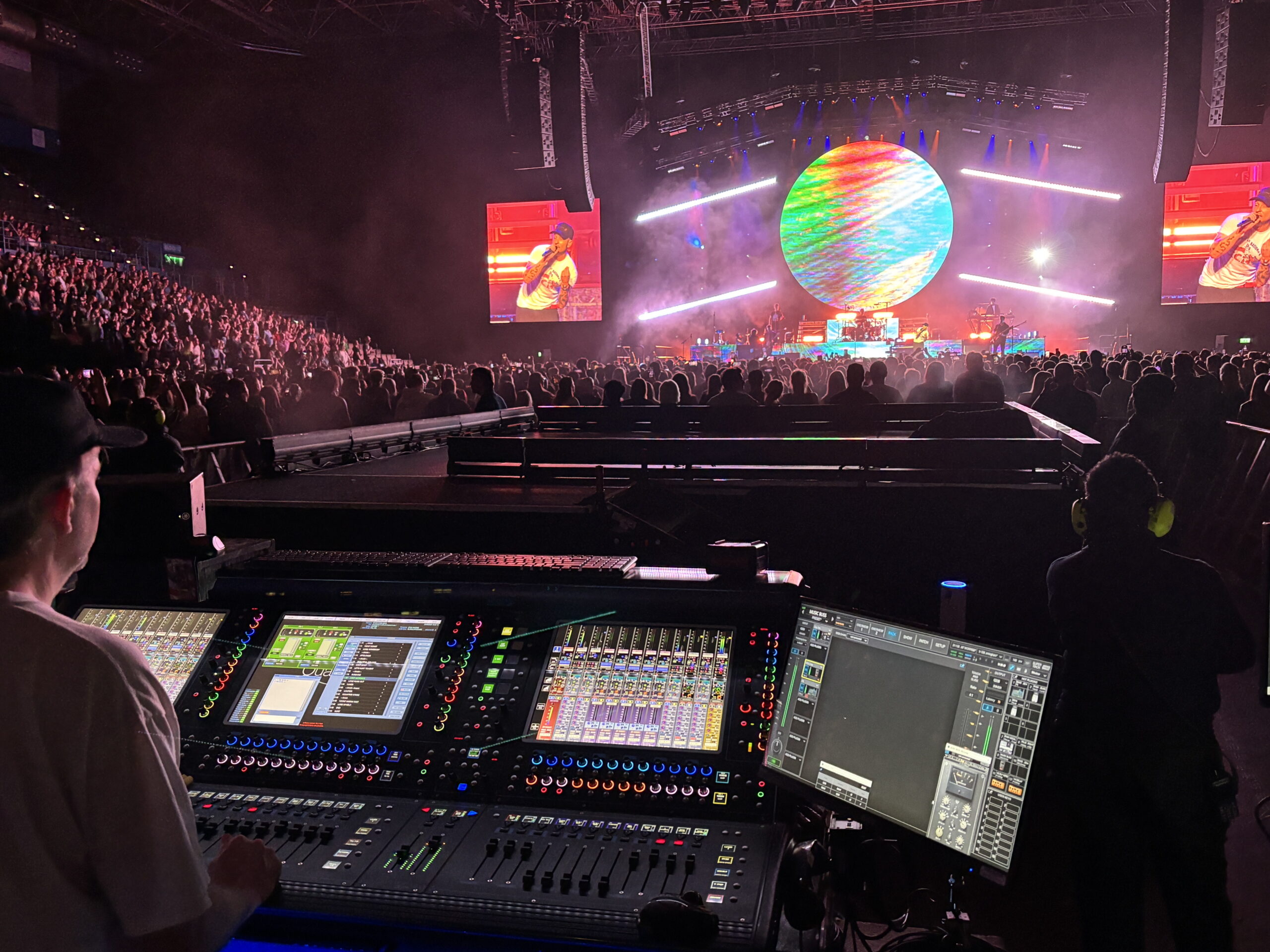
    His string of live shows and tours in support of those recordings are just as successful. Keeping them that way is why Wickham’s performances have come to rely on DiGiCo consoles, including the pair of recently updated Quantum338 Pulse consoles with him on the road this year for his Songs of the Saints US spring (Mar 18 to May 24) and fall (Sep 16 to Oct 16) tour segments, along with one DiGiCo SD-Rack, one SD-MiNi Rack, and an Optocore loop network—all supplied by Nashville-based Spectrum Sound.

    On the road, the consoles are being piloted by FOH helmsman Daniel Ellis and monitor maven Adam Snyder. “We’ve both used DiGiCo and Quantum extensively over the years,” says Snyder. “In fact, most of my touring experience has been on DiGiCo, and Quantum specifically the past four years. We both decided on DiGiCo for these shows after discussing options with the tour’s production manager, Boyo Manuel. Besides being a great option logistically, we have a lot of experience on them and know that they’re good and solid consoles.”

    Adds Adam Snyder, “We went with the Q338 because as this tour grew I needed the higher channel count. Before the Q338 got the Pulse upgrade”—taking it from 128 to 156 channels and from 64 to 72 aux/sub groups—“I probably would’ve needed an even bigger console. But getting those extra inputs and output channels, and specifically the extra Mustard channels that the Pulse upgrade brought, allowed me to not have to make the jump to a Q5 or Q7.”

    That, in turn, he says, has favorable impact on both space and logistics for shows. “We’re a full-fledged arena tour at the moment; we have eight trucks and seven buses. Regardless, everything still counts, including size and weight.”

    But even when doing one-offs and fly dates between the tour’s two main legs, DiGiCo desks are waiting for them at each destination. “In those cases, we don’t always carry a package,” says Snyder. “But even then, at festivals and other events, it’s virtually always a DiGiCo. That really helps us to be able to transfer files. And some of the additional features they’ve added in the recent updates have made it even easier for us to keep more consistent when we go do a one-off. Looking at the whole year, not just a tour, we want consistency, and we like that can we get our hands on DiGiCo easily anywhere to keep the sound consistent.”

    Both Ellis and Snyder have dug deeply into the Quantum tool kit and have found that they can get everything they need in terms of processing, dynamics, and EQ from the consoles themselves. Ellis has A/B-ed the equalization on both the SD and the Quantum desks and says that while both are excellent, the Mustard EQ lets him get to where he wants to go faster.

    “I don’t know if it’s just my perception, but the Mustard EQ just seems to get me results quicker. So I like that a lot and I use it on drums and vocals mostly. I like the Mustard compressors, too; I use the Optical on vocals and FET Limiter a lot on drums. I’m using a Waves SuperRack Livebox to run VST3 plugins at FOH, but other than that, we’re mostly all in the console at both ends of the snake. My workflow and brain work better with less stuff, so I just try to keep it as minimalist as possible; I keep it all in the box as much as I can. In fact, I went all of last year without using anything outside of the console, just to prove to myself that I could. And it works great. I now have a few extra processors outside of the DiGiCo, but it definitely can get the job done by itself.”

    Snyder immediately points to the DiGiCo Mustard Source Expander (MSE), a dynamics processor designed to reduce stage noise and feedback by lowering the level of non-transient signals (like vocals or brass) when they fall below a set threshold. Introduced in the V20 software update for Quantum consoles, it acts as a specialized gate with up to 40dB of depth, improving signal clarity.

    “That’s been huge for me,” says Snyder, who is also in charge of maintaining gain-sharing between the consoles and racks. “Phil used to tour with two outboard PSEs and we would always try our best to advance them for one-off gigs. Having that in the board now is awesome. I mixed a pretty gnarly sounding room in January and had that MSE across all of my vocals and it saved the show in that environment. And that software upgrade for me at monitors has been a godsend, because I am in the console—I don’t have any outboard gear, and I’m not using Waves. So the more onboard tools that I can get, the better. And that one has definitely been heavily used by me and I love it.”

    Like all live sound engineers, Ellis and Snyder are reluctant to make upgrades or other system changes while on the road, but they’re also still looking forward to the new ones that can integrate for the next round of shows. “I’m very excited about the latest V22 software update that just came out: integration with [Harrison Audio] LiveTrax 3, new capabilities for adding and naming markers with snapshots, and the new Mustard updates,” says Ellis. “I’m looking forward to playing with those in a couple of months. I’m just not going to be that crazy person that upgrades the console in the middle of a tour!”

    Snyder takes the opportunity to talk about one element that will also be there in the future, just as it has in the past and every day today on the road: DiGiCo support. “As always, DiGiCo’s support is pretty incredible,” he says. “We haven’t had any console issues on this tour, but I know if we did, it would be a quick call to somebody and we would get an answer, and I love that. People can argue about the way a console sounds or the onboard plugins or whatever on a console, but if I can’t get support for it when it’s needed, it’s not worth it. And DiGiCo, in my experience, has always been there for me and gotten me what I needed really quickly.”

    “And I’d add that our crew from Spectrum Sound has also really taken care of us. If any sort of issue has arisen, they’ve usually resolved it before we’ve had to make a call. Between our partnerships with Spectrum and Breit Group management, we feel very taken care of out on the road. That’s the way to tour: to not worry about possible issues but be able to focus completely on making everything sound great.”
  • DiGiCo Introduces Quantum225 DS Mixing Console

    DiGiCo Introduces Quantum225 DS Mixing Console

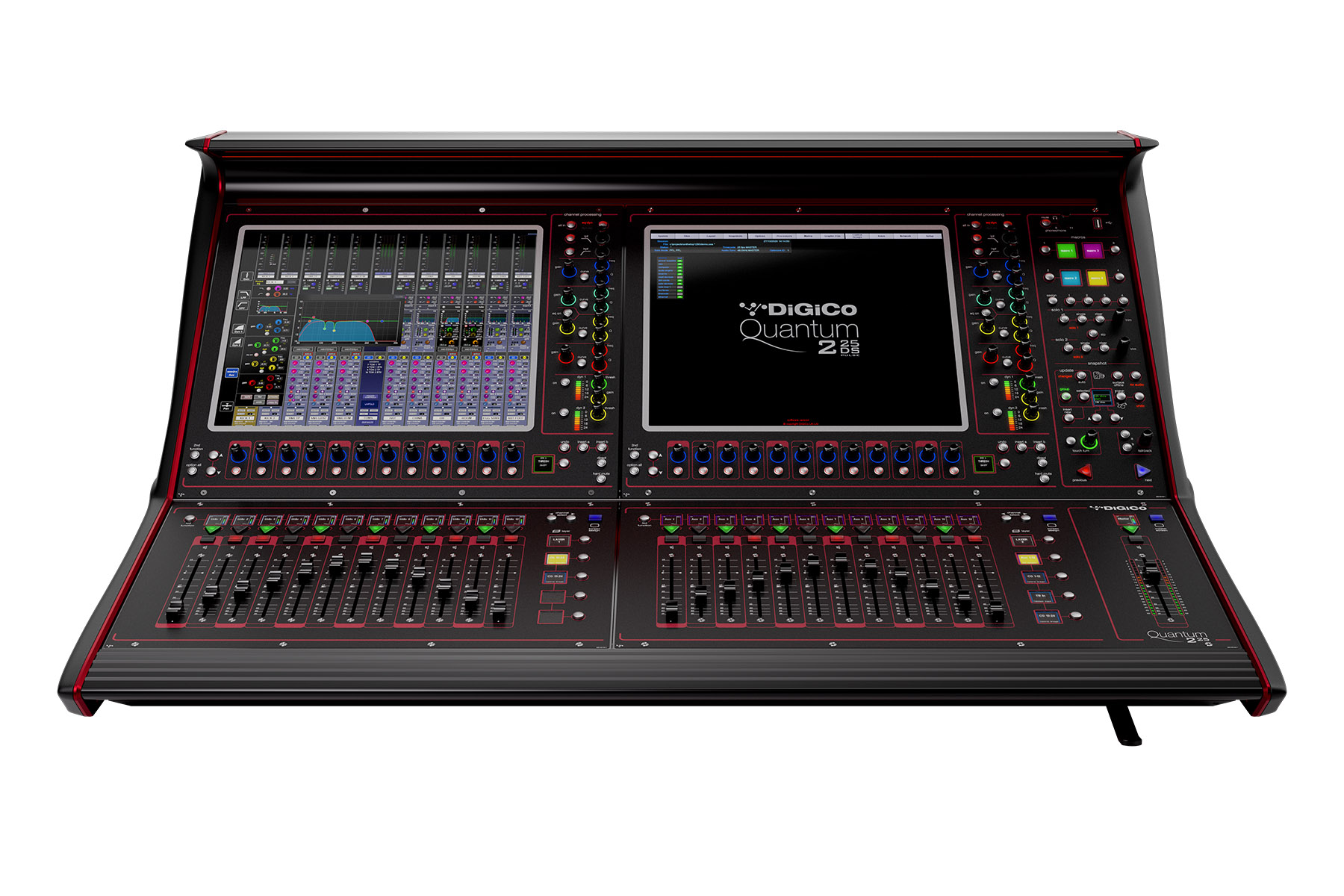
    DiGiCo has introduced the Quantum225 DS, an upgraded version of its widely used Quantum225 mixing console, designed for live events, festivals, and performance venues. The new DS model features dual 17-inch multitouch screens, offering improved control, better workflow, and enhanced user interaction compared to the previous single-screen setup.

    With the optional Pulse software, the Quantum225 DS significantly boosts performance by increasing channel count, buss capacity, and processing power. It also includes expanded connectivity options and advanced integration capabilities, making it a flexible and future-ready solution. Existing Quantum225 users can upgrade their systems to the new DS specification, ensuring long-term value and scalability.

    Over the past five years, DiGiCo’s Quantum225 has successfully proven itself as a powerful, versatile, and cost-conscious workhorse for live music venues, tours, festivals, theatres, houses of worship, and many other uses. Now, the compact mixing console has evolved with the introduction of the Quantum225 DS. Featuring dual integral screens giving users expanded capabilities, this latest addition to the Quantum lineup represents a robust, festival-ready, and competitively-priced console.

    Whereas the standard Quantum225 features a left-panel bracket to accommodate a channel or overview screen, KLANG:kontroller, or laptop, the Quantum225 DS is equipped with two 17-inch, full-color, daylight-bright TFT multitouch screens for enhanced workflow functionality and control.

    The inclusion of DiGiCo’s optional Pulse software package bumps up the power and versatility of the new Quantum225 DS, raising its input channel count to 96 (from 72), buss count to 48 (from 36), and Mustard and Nodal Processor tallies to 36 and 48, respectively (from 24 and 32). Mix Minus is also included in the console’s Pulse feature set, and the desk may be further enhanced with the manufacturer’s optional T software package for bespoke theatre-centric amenities.

    An upgrade path is additionally available for existing Quantum225 consoles, for those wanting to increase their functionality and performance.

    “Paying heed to the adage ‘give the people what they want,’ we’re now honoring the many requests we’ve heard to offer a dual-screen version of our compact Quantum225—and we have evolved it for maximum performance,” says DiGiCo Managing Director Austin Freshwater. “For our customers who already own a Q225, we’re also offering a hardware upgrade solution that will allow them to bring their desks up to the Quantum225 DS spec, extending the capabilities and ROI of their existing inventories. As always, purchasing a DiGiCo once again proves to be a smart investment indeed.”

    Ideal for festivals and fast-paced live environments, the Quantum225 DS features 41 mini TFTs located across the surface to provide unrivaled user feedback and interaction. Also included are a 12×12 Matrix, four MADI ports and dual DMI ports for added connectivity, 8×8 analog and four AES channels for local I/O, built-in UB MADI, optional optics, Fourier Audio, and Waves SoundGrid integration, plus dual PSU.

  • Good Shepherd Church Pairs DiGiCo Quantum225 FOH Console with KLANG:vokal+ for Immersive IEM Mixing

    Good Shepherd Church Pairs DiGiCo Quantum225 FOH Console with KLANG:vokal+ for Immersive IEM Mixing

    A good shepherd carefully tends the flock wherever it roams, and in the case of Charlotte, North Carolina’s Good Shepherd Church, that flock has become quite widespread over the past 35 years. Started in 1991, the church now holds four Sunday worship gatherings—three in English and one in Spanish—as well as for people all over the world through its online services. But Good Shepherd is as tech-savvy as it is devout, and its technology choices, including the addition of a DiGiCo Quantum225 FOH console paired with the new KLANG:vokal+ as part of its IEM mixing world, reflect that.

    “Our previous console was about 16 years old and definitely showing its age,” says Good Shepherd Worship Arts Pastor Chris Macedo. “It was an early-generation digital console, quite large and cumbersome, and limited in both input count and functionality. It also lacked some of the capabilities we wanted, such as virtual soundcheck, automation features, and easy integration with external processing, so it was ultimately time for an upgrade.”

    When evaluating replacement options, the church initially didn’t look at DiGiCo solutions, figuring that the brand’s products would be out of its price range, but the Quantum225 “changed everything,” Macedo says. “Our technical director saw it, and it immediately stood out as a unique opportunity. It landed just above the price range we had been considering, but it made entering the Quantum ecosystem possible in a way that simply hadn’t been possible before. Without the Q225, we would not have been able to make that move.”

    The church purchased the console from Charlotte-based dealer/integrator World-Class Acoustical Visual Elements (WAVE), which upgraded the room’s acoustics and retuned the sanctuary’s existing PA at the same time, collectively revitalizing the space. Good Shepherd’s technical team personally handled the installation of the console, and although they had not mixed on a DiGiCo desk prior to putting in the Quantum225, the crew’s impressions were very positive.

    “There was a noticeable increase in overall fidelity and clarity,” says Macedo. “The mix now feels more detailed and articulate, and the way frequencies sit in the room feels more balanced and controlled. The workflow improvements were also significant; moving between layers, organizing inputs, and navigating the console are far more efficient than what we had before.”

    The Quantum225 controls Good Shepherd’s FOH mix—with 48 inputs typically feeding into the desk—while the KLANG system handles all monitor mixing. A significant portion of the church’s audio infrastructure is Dante-based, accommodated via a DMI-DANTE64@96 card primarily used to receive audio from the DSP and route out to a DiGiCo DQ-Rack that services the drums and feeds wireless in-ear monitor system. A smaller DiGiCo Dante A168D STAGE rack is also deployed on the opposite side of the stage. “We send a lot of individual instrument channels using Dante Virtual Soundcard as well as from our Shure ULXD microphones,” Macedo adds.

    Prior to installing the console, the church considered building a separate production suite with a dedicated broadcast mixer, but that plan wasn’t deemed viable. “Instead, we worked with WAVE to improve the acoustics in the room, with the hope that if we paired that with the right console, we could deliver a mix that translates well both in the room and online. Now, when someone watches on YouTube or our website, they are essentially hearing the same mix that is coming through front of house. We simply send that mix out through another group and apply some very basic tone shaping and leveling with a limiter to prepare it for the online platforms. In other words, it’s more or less the same mix—just slightly optimized for streaming—and it works very well.”

    Building upon the KLANG:vokal platform that the church first implemented in 2021, the church also recently enhanced its original KLANG:vokal processor with the :vokal+ upgrade, which boosted it to 64 mono channels on each of the 12 immersive in-ear mixes, and KLANG parametric Root/Intensity EQs for all 64 mono inputs and all 12 mixes.

    Between the KLANG:vokal+ and DiGiCo Quantum225, the church has what Macedo says is an ultimately streamlined workflow. It’s one that requires fewer hands on deck for Sunday services but that still delivers impactful modern worship music to attendees and a completely customizable experience for musicians onstage.

    “The KLANG:vokal+ upgrade brought us from 24 channels to 64, a huge step up,” he says, “and gave certain musicians, such as our drummers, tons more flexibility in terms of setting up the percussion space for everyone. They can put exactly what they need on their KLANG:kontroller or their iPad, set it, and forget it.”

    Macedo says the immersive 3D capability of the KLANG:vokal+ has given everyone onstage a fantastic space in which to perform. “All of our vocalists use it, all of our drummers use it,” he says. “A lot of our inputs are in stereo, so having that immersive space really helps them to dial in the width and the placement of everything inside of the mix. And they love it!”

    “Pre-KLANG, we didn’t really use a lot of stereo inputs inside of our monitoring setup, so when we moved to this, having stereo available to us just because of the increased channel count allowed for everything to open up even further. Specifically, our guitar players were just ecstatic because they had been running in mono only, so to be able to hear their instrument coming through the way they always imagined it would sound, with delay and reverb effects, really made a huge difference. It let them translate what they imagined into a reality in their ears.”

    The church’s KLANG:vokal+ is integrated as an outboard unit, connected to the console via MADI. Macedo says they use about 10 of the 12 possible mixes each Sunday, with every user able to balance their own monitor mix directly from either a KLANG:kontroller or from an iPad. “I’ve looked into the idea of fully integrating KLANG with the console, which can be done,” he says. “But we just haven’t found a use case that makes a lot of sense for us yet since our setup is pretty static. But it’s nice to know that capability can easily be done.”

    Keeping musicians happy onstage goes a long way to making performances really stand out and engaging the audience. Macedo says the ability to create individual mixes achieves that for the church’s musicians, and it shows. “Our drummer, for instance, has the ability to literally curate the drums, to be exactly where he wants each of them,” he explains. “We can also send in our drum bus that has been mixed from front of house directly to everybody else, so they don’t have to worry about mixing the drums down to a really granular level—they can just have a nice stereo drum bus coming from the board. So everybody can really tailor every mix to exactly what they need.”

    In addition to the musicians, the house engineers are equally pleased—with so much of the monitoring in the hands of those who benefit from it the most they can focus on what the audience is experiencing. “The user experience is far superior and it really allows us not to be limited by what’s available on the console, because the :vokal+ is really doing all the work,” he says. “So it allows our front of house to really focus on front of house, and we don’t have to have someone who is constantly watching monitors. I mean, week to week, we sometimes never even touch the mixes. It just works rock solid every time, and it makes Sunday very, very easy and enjoyable.”

  • DiGiCo Announces V22 Software Update

    DiGiCo Announces V22 Software Update

    DiGiCo has released Version 22 software for its Quantum and SD consoles, offering a free upgrade packed with new features aimed at improving live sound workflows. Highlights include the new Mustard Levelling Amp for richer, more controlled audio processing, enhanced Snapshot functionality with Setlists for faster show management, and improved timecode-based recall capabilities for complex productions.

    The update also strengthens integration with external systems, including Sound Devices Astral wireless and LiveTrax 3, enabling smoother recording, monitoring, and control directly from the console. Additional improvements to macros, routing flexibility, and diagnostics tools further streamline operations, reinforcing DiGiCo’s commitment to continuously enhancing performance and usability for AV and IT professionals.

    Never content to rest on its laurels, DiGiCo announces the release of its latest software, Version 22, designed for all Quantum and SD consoles. Now available for free download from the Info and Downloads section of the DiGiCo website, found under the Support tab at www.DiGiCo.biz, V22 offers its adopters an abundance of new features and functional improvements that further streamline and enhance the experience of mixing live sound.

    Mustard Levelling Amp

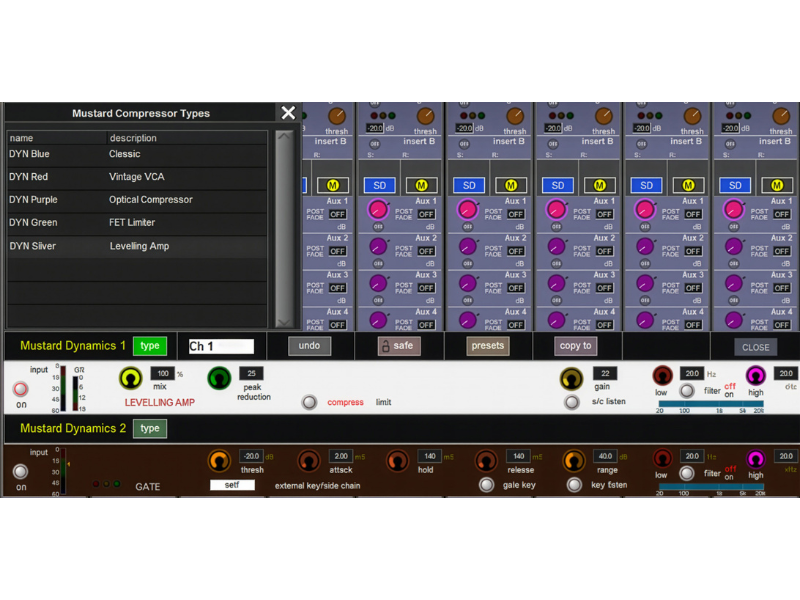
    Mustard, available on all Quantum desks, is a premium channel strip insertable onto all types of channels and provides sonic processing based on sought-after, industry-standard processors. DiGiCo added the Mustard Source Expander in software V20, and now, with V22, the manufacturer introduces its new Mustard Levelling Amp, the Silver One. This processor is based on the classic tube-design, electro-optical compressor sound, giving warmth and thickness to sources like vocals and bass while still maintaining their dynamic content.

    Snapshot Setlists

    DiGiCo’s Snapshots panel has undergone a makeover, adding some new functionality. Snapshots can now easily be reordered using Touch and Move, and the Snapshots Overview panel now follows all view options of the main Snapshots panel, giving continuity from Master Screen to Overview Screen.

    With V22, Setlists have also been added to the Snapshots panel. This feature has been heavily requested and is designed to quickly and easily build up custom shows from a library of different snapshots. By default, the All Snapshots list includes all snapshots in a session. Further set lists can then be created and snapshots added and removed from these. The console will then only recall snapshots in the current setlist. Snapshots in set lists can be in a different order to the All Snapshots list and the console will fire through them in this custom order. As a real-world example, during festival season, an act may change the length of its set each day, prompting the audio engineer to create specific 45-minute, hour-long, and headlining setlists for easy show selection.

    Snapshot Recall Times

    With an increasing number of productions now utilising timecode to manage shows, V22 has overhauled the Recall Times panel of the Snapshot panel. Snapshots previously had the option to capture a recall time at the point of insertion, and now can update their recall time from timecode when the Update Recall Times button is pressed. As productions can also frequently change as they develop, DiGiCo has added timecode offset adjustments to allow for recall times to be easily adjusted for one or many snapshots at once.

    Aux To Faders Includes Groups

    DiGiCo’s sophisticated internal console routing has provided users with the ability to flexibly route anything almost anywhere. Groups have always had the ability to send to Auxes, and now with V22, Groups can be included when enabling Aux to Fader. By default, all but the Master group are included in the Aux to Fader selection, and the included groups can be changed at any time. If a Group is enabled for Aux to Fader and is a member of a Control Group that has Aux Sends enabled, then the Control Group fader will provide the same +/-18dB controller as any input channels in the control group when in Aux to Fader mode.

    Update to Macro Panels

    Version 22 brings some stellar improvements and new features to the Macro panel. First, there is the ability to reorder Macros to create an easier to navigate list. Second, when searching for a Macro command, the command types column now filters to show categories where the search term exists. New Macro commands for V22 are Switch to Bank, bringing a specific fader bank to the surface; and Set Security Mode, putting the console directly into either Live or Unattended mode without navigating through the Security Panel.

    For those on a Quantum112 or Quantum852, DiGiCo has also added a search feature to the Macroder and Channel Macros panel. And if a Macro is used on a Quantum112 to set the console into Surface Offline mode, an indication is displayed in the Top Bar of the console.

    Sound Devices Integration

    The latest software update now deepens DiGiCo’s integration between Quantum consoles and the Sound Devices Astral range of wireless microphones. Within Audio I/O, users can assign RF channels from Astral devices to sockets within a session. If these sockets are then routed to a channel, data from the Astral receiver, including Battery level, RF Quality level, NexLink signal strength, On/Off Status, and Mute Status are displayed at the top of the channel.

    LiveTrax 3 Integration

    Harrison provides innovative software solutions for the Live and Studio market. Alongside the launch of the new LiveTrax 3 software, V22 provides a brand-new integration creating the ultimate Recording and Virtual Soundcheck system. When fully integrated, channel names from the session can be pulled into the LiveTrax session and be updated at any time. Functions for controlling LiveTrax, such as record and play, are now available from the console directly, and whenever a snapshot is fired, a corresponding section with the same name is automatically inserted into the LiveTrax project, if this setting is enabled. When playing back into the console from LiveTrax, if a snapshot is fired, the play head automatically moves to the corresponding section and begins to play from there.

    Workflow Improvements

    It’s often the little things that make all the difference, and some of the workflow improvements in Version 22 include: collecting diagnostics files directly from within the console application; when

    copying Aux levels from Stereo to Stereo Aux, Pan data is also included; when an Aux node is set to control KLANG, the pick point location is now hidden as KLANG does not take this into account; and Mustard Dynamics Gain Reduction and Gate status is now shown in our Channel overviews.

    “Our customers know that when they purchase a DiGiCo console, that’s only the beginning of the relationship, as our R&D team is committed to continually bringing fresh features and increased performance to users’ products,” says DiGiCo Managing Director Austin Freshwater. “The new Version 22 software update is a perfect example, breathing increased life into older and newer DiGiCo desks alike, keeping them at the very top of their game for the long haul.”

  • Engineers Choose Two DiGiCo Quantum338 for Halsey’s Back to Badlands World Tour

    Engineers Choose Two DiGiCo Quantum338 for Halsey’s Back to Badlands World Tour

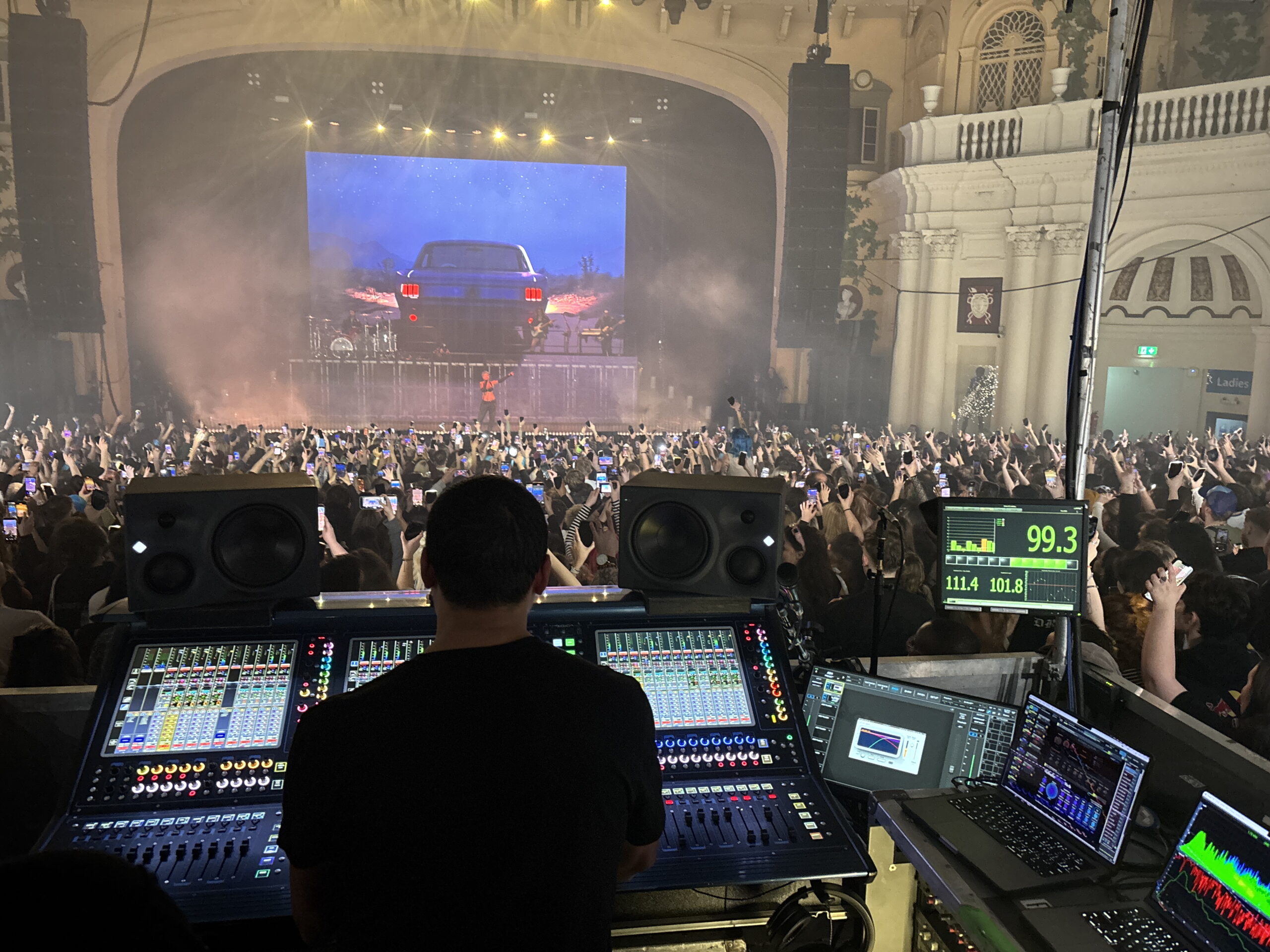
    Front-of-house engineer James Butera has been touring with Halsey since 2023, and Schyler Blackman, monitor engineer, has been with them for almost a year. Both engineers are enjoying the DiGiCo Quantum338, supplied by Clair Global for this high-energy world tour.

    Halsey is an American singer-songwriter, originally from New Jersey, and her global appeal is underlined by over 31 billion streams, five chart topping studio albums, and 29 singles. Halsey’s latest sold-out world tour, Back to Badlands, was a celebration of her album Badlands, which debuted in 2015. The tour started last October, visiting the USA, Canada, Mexico, and Europe, ending in Australia in February 2026, with many extra dates being added due to huge demand.

    The switch to DiGiCo Quantum338 happened in 2023, after a catastrophic failure of Butera’s previous console. The desk failed at the top of his very first show with Halsey and, coupled with compatibility issues, he made the choice to jump to a different manufacturer.  His main concerns were stability and reliability, plus proven compatibility with the existing Dante playback system. It was an added bonus of choosing DiGiCo that he was also able to streamline the audio rig with DMI-Dante cards, reducing rack space, too.

    “DiGiCo’s I/O flexibility and stability were the two big selling points,” Butera recalls. “We cut the amount of rack space and gear in half when we switched to DiGiCo, and we no longer started festival set changes with, ‘hold on, I need to power cycle’, which was great! Global availability is also excellent. Every festival you walk into, it’s a DiGiCo, which is reassuring. There are a lot of administrative details that make DiGiCo an easy choice for a global act.”

    Worldwide large-scale touring is a dream career for any live sound engineer, and knowing you have the choice of the world’s best equipment at your fingertips makes it just that a bit better. For Butera, standing behind a DiGiCo console is not unlike standing in front of a high-performance vehicle, as it smooths the edges of the audio experience and makes life a little less complicated in the process.

    “I think all the major players have great-sounding consoles; it’s like Porsche versus Ferrari. They’re both beautiful cars and they both go fast,” Butera continues.  “At some point, it becomes a personal preference, but there are definitely some shortcomings in terms of flexibility if you leave the DiGiCo ecosystem. There is so much flexibility, all the network options on hand are great. Built-in Dante on the Quantum112 looks really good. DiGiCo is just really hard to beat.”

    It’s not just the front-of-house experience that is frictionless, communication between consoles is also improved with a DiGiCo ecosystem. Blackman can easily and quickly share data from the monitor position with the console send/receive functionality, via the Optocore loop. This function is available to any consoles on the loop and removes the need for additional multicore runs by easily assigning any send as a latency-free port, instantly visible to other consoles via the network.

    With the stresses of global touring, it is unlikely that any piece of equipment will make it back to the warehouse completely unscathed. If the worst should happen, using DiGiCo means that there is a whole world of support available, whatever time zone the tour is in.

    “I’ve been flitting in and out with DiGiCo since 2015, depending on whether I get to choose, obviously,” Blackman explains. “It’s the flexibility, stability, and reliability that really stand out. No matter where you’re at in the world, whether it’s Topeka, Kansas, or London, you can find a DiGiCo somewhere close. I was on a gig this summer in Seattle and one of the cards in our stage rack developed a fault. We discovered it at power-up, and within 20 minutes, we had another one onsite from a local audio vendor. That’s not always the case with all manufacturers. Just being able to source parts on the rare occasion where something does go wrong is amazing.”

    Mixing with a DiGiCo console is more than great sound and an ergonomic console layout. The DiGiCo family is just that: a global network of people who really understand the pressures of audio engineering, and whether that is happening in a stadium, surrounded by fans, a theater, or a broadcast studio, DiGiCo equipment and people have got you covered. That feeling is very comforting when dealing with as many moving parts as Blackman and Butera are, and as they conclude, DiGiCo support goes above and beyond, giving them the confidence to do the same.

    “I like having the I/O flexibility, too; DiGiCo is friendly with everything,” Blackman finishes. “I’m using a LiveBox, a bunch of outboard gear, and Dante. Having one system that is compatible with all of the different players in the game is really, really nice.”

    “The support is pretty impressive; we were doing a show in Minneapolis and needed some help,” Butera ends. “Matt Larson, Group One Vice President was traveling home at just the right moment and he jumped off the plane to come straight to us. The commitment is amazing, the DiGiCo team just can’t get enough!”

  • OSU’s Schottenstein Center Ups Its Audio Game With New DiGiCo Quantum225 Mixing Console

    OSU’s Schottenstein Center Ups Its Audio Game With New DiGiCo Quantum225 Mixing Console

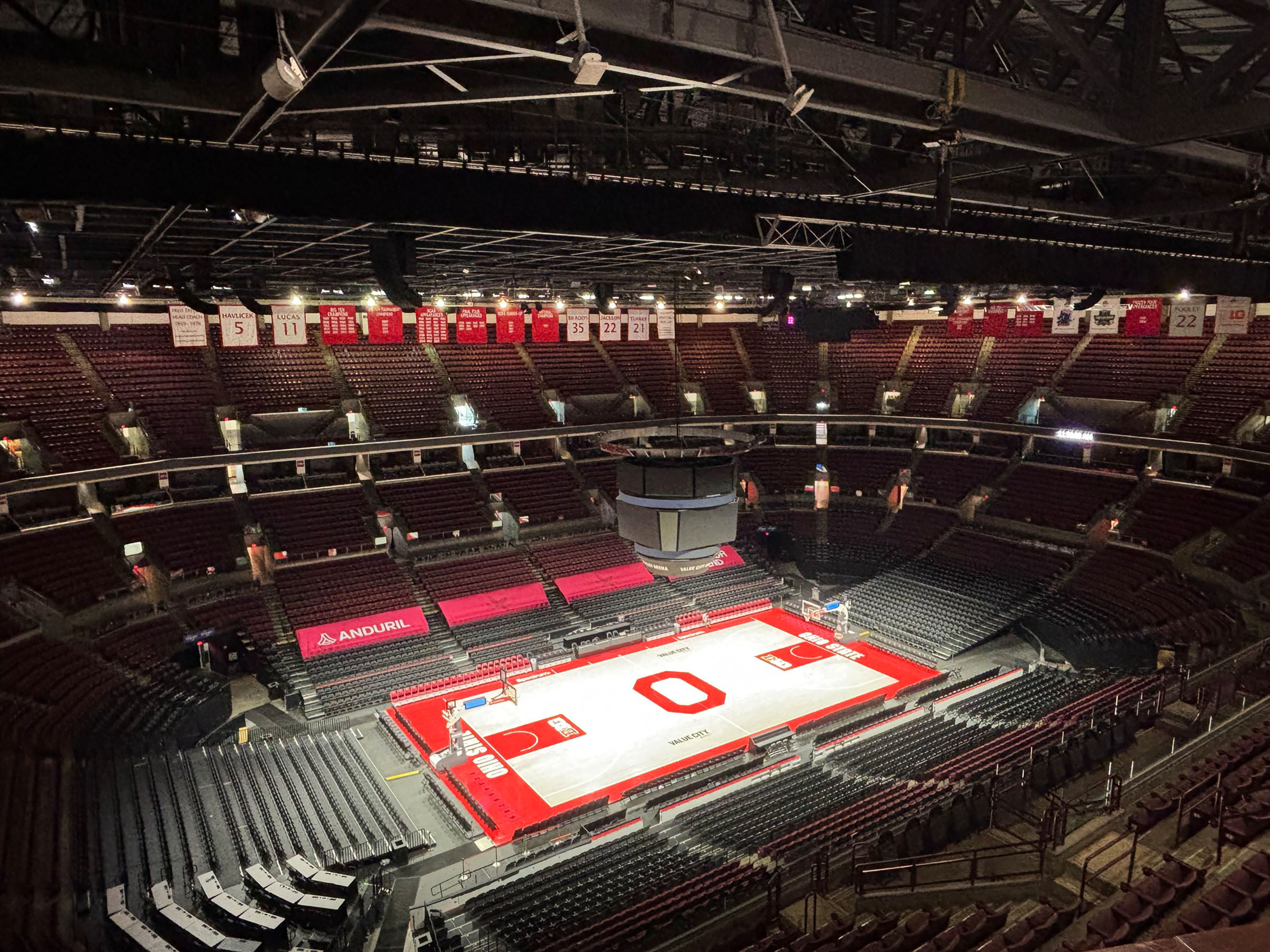
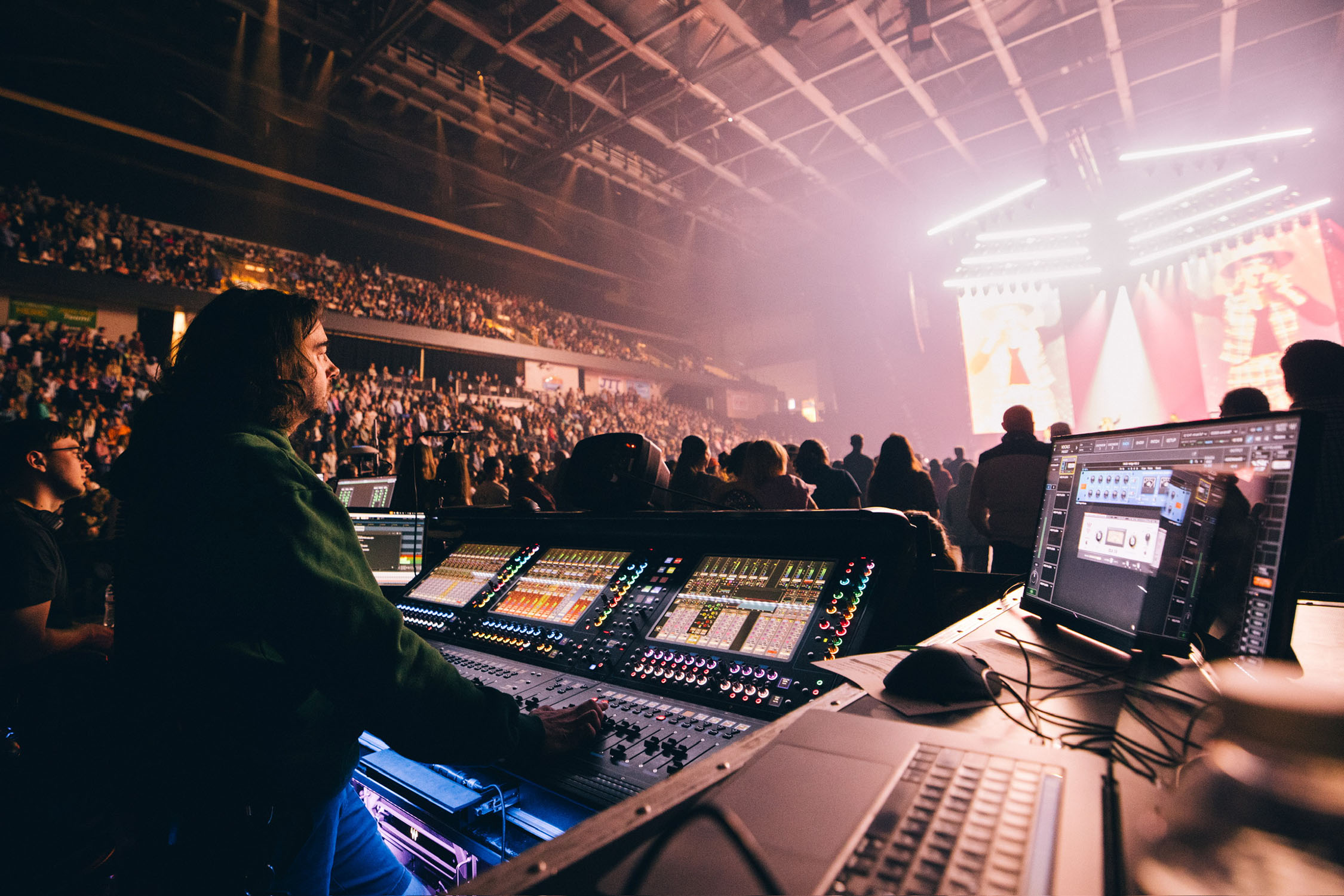
    Located on the Columbus campus of Ohio State University, the Schottenstein Center is the largest arena in the Big Ten Conference and accommodates a wide range of productions. Beyond hosting OSU Buckeyes men’s and women’s basketball and men’s ice hockey games, the arena serves as the setting for major concerts, family shows, and other events, such as the Winter Jam, which annually brings together some of the biggest names in Christian music.

    The 20,000-capacity venue, also known as Value City Arena and less formally as “The Schott,” makes its commitment to aesthetics clear from the moment one approaches it. The Center features six unique terrazzo floorscapes, designed by artist Alexis Smith, comprising 350 gallons of epoxy over five miles of 1/16-inch zinc wire strips painstakingly bent and placed by hand, and 115 tons of stones, mother of pearl, and glass chips, prepared in custom shades.

    To keep the Center’s new sound as beautiful as its impressive flooring, the venue recently installed a DiGiCo Quantum225 front-of-house audio console paired with a DQ-Rack for Dante-connected I/O and processing. The project, completed just ahead of this year’s college sports season and including an Adamson PA system, was designed by Richmond, Virginia-based Anthony James Partners, with installation and integration done via Champaign, Illinois-based C.V. Lloyde Audiovisual.

    “This project was a huge step forward for the Center’s in-house production team,” states C.V. Lloyde Project Manager Jared Miller. “They had been working with a sound system and console that were probably 15 years old, so it really brought the venue up to date.” He cites the new console’s robust interface and Quantum processing features for the choice, but equally emphasizes DiGiCo’s comprehensive onsite training of the venue’s staff: “DiGiCo was there for multiple sessions, so everyone was able to participate,” he says.

    The 48-input/24-output DQ-Rack was also a focus. Miller notes its connection to the DiGiCo desk via a DMI-DANTE card means that all rack inputs and outputs can be accessed at both 48kHz and 96kHz. “The console and the DQ-Rack are a great combination for a venue like this,” he says.

    Jack Covert, Vice President of Anthony James Partners, the consultant on the renovation of the venue’s sound system, says their recommendation of the DiGiCo Quantum225 was made early on in the process. “DiGiCo is our ‘go-to’ for large arena and stadium-level sound systems because of its reliability and superior performance,” he says. “The Quantum225 was our first choice here.”

    However, Covert points out that the Schottenstein Center’s AV crew, part of OSU’s technical staff, are seasoned AV professionals and experienced with a wide range of pro audio systems. “There was a lot more to this project than simply great sound: the entire system had to be as flexible as possible to accommodate the venue’s range of productions, from Big Ten Division 1 basketball to ice hockey to touring shows like Disney On Ice,” he says. “That includes the audio console, which has to handle all of that. The staff at the Schott have seen it all, and they could see that the Quantum225 was the console this situation called for. It has the features, and it has the ease of use. It has everything.”

  • DiGiCo Quantum338 Consoles Provide Sonic Consistency for The Kooks on Tour

    DiGiCo Quantum338 Consoles Provide Sonic Consistency for The Kooks on Tour

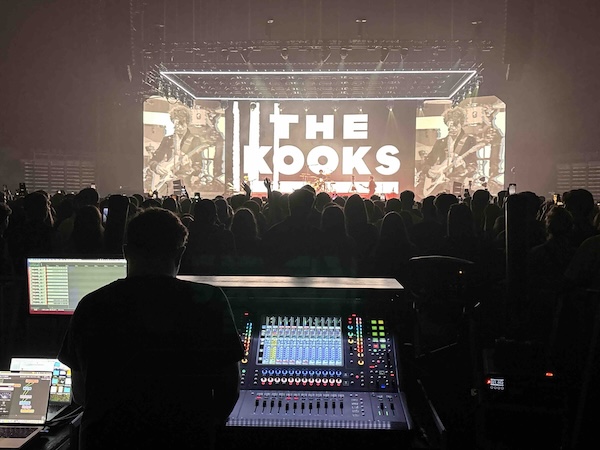
    The Kooks started out in Brighton in 2004. After achieving near-instantaneous acclaim, over the next 20 years they built a reputation for excellence with huge album sales and, now, millions of streams every month. Their latest European tour begins in February 2026 and runs straight into the festival season. Accompanying the band is front-of-house engineer Russ Miller and Ralph Smart at the monitor position, and both are using DiGiCo Quantum326 consoles supplied by rental company Adlib.

    Miller joined the crew in 2021, with Smart joining in May 2022. As Miller explains, the band were already very sure about their audio setup, and thanks to DiGiCo’s clarity, there was no way that the consoles were going to change.

    “The Kooks is the first band I’ve worked with where the console has been a permanent fixture. We inherited the gig in 2021 from another pair of engineers who Ralph and I knew, and they were pretty entrenched in the DiGiCo ecosystem,” Miller recalls. “The decision was made to not change anything just for the sake of it and keep that consistency. We were very happy with the SD12-96s that were being used, but then the Quantum range came out and the SD12s were harder to get hold of, so we swapped. We started with the Quantum225, then went up to the Quantum326 to benefit from the larger console surface.”

    No one knows the music better than the people who composed it, so when making choices that impact the sonic quality of the music, Miller believes it is vital the artists are 100% happy. For him, this point of view is key to all his work and especially with The Kooks. As he continues, the band are absolute experts in how their music should be heard, and although the language of sound engineers and musicians may be slightly different, the talent, skills, and professionalism are exactly the same.

    “I’ve been mixing a for a while now, but when you first start off as an engineer, there can be a tendency to think, I’m the audio engineer, I have the technical knowledge,” he says. “The fact is, there’s a reason, aside from brilliant songs, that those musicians are up there on stage, and that is they’ve got really good ears. They know exactly how they want their songs to sound and can hear the most subtle changes. So, we make sure that we’ve got consistency at both ends of the multicore, that’s really important.”

    It is not just sonic quality that keeps musicians and engineers coming back to DiGiCo, the control surface is just as important. The intuitive, customizable surface of the Quantum326 ensures that Miller’s focus is always where it needs to be: with the band.

    “Mixing is a dance, it’s a performance; you’re performing almost as much as the band. Having the same console under your fingertips all the time means you can learn that dance,” he expands. “I would wager that no matter what console somebody uses, they will try and make everything the same on every console, not just sonically, but the actual physicality of it. People in studios do the same thing, maybe their kick drum always comes up on Fader 19, or the vocal is always on 20, etc.”

    At the monitor position, Ralph Smart appreciates the Quantum326’s features, relying on benefits like the larger matrix and increased Quantum processing power. For him, consistency is also a major factor in his use of DiGiCo consoles. Performing globally can make it difficult to guarantee the brand and type of console you may receive, but by opting for DiGiCo on the rider, its global network of distribution means it is less of a gamble.

    “Having a setup we know we can replicate across all territories via local suppliers has been crucial for consistency. Last year, we made the leap to Quantum and I haven’t looked back,” he says. “The additional matrices and macros on the Q326 have given me some really useful routing options with all my tech-mixes that were not possible when we were on the SD-Range. I have been utilizing the Mustard Source Expander, which has been great, especially in the bigger venues, it’s a really useful tool. I’ve also had great results experimenting with the tube emulations and the Mustard compressors on the console.”

    The winning combination of performance and support is something that DiGiCo and its commercial partners are well known for, and Adlib is no exception. Based in Liverpool, the company has traded for over 40 years and supplies the full range of DiGiCo consoles and accessories. It also provides crew and engineers, several of whom have joined The Kooks on tour. It’s another combination that has worked well for the band and the engineers, as they conclude.

    “Adlib have a kindness that clearly comes from the top down. Everyone who works there has it, it’s like a house attitude. I love working with them for that reason, and the gear is always top-notch, too,” Miller finishes. “David Grimes was the systems tech on the tour, he’s amazing, and Emma, who was our stage tech, is incredible; plus our PA techs, Sam and Jamie, they’re all really knowledgeable and great engineers as well. It’s great to have extra sets of experienced ears on tour.”

    “Support has been great for this tour,” Smart agrees. “Dave Jones and all the guys at Adlib have been amazing; the kit was prepped perfectly with excellent crew. DiGiCo support has always been second to none. We had a festival a couple of years ago that we would have had to cancel after our console took a bath during a stage evacuation in Europe. As we were discussing pulling the show, a DiGiCo rep appeared and gave us a brand new Q338, gig saved! They always come through for us.”

  • DiGiCo Quantum338s Escape to Europe with OneRepublic

    DiGiCo Quantum338s Escape to Europe with OneRepublic

    Formed in 2002, OneRepublic have enjoyed huge international success, with over 18 billion streams on Spotify alone. Their current tour, Escape to Europe, continues until the end of the year before escaping into the rest of the world in 2026. Accompanying the band are Justin Ripley at the front of house position and Chris Marinaccio at the monitor position. Both engineers are using Quantum338, supplied by Spectrum Sound in Nashville.

    Ripley has been with the band for many years and, as he explains, the scale and variety of the band’s touring schedule will keep him coming back to DiGiCo, whatever the venue.

    “For OneRepublic, the choice to use DiGiCo is predicated on reliably sourcing them everywhere,” he expands. “The neutral sound of the console and the fact that the components hold up quite well on the road mean I have used them the whole time. This band will definitely push the limits of the gear we take with us due to how much we travel.”

    Traveling extensively, with multiple rigs on the road, means that Ripley is constantly developing and evolving his show file. As he continues, the technicality of swapping files between consoles is not something he worries about, but being up to date is.

    “I like to use the most recent file available because I’ve always brought my most recent music ideas to every show I’ve ever done. It’s nice to have some benchmark ideas available to me at all times,” he expands. “As I get older, I find myself using less toys, getting less and less tweaky with the sound, so my DiGiCo footprint is mostly routing and basic sound sculpting. The sound of DiGiCo consoles will always keep them in demand.”

    Monitor engineer Marinaccio has been with the band for almost exactly a year. In that time, he has toured across Asia, the Middle East, USA, and now Europe. As he explains, there really is not a band that tours quite like OneRepublic, with a total of six Quantum338 always on the road, also supplied by Spectrum Sound. No day is ever a typical day, but having the power of DiGiCo in his rig helps the day go smoothly, whatever it holds.

    “We have the three full audio rigs and a fly rig constantly in rotation around the globe. With the band jumping between continents, it can get intense, but it’s been incredible,” he says. “The crew is ultra-professional, and I’m lucky to be working alongside two of the best audio minds in the business: Justin Ripley and Production Manager Dave McMullin. The DiGiCo Quantum338s are one of the most robust audio packages I’ve ever worked with. We’re also using a shared SD-Rack, two SD-MiNis, and an Orange box. Typically, we will start with unloading the truck in the morning, I set up my control package, set wedges, check the Opto-Loop, confirm MADI with the video department, and line check before the show. It’s hard to say exactly, because almost nothing is typical with this band. One day we’re sending gear up a mountain in Austria, the next we’re prepping for a major festival in Abu Dhabi!”

    When the work is so varied, having a familiar workflow and reliably customizable surface is key. As Marinaccio continues, the features quickly and easily available on the Quantum338’s surface make it the ideal companion, wherever they end up.

    “The flexibility of the Quantum338 allows it to adapt easily to either monitors or front of house positions,” he explains. “On the monitor side, the customizable layout is crucial; quick access to auxes and inputs makes for a fast and intuitive workflow. The input and output count is also a big factor. We’re dealing with around 105 input channels and 34 auxes on this tour, and the Q338 handles it all comfortably. The aux function on the control groups is really useful for quick changes on an instrument group for one person. Relative groups are another extremely useful feature for overall changes across multiple snapshots, and aux nodes are amazing for that one musician who needs an instrument processed completely differently. Even simple stuff like fades in between snapshots can turn a jarring transition into something that just works.”

    On a busy, globe-crossing tour, knowing that the equipment you use every day will just work, no matter how far it has traveled overnight, is a massive bonus. For the expansive Escape to Europe tour, this is even more important. Engineers may use the consoles in very different ways, but as both Ripley and Marinaccio conclude, the ability to be exactly what they both need is what keeps them on the rider.

    “There’s a lot of muscle memory built up now on this platform because the layout is really simple and straightforward,” Ripley notes. “I only recently started using Mustard EQ and, now that I have, there will be no going back.”

    “I exclusively use DiGiCo on tour. No other company offers a desk that matches its combination of power, flexibility, and global availability,” Marinaccio finishes. “I keep on choosing DiGiCo for its strong field support, plus the workflow just makes sense to me. In my opinion, DiGiCo makes the best live sound consoles out there, and for a tour with scale of OneRepublic’s, DiGiCo is simply the right tool for the job.”

  • New World Symphony Reprises its DiGiCo Refrain with Quantum225 Pulse

    New World Symphony Reprises its DiGiCo Refrain with Quantum225 Pulse

    New World Symphony (NWS), one of the world’s leading orchestral institutions for training musicians in preparation for professional careers in classical music, has been known as the home of the best since it was established in 1987. Co-founded by conductor Michael Tilson Thomas and Lin and Ted Arison as a training orchestra for young musicians and a bridge between school and professional orchestras, NWS moved into its current Frank Gehry-designed New World Center campus in Miami Beach in 2011. That was the same year the symphony acquired its first DiGiCo console, a D1 Live.

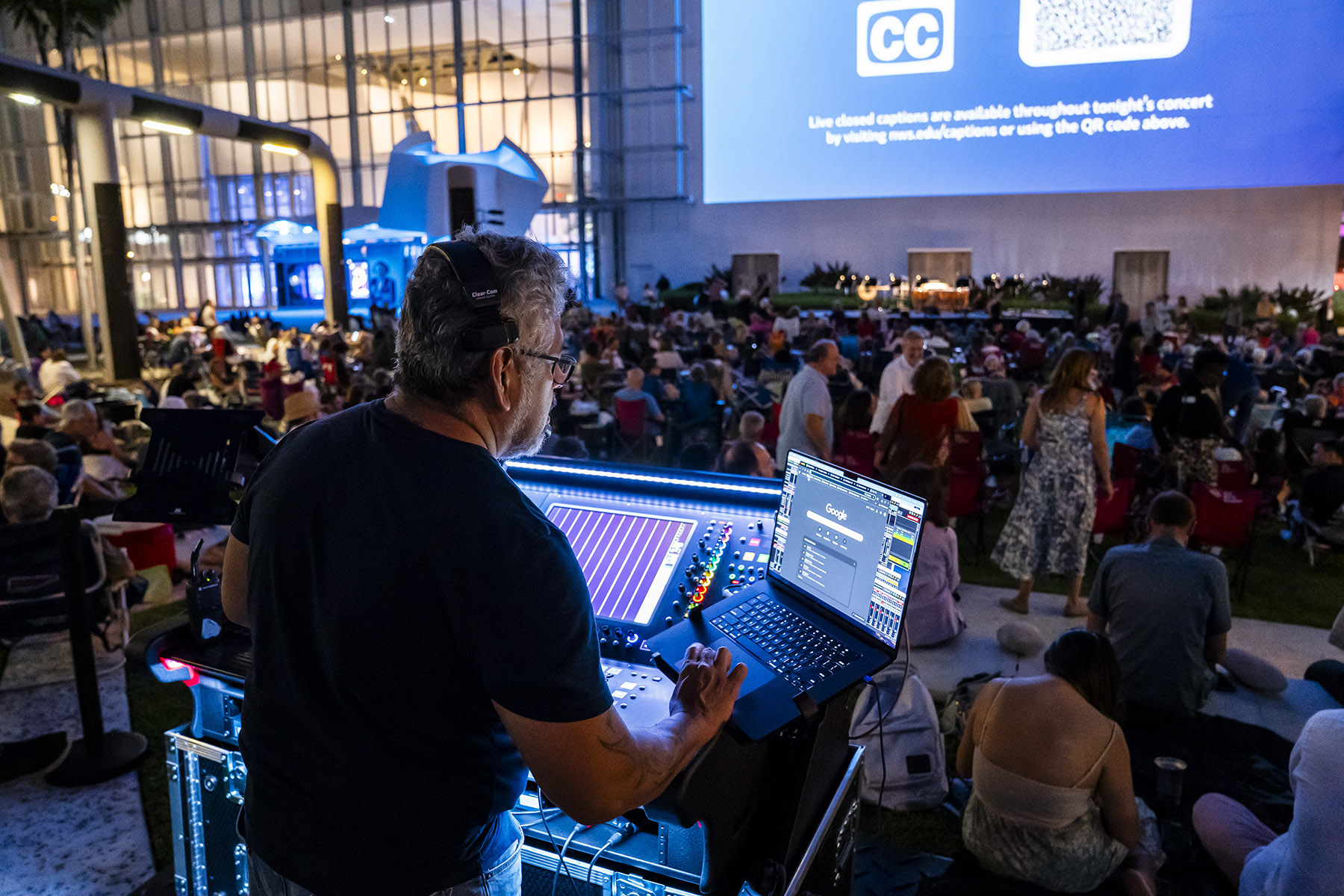
    Since then, New World Center has remained a DiGiCo facility, most recently adding a Quantum225 Pulse console to mix orchestral and other performances that are projected onto the venue’s 7,000-square-foot WALLCAST® screen, located in the SoundScape Park outdoor listening area. Combined with a Meyer Sound Constellation sound system, patrons can spend the evening picnicking on the lawn as beautiful classical music fills the warm night air.

    After many years of dependable service, New World Symphony’s original D1 Live desks gave way to three Quantum5 consoles, used for FOH, monitors, and a spare, as well as an SD9 console used in teaching rooms. “Because we were already very familiar with the DiGiCo platform, I decided on a Quantum225 console because I knew that it would give me all the creative freedom that I needed to be able to mix how I want to mix,” says NWS Director of Audio Services Roberto Toledo, who just won a Suncoast Emmy Award for live-stream audio mixing for the WALLCAST concerts. “When I do a live stream, basically what I’m doing in the console is nearly identical to how I mix in a studio, so the Q225 gives me a studio experience in a sense. I think of it as an outdoor studio, like an outdoor control room. For WALLCAST concerts, we mix through the console and then send outputs to the Meyer Constellation system in SoundScape Park. It gives the audience an amazing experience.”

    Toledo says DiGiCo’s sonic transparency is a perfect match for classical music, and that certainly extends through to the new Quantum225 Pulse. But he’s also a huge fan of its Quantum processing power, particularly the Mustard compression. “I literally ran out of Mustard channels – I’m using all of them!” he quips. “I love Mustard. It gives us the option to use parallel compression, which I think for classical music in this setting is really the best. It gives me the ability to compress as necessary, but it’s such a subtle sound that it offers a lot of control over the compression effect. It lets me balance the way I’d like to, whereas if I was using traditional compression, I’d have to be a little more careful with it, because it’s easy to go overboard.”

    “In classical music, a lot of people don’t like using compression at all,” he adds. “I’m not afraid to use it, but I want to make sure that the audience isn’t hearing this super-squished sound and that they are getting true dynamics, even as I’m getting the control that I need for my mix. It’s compressed, but it doesn’t sound compressed. And that’s what Mustard gives me.”

    DiGiCo technology has been assuring New World Symphony and its listeners that what they’re hearing is as modern as it gets. “With DiGiCo, it really feels like I’m mixing in a studio, even outdoors, and that’s a great feeling,” says Toledo.

  • AR Rahman’s 2025 Wonderment Tour Takes the Fourier Audio transform.engine Global

    AR Rahman’s 2025 Wonderment Tour Takes the Fourier Audio transform.engine Global

    If anyone ever deserved the term “global,” it would be Allahrakka Rahman. Known to fans the world over as ARR, the composer, musician, record producer, singer, songwriter, and philanthropist is best known for his scoring of Tamil and Hindi cinema, as well as for international films—work that has earned him two Academy Awards, six National Film Awards, a pair of Grammy Awards, a BAFTA, and a Golden Globe, plus a slew of plaudits from his native India’s film industry. ARR spent much of this past year on a world tour, the 2025 Wonderment Tour, which included cities across North America and the UK, including Vancouver, Los Angeles, Houston, Atlanta, Toronto, Manchester, and Birmingham. Most recently, his show hit home in Hyderabad, Pune, and Mumbai.

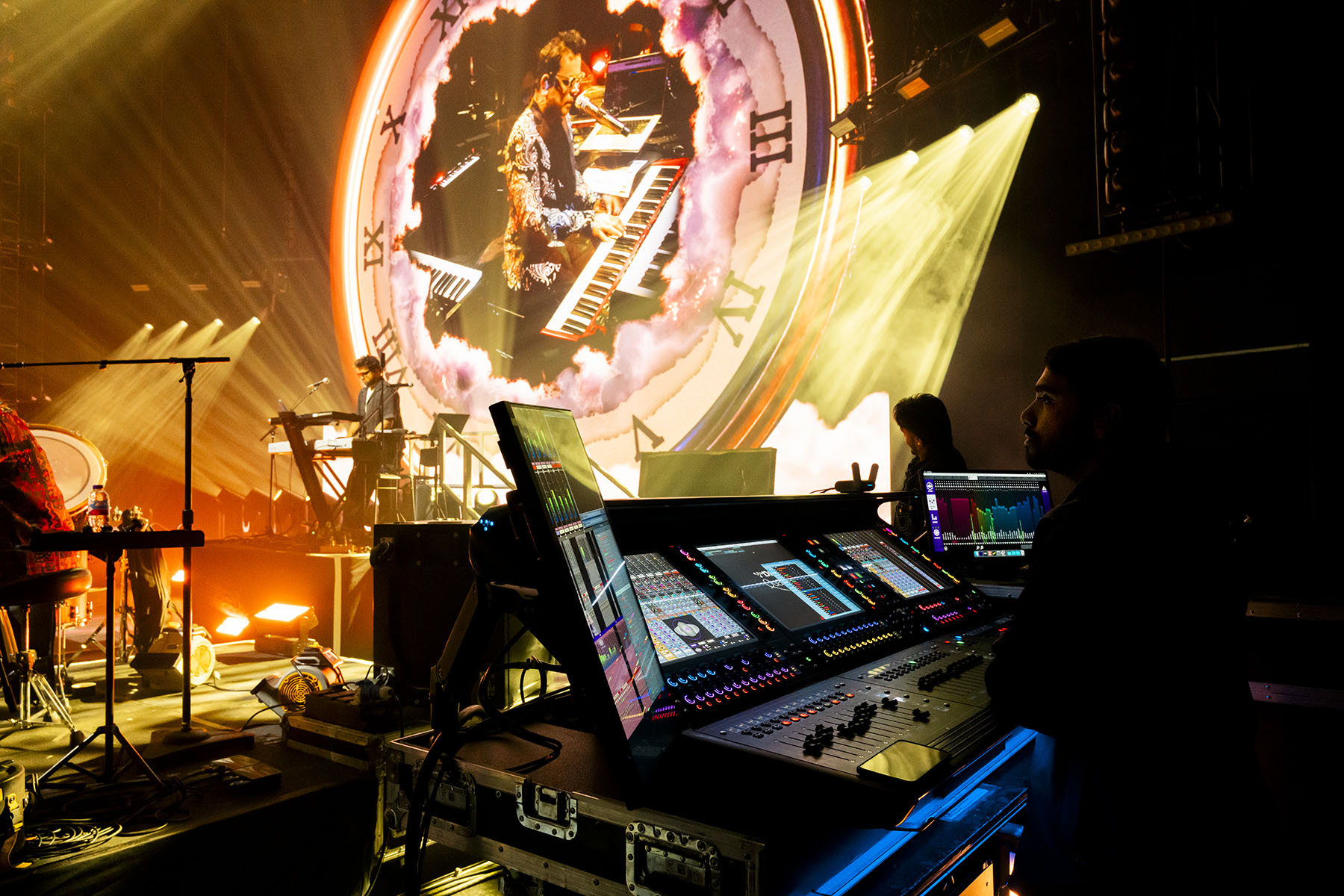
    Each of these performances benefited from the use of Fourier Audio’s transform.engine, a VST3 plugin host server that lets live sound engineers reliably run VST3 plugins with extremely low latency. The transform.engine was utilized on the Wonderment excursion by both FOH engineer Riyasdeen Riyan and monitor engineer Mark Thomas, who were also pairing it with Fourier’s transform.suite ’25 software bundle on their respective DiGiCo Quantum338 consoles.

    Interestingly, Thomas says that he and his colleague, Riyan, initially discovered the transform.engine online, via social media. “We heard about it and then secured a demo unit before we went on tour,” he recalls. “We were looking for a way to transition from Waves to a third-party platform, which would support third-party plugins and beyond. The transform.engine fit the bill perfectly. And now, over the course of the entire tour, both of us have completely adopted it into our workflows. It was that transformative.”

    FOH engineer Riyasdeen Riyan says that he’s had a lot of success using many plugins through the transform.engine—including Oeksound Soothe Live, LiquidSonics’ Seventh Heaven and Cinematic Rooms bundles, Gullfoss Live, and SoundToys’ Crystallizer and EchoBoy—but its big advantage for him has been in the workflow department, and specifically for achieving a studio-level of sonic quality for that processing. “We can replicate live whatever effects that we are using in studio,” he says. “Whomever the artists are that we are working with, including ARR, they are mostly from the studio world, and now we can replicate whatever they used in their original sessions, easily and reliably.”

    Riyan says this extends granularly to each plugin’s various parameters—“the kind and tempo of delay, the kind of effects, or the robotic vocals, or the harmonies… everything”—that allows them to recreate the studio experience onstage.

    Thomas, who is also using a DMI-KLANG immersive IEM mixing system card on the shows, is applying the transform.engine primarily for his Valhalla and LiquidSonics reverb plugins, as well as the Oeksound Soothe Live dynamic resonance suppressor, which is part of the transform.suite ’25 bundle that he inserts on his console’s mix bus.

    “The transform.suite ’25 software is our primary plugin bundle that we’re using on the tour right now,” he says. But the main “transformative” aspect of the transform.engine for him is in the workflow. “The major change that has happened is that the sonic quality I previously wanted with using these plugins depended upon using a server,” he explains. “With the transform.engine, I can load up exactly the plugins that I need and have the flexibility of using them with time-code synchronization—so virtually zero latency.”

    That’s critical for ARR’s complex shows, he says, due to the large number and frequency of the snapshots needed. “We have a lot of changes in the plugins’ parameters, which the transform.engine handles very well,” he says. “And the coordination of the plugin host within the video environment allows us to tweak settings on the fly without going into a third-party screen. So the workflow is quite very fast and flexible, compared to most other plugin workflows that we’ve previously used. It really is transformative.”