Category: Mixing

  • Fellowship Church Elevates Worship Environment with DiGiCo Quantum338 Consoles

    Fellowship Church Elevates Worship Environment with DiGiCo Quantum338 Consoles

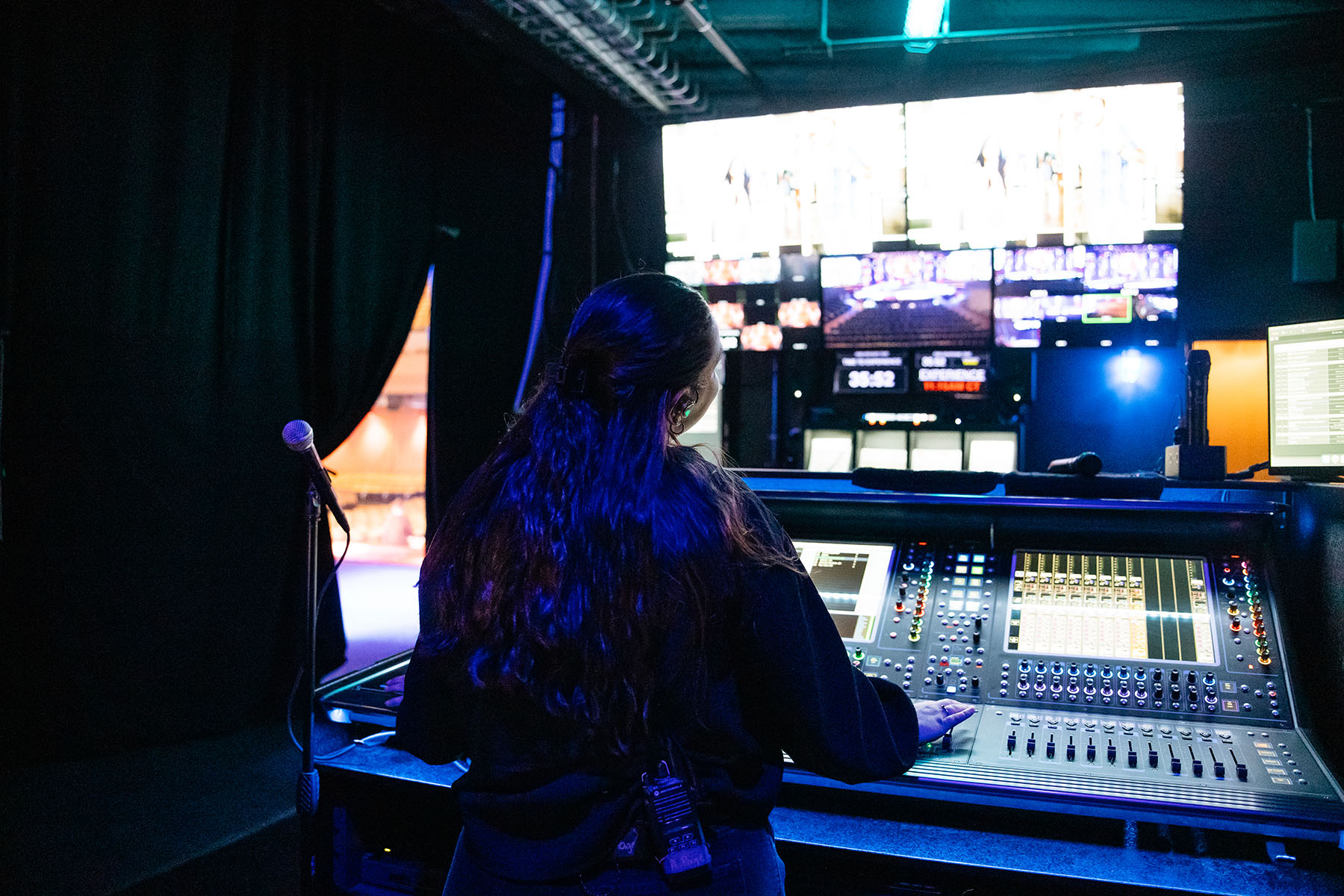
    From its founding in 1990 by Pastor Ed Young, Grapevine, Texas’ Fellowship Church has unswervingly focused on helping people “discover real answers for real life.” After more than three decades of growing its community of faith across multiple regional campuses and online, the church has upgraded the audio infrastructure of its main 4,200-seat worship auditorium with two DiGiCo Quantum338 digital mixing consoles, supplied by systems integrator Clark, which are now being utilized at Fellowship’s FOH and monitor mix positions.

    For Fellowship Church, production technology exists for one purpose—enabling people to clearly hear life-changing truths—and behind the scenes, the new audio control surfaces support that goal. “Our role is simple,” says a member of the church’s production leadership team. “We want to remove anything that distracts people from hearing God’s Word and engaging in worship. Here at Fellowship, production is not about spectacle; it is about removing distractions. When technology works the way it should, it disappears. And what remains is every microphone, every instrument, and every element of the service working together to create a meaningful worship experience.”

    A key component of that approach rest on clarity, and, powered by DiGiCo’s Quantum processing engine, the new consoles deftly manage large input counts while maintaining clarity and consistency across all of Fellowship’s services. “The clarity is incredible,” the team shares. “It keeps the attention where it belongs: on the message and on worship.”

    Ease of use was also cited as another benefit, as Fellowship Church depends on a strong culture of volunteers. Engineers, musicians, and technicians serve together each week, and the system needed to be powerful but simple to operate. “The DiGiCo interface is fast and intuitive,” the team explains. “That allows our volunteers and staff to focus on serving people rather than managing technology.”

    The recent console upgrade reflects a philosophy that has shaped Fellowship Church from its start, which is that excellence should serve the mission. “Pastor Ed Young often reminds the congregation that the church exists to help people discover hope in Christ and apply Biblical truths to everyday life. Technology simply helps deliver that message clearly. As Fellowship Church continues to grow, our new DiGiCo Quantum338 consoles will provide a strong foundation for the future while supporting the church’s commitment to helping people encounter God and His timeless truths.”

  • Total Flexibility for James’s Love is the Answer Tour Supplied by DiGiCo Quantum338

    Total Flexibility for James’s Love is the Answer Tour Supplied by DiGiCo Quantum338

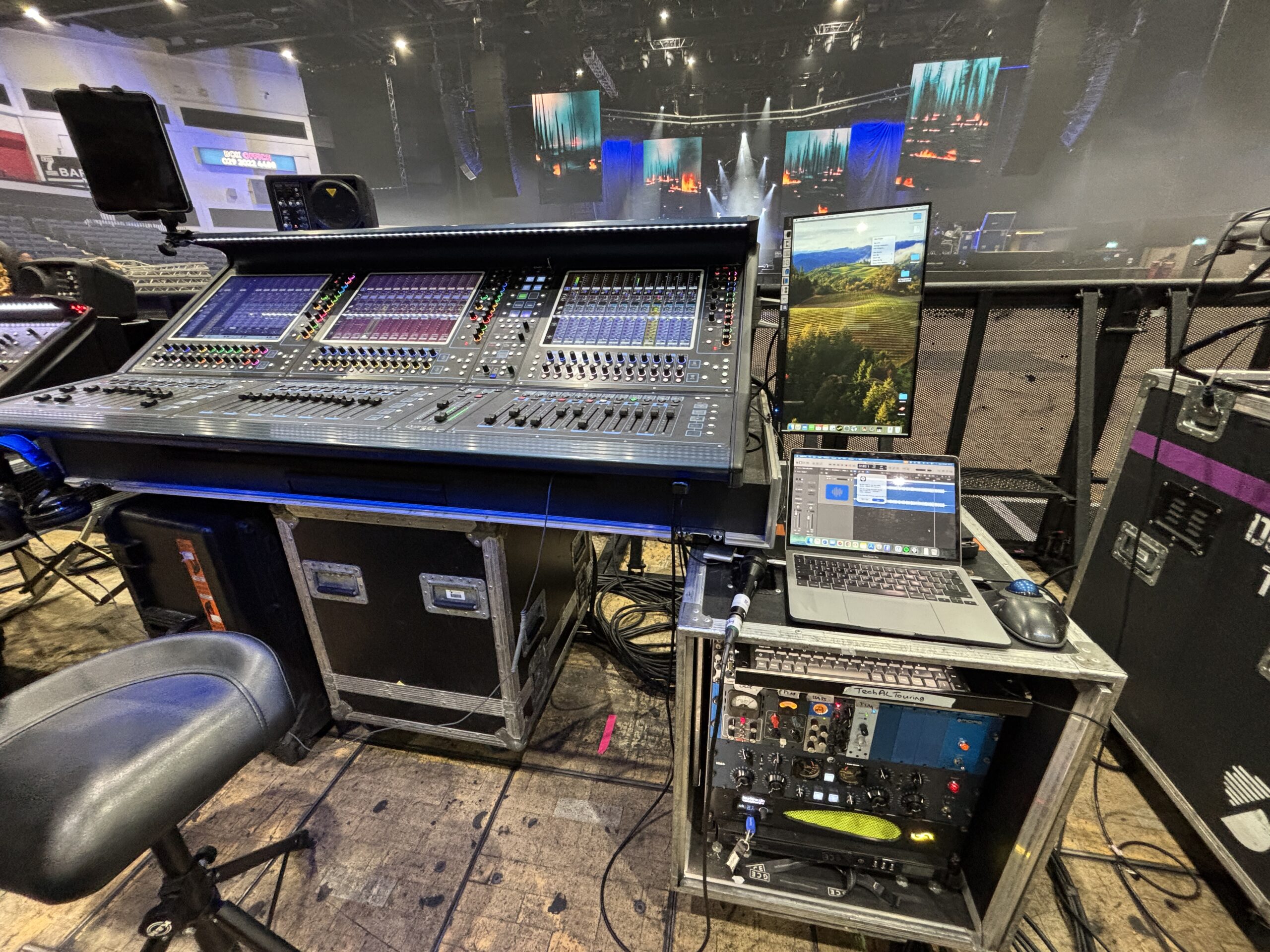
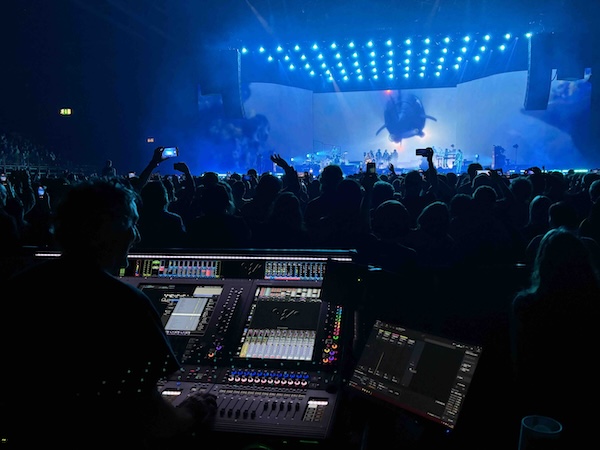
    James performs with spontaneity and without set lists, so being ready for anything means front-of-house engineer Chris Lynch needs the power and speed that only DiGiCo can deliver. The generous surface area of the Quantum338 and three large screens provide everything he needs access to within arm’s reach. In addition, Aled Irfan, at the monitor position, is using an SD10 and has also invested in KLANG and a Fourier Audio transform.engine. His company, AL Touring, supplies the control package for the tour, including microphones, in-ear monitoring, and stage wedges, with the PA provided by Solotech.

    “I’ve been touring the Quantum338 for about 18 months now,” Lynch explains. “I pride myself on being able to use any console comfortably, but this job requires a lot of channels. We have nine performers on stage, two drum kits, keyboards, trumpet, violin, cello, and there’s loads going on. I need access to a lot of faders, and the Quantum338 was the console I thought best suited the band.”

    With a back catalog of over 300 songs, James has plenty of choice when it comes to material. A smaller console could house all the inputs and outputs but, as Lynch continues, three screens and 38 faders on the surface makes the Quantum338 the ideal console to help him keep up with the band.

    “The Quantum Spice Rack and Mustard Processing is really good,” he continues. “You have to be flexible for a show like this. James did songs on the tour they hadn’t even played in rehearsals, and hadn’t played for months. They just said, ‘oh, we’re going to do this one’, and they did it, and it sounded amazing. It’s incredible, really. I honestly don’t know how they do it, how they just pick a song and go, ‘okay, we’re going to do this one today’. That’s the genius of James. I could do it on a Q112, probably with an iPad, but it’s much more efficient on the Quantum338.”

    During rehearsals, Lynch got to test the new Fourier Audio transform.engine, purchased by AL Touring from Solotech for the tour. Trying out a new piece of equipment can be hit or miss, but for Lynch, the process has been smooth. The main issue was not getting overwhelmed by the choice of plugins.

    “We had a week’s worth of production rehearsals where we trialed the Fourier. Suddenly, I had hundreds of plugins to have a play with,” he recalls. “I wanted the mix to breathe and the band to be dynamic, with a more rock mix. But that’s different every time because of how the band play, so I’ve used the plugins selectively. I probably only used three or four, and they’re all in the mix. I’m not using anything for the sake of using it, and it’s all been good so far. I think I’ve still got lots to discover. I’ve got a few plugins I’ve been looking at that I’m going to purchase myself that we’ll try in the summer, but it’s been flawless, which has been great.”

    Having been an engineer for a variety of bands, as well as many other types of performance, Lynch has worked with a huge range of consoles from many different manufacturers. Being able to program quickly and efficiently, whatever console he stands behind, and instinctively get the best sound for the show is a key skill. This flexibility has always rewarded him, but going forward he believes that choosing DiGiCo is likely to become a regular occurrence.

    “There are features that I like from other consoles, but nothing comes close to the separation you get from a DiGiCo console,” he concludes. “I’ve also been impressed with the DiGiCo availability around the world, we’re able to get supplies and support wherever we go. I’ve been very impressed with what DiGiCo has done for us.”

  • Engineers Choose DiGiCo Quantum338 and Quantum5 for Laufey World Tour

    Engineers Choose DiGiCo Quantum338 and Quantum5 for Laufey World Tour

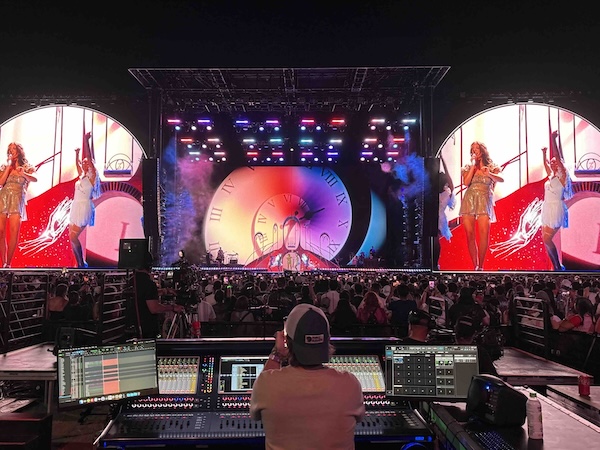
    Laufey is an Icelandic singer-songwriter with a genre-defying style that has won critical acclaim, resulting in a host of awards. The A Matter of Time tour accompanies the album of the same name and began in 2025, concluding in August 2026 with dates globally.  At front of house, Matt Grabe is using a DiGiCo Quantum338, while monitor engineer, Sebastian Mut, began the tour with a Quantum338, but expanded into a Quantum5 for later dates. All consoles are supplied by Sound Image, a Clair Global brand.

    Grabe started engineering and mixing in studios. Twelve years later, a good friend, front-of-house engineer Shane Haase, took him out on tour as system engineer for Alabama Shakes. He worked for a variety of artists over the next seven years, but it was not until another friend asked him to fill in mixing that he took the plunge and returned to a console position. He has been working with Laufey since 2024 and DiGiCo has always been his manufacturer of choice, allowing him to mix fast and instinctively.

    “Having a reliable desk that can be sourced anywhere in the world is non-negotiable,” he explains. “I started specifying Quantum consoles due to the clarity of the screens. I have minimal vision in one eye and a transplant in the other. From day one, my top-tier Sound Image representative Kim Sawaya made sure that one was always available. I didn’t start using Quantum features until recently, but now MSE and Spice Rack are in use on every file.”

    Mut began his training in houses of worship before moving into touring. He started with Laufey in 2024 and has been using DiGiCo consoles throughout his career. He has consistently chosen DiGiCo for the past three years, thanks to the power of the consoles, global availability, and DiGiCo support.

    “We swapped to the Q5 for Laufey’s Coachella performance,” he recalls. “The Q338 and Q5 are fantastic monitor consoles, the layout of both surfaces makes getting anything done very quick and efficient! The most useful features for me have absolutely been the powerful Snapshot and automation functionality, as well as the Spice Rack, specifically Naga 6. With all the international travel on this tour, being able to keep everything in a slim package that can be replicated in a new region quickly has been important for us.”

    Global touring comes with many complications, but for Mut and Grabe, ensuring they have the tools that make their jobs possible is not one of them. Depending on the type of show, the engineers will either take their own equipment or pick it up locally. As Grabe continues, having DiGiCo consoles on the rider means that they are never disappointed by a lack of availability.

    “We travel with the control package, desks, I/O, mics, and instrument DIs,” he continues. “On occasion, we fly into a duplicate of that system. It’s daunting to recreate as we are near fully loaded on four SD-Racks, an SD-MiNi Rack, and over 50 channels of RF. The set has a string quartet, a jazz trio on the B-Stage, and even a moving Steinway grand piano. Our brilliant technicians make that all possible. For solo dates, it’s very simple to convert the show file to whatever SD or Quantum desk is provided locally.”

    Laufey’s style is pure and deliberate, with Grabe using a very light touch in terms of processing. He prefers to rely on the faders to ride dynamics, rather than heavy gating or compression, ensuring every detail is heard with natural clarity. At the monitor position, Mut has a similar methodology, using the Fourier transform.engine as his dedicated choice for plugins, as required. For him, the reliability guaranteed by Fourier’s rock-solid sandboxing gives him an appreciated additional layer of security.

    “The Fourier has been a great piece of hardware; it’s very consistent and has been without any major issues,” he notes. “It’s a relief to know that if anything were to happen with a plugin mid show, it wouldn’t stop everything running on the server. The console integration is a big feature for me. Having Snapshot recall between the transform.engine and the console without any extra hardware or programming is really useful. I’ve also been very impressed with how much processing power I have available to me with just one server.”

    For both engineers, the DiGiCo Quantum ecosystem offers a complete package of reliability, power, and support that means their workflow runs smoothly in any corner of the globe. As they both conclude, on a tour of this scale, that is not a luxury, it is a necessity.

    “We’ve chosen DiGiCo due to logistics, and the power of the desk,” Mut says. “Being able to replicate this package anywhere in the world, quickly, and without much fuss, is a huge selling point for us. And with the powerful Snapshot and automation functionality we can nimbly do anything we’re asked to deliver the best product for our artist.”

    “There are scenarios where you jump on a red-eye flight to mix a new band with nothing but a festival changeover,” Grabe finishes. “Equipped with SD Convert and a punt file, any DiGiCo will do. That doesn’t just make my life easier, it makes the task possible.”

  • DiGiCo Quantum338 Helps Tyler Childers’ Snipe Hunt Tour Capture the Right Stage Mixes

    DiGiCo Quantum338 Helps Tyler Childers’ Snipe Hunt Tour Capture the Right Stage Mixes

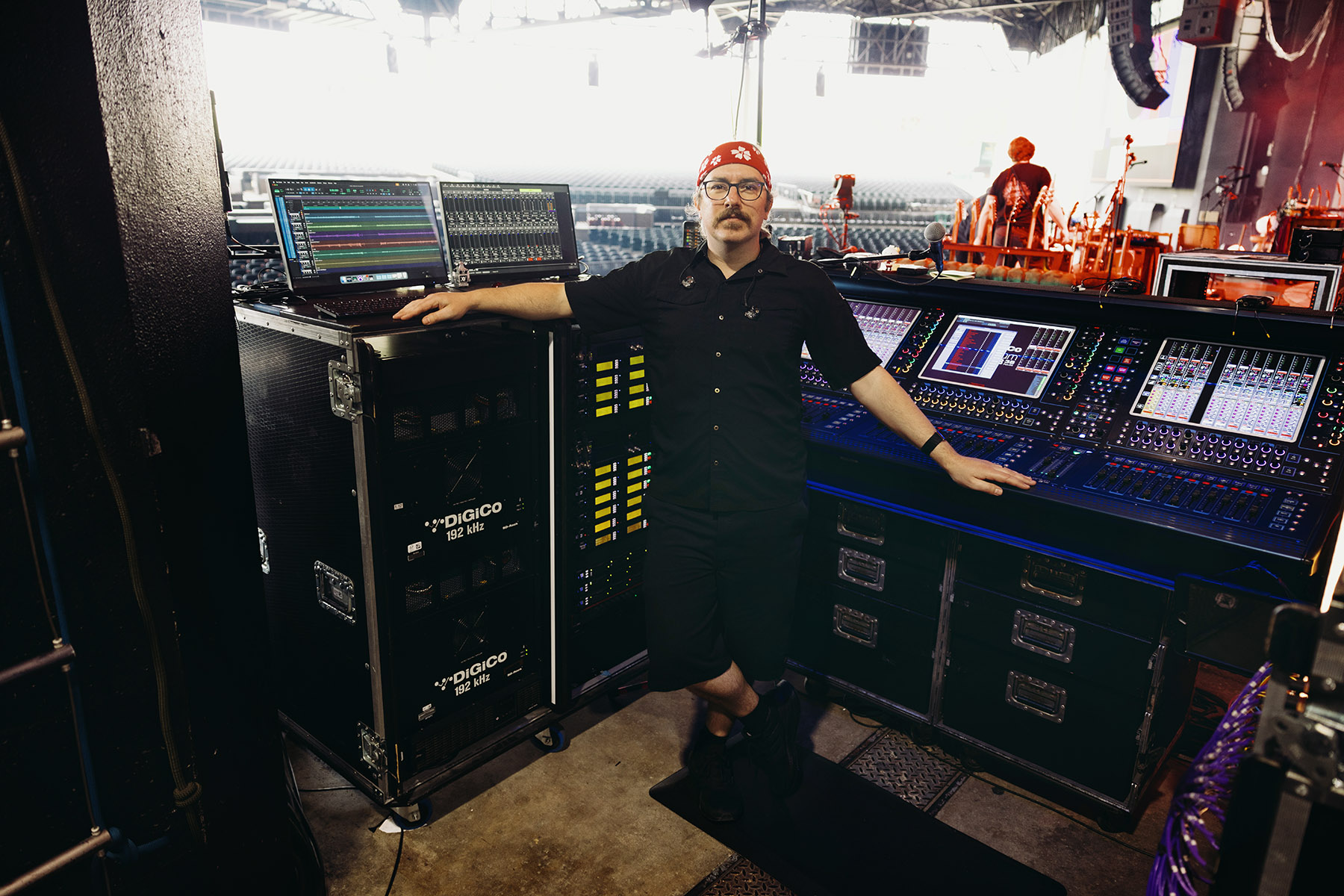
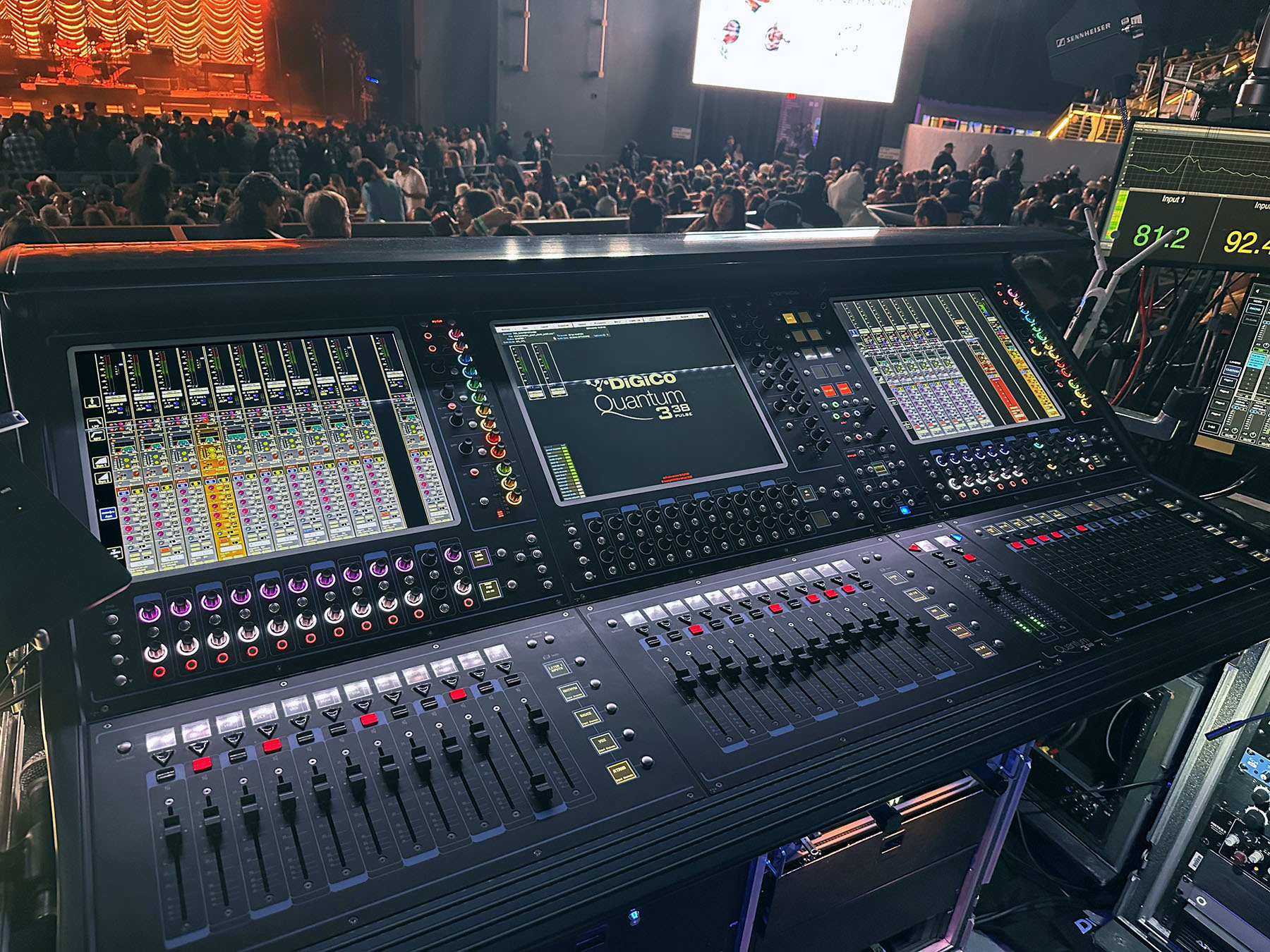
    Tyler Childers’ seventh and latest studio record, Snipe Hunter, is an adventurously sprawling collection of tunes that spans a range of genres, from Appalachian folk and gospel music to psychedelia and experimental rock. To properly cover a lot of musical ground on his current Snipe Hunt Tour, which kicked off in Dallas on April 23, the Kentucky-born-and-raised singer-songwriter is backed up by his raucous seven-piece band, The Food Stamps, which generates a joyous explosion of musical creativity on stage each night. To best keep all of the singers and musicians in sync with their own performances as well as each other, Sound Image, a Clair Global brand, is carrying a DiGiCo Quantum338 as the tour’s monitor console.

    Cory Benson has been the artist’s monitor engineer for three and a half years now, first hitting the road with Childers on 2023’s Send in the Hounds Tour. “As that tour wound down, I was taking inventory of the gear and reviewing what worked and what could be improved upon based on Tyler and the band’s needs,” he shares. “I remember seeing a lot of positive videos and writeups on the DiGiCo Quantum338 and requested one to work with before the next tour prep began. What first drew me to the Quantum was a tossup between the superficial and the real-world applications. I’m a sucker for aesthetics and the Q338 is such a stunning console—the layout, the colors, the size, and those fantastic screens.”

    “On the more practical side, the Nodal Processing was a game-changer,” he continues. “As a monitor engineer, you can find yourself cluttering up your fader banks with duplicated channels for specific sends. Being able to handle the individual sends from one channel allows me to keep my layouts simple and clean. Besides the fader bank cleanliness that Nodal Processing provides me, the safety net of my show lives in the macros. I’ve mixed on other desks, but nobody does macros better than DiGiCo. The layout and functionality are top notch on the Q338.”

    Benson describes his Snipe Hunt Tour monitoring setup as “pretty simple,” with the DiGiCo desk controlling two SD-Racks loaded with 32-bit mic pres and analog output cards. He’s also utilizing two DiGiGrid MGBs to pull MADI into his recording computer.

    From his typical position at stage left, Benson is supplying eight stereo IEM mixes for the band, along with five stereo IEM mixes for the backline techs, one stereo IEM VIP mix, and up to three stereo IEM mixes for guest sit-ins, potentially bringing the total to 17 on a busy day. “I also send a backup stereo mix to a hardwired pack for our drummer, Rod, and a feedback wedge for our guitarist, James, which is only used for a few of his solos since all our amps are upstage of the risers.”

    This being Benson’s third official outing on a Quantum338 has only further cemented his appreciation for DiGiCo’s Quantum platform. “Man, trying not to sound too much like a DiGiCo fanboy is tough!” he laughs. “The Mustard and Spice Rack processing is yet another powerful set of tools that help keep me in the box. True Solo is a tool that you don’t think you’ll need until you have it, and then you wonder how you’ll ever work without it. The footprint of the Q338 is also great and can easily squeeze into some of the tightest of underplays that we sometimes find ourselves in. And the rugged, road-worthy build has definitely been tested in the past couple of tours: from rough ferry crossings across the UK/EU, to dusty outdoor festivals, to gale-force winds and rain in the Pacific Northwest, to a sweltering prehistoric show in a small grassy patch next to the highway—our most recent underplay at Dinosaur World in Kentucky—this console has never failed to perform.”

    Largely eschewing audio plugins and external processing, Benson prefers to keep everything onboard as much as possible. “I utilize the Naga 6 on Tyler’s vocal channel to reign in the wild dynamics of his performance before sending it through the DYN Blue Classic compressor, which is filtered to catch any aggressive peaks in his upper-mids,” he says. “I’m also running DYN Blue Classics on my band buses with a higher threshold to just glue everything together and catch any runaway transients. I use the Mustard gates for my toms because they feel a little more musical and organic than the SD’s. And with DiGiCo’s latest V22 software update, I’m now utilizing the new Mustard Levelling Amp, The Silver One, on upright bass—this thing is killer!”

    “In my opinion, this desk works so well for this band because of its sonic transparency,” he adds. “These artists work so hard to craft the tones and sounds they want, so the last thing I want to do is affect it. I want the artists to be confident that what they’re hearing in their IEMs is an accurate representation of what their instruments are doing on stage.”

    The confirmation that Benson has received back from the performers has confirmed that he’s taking the right approach—with the right console. “They’ve all, at one time or another, said positive things. But the comment that immediately comes to mind was from Jesse, one of our guitarists/multi-instrumentalists—they call him ‘The Professor’ because he actually is a music professor back in his home state of Kentucky. During our first rehearsal after the switch to the Q338, he turned to me a few minutes in, smiling, and said that he noticed a major positive difference in the clarity and fidelity compared to our previous console. All the guys on stage have great ears and don’t tend to sugarcoat anything, so when they comment positively on the audio, I know it’s genuine.”

    The Snipe Hunt Tour stops at a variety of iconic venues—including Chicago’s historic Wrigley Field and Pennsylvania’s Hersheypark Stadium—before wrapping up on October 3 at Portland’s Moda Center.

  • DiGiCo Quantum Consoles Are Always Enough For Turnstile’s Live Sound Engineers

    DiGiCo Quantum Consoles Are Always Enough For Turnstile’s Live Sound Engineers

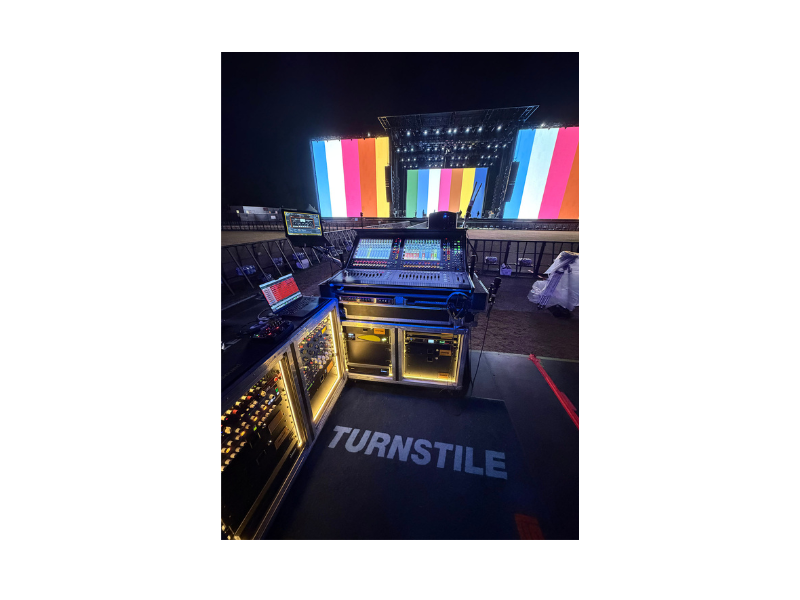
    Although Baltimore-based Turnstile officially got off the ground in 2010, the hardcore punk band’s trajectory over the past five years has been nothing short of meteoric, globally igniting with 2021’s genre-bending Glow On record, which earned them three Grammy nominations. Four years later, Turnstile dropped their fourth album, Never Enough, which garnered the band Grammy nominations in an unprecedented three categories—rock, alternative, and metal—and sent them home with awards for both Best Metal Performance (“Birds”) and Best Rock Album this past February.

    Two key components of Turnstile’s success have been their incendiary performances and relentless touring, including late-2025’s Never Enough Tour and prime slots at the Primavera, Outbreak, and Glastonbury festivals. This year, Turnstile is once again out on the festival circuit, which kicked off with back-to-back weekends at Coachella in April and now soon whisks them off to Osheaga, Lollapalooza, Outside Lands, Bumbershoot, Shaky Knees, and other North American gigs, plus a heavy roster of international fests.

    Jake Lang has been with the band for five years as FOH engineer, production manager, and tour manager—and now solely focuses on FOH as the group has scaled up. For his choice of instrument, Nashville-based Worley Sound is supplying him with a shiny new DiGiCo Quantum326 mixing console.

    “I love the Q326 for its transparency,” he says. “I dig being able to mix a variety of bands”—including Alkaline Trio, Movements, and others—“and get consistent results but with vastly different tones and vibes. I’ve previously carried a Q338, but with Turnstile, that’s a lot of console for a five-piece band that has a fairly low channel count, so the Q326 has been exactly what I’ve needed. I appreciate being able to tip the board with just one other person, and I can run the whole show off of a single layer. We really keep it simple: no playback, no click. We occasionally have someone pop in with a guest vocal or instrument, but we’re pretty straightforward. I mostly mix into groups, and between that and using control groups, I don’t really have to bounce around between layers.”

    At the other end of the Optocore loop is monitor engineer Chris “Chop” Mateer, who moved into his current position with the band this past December. His console of choice is the DiGiCo Quantum338, also provided by Worley Sound, which affords him a larger worksurface to get around on.

    “I’m running five IEM mixes for the band, plus seven that cover our crew and guests, for a total of 12 mixes of Shure Axient Digital PSM,” says Mateer. “We have live cabs onstage, but the band is all on ears, plus there’s a thumper for our drummer, Dan. We’re also doing a fair bit of con sends and receives with the DiGiCos for things like IEM mixes for our lighting and video crew at FOH, talkbacks from FOH to me, and for Jake sending his mix back to the stage so I can share it to friends-and-family fills onstage. Our stage gets pretty crowded with guests and we want them to have the same experience as the crowd.”

    For Mateer, DiGiCo’s snapshot system is a massive plus. “I really love the snapshot system, especially with the new updates,” he shares. “It lets me give everyone the same show with consistent moves each night, allowing me to keep my focus on the stage. It’s now even easier to keep my snapshots organized, and being able to flip between a festival and headline show setlist saves a lot of time in reordering.”

    And he quickly cites the Quantum desk’s comprehensive processing facilities as another major perk: “I feel like I can solve just about any problem that comes up with the console’s onboard processing. Don’t get me wrong; I love outboard gear, but I don’t like to begin adding gear unless it’s to address something specific that I can’t solve otherwise. Between the Mustard, Spice Rack, and Nodal Processing I’ve been able to stay entirely in the desk and haven’t had to reach for any outside solutions yet. It makes it really simple for whenever we might need to source consoles locally for a one-off or something. I just need to get a Quantum in front of me and I’m all good.”

    Out at front of house, Lang also appreciates Quantum processing—“the Mustard PSE is an absolute life-saver against our stage volume, which can be pretty intense,” he says—but he’s also recently fallen in love with Fourier Audio’s transform.engine for deploying studio-grade plugins live. “I started using Fourier when we began working with Worley Sound last year, and I was immediately sold. I initially started with oeksound’s Soothe Live and Valhalla’s reverbs and very quickly knew that I’d never go back,” he laughs. “I feel like I’ve barely scratched the surface with Fourier’s options. Soothe Live has been amazing on vocals and bass, and I’ve really been digging the Seventh Heaven Bricasti plugin. I also love the Sound Toys stuff; saturation and delay are huge for me, so I’m Decapitator-ing some parallel drums and really hammering EchoBoy out there.”

    And both engineers are quick to praise the service and support they’ve received from Worley Sound, which has been providing their DiGiCo control package for the past year. “Tom and the Worley crew are the best,” says Lang. “Being at the Worley shop is just so much fun. They always send us out with beautiful rigs, and their attention to detail is truly unmatched. Tom is also just the best guy I’ve ever met. Turnstile has been moving up at such a rapid pace and Tom has been an unbelievable resource as we scale up and move into bigger and bigger rooms.”

    Mateer agrees: “I’ve worked with Tom as a vendor on a few projects now, and every time, he and his shop crew have taken incredible care of us. Every idea I want to try out—and I’ll admit, there are a lot of them—they are always open, and come up with a great way to implement it. We definitely get a lot of compliments on their racks and consoles and are proud to partner with them. What they have going on at Worley Sound and Worley Studio is something really cool, for sure!”

  • Gorillaz’ Engineers Choose DiGiCo Workflow for Band’s Epic The Mountain World Tour

    Gorillaz’ Engineers Choose DiGiCo Workflow for Band’s Epic The Mountain World Tour

    BRIT and Grammy-winning virtual band Gorillaz is partway through an epic world tour that includes not just the Gorillaz live band, but also a stellar lineup of guest performers at each show. With a DiGiCo Quantum852 at front of house and another at the monitor position, both supplied by Entec Sound and Light, engineers Matt Butcher and Dave Guerin can cope with anything the show throws at them.

    Entec Sound and Light supply the full audio package and additional crew for the BRIT and Grammy-winning virtual band’s world tour in support of chart-topping new album The Mountain. With multiple different guest performers joining Damon Albarn and the Gorillaz live band on stage every night, even the DiGiCo Quantum852 is pushed to the max. At the monitor position, Guerin has just 12 spare input channels on his console. At front of house, Butcher has a little more “wriggle-room” and says the real reason behind his console choice is DiGiCo’s speed of workflow.

    “There are lots of reasons to use a DiGiCo, but we use the Quantum852 for Gorillaz because no other manufacturer makes a console that can do what a DiGiCo does,” he explains. “We can edit really quickly on the Q852, it has the redundancy we need, and we can cater for any type of record or broadcast feed request. Usually, it’s just a left/right feed because even just sharing the Groups requires 64 XLR tails.”

    The minimum channel count to run the show currently stands at 165 inputs at front of house. These come from multiple vocal microphones, each with a different effect, instruments, and guest artist inputs. There is a Quantum326 for playback alongside the two Quantum852s. Butcher is also utilizing a Fourier transform.engine at front of house and, with the exception of his trusted SPX900 and a few other vocal effects, it has greatly reduced the outboard effects he travels with.

    “The Fourier works well. I do most things on the console, but there are some big reverb effects coming from the Fourier and it’s all nice and stable,” he continues. “We have a lot going on with multiple Optocore loops and huge channel counts, and it’s solid throughout.”

    Guerin has created a range of apps to keep up with his channel numbers at monitors. He supplies iPads to the musicians and technicians so they can control their own mixes. His Faders app is capable of directly controlling channel, aux, group, and matrix outputs, plus control group faders.

    “I’ve created multiple apps now: Faders, Doris, Changes, and SetList,” he expands. “Each one has a different purpose, so because DiGiCo consoles only connect to a single external app, I designed Router, which enables all the apps to connect to the console via a single application. It’s very useful for the tour, not just for the DiGiCo consoles, but also for our RF Tech who can route any of my mixes to any of our four backup Sennheiser Spectera at a touch on his iPad. I have 290 input channels and 130 outputs on this tour, so it’s important to stay on top of things! I’m thinking of creating another app that just tells you what happened in the last OSC command you fired, to help you keep track!”

    With so many regular and guest musicians, plus a choir, the channels add up quickly and emphasizes why the workflow and surface layout of the Quantum852 was such huge draw for both engineers. For Butcher in particular, DiGiCo has meant stability, reliability, and convenience that is not available with any other platform.

    “We have used other consoles that sounded great and were readily available, but then they would have really strange errors before the show,” he continues. “The DiGiCo ecosystem is rock solid and works very conveniently for rack sharing and multiple inputs. The audio network setup is pretty easy, too. We’ve been using DiGiCo consoles for a long time now, and the high input count works well. It serves our purposes and sounds great.”

    Guerin agrees and highlights the DiGiCo team’s dedication to customer service as another reason not to swap consoles. For him, knowing there is always someone on the end of the line is a key factor in his long-standing relationship with both DiGiCo and Entec Sound and Light.

    “There’s great backup from DiGiCo and Entec, with Dan Scantlebury, Tom Olorenshaw, and Matt Smith back at base, plus Colin Woodward, Kev Gill, Alex Chapman, and Alex Goodby on the road with us. On the rare occasions I need help, there’s always someone to call,” Guerin concludes. “I had an issue on a Sunday morning at the O2 in London, I rang the DiGiCo help line, and John Stadius, DiGiCo’s Technical Manager, called me back. Even though the company has grown, they still provide worldwide support along with the attention to detail that engineers rely on.”

    The Gorillaz live experience – hailed as “an overwhelming pop spectacle” (Rolling Stone) and “a star-studded show of lush visuals and borderless music” (The Observer) – draws on a quarter century of genre-bending, paradigm-shifting, consistently innovative musical brilliance. Following a triumphant 13-date run of shows across the UK and Ireland earlier this year to mark the release of critically-acclaimed new album The Mountain, Gorillaz’ first ever stadium show just took place in London on Saturday, June 20, with support from Sparks and Trueno.

    The Mountain World Tour will play festivals across Europe this summer before heading to North America and South America in the autumn. The band will play India for the very first time early next year with shows in two cities: Mumbai on January 27 and Bengaluru on January 31, 2027.

  • Charlie Puth Takes to the Road with Clever DiGiCo Quantum5 Consoles

    Charlie Puth Takes to the Road with Clever DiGiCo Quantum5 Consoles

    Chart-topper and multi-award-winner Charlie Puth’s Whatever’s Clever World Tour is just that; it will take the singer-songwriter-producer on one of his largest live productions to date, with headline dates across North America, Europe, and the Asia-Pacific, starting in April in San Diego and closing (so far) in Perth, Australia in November, in support of his fourth studio album. Onstage, it’s a tight group: besides the artist there are drums, bass, guitars, keyboards, and three backup vocalists. For production manager Mike Schaeffer, who is also mixing front of house, and Josh Cruz at monitors, their instruments are equally important: a pair of DiGiCo Quantum5 consoles, supplied for the tour by Clair Global.

    “The Quantum console has been on the rider for Charlie since 2018,” says Schaeffer. “It’s always been my preferential console. I’ve always chosen DiGiCo, and so the console became a requirement based on anything we were doing.”

    Both consoles are on a single Optocore network, sharing it with an SD-Rack and an SD-MiNi Rack, as well as an Orange Box bidirectional audio-format converter that connects between any two of the compatible DiGiCo Multichannel Interface (DMI) cards. In this case, some of the outboard used on the tour includes various Waves plug-ins, as well as a Rupert Neve Designs Shelford channel strip that combines transformer-gain microphone preamp, an inductor-based equalizer (EQ), and a diode-bridge compressor that Schaeffer applies to Puth’s vocals. Otherwise, the Quantum5 desks are pretty much the center of all routing as well as processing.

    “The Quantum5 is a very comfortable desk to move around on,” he says. “My workflow is pretty straightforward. I do a lot of bus processing. I like the fact that you can send a bus to a bus, which a lot of consoles just didn’t do for a while. I use a Rupert Neve Design master-bus processor and a master-bus transformer. No matter what configuration of outboard and onboard processing I need, the Quantum5 lets me organize it however it best suits my workflow needs.”

    Josh Cruz joined Puth crew in 2022, as the band was just formulating itself around the core that would be on the current tour. “DiGiCo has also been my preference for a while. I’m doing a lot more than just your basic channel input to aux output,” he explains. “So having the flexibility of the three banks of faders, a powerful macro section, and the amount of inputs and outputs the Q5 offers were super helpful.”

    Cruz describes his goal when monitor mixing as preserving the feel for the musician. “I tend to take a very basic approach to monitor mixing: a lot of my EQs are pretty flat, not a ton of compression going on. The band members are very particular about their sounds and it’s not my place to unnecessarily manipulate any of that. For example, our guitar player uses an Axe-FX and he shapes a lot of his sounds on the front end. He literally says, ‘Do not put any filtering, EQ, or compression on it.’ It’s an XLR straight to the desk and I simply send it right back to him at the level he wants.”

    “We’re a little over the 56 I/O an SD-Rack offers in terms of physical inputs coming from the stage, but in total terms of what’s on my desk, I’m almost maxed out: there are a few double-patched inputs, effects returns, and there’s a number of playback channels, which come in over MADI through the Orange Box. We also have the Sound Devices Astral wireless ARX16, running two of them in mirror mode, and that provides all of our vocal inputs. Plus, I have a number of utility channels that I’m using to allow for some tech control. It expands well beyond the normal use case of an input channel being something coming from stage.”

    Fortunately, the Quantum5 is more than up to the task, designed, as Cruz puts it, “to remove the guardrails around what it means when you look at an input channel, an aux, a group, or a matrix,” he says. “I can essentially take any of those things and turn them into anything that I want and route them anywhere. And because of that, it has allowed me to push the limits as to what each of those things can do.”

    Another capability both engineers celebrate about DiGiCo’s Quantum technology is its ability to manage control from numerous sources via massive I/O capacity, Optocore fiber loops, DMI cards (Dante, MADI, Waves), and extensive software integration. “One thing that I really appreciate is that the DiGiCo consoles have the ability to have external control from a number of different sources,” says Cruz. “Being able to incorporate the console into a network is pretty common in a lot of consoles these days, but with the Quantum5, specifically, I’m able to control it from multiple sources at monitors.” He cites the software Companion by Bitfocus using a custom module called DiGiPanion by fellow DiGiCo user David Lim, which allows operators to manage tasks such as triggering complex macros and interfacing with external platforms such as DAW systems, with a single button press. “The flexibility of what DiGiCo has made available through their OSC control has been super helpful for me,” he says. “Capabilities like that, and the ability to let us work the way we want to, is why DiGiCo is always the top choice.”

  • Thee Sacred Souls Blessed with DiGiCo’s Quantum Power on Worldwide Journey

    Thee Sacred Souls Blessed with DiGiCo’s Quantum Power on Worldwide Journey

    If Thee Sacred Souls evoke Amy Winehouse’s stripped-down garage-band funk of the early 2000s, it’s not surprising: early on they shared the same scrappy Daptone Records label as the bluesy diva, as well as a similar production ethos and aesthetic, plus some key personnel. Fans won’t have to go far to hear the Souls’ soulful sound this year, because the three core band members, abetted by a dozen or so musical associates on stage, are likely coming to them: after some one-off shows this spring, including two nights at L.A.’s Greek Theatre, the trio are heading to Asia/Oceania in May, to Europe for festivals in June, on to the UK in July, and then back to North America for The Constellation Tour in August and September.

    At every stop and step along the way, the shows will be passing through more than global turf—they’ll be completely within DiGiCo territory, as every show will use DiGiCo Quantum consoles. The Quantum326 will be the workhorse, its power and compact form factor the perfect choice for a diverse set of gigs and venues, and provided by the Escondido, California office of Sound Image, a Clair Global brand, with the Quantum338 and other Quantum desks ready to fill in for fly dates along the way, as well as an SD-Rack stage box.

    “On our riders, DiGiCo is always the first; for our run in May, ninety percent of it will be DiGiCo,” says Josh Benton, Thee Sacred Souls’ front-of-house engineer for the last five years. “When we do our touring in the States, if we’re in a bus and have a truck, we’re always traveling with a DiGiCo. It’s been my favorite desk for that entire time.” Adds monitor mixer Zac Gerig, “Probably ten years for me!”

    The band’s association with DiGiCo can be traced to a 2025 appearance on Austin City Limits. “We were on a different console for that tour; Austin City Limits was a fly-in and they had DiGiCo Quantum338 desks there,” Benton recalls. “As we’re going through sound check and line check, our lead singer, Josh Lane, gets on his mic and says ‘This is the best my mix has ever sounded. What are we doing different?’ And the monitor engineer with us at the time said, ‘Oh, we’re on this DiGiCo desk,’ and Josh looks at me and says, ‘Can we use these from now on?’ We switched and have never looked back. That’s a true story!”

    While he’s used both the Quantum326 and Quantum338 on Thee Sacred Souls shows, depending upon availability and type of date, Benton says the Quantum326’s specifications and flexibility make it his favorite road companion. “Either desk is good with me, but when we get on tour, I prefer the Q326 just because it’s more compact. But we both appreciate the flexibility of the consoles. It goes without saying that they sound great, and their flexibility to let users move anything anywhere means we can each have our own workflows exactly as we want them, in any situation. I’m also a huge fan of the ability to swap out DMI cards—if we want to use different protocols on the back of the desk, it’s just swap it out and off you go. And honestly, that’s been a huge asset as of late as we started using the Dante protocol for some of that.”

    Benton is a fan of Quantum’s Mustard processing, particularly its optical and other compressors, as well as some of the Spice Rack EQ features. But it’s the console’s ability to accommodate his workflow and the band’s onstage configuration that makes the Quantum326 such as great fit. “Our input list isn’t terribly big, no more than 40; they’re not playing with tracks,” he says. “If you don’t see it on stage, it’s not happening. So the processing power on the Quantum far exceeds anything I will ever use. I mean, I could have two bands on stage, double our input count, and I’d still have more than enough processing. Even with effects returns, et cetera, it’s more than enough. That really lets me concentrate on the mix and on the evolving show onstage, which can be pretty complex: as a band, it’s the three guys, but as a live act, we are at minimum an 11-piece band, and sometimes a 15-piece band if we have a string quartet with us, as we did for our two shows at the Greek Theatre in L.A. And with a single SD-Rack, we’re actually able to cover our needs and any of the support artists that tour with us, which is something we’re planning on doing for the summer run, all within one infrastructure. It makes for a very streamlined workflow.”

    In monitor world, Zac Gerig also has a busy workflow, working with a combination of both IEMs and traditional wedges. “When we have strings, it’s 12 channels of stereo in-ears, and then six wedge mixes,” he says. “Monitor world is busy.”

    And he’s equally effusive about his Quantum326 for that reason. “What I like is that I don’t need any outboard gear; all my processing’s done within the console itself,” he explains. “So I’m using all the built-in Spice Rack and Mustard EQs. The biggest thing, and what I like about not having any of the outboard gear, is I get to really dig into everything that Quantum has to offer.”

    For instance, he calls the Mustard [primary] Source Enhancer, used to reduce microphone bleed and feedback, a “game-changer, thanks to the fact that you can sidechain the frequency input,” a capability that most PSEs can’t offer. “We have a couple of quiet singers onstage, and the MSE makes a really big difference in the bleed from the stage. Also, there’s a song where our lead singer will run through the crowd singing, and he’ll run as far as the stage design will let him. And the ability of the Mustard Source Enhancer to keep the delay and PA out of his mic is a huge advantage. In fact, we just did a show with an older DiGiCo console that didn’t have that, and it made me miss the Mustard.”

    But for Gerig, it almost always comes back to workflow. “I just love the surface itself and the workflow, and the flexibility that DiGiCo provides to customize the layers and the macros,” he says. “The biggest thing for me at monitors is speed, but also the precision of sound. I try to get all of my moves down to a couple of button presses, because when we start a line check, or if we’re doing a festival and the band didn’t get a sound check, every one of the 15 people has access to a talkback that goes directly to me. And if it takes me more than 10 seconds to make these adjustments, I get buried. The Quantum’s flexibility provides the workflow that I need to keep up with 15 people on stage. If there’s an issue, I can quickly grab the right control and it’s sorted within seconds, instead of minutes, which for me is huge. On every show, there’s a lot coming at me, but I’m able to handle it all with the layout of the Quantum’s surface and its flexibility, which is why the Quantum desk has become my favorite for everything.”

  • Jersey Opera House Purchases DiGiCo Quantum338T for Newly Refurbished Venue

    Jersey Opera House Purchases DiGiCo Quantum338T for Newly Refurbished Venue

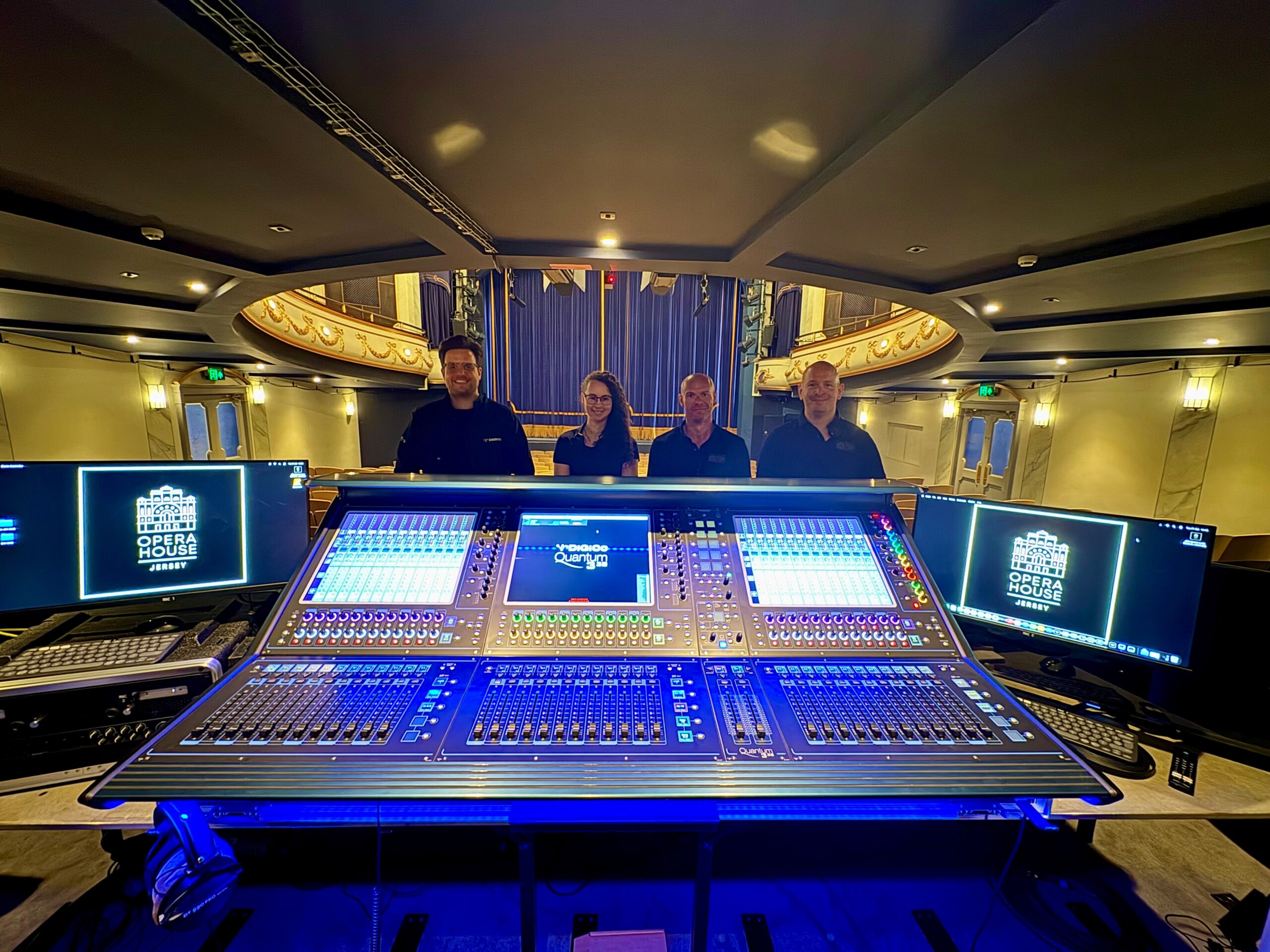
    The 125-year-old Jersey Opera House (JOH), located in the Channel Islands just off of France’s Normandy coast, recently benefited from a 12-million-pound refurbishment, reopening after a five-year hiatus with a gala performance in October 2025. In the last few months, the JOH has reestablished itself as an outstanding live venue, delivering sellout performances from greats like Gilbert O’Sullivan to children’s favorites like Horrible Histories, with dance, comedy, and cinema also thrown in. Technical Manager Chris Wink explains how a generous benefactor donation for equipment facilitated the purchase of a brand-new Quantum338T, supplied by Stage Electrics, adding to their existing DiGiCo SD9 and securing the future purchase of a Quantum112.

    “We were lucky enough to benefit from huge generosity, so we now have a fantastic Quantum338T and are developing a cutting-edge d&b loudspeaker system,” he expands. “The Quantum338T will position us perfectly as we begin to produce more work in-house and is a natural fit for the caliber of artists that visit the JOH. We are really investing in equipment and people since our building project finished. Many of our visiting shows already use DiGiCo, so the Q338T helps with our workflow, making setups much easier.”

    In a five-year-long, government-funded construction project, the entire structure of JOH has been upgraded and repaired. The final upgrades were to the theatrical equipment, including full lighting and sound systems. The Quantum338T was chosen thanks to its trio of 17-inch, high brightness screens and large console surface area. With 156 input channels, 72 busses, and a 36 x 36 matrix, the Quantum338T is built for complex shows and is exactly what JOH needs.

    “The Opera House started 1900 as a replacement for the Theatre Royal,” Wink continues. “Over the years it has had many refurbishments, but in 1997 it was taken back to its original form, and we have updated and safeguarded that work. It’s a beautiful, historical building, but we are looking to the future with modern works being commissioned, including a brand-new opera, pantomime, and dance. The Quantum338T is proving essential because of our varied workflow and the speed at which we change shows.”

    The DiGiCo “T” software upgrades the standard Quantum338 with a variety of added features, including increasing the matrix from 24 to 36 with individual Nodal delays and aliases on each channel. When coupled with the ultra-flexible 32-bit SD cards and an Optocore loop, Wink gains a level of agility that has enabled him and his team to deliver crystal clear sound, regardless of the genre of the show. As he continues, it is the ability to make the racks whatever you need them to be that makes the DiGiCo ecosystem so appealing.

    “The SD-Racks being able to be whatever you need, wherever you need it, via hot-swapping cards is essential,” he continues. “We also use Orange Boxes within the system, once again adding more flexibility, certainly for Dante inputs and outputs, and personal monitoring requirements. Because of the unique nature of our venue, we often end up taking multi-track recordings, too. Software-wise, we’ve really noticed the impact that Mustard and Chilli processing has, it felt like a big change from our SD9.”

    With a varied repertoire it is often the shows that need the most subtle reinforcement that require the most care. For his next project, Wink is focusing on subtle reinforcement, where the clarity of the JOH DiGiCo and d&b combination will subtly incorporate sound effects and musical elements in a way that could not be achieved with a different combination of equipment.

    “The quality of the preamps in the 32-bit cards delivers a level of finesse that is not present with other brands,” Wink concludes. “It’s about having a system that’s powerful and punchy enough to deal with any rock or pop artists that come over, but also be quiet and clean enough to deal with the subtle reinforcements of a spoken word play, or an opera. There are times where you need a sledgehammer and there are times that just need a little file, and the DiGiCo Quantum338T does everything!”

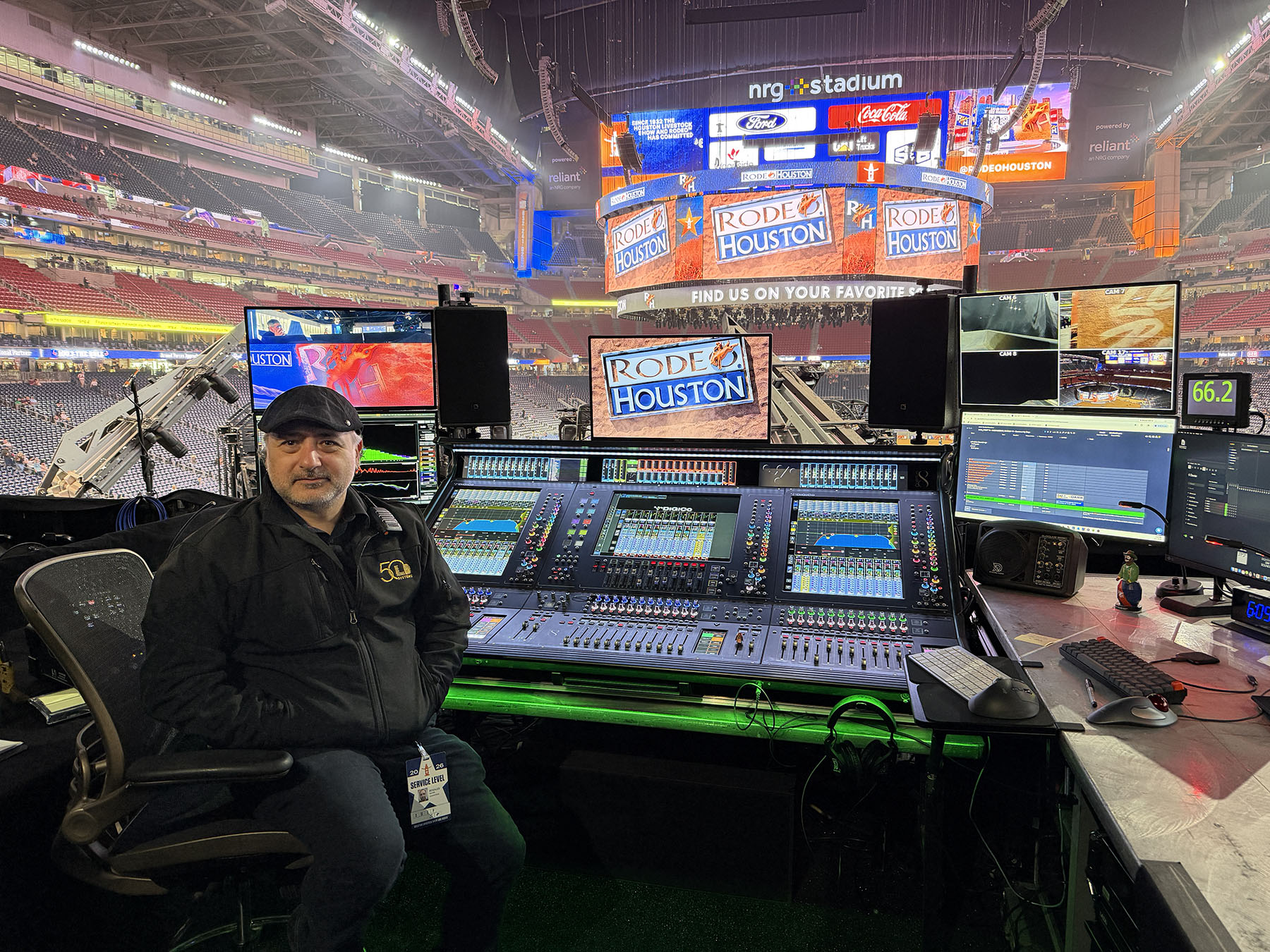
  • DiGiCo Quantum852 at RODEOHOUSTON® Assures Fans Heard Every Hoofbeat and Drumbeat

    DiGiCo Quantum852 at RODEOHOUSTON® Assures Fans Heard Every Hoofbeat and Drumbeat

    Originally designed as an opportunity for farmers and ranchers to showcase their work, the RODEOHOUSTON® Super Series—aka Houston Livestock Show and Rodeo™—has grown from a small regional exhibition founded in 1932 into one of the largest cultural and economic events in the United States. Since 2003, it has been staged at NRG Stadium, where it was held this year from March 2-22, along with a slew of concerts by Tim McGraw, Lainey Wilson, Kelly Clarkson, Lizzo, Luke Bryan, Chris Stapleton, Dwight Yoakam, Shaboozey, and many others.

    Befitting its current place in sports media, RODEOHOUSTON had top technology in place this year to assure visitors—more than 2.7 million of them over the course of three weeks—had great sound to go with the dramatic visuals. That included DiGiCo’s flagship Quantum852 mixing console, deployed there for the first time via Houston-based LD Systems, a Clair Global brand, which used the desk to mix the largest rodeo event in the world. The console was accompanied by a pair of DiGiCo SD-Racks and an Orange Box in the main patch room, plus four SD-Mini Racks distributed throughout the stadium.

    “This is a high-profile event that operates around the clock for 21 days straight,” observes LD Systems President Rob McKinley, who also served as the Project Manager for the event. “Every technical element is mission-critical, with minimal time for recovery if any issues arise. Therefore, my role is to support the team with the tools and resources they need to perform flawlessly, and if there is an issue, that there is rock-solid backup to quickly recover. DiGiCo has provided a great tool in the Quantum product to elevate our engineers’ performance, thereby creating a greater fan experience. DiGiCo provided excellent support, with Julian Gates onsite for several days to ensure the Quantum852 performed, which it did with flying colors. Everyone was pleased with the outcome and we look forward to many more great events with DiGiCo.”

    As sports and entertainment continue to converge, tools like the Quantum852 become critical for being able to address the entire spectrum of audio needs. “My role sits somewhere between a live sports mix and a show mix,” explains LD Systems A1 for the event Rafael Rosales. “I’m managing everything the audience hears during the rodeo: announcers, effects, playback, interviews… and making sure it all translates clearly across a very large space.”

    Scale—of the venue, the event, and the technology needed to present it—is the single biggest challenge. “The scale is a big part of it, but it’s really the combination of scale and speed,” Rosales says. “You’re working with a very large PA, long throw distances, and a high noise floor from the

    crowd and the arena itself, while also dealing with open microphones, especially announcers in front of the PA. So gain-before-feedback, bleed control, and intelligibility are constant priorities. At the same time, the show moves very quickly. You can go from an intense event straight into an interview, then into playback, and back into competition within seconds. Each of those elements behaves very differently sonically.

    “But, beyond that, the goal is immersion,” he continues. “I’m using a wide network of microphones—ambient mics around the arena, effects mics on gates and chutes, chuck wagons, lavaliers on contestants and contractors, and so on. The intention is that no matter where someone is seated it feels like they’re right there on the dirt, hearing the details of the action as it happens.”

    This is why Rosales says the Quantum852 is the platform he chose to manage this complex production on, because it offers him the processing depth, visibility, and reliability he needs for this scale and scope of show. “On the input side, I rely heavily on Mustard Processing—dynamic EQ, multiband compression, and the Mustard Source Expander—to stabilize each channel before it even reaches my mix,” he explains, referring to DiGiCo’s onboard tube/EQ/dynamics processing modeled from highly sought-after analog units. “With over 100 inputs active I can’t physically ride every fader all the time, so I build that control into the channels themselves. That way, even if I’m not touching a source at a given moment, it’s still behaving in a controlled and predictable way. Playback feeds are a good example of that. They all come in with different tonal signatures and dynamics, so I use multiband compression to smooth those differences so everything sits in a consistent sonic space. I also extend that approach to my busses, using dynamic EQ and multiband compression, to keep groups balanced as multiple elements stack up. Another thing I really like is the amount of metering and data the console gives me. I have a lot of visual feedback in front of me at all times—levels, dynamics, processing activity—which helps me make fast decisions in a very dynamic environment.”

    Anyone familiar with rodeo arts knows the significance of eight seconds—the minimum time a rider has to stay on a bull to qualify. In a sport measured in seconds, the ability to match the audio workflow pace to that of the events is critical. Again, says Rosales, this is why he chose the Quantum852.

    “In this environment speed and access are everything,” he says. “I’m working with over 120 inputs, so I rely heavily on macros and spill sets to organize the console around how the show actually unfolds. I can instantly jump to specific zones, whether it’s a section of the arena, announcers, or playback, and only see what I need in that moment. That means I’m not searching for channels; I’m going directly to where the action is happening. Physically, the desk also supports that workflow: having a large number of faders available, depending on layout, lets me keep key inputs and groups under my hands without constantly banking.

    “The dual-engine design is also critical: it gives me seamless redundancy that is essential when you’re effectively running a live, broadcast-style mix for that many people. It really comes down to preparation and speed. I use processing to control my inputs before they hit the mix, rely on visual metering to stay informed, and use the workflow tools to react instantly. That’s what allows me to deliver a mix that feels both clear and immersive for the entire stadium.”

    Thomas Ruffner, LD Systems Audio Ops Manager and a Systems Engineer on the Houston Livestock Show and Rodeo project, also had high praise for the DiGiCo elements of the show’s production, but he additionally made observations about how critical the support was from the company and its related teams. “It’s worth highlighting the absolutely amazing support we receive from DiGiCo and its US distributor, Group One,” he says. “Whether we’re adopting a new platform like the Q852, or just working through scenarios with existing DiGiCo equipment, the customer service they provide is truly second to none. The team at Group One is really fantastic at making sure we have the tools, knowledge, and real-time support necessary for success with a powerful platform like Q852 at the helm of a complex show like RODEOHOUSTON. Vendor support is a major deciding factor when choosing which tools we use, and the DiGiCo and Group One teams never disappoint!”