Category: IBC 2025

  • VIDA Launches Media Factory: Agentic AI-Powered Workflow Automation for the Digital Media Supply Chain

    VIDA Launches Media Factory: Agentic AI-Powered Workflow Automation for the Digital Media Supply Chain

    VIDA has introduced Media Factory, an agentic AI-powered workflow automation engine, at IBC 2025. Integrated into VIDA Content OS, it gives media supply chain teams a drag-and-drop way to build, test, and deploy workflows in hours instead of weeks. With 300+ pre-built connectors and AI integration, it helps automate tasks like ingest, tagging, transcription, compliance checks, and multi-platform delivery.

    Designed for speed and adaptability, Media Factory reduces the need for heavy software development while helping IT and operations teams meet tighter deadlines with fewer resources. The platform enables seamless connections between content, business systems, and AI agents, unlocking efficiency, flexibility, and smarter ways to manage media operations.

    VIDA, the secure cloud-native media asset management platform, is launching at IBC Show 2025 Media Factory, a drag-and-drop workflow automation engine designed to transform the way media supply chain teams orchestrate their content processes and business systems.

    Integrated directly into VIDA Content OS, Media Factory puts intelligent automation in the hands of operations and technology leads. With over 300 pre-built connectors, including support for leading AI agents, teams can build, test, and deploy powerful workflows tailored to their specific business needs. What would have previously taken weeks of custom software development can now be tested and deployed in hours.

    At a time when operational teams are being asked to do more with less, delivering to more platforms, working under tighter deadlines, and embracing AI, VIDA Media Factory introduces a smarter, faster way to automate complex workflows using a visual, drag-and-drop interface.

    “VIDA Media Factory is about giving teams the tools to connect content, configure any workflow, and integrate with any business system. The possibilities are mind-blowing,” said Symon Roue, Managing Director at VIDA. “By harnessing the power of agentic AI, teams can automate business processes from routine tasks to entirely new operational models, removing the friction that slows people and content down.”

    Built for adaptability, Media Factory allows both users and AI models to orchestrate actions such as:

    • Ingest, AI tagging, transcription, translation and metadata packaging
    • AQC, compliance checks, and age-appropriateness flagging
    • Trigger-based delivery to FAST platforms, YouTube or social media
    • Slack/email/sns notifications, business system integration, and more

    Workflows can be triggered by scheduled events, webhooks, asset-level changes, or file-based activity. New custom connectors can be added to integrate internal tools, allowing for seamless, enterprise-wide automation across rights management, analytics, marketing, and beyond.

    Unlike traditional workflow systems that require top-tier software engineering support and custom development, Media Factory enables operations and technology teams to move at pace, deploying and evolving workflows as their needs change.

    VIDA Media Factory will be available to enterprise customers and partners starting September 2025 and forms a core part of VIDA’s mission to modernise media operations, unlock creativity, and maximise the value of existing content libraries. Media Factory will be demonstrated on VIDA’s stand at IBC 2025 in Hall 5, stand 5.D50.

  • Must-See at IBC 2025: Gaudio Lab Debuts One-Stop Audio AI Solution for Content Localization

    Must-See at IBC 2025: Gaudio Lab Debuts One-Stop Audio AI Solution for Content Localization

    Gaudio Lab, an innovator in AI-powered audio technology, will debut at IBC 2025 in Amsterdam with Gaudio Studio Pro, its all-in-one AI solution for content localization. The platform simplifies and accelerates the complex process of preparing media for global audiences by combining dubbing, music replacement, cue sheet generation, and audio separation into a single streamlined workflow.

    With features like automatic copyrighted music replacement from a 110,000+ licensed track library, AI-powered dialogue/music/effects separation, and over 90% faster turnaround compared to traditional methods, Gaudio Studio Pro is designed to cut costs and timelines significantly. Backed by award-winning AI technology and trusted by top studios, it provides broadcasters and distributors a faster, safer, and more scalable way to localize and export content worldwide.

    Gaudio Lab, a leading innovator in AI-powered audio technology, will make its debut at the International Broadcasting Convention (IBC) this September in Amsterdam, presenting a breakthrough solution that could transform the way broadcasters, content providers, and distributors prepare content for global distribution and localization.

    Established in 1967, IBC has grown into one of the world’s largest broadcasting and media events, attracting professionals from over 170 countries and serving as a vital hub for discovering emerging technologies and forging international partnerships.

    Introducing Gaudio Studio Pro

    At IBC 2025, Gaudio Lab will introduce Gaudio Studio Pro, an AI-powered content localization platform designed to streamline the fragmented processes involved in preparing content for international distribution. The platform integrates AI source separation for M&E (Music and Effect) tracks, dubbing, music replacement, cue sheet generation, and localization into one seamless workflow.

    One of its most impactful features is its ability to resolve copyright issues that often block content from being exported. For example, if a popular entertainment show contains copyrighted background music that prevents overseas sales, Gaudio Studio Pro can automatically detect and replace music tracks with alternatives from a library of over 110,000 high-quality tracks composed by human musicians, while preserving the original mood.

    Over 90% Faster Localization

    Powered by world-class AI audio separation technology, Gaudio Studio Pro can isolate dialogue, music, and effects even from a single mixed master track, allowing re-editing without separate audio stems. Its AI automatically detects music segments, swaps them with licensed tracks, generates accurate timecodes and cue sheets, and preserves the original mastering effects. This dramatically reduces production timelines by over 90% compared to traditional workflows, while significantly lowering costs.

    Proven Technology with Global Recognition

    Gaudio Studio Pro brings together Gaudio Lab’s globally certified audio technologies. Its file mixing and mastering capabilities were adopted as an ANSI/CTA standard in 2022. The company’s AI audio separation engine won the CES 2024 Innovation Award and was ranked first by leading international media evaluations. Its AI music recommendation and placement system also earned a CES 2025 Innovation Award. To ensure both speed and premium quality, the platform was co-developed with Wavelab, one of Korea’s top-tier film sound studios. Beyond the platform itself, Wavelab’s expert team offers review and manual editing services, adding an extra layer of trust and delivering a premium finish that meets the highest global standards.

    Looking Ahead to IBC 2025

    Henney Oh, CEO of Gaudio Lab, said that IBC offers a valuable opportunity to meet European broadcasters and distributors who struggle with the high costs and long timelines of content localization and international delivery. He added that the company’s mission is to make it easier for content to move freely across borders, enriching the global media landscape through trusted, world-class audio AI technologies.

    Gaudio Lab will exhibit in the Future Tech Zone at RAI Amsterdam from September 12 to 15, 2025.

  • Facilis Technology Showcases Cutting-Edge Innovations at IBC2025 Conference Amsterdam

    Facilis Technology Showcases Cutting-Edge Innovations at IBC2025 Conference Amsterdam

    Facilis Technology is set to showcase major updates to its shared storage and workflow solutions at IBC2025 in Amsterdam. The company will debut HUB 8.3.2, featuring smarter administrative controls, expanded hybrid support, and FastCache, an SSD-based caching system that speeds up both remote and on-premises editing. Alongside this, the FastCache PreLoader app gives users better control over cached assets, while FastTracker 3.8.2 adds AI-driven transcription, metadata tagging, and tighter integration with DaVinci Resolve.

    Facilis is also introducing higher-capacity HUB servers, new nearline storage options, and Thunderbolt 5 adapters in partnership with ATTO Technology to support high-speed 8K workflows. These innovations underline Facilis’ commitment to solving workflow bottlenecks and delivering efficient, cost-effective storage solutions for broadcasters, post-production teams, sports, and education sectors.

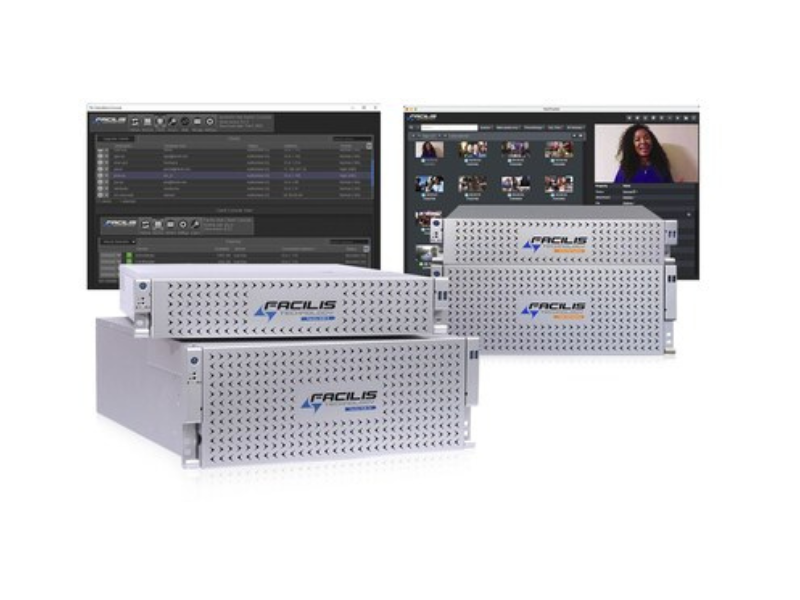
    Facilis Technology, a leading international supplier of cost-effective, high-performance shared storage solutions for collaborative media production networks, will present the latest enhancements to its workflow tools and shared storage systems at IBC 2025. Attendees can visit Facilis at Stand 7.A55 (Hall 7) to see the debut of Facilis HUB 8.3.2, with FastCache Workflow Accelerator, FastCache PreLoader and the newest version of FastTracker 3.8.2.

    Facilis HUB 8.3.2 introduces advanced administrative controls, refined performance monitoring, and greater flexibility for hybrid environments. With features like Smart Access Rules, enhanced Virtual Volumes, and expanded cloud integration options, version 8.3.2 reinforces Facilis’ commitment to adaptable and efficient media production infrastructure.

    At the heart of the demonstration is FastCache, Facilis’ innovative SSD-based client caching system designed to dramatically accelerate workflows for remote and on-premise editing. FastCache provides high-speed access to shared assets while preserving the security and collaboration required in modern production environments.

    FastCache lowers the server and network load, improved response time when working with high-bitrate media files and delivers a superior hybrid remote workflow for facilities that require that flexibility.

    FastCache PreLoader is a new application included in 8.3.2. With FastCache PreLoader, users can track locally cached assets from a single dashboard, and proactively cache data for your next session. Also, you can save custom preloaded projects that can be re-used when returning to a prior session.

    FastTracker 3.8.2 is also featured, Facilis’ powerful media asset management tool that now includes improved on-premises AI-driven multi-lingual transcription, auto metadata tagging through Google Vertex AI, and R3D and BRAW proxy generation. These features are purpose-built for distributed production teams, enabling faster search, approval, and delivery workflows.

    FastTracker 3.8.2 with Vertex AI can enrich your metadata with object and logo recognition, text and sign tagging, as well as spoken word transcription in hundreds of languages. Add the new DaVinci Resolve Workflow Integration with metadata import and proxy attachment, and FastTracker becomes your one-stop search, find and access tool for content creation professionals.

    “IBC is our annual opportunity to show the international production community how our solutions are addressing real-world workflow bottlenecks,” said Jim McKenna, Chief Marketing Officer at Facilis Technology. “With FastCache, the enhancements to our HUB platform, and FastTracker, we’re helping facilities meet increasing content demands with greater speed and agility.”

    Facilis will now support higher capacity options in most HUB server models. Now offering up to 720TB in a 4U form factor and 1.4PB in an 8U form factor server. This higher density of capacity will help customers that are looking for larger disk-based online and nearline options for their data. Facilis is also expanding their product line with near-line options at substantially lower cost as compared to fully featured HUB storage. These nearline units will be available as of the release of 8.3.3 and start at 384TB in capacity.

    Facilis will also support new Thunderbolt 5 adapters in partnership with ATTO Technology. The ThunderLink TLFC-5642 (64Gbps Fibre Channel) and ThunderLink NS 5102 (100Gb Ethernet), are specifically designed to support Thunderbolt 5 for high-speed media transfers. These adapters, in conjunction with Facilis shared file system, are built to handle high-end 8K video editing up to uncompressed quality.

    Facilis systems are used worldwide in broadcast, post-production, sports, and education sectors, where reliable high-performance shared storage and workflow integration are essential.

  • Imagine Communications Announces the Next Generation of Monitoring Solutions for Video Networks at IBC2025

    Imagine Communications Announces the Next Generation of Monitoring Solutions for Video Networks at IBC2025

    Imagine Communications is unveiling its new Imagine Monitoring Solution (IMS) at IBC2025 in Amsterdam. IMS is built specifically for the complex needs of video networks, unlike generic IT monitoring tools. It gives broadcasters, content providers, and operators complete visibility of the video chain, from ingest to playout, helping them catch issues early, fix them faster, and avoid service disruptions.

    Designed for cloud, on-premises, and hybrid environments, IMS combines video-aware analytics, customizable dashboards, and intelligent alerts to make network monitoring smarter and easier. With open APIs, standard protocols, and flexible subscription pricing, IMS allows IT teams to move from reactive troubleshooting to proactive management, saving time, cost, and effort.

    At IBC2025 (12-15 September, RAI Amsterdam, stand 1.B73), Imagine Communications will introduce the Imagine Monitoring Solution (IMS), a ground-up solution for the unique demands of monitoring video networks. IMS is the only monitoring solution to deliver full visibility across the entire video chain — from ingest to playout — enabling broadcasters, content originators, and MSOs to detect issues earlier, resolve them faster, and avoid costly outages.

    While the demands on video networks soar, the tools many teams rely on for monitoring are designed for general-purpose IT infrastructure or closed ecosystems. They are not focused on the intricacies of video networks — especially those that have transitioned to IP networks or are operating content delivery networks. IMS offers video-aware monitoring features that analyze all operational aspects of the complete video network from a single intuitive user interface. This includes in-depth data analytics that provide intelligent network analysis to identify processing trends and predict potential issues before they occur.

    “The video network-specific nature of IMS separates it from the generic IT monitoring tools available on the market today,” said Dan Walsh, senior vice president, product management, at Imagine Communications. “Our new offering gives our customers access to the latest in video network monitoring, with end-to-end observability of all devices running in the network — regardless of device manufacturer.”

    IMS gives users a live view down to the individual components of the video signal path, enabling faster issue isolation and real-time troubleshooting to minimize issues that could adversely affect the resulting video content delivery. Customers get started quickly with curated, prebuilt device profiles and can create fully customized dashboards tailored to their operational workflows. The combination of profiles and customization enables precise, user-defined alerting with flexible severity levels, escalation paths, and notification schedules — reducing noise and helping teams focus on the most relevant issues.

    IMS is made for cloud, on-premises, and hybrid video processing and delivery environments. As part of Imagine’s commitment to industry collaboration and interoperability, IMS supports open APIs and standard protocols and easily plugs into existing ecosystems. Customers can continue to leverage existing IT monitoring tools while migrating to and enabling complete video network visibility with IMS.

    “With IMS, Imagine is enabling media companies to move from reactive troubleshooting to proactive performance management,” Walsh added. “Customers will benefit from operational savings, reduced training and maintenance overhead, and a deployment model with simple, competitive pricing options, including usage-based subscription pricing.”

    Visitors to the Imagine stand (1.B73) will be among the first to experience how IMS is setting a new standard for visibility, control, and confidence in video network operations.

  • MultiDyne Builds Toward Next Crescendo in Audio Monitoring

    MultiDyne Builds Toward Next Crescendo in Audio Monitoring

    MultiDyne is launching its new Crescendo Series of audio and video monitoring tools at IBC2025, starting with the C16-AM-12G. This is MultiDyne’s first in-house designed audio monitor, building on the proven CENSUS line while adding support for 12G-SDI and IP workflows. Compact in a 1RU design, it’s made for studios, trucks, and live production, offering pristine sound quality and powerful low-end performance for noisy environments.

    The C16-AM-12G supports 16-channel monitoring, real-time bar graph visibility, and flexible outputs including XLR, headphones, Bluetooth, and HDMI for video previewing. With optional Dante and ST 2110-30 support, redundant power, and Ross Dashboard integration, this monitor is designed to meet the needs of modern broadcast and IP-based audio environments, setting the stage for future Crescendo models through 2026.

    MultiDyne Video & Fiber Optic Systems will begin rolling out a new generation of audio and video monitoring tools at IBC2025 that are engineered to support embedded 12G-SDI and IP audio monitoring. MultiDyne’s first entry to the new Crescendo Series, the C16-AM-12G,is MultiDyne’s first in-house designed audio monitor, carrying over the proven feature sets of its acquired CENSUS audio monitor line while adding support for 12G and IP workflows. Now shipping, MultiDyne will demonstrate the C16-AM-12G at Stand 11.C12.

    The C16-AM-12G’s modernized design represents optimizes broadcast-quality audio monitoring for studios, trucks, and other demanding production environments. Its compact 1RU design integrates a dense feature set, prioritizing pristine sound quality for confidence monitoring in broadcast and live production. Its exceptional sound processing is powered through 16-channel audio monitoring for unmatched clarity and precision, enriched through powerful low-end performance that makes the unit viable in noisier machine rooms, trucks and flypacks.

    Users can monitor individual channels on-the-fly, drive output to external speakers, and downmix left/right channels via its intuitive control functionality. For enhanced confidence monitoring all 16 channels can be simultaneously viewed with clear visibility of individual bar graphs. That concise visual consumption provides immediate insight into whether audio levels have been exceeding the desired output thresholds.

    The base unit comes standard with 12G-SDI support, with optional add-ons for Dante or ST 2110-30 to support audio-over-IP workflows. “The Crescendo Series represents MultiDyne’s audio monitoring platform of the future, with new hardware, a networking architecture and design characteristics,” said Jesse Foster, Director of Products and Strategic Accounts, MultiDyne. “Featuring both the latest SDI standard and IP audio options, the entire series will supersede the original CENSUS Series as new models come to market well into 2026.”

    The 1RU C16-AM-12G accommodates a wide array of input sources including SDI loop-outs, analog differential inputs, and network ports via RJ45 or SFP. For output, users benefit from L+R and low-frequency internal speakers, XLR, headphone, and Bluetooth connectivity can be added via a 3.5mm jack and USB port. Dual front displays deliver real-time audio parameters, while HDMI output provides SDI video previewing. All Crescendo Series monitors will include redundant power supplies and expanded Ross Dashboard integration.

  • Chyron Announces Key Themes for IBC 2025

    Chyron Announces Key Themes for IBC 2025

    Chyron is bringing its full suite of broadcast and production solutions to IBC 2025 in Amsterdam (booth 7.B47), showcasing innovations in real-time graphics, cloud live production, AI-driven efficiencies, and workflow automation. The company will highlight its flagship PRIME platform with new Adobe After Effects and Illustrator integrations, expanded HTML5 capabilities, and advanced control tools for news, sports, and live events. Visitors can also see updates to CAMIO, PAINT, VP, Toolbox 4.0, AXIS Maps, and Chyron LIVE, all designed to streamline workflows, reduce costs, and boost production value.

    A big focus this year is on cloud production and AI. Chyron LIVE introduces features like AI-powered replay clips, SCTE-35 ad markers, customizable control panels, and seamless OTT delivery, making professional live production possible from anywhere at low cost. Sports broadcasters will see AI-based calibration, tracking, and IP 2110 workflow support in PAINT and VP, while ZXY Tracking adds pinpoint GNSS-powered tracking for racing sports. Chyron emphasizes that its mission is to deliver practical innovation that helps customers lower total cost of ownership while increasing storytelling power.

    Chyron is pleased to share that its full portfolio will be shown at the IBC 2025 Show, September 12 – 15 at the Amsterdam RAI, booth 7.B47. Attendees can experience Chyron’s latest customer-centric innovations, notably for real-time graphics creation, data integration and playout, as well as significant updates across its product portfolio. As they make their way through the Chyron booth, visitors will experience not only individual Chyron products, but more importantly, comprehensive streamlined workflows that intentionally lower the total cost of ownership while raising overall production value. The key underlying driver of new Chyron features and workflows is a forward thinking approach that thoughtfully leverages developing technologies including cloud live production and AI-driven efficiencies.

    Graphics Design, Data Integration and Playout

    At this IBC, Chyron’s flagship graphics platform, PRIME, will be on full display, supporting not only graphical overlays, but also video walls, branding, and touchscreen implementations, as well as Chyron’s well known venue control solution, Click Effects, ensuring a common architecture and design feature set for all of these functional modules.

    PRIME has long been known for seamless, robust capabilities to leverage assets designed in Adobe® applications. Brand new, and even more robust usability of After Effects®  and Illustrator®  creative assets will be introduced at this IBC furthering PRIME’s efficacy for graphics designers everywhere. Alongside these Adobe workflow improvements, PRIME’s recent releases provide new tools to accelerate scene design, craft responsive playout interfaces, and accelerate PRIME system playout performance. Also new at IBC with the unveiling of PRIME 5.3 will be expanded HTML5 graphics capabilities, aligning with Chyron’s commitment to meeting customer needs in any workflow. Uniquely, PRIME does not separate the creation of HTML5 assets from its broadcast graphics workflow, giving the user a powerful efficiency to choose and use what is needed, all from a single graphics system.

    Other freshly updated content generation tools shown at IBC 2025 include Toolbox 4.0 and a new Chyron AXIS Maps module. Toolbox is a simple but powerful application that lets users leverage PC and web content as SDI or NDI sources in the production control room. Within a single system, Toolbox provides tools to capture custom regions-of-interest, drive codec-agnostic clip playlists, and deliver professional remote guest experiences by converting show feeds to webcam signals. The 4.0 release modernizes Toolbox for broadcaster IT ecosystems, with Windows 11 OS support and Chyron’s high-performance hardware. Another simple but powerful tool, the brand-new AXIS Maps module significantly improves map graphics for news storytelling with 3D globes, elevation models, and extensive data layer support.. AXIS Maps is part of the AXIS suite of modules offering creation and order management for maps, financial market data, charts, and composite images.

    Lower Cost, Higher Production Value

    Live productions with a pre-planned run of show, such as news broadcasts, offer significant opportunity for efficiency, with journalists easily adding cues to the NRCS rundown for automated playout of the graphical templates they select and fulfill. Chyron CAMIO, which can integrate any major on-premises or cloud-based NRCS with Chyron PRIME graphics, provides this time and cost-saving workflow not only across graphical overlays (CG), but also by enabling the NRCS to automate playout of video wall content (PRIME Video Walls), virtual sets and augmented reality elements (PRIME VSAR) and even weather segments (Chyron Weather) for fully automated visual storytelling playout. CAMIO’s efficiency scales highly when this workflow is implemented across multiple stations in a group with CAMIO’s hub-and-spoke configuration.

    At this IBC, visitors seeking the latest in efficient live production can see a full demonstration of how PRIME Control Panels are now accessible within LUCI, CAMIO’s NRCS plugin. Control Panels were originally developed to enhance live playout in PRIME, but in the CAMIO LUCI workflow, they are used upstream of playout, giving the journalist powerful control of how graphics for their stories are fulfilled, the style of those graphics and how the graphics reference sources to display data.  Without losing the efficiency of the CAMIO workflow, journalists and producers are empowered to fulfill graphics templates with a high degree of quality.

    Programs with less predictable rundowns, such as live sports may not lend themselves to the degree of playout automation as highly planned programs, but perhaps demand the most efficiency, as operators need to react quickly. New features seen at IBC for enhancing workflows and improving content are found in both PAINT (illustrated replay) and VP (virtual placement of offsides lines and adverts).

    PAINT’s intelligent sweep calibration feature auto-detects and checks the alignment of field lines to ensure graphics are perspective-accurate to the playing surface – this AI feature greatly accelerates both global and American football production.. In addition to live calibration tools, PAINT can ingest calibration data from Chyron’s Virtual Placement (VP) system, allowing teams to leverage pre-established field layouts and maintain consistent visual alignment across platforms. PAINT 10.2, unveiled at this IBC show, features an expanded toolset for telestration, and increased utilisation of Chyron’s VAULT data sync, automating team colors, logos and graphics branding. AI plays a role in PAINT’s streamlined operation, tracking players to reduce or eliminate the need for keyframing player tracking illustration tools.

    A new feature this year in VP illustrates Chyron’s effective leveraging of features across its product line. In this case, VP can place graphics from PRIME virtually in live video, offering another innovative visual storytelling approach for sports productions. VP’s utility is also expanded with new functionalities supporting basketball.

    Both PAINT and VP now support IP 2110 workflows, an important milestone for extending the usability of these products to live stadium productions commonly using IP 2110.

    Innovation

    Chyron embraces live cloud production, AI, and other developing technologies that improve today’s workflows and prepare for those of tomorrow.

    Chyron LIVE remains at the forefront of live cloud production innovation, bringing the full power of PRIME graphics, streamlined vision mixing, tools for commentary and audio control, and the primary features of Paint for illustrated replay to a single cloud native application, making live production accessible from anywhere with a web browser at a minimal hourly cost. New features this year in Chyron LIVE include SCTE-35 markers for ad insertion, furthering LIVE’s promise of low cost production by making content instantly monetizable. Customizable control panels, first seen in Chyron PRIME are now available in LIVE so users can build or commission a control interface with just the tools they need to tailor playout to their specific needs and make LIVE operable by a minimally trained crew or volunteer. In addition to its robust yet intuitive production workflow, Chyron LIVE has been fully tested with technology partners, including Haivision and Asport to bring end users seamless solutions for encoding, video synchronization, content management, and distribution to OTT platforms.

    All-in-one production demands effective time saving features, including AI enabled features.. At this IBC, visitors are encouraged to see LIVE’s AI-generated replay clips in action. Multi-platform delivery, becoming increasingly common to meet consumer demands, also leans on the efficiency of AI. Visitors will be able to see how AI streamlines OTT delivery in the joint demo of Chyron LIVE and Asport. Additionally, Chyron LIVE is honored to be included in the IBC Accelerator program, partnering with other leading technology providers to deliver bespoke viewing experiences guided by AI.

    A final example of Chyron’s commitment to innovation, ZXY Tracking takes its place in the Chyron portfolio alongside other sports analysis and broadcast tools. ZXY Tracking is the newest generation of the previous Tracab HTS (horse tracking system). In April, 2025, Tracab was purchased from Chyron by EA Gaming, who was attracted to Chyron’s innovative development of Tracab visual tracking technology. However, Chyron retained ownership of the device based tracking system that is now ZXY Tracking. Based on military grade GNSS (global network satellite system), ZXY Tracking measures location and speed of horses, cars, or any other racing object with pinpoint accuracy. This data may be sent to analysts, trainers or any other outlet. It may also be displayed in live broadcasts or streams via Chyron PRIME graphics. Chyron continues its commitment to innovation with ZXY Tracking, expanding its capabilities and testing it with other racing sports.

    “As always, Chyron is excited to share our latest advances at IBC 2025. We are proud of our legacy of innovation guided by what our customers want and need to succeed,” stated Mike Truex, Chyron CEO.  “We look forward to welcoming our IBC visitors, hearing their latest challenges and learning how we can help. Our success is driven by their success. Cloud production, AI and other new innovations realize their fullest potential when they produce a real return on investment.”


  • ENCO Delivers Unreal Augmented Reality Experiences with Qimera Virtual Set at IBC

    ENCO Delivers Unreal Augmented Reality Experiences with Qimera Virtual Set at IBC

    ENCO has introduced major updates to its Qimera Virtual Production Studio at IBC, enhancing how broadcasters and enterprises create AR/VR/XR graphics in live events, news, and productions. With its new integration with Unreal Engine 5.6, Qimera now delivers sharper, more realistic graphics, improved GPU performance, and better scene rendering for professional-grade virtual environments. These upgrades make it easier for teams with limited resources to produce high-quality live productions.

    In addition, Qimera now integrates robotic cameras and jibs directly through the VISCA protocol, allowing full automation and simplified workflows within one interface. Enhanced real-time data capabilities, including AR-based charts and graphics automation, further streamline newsroom and live event production. The result is a powerful, intuitive platform that lowers costs, reduces complexity, and empowers even small teams to create broadcast-level immersive experiences.

    ENCO has updated its Qimera Virtual Production Studio with new features that improve workflow capabilities for the rendering, visualization and automation of AR/VR/XR graphics and live data in live broadcast, news and event production. The latter includes increased interest from corporate enterprise customers seeking cost and workflow-efficient tools to create professional live productions with teams with limited resources or expertise.

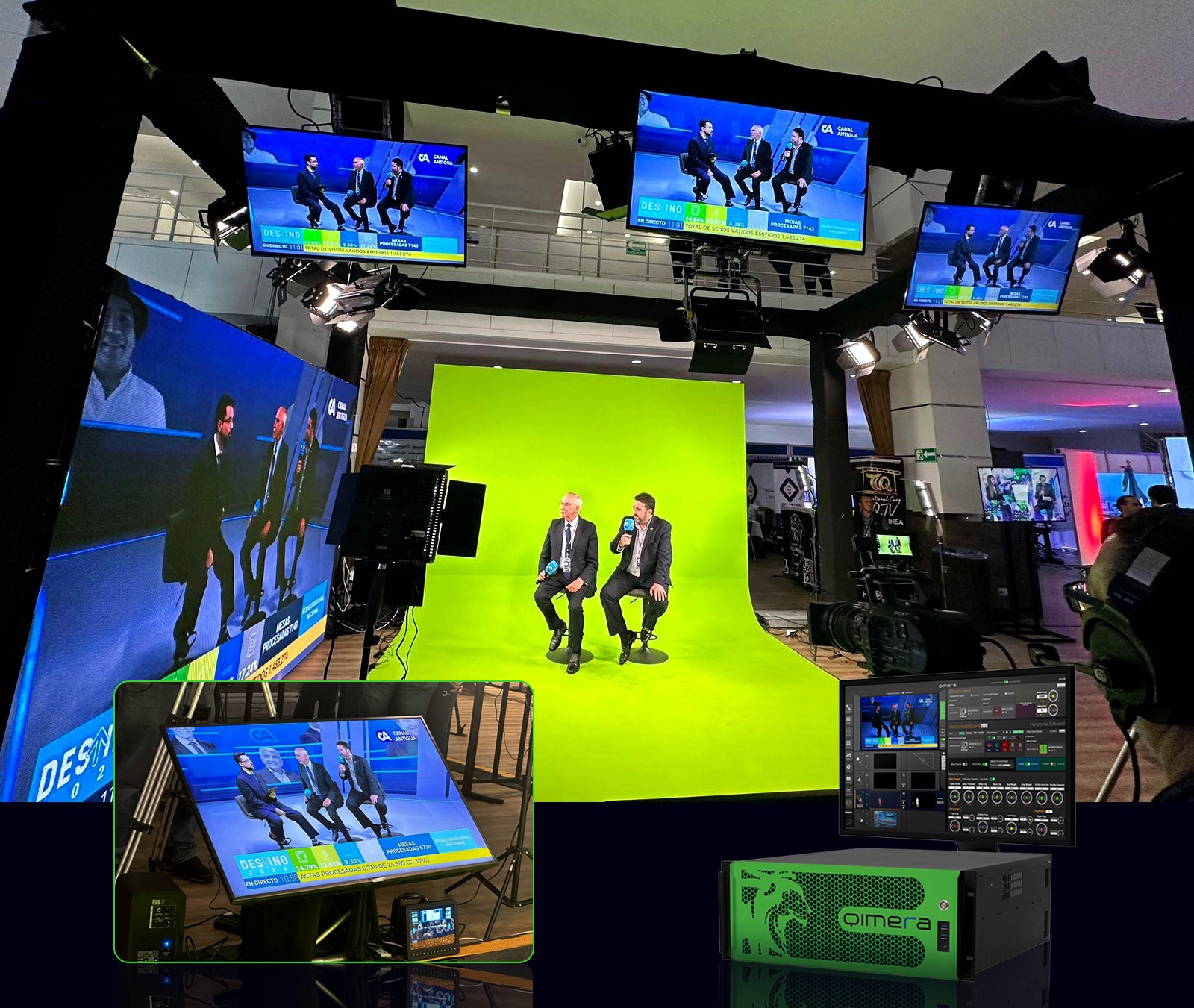
    Qimera is a real-time 3D compositing tool that allows content creators to utilize advanced virtual sets anywhere. New for IBC, ENCO will present Qimera’s integration with Unreal Engine 5.6, delivering higher quality graphics through more effective utilization of hardware resources. That includes improved GPU-driven performance to improve stability and strengthen precision while building scenes and managing live productions.

    Unreal Engine 5.6 also improves upon previous advancements in streamlined performance capture and cinematic rendering introduced within Qimera’s virtual environments in a previous software release. A new suite of integrated tools offers better control of production and pipelines and improves 3D rendering and, with increased luminance for more realistic reflections and lighting. Enhanced virtualized rendering adds to the impression of realistic environments through its production of crisper and more realistic images.

    As broadcasters embrace increasingly efficient tools to optimize virtual production workflows, Qimera now supports direct integration with PTZ cameras, robotic jibs, and pedestals through the VISCA protocol. This enables precise control and automation of camera movements from within the Qimera interface, eliminating the need for external controllers. By centralizing robotic camera operations in the same environment as the virtual production system, operators can reduce setup complexity, improve synchronization, and lower overall production overhead.

    ENCO has also updated Qimera’s live data capabilities, including automating graphics feeds with its MOS Listener for newsrooms. The application monitors incoming names, titles, graphics and other media objects for immediate display within varied Qimera environments.  Qimera’s real-time 3D charts and graphs can be generated in Augmented Reality with no green screen and intermixed with live camera feeds, and a newly expanded library of 3D visualization charts extends the possibilities of AR/VR applications within its live production workflow.

    Visitors to ENCO’s stand will have the opportunity to step into a streamlined Qimera’s production environment featuring green screen and 3D camera tracking technology (8.C76), and experience Qimera’s workflow from creation to through to visual presentation.

    “Qimera sets come to life quickly with an intuitive workflow and general ease of use that makes single operator use a genuine reality,” said Ken Frommert, President, ENCO. “With compositing tools built with modern, automated production workflows in mind, users of any skillset can quickly incorporate highly advanced virtual sets and real-time augmented reality graphics thanks to a quick learning curve. Once familiar, Qimera’s virtual universe opens to wherever the content creator wishes to go. It’s possibilities are endless.”

  • swXtch.io Innovation Changes the Game for SRT Distribution

    swXtch.io Innovation Changes the Game for SRT Distribution

    swXtch.io is revolutionizing SRT workflows with its new SRTx Gateway, designed specifically for live event productions. Unveiled at IBC2025, this software-based solution boosts stream density and simplifies network configurations. It supports SRT, JPEG-XS, ST 2117-1, and ST 2110 workflows, making it an ideal fit for remote production, distribution, and monitoring. The gateway’s flexibility allows for deployment both on-premise and in the cloud, offering cost-effective, high-quality solutions for large-scale productions like live sports and virtual productions.

    Additionally, swXtch.io introduces the cloudSwXtch platform and its wXcked Eye user interface, providing a comprehensive network map to manage and configure SRT streams easily. This enhances visibility and control over high-bandwidth workflows, helping IT professionals streamline their infrastructure. With swXtch.io’s breakthrough, users can optimize their broadcast operations while reducing hardware dependency.

    swXtch.io has amplified its support for SRT workflows with a new specialized gateway solution primarily targeted at the live event market. To be introduced at IBC (Stand 1.A71 and 14.A70), the new software-based SRTx Gateway from swXtch.io uses the inherent strengths of the SRT transport protocol for robust content protection across public internet and 5G connections, and leverages the company’s networking expertise to enable the highest stream density for an SRT gateway on the market. Further, swXtch.io allows customers to deploy as many SRTxGateway instances as they like wherever they require – either on-prem or in the cloud. Users are only billed a simple rate per hour for each stream that enters or exits the gateway.

    swXtch.io has effectively applied its advanced multicast technology to SRT transport to enable hundreds of broadcast-quality compressed video workflows, such as H.264 or HEVC, through a single cloudSwXtch network. Comparatively, the same volume of high-bandwidth workflows would typically require multiple separate SRT gateways to achieve the same high-quality, low-latency throughput – a substantial reduction of networking infrastructure for large-scale productions like live sports, as well as emerging virtual production workflows.

    swXtch.io’s new SRTx Gateway will also support JPEG-XS, ST 2117-1 (VC-6), and uncompressed ST 2110 workflows – an industry first breakthrough that provides exceptional value for remote production, distribution and monitoring operations.

    “SRT is the de facto standard for mobile content producers and other REMI operations due its transport reliability and ease of use,” said Brent Yates, CEO, swXtch.io. “We are advancing the possibilities of SRT’s video and audio agnostic capabilities by utilizing our proven technology to carry an array of formats, codecs and resolutions into and through the cloud in numbers never achieved, while also evolving SRT’s point-to-point connectivity into a switched protocol. It is not only highly reliable and efficient operationally, but a simple and effective drop-in replacement for multiple separate, existing SRT gateways.”

    swXtch.io will also demonstrate how cloudSwXtch simplifies SRT stream configuration while offering complete observability of SRT streams through its wXcked Eye user interface. wXcked Eye provides users with a network map that populates all stream views and channel views, along with flexible parameters for how each customer configures and looks at their broadcast networks. For a customer sending SRT workflows from cameras, satellite, encoding and other sources into and through cloudSwXtch, wXcked Eye provides complete control to configure and manage the many different protocols and conversions required for reliable, scalable throughput.

    The swXtch.io will demonstrate its new SRTx Gateway and other on-prem and cloud innovations from the cloudSwXtch family at the Bridge Technologies and Microsoft stands at IBC2025, which takes place September 12-15 at the RAI Amsterdam.

  • The Sennheiser Group at IBC 2025

    The Sennheiser Group at IBC 2025

    At IBC 2025, the Sennheiser Group will showcase its latest audio solutions designed to enhance professional media production and entertainment experiences. Highlights include new products from Neumann, like the MKH 8018 stereo shotgun microphone, along with the groundbreaking Spectera wireless system and SoundBase, an innovative RF planning tool. The group will also celebrate its 80th anniversary by merging historical audio milestones with cutting-edge technology, offering immersive audio demos and hands-on experiences at their booth.

    Visitors can explore a range of advanced solutions for broadcasting, including Neumann’s immersive 7.1.4 studio setup, and the revolutionary AMBEO 2-Channel Spatial Audio live renderer, which enables stereo broadcasts with immersive sound. Sennheiser and Merging Technologies will also display their powerful audio tools, from the Pyramix DAW to the Merging Anubis interface, demonstrating how their tech can streamline workflows and enhance live production.

    At IBC 2025, the Sennheiser Group will be showcasing its audio solutions for the creation of professional media content and entertainment experiences. Visitors to stand 8D50 in the Audio Hall will be able to see and experience the group’s audio highlights, encompassing solutions for recording, monitoring and playout, including some new launches from Neumann.

    The best from past and present

    Celebrating the company’s 80th anniversary, the Sennheiser showcase plays with the fascinating contrast between historical images from Sennheiser’s rich broadcast past and the latest advances in audio technology, including the wideband Spectera wireless ecosystem and narrowband EW-DX systems.

    From past to present: Sennheiser mikroport transmitter from the 1950s and today’s Spectera bidirectional SEK bodypack
    From past to present: Sennheiser mikroport transmitter from the 1950s and today’s Spectera bidirectional SEK bodypack

    MKH 8018 stereo shotgun completes the MKH 8000 series

    Following on from the Sennheiser MKH 8030 figure-of-eight microphone, broadcasters and filmmakers can now discover the latest addition to Sennheiser’s MKH series of RF condenser microphones, the MKH 8018 stereo shotgun microphone. Providing flexibility for audio engineers, the climate-proof, rugged shotgun microphone features three switchable stereo modes: MS stereo, for step-free adjustment of spatial imaging, and wide or narrow XY stereo, which are premixed in the MKH 8018 with settings that were fine-tuned and verified in multiple user field tests. An integrated -10dB pad, broadcast-friendly frequency response of 40 – 20,000 Hz, and a compact, lightweight aluminium housing round off this exceptional pro microphone.

    The Sennheiser MKH 8018 stereo shotgun microphone with three selectable stereo modes
    The Sennheiser MKH 8018 stereo shotgun microphone with three selectable stereo modes

    SoundBase, the world’s first brand-neutral RF planning tool

    The Sennheiser team are delighted to welcome SoundBase as a guest, and will be demoing their app, which is the world’s first universal wireless audio management software.

    To coordinate a production’s wireless mics and monitors today, RF managers and monitor engineers still need to handle multiple software tools to set up the wireless brand by brand.

    SoundBase addresses these fragmented workflow challenges that have long plagued the industry.

    Developed by audio veterans Matt Dale and Donny Kuser, the app integrates with equipment from all major manufacturers, eliminating the need to switch between multiple applications, particularly during critical production moments. It streamlines wireless coordination, centralizes communication, and enables seamless remote collaboration.

    SoundBase works with wireless systems from every major manufacturer, providing the audio team with a single, time-saving and efficient workflow
    SoundBase works with wireless systems from every major manufacturer, providing the audio team with a single, time-saving and efficient workflow

    Spectera and SoundBase demonstrations

    The SoundBase RF planning tool and Spectera, the world’s first bidirectional wideband wireless ecosystem, will be demoed on the Friday, Saturday and Sunday of the show:

    • Spectera demo sessions at 11 a.m. and 2 p.m.
    • SoundBase demo sessions at 12 noon and 3 p.m.

    Visitors who cannot make it to these slots are welcome to join us for ad hoc presentations at stand 8D50.

    Networked Neumann and Merging areas

    Neumann will showcase its range of studio monitors in a dedicated studio area featuring a 7.1.4 immersive setup. This includes a brand-new subwoofer with multichannel bass management – to be launched at IBC!

    Of course, Neumann will also present a variety of its microphones, including the BCM 104 broadcast mic, capsule heads for wireless systems, MCM Miniature Clip Mics, TLM 102 and TLM 107 as well as a selection of its legendary classics, such as the U 87 Ai, U 67, U 47 fet and M 49 V. And you can also meet another legend, the KU 100 binaural head, now in its 34th year and still the easiest way to produce stunningly realistic immersive audio.

    Something’s coming from deep below…
    Something’s coming from deep below…

    As part of the immersive studio/OB van area, Merging Technologies – part of Neumann – will showcase the Pyramix 15 DAW, along with the Hapi Mk III modular audio interface. The desktop audio interfaces Merging Anubis and Neumann MT 48 will also be demonstrated, including recently added OSC control capabilities, allowing remote controlling fader moves and other parameter changes via third-party hardware controllers.

    Running in a Ravenna AES 67 network, the studio area links to a second demo area of the Neumann/Merging showcase, which is on a Dante AES 67 network. Here, visitors will be able to experience Neumann’s new RIME plug-in, enabling immersive monitoring using NDH 20 and NDH 30 headphones.

    Also demonstrated will be Merging’s state-of-the-art Ovation playout system and show sequencer. Version 11, which was recently released, introduces a bold new design with a refined dark-mode interface and streamlined usability. The updated, fully customizable mixer, panner, and renderer allows users to tailor busses, strips, and aux channels to any workflow – whether for stereo, multizone, or immersive formats.

    AMBEO 2-Channel Spatial Audio: Real-Time immersive rendering for stereo broadcasting

    Delivering immersive audio experiences without segmenting the audience or complicating the signal chain remains a key challenge for live broadcasters. The AMBEO 2-Channel Spatial Audio live renderer solves this issue by enabling real-time rendering of immersive content into a stereo-compatible AMBEO format. The two-channel output retains spatial depth and localisation cues, optimised for playback on any stereo system, and improves voice intelligibility — no additional decoding or hardware required.

    Powered by proprietary immersive audio algorithms, AMBEO generates a hardware-agnostic, downstream-compatible signal that preserves the creative intent and immersive quality of the original mix. Broadcasters and streaming providers can maintain the stereo delivery path while offering a significantly enhanced listening experience.

    Visitors can experience this technology embedded on a Merging ANUBIS device, showcasing low-latency performance and seamless integration into existing live production workflows.

    The AMBEO 2-Channel Spatial Audio live renderer unlocks investments into surround and immersive content for all viewers. Pictured is the renderer interface for finetuning the spatially enhanced two-channel mix, controlled via the standard Anubis remote control software
    The AMBEO 2-Channel Spatial Audio live renderer unlocks investments into surround and immersive content for all viewers. Pictured is the renderer interface for finetuning the spatially enhanced two-channel mix, controlled via the standard Anubis remote control software
  • BHV Brings First Production Units of SportsBox to IBC 2025

    BHV Brings First Production Units of SportsBox to IBC 2025

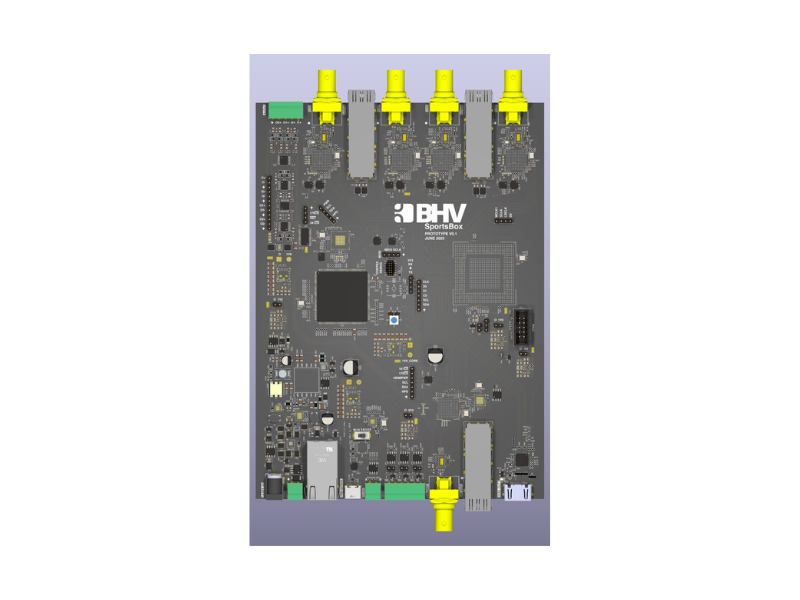
    BHV is set to unveil the first production units of SportsBox, a compact, remote vision mixer and picture processor, at IBC 2025. Measuring just 17 x 22 x 3 cm, SportsBox offers impressive 4K/4:2:2 video performance with 4-channel 12G-SDI inputs and embedded audio, making it ideal for demanding environments like motorsport vehicles. This small but powerful unit enables real-time monitoring and switching of all four video channels over a single baseband link, ensuring seamless, high-quality broadcasts.

    Designed with a software-defined architecture, SportsBox allows for future updates such as HDR support and IP video transport. With its field-ready build and lightweight design, it marks the beginning of a new series of products from BHV, tailored for field production and OB applications. Attendees at IBC 2025 can check out the device in action at Stand 10.B10 and see what’s next for BHV in sports broadcasting.

    BHV, renowned for its design and engineering expertise behind many of broadcast’s leading names, returns to IBC with the first production units of SportsBox, its own-branded compact remote vision mixer and picture processor.

    Measuring just 17 x 22 x 3cms, SportsBox delivers big performance from a small package, offering full 4-channel 12G-SDI inputs supporting 4K/4:2:2 video and embedded audio. Designed for demanding environments such as vehicle onboard motorsport, SportsBox is uniquely capable of simultaneously transporting all four video channels over a single baseband link – such as COFDM – providing a gallery preview of four cameras per vehicle, ensuring maximum viewer engagement.

    BHV CTO Bill Garrett says “More and more sponsors are demanding visibility in sports coverage and that means 4K is now a necessity. Previously, 4K meant cumbersome installations that were often rejected by the sporting bodies. Now BHV offers switching and processing, including PIP, in a compact, field-ready unit weighing just a few hundred grams.”

    At its heart, SportsBox is based on software-defined architecture that allows deployment customisation with a feature roadmap that includes HDR support and IP video transport.

    The launch of SportsBox marks the first in a series of branded products BHV is bringing to field production and OB applications. IBC 2025 attendees can see the production-ready SportsBox in action at Stand 10.B10 (L2Tek) and learn about what’s coming next from BHV.