Category: Display

  • Sony Brings Simplicity to Enterprise Display Management with a Layered Approach

    Sony Brings Simplicity to Enterprise Display Management with a Layered Approach

    As AV systems become more connected and increasingly intertwined with enterprise IT, managing displays has evolved into far more than an installation task. Today’s organizations expect their display infrastructure to be easy to deploy, remotely manageable, and capable of integrating seamlessly with broader workplace technology ecosystems. That shift is driving manufacturers to develop solutions that simplify every stage of a display’s lifecycle, not just its initial setup.

    At InfoComm 2026, Sony showcased how its Professional BRAVIA platform is addressing those needs through a multi-level management strategy that scales from quick deployments to enterprise-wide device oversight. Rather than introducing a single management solution, Sony demonstrated a connected ecosystem designed to reduce installation time, improve operational visibility, and support long-term system reliability.

    Reducing Complexity from Day One

    One of the biggest challenges in enterprise AV deployments is consistency. Whether installing ten displays or hundreds across multiple locations, manually configuring each device increases deployment time and leaves room for configuration errors.

    Sony’s answer is its Device Provisioning Tool, a free solution built around its Zero-Touch Provisioning capability. Instead of configuring displays individually, installers create deployment profiles that automatically apply preferred settings during installation.

    “Essentially what we’re doing is creating different profiles for each display to ensure that every single time you’re going to your install, it’s set up correctly,” said Kianna Pompa of Sony Electronics.

    The workflow is intentionally straightforward. Once a Professional BRAVIA display connects to the network, it generates a QR code that technicians scan using a smartphone. Because the provisioning process is HTML-based, no additional mobile application is required. Within approximately ten minutes, the display is configured according to the predefined profile, helping installers eliminate repetitive setup tasks while ensuring every deployment follows the same standards.

    For AV integrators managing large-scale rollouts, the ability to automate configuration not only saves time but also reduces costly return visits caused by missed settings or inconsistent installations.

    Shifting from Reactive to Proactive Management

    Deployment is only one phase of a display’s lifecycle. Once systems are operational, organizations need tools that allow IT teams and AV managers to monitor devices remotely, identify issues early, and perform maintenance without traveling onsite.

    Sony’s Device Management Platform is designed to address that operational need.

    The centralized platform provides administrators with visibility into connected Professional BRAVIA displays through a single dashboard. From there, organizations can monitor device status, receive alerts, perform remote diagnostics, install software packages, and manage firmware updates as they become available. Sony said firmware update support is planned for a future release, expanding the platform’s remote management capabilities even further.

    The platform also supports preloading digital signage software and content management integrations before displays are deployed, helping organizations accelerate installation while maintaining consistent configurations across multiple locations.

    For enterprises operating conference rooms, classrooms, retail environments, or digital signage networks, that level of centralized oversight can significantly reduce downtime while improving support response times.

    A Management Strategy That Extends Beyond Displays

    Enterprise AV environments rarely rely on a single manufacturer’s products. Displays, conferencing systems, microphones, cameras, and control platforms all need to work together, making interoperability increasingly important.

    Recognizing that reality, Sony continues expanding its ecosystem through partnerships with leading AV technology providers.

    One of the integrations highlighted at InfoComm was Crestron XiO, enabling Sony Professional BRAVIA displays to be monitored and managed alongside other enterprise technologies through a unified dashboard.

    Rather than switching between multiple management platforms, administrators can oversee display health, collect telemetry, remotely reboot devices, and manage supported updates within the same interface used for other connected AV equipment.

    “You could be an end user, where you’re controlling your whole organization, or you can be an integrator and provide this as a service,” Pompa explained.

    That flexibility reflects a growing trend across the AV industry, where managed services continue to become a larger part of system integration. For integrators, centralized management platforms create opportunities to provide ongoing remote support long after installation is complete. For end users, they simplify operations while reducing dependence on onsite service calls.

    Beyond Sony’s displays, unified management platforms can also provide visibility into devices from manufacturers such as Shure, Cisco, and Logitech, giving organizations a broader view of their AV infrastructure from a single interface.

    Supporting the Entire Display Lifecycle

    Sony’s approach reflects a broader evolution taking place across enterprise AV. Success is no longer measured solely by display quality or hardware performance. Increasingly, customers are evaluating how easily technology can be deployed, maintained, updated, and integrated into existing IT workflows.

    By offering multiple levels of management, from free zero-touch provisioning to centralized monitoring and ecosystem integrations, Sony is positioning Professional BRAVIA displays as connected enterprise devices rather than standalone screens.

    As organizations continue investing in hybrid workplaces, digital signage, and collaboration spaces, efficient lifecycle management is becoming a competitive advantage. The ability to deploy displays faster, monitor them proactively, and manage them remotely helps reduce operational costs while improving reliability across the entire AV environment.

    InfoComm 2026 made one thing clear: the future of professional displays isn’t just about what’s on the screen, it’s about how intelligently those displays can be managed throughout their lifecycle.

  • Anthony James Partners Supports Technology Modernization at Ohio State’s Schottenstein Center

    Anthony James Partners Supports Technology Modernization at Ohio State’s Schottenstein Center

    Anthony James Partners (AJP), a technology consulting firm specializing in sports and entertainment venue systems, is providing design, procurement, and construction administration services to support a comprehensive technology modernization at Ohio State University’s Jerome Schottenstein Center. The project includes upgrades to the arena’s video display systems and a recently completed audio system renovation designed to enhance fan engagement and support the venue’s diverse event schedule.

    “We’ve seen how electric the atmosphere at the Schottenstein Center can be,” Ross Bjork, Senior Vice President & Wolfe Foundation-Eugene Smith Endowed Director of Athletics, said. “The last two men’s basketball games last year, the Michigan series for men’s hockey and the NCAA Tournament games for women basketball were prime examples a great environment for the fans and the athletes and we want to continue to build on those experiences. The enhancements to the video boards will deliver sharper visuals, allow for more dynamic content, and provide greater connectivity to the action. We want the fans to feel immersed in every moment, from the time they walk in the door until end of the game.”

    LED DISPLAY SYSTEM UPGRADES

    The project includes a new center-hung display system featuring four high-resolution 3.7mm LED display faces configured in a continuous convex design, integrated underbelly displays, four corner displays, a continuous 360-degree ribbon display, and 43 upper and lower vomitory displays located throughout the arena. Together, the upgrades provide more than 7,200 square feet of LED display technology and nearly 64 million pixels throughout the venue.

    Anthony James Partners (AJP), working alongside Osborn Engineering, was selected by Ohio State in 2025 to lead the planning, design, procurement, and implementation oversight for the project. Daktronics was later selected as the LED display manufacturer and installation vendor.

    The new center-hung replaces a display installed in 2006 that featured four 16-foot by 9-foot video displays. The new design increases the primary display area from approximately 576 square feet to more than 1,900 square feet (a 234% increase) while delivering more than 2.5 times the pixel density through 3.7mm LED technology.

    Integrated into the center-hung are two high-resolution underbelly displays that provide enhanced viewing opportunities for guests seated directly beneath the structure. Four corner displays measuring nearly 38 feet wide by 12 feet tall further expand visibility throughout the seating bowl.

    A continuous ribbon display extends approximately 951 linear feet around the arena, complemented by 43 upper and lower vomitory displays that enhance communications, event presentation, and sponsorship opportunities throughout the venue.

    “We’ve had the opportunity to work with Ohio State on technology initiatives for many years, and we’re grateful for the trust they continue to place in our team,” said Dave Watroba, Managing Director at Anthony James Partners. “The most successful projects begin long before equipment is purchased. Understanding the client’s objectives and developing the right strategy at the outset is often what determines a project’s success. The Schottenstein Center modernization is a great example of that process in action.”

    Installation of the LED Displays is scheduled to be completed by September 2026 ahead of the upcoming basketball and hockey seasons.

  • Samsung Technology Powers the Health Security Operations Center Monitoring for Infectious Disease Risks During 2026 World Soccer Games

    Samsung Technology Powers the Health Security Operations Center Monitoring for Infectious Disease Risks During 2026 World Soccer Games

    Samsung Electronics America, Inc., today announced its participation in a coalition to protect public health during the 2026 World Soccer Games. As part of this effort, Samsung has provided the pioneering Health Security Operations Center (HSOC) with display and mobile technology solutions, and AT&T has delivered the secure connectivity, wireless mobility, and networking infrastructure that helps power the HSOC ecosystem. Together, these solutions enable the movement of critical data and support near real-time collaboration among participating organizations.

    Samsung has equipped the HSOC with technologies from across its ecosystem, including smartphones, tablets, PCs, wearables, smart signage, interactive displays, audio solutions and monitors, while AT&T provides the secure wireless and networking foundation that helps keep those devices and systems connected. This technology helps researchers and teams visualize data, stay organized, collaborate in real time, and support rapid responses.

    “Public health teams need technology that provides them with visibility into what’s happening, and allows them to share information quickly and coordinate with confidence,” said Todd Maxwell, Director of Regulated Business Development, B2B at Samsung Electronics America. “Samsung’s contribution to the Health Security Operations Center reflects how connected devices, displays and the Knox security platform can support faster situational awareness and help experts act on complex information in high-stakes environments.”

    “In environments where timely information can drive critical decisions, organizations depend on secure, resilient connectivity to keep people, devices and data connected,” said Nazanin Hoglund, Assistant Vice President of Mobility Devices and Converged Products, AT&T Business. “AT&T is proud to support the Health Security Operations Center with wireless connectivity and secure networking services that help researchers, healthcare organizations and public health experts collaborate, share information and respond more effectively in virtually real time.”

    Equipping Health Security Teams with Connected Tools for Real-Time Collaboration

    The HSOC brings together data from wastewater monitoring, hospitalizations, real-time health reports, environmental monitoring, open-source intelligence and international health alerts. Based on Samsung’s proven track record of providing mobile technology that bridges situational awareness gaps in the public safety sector, combined with AT&T connectivity, is helping to support the operational environment that teams rely on to assess information and coordinate action.

    The HSOC features a connected technology ecosystem that empowers HSOC analysts to monitor, analyze, report and coordinate throughout the 2026 World Soccer Games. Large-format displays and monitors allow teams to view dashboards, situational updates and emerging public health trends across the operations center, while Samsung smartphones, tablets, PCs, and wearables enable staff to stay connected and productive as they develop reports and support public health partners. HARMAN, a Samsung subsidiary, also provided audio solutions, including JBL speakers and headphones, to support audio needs and clear voice communication for collaboration across teams.

    Building on years of experience supporting control rooms and command centers, Samsung display technology empowers organizations to seamlessly collect data, collaborate and view information using crisp, high-detail visuals. From QMC Smart Signage and Interactive Displays to commercial monitors, Samsung displays provide response teams with the 24/7 enhanced performance needed to streamline operations and maintain situational awareness. It is why organizations across industries – from government to healthcare – rely on Samsung end-to-end solutions to support mission-critical operations around the clock.

    “The Health Security Operations Center depends on timely information, multidisciplinary coordination and the ability to translate complex data into actionable insights,” said HSOC director Rebecca Katz, PhD, MPH, a professor at Georgetown University. “Technology, like that provided by Samsung, helps create the connected environment our teams need to execute our work.”

    “Having built and scaled telehealth operations, I have seen firsthand how technology can drive agility, innovation, and collaboration,” said Ethan Booker, MD, FACEP, vice president of care innovation at the MedStar Institute for Innovation and chief medical officer for telehealth at MedStar Health. “The Health Security Operations Center shows how a technology-forward initiative can help those gathering do so safely and securely.”

    Supporting Secure, Data-Driven Health Operations

    Samsung Knox, Samsung’s government-grade mobile security platform, supports a secure technology environment for participating teams working across connected devices. As the HSOC analyzes multiple sources of health-related information and distributes daily situation reports to over 350 public health-related organizations and 1,000 individuals, Knox helps organizations manage devices, protect sensitive workflows, and maintain confidence in the technology supporting mission-critical public health operations.

    Bridging Science, Public Policy and Innovation

    The HSOC brings together more than 40 organizations spanning academia, public health, technology, and communications. This includes Samsung’s partner, Verily Health, which is testing wastewater samples for pathogens such as SARS-CoV-2, influenza, RSV, norovirus, and measles, and aggregating wastewater data from additional sources using its trusted research environment, Verily Workbench.

    “The future of public health readiness depends on the ability to bring people, data and technology together in practical ways,” said Stephen Gillett, CEO of Verily Health. “By supporting Georgetown, MedStar Health, and the broader HSOC coalition, Samsung is helping provide the connected tools teams need to turn information and insight into coordinated action.”

    This expands on Samsung’s existing collaboration with Verily Health. Earlier this year, the two companies announced that they would bring together Samsung’s Galaxy Watch 8 with Verily Health’s precision health platform, Pre, to provide an integrated solution. This joint offering aims to accelerate research for life sciences and government customers by combining advanced health analytics with consumer-grade wearable data.

  • CSX Transportation Illuminates Jacksonville Skyline with Nanolumens Performance Series Displays

    CSX Transportation Illuminates Jacksonville Skyline with Nanolumens Performance Series Displays

    CSX Transportation, headquartered in Jacksonville, Florida, is one of the nation’s largest freight railroads, operating over 20,000 miles of track across 23 states, the District of Columbia, and two Canadian provinces. Headquartered in Jacksonville, Florida, the national transportation provider is based in a 251-foot high-rise in the city’s Northbank district, overlooking the St. Johns River. Built in 1960, the CSX Transportation Building has become a central fixture of the Jacksonville skyline.

    CSX recently unveiled a custom LED sign atop its headquarters, featuring the company’s modern logo alongside a locomotive image. Phase Integration, a national commercial technology solutions provider, was selected to design, manage and integrate the project. Since 2016, Phase Integration has delivered a holistic approach to office technology for businesses across Jacksonville.

    Building on prior success with Nanolumens, Phase Integration turned to the LED manufacturer for this highly visible installation. The two companies had previously collaborated on complex projects, including Brightline Station in Miami, and Phase Integration trusted Nanolumens to provide the engineering expertise, design flexibility and reliability required for a one-of-a-kind rooftop display.

    “One of the main reasons we chose Nanolumens was due to the complexity of the project,” said Casey Morris, senior director of operations for Phase Integration. “The engineering support and resources we knew we’d receive from them were a huge factor for us. The project at CSX Transportation Building was truly one of a kind, and Nanolumens is the go-to for anything custom when it comes to LED solutions.”

    Phase Integration previously partnered with Nanolumens on the Brightline Station in Miami, where custom LED displays were engineered for a three-story column set at a 15-degree pitch. The installation at the CSX Transportation Building, however, was even more complex. “Unlike Brightline Station, which was mostly straight lines, this installation includes four distinct rooftop signs that define the Jacksonville skyline,” explained Morris. “There’s not another building in town that has anything like it.”

    From concept to completion, Nanolumens collaborated closely with Phase Integration to bring CSX’s vision to life. “When a customer says, ‘We want our logo on top of our building next to a train – can it be done?’ our answer is always ‘Yes,’” said Morris. “Nanolumens collaborated closely with us on renderings, logo files and digital simulations, which enabled our clients to see their vision in advance. If we compare the renderings to the final installation today, they’re almost identical.”

    Reliability was another critical factor. Morris explained, “Nanolumens is an industry leader when it comes to warranties. Their six-year warranty for indoor displays and three-year warranty for outdoor displays gives us confidence the technology will perform, not just at installation but throughout its lifecycle.”

    The new signs also offer flexibility for special events and community engagement. Most days, the displays highlight CSX’s core branding, but they can be adapted for occasions like Jaguars games, when teal colors and a jaguar graphic take over, or 4th of July, when the American flag is prominently featured. “The new signs are more than branding. They provide CSX with a flexible canvas for community engagement,” said Morris.

    Morris added, “The client is absolutely thrilled with the finished product – over the moon, in fact.”

    Nanolumens’ Performance Series played a pivotal role in bringing CSX and Phase Integration’s ambitious vision to life, delivering a final product that is visually striking and resilient. Designed for demanding outdoor environments, the Performance Series offers seamless integration into existing architecture with versatile format options and the choice between cabinet or frame-and-skin designs.

    Each cabinet is fully IP67-rated, ensuring reliable protection against dust, water and harsh weather conditions. Built with premium components, the displays are engineered for durability and come backed by an industry-leading three-year extendable warranty. With the Performance Series, CSX Transportation gained a high-performance solution capable of withstanding the elements while showcasing its brand in a dynamic, modern way.

  • Philips Unite LED brings new energy and seamless collaboration capabilities to government offices with a 135” All In One display solution

    Philips Unite LED brings new energy and seamless collaboration capabilities to government offices with a 135” All In One display solution

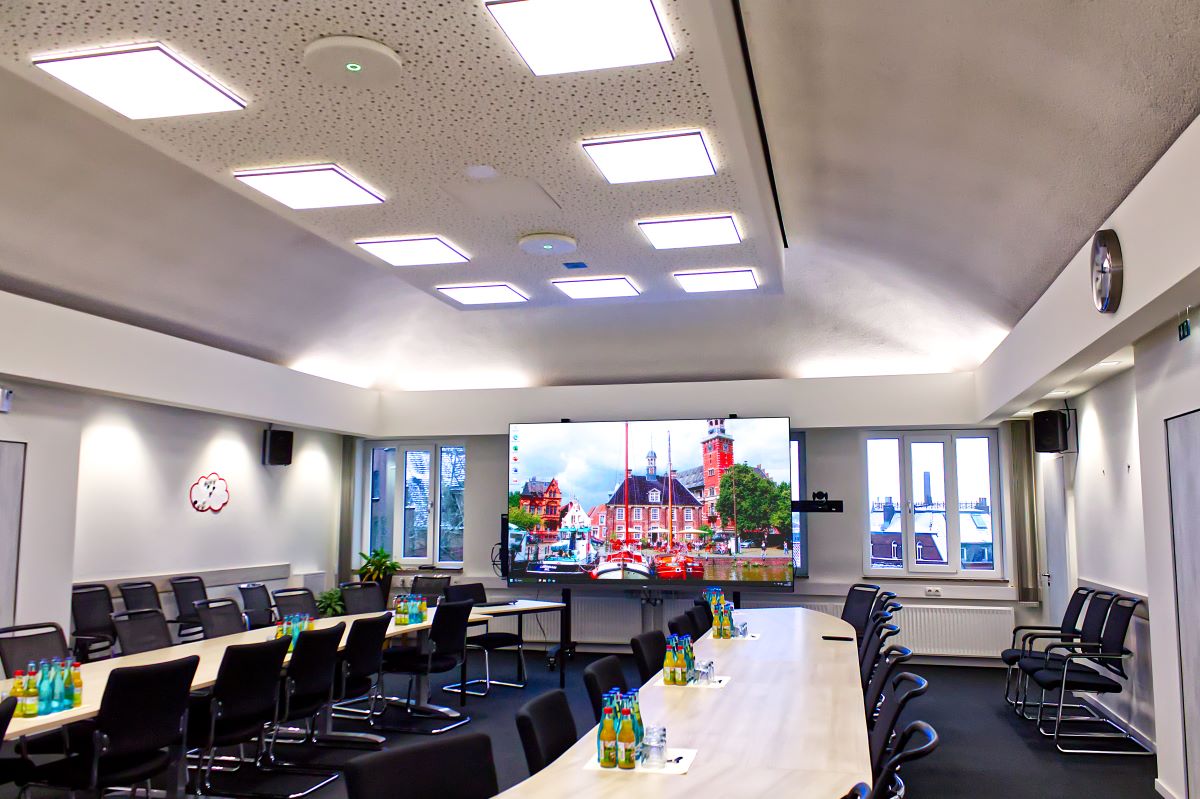
    PPDS, the exclusive global provider of Philips Professional Displays, is excited to announce that its advanced Philips Unite LED 6000 Series All In One solution has been selected to deliver ‘transformational’ meeting room capabilities and experiences at the upgraded Leer Municipal government offices in Germany.

    Leer Municipal – based in the Rathaus – serves as the central administrative hub for the town of Leer, a short drive from the Dutch border in the historic region of East Frisia. It serves as the seat of local government where the mayor and administration oversee key decisions, manage local services, and handle civic matters for the community.

    As part of its ongoing focus on improving operational performance and workplace efficiency, the Leer Municipal team set out to modernise its central meeting room with a new visual solution that leverages the latest innovations in display technology and collaboration functionalities. Working with local integrator, LS IT & Media, the requirements were clear: to take presentations, council work, and hybrid meetings to the next level.

    Future ready

    Concluding extensive fact finding and site visits, the 135” Philips Unite LED 6000 Series All In One display from PPDS was immediately identified as the standout choice to achieve the team’s high expectations and ambitions.

    Built for reliability, the Philips Unite LED 6000 Series AIO – which is designed for fast and hassle free installation – was selected, in part, due to its outstanding image quality, reliability, and focus on energy efficiency and business sustainability.

    With full HD resolution, 900 cd/m² brightness, and a fine 1.5mm pixel pitch, the display delivers outstanding image quality even in bright environments, with even the smallest details – such as numbers on a spreadsheet – presented with crystal clear quality.

    Seamless flexibility, usability, and sustainability

    The rich colour depth, wide viewing angles, and durable design offered by the Philips Unite 6000 Series All In One make it particularly well suited for municipal meeting spaces with demanding visual requirements.

    The integrated media player, broad connectivity options – including HDMI, DisplayPort, USB-C, and audio – and the included wall mounting system ensure flexible use and smooth integration into existing setups.

    Supporting the Leer Municipal team’s focus on sustainability, the 135” Philips Unite LED 6000 Series AIO has been created with business sustainability in mind, consuming less energy versus comparable models, including just 0.5 watts in ‘ultra low’ standby mode. This feature not only helps in lowering operational costs but also supports sustainability goals by reducing environmental impact and total cost of ownership.

    PPDS Partner, LS IT & Media, oversaw the entire process, from planning and component selection through to installation and commissioning, ensuring seamless alignment with the full meeting room solution.

    Advanced audio and video conferencing

    Providing an unmissable and highly versatile centrepiece, the overall solution also incorporates a professional AVer PTZ camera for hybrid collaboration, two Sennheiser TeamConnect Ceiling Medium ceiling microphones for comprehensive room audio coverage, a high performance conferencing PC, and Dante audio technology for lossless signal transmission. Together, these elements create a meeting environment that combines exceptional visual performance with advanced audio and video conferencing capabilities.

    The installation has added significant value for the city of Leer, including enhanced visibility for all participants, seamless hybrid meeting support, clear voice capture without the need for table microphones, and expanded functionality such as recording and AI powered transcription via tools like tucan.ai.

    The modular and scalable AV infrastructure also ensures the system is well prepared for future needs.

    Eckhard Groen, a member of the management team at LS IT & Media, commented: “With the Philips 135” Unite LED wall as the visual centrepiece, a modern, high performance meeting room was created that sets new standards for the Leer Municipal committee work.

    “The high quality image quality of the Philips Unite LED All In One, combined with professional audio and video technology, enables efficient, transparent, and contemporary council work.”

  • Christie earns best-in-class supplier recognition from Lockheed Martin

    Christie earns best-in-class supplier recognition from Lockheed Martin

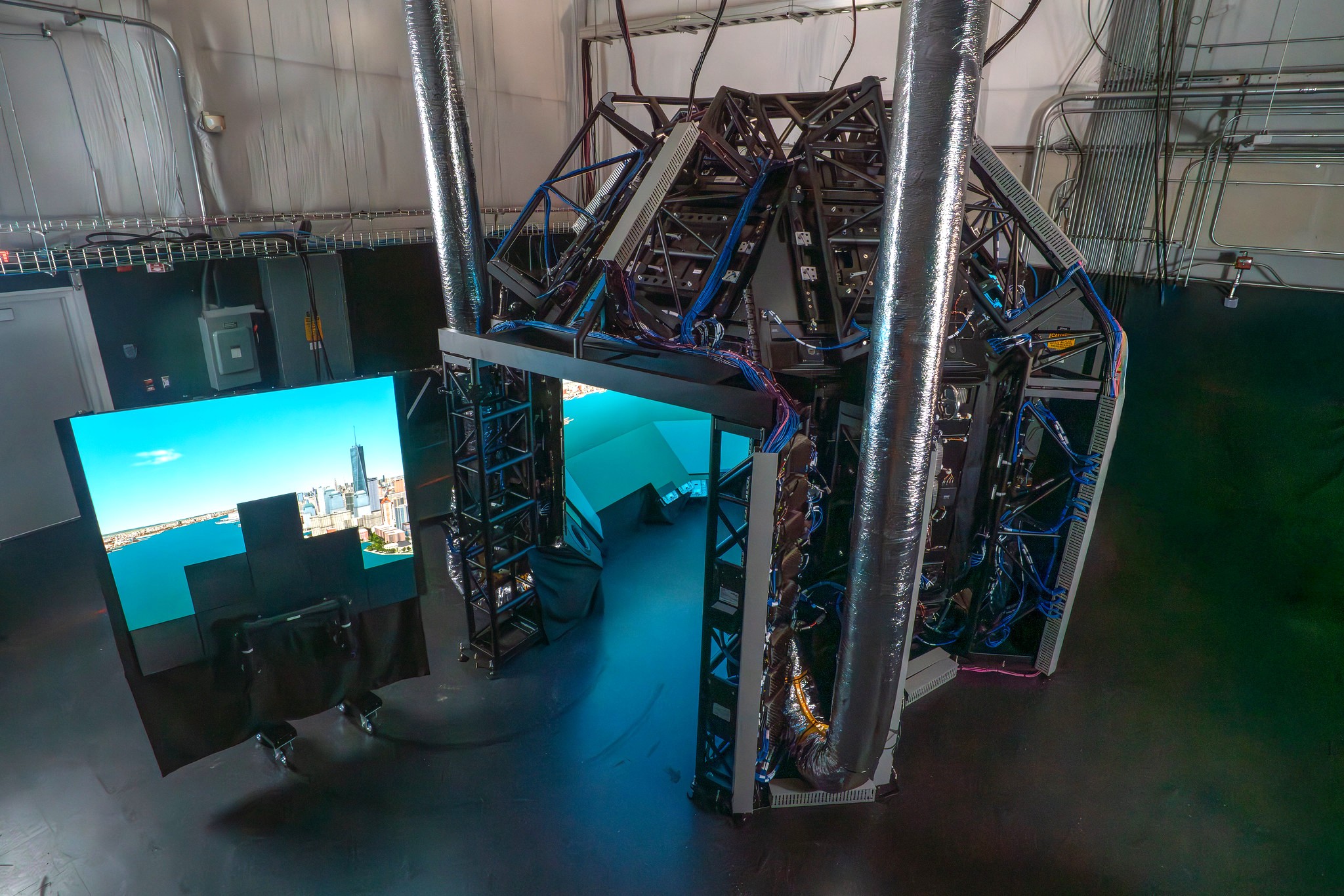
    Christie has been recognized as a 2025 Best-in-Class supplier by Lockheed Martin for its strong performance, innovation, and support of mission-critical programs. The recognition highlights Christie’s role in providing MicroTiles® LED technology for the AMAZE visual display system, an immersive 360-degree training environment designed for F-35 pilot simulation. Built in Canada, the solution delivers high-quality visuals while reducing system complexity compared to traditional projector-based setups.

    The award reflects Christie’s continued commitment to developing advanced visual technologies for demanding simulation and training applications. By working closely with Lockheed Martin, Christie is helping create more efficient, reliable, and immersive training environments that support the evolving needs of defense and aerospace customers around the world.

    Christie® has been named a 2025 Best-in-Class supplier by Lockheed Martin, recognizing the company’s strong performance, innovation, and role in supporting complex, mission-critical programs.

    Christie supplies MicroTiles® LED technology for Lockheed Martin’s AMAZE (Amorphic Appearance Zero-Projector Environment) visual display system. Designed, manufactured and assembled in our world-class centre of excellence facility in Kitchener, Canada, the MicroTiles LED displays form a key component of the AMAZE solution, which powers a full immersive,360-degree training environment for F-35 pilots. By leveraging Christie’s advanced LED technology, the AMAZE system delivers superior visual performance while reducing system complexity and minimizing overall footprint compared to conventional projector-based training environments.

    “We’re proud to be recognized by Lockheed Martin as a best-in-class supplier,” says Michael Phipps, president and chief executive officer, Christie. “This recognition reflects the dedication and expertise of our engineering and operations teams in delivering a high-performance visual display solution that advances simulation and training capabilities. We deeply value our collaboration with Lockheed Martin and remain committed to driving future innovation and success together.”

    In a letter announcing the recognition, Abby Lilly, Chief Supply Chain Officer at Lockheed Martin, highlighted Christie’s contributions, noting the company’s “exceptional operational performance and mission-critical contributions,” as well as its commitment to reliability, innovation, and precision.

    “Your organization’s reliability, innovation, and precision are essential to our mission,” said Lilly.

    This recognition underscores Christie’s role as a trusted partner in delivering advanced visual technologies that support complex training environments and evolving customer needs worldwide.

  • Digital Signage Federation Launches Inaugural Pixel Awards to Honor Excellence and Innovation in Digital Signage

    Digital Signage Federation Launches Inaugural Pixel Awards to Honor Excellence and Innovation in Digital Signage

    The Digital Signage Federation (DSF) has launched the inaugural Pixel Awards, a new annual awards program recognizing outstanding projects, individuals, and innovations across the digital signage industry. With the theme “Where Innovation, Creativity, and Impact Take the Stage,” the awards celebrate excellence in design, technology, integration, audience engagement, and large-scale deployments. Winners will be announced on September 17, 2026, during the DSF Mix and Mingle event at Filoli Gardens in California.

    The Pixel Awards are designed to highlight the business impact of digital signage while recognizing the teams and leaders driving the industry forward. An independent panel of industry experts will evaluate project submissions based on creativity, technical execution, innovation, and measurable results. The program offers AV integrators, technology providers, and end users an opportunity to showcase successful deployments and gain industry recognition.

    The Digital Signage Federation (DSF), the independent, non-profit trade association serving the digital signage, interactive technology, and digital out-of-home industries, today announced the launch of the Pixel Awards, a new annual program celebrating the projects, people, and innovations shaping the future of the industry. The inaugural awards carry the theme “Where Innovation, Creativity, and Impact Take the Stage,” and will be presented September 17, 2026, during the DSF Mix and Mingle at Filoli Gardens in Woodside, California.

    Created to spotlight excellence across the entire digital signage ecosystem, the Pixel Awards go beyond technology alone to recognize the strategy, creativity, and collaboration that make deployments successful. The program aims to elevate the strategic value of digital signage by highlighting real business outcomes, showcasing innovation that pushes the industry forward, and celebrating the people behind the work from emerging leaders to seasoned contributors.

    “Digital signage has become a driving force in how organizations transform customer experiences, achieve business outcomes, and connect physical and digital environments,” said Frank Pisano, Chairman of the Digital Signage Federation. “The Pixel Awards create a shared moment of recognition for our community; a stage where the industry’s best work, and the people behind it, get the acknowledgment they deserve.”

    Award Categories

    The inaugural Pixel Awards feature five project-oriented categories and one individual honor:

    • Showstopper — Best Overall Digital Experience: Exceptional impact through the seamless combination of strategy, technology, design, and audience engagement.
    • Pixel Perfect — Best Visual Design & Creative Execution: Outstanding visual design and creative storytelling that elevates the digital signage experience.
    • Behind the Screens — Best Technical Innovation / Integration: Technical innovation or integration that pushes the boundaries of what digital signage can achieve.
    • Engagement Engine — Best Audience Engagement / Measurable Impact: An initiative that drives meaningful audience engagement and delivers measurable results.
    • Rollout Rockstar — Large-Scale Deployment / Execution Excellence: Excellence in the planning, coordination, and execution of a large-scale digital signage deployment.
    • Industry Illuminator — Individual Excellence / Industry Impact: An individual whose leadership, innovation, and influence are lighting the way forward. Nominees for this community-driven honor are voted on directly by the full DSF membership.

    Judging and Recognition

    Project submissions will be evaluated by an independent panel of respected industry leaders, including Paul Fleuranges, Wayne Rasor, Dominic Desieno, Len Dudis, and Kim Sarubbi. Entrants are asked to tell the story of their work through a project description, the key challenge and innovation involved, and quantified results, supported by high-quality images and a short video. Elaborate production is not required — an authentic explanation from the team is encouraged.

    How to Enter

    Submissions are made through the DSF Judgify platform. The submission portal opened June 1, 2026, and entries close July 31, 2026. Finalists will be announced in August, with winners revealed at the September 17 ceremony. The cost per submission is $275 for DSF members and $400 for non-members. End users may apply for DSF membership at no cost, and all others may apply for pro-rated memberships for the remainder of 2026.

    The awards ceremony is open to the public, though seating will be limited. Finalists will receive reserved tickets, and the Mix and Mingle networking event will be open to all attendees. Complete submission guidelines, judging criteria, and entry details are available at digitalsignagefederation.org/page/pixelawards.

  • Leader provides T&M for global broadcast of Pope Leo XIV’s visit to Barcelona’s Sagrada Família

    Leader provides T&M for global broadcast of Pope Leo XIV’s visit to Barcelona’s Sagrada Família

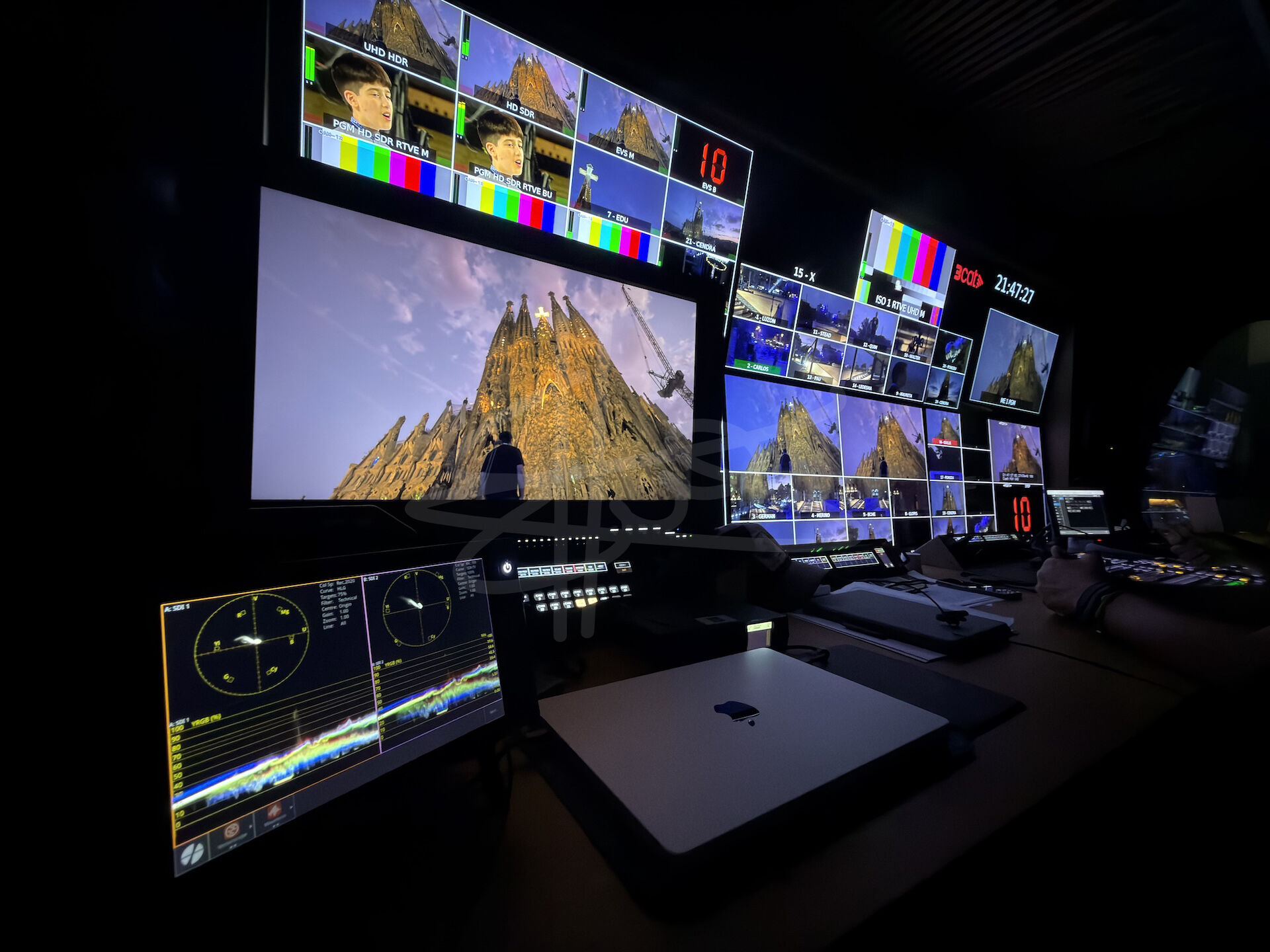
    Test & measurement innovator, Leader Electronics of Europe, is proud to announce that two of its leading products, the PHABRIX Qx rasterizer and LeaderPhabrix LPX500 waveform monitor, were employed during the live production of the recent event held at the Basilica of the Sagrada Família in Barcelona, Spain. Taking place on June 10, the production captured a historic visit by Pope Leo XIV to the church, marking both the centenary of the death of the basilica’s legendary architect, Antoni Gaudí, and the recent completion of the Tower of Jesus Christ.

    The much-loved house of worship has been under construction for 144 years, and it is anticipated that it will be a further decade before it is fully complete. But there is no doubt that the finalization of the Tower of Jesus Christ represents a hugely significant moment; not only is it the Sagrada Família’s centerpiece, but it is also the world’s tallest church tower at 172.5 meters tall.

    Accordingly, expectations were sky-high for the broadcast production of the Jesus Tower inauguration, coinciding with the Holy Father’s visit, which was overseen by the national Catalan broadcaster 3Cat (TV3). Production director Pauli Subira Claramunt worked to realize artistic director Igor Cortadellas’ vision of an event that encompassed both the interior and exterior of the church, and required cinematographic techniques and technologies, some of which – like Sony’s Cinema Line cameras – had not previously been used in a European international UHD/HDR live broadcast.

    “Regardless of the cost that UHD/HDR might have [for an event like this], the importance of the production and the relevance in terms of archival and distribution is so large that it doesn’t really matter if it’s more expensive,” says Hector Sole-Bradshaw Beltran, the broadcast engineering consultant who served as technical director for the project, and who describes his primary hurdle as “how to unify two fields of expertise – the broadcast engineering requirements of Tier One production, and digital cinematography tools.”

    With so many technical challenges in play, it’s not surprising that Sole-Bradshaw wanted to employ some of his enduring ‘go-to’ production tools – including two from the Leader Electronics product range. Indeed, he reveals that he “always brings” his PHABRIX Qx advanced rasterizer to a production, adding that it “surely has a place in any high-end OB deployment in the world. What I tend to do is have a V-Lock battery powering the unit, so I don’t need to have it plugged into mains, and that allows me to move to different places in the engineering footprint and do the required testing and analysis.”

    Sole-Bradshaw also brought along a LeaderPhabrix LPX500 quad 4K-input hybrid IP/SDI waveform monitor, which in this instance was used to display and monitor 4 x 12G-SDI signals (there was no IP element to this production). He notes: “I was able to check a camera anytime during the show or rehearsals, including both HDR and SDR sources. Again, it’s another item of very reliable equipment that helped make the production run smoothly.”

    With a mere two days to accomplish the load-in and set-up, and the architectural and physical constraints of the basilica creating plenty of challenges for the broadcast teams, there was a lot riding on the events of June 10. But Sole-Bradshaw confirms that the production went very well and the Leader T&M equipment certainly played its part, adding: “One of the most difficult things to do nowadays, especially when you take into account different political and religious beliefs, is to arrive at a production that is pleasing to everyone. But by focusing on the building itself, which is outstanding and unique in the world, it was one of those occasions where there was universal acclaim and people were left with a really beautiful memory of the day.”

  • PPDS brings modern luxury and limitless entertainment to historic five star Bellevue Syrene hotel with Philips MediaSuite TV installations

    PPDS brings modern luxury and limitless entertainment to historic five star Bellevue Syrene hotel with Philips MediaSuite TV installations

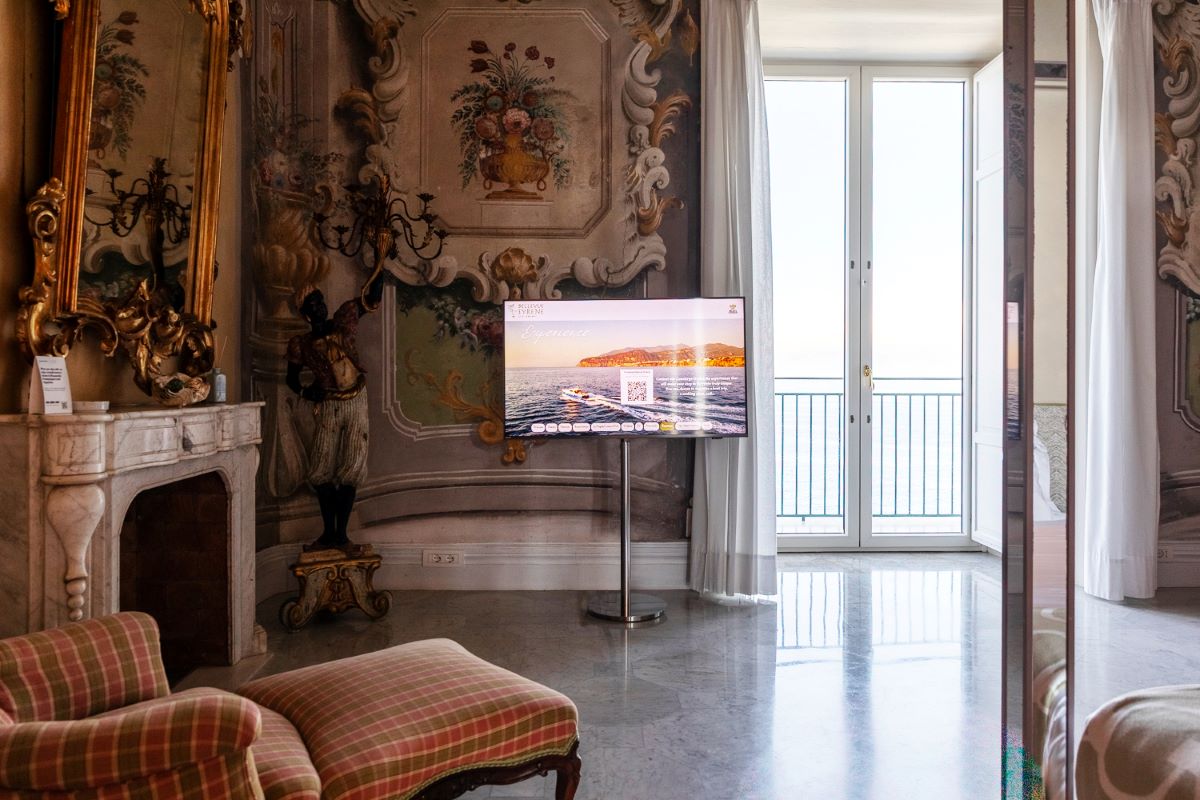
    PPDS, the exclusive global provider of Philips Professional Displays, is proud to announce that its market leading range of Philips MediaSuite TVs has been chosen to deliver seamless access to a virtually limitless world of personalised digital entertainment at one of Italy’s most tranquil and picturesque five star hotels, the Bellevue Syrene.

    Housed in the popular tourist destination of Sorrento in Southern Italy, and offering breathtaking views of the Bay of Naples, the cliff edge Bellevue Syrene is a truly remarkable boutique destination, offering the perfect blend of historical heritage and modern luxury to guests.

    With 51 guest rooms and suites, each meticulously designed with a sophisticated blend of modern and antique furnishings, the hotel owners sought to modernise its ageing and restrictive television system by investing in a new ‘state of the art’, fully connected and centrally managed hospitality display network.

    In partnership with trusted local integration specialist, Meginet, key requirements for the project included exceptional 4K UHD display quality and the ability to provide guests with a personalised entertainment experience, offering seamless access to their preferred streaming services, apps and on demand content from the comfort of their room.

    The Suite spot for guests

    Concluding extensive market research, a fleet of 70 4K UHD Philips MediaSuite TVs – ranging from 43” to 65” – was unanimously selected and installed inside all hotel rooms, with additional units added for larger suites.

    Delivering a new benchmark for in room entertainment while placing guests firmly in control of their viewing experience, one of the standout features influencing the hotel’s decision was the inclusion of the cast feature built directly into Philips MediaSuite TVs. First introduced on Philips MediaSuite in 2019, this allows guests to wirelessly share their favourite movies, TV shows, music, photos and even business presentations directly from their personal devices to the TV.

    The Philips MediaSuite TVs solution offers a simple and intuitive user experience, with guests able to securely connect their smartphone or tablet to the TV using a unique QR code and instantly cast content from their preferred streaming services, such as Netflix and Amazon Prime Video, at the touch of a button.

    Philips MediaSuite TVs also provide guests with access to thousands of apps, games and entertainment options, creating a familiar and personalised home from home experience.

    Beyond traditional TVs

    Philips MediaSuite TVs also provide the Bellevue Syrene’s AV and IT teams with complete control over the hotel’s display network using PPDS’ CMND platform. Centrally managed and fully customisable to reflect the hotel’s unique brand identity, the platform enables regular software updates, security enhancements and new features to be scheduled and deployed remotely as they become available, reducing maintenance demands.

    All TV login information is also automatically deleted upon checkout – rather than manually – adding further time and cost efficiencies.

    Furthermore, Bellevue Syrene staff can now enhance their direct communications with guests either on a collective or personalised basis, by effortlessly creating and displaying content on the TV screen, such as welcoming messages, in house information, check out details, marketing, and more.

    The installation of Philips MediaSuite has achieved all expectations from the hotel owners, staff, and guests, delivering advanced and future proofed experiences while upholding the high standards of traditional luxury hospitality.

    Claudio Napolitano, General Manager, Hotel Bellevue Syrene, commented: “When it comes to digital entertainment and information technology and communications services, we always choose partners capable of providing valuable, reliable and cutting edge technologies. Enabling us to offer our guests a truly complete and memorable stay.”

    Vittorio Acampora, CEO, Meginet, added: “Our partnership with PPDS for Philips Professional Displays is a key factor that enables us to invest in joint strategies. Providing us with a solution that combines technological innovation with ease of use.”

  • Absen Unveils Upgraded Global Booking Platform for its Worldwide Showroom Network

    Absen Unveils Upgraded Global Booking Platform for its Worldwide Showroom Network

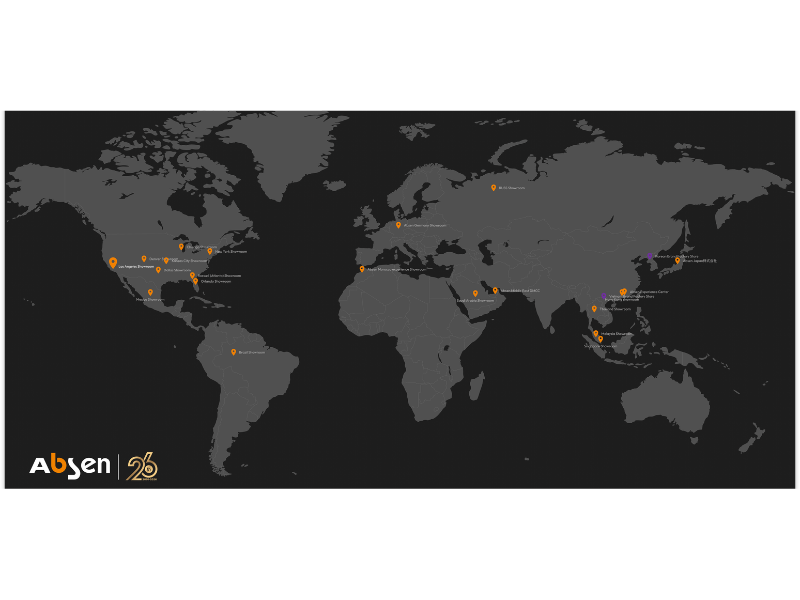
    Absen has upgraded its global showroom booking platform, making it easier for customers and partners to schedule visits across its growing network of experience centers worldwide. The new system offers a cleaner interface, real-time appointment availability, and instant booking updates, creating a smoother experience for AV professionals looking to explore the company’s latest LED display solutions.

    The upgrade supports Absen’s continued expansion, with new showrooms opening across the Americas, EMEA, and APAC. These locations provide hands-on product demonstrations, local technical expertise, training, and meeting spaces, helping AV integrators, consultants, and IT decision-makers evaluate LED solutions for ProAV, digital signage, and rental & staging applications.

    Absen, a global leader in LED display technology has announced a full upgrade to its global showroom booking system, making it easier for customers and partners to schedule visits to the company’s growing international network of showrooms.

    Designed to deliver an intuitive and user-friendly experience, the refreshed platform supports Absen’s wider strategy of deepening brand localisation and strengthening offline service capabilities in key markets worldwide.

    Over the past year, Absen has continued to expand its global showroom footprint, opening new sites and brand factory stores across the Americas, EMEA and APAC. Newly added locations include Los Angeles, Mexico and Denver in the Americas; Morocco and Saudi Arabia in EMEA, as well as Korea and Vietnam in APAC. Together, these additions reinforce Absen’s commitment to providing localised support and giving customers direct access to the latest LED display technologies for the ProAV, DOOH and Rental & Staging markets.

    Each showroom is designed to reflect local market needs with carefully curated displays that demonstrate how Absen’s innovative LED solutions can be applied across a range of sectors and markets. Fully open for guided tours, the spaces offer visitors the opportunity to explore products first-hand, gain practical insights from regional teams and experience a more personalised level of support throughout the specification and decision-making process. In addition, the centres also host open and partner events, provide meeting spaces, market-focused demonstrations, in-person expertise and Absen Certified Engineer (ACE) training closer to home.

    The newly upgraded booking interface has been created to simplify every stage of the visitor journey including choosing a location and arranging an appointment. With a cleaner design and more seamless navigation, the platform enables users to identify their nearest showroom, select a suitable time and submit visit requests with greater ease and confidence. The result is a smoother digital experience that complements Absen’s on-the-ground investment in local service and customer engagement. Received feedback from users of the new booking system has included:

    “Transparent time slots: Real-time display of available showroom time for self-selection, saving repeated communication.”

    “Real-time booking status: Instant clear updates throughout reservation process for worry-free schedules.”

    “As a global company with more than 26 years of experience, we recognised early on the value of giving customers the opportunity to experience our products first-hand in their local market.” explains Tania Zhao, Vice President of Absen. “Today, with more than 20 state-of-the-art experience centres across four continents, we are making it easier for customers to access our showrooms, explore solutions relevant to their needs and benefit from a more seamless, personalised experience from their first interaction with Absen.”