Absen has introduced the PL Plus V2X Series, the latest addition to its Polaris family of LED displays designed for indoor rental and staging. The new series brings improved image quality, color accuracy, brightness up to 1,200 nits, a 95% DCI-P3 color gamut, and a 7,680 Hz refresh rate for smooth visuals in live and broadcast environments.
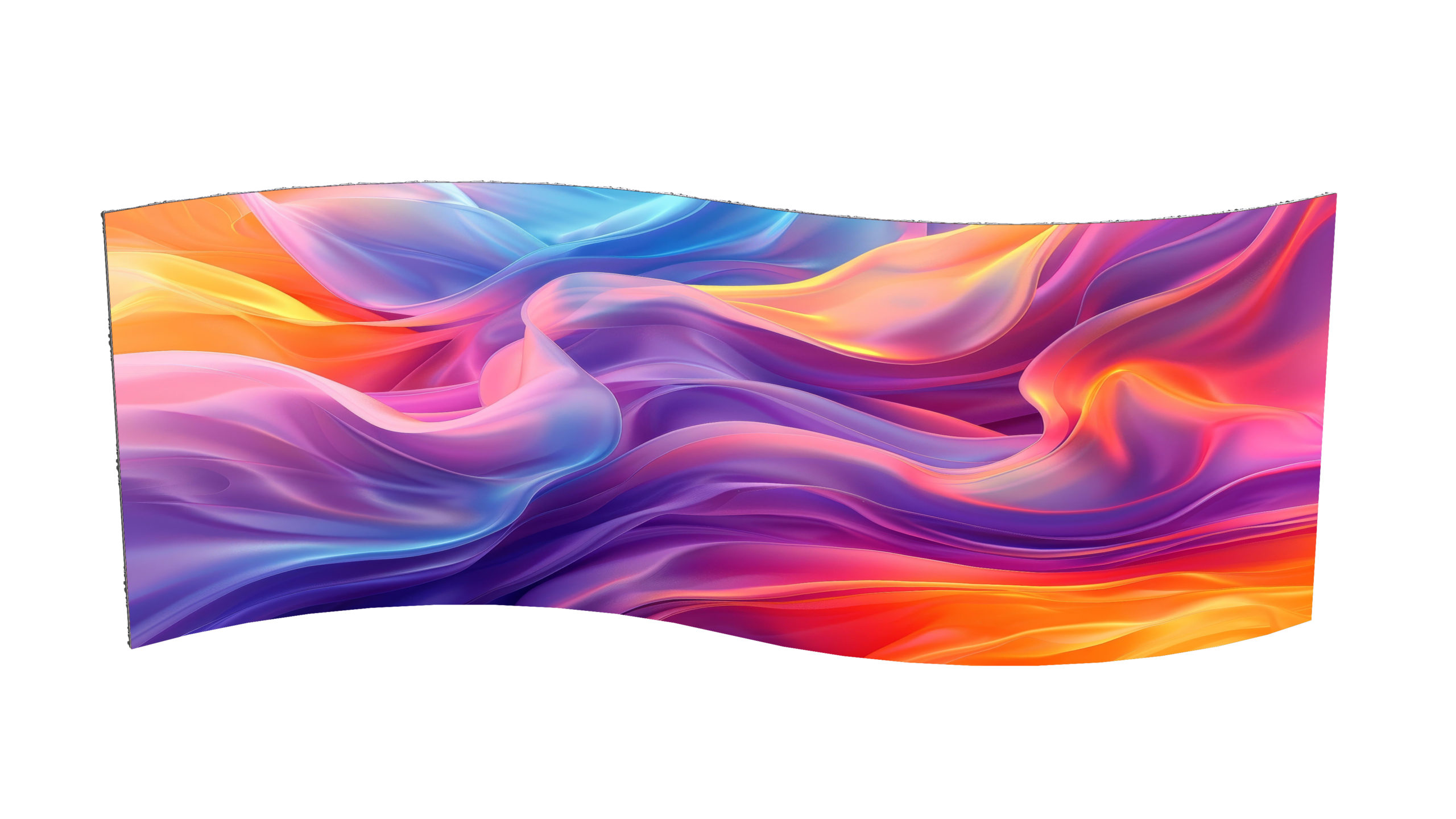
The PL Plus V2X Series also gives AV professionals more flexibility with flat, curved, L-shaped, and flexible panel options. With improved panel-to-panel consistency and deployment flexibility, the series is built for touring, live events, corporate productions, broadcast, and other demanding LED applications.
Absen Inc., the US subsidiary of Absen, the internationally acclaimed innovator in LED display technology, announces the PL Plus V2X Series, the latest evolution of its Polaris Series for indoor rental and staging applications. Building on nearly a decade of success and more than one million Polaris Series displays sold worldwide, the PL Plus V2X Series delivers enhanced visual performance, expanded creative flexibility and improved panel-to-panel consistency for today’s live events, touring, corporate productions and broadcast environments.
“The PL Series has become one of the most trusted LED platforms in rental and staging because it consistently delivers the performance and reliability our customers need,” said Emily Chan, president of Absen Inc. “With the PL Plus V2X Series, we’ve enhanced many aspects of the platform, including image quality and color accuracy, giving production teams even greater confidence to deliver exceptional visual experiences for live events, touring, corporate productions and broadcast applications.”
The PL Plus V2X Series delivers significant improvements in visual performance, including brightness up to 1,200 nits, a 95% DCI-P3 wide color gamut and a 7,680 Hz refresh rate that provides smooth on-camera performance while reducing flicker, even at low brightness levels. Together, the enhancements of the PL Plus V2X Series produce vibrant, lifelike imagery for both live audiences and broadcast applications.
Designed to support a wide range of creative display configurations, the PL Plus V2X Series includes flat, curved, L-shaped and flexible panel options that enable event professionals to build custom stages, immersive environments and architectural LED installations. Through same-batch LEDs and color-matched mask controls during manufacturing, Absen further improves panel-to-panel uniformity, helping deliver seamless visual performance across large LED canvases.
Built for rental companies, production teams and system integrators, the PL Plus V2X Series is engineered to meet the demands of live entertainment, corporate events, touring productions and broadcast environments. By combining enhanced visual performance with greater deployment flexibility and consistent image quality, the latest addition to the Polaris family continues Absen’s commitment to delivering reliable LED solutions for the world’s most demanding productions.
Located on Chicago’s South Side, the Obama Presidential Center is a 19.3-acre campus that serves as a civic and cultural space, including a four-floor museum, program rooms, a public library branch, an athletic center, an auditorium, and community gathering spaces. At the center of the museum experience are large-scale immersive media installations designed to support storytelling throughout the facility.
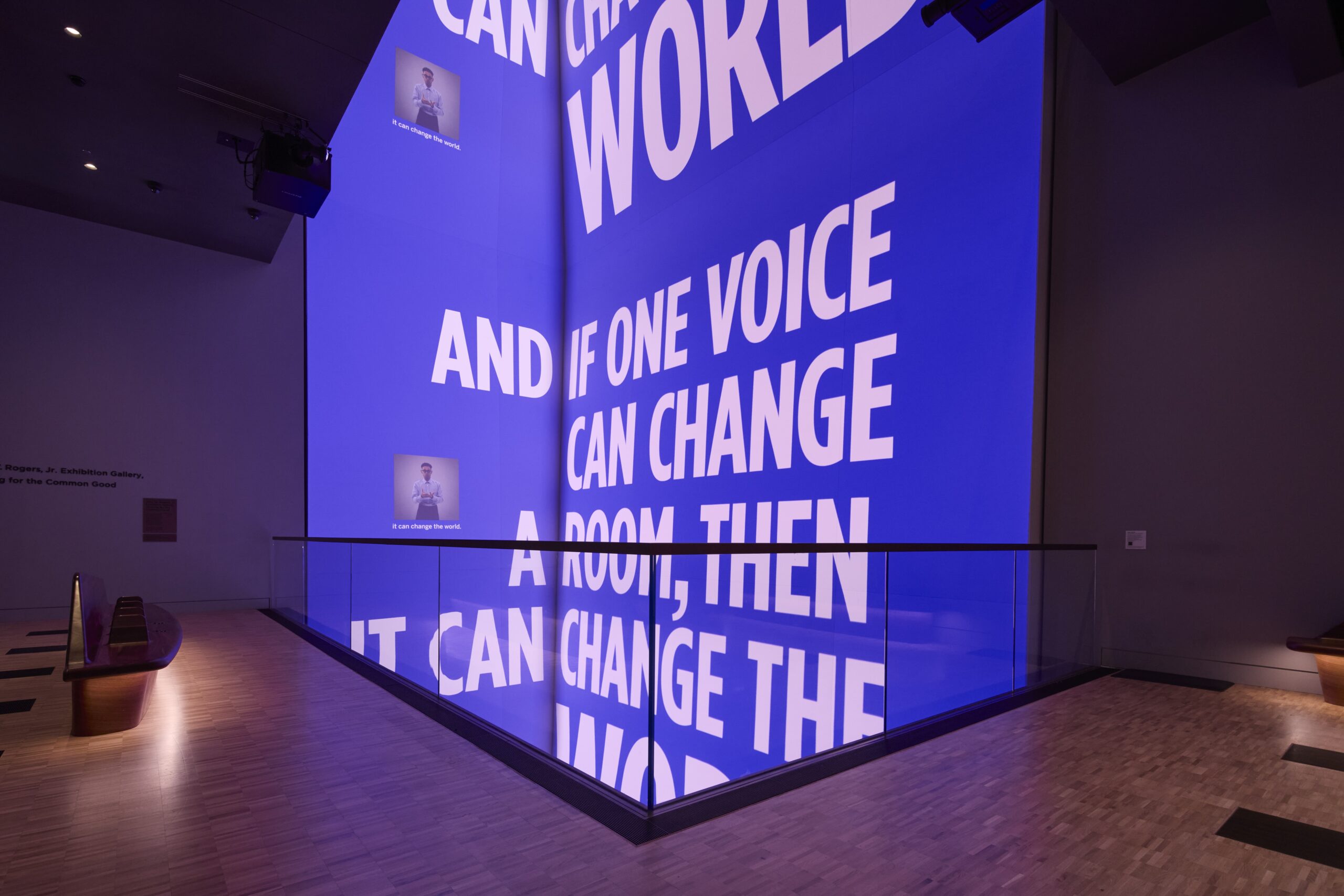
The museum explores themes of democracy, civic engagement and social change through interactive exhibits, archival materials and multimedia environments throughout the building. Among the museum’s most technically demanding installations are “Power of Words,” a four-story projection experience extending through the museum atrium, and a 360-degree circular projection environment featuring custom digital artwork developed in collaboration with a French artist.
“Power of Words” spans approximately 85 feet vertically across four museum floors, allowing visitors to view the installation from multiple balcony levels throughout the atrium. The projection system consists of seven projectors positioned across multiple floors, including four landscape-oriented projectors covering the primary wall surface and three portrait-oriented projectors covering an adjacent wall. The second installation uses eight projectors arranged around a circular projection ring to create a continuous immersive display.
The scale and complexity of the installations created significant operational challenges for the museum team. The large-format multi-projector systems require consistent alignment and calibration to maintain a seamless image, particularly in public environments like the Obama Presidential Center, which are subject to vibration, HVAC activity, temperature fluctuations and ongoing visitor traffic. In the case of “Power of Words,” the projection surface itself spans four stories and is integrated directly into the building structure, introducing subtle shifts in geometry and screen tension over time.
“We needed a system that would allow us to automate alignment and maintain image quality without requiring constant manual intervention,” said Paul Horst, senior manager of exhibition AV systems for the Obama Presidential Center.
Without automated calibration, maintaining systems of this scale often requires ongoing involvement from highly specialized projection technicians who can manually adjust geometry, warping and edge blending. In museum environments that operate daily with limited onsite technical staffing, those workflows can become difficult to sustain long-term.
To address those challenges, The Obama Foundation selected Scalable Display Technologies, whose software enables multiple projectors to operate as a single seamless display. Using camera-based calibration, the software automatically aligns geometry, and blends edges across projection surfaces of varying shapes and scales. What traditionally required days of manual alignment by specialized technicians can instead be completed through automated recalibration workflows.
The ability to rapidly recalibrate large projection environments was particularly important for a museum installation that operated continuously without dedicated projection specialists onsite. Projection systems naturally drift over time due to environmental conditions, vibration, projector maintenance and changes in screen geometry. Scalable’s software allows operators to restore alignment through automated recalibration rather than relying on time-intensive manual adjustments or external service calls.
“We’ve been working with Scalable on batch files to run calibration from the command line, automatically generate MPCDI files, copy those files into the media server and trigger the media server to load updated calibration data,” explained Horst.
The automated workflow also coordinates environmental controls during recalibration, including projector warm-up periods and temporary lighting adjustments. Once recalibration is initiated, the system generates updated alignment datasets that can be deployed without extensive manual correction. “The recalibration process inside Scalable’s software has worked extremely well,” said Horst. “It’s very helpful to warm up the projectors, run recalibration and achieve a clean updated alignment without extensive manual work.”
Scalable’s projection technology is widely used in simulation, museum and immersive entertainment environments where image consistency and reliability are critical. The same automated calibration workflows used in defense and aerospace simulation systems are also deployed in projection mapping installations, themed entertainment environments and large-scale immersive exhibits where multiple projectors must behave as a single unified image.
The architectural design of the atrium installation also introduced unique geometric challenges. Because of balcony placement and limited projector mounting positions, the system required projection across two intersecting wall planes positioned at nearly 90-degree angles. Several projectors were forced to operate at extreme projection angles where image spillover between adjacent surfaces became difficult to manage.
To accommodate these conditions, Scalable collaborated with The Obama Foundation to develop a software feature called Projector Groups. The feature allows separate warp-and-blend operations across independent projection surfaces while maintaining controlled edge transitions between content regions. Horst explained, “That allowed independent warp and blend operations on each wall with a defined hard-edge seam between content regions.”
Prior to full deployment, The Obama Foundation developed both a full-scale projection mock-up and a miniature physical model replicating the final projector configuration. The process allowed the project team and Scalable engineers to test geometry, camera placement, media playback and calibration behavior before installation inside the museum.
“By the time we entered the building installation phase, we already felt confident the system would work,” said Horst.
In addition to the technical capabilities of the software, Horst cited Scalable’s engineering support and responsiveness as a major factor throughout the project. “One of the biggest factors, honestly, wasn’t technical — it was customer service,” he said. “They’ve been very active throughout the process, added entirely new software features to solve challenges unique to our project and responded quickly whenever issues came up.”
According to Horst, the system’s stability allowed exhibit designers and media producers to focus on refining content presentation rather than resolving projection issues during deployment.
“The installation looks extremely clean,” Horst said. “Honestly, one of the best outcomes is that nobody comments on the projection itself, which is exactly what you want. It simply looks the way it’s supposed to look.”
Oodle Noodle sought after Sony’s BRAVIA professional displays to modernize and streamline its communications, improve efficiency, and make each store more visually impactful.
How we helped
The Challenge
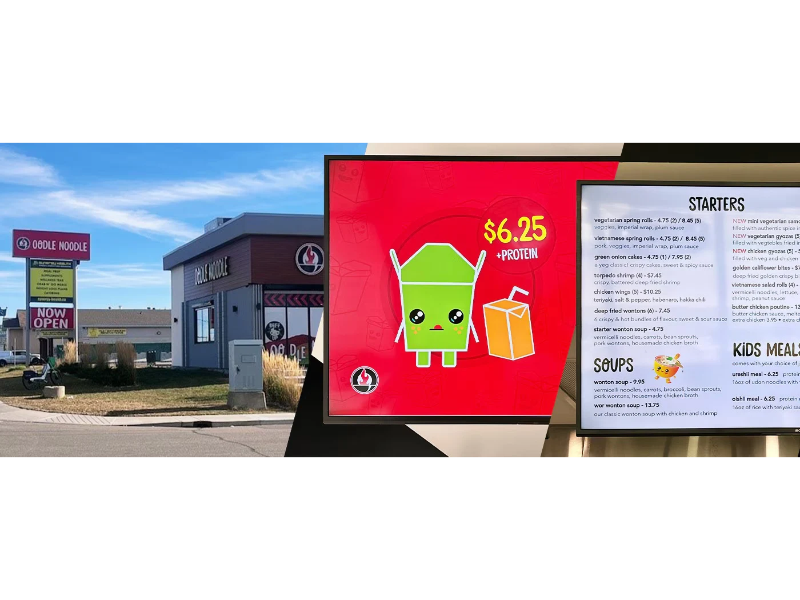
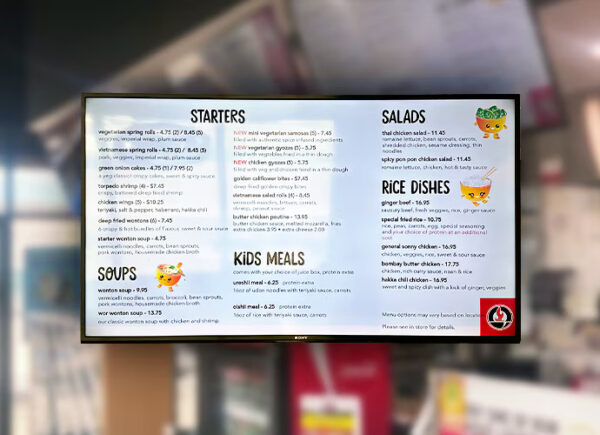
The Oodle Noodle restaurant chain wanted to move away from static menu boards and physical signage, which were time-consuming and labor intensive to update
They were looking for a dynamic digital display option to help automate company-wide communications and enhance the overall customer experience
The Solution
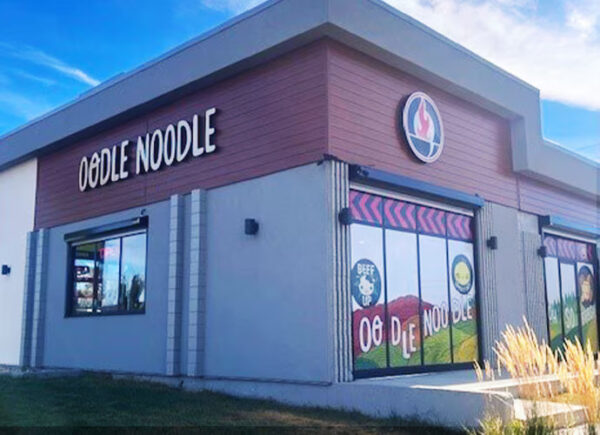
Oodle Noodle installed Sony’s BRAVIA professional 55-inch displays in each of its locations, primarily for digital menu signage and promotional content
The Outcome
The Sony professional displays are helping the company modernize, improve efficiency and make each site more visually impactful
The ability to display eye-catching visuals has helped increase customer engagement, leading to higher sales for featured items
“The high resolution, vibrant colors, and reliability of the BRAVIA professional displays make them an ideal choice for our fast-paced restaurant environment.”– Jassi Dhuga,
Operations Coordinator, Oodle Noodle Franchise Corporation
Operational Efficiency
Switching to digital displays has streamlined Oodle Noodle’s menu and promotion updates, reducing labor and printing costs while increasing agility and customer engagement.
Sustainability
Energy-efficient and durable displays contribute to lower maintenance costs and a more environmentally friendly solution.
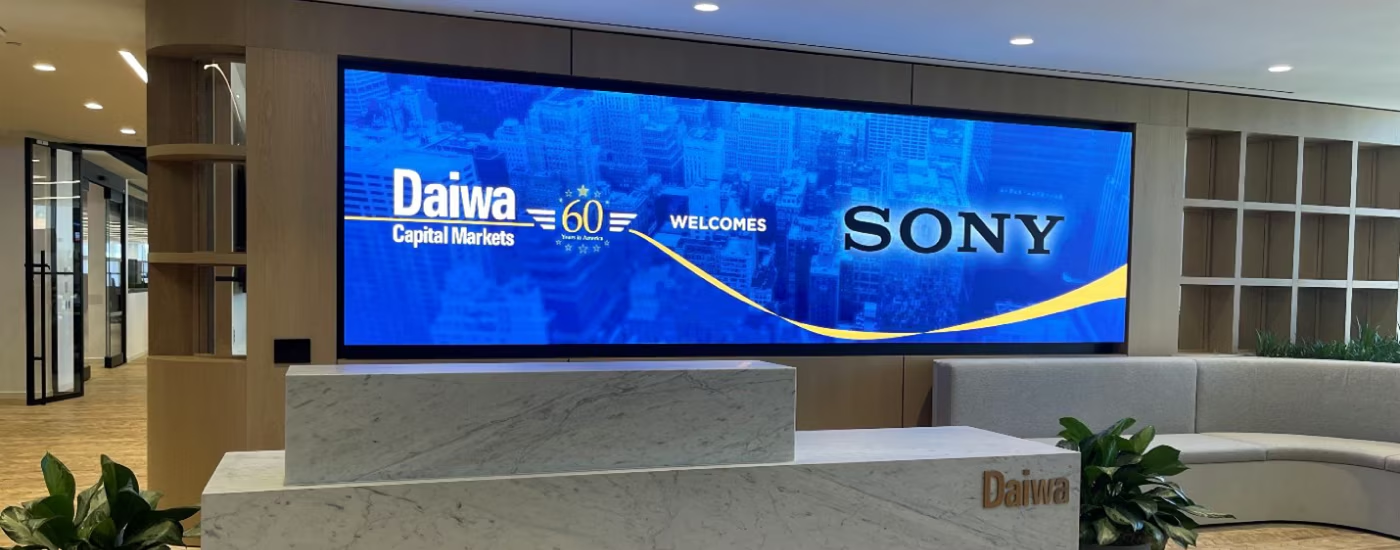
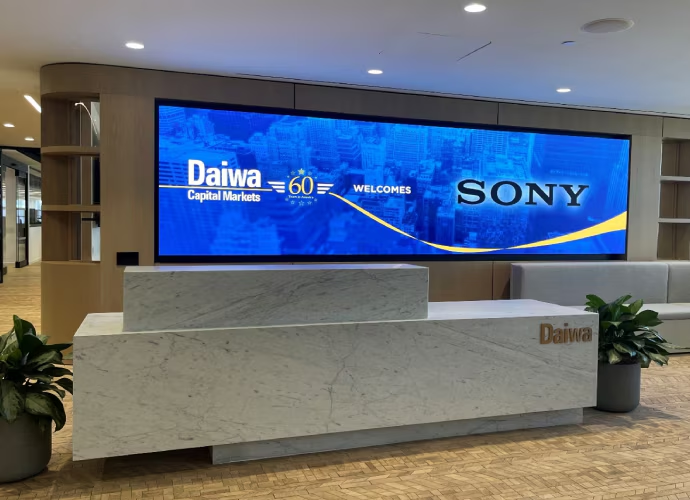
Daiwa Capital Markets Americas Inc., moved its US HQ to a new location in NYC, leveraging digital signage and meeting rooms to enhance brand image and improve employee and client communications.
How we helped
The Challenge
Bright lobby lighting demanded bright, direct view LED wall to overcome ambient light
High quality display and content needed to engage and resonate with employees and clients
Remote display controls needed for seamless connectivity due to space constraints
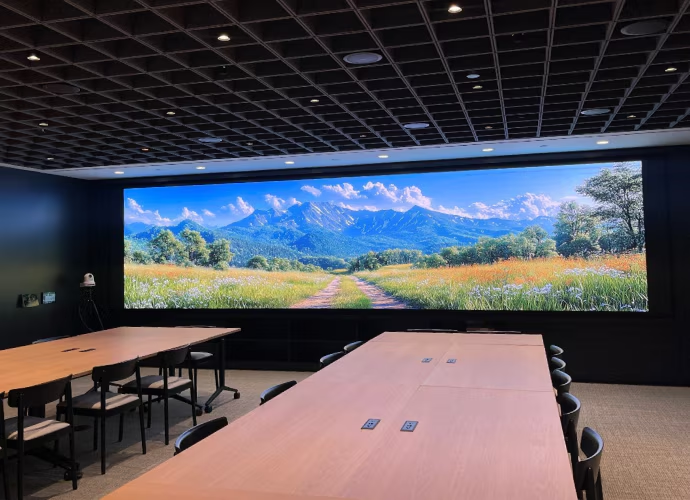
Professional displays required in all meeting rooms
New display tech and dynamic content enhance visual appeal and functionality of Daiwa’s public spaces
Displays embody Daiwa’s high standards and reputation as a leading financial firm
Increased employee and client engagement will transform the office into an innovative environment
“We are thrilled with the integration of Sony CLED technology into our new office space. The unparalleled clarity of these displays transforms our lobby and multipurpose areas into dynamic hubs of engagement.” Keiji Machida, Chairman and CEO
Collaborative Partnerships
Daiwa partnered with Sony to implement Sony displays and a Crystal LED video wall, enhancing their commitment to quality and innovation as a world-class financial firm.
Visual Appeal and Functionality
Sony’s displays are anticipated to become integral tools in embodying Daiwa’s high standards and reputation.
Lumagen is bringing a complete premium home cinema experience to CEDIA Expo 2026 with its “Paragons of Home Cinema: Episode II” demonstration. The showcase will feature the debut of the new ArtisaN 8K Ready video and audio processor alongside technology from Christie, Stewart Filmscreen, NextLevel Acoustics, StormAudio, SPEAKERPOWER, Simplified Acoustics, and CineMotion Posters. Together, these solutions will demonstrate how advanced video processing, immersive Dolby Atmos audio, and optimized room acoustics can work as a unified home theater ecosystem.
The 9.4.6 Dolby Atmos demo is designed to give dealers and industry professionals a real-world look at high-performance home cinema integration. Visitors will also be able to experience additional technologies in booth 1346, including a new ultra-wide direct-view LED video wall from Pixel Perfect Walls. The collaboration highlights the growing focus on delivering cinematic experiences through seamless integration of audio, video, acoustics, and control technologies.
Bringing advanced image processing to home cinema, Lumagen will debut the ArtisaN 8K Ready video and audio processor ($11,495 MSRP) at CEDIA Expo 2026. ArtisaN features eight inputs, two outputs, real-time video scaling, HDR dynamic tone mapping, precise lip-sync control and low-latency game mode with a fixed 3-millisecond video delay. Manufactured in the USA, Lumagen also offers an ArtisaN upgrade path to 4K120 and 8K processing (additional $2,500 MSRP).
Christie will make the CEDIA debut of its award-winning 4K1000-KS model from the Korus Series of 1DLP projectors. Backed by an industry-leading five-year or 20,000-hour warranty, it combines a lightweight, ultra-compact chassis with versatile lens options, including an ultra-short-throw Z-shaped lens, for flexible integration into any space. MSRP $14,461.
Stewart Filmscreen will showcase VistaScope Evo, a two-way vertical masking screen system featuring Harmony G3 acoustically transparent woven screen material. The 4.5-inch-bordered system supports larger cinematic images while allowing proper speaker placement behind the screen. VistaScope Evo will demonstrate formats from 188 inches diagonal at a 2.39:1 aspect ratio to 116 inches diagonal at a 4:3 aspect ratio. MSRP as shown is $27,750.
NextLevel Acoustics will feature its award-winning Cinema Series, a high-performance immersive audio system designed for power, clarity, precision, and cinematic scale. The demonstration will also debut two additions: the Cinema H height speaker, with 93 dB sensitivity, and the flagship CI-HV21 High Velocity 21-inch subwoofer, designed for deep, fast, room-pressurizing bass. MSRP for the NextLevel Acoustics 9.4.6 loudspeaker system is $66,000.
StormAudiowill showcase its Elite processor, built on the CEDIA Product Hall of Fame-winning ISP platform. As the heart of the immersive audio demonstration, the Elite processor will manage audio decoding, signal processing, bass management, and system calibration through the complete StormAudio Calibration Suite, combining Dirac Live Room Correction, Bass Control, Active Room Treatment (ART) with powerful manual optimization tools to deliver precise and consistent performance. MSRP: $28,499.
SPEAKERPOWER will premiere the HTx408, an eight-channel amplifier delivering 400-watts per channel. Built on the award-winning HTRx8-400 platform, the HTx408 is designed for high-end residential theaters and combines reference-level power, high-fidelity performance, and a rack-ear-free design for installation in a custom credenza or AV rack. MSRP: $1,999.
Simplified Acoustics will manage room acoustics. Utilized will be the company’s new BDP acoustic panel. This uses a new formula for Binary Amplitude Diffusion over an absorptive panel that is more effective for off access waves than a traditional binary amplitude panel. System MSRP $5,400.
CineMotion Posters will demonstrate two 55-inch TVs in portrait mode in SR7 and booth 1346. One TV will function as a poster player, rotating through movie posters, while the second will serve as digital signage. The company’s CMP-01 poster player turns any flat screen with an HDMI port into an animated, interactive, and connected digital movie poster that can display posters within a user’s playlists, along with “Now Playing” posters and banners when connected to any Kaleidescape Strato-series player. The player can also play back both static images and motion posters.
“Our goal with Paragons of Home Cinema: Episode II is to give dealers a complete, real-world demonstration of what is possible when best-in-class video, audio, acoustics, and theater design technologies are engineered to work together,” said Jim Peterson, president of Lumagen. “By bringing these brands together in one room, dealers can experience the performance and integration — including Lumagen’s direct control of the Stewart masking system — that define a true premium home cinema solution.”
Across the aisle in booth 1346, the SR7 partners will exhibit additional products. New for 2026 and making its Expo debut, Pixel Perfect Walls will showcase an ultra-bright 130-inch direct-view LED video wall featuring a 0.9mm pixel pitch and an ultra-wide 2.22:1 aspect ratio. This will be demonstrated with Lumagen’s ArtisaN, StormAudio’s Fusion 20 integrated amp, and NextLevel Acoustics’ custom LR-CC 5.5 soundbar and HV10 Subwoofer.
SR7 contributors includeKaleidescape (Movie Platform), Home Theater Gurus (Sound Room Design), Lowell Manufacturing (AV racks), and Bayview Audio (Video Production of SR7 demo introduction).
PPDS has introduced the new Philips Unite LED 3000 Series, its most accessible 16:9 dvLED display range to date. Designed for businesses seeking the benefits of LED technology without the premium price tag, the new series combines strong visual performance, flexible installation options, and energy-efficient operation for applications across retail, corporate, education, transportation, hospitality, and public venues.
Available in four pixel pitch options, the Philips Unite LED 3000 Series delivers vibrant colors, high brightness, and smooth visuals while incorporating advanced common cathode technology for improved efficiency and reliability. With durable IP-rated protection, simplified maintenance, and a focus on sustainability, the new range expands access to professional LED solutions for a wider range of AV and IT customers.
PPDS, the exclusive global provider of Philips Professional Displays, is excited to announce the new Philips Unite LED 3000 Series, bringing a new generation of ultra flexible, energy conscious dvLED panels designed to deliver premium visual performance while making LED technology more accessible for a wider range of businesses and budgets.
Extending PPDS’ commitment to its lineup of ‘elemental’, more investment friendly professional displays, such as the recently launched Philips Signage 2000 Series, the new Philips Unite LED 3000 Series enters the market as PPDS’ most accessible 16:9 dvLED range to date, empowering businesses to enjoy the performance and efficiencies available through LED technology.
Built with flexibility and versatility at its core, the Philips Unite LED 3000 Series is designed to deliver impactful visual experiences across almost any indoor environment, with retail, corporate, transportation, education, hospitality, events, and public venues among target markets.
Quality without compromise
Bringing the advanced features and capabilities already within PPDS’ premium COB LED portfolio to a more accessible price point, the Philips Unite LED 3000 Series is available in four pixel pitch options – 0.9, 1.2, 1.5, and 1.8pp – helping customers select the ideal solution for their specific viewing distances and application needs.
Designed to perform across a wide range of environments and lighting conditions – from dynamic video content to detailed presentations in boardrooms – the 0.9, 1.2, and 1.5pp models deliver 600 nits brightness
and 3840 Hz refresh rates. The 1.8pp model increases this further with 1000 nits brightness and 7680 Hz refresh rates, for flicker free, seamless visuals.
Jeroen Brants, Global Product Director LED Displays at PPDS, commented: “At PPDS, we believe premium visual experiences should be accessible to all. Historically, customers looking to deploy LED solutions at a lower price point have often faced compromises, whether in performance, reliability or ongoing support. With the Philips Unite LED 3000 Series, customers can benefit from outstanding visual quality, dependable performance, and the reassurance of working with a trusted global brand.”
Cool, consistent, reliable Joining PPDS’ growing COB LED family, which includes the Philips Unite LED 5000, as well as the Philips Unite LED 6000 panels and Philips Unite LED 6000 All In One Series, the new 3000 Series is also armed with advanced common cathode technology, to deliver outstanding colour accuracy, enhanced stability, and reliability, as well as energy efficiency.
With a 96% colour gamut, vibrant colours, deep blacks, and uniform brightness, the Philips Unite LED 3000 Series ensures content is reproduced with exceptional realism and precision. From brand showcases and advertising to automotive, fashion, and retail environments, it enables organisations to present products and messaging exactly as intended.
The Philips Unite LED 3000 Series also continues PPDS’ unwavering focus and commitment to delivering industry leading sustainable solutions to market, with the common cathode technology allowing displays to operate on lower energy consumption. Coupled with adaptive brightness, automatically adjusting to light conditions – such as a retail windows, transportation hubs, or office and school auditoriums – customers can expect a lower cost of ownership and extended lifetimes compared to common anode models.
Built to last
For additional peace of mind, particularly in demanding environments and where air quality is poor, the Philips Unite LED 3000 Series has been built to last, with IP54 ingress protection rating for dust and water resistance to the front, and IP31 to the back of each panel.
Maintenance is made simple through a smooth, easy to clean surface and convenient front and rear access. Using the supplied T-hex tool, modules within each cabinet can be unlocked and removed quickly, allowing straightforward access to the power supply, hub board and wiring for efficient servicing.
The Philips Unite LED 3000 Series is available for pre order now globally, with shipments commencing in August.
Jeroen Brants concluded: “At PPDS, we don’t believe in limitations. The Philips Unite LED 3000 Series has been designed from the ground up to deliver exceptional performance, flexibility, and value. With its 16:9 format and versatile installation options, it is ideally suited for a wide range of indoor environments – from displaying dynamic video content and detailed visuals such as spreadsheets in professional settings, to delivering fast and vibrant content feeds in applications such as public venues.”
“Today’s announcement represents an important step forward in making professional LED technology available to an even wider audience.”
Baird elevates the VandenBerg Conference Room with Sony Pro AV to overcome bright ambient light, delivering a flexible, scalable system with a consistent look and simple operation for teams.How we helped
The Challenge
Global finance services firm Baird sought to update its conferencing display and control systems in its VandenBerg Conference Room, a space with high ambient lighting. By implementing Sony’s pro AV solutions, the goal was to build a flexible, user‑friendly space with a unified look, scalable design, and reliable, proven technology
The Solution
Baird’s conferencing system uses Sony’s SRG-A12 PTZ cameras with image stabilization, focus area cropping and presenter tracking. Two capture participants from atop pillars in the front of the room, and one is positioned on each back wall. Additionally, Sony’s BRAVIA Professional Displays are used as confidence monitors
The Outcome
Baird appreciates the technology’s ease of use and reliable performance of the PTZ cameras and remote controllers, enabling events to be managed seamlessly. The cameras’ speaker‑tracking, zoom, and NDI capabilities integrate smoothly with their existing network, and the displays maintain strong visibility even in bright ambient lighting
“Sony’s SRG-A12 cameras combine functional operation with beneficial features, including image stabilization, speaker tracking and NDI support, empowering our team to manage a production with ease.”
Michael Padilla
AV Support Specialist, Baird
Scalable, Network-Ready Integration
NDI support plus speaker tracking and zoom integrate smoothly with Baird’s existing network, creating a flexible system that can expand while keeping a consistent experience.
Enhanced Collaboration
BRAVIA Professional Displays provide crisp, dependable visuals that keep teams aligned, engaged, and collaborating effectively throughout every meeting.
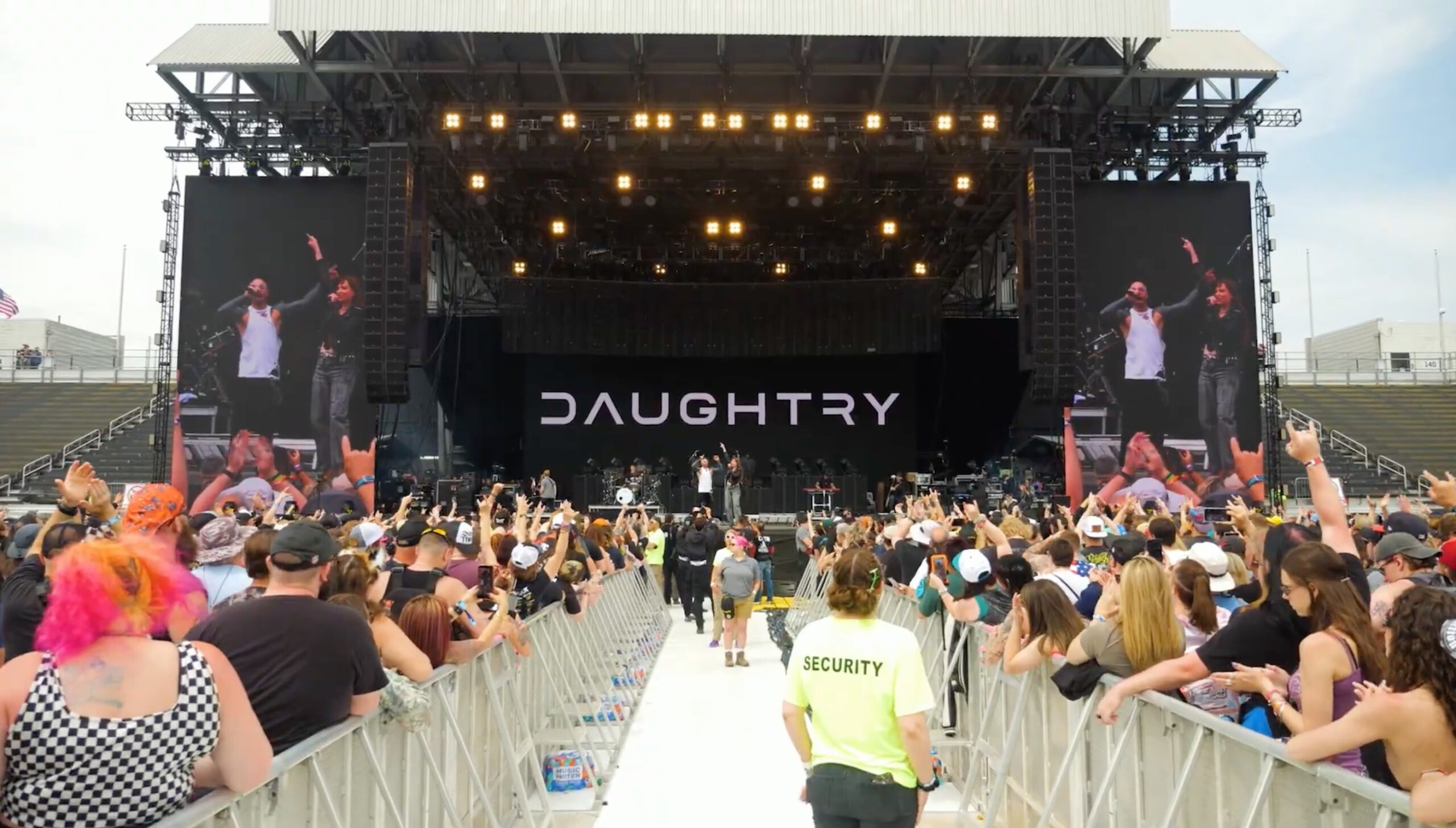
Danny Wimmer Presents’ (DWP) Sonic Temple Art & Music Festival, one of the nation’s premier hard rock and metal festivals, brings thousands of fans to Historic Crew Stadium in Columbus, Ohio, for four days of performances across multiple stages. With audiences filling the venue front to back, large-format LED displays are essential to giving every attendee a clear view of the action.
To support the festival’s demanding production schedule, Concert Stuff Group’s (CSG) Loud & Clear selected Absen’s JP5 Pro from the Jupiter Pro Series. Designed specifically for touring applications, the Jupiter Pro Series combines rapid deployment, high-brightness performance and rugged reliability, helping production crews meet the compressed schedules and demanding conditions of large-scale outdoor festivals.
“At a festival like this, there are so many people here. This entire stadium is full,” said Corey Willard, head of video production for Loud & Clear. “The people in the back have to be able to see the bands performing. Primarily, they’re seeing that through the screens we’ve built, so it’s a super important part of the festival experience.”
Sonic Temple marked Loud & Clear’s first deployment of the Jupiter Pro Series. For touring production companies, introducing a new LED platform requires confidence that it can withstand festival production, where crews have limited time to assemble large display systems safely before showtime.
“The biggest challenges are that it has to go up fast, it has to come down fast, it has to go up safely and it has to look great in a variety of outdoor situations,” said Nick Thieme, general manager for Loud & Clear. “The JP5 went in super quickly. We were really impressed with how easy it went together.”
Despite the scale of the deployment, Loud & Clear built out two stages — four IMAG walls and two upstage walls — in a single day.
The Jupiter Pro Series’ large-format cabinets reduce the number of panels required and simplify installation, while lightweight composite construction makes the displays easier to transport and position. Precision locking technology and an integrated alignment feedback system create a stable, seamless surface across large-scale installations — reducing setup time without compromising structural integrity or image quality.
Outdoor festivals present significant visual challenges. Throughout the day, displays must remain visible under changing weather conditions and direct sunlight while continuing to deliver the image quality required for both live audiences and camera systems. Maintaining brightness and contrast is essential to preserving the viewing experience from the front row to the back of the venue.
“Brightness is very important because you’ll have the sun directly hitting the screens,” noted Willard. “If you can’t get bright enough to compete with the sun, you’re going to have a hard time seeing the content. They are excelling at the job they were created to do.”
The Jupiter Pro Series delivers up to 5,000 nits of brightness with black LED technology that reduces surface reflections and improves contrast. Combined with 16-bit grayscale, a 7,680 Hz refresh rate and an 8,500:1 contrast ratio, the displays produce detailed, high-contrast imagery in bright outdoor environments while supporting live production and broadcast workflows.
Reliability remained equally important throughout the deployment. Touring equipment is repeatedly transported, assembled, disassembled and shipped between venues, making long-term durability just as critical as visual performance. Even small equipment failures can increase maintenance requirements, delay productions and impact the audience experience.
Willard said, “You can have the best-looking panels in the world that go up super quickly, but if they’re not reliable, if you’re constantly dealing with modules or pixels going out or power issues, it doesn’t matter. You need something that’s going to be robust enough to get you through the show and hopefully through many, many years. The JP5 panels are perfect for that.”
By combining rapid installation, high-brightness performance and dependable operation, Absen’s Jupiter Pro Series helped Loud & Clear deliver the visual experience fans expect — and gives touring companies a display platform that performs consistently as they balance compressed schedules with growing audience expectations.
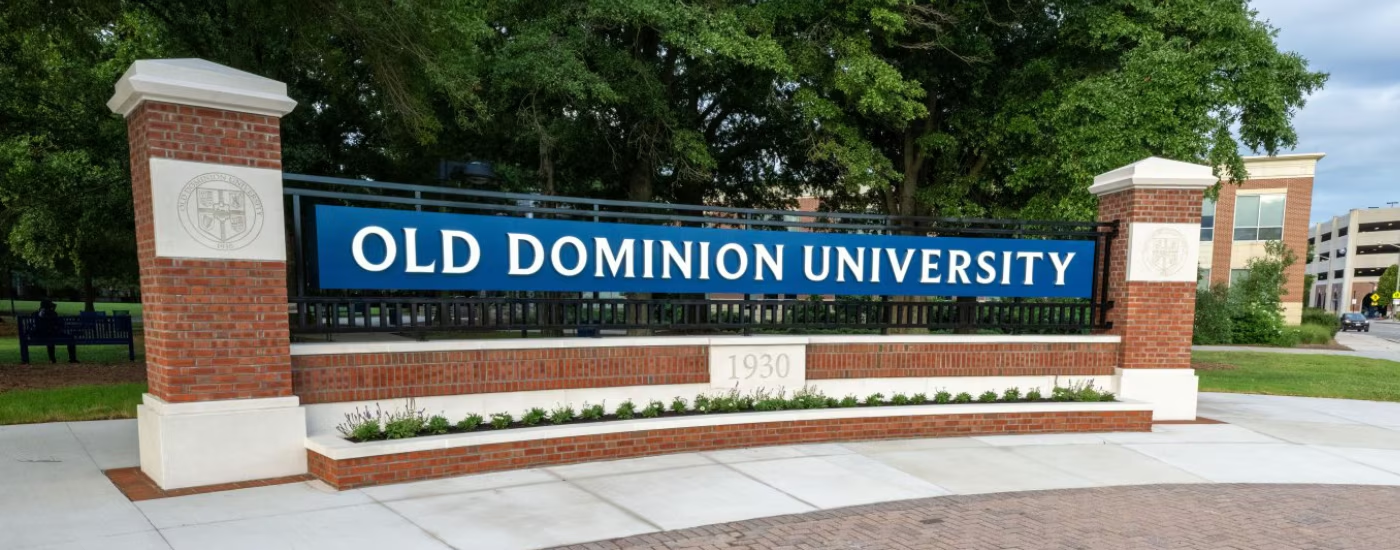
Old Dominion University (ODU) is investing in Sony BRAVIA professional displays to enhance learning environments and deliver exceptional experiences campus-wide.
The Challenge
Higher education faces mounting pressure from declining enrollment, rising costs, and growing scrutiny over the value of a degree
ODU needed to replace aging, failing display technology within tight budget constraints, requiring a reliable and intuitive solution that faculty could use independently without ongoing technical support
The Solution
ODU deployed over 100 Sony Pro BRAVIA displays and laser projectors for classroom presentations and digital signage across academic buildings, conference rooms, and common areas, all centrally managed campus-wide
Sony’s versatility, reliability, and low-maintenance hardware made them the trusted choice for ODU’s wide range of campus needs
The Outcome
Sony BRAVIA professional displays and laser projectors have transformed day-to-day operations at ODU, allowing faculty to walk in and teach without any technical friction
Centralized management allows ODU to push campus-wide updates or targeted messaging simultaneously, saving significant time and resources
“Reliability is the key. That I don’t have to touch something for years and it still works? That’s a win-win for me.” Dwayne Smith
Executive Director of Digital Integration Environments, Old Dominion University
Ease of Use Sony Pro BRAVIA displays empower faculty to walk in and begin teaching instantly, eliminating the need for technical support
Centralized Management All 100+ BRAVIA professional displays are networked and managed campus-wide, allowing simultaneous updates and targeted messaging from a single system
Cost Efficiency Sony’s durable, low-maintenance hardware helps ODU reduce long-term operational costs while staying within tight budget constraints
Campus Communication Centralized digital signage enables ODU to deliver real-time messaging and targeted communications across the entire campus
I’ve spent the last two decades appreciating quality pixels – steadily improving brightness, contrast, and color help maintain my eager anticipation of “what’s next?” The recent trend toward larger screen sizes, particularly driven by increasingly affordable LCD TVs, has some asking if projection’s days are numbered. My short answer is that projection isn’t going anywhere, but rather, the entire large-display market is evolving faster than it has in years.
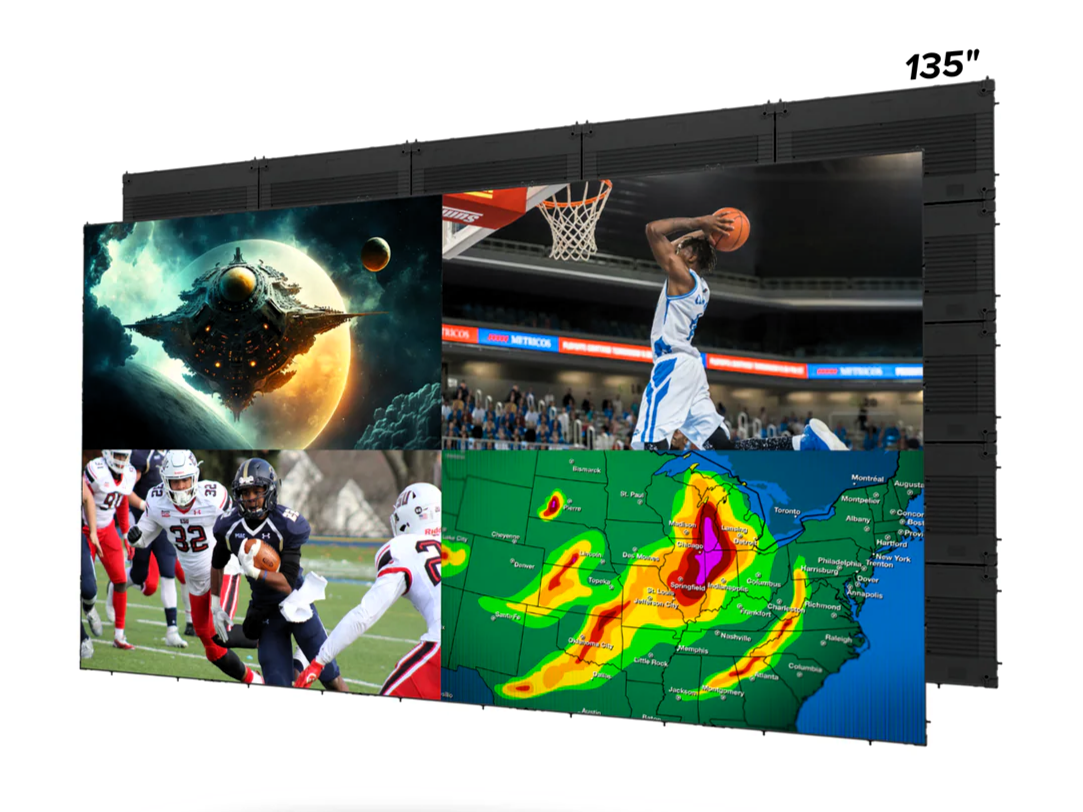
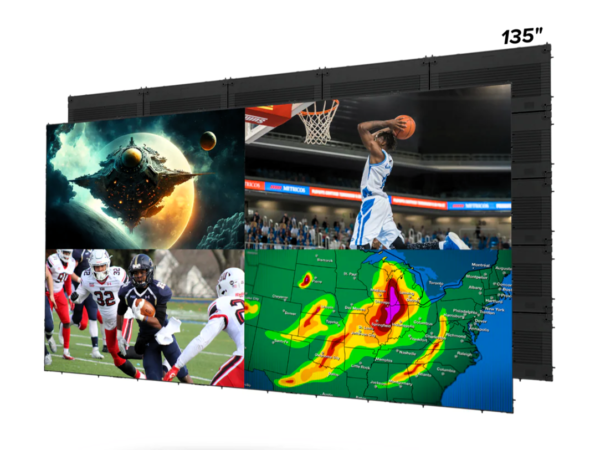
The clearest signal came when Epson, a brand synonymous with three-chip 3LCD projection, recently unveiled its first direct-view LED (DVLED) lineup: the LE-C1 Series in 135-inch and 162-inch all-in-one configurations, with the former available in 1080p and 4K resolutions. When a company known for projection adds an emissive display line, the industry takes notice. But that’s not a retreat from projection. If anything, the opposite. Projection is in the middle of one of its most significant innovation cycles in decades.
Direct-view LED places millions of individual red, green, and blue LED chips directly on a surface, increasingly using durable chip-on-board (COB) encapsulation. DVLED avoids many compromises of projection: no ambient light washing out the image, no shadows, and no throw-distance math. DVLED has proven itself in demanding professional settings, including outdoor installations and XR broadcast stages. However, consumer and residential applications remain tougher to crack economically due to manufacturing yields that keep it in premium luxury territory.
Trade shows such as InfoComm 2025 and CES 2026 highlighted an expanded range of DVLED products and manufacturers competing for attention. Five-figure options with similar specs are challenging the six-figure DVLED options from a few years ago. Epson’s entry with the all-in-one LE-C1 Series, which integrates consumer-friendly video inputs and image processing, brings Epson’s scale, manufacturing efficiencies, and broader distribution. This is good news for integrators first and for residential buyers eventually.
However, DVLED display specialists like AWALL already have competitively priced near-4K video products on the market with twice the luminance of Epson’s offering. Beyond pricing, product reliability and customer support will likely be strong drivers in attracting new owners.
Projection Is (Finally) Solving Old Problems
Projection manufacturers always look for ways to increase brightness and efficiency. They have also realized the need to address frustrations that have limited projection outside dedicated theaters.
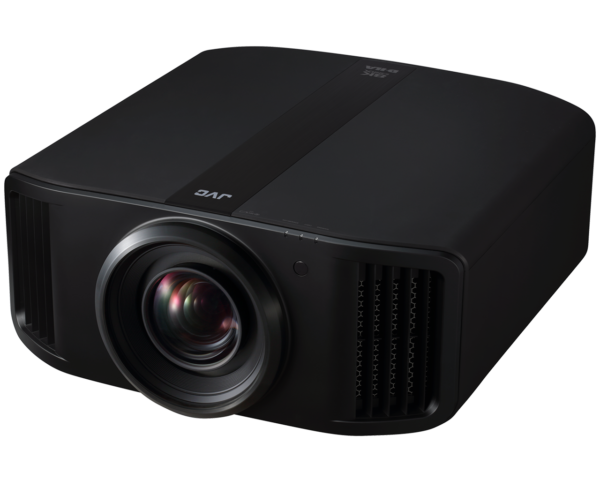
Amid the current high-end consumer landscape, JVC’s flagship 3-chip D-ILA laser models remain an exercise in pure visual bliss. I recently sat in a room built around JVC’s NZ900, projecting onto a 175-inch Stewart StudioTek 130 G4 screen, with a madVR Envy Extreme handling reference-level video processing. In a properly light-controlled room, that combination delivers native contrast and frame-by-frame dynamic HDR tone mapping that’s exceptionally difficult to match.
That pinnacle still requires a windowless room and a serious budget. The room above, with its full JBL Synthesis surround system, dual SVS subwoofers, and Marantz separates running through a custom-optimized Dirac ART filter, easily reached six figures. Fortunately, that’s no longer the only path to exceptional projection. A new generation of consumer flagship projectors leverages advances in RGB laser illumination, DLP silicon, and image processing to deliver dramatic improvements in brightness, color, HDR performance, and gaming responsiveness, all at prices within reach of more enthusiasts.
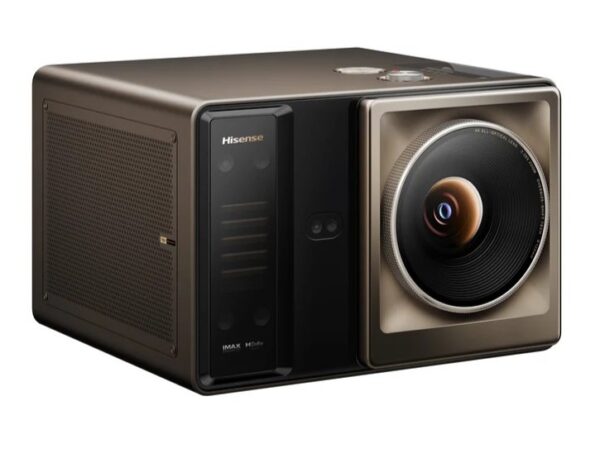
For years, projector dynamic contrast relied on coarse global iris and light-source adjustments, which could produce visible brightness pumping in challenging scenes. The newest generation of consumer laser projectors, both ultra-short-throw (UST) and front-projector designs, offers more refined light control. Hisense’s XR10, a standard-throw home theater projector, pairs a six-blade dynamic iris with seven levels of laser modulation. AWOL’s Aetherion Max, a UST model, combines a seven-level iris with its Enhanced Black Level (EBL) laser-dimming system. XGIMI’s Titan Noir Max, another front-projection design, features a dual-iris system with five manual aperture settings and a continuously variable automatic mode. None of these systems performs true spatial or zone-based dimming like a premium Mini-LED LCD television. Instead, they coordinate a dynamic iris aperture with content-adaptive laser output. The result is more convincing black levels, fewer visible brightness artifacts, and dynamic contrast performance reaching 6,000:1 in some models and up to 10,000:1 on the Titan Noir Max.
Aetherion Max 4K laser projector – Image credit: AWOL Vision
Laser illumination has matured, too. Discrete RGB triple-laser systems generate independent red, green, and blue primaries rather than filtering a single blue source, covering the demanding BT.2020 color space rather than the narrower DCI-P3. The Hisense PT1 and the brighter PX3-Pro are prime examples of refined RGB laser technology.
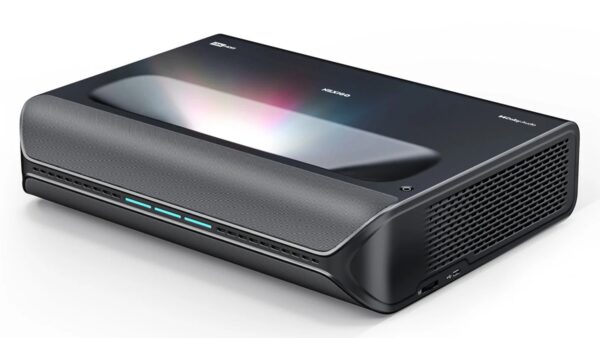
NexiGo Aurora Pro MKII UST projector – Image credit: NexiGo
The NexiGo Aurora Pro MKII pairs a motorized iris with a laser-LED hybrid light source to deliver deep blacks that are especially apparent in a light-controlled environment. That pairing may preview where the light-engine conversation is headed. Appotronics, whose optical platforms power a large share of the industry’s laser projectors, has begun marketing laser-LED combinations as complementary rather than competing: lasers contribute brightness and a wide color gamut, while LEDs contribute a wider emission angle with virtually no speckle or color fringing. Blending the two lets manufacturers retain a laser engine’s punch while removing its most distracting artifacts.
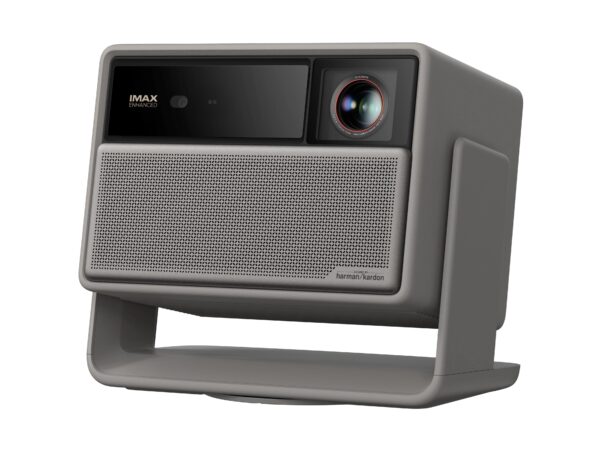
Horizon 20 Max RGB laser projector – Image credit: XGIMI
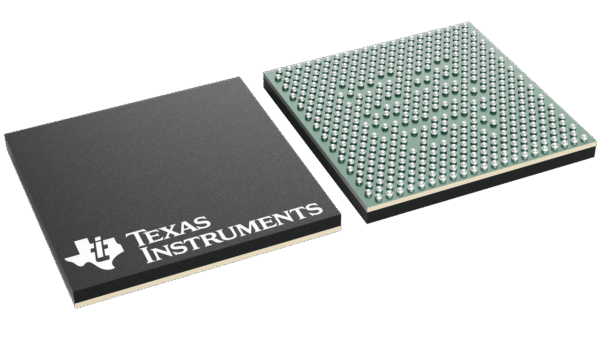
Gaming has caught up, too. Traditional consumer projectors relied on double-buffer architectures that added 16 to 30 milliseconds of input lag. The new Texas Instruments DLPC84-series controller, which drives the XGIMI Horizon 20 Max (the first projector to use TI’s new controller) and the AWOL Aetherion Max, replaces that with a rolling, line-by-line buffer that rasterizes pixels almost as fast as the source delivers them. The controller’s specs are exactly what’s needed for gaming on the latest consoles and PCs: native 1ms input lag, variable refresh rate (VRR), and AMD FreeSync support, with up to 240Hz refresh rates. Examining the Hisense PX4 Pro’s published specs, which include 1ms response time and FreeSync VRR, it likely features a controller from the same family, though Hisense hasn’t named the chip outright. For gamers used to instant response from a flat panel, projecting a 120-inch image no longer means a performance penalty.
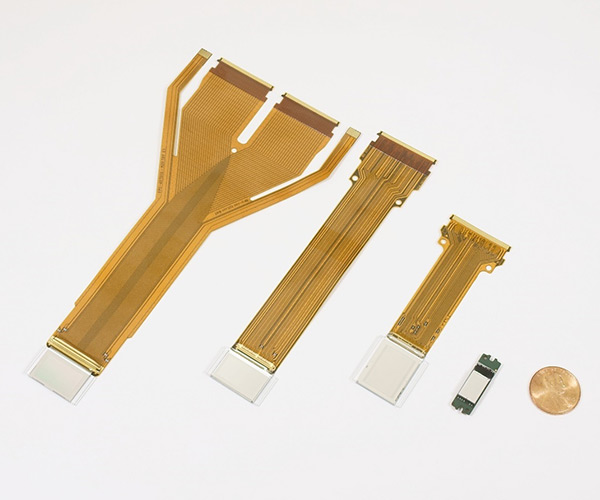
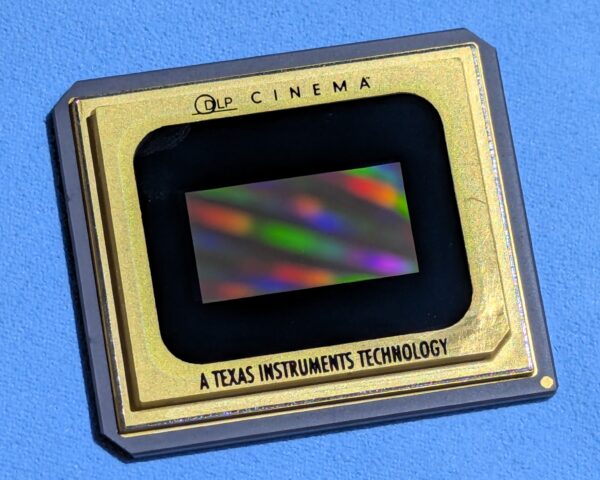
While the DLPC84-series controller delivers processing and latency improvements, TI’s new Single Spring Tip Torsional (SST) micromirror architecture physically reinforces the mirrors. This updated pixel design enables smaller, consumer-grade DMDs (digital micromirror devices) to withstand the intense thermal and optical loads of pure RGB laser engines. By tolerating this extra energy, the chipsets allow compact living room projectors to safely break through the 5,000- to 8,000-lumen barrier without requiring massive industrial-sized chassis or loud cooling fans.
Digital Micromirror Device (DMD) – Image credit: Robert Heron
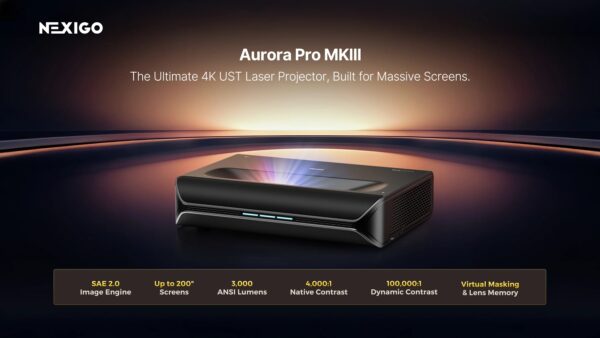
Processing has gotten smarter, too. NexiGo’s Scene Adapt Engine 2.0, debuting on the upcoming Aurora Pro MKIII, is a machine-learning model trained on tens of thousands of hours of movie footage to predict how a scene’s brightness will evolve frame by frame, rather than reacting after the fact. That predictive step enables its Subtitle Optimization feature to prevent bright captions from triggering brightness pumping, which has historically disrupted dynamic dimming in dark scenes. Its companion Virtual Masking feature shifts letterboxed content to the top or bottom of the frame to pair with drop-down or floor-rising ambient light-rejecting (ALR) screens, boosting perceived contrast without a mechanical masking system.
Aurora Pro MKIII 4K laser projector – Image credit: NexiGo
Large-Format LCD and OLED: The Middle Ground
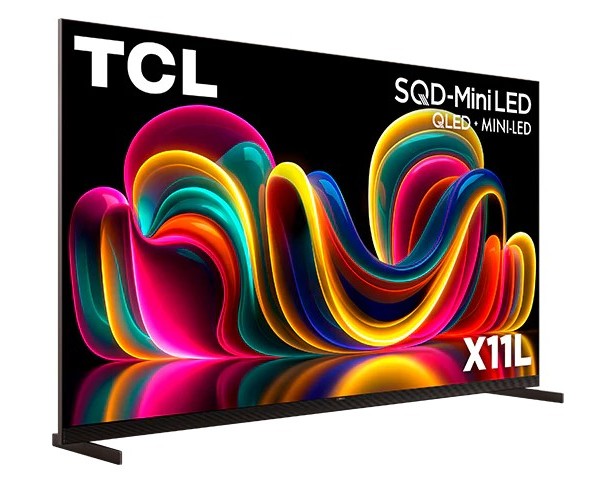
Flat panels haven’t been sitting still either. As I covered in my 2026 Display Tech Preview, CES 2026 brought a wave of large-format LCD and OLED TVs in the 97- to 130-inch range, with significantly better color volume, luminance, and HDR than the category has ever offered.
These panels don’t match DVLED’s bezel-free scale and can’t compete with projection on cost for screens larger than roughly 100 inches. But for buyers who want a large, bright, plug-and-play display without the architectural planning of a DVLED wall or the light-control requirements of a projector, these screens are becoming a compelling, lower-complexity option.
More Choices, Better Displays
Epson’s DVLED move isn’t a sign that projection has reached the end of its runway. Instead, it’s proof that the large-display market has become more diverse than ever. DVLED will continue to gain ground in applications that require robust, high-performance pixels or in locations with zero tolerance for throw distance. Projection keeps closing the gap in contrast, color, gaming latency, brightness, noise, and everyday usability. And large-format LCD/OLED for 100-inch and smaller displays offers a tempting balance of increasingly impressive performance for the price.
I see no signs of one display technology completely replacing the other. Our options for large-format displays are increasingly complementary, each excelling in different conditions. We no longer have to ask which one wins. The question is which one fits the room.