Category: Display

  • PPDS to unveil brand new 4K Philips Collaboration Displays for Education at FETC and Bett 2024 bringing a new class of interactivity and engagement to teaching and learning

    PPDS to unveil brand new 4K Philips Collaboration Displays for Education at FETC and Bett 2024 bringing a new class of interactivity and engagement to teaching and learning

    PPDS markets and sells Philips-branded professional displays, including TVs, signage, and LED solutions, worldwide. Combining Philips brand promise with TPV’s display manufacturing expertise, PPDS designs innovative products for resellers and end customers.

    PPDS will showcase Philips Professional Displays and related solutions at FETC 2024, including the launch of 4K interactive displays and preview of the Philips Genius education software suite.

    PPDS will showcase its latest hardware and software innovations at FETC 2024, including the 4K interactive Philips Collaboration displays for Education and the Philips Genius education software suite. The comprehensive suite includes digital signage, dvLED, zero power ePaper displays, and interactive classroom solutions. The Philips Collaboration Series for Education offers innovative features and enhanced inclusivity.

    PPDS, the exclusive provider of Philips Professional Displays and complementary solutions, will be showcasing its latest generation of complete across-campus hardware and software innovations on stand 1434 at FETC 2024. This year’s special event also includes the official global launch of the brand new 4K, interactive Philips Collaboration displays for Education, together with an official preview of its highly anticipated Philips Genius education software suite – delivering the manufacturer’s most advanced classroom solution to date.

    Located on the Philips booth 1434, PPDS’ specialist education team will showcase, demonstrate, and educate visitors on the company’s ever growing and evolving suite of ‘across campus’ solutions. These include digital signage, dvLED, zero power ePaper displays, interactive classroom solutions, and more, at FETC 2024.

    PPDS continued to make significant advancements in the education market in 2023, becoming the brand of choice for installations inside an increasing number of educational environments, including some of the world’s most recognized and prestigious universities. Classrooms, lecture theatres, auditoriums, libraries, reception areas, canteens, sports halls/stadiums, hallways, elevators, and student accommodation are among some of the recent examples of areas in which Philips Professional Displays are now prominent.

    New for 2024

    Kicking 2024 off with a bang, and in what will be one of PPDS’ most important education focused product launches ever, the Philips stands at FETC, and at Bett in London, will provide centre stage for the unveiling of a brand new Philips Collaboration classroom display range, with the all new ‘elementary’ Philips Collaboration

    BDL3152E and ‘advanced’ Philips Collaboration BDL4152E display series for education, with breakthrough price points and innovative new features.

    Available in 65”, 75”, and 86” sizes across both model variants, the new Philips Collaboration Series for Education marks a significant step beyond the original Philips E-Line Series, which debuted in 2021, featuring an all-new tailored design, together with the latest advances in educational software delivering unrivalled levels of engagement and inclusivity inside any learning environment.

    Redesigned using vital market feedback from education professionals, the Philips Collaboration display for Education runs on Android 13 – the world’s most popular and recognized OS used on over 3 billion devices – bringing an instantly familiar mobile or tablet experience to the classroom, for near-universal usability, and minimal training.

    Collaborate and participate

    As with their predecessors, the two new interactive Philips Collaboration for Education Series’ have been built with connected experiences and usability as their core and feature a stunning new 3840 x 2160 Ultra HD, 400-450cd/m2 brightness display, together with 40-touchpoint interaction, double that of their predecessors.

    With a blueprint to connect and enable classmates and tutors in the classroom like never before, the new WiFi and Bluetooth-enabled Philips Collaboration 3152 and 4152 displays both come with an upgraded highly intuitive integrated whiteboard application, encouraging multiple students to physically interact with the screen simultaneously by hand or dedicated display stylus.

    Frank Trossen, Global Business Development Director Education at PPDS, commented: “We have designed the new Philips Collaboration 3152 and 4152 to be truly intuitive, and we are confident that, from the moment the display is switched on, students and tutors alike will have a firm grasp and understanding of how it works. We want users to embrace the benefits of technology, rather than to be challenged by them, and we have worked hard to ensure the Philips Collaboration for Education line up will always provide a seamless user experience, whatever it’s being used for.”

    Seamless interaction

    For a seamless process, the state-of-the-art screen – which provides optimum viewing performance in any light setting – includes PPDS’ zero gap, zero latency touchscreen technology. This guarantees a natural and lag-free user experience, with precise direct on-screen writing and drawing, comparable to that of traditional pen and paper, and without fear of slowing down or disruption.

    Adding further flexibility – including for those studying remotely – PPDS is also delighted to confirm that a brand new advanced in-house wireless content sharing option – Philips ScreenShare – will soon be available, allowing tutors and students to securely connect their own (or school provided) device directly to the screen, effortlessly interacting and sharing their ideas and content with a perfect view of the action.

    Up to 64 personal devices (running on ChromeOS, MacOS, Windows, iOS or Android) can be securely connected at the same time, including those located in other rooms or locations, and even those studying remotely. AirPlay, Google Cast, and MiraCast are also supported, bringing more familiarity and simplicity to content sharing.

    All content can be easily shared and recorded via email or made accessible through the Cloud, reducing the need for excessive and potentially distracting notetaking, and keeping students fully engaged at all times.

    Johan Devos, Global Product Manager Interactive Displays at PPDS, added: “Inclusivity is crucial to any learning environment. Our new Philips ScreenShare software will, among many of its benefits, allow even the most reserved individuals to have a voice, able to share their creativity with the class. This allows them to demonstrate their potential, to build confidence, and to work with others. That alone is an incredibly powerful tool.”

    Philips Genius – new teaching and learning software / Google EDLA

    And that’s not all. Both new Philips Collaboration Series’ will also become the first Philips education displays to feature Philips Genius – a brand new education software solution, bringing a plethora of out-of-the-box, ready-to-use features and capabilities, ensuring classrooms are prepped for action from the moment the screen powers up.

    The Philips BDL4152E (advanced) model also comes with Google Enterprise Devices Licensing Agreement (EDLA) certification, providing advanced and official access to the Google Play store, together with Google’s most popular Google Mobile Services (GMS), such as Google Classroom, Google Search, YouTube, Chrome, Google Drive, among many others, reinforcing intuitive use with familiar tablet/mobile experiences.

    Thanks to the Philips Collaboration displays’ built-in videoconferencing capabilities, collaboration and interactivity is not confined solely to those in the classrooms, with opportunities to invite special guests, or even students studying remotely or otherwise away from the classroom, to join in lessons and present to their tutor and peers. Simply connect a compatible camera and use the Philips Genius software, or connect via third-party apps such as Skype, Zoom, and others to make your calls.

    For enhanced audio experiences, the new Philips Collaboration for Education line up also features two upgraded and repositioned front facing speakers, with 2 x 16W speakers on the Philips Collaboration 3152 and 2 x 20W speakers on the Philips Collaboration 4152. Storage has also been increased on both displays, with 32GB on the 3152 and 64GB on the 4152, while RAM has also been increased at 4GB and 8GB respectively, for improved performance and convenience. The two Series’ also now feature more conveniently accessible input connections, whether wall, desk, or trolley mounted.

    Built to last

    Designed for the rigors of daily use, Philips Collaboration 3152 and 4152 displays have been built to stand up to even the most heavy-handed of users, coming equipped with a highly durable 7H (Mohs) glass, ensuring risk of damage is significantly reduced, including any unsightly scratches.

    Furthermore, to ensure optimum viewing performance, the Philips Collaboration for Education displays also feature an improved anti-glare and anti-reflection gloss coating, which together with improved screen brightness – from 400cd/m2 to 450 cd/m2 – ensures these new Series’ can be viewed properly in any lighting conditions or exposure. The Philips Collaboration 4152 also includes anti-fingerprint coating, and a blue light filter, further enhancing screen performance and viewing.

    Staying in control

    Also available on the Philips Collaboration for Education Series, PPDS Wave – the evolutionary remote device management ecosystem, brings a fresh and future-proofed approach to controlling and managing display fleets of any size.

    In a continuing climate of rising energy prices, PPDS Wave Controller can play a pivotal role in delivering environmentally conscious, more sustainable solutions for education establishments, while also helping to reduce the total cost of ownership with energy saving opportunities and extended product lifetimes.

    PPDS Wave also allows fleet managers to use power scheduling for their displays, to automatically power them down when not in use, for instance outside of core school hours. Brightness can be adjusted intelligently, based on the lighting conditions, again supporting energy savings and extended product lifetimes.

    Adding further energy saving opportunities to the classroom, the Philips Collaboration 4152 also features a ‘Presence Sensor’, powering up and down based on the room’s activity.

    No student left behind

    As part of an ever deepening commitment from PPDS to supporting all levels of education, both the new Philips Collaboration 3152 and Philips Collaboration 4152 will come with a significantly lower price point compared to previous and other comparable models available in the current market bringing greater access to an even wider audience.

    Robert Hsu, VP Global Product Strategy at PPDS, commented: “At PPDS, we of course understand the huge importance of education and the value and opportunities that interactive displays can provide in creating an engaging and inspiring classroom experience. Equally, we understand that price pressures can often mean settling for less. We don’t believe any student should suffer academically or miss out for this reason. That is one of the key drivers behind the new Philips Collaboration 3152 and 4152 displays, working hard to bring the features of today and tomorrow together, with the power to transform the teaching and learning experience.”

    Frank concluded: “We are excited to be showcasing at FETC and at Bett 2024 for what will be one of our biggest and most important launch events of the year, with our new Philips Collaboration for Education Series’, together with Philips Genius, providing the power to bring together any classroom or learning environment, and to elevate the education experience.

    “And these new interactive displays are just one of the solutions going on show during these first education events of 2024. Our focus is not simply on the classroom, but across all areas of a campus, providing the widest, and ever-evolving, range of professional displays to deliver vital communications across education settings. Whether it’s a giant videowall in reception, interactive wayfinding, digital signage menus in the cafeteria, LED walls in lecture theatres, or TVs in the dorms, PPDS has it covered with Philips Professional Displays. We can’t wait to see you on stand to tell you more.”


  • 2024 Display Tech Expectations

    2024 Display Tech Expectations

    Where 2024 Display Tech is headed

    By Robert Heron

    robert@heronfidelity.com

    The new year brings another CES (Consumer Electronics Show) and a grand preview of what we can expect from display manufacturers in 2024. The primary display trend I witnessed at the show was a widespread, albeit mostly incremental, increase in specs. 2024 Display Tech will bring us more (and more affordable) display options with larger screens, brighter luminance levels, and increasingly saturated color palettes.

    8K Processing

    Interestingly, 8K display resolution generated few headlines and fewer new products at CES. 8K resolution is coming to some home theater projectors, and a few returning flagship LCD TVs will feature this 33+ million pixel screen resolution. Most 8K presentations at the show were related to the improved capabilities of video processors that will drive the latest Ultra HD display devices and the rest of 2024 display tech. The most effective video processors have been machine-trained on (many) thousands of hours of content and sometimes blur the lines between being faithful to the artistic intent and video picture enhancement.

    AVNation Hisense_RHeron
    Hisense 8K UST projector. Image by Robert Heron

    [PICTURE 00: Hisense 8K UST projector. Image by Robert Heron.]

    AVNation Sam_QN900D_RHeron
    [PICTURE 01: Samsung QN900D 8K LCD TV. Image by Robert Heron.]
    [PICTURE 01: Samsung QN900D 8K LCD TV. Image by Robert Heron.]

    LCD’s Endgame

    LCD TV manufacturers know they cannot compete with OLED’s perfect black levels and infinite contrast and have difficulties matching its well-saturated color palette. To compensate for this, 2024 LCD TVs are focusing on providing the brightest pictures yet seen. Several manufacturers claimed this year’s upper-tier models will reach 3000-5000 nits of peak brightness through mini-LED backlighting systems. One manufacturer claimed its giant 2024 flagship LCD TV will achieve HDR’s 10000 nit spec with 40000 local dimming zones.

    [https://en.wikipedia.org/wiki/Candela_per_square_metre]

    [https://www.hisense-usa.com/newsroom/hisense-exhibits-2024-display-innovations-at-ces-2024-including-uled-x-laser-tv-and-auto]

    AVNation Hisense_110UX_RHeron
    [PICTURE 02: Hisense 110UX 10000 nits/40000 local dimming zones. Image by Robert Heron.]
    [PICTURE 02: Hisense 110UX 10000 nits/40000 local dimming zones. Image by Robert Heron.]


    AVNation TCL_QM851G_RHeron
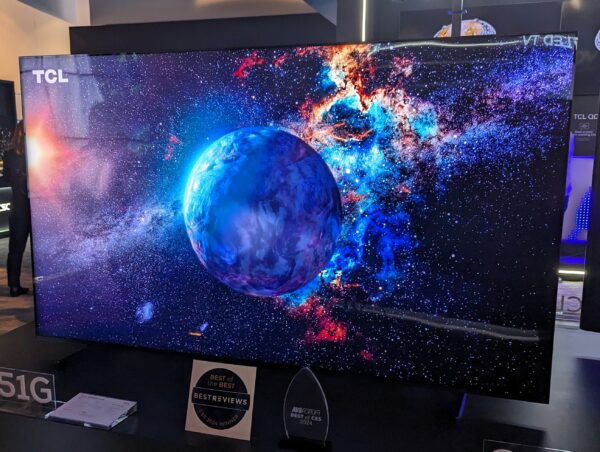
    [PICTURE 03: TCL QM851G 5000 nits/5000 local dimming zones. Image by Robert Heron.]
    [PICTURE 03: TCL QM851G 5000 nits/5000 local dimming zones. Image by Robert Heron.]

    A likely factor of this brightness push in consumer televisions is the recent introduction of the 4000 nit Sony BVM-HX3110 professional master monitor. The HX3110’s dual-LCD layer design gives content creators a readily available option for accurately crafting wide color gamut HDR video at peak luminance levels that exceed the majority of televisions currently available.

    [https://pro.sony/ue_US/products/broadcastpromonitors/bvm-hx3110]


    AVNation SONY_bvm-hx3110-768x576
    [PICTURE 04: Sony BVM-HX3110 pro monitor. Image by Sony. https://pro.sony/ue_US/press/bvm-hx3110-reference-monitor-announcement]
    [PICTURE 04: Sony BVM-HX3110 pro monitor. Image by Sony. https://pro.sony/ue_US/press/bvm-hx3110-reference-monitor-announcement]

    OLED PHOLED

    It may seem improbable that OLED TVs will ever depict material authored at 4000 nits without using tone mapping. Still, OLED panel manufacturers claim that the best 2024 designs can reach 3000 nits, with hints of 4000 nits peak brightness in 2025. Remember that display panel manufacturers like Samsung Display and LG Display provide display modules to various companies that build the products that make it to consumers (e.g., Sony Electronics, Samsung Electronics, and LG Electronics). These consumer device manufacturers will likely limit the peak brightness of an OLED display to less than the panel maker’s claims to increase panel longevity or to achieve a specific power consumption target.

    [https://en.wikipedia.org/wiki/Tone_mapping]

    One factor in increasing OLED efficiency is transitioning from a blue fluorescent emitter to a blue phosphorescent OLED (PHOLED) emitter. Phosphorescent chemistry enables the OLED material to convert more of the consumed electrical current into usable light instead of waste heat that accelerates panel degradation. Red and green OLED emitters transitioned to phosphorescence years ago, and it took quite a bit longer for chemists to perfect the recipe for blue. We’ll likely see these new blue emitters reach consumer products in 2025.

    [https://spectrum.ieee.org/blue-pholed]

    MicroLED 2024 Display Tech – Back to the Future

    Over a decade has passed since Sony wowed CES attendees by demonstrating a 55-inch 1080p MicroLED display capable of 400 nits of brightness and perfect contrast. Today, companies are showing MicroLED TVs with screen sizes exceeding 110 inches that claim 5000 nits of light output and pixels that will last 100000 hours without risk of burn-in. MicroLED was the most impressive eye candy on the show floor, but it comes with a hefty price tag in the 5 to 6-figure range. The ability to quickly evaluate, bin, blend, and accurately place the millions of LEDs that make up a MicroLED display highlights the difficulty in mass manufacturing these essentially bespoke video devices.

    [https://www.sony.com/en/SonyInfo/News/Press/201201/12-005E/]


    AVNation 2024_Sam_uLED_RHeron
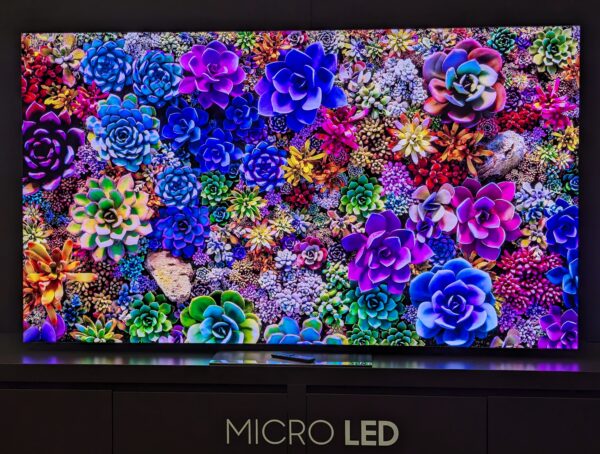
    [PICTURE 05: Samsung MicroLED display. Image by Robert Heron.]
    [PICTURE 05: Samsung MicroLED display. Image by Robert Heron.]

    Quantum Dot Electroluminescence (QDEL)

    The tiny semiconductor crystals known as quantum dots (QD) are a cornerstone of improving color in flat panel displays. The quantum dots used in today’s LCD TVs (often branded as QLED and ULED) and QD-OLED displays developed by Samsung efficiently convert a high-frequency/high-energy blue light source into lower-frequency reds and greens – a process described as photo-emissive or photoluminescence.

    [https://en.wikipedia.org/wiki/Photoluminescence]


    Sharp Electronics demonstrated the next generation of QD display technology at CES 2024: quantum dot electroluminescence (QDEL). A QDEL display converts electrical current directly into visible light using an inorganic material (quantum dots) that should be less prone to degradation over time than today’s OLED formulas. Sharp’s private CES demonstration included a 12-inch QDEL monitor displaying motion video and a prototype 30-inch monitor. While Sharp’s demo was the most advanced form of QDEL we’ve seen, it will be a couple of more years before it competes with the brightest and most colorful display technologies we have today.

    [https://www.digitaltrends.com/home-theater/sharp-qdel-tv-ces-2024/]

    Artful TVs

    Samsung’s The Frame series of televisions was not the first to bring artwork to a consumer display device. However, the company’s efforts proved extremely popular, so it’s no surprise that most TV makers had their art-ready offerings prominently featured in their booths at CES. For 2024, Samsung’s latest iteration of The Frame features an “Art Mode” validated by Pantone. It further improves its depiction of artistic creations with a room light sensor that adjusts the display’s “brightness and hues to optimize the image for ambient lighting conditions.” A technical demo provided by Samsung showed The Frame responding to changing room lighting conditions, including color temperature, and the TV responding within seconds to maintain an accurate visual representation. A nearby Pantone color sample chart and color evaluation lightbox highlighted how closely the 2024 The Frame matched the real-world effects of lighting quality on our perception of color. The Frame did an admirable job of showing how the artwork would look if placed in the room you are standing.

    [https://www.samsung.com/us/tvs/the-frame/highlights/]

    [https://news.samsung.com/us/the-frame-receives-first-pantone-validated-artfulcolor-certification-for-color-fidelity/]


    AVNation Sam_The_Frame_RHeron
    [PICTURE 06: Samsung The Frame television. Image by Robert Heron.]
    [PICTURE 06: Samsung The Frame television. Image by Robert Heron.]

  • AUO Corporation showcases next-generation LED Dome Display at ISE 2024

    AUO Corporation showcases next-generation LED Dome Display at ISE 2024

    AUO, a Taiwan-based technology company, offers innovative products and solutions in smart mobility, industrial intelligence, energy, retail, healthcare, and enterprise, with a global team of 38,000 employees.

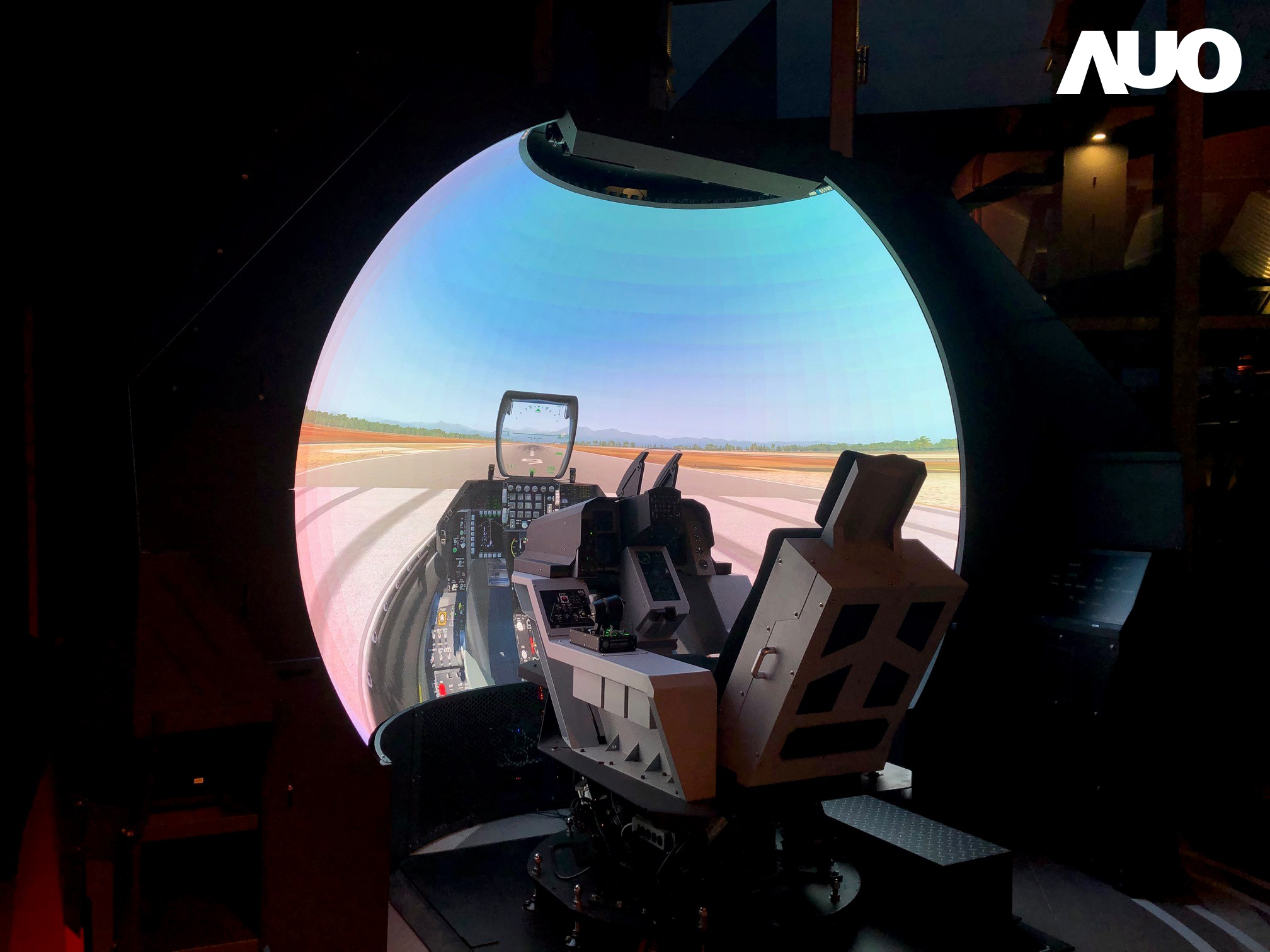
    AUO Corporation will showcase its LED Dome Display solution at Integrated Systems Europe (ISE) 2024, featuring a 3m immersive display with high brightness, resolution, dynamic range, and wide color gamut. The technology has been deployed in various sites.

    The immersive 3m spherical display offers high brightness, resolution, dynamic range, and a wide color gamut, making it ideal for immersive experiences in amusement and simulation applications. The modular design streamlines installation, saving time and labor costs. The display features 18-bit color depth, HDR support, 4K resolution, and 120 Hz frame rate for smoother images.

    AUO Corporation (AUO), a global leader in display technology and applications, will showcase its LED Dome Display solution at Integrated Systems Europe (ISE) 2024, stand 5K200. The spherical 3m immersive display features AUO LED (ALED) technology, which offers high brightness, high resolution, high dynamic range and a wide colour gamut for simulations and amusement applications. The technology has recently been deployed in several sites to deliver engaging entertainment experiences. AUO Corporation will participate at ISE for the first time, alongside its industrial and commercial display subsidiary, AUO Display Plus (ADP).

    “Our LED Dome Display technology provides a stunning next-generation visual display solution for immersive experiences in both amusement and simulation applications,” said Dr. Wei-Lung Liau, Chief Technology Officer of AUO. “There is a growing trend towards LED deployment in this space, with fewer limitations than traditional projection systems allowing partners more creative freedom in their installations. AUO’s ALED technology offers superior brightness, contrast and image quality, which further enhances the sense of immersion and realism. The technology can apply to driving, sailing, and flying scenarios, delivering a realistic image for powerful, lifelike experiences.”

    The solution uses ALED technology to allow for the immersive hemispherical shape to be achieved, with its modularised dome frame and cabinet designed to speed up the installation process to save time and labour costs. The display features 18-bit colour depth when paired with the self-developed AUO controller, and it supports HDR formats to provide richer colours and smoother gradation. Its 4K resolution image and 120 Hz frame rate create smoother images, with increased details. AUO sphere image processing technology (powered by an AUO self-developed controller) allows partners to transform flat images into spherical content to fit the dome display, whilst real-time image processing enables players to interact with content instantaneously.


  • Picking the perfect WFH monitor

    Picking the perfect WFH monitor

    By Robert Heron

    robert@heronfidelity.com

    WFH Monitor Excellence

    It doesn’t matter if your home office is a dedicated room or something cobbled together in a convenient spot: a good computer monitor goes a long way toward increasing productivity by making it easier to see what you are doing. The ideal WFH monitor will also provide the necessary features to make daily operations convenient and easy.

    KNOW THYSELF

    The first step to finding your perfect display is considering how you plan to use it. Suppose you spend most of your time reading web pages or reviewing and editing documents. In that case, you’ll appreciate a WFH monitor that makes text appear crisp and detailed. Multi-taskers may want to add a display or prefer a monitor that makes connecting a laptop or integrating a second computer easy. Color-critical applications like image or video editing would benefit from a display well-calibrated to industry standards right out of the box.

    Also, consider the room environment – lighting in particular. A brightly lit room would benefit from a monitor that delivers at least 300 nits of light output. Darker rooms are ideal for monitors with excellent picture contrast that can produce inky-dark blacks.

     A bright and accurate WFH Monitor

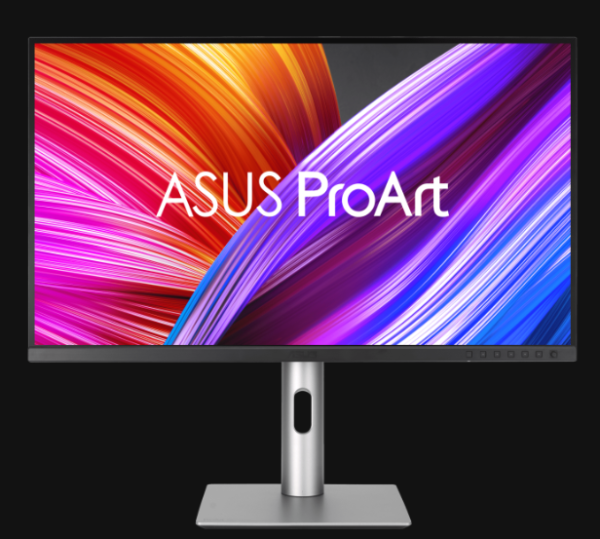
    The Asus ProArt Display (PA279CRV) is a 27-inch 4K monitor with detailed imagery, good viewing angles, and punchy brightness. Its factory color and grayscale video calibration results in an accurate performance right out of the box, and it claims to cover almost all of the DCI-P3 and Adobe RGB color gamuts. Ergonomics are excellent, with a compact base that offers tilt, swivel, pivot, and height adjustments. The ProArt display also incorporates a 96W USB-C port for an all-in-one link to a compatible laptop.

    AsusProArt monitor
    AsusProArt monitor

    Asus ProArt Display (PA279CRV)

    [https://www.asus.com/us/displays-desktops/monitors/proart/proart-display-pa279crv/]

    SCREEN SIZE/SHAPE

    Screen size is the first spec to consider when shopping for a new display. A larger single WFH monitor can reduce clutter and complexity by replacing two smaller-sized screens. Or, you may require a secondary display with a stand that offers flexible orientation options for creating the perfect view. Some applications are better suited for a wider or taller monitor than the standard screens with a 16:9 aspect ratio. Help yourself visualize an ideal monitor size and shape by grabbing a measuring tape and crafting a paper or cardboard proxy.

    Recommendation: A near-perfect second display

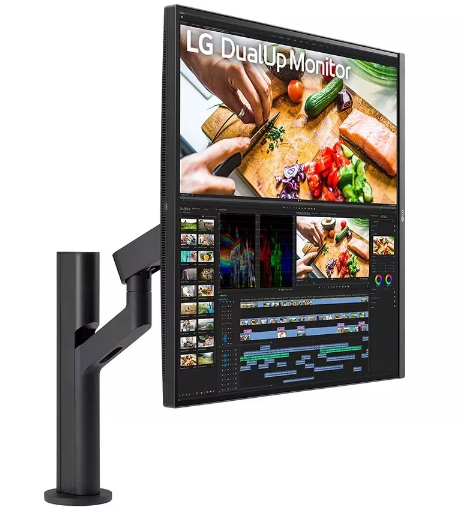
    The LG 16:18 DualUp Monitor with Ergo Stand (28MQ780-B) is an attention grabber with its unique screen shape and a stand that clamps to the edge of a desk, minimizing consumed real estate. The arm-like Ergo Stand allows this 28-inch display to be orientated however the user sees fit, including adjustments for rotation, swivel/tilt/height, and extend/retract. The screen’s 2560 x 2880 pixel resolution is effectively two 1440p monitors stacked together that exceed 300 nits of light output while covering up to 98% of the DCI-P3 color space. Add its decent factory calibration, and the DualUp would be ideal for photo or video editing. The DualUp’s almost squarish screen with 135+ PPI would also be perfect for document and web work. A built-in KVM switch can leverage the monitor’s 90W USB-C and DisplayPort connections to control two computers with one keyboard and mouse connected to the display.

    LG DualUp Monitor
    LG DualUp Monitor

    LG 16:18 DualUp Monitor with Ergo Stand (28MQ780-B)

    [https://www.lg.com/us/monitors/lg-28mq780-b-dualup-monitor]

    [https://en.wikipedia.org/wiki/KVM_switch]

    TEXT/PPI

    The more pixels-per-inch (PPI) a screen has, the more detailed and legible text will appear. A monitor’s PPI rating is a factor of the screen’s native pixel resolution in relation to its physical screen size, and a PPI greater than 90 is a good starting point. A PPI rating of 130 or higher is ideal for maximum text clarity. Consult a PPI calculator to make sure the monitor you are considering isn’t a downgrade in fine detail from what you may already have.

    [https://www.sven.de/dpi/]


    Screen size (16:9) Resolution Pixels-per-inch (PPI)
    24-inches 1920 x 1080 (1080p/Full HD) 91.79
    27-inches 2550 x 1440 (1440p) 108.79
    27-inches 3840 x 2160 (2160p/4K) 163.18
    32-inches 3840 x 2160 (2160p/4K) 137.68


    It’s worth noting that some display technologies are better than others when rendering text with optimal clarity. OLED monitors, including quantum dot OLED (QD-OLED), are pure eye candy and offer superior picture contrast, color performance, and off-axis viewing. However, compared to LCDs, the unique sub-pixel structure of OLED displays can introduce color-fringing artifacts to rendered text that may prove undesirable. Software font enhancements like Windows ClearType can minimize these OLED artifacts to some degree but with sacrifices in overall text clarity.

    Recommendation: All-around excellent WFH Monitor

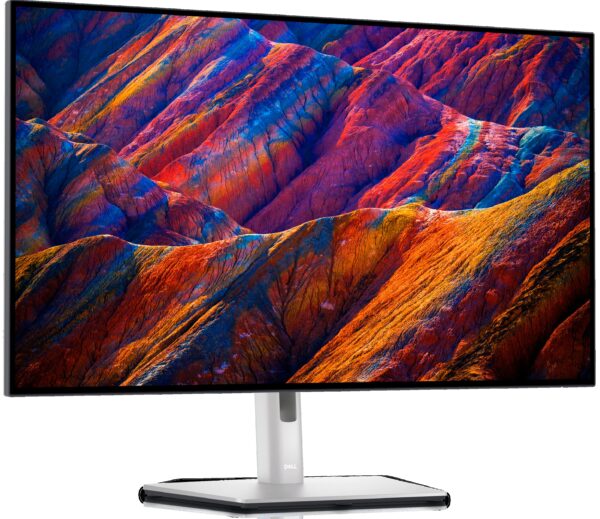
    The Dell U2723QE is a highly rated 27-inch 4K monitor for good reasons. This display offers a compelling combination of a well-contrasted bright picture, high pixel density, wide viewing angles, and terrific out-of-the-box color accuracy. The U2723QE’s stand provides excellent ergonomics with any desired orientation. Its integration of a KVM switch makes it well-suited for dual PC configurations or modern laptops that can use a single USB-C connection for video, power, and external control. The Dell U3223QE is a similar 4K display with a larger 32-inch screen size.

    Dell u3223qe
    Dell u3223qe

    Dell U2723QE

    [https://www.dell.com/en-us/shop/dell-ultrasharp-27-4k-usb-c-hub-monitor-u2723qe/apd/210-bdpf/monitors-monitor-accessories]

    [https://www.dell.com/en-us/shop/dell-ultrasharp-32-4k-usb-c-hub-monitor-u3223qe/apd/210-bdph/monitors-monitor-accessories]

     SECOND DISPLAY OR WIDESCREEN

    The popular aspect ratio of 16:9 featured in most computer monitors is adequate for displaying two windows or documents side by side. When a larger workspace becomes necessary, an additional display or ultrawide monitor can be a game changer. Adding an extra display can be a cost-effective upgrade that allows for the option to rotate a screen into a portrait view that can assist with previewing long documents or web pages. An ultrawide monitor with an aspect ratio of 21:9 or wider will provide a more seamless and efficient view than a multimonitor setup’s additional bezels that divide a visual workspace. For remote workers in a screen-sharing scenario, remember that an ultrawide monitor’s unique shape and relatively high pixel count may make it more difficult for coworkers to view your presented content.


    A high-resolution WFH Monitor

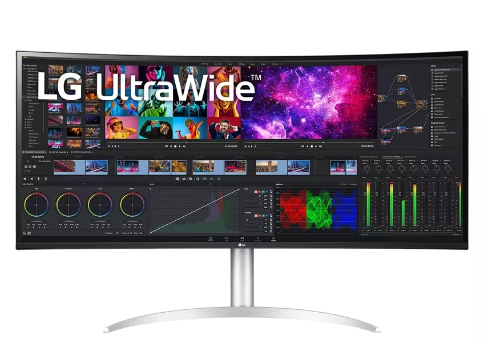
    The 40-inch LG Curved UltraWide 5K2K Nano IPS Monitor (40WP95C-W) is a 21:9 widescreen monitor that matches the pixel density of 32-inch 4K monitors (~140 PPI), making it ideal for text-heavy workloads. A USB-C/Thunderbolt 4 port on the monitor’s rear can deliver up to 96W, making it easy to connect to a compatible laptop. This LG UltraWide has decent contrast and brightness, and its color gamut coverage extends impressively into DCI-P3 territory. However, content creators should consider giving this monitor a custom color calibration using LG’s free Calibration Studio software (compatible hardware meter not included) to ensure reference-quality imagery.

    LG UltraWide
    LG UltraWide

    LG Curved UltraWide 5K2K Nano IPS Monitor (40WP95C-W)

    [https://www.lg.com/us/monitors/lg-40wp95c-w-ultrawide-monitor]

    [https://www.lg.com/ca_en/support/product-support/cs-40WP95C-W.AUS/]

    VALUE PROPOSITION

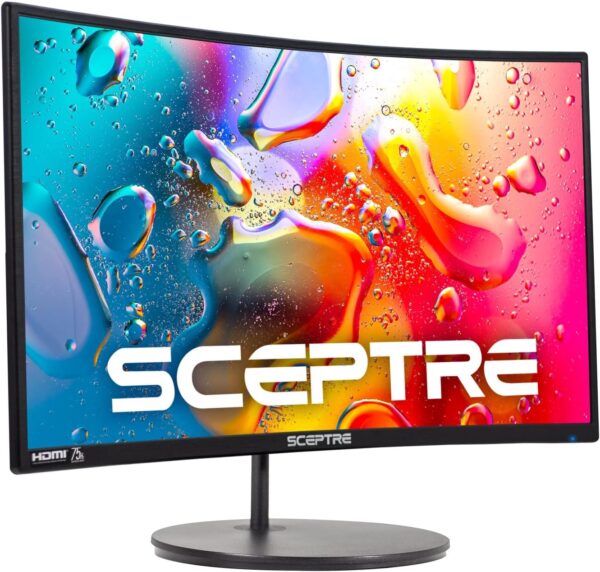
    Sometimes, the lowest price is the best option. When comparing the most affordable WFH monitor available today, I’m impressed with the value offered by the Sceptre brand that dominates Amazon’s Best Sellers category – half of the top ten on this list, at the time of this article, are Sceptre-branded displays! Add to this the company’s thousands of user reviews, averaging over 4-stars. Granted, all of Secptre’s monitors listed in Amazon’s top twenty are 1080p screens in the 80-100 PPI range, but shop carefully, and you could score a decent display without breaking the bank.

    Sceptre
    Sceptre

    Sceptre ‎C248W-1920RN

    [https://www.sceptre.com/]

    [https://www.amazon.com/Best-Sellers-Computers-Accessories-Computer-Monitors/zgbs/pc/1292115011/]


  • PPDS and DEEL Media transform the movie-going experience at Showcase Cinemas in North America with 568 Philips 4K UHD digital signage and videowall displays

    PPDS and DEEL Media transform the movie-going experience at Showcase Cinemas in North America with 568 Philips 4K UHD digital signage and videowall displays

    PPDS, the exclusive global provider of Philips Professional Displays and dedicated AV solutions, is excited to announce the installation of 568 remotely managed 4K Philips digital signage and videowall units in all Showcase Cinemas in North America, transforming the moviegoing experience and delivering lucrative new sales opportunities.

    Founded in 1936 in Dedham, Massachusetts – and owned by National Amusements Inc, a leader in the motion picture exhibition industry – Showcase Cinemas is one of the world’s oldest and most recognized global theatre chains, with 76 venues (operating almost 1,000 screens) spanning the US (22), UK (17), Brazil (29), and Argentina (8).

    Synonymous with comfort and quality, Showcase Cinemas – operating under a variety of brand names, including Cinema de Lux, SuperLux and Multiplex in Massachusetts, New York, Ohio and Rhode Island – offers a wide and ever-evolving choice of dining options, including full-service restaurants, bars and cafés, and traditional concession kiosks. For a few dollars more, it even offers in-theatre dining options, with food and drink delivered directly to your seat.

    Technology plays an important role in Showcase Cinemas’ connected digital approach, impacting almost every aspect of its business, beginning before moviegoers even set foot inside its establishments.

    Transformers

    Part of a major refresh of all Showcase Cinemas in the US, the company turned to Atlanta-based PPDS partner, DEEL Media – a leading digital signage solutions specialist, with extensive experience in delivering turnkey solutions to movie theatres – tasking the company to replace its ageing and outdated display network to transform the visual experience for movie-goers. This included delivering additional and consistent communications across all locations, while creating new revenue opportunities.

    Following deep-level discussions and site visits, 549 x Philips Signage D-Line 4K UHD digital displays (43”-75”) and 19 x Philips Videowall X-Line (49”-55”) displays were selected and installed in all Showcase Cinemas lobby areas, as well as along corridors leading up to each theatre screen. This replaced the previous scattergun approach to displays, switching to a single manufacturer, rather than using multiple brands across its network, for more consistent capabilities and experiences.

    Philips X-Line and D-Line displays were selected, in part, due to their flexibility and versatility to conform to almost any environment, thanks to their powerful high-impact 4K screen, ensuring picture-perfect performance in any lighting condition, including direct sunlight.

    With PPDS’ ‘Open 2’ strategy – embracing complementary software platforms and hardware from other providers – displays were configured and tailored to suit each unique theatre design and environment using DEEL Media’s proprietary ‘Carbon™’ content management system, providing extensive control, management and creation capabilities, managed either on-site or from a central location for the first time.

    Designed for today and the future while transforming each space into a hive of digital activity, the Philips Signage D-Line and Videowall X-Line displays now provide a constant, wide, and varied feed of digital content and information to visitors. Removing all paper-based messaging, this includes box office information, trailers for current and ‘coming soon’ movies (including ‘Digital Poster’ casing in selected venues), and wayfinding, together with extensive branding and marketing opportunities that were not available with its previous system.

    The menu

    Continuing the feast of digital experiences, the centrepiece of each location – and a vital focus for additional revenues – are the main food concession kiosks, which feature an elevated and unmissable line of connected Philips Signage D-Line displays, stretching the full width of the purchasing areas.

    Here, DEEL Media designed all the content to offer an ever-changing digital menu board, showcasing mouthwatering visuals (including for specific brands, such as Starbucks and Edy’s), together with pricing, calories and deals on all available refreshments, such as hot dogs, nachos, drinks, popcorn, candy floss, and chocolates.

    A recent survey* of 2,500 moviegoers showed 81 percent of people believe concessions are an important part of the movie theater experience and since installation, food and beverage sales have increased by approximately 20 percent, bringing an instant return on investment.

    Philips Signage D-line and Videowall X-Line displays, together with DEEL Media’s platform, also provide opportunities for regular ‘lobby takeovers’ with all displays synchronized to show specific, impossible-to-ignore content simultaneously. Examples of use-to-date include promotions of the latest food combos, seasonal events, and other special gatherings.

    A time to thrill / Fast and furious

    Despite a tight deadline, the project was completed across all movie theatres on time earlier this year, and has been hailed as a complete success, with all challenges overcome and ambitions met.

    Bruce Wyrwitzke, Director of Sales NA at PPDS, said: “Our Philips digital signage and videowall solutions have a proud and proven track record in helping businesses to transform visitor experiences in a variety of markets and environments, culminating in increased profits. We’re proud to have supported DEEL Media, a PPDS Global Alliance Partner, in helping Showcase Cinemas achieve its ambitions for what has been a hugely important project.”

    Vik Joshi, Assistant Vice President of Retail Technologies at Showcase Cinemas US, said: “At Showcase Cinemas we offer an experience that separates us from other exhibitors. This project with DEEL Media and PPDS came about because our old signage system had become outdated and needed a refresh. We were very impressed with the quality and capabilities of the solution presented, and after an initial trial, we were happy to go ahead with the full refresh across all our US locations.”

    Jacob Volk, Executive Vice President of Client Services at DEEL Media, added: “The Philips D-Line and Philips X-Line displays were the standout choices for this project. Working seamlessly with Carbon™, Showcase Cinemas can efficiently manage all current digital menu boards and other signage implementations, be that the 500-plus they have today or the thousands they may have in the future. It’s just as easy to manage the digital signage in all theaters as it is one. The feedback we have received from Showcase Cinemas, from executives through to the staff, has been overwhelmingly positive and the project a complete success.

    Vik Joshi concluded: “I would highly recommend DEEL Media and PPDS to anyone in our industry looking to update their existing menu boards and box office screens. The quality of the products, together with the

    professionalism, ensured a seamless transition in switching from one system to another and it’s been a very stress-free experience.”

  • Samsung, Hollywood Park team up on LED video display installation at SoFi Stadium

    Samsung, Hollywood Park team up on LED video display installation at SoFi Stadium

    Samsung’s outdoor LED products were exclusively used to build SoFi Stadium’s 70,000 square-foot dual-sided center-hung videoboard and five levels of fascia display

    They say the stars shine brighter in Hollywood and thanks to Samsung Display technology, Hollywood Park will be the brightest of them all.  Samsung’s outdoor LED products were exclusively used to build SoFi Stadium’s 70,000 square-foot dual-sided center-hung videoboard and five levels of fascia display which will be used to elevate the fan experience to unparalleled heights.  The state-of-the-art videoboard not only features the most LEDs ever used in a sports or entertainment venue, but also has the first and only 4K end-to-end video production in a stadium.

    “SoFi Stadium features cutting edge display technology and serves as another example of Samsung’s commitment to changing the way fans interact with live sports,” says Harry Patz, Senior Vice President and General Manager, Display Division, Samsung Electronics America.  “We are proud to outfit the stadium with an iconic, first of its kind, double-sided 4K LED display and additional Samsung digital signage technology to ensure that each fan has a unique experience every time they visit Hollywood Park. SoFi Stadium will instantly become one of the NFL’s most talked about stadiums and Samsung is honored to be a part of its history from the start.”

    “The Samsung LED technology represented in the videoboard at SoFi Stadium is unlike anything fans have ever experienced,” said Jason Gannon, managing director, SoFi Stadium and Hollywood Park. “The design as well as the board’s video and audio capabilities are the first of their kind in sports and will set a new precedent for the in-stadium experience.”

    Built for the future, the videoboard has the largest LED content playback system ever deployed. With nearly 80 million pixels spaced 8 millimeters from center to center, each panel can be uniquely or congruently programmed with statistics, live and/or animated content. The largest panel is almost 40 feet or four stories tall; its smallest panel is nearly 20 feet or two stories tall. Its unique size and shape make it wider than the field of play and offers fans a spectacular view from anywhere in the stadium, enhancing the action taking place on the field.

    The different sizes of the video panels are designed to serve spectators in every seat, from the sideline to the upper deck. Fans sitting in the lower bowl of the stadium will view the inside of the videoboard as it sits directly across from their line of view, while guests in the upper bowl will view the outer panels of the videoboard.

    Built into the videoboard is a state-of-the-art JBL audio system with more than 260 of the stadium’s total 4,500 loudspeakers. The videoboard sound system accounts for half a million of the 1.3 million watts of Crown Audio amplification in the venue.

    This cutting-edge technology within this 298-acre sports and entertainment destination in the heart of Los Angeles will set a new standard for the fan experience. SoFi Stadium and Hollywood Park represent the future of sports and live entertainment. Samsung is excited to work with Hollywood Park to enhance, improve and develop dynamic and innovative technology to improve the guest experience for years to come.

    “As sports and concerts begin to come back, stadiums need to deliver a new kind of experience to their guests every time they step into the venue that provides customers with safety information and overall peace of mind, Brett Unzicker, Vice President, LEES, Display Division, Samsung Electronics America.  “At Samsung, we understand how using the latest technology in digital signage can help partners like Hollywood Park not only elevate the overall fan experience, but also ensure that safety is top of mind to all.”

    Additional Samsung technology is represented throughout Hollywood Park, reaching fans across the district’s residential, office and retail areas through Hollywood Park’s connected mobile app.