Immersive venues promise unforgettable audience experiences. But what happens when the technology behind the spectacle becomes too complicated to manage?
From concerts and corporate events to exhibitions and experiential entertainment, immersive AV technology is changing how audiences engage with live productions. Massive LED displays, projection mapping, spatial audio, and interactive systems are transforming traditional venues into environments where audiences become part of the experience.
Yet behind the visual spectacle lies a growing operational challenge. Skilled labor shortages, complex AV infrastructure, and demanding production schedules are putting pressure on event teams. For venue managers and technical directors, the question is no longer just how to create immersive experiences, but how to deliver them reliably, efficiently, and at scale.
Immersive Venues Are Changing the Live Event Experience
Traditional live events have relied on stages, screens, and sound systems to capture attention. Immersive venues take a different approach, using integrated audiovisual technology to transform the entire environment.
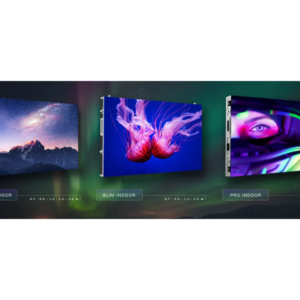
Large-format LED displays create digital landscapes, projection mapping turns physical surfaces into storytelling elements, and spatial audio delivers sound throughout the venue. Combined with synchronized lighting and interactive technologies, these systems create experiences that extend beyond conventional presentations.
The Sphere in Las Vegas demonstrates what’s possible. Its 160,000-square-foot interior LED display surrounds audiences, while its immersive audio system uses 167,000 individually amplified speaker drivers to deliver precisely controlled sound. The venue also incorporates multisensory technologies that support immersive storytelling.
But Sphere offers a broader lesson for the AV industry: immersive experiences depend on much more than impressive hardware. Behind the visuals are sophisticated content processing, audio distribution, synchronization, and control systems working together.
For event producers, the challenge is achieving that coordination without introducing unnecessary operational complexity.
The Hidden Challenges Behind Immersive Event Production
As immersive environments become more sophisticated, the demands on production teams increase.
Skilled labor remains a critical challenge. Immersive productions require expertise across video processing, media servers, networking, spatial audio, lighting, and control systems. Finding professionals capable of managing these interconnected technologies can be difficult, particularly when events operate under tight deadlines.
Greater complexity also increases dependence on specialized technicians. Without intuitive controls, standardized workflows, and proper training, even routine production changes can become time-consuming.
Scalability creates another concern. A venue hosting corporate presentations one week and large-scale entertainment productions the next needs infrastructure capable of supporting different content formats, audience requirements, and technical configurations.
Then there’s the pressure of event delivery. Live productions leave little room for delays. A synchronization issue, network interruption, or media server failure can disrupt an otherwise carefully planned experience.
For technical directors, the priority isn’t simply achieving impressive technical performance. It’s ensuring that performance remains consistent when the venue is operating under pressure.
Why Scalable AV Infrastructure Is Essential
Immersive venues require infrastructure that can evolve alongside production demands. Systems designed around a single event format may become restrictive as venues expand their programming.
Modular video distribution, networked audio, adaptable display configurations, and centralized control can help venues accommodate different productions without repeatedly redesigning their infrastructure.
However, scalability isn’t just about adding more equipment. It requires careful planning around network capacity, signal distribution, processing requirements, and compatibility between systems.
Reliability must also be part of the design process. System monitoring, appropriate redundancy, testing, and recovery procedures help production teams identify problems and respond before they affect the audience.
For venue operators, this means evaluating AV investments based on long-term flexibility rather than immediate visual impact alone.
A scalable system should make future productions easier to deliver, not introduce additional technical barriers whenever requirements change.
Why Turnkey AV Integration Matters More Than Ever
One of the biggest challenges in immersive venue development is coordinating technologies from multiple manufacturers.
Displays, audio, lighting, networking, media servers, and control platforms may perform well independently. But when these systems must operate together, compatibility and synchronization become essential.
A coordinated AV integration strategy helps address these challenges before they reach the production floor.
Rather than treating each technology as a separate installation, experienced integration partners can coordinate system design, equipment selection, deployment, commissioning, and operator training around the venue’s operational requirements.
This approach can simplify troubleshooting, establish clearer technical responsibilities, and reduce the burden on internal production teams.
Ongoing support is equally important. Immersive venues require regular maintenance, software updates, system monitoring, and technical assistance to maintain dependable performance.
For event producers facing limited technical resources, a well-supported AV environment allows teams to focus on creative execution instead of constantly managing infrastructure problems.
The real value of turnkey integration isn’t simply bringing technologies together. It’s making sophisticated systems easier to operate, maintain, and scale.
Are Immersive Venues Delivering Real Value?
Immersive technology can create memorable experiences, but impressive visuals alone don’t guarantee a strong return on investment.
Venue managers must evaluate whether their systems improve event delivery, support diverse productions, and contribute to operational efficiency.
Audience engagement remains important, but it should be considered alongside measurable indicators such as setup time, technical disruptions, staffing requirements, maintenance costs, and system utilization.
For multipurpose venues, flexibility can be particularly valuable. Infrastructure that supports concerts, corporate events, exhibitions, and other productions may offer more long-term opportunities than technology limited to one application.
The goal should be to balance creative ambition with operational practicality. Technology must enhance the audience experience without making production unnecessarily difficult.
Five Questions Venue Operators Should Ask Before Investing
Before investing in immersive AV solutions, event producers, venue managers, and technical directors should consider five practical questions.
- Can the system support different event formats? Flexible infrastructure helps accommodate changing production requirements without extensive modifications.
- How much specialized labor will it require? Intuitive control systems, standardized workflows, and effective training can reduce operational complexity.
- What happens when critical technology fails? Monitoring, redundancy, and recovery procedures should be considered during system planning.
- Can the infrastructure handle tight production schedules? Efficient configuration, reliable performance, and streamlined changeovers are essential for busy venues.
- Who provides support after installation? Maintenance, technical assistance, and future upgrade planning should be part of the investment decision.
These questions shift the conversation from equipment specifications toward long-term venue performance.
Frequently Asked Questions About Immersive Venues
What makes a venue immersive?
An immersive venue combines technologies such as LED displays, projection mapping, spatial audio, lighting, and interactive systems to create an environment that surrounds and engages audiences.
What AV infrastructure is needed for immersive experiences?
Requirements vary by application but may include scalable video distribution, networked audio, media servers, synchronized control systems, reliable networking, and monitoring capabilities.
How can venues manage immersive AV operating costs?
Venue operators can control long-term costs through scalable infrastructure, standardized workflows, staff training, preventive maintenance, and dependable technical support.
The Future of Immersive Venues Depends on What Audiences Don’t See
Immersive venues are expanding what’s possible in live entertainment, corporate events, and experiential environments. But as productions become more sophisticated, the need for reliable infrastructure, skilled operations, and coordinated integration becomes increasingly important.
For event producers and venue managers, success requires more than investing in advanced displays or audio systems. It depends on scalable AV solutions, practical system design, and dependable long-term support.
The most successful immersive venues won’t necessarily have the most technology. They’ll be the ones where every system works together seamlessly, allowing audiences to focus entirely on the experience.
The real measure of an immersive venue isn’t how much technology audiences notice. It’s how completely the technology allows them to forget everything else.
- AVNation Staff
- AVNation Staff
- AVNation Staff
- AVNation Staff