Category: Article

  • Courtroom Modernization in 2026: What IT Leaders Are Standardizing First (and Why)

    Courtroom Modernization in 2026: What IT Leaders Are Standardizing First (and Why)

    In 2026, courtroom modernization is no longer a discretionary upgrade or a facilities-driven refresh cycle. Across state and local justice systems, technology decisions are being reshaped by policy, compliance mandates, and operational risk management. Courtrooms have become mission-critical IT environments, where audio, video, control, and network infrastructure directly affect due process, security, and public trust.

    For IT leaders in the justice sector, the priority is clear: standardize first, modernize second. This shift is not about slowing innovation. It is about creating controlled, defensible, and scalable technology environments that can support the realities of modern judicial operations, hybrid proceedings, digital evidence, cybersecurity threats, and shrinking technical staff.

    Courtroom Technology Has Become a Matter of Policy, Not Preference

    Historically, courtroom technology evolved unevenly. One judge favored document cameras, another preferred monitors. Some rooms received major upgrades, others limped along with legacy systems. In 2026, that model is increasingly untenable.

    Today’s courtrooms are governed environments. Technology choices are shaped by statewide judicial councils, IT governance boards, and security policies that extend far beyond the walls of a single courthouse. Audio and video systems are no longer “room tools”; they are systems of record that influence appeals, evidentiary integrity, and compliance with public access requirements.

    As a result, modernization efforts now start with policy questions:

    • How is courtroom audio captured, logged, and preserved?
    • Who has access to control systems, and how is that access audited?
    • How do we ensure consistent performance across every courtroom in a district?

    Once those questions are answered, technology selection follows, not the other way around.

    Why Standardization Is the Cornerstone of Judicial Technology Strategy


    For justice-sector IT leaders, standardization is not about convenience. It is about risk reduction.

    Inconsistent courtroom technology creates procedural vulnerability. A microphone that fails to capture a key exchange, a camera angle that obscures a witness, or an unreliable recording system can introduce grounds for appeals or retrials. These are not theoretical risks; they are operational realities that carry financial and reputational consequences.

    Reducing Procedural Risk Through Uniform Technology Behavior

    Standardized courtroom AV systems ensure that every proceeding, regardless of location, meets the same technical baseline. Audio levels behave predictably. Camera framing is consistent. Evidence presentation follows defined workflows.

    From a policy perspective, this uniformity strengthens the defensibility of the judicial record. From an operational perspective, it simplifies training, troubleshooting, and support. Staff do not need to relearn each room. Judges are not dependent on local “workarounds.” The system behaves as expected, every time.

    From Capital Projects to Governed Technology Programs

    Another major shift in 2026 is how courts view modernization itself. Instead of one-off renovation projects, many justice systems are adopting governed technology programs with defined standards, approved equipment lists, and lifecycle management plans.

    This approach allows IT departments to control versioning, firmware updates, and compatibility across hundreds of rooms. It also aligns courtroom technology with broader government IT policies, including cybersecurity frameworks and asset management requirements.

    Security Architecture Is a Baseline Requirement, Not an Add-On

    If there is one area where courtroom modernization has become deeply technical, it is security.

    Courtroom AV devices, microphones, cameras, encoders, control processors, are now fully networked endpoints. They generate data, store credentials, and interact with enterprise systems. In high-security environments, that reality changes everything.

    AV Endpoints in Zero-Trust Environments

    In 2026, many justice IT departments are adopting zero-trust security models. Under these frameworks, no device is inherently trusted, not even courtroom AV equipment.

    This has direct implications for system design. AV endpoints must support authentication, role-based access control, secure firmware updates, and network isolation. Devices that cannot meet these requirements increasingly fail to make approved standards lists, regardless of their AV performance.

    For AV professionals, this means security fluency is no longer optional. Understanding how devices authenticate, how traffic is segmented, and how access is logged is now part of delivering a compliant courtroom system.

    Aligning With CJIS and State IT Security Policies


    Justice environments often operate under overlapping regulatory frameworks, including CJIS requirements, state IT security standards, and local government policies. Courtroom technology must align with all of them.

    Standardization simplifies this alignment. When every courtroom follows the same architecture, same device classes, same network segmentation, same access controls, compliance becomes manageable. When every room is different, compliance becomes a moving target.

    Digital Evidence Management Drives Technical Consistency

    One of the strongest forces behind courtroom standardization in 2026 is digital evidence.

    Evidence is no longer limited to physical exhibits. Video clips, body camera footage, surveillance recordings, and digital documents are now routine. Courtroom AV systems must present this material clearly, accurately, and securely, while maintaining chain-of-custody requirements.

    Chain-of-Custody Starts With Signal Integrity

    From an IT perspective, signal integrity is not just a quality issue; it is a legal one. Courts are increasingly standardizing how evidence is ingested, displayed, recorded, and archived. This includes consistent codecs, timestamping, metadata handling, and storage workflows.

    Standardized AV systems reduce variability in how evidence is handled, minimizing questions about authenticity or alteration. They also make it easier to integrate courtroom recordings with long-term archival systems and records retention policies.

    Integration With Case Management and Transcription Systems

    Modern courtrooms do not operate in isolation. AV systems must integrate with case management platforms, transcription services, and evidence repositories. That integration drives technical decisions around APIs, formats, and interoperability.

    Standardization ensures these integrations work consistently across facilities, reducing administrative overhead and minimizing the risk of data gaps or mismatches.

    Hybrid Proceedings Are Now Governed Use Cases

    Remote and hybrid proceedings are no longer exceptions reserved for emergencies. In 2026, they are embedded in courtroom operations, but under clearly defined rules.

    Policy-Defined Standards for Remote Participation

    Courts are increasingly formalizing standards for remote testimony, arraignments, and hearings. These standards dictate camera placement, audio intelligibility, monitoring requirements, and identity verification processes.

    From a technology standpoint, this drives uniform AV designs that support remote participants without compromising courtroom decorum or security. From a policy standpoint, it ensures fairness and consistency regardless of how participants appear.

    Preserving Judicial Authority Through Control Systems

    One concern frequently raised by judges is loss of control in hybrid environments. Standardized control systems address this by ensuring judges retain authority over microphones, cameras, recording, and remote connections.

    Ease of use is critical here. Control interfaces must be intuitive enough for judicial officers to operate confidently, without technical assistance during proceedings.

    Network Architecture Is the Backbone of Courtroom Reliability

    In 2026, courtroom AV strategy increasingly starts with the network team, and for good reason.

    Network performance directly affects audio quality, video reliability, recording integrity, and system uptime. As a result, many courts are defining network architecture standards as part of their courtroom technology policies.

    Segmentation, Redundancy, and QoS as Policy Requirements

    Justice IT departments are standardizing network segmentation to isolate courtroom AV traffic from other systems. Quality of Service (QoS) policies prioritize real-time audio and video. Redundant paths and failover strategies protect against downtime during proceedings.

    These are not engineering preferences; they are governance decisions designed to protect the continuity of judicial operations.

    Scaling Across Districts and Facilities

    Standardized network models allow courts to scale modernization efforts efficiently. Whether upgrading five courtrooms or fifty, IT teams can apply the same architecture, reducing deployment time and operational complexity.

    Staffing Constraints Are Shaping Technology Decisions

    Like many public-sector organizations, courts face staffing challenges. Specialized AV and IT talent is scarce, and budgets are tight.

    Standardization helps mitigate these pressures by enabling centralized support models. With predictable systems, IT teams can monitor performance remotely, diagnose issues faster, and reduce on-site intervention.

    This operational efficiency is a key driver behind many standardization initiatives in 2026.

    Centralized Monitoring as an Operational Mandate

    For justice systems managing large, geographically distributed court portfolios, centralized monitoring has moved from a technical enhancement to an operational requirement. Courts now expect AV integrators to design standardized systems that enable real-time visibility into device status, network connectivity, recording services, and system health across all courtrooms. This approach allows IT teams to detect and resolve issues proactively, often before proceedings are impacted, reducing reliance on on-site intervention and specialized labor. Centralized monitoring also supports predictable maintenance, policy-driven change management, and performance reporting, giving court leadership measurable insight into system reliability and vendor accountability over time.

    What Justice Systems Expect From AV Integrators Today

    The expectations placed on AV integrators in the justice sector have changed dramatically.

    Courts now expect partners who understand policy, security, and documentation, not just equipment. Deliverables increasingly include compliance documentation, network diagrams, access control plans, and lifecycle support strategies.

    Long-term partnerships matter more than one-time installations. Courts want systems that can be maintained, updated, and defended over time.

    Policy Compliance, Documentation, and Security Validation

    Justice systems now require AV delivery to include formal policy compliance and security validation as part of the project scope, not as post-install cleanup. Courts operate under strict governance frameworks, and undocumented systems introduce operational and legal risk. As a result, integrators are expected to provide detailed as-built documentation, network and signal flow diagrams, device inventories, and configuration records that align with state IT and judicial policies. Security validation has also become a prerequisite, with courts demanding confirmation that AV endpoints meet authentication, access control, and firmware management requirements before systems are accepted into production. This level of rigor ensures that courtroom technology can withstand audits, staff turnover, and evolving security standards without disrupting proceedings.

    Long-Term Support Models Aligned with Judicial Governance

    In 2026, justice systems view lifecycle support as a governance issue, not a service add-on. Courts expect AV systems to be maintained within defined policy frameworks that include firmware management, security patching, and planned refresh cycles aligned with judicial calendars. Integrators are increasingly evaluated on their ability to deliver predictable, policy-compliant support over time, minimizing unplanned downtime and emergency interventions. Long-term support models that respect court schedules and change-management processes allow IT leaders to maintain system integrity while adapting to new requirements, ensuring courtroom technology remains reliable, secure, and defensible throughout its lifecycle.

    Preparing Courtroom Infrastructure for the Next Regulatory Horizon

    Courtroom modernization efforts are increasingly shaped by what lies ahead, not just current operational needs. Justice systems are preparing for heightened regulatory scrutiny as digital proceedings, public access, and data retention expectations expand. This forward-looking approach is driving courts to standardize infrastructure now, ensuring that future mandates can be addressed without disruptive redesigns or compliance gaps.

    Increased Digital Transparency and Public Access Requirements

    Livestreaming proceedings, remote public access, and long-term digital record retention are becoming more common across court systems. While these capabilities enhance transparency, they also increase exposure and risk. Standardized courtroom AV systems provide the consistency and control needed to manage access, protect sensitive information, and maintain system integrity. By adopting defensible, policy-aligned designs, courts can expand public access responsibly while preserving security, reliability, and trust.

    Standardization Is How Courts Preserve Trust While Adapting to Change

    As courts continue to modernize, standardization remains the mechanism that allows them to balance innovation with responsibility. In highly regulated justice environments, trust is built through consistency, reliability, and accountability. By standardizing courtroom technology around policy, security, and governance, courts create a stable foundation that supports new capabilities without compromising the integrity of the judicial process. In 2026 and beyond, standardization is not a constraint, it is how courts adapt with confidence.

  • Jensen Huang IEEE Medal of Honor 2026 Complete Acceptance Speech

    Jensen Huang IEEE Medal of Honor 2026 Complete Acceptance Speech

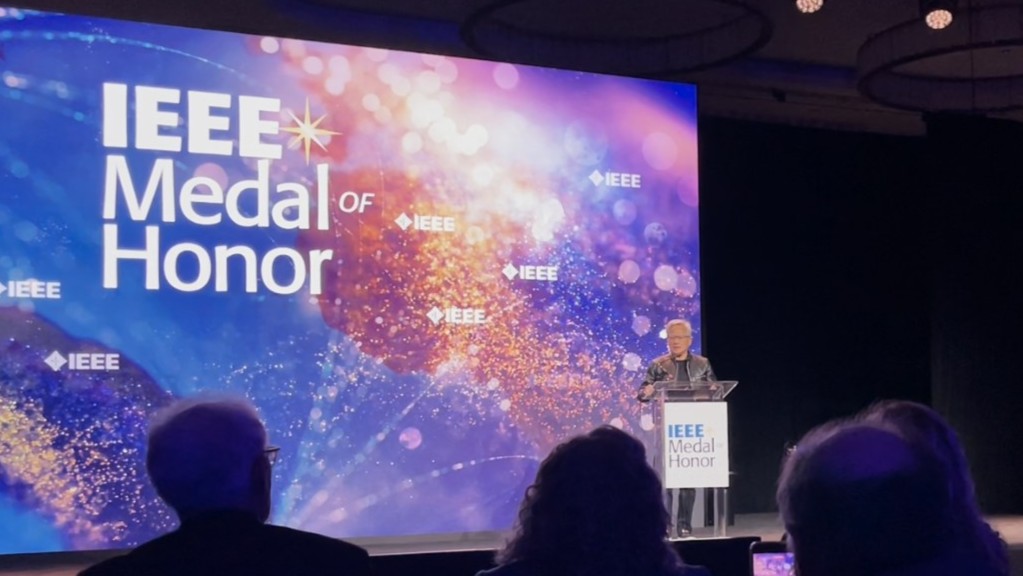
    Jensen Huang’s CES 2026 NVIDIA keynote detailing the company’s latest advances in AI, including the Vera Rubin Architecture launch, self-driving car technology, and, of course, gaming announcements, has received extensive coverage worldwide. Jensen’s acceptance of the IEEE’s 2026 Medal of Honor on Tuesday at CES has barely been noted. Previous Medal of Honor winners include Marconi and Armstrong for radio, Vincent G. Cerf and Robert E. Kahn for the Internet, and Bradford W. Parkinson for GPS. The most prestigious award offered by the global community for technologists, the IEEE Medal of Honor recipients, “represent today’s most groundbreaking technological advancements and are innovators at the forefront of the technology that is poised to drive society forward for the benefit of humanity.” The complete transcript of Jensen’s acceptance speech follows; it has been lightly edited for clarity:

    Hi, this is an incredible honor, uh, Mary Ellen. Sophie is, uh, really, really incredible honor to receive this.

    I went into engineering because it was math-heavy and science-heavy. And, uh, I’ve always enjoyed solving math problems and science problems. Right. I didn’t think too deeply about the selection of professions. It was really the challenge of the work and the technical content of the work that attracted me.

    I had the good fortune of not even deciding what university to go to. I chose to go to Oregon State University ’cause it was our home university. And because of that lack of choice, I ended up having a lab partner who, today, is my wife. We met when we were sophomore EE Fundees. We were lab partners, and I had the good wisdom of asking her to do homework with me every Sunday, which, which led to, uh, several years of dating. And it changed everything.

    It, of course, was the foundation of a very beautiful family and a happy life. And it gave me the opportunity to go pursue, over time, endeavors that were greater and greater and more and more ambitious. No engineer could possibly imagine that their life or profession would ultimately lead to becoming one of Nvidia’s founders or its CEO.

    Being the company that reinvented computing and led to this industrial revolution that we now recognize as artificial intelligence. It is not humanly possible to imagine that the company you started along with Chris and Curtis in a townhouse would now become the most valuable company in the world.

    That’s not a game plan that you can reasonably imagine. It’s not reasonable to imagine really that you would, your company would go forward and end up reinventing the most important instrument, the single most important tool of humanity called computers. That, that this, this endeavor, this life’s work we call Nvidia, would go off and literally transform every single field of science and every industry in the world today. It is not reasonable to imagine that. It is not reasonable to expect that. And yet here we are, through the good friendship of all of the employees of our company.

    This award is really a recognition of their life’s work. You know, ultimately engineering is a field that, that, uh, is about applying principles, first principles in science and math. It is about learning how to solve problems. Breaking down incredibly challenging problems into solvable parts, and the dedication and resilience to go solve them and make possible what was nearly impossible. And this profession is the most noble of all, expressed in that way to be the building blocks, to be the foundation of what builds society today. And I’ve had the benefit, the good fortune of having a loving, supporting family.

    That made it possible for me to dedicate my life’s work at Nvidia. But mostly, really, the incredible geniuses and the amazing people I get to work with. I’m surrounded by some of the finest engineers, scientists, and researchers in the world. Who make everything that we do at Nvidia.

    And so I’m deeply humbled to receive this award. I’ve always, you know, I think of IEEE often actually. When you think about 802.11, you have to think about IEEE. And when you think about IEEE 754, frankly, we wouldn’t have a global standard for how to express floating point numbers for computers to understand. And those foundations, the industrial

    standards, become the building blocks, the fabric by which the computer industry is built. The list of IEE standards goes on and on. I won’t, uh, impress you with my knowledge of IEE standards. But it is an essential ingredient and an essential contribution to the world’s technology industries. And I want to thank the IEEE for this incredible honor.

    I want to thank my wife, my beautiful lab partner for supporting me all these years and, for raising two amazing kids who are both in technology today. I’m quite proud that they’re working at Nvidia. So, thank you for this incredible award. I receive it on behalf of all the great employees.

    Thank you. Along with the honor of being selected by your peers, this is the second year the IEEE Medal of Honor has included a $2 million prize, “reflecting – the award’s stature as one of technology’s most esteemed recognitions.”

  • Digital Signage Content That Doesn’t Get Ignored

    Digital Signage Content That Doesn’t Get Ignored

    If you work in AV or retail technology, you’ve seen it firsthand. Screens are everywhere, yet most shoppers walk right past them. Not because they hate digital signage, but because it rarely gives them a reason to care.

    Retailers have invested heavily in displays, players, and platforms. But attention is still the rarest currency on the store floor. The truth is uncomfortable but necessary to say out loud: digital signage doesn’t fail because of hardware limitations. It fails because the content was never designed to compete in the real world.

    And that’s exactly why this conversation matters right now.

    Digital signage remains one of the most powerful in-store marketing tools available, when it’s done right. It can influence decisions in real time, reinforce brand trust, and guide customers at the moment it counts. The question isn’t whether signage works. It’s whether the content is working hard enough.

    The In-Store Attention Economy: Seconds That Decide Everything

    Retail environments move fast. Shoppers don’t stop, stare, and study screens. They glance while walking, scanning shelves, or checking their phones. That means digital signage content has seconds, sometimes less, to earn attention. This is where many deployments miss the mark. Screens are treated like static billboards instead of dynamic marketing channels. Content is overloaded, brand-heavy, or disconnected from what the shopper is actually doing in that moment.

    The most effective retail signage strategies start with a simple mindset shift: marketing drives the message, not the screen. When content aligns with goals like awareness, promotion, or conversion, and is designed for motion, it stops blending in and starts influencing behavior.

    For the AV community, this is where design, placement, and intent intersect. It’s not about more content. It’s about smarter content.

    What Content Looks Like When It Actually Works

    High-impact digital signage content respects the reality of retail. It’s clear, visually disciplined, and immediately valuable. It doesn’t ask for attention, it earns it.

    Strong hierarchy ensures the message lands instantly. Controlled motion draws the eye without overwhelming it. Messaging is benefit-led, not brand-heavy. Most importantly, the content feels relevant to where the customer is standing and what they’re likely thinking.

    Dynamic content consistently outperforms static loops. Time-based promotions, localized messaging, and inventory-aware visuals feel alive because they respond to the environment. They signal to the shopper that this screen has something useful to say right now, not just something to show. When signage content is designed this way, it stops being background noise and starts becoming part of the shopping experience.

    Why Data and Personalization Change the Game

    Today’s digital signage platforms aren’t guessing anymore. Foot traffic data, dwell time insights, and engagement metrics offer real visibility into what content performs and what gets ignored. That data becomes even more powerful when paired with personalization. Content that adapts based on location, time of day, or customer behavior feels intentional instead of generic. A message at the store entrance serves a different purpose than one at checkout, and smart signage knows the difference.

    From a marketing perspective, this is where digital signage earns credibility. Performance can be measured. Content can be optimized. Engagement can be tied back to real outcomes. For AV and IT teams, it also means signage finally speaks the same language as the rest of the retail marketing technology stack.

    Designing Content That Scales in the Real World

    Retail isn’t controlled or predictable. Lighting changes. Layouts evolve. Stores differ by location and audience. Digital signage content has to work across all of it. That means designing with placement in mind, from high-traffic entrances to product zones to point-of-sale displays. It also means building systems that scale. Centralized content management allows brands to stay consistent while giving local teams flexibility to stay relevant.

    This is where collaboration across marketing, AV, and IT becomes critical. When those teams work together, signage stays fresh, aligned, and purposeful. When they don’t, screens age quickly, and get ignored just as fast.

    Where Digital Signage Is Headed Next

    Digital signage is no longer a standalone tool. It’s becoming a core part of the retail marketing ecosystem. AI-driven content creation, automated optimization, real-time personalization, and tighter omnichannel integration are already reshaping what’s possible.

    As stores become smarter, signage will become more responsive, adjusting messaging in real time and playing a larger role in shaping customer experience and conversion strategies. For retailers and AV professionals alike, this evolution opens the door to signage that doesn’t just display content, but actively drives results.

    From Screens People Ignore to Screens That Actually Matter

    Digital signage doesn’t fail because shoppers don’t care. It fails when the content doesn’t respect their time, context, or intent.

    When driven by marketing strategy, powered by data, and supported by the right AV infrastructure, digital signage becomes something far more valuable than a screen on a wall. It becomes a storyteller. A guide. A decision influencer.

    For the AV community, this is the opportunity. To move beyond installs and uptime, and start shaping experiences that customers actually notice. If digital signage is going to earn attention, the content has to earn its place. And when it does, the impact speaks for itself.

  • Inside the Modern Hybrid Studio: Where Virtual, Remote, and On-Site Production Meet

    Inside the Modern Hybrid Studio: Where Virtual, Remote, and On-Site Production Meet

    Broadcast has always been a high-pressure world, but today’s demands hit differently. Teams must move faster, deliver cleaner content, scale instantly, support remote talent, and stay on the cutting edge while keeping uptime rock solid. That’s why the hybrid studio, where virtual, remote, and on-site production all work together, has evolved from an interesting idea into the new operational standard.

    For broadcast engineers and station managers, this shift isn’t just about keeping up. It’s about staying ahead, and winning in a competitive, rapidly transforming industry.

    Why Hybrid Studios Are Suddenly Everywhere

    The broadcast industry is evolving faster than ever. IP-based production, cloud editing, and real-time collaboration have gone from emerging trends to core expectations. Viewers expect high-quality content from anywhere in the world, and production teams want workflows that follow them, not the other way around.

    Leading brands like Ross Video, Sony, and Blackmagic Design are reshaping the studio model, giving teams the power to scale production flexibly, on-premises, in the cloud, or somewhere in between, without sacrificing quality or reliability.

    Where Hardware and Software Finally Work Together

    Hybrid production isn’t about tacking on cloud tools, it’s about creating tightly integrated ecosystems where hardware and software work in perfect sync.

    Blackmagic Design leads the way with gear built for hybrid workflows. Its cameras and switchers adapt easily to both IP-based and traditional setups. Ross Video offers seamless control through a blend of automation, hardware integration, and remote-friendly software, enabling production teams to move faster and smarter.

    Supporting all of this are Bluefin’s high-performance displays, which deliver dependable visual infrastructure for studios that simply can’t afford failure.

    The result? Broadcast environments that are agile, scalable, and ready for what’s next.

    The Rise of the Remote Layer

    What started as a workaround is now standard practice. Remote production empowers teams to operate shows from anywhere, with the same confidence as being on-site.

    Ross Video’s robust automation tools and remote production suites allow for seamless switching, graphics handling, and live control from across the country, or across the globe.

    Sony’s IP-ready camera systems and remote control capabilities help producers deploy flexible, high-quality imaging setups without having to staff every physical location.

    Remote workflows mean reduced travel, leaner staffing, and built-in continuity, no matter what the day throws at you.

    The Virtual Layer: Cloud Tools That Scale on Demand

    The cloud isn’t here to replace physical studios, it’s here to supercharge them.

    With tools like Sony’s Creators’ Cloud and Blackmagic Design’s DaVinci Resolve cloud ecosystem, teams can collaborate on editing, grading, and finishing projects in real time from anywhere in the world. These platforms provide agility for global teams working under tight deadlines.

    Dante adds yet another layer of hybrid power, offering cloud-enabled routing, monitoring, and control that unites physical I/O with virtual environments across the network.

    Together, these solutions create an environment where scaling production, even under pressure, becomes frictionless.

    Reliability and Uptime: The Deal-Breaker for Broadcast

    In broadcast, uptime is everything. A hybrid studio built with redundancy and smart failover tools can stay resilient, even under pressure.

    Ross Video’s automation pipelines reduce the chance of human error, while their real-time monitoring tools keep operations smooth and steady. Dante’s software-based redundancy enables rapid troubleshooting and recovery.

    Bluefin’s commercial-grade displays support mission-critical applications with consistent performance and zero tolerance for failure. With layers of protection in place, studios stay live, responsive, and secure.

    How Engineers Can Future-Proof Their Studios

    To build a studio that’s truly future-ready, engineers should prioritize IP-native, cloud-integrated systems that are modular, scalable, and designed around automation and interoperability. Brands like Sony offer advanced, cloud-connected imaging and production tools. Ross Video stands out with its powerful automation and remote-control capabilities, while Blackmagic Design provides accessible, professional-grade hardware and software designed for fast, flexible deployment. Dante enables smooth AV-over-IP routing and seamless cloud integration, ensuring everything works together across locations. And Bluefin delivers the reliable visual infrastructure needed to keep everything running flawlessly. These technologies don’t just meet current needs, they position studios to evolve, scale, and thrive in the years ahead.

    The Payoff: Smarter Workflows, Better Content, Stronger ROI

    Hybrid studios aren’t about jumping on the latest tech trend. They’re about enabling teams to deliver more, faster, with fewer resources and greater impact.

    From cutting downtime and reducing travel to enabling real-time collaboration across continents, the benefits are both operational and creative. The payoff? Smarter workflows, stronger teams, and higher-quality content that meets, and exceeds, audience expectations.

    As AV and IT continue to merge, hybrid production will define the next decade of broadcast. And those who invest now won’t just survive the shift, they’ll lead it.

    The future of broadcast isn’t coming. It’s already live.

  • Ecosystems – Done Right

    Ecosystems – Done Right

    Technology needs in today’s business and educational campuses are evolving rapidly. In the new era of hyper-connected workers and students collaborating in-person, remotely, or in a hybrid scenario, or in the roll-out of digital signage systems, we often hear that the pursuit of better AV tools has now transformed into the pursuit of the ideal AV “ecosystem.” While that term can be overused, the stakes couldn’t be more real. For IT and AV leaders managing workplaces, global campuses, and even displays in public spaces, the promise of robust ecosystems that can reduce operational friction between hardware and software solutions, increase system reliability, and make technology easier to deploy, manage, and evolve is an exhilarating one. Are we as an industry getting there? We are, if you follow the industry leaders at the vanguard of this technology sea-change. Sony is at the forefront – but intentionally not alone – in establishing ecosystem best practices.

    Creating robust ecosystems

    What defines an AV ecosystem, as opposed to a typical AV system cobbled together with many vendors’ solutions? “In a true ecosystem,” says Kianna Pompa, Product Manager, Sony BRAVIA Displays, “products, technologies and services are designed to work together seamlessly. It’s not about spec’ing and installing products from different companies then hoping you can get them all to work together harmoniously. You create an experience where yes the end user can choose some of their preferred devices, but you insure with your ecosystem provider partners that all the solutions are not only fully compatible with each other but work together synergistically within the larger network, including if necessary an IoT or AV over IP landscape.”

    Ultimately the goal of AV ecosystem design is to ensure that the whole is meaningfully greater than the sum of its parts. The only way to get there is with alliances among AV providers that go beyond marketing talk and focus on reliability, and reducing friction across multiple AV hardware and software components of the system.

    Bob Bavolacco, Director, Strategic & Technology Partnerships at Crestron, describes that partnering process succinctly, and with real-world examples of its success. “We actually learn from our partners,” he says. “Sony is a key part of our strategy. For example – we went to Sony, and asked them to help us when we were creating Crestron’s AirMedia, that provides BYOB conferencing and wireless presentation in digital signage. We don’t do this in a vacuum. We asked Sony, and we standardized, and that’s why we have Korbyt, and Appspace, as applications out of the gate. And we have a larger roadmap for our AV ecosystems thanks to our alliance with Sony. On a weekly basis our engineers are talking to Sony engineers – because our customers want this high level of integration.”

    “We actually learn from our partners. And we have a larger roadmap for our AV ecosystems… thanks to our alliance with Sony.”

    – Crestron’s Bob Bavolacco

    What becomes clear when talking to industry leaders and top solution providers is that the relationship between Sony and its partners is less like “compatibility testing” and more like joint product development. In addition to Crestron, good examples of this approach are Appspace, and Korbyt.

    Many are familiar with Appspace as a cloud-based CMS (content management system) provider for digital signage, but the company has evolved beyond providing only typical digital signage solutions, and now can transform “signage” into robust workplace experience platforms. AppSpace’s entire platform thrives on the assumption that it can run across many vendors’ hardware solutions, including displays – an assumption that can’t be made lightly. For AppSpace, the stakes are high. Tom Pennella, Senior VP of Sales at Appspace says that “without the ecosystem approach, we would not survive.” Fortunately, Sony’s willingness to open up APIs, provide early engineering samples, and collaborate deeply on development with Appspace makes that work.

    Another key Sony Alliance Partner is Korbyt. Korbyt helps customers build content feeds that broadcast simultaneously across digital signage, desktop, web, and mobile. They’ve evolved into what’s now called the workplace experience platform, which includes much more than digital signage. It’s digital signage, but it’s also space management, and more.

    Andrew Gildin, VP, Global Partners and Sales at Korbyt, frames the company’s reliance on ecosystem partners, with Sony at the top of that list, with this question: “Is the customer getting more value out of a joint Sony + Crestron + Korbyt solution, say, than they would from each of those companies separately? The essential point is that partnership is a two-way street – it extends beyond provider relationships, important as those are Partnership is also about solving the customer’s business objectives.”

    Indeed, the customer’s business objectives should guide ecosystem priorities. Every provider partner reinforces Sony’s model – and that works because it is built backwards from the customer, not forward from the manufacturer.

    Openness as a defining technical approach, not a marketing phrase

    The end-goal of industry leaders like Crestron, Sony, Korbyt, and Appspace? It is not an ecosystem built to keep people in, or certain products out. It is an ecosystem built to pull people together with the overarching goal of making life easier for AV and IT managers and making the technology experiences better for end users. And that distinction matters – it can actually transform how global organizations deploy and support AV infrastructure.

    Sony’s ecosystem strategy is highlighted with a refreshing anecdote from Rich Ventura, VP of Professional Display Solutions at Sony. “The first week I started with Sony, 5 years ago,” he notes, “I asked, who are our partners? What are my customers’ pain points, and can we, together, help them get past those pain points? We can’t do all this by ourselves – how do we the solution partners, make each other better? And make the customers better?”



    For any manufacturer, those questions are far from simple and raising them transparently is significant in itself. It signals the philosophy behind Sony’s approach to partnerships, integrations, and the broader AV/IT ecosystem that must seamlessly coexist across meeting rooms, classrooms, corporate offices, and campuses. Rather than attempting to build a walled garden with its solutions, Sony has invested deeply in making its products compatible, controllable, and extendable with other solution providers. Kianna Pompa framed it this way, “We turn the process into something that is more open source – and that facilitates, not hinders, letting the customer decide on their exact mix of user-facing AV tools.”

    Sony’s approach is about strategic clarity. The modern workplace is no longer a single stack. It is a constant negotiation between displays, BYOD workflows, digital signage platforms, room scheduling applications, control systems, media transport protocols, and cloud platforms. No vendor, not even the world’s largest, can credibly claim to have every piece of hardware or software needed to complete the ecosystem. Rather than fighting the complexity, Sony leaned into it. Rather than isolating their hardware, they “opened up.”

    That openness shows up in tangible ways: more than 50 signage platforms certified on Sony SOC displays; publicly available cloud APIs; and dedicated engineers whose full-time job is making sure control and signage partners can integrate before a new product ships. For customers’ IT and AV teams, that means the ecosystem isn’t something they’re forced into. It’s something they can assemble around existing standards, workflows, and global templates.

    This is not the typical ecosystem pitch built around lock-in. Sony does not insist on a Sony-only signage platform or a proprietary content system. Instead, more than 50 signage platforms can run natively on Sony’s System-on-Chip (SoC), with Sony publicly posting cloud APIs so partners can build their own integrations if they wish.

    Sony’s Kianna Pompa puts the goal plainly. “We don’t want to lock you down into only using a Sony service.”

    In an industry where vendors often pursue vertical integration at the expense of flexibility, Sony has taken the opposite path. This openness is not merely philosophical—it is operational, and it is engineered into the product line. Rather than fighting the complexity, Sony leans into it. Rather than isolating their hardware, they opened it up. That philosophy radiates through all the partners – Crestron, Korbyt, Appspace, and many more – who have joined the Sony Alliance Partnership.

    Global standardization: a real-world ecosystem requirement

    Enterprise AV is now global by default. It’s common to have a customer headquartered in New York, with engineering in London, operations in Singapore, training in Bangalore. Technology has to work the same everywhere.

    “So many enterprise customers have asked us for global solutions”, Pompa says. “Sony’s response goes far beyond regional sales coordination. We launched a global AV solutions website listing what models are available per country – critical for organizations trying to standardize room templates across continents. And when exact hardware parity isn’t possible, Sony’s account managers “quarterback” the process, ensuring equivalent models; identical control behaviors, uniform SOC and signage support, even local deployment assistance

    Pompa explains how this works in practice, “The account manager is the liaison  – bringing in any other Sony member that would support the account.”

    For IT and AV teams supporting dozens or hundreds of sites worldwide, this makes global standardization possible. Bringing on global partners – whether Crestron, Appspace, or any of the dozens of Sony’s Alliance Partners – ensures that it’s a more sustainable business model.

    What IT and AV end users can take from Sony’s approach

    After looking at Sony’s model and hearing from some of its closest ecosystem partners, several high-level lessons apply directly to IT and AV professionals building their own organization’s technology strategies:

    • Openness scales, across both space and time. Closed systems eventually break.
    • in pursuit of better system performance.
    • Reliability comes from consistently following the partnership model, not cobbling together the AV system and hoping it all works together seamlessly.
    • Global standardization and efficiency at scale is achievable—but only with deliberate alignment.

    Conclusion

    An ecosystem thrives only when everyone involved understands who it truly serves. It’s not built for the manufacturer, nor for the partner network – it’s designed for the person who walks into a room and starts a meeting effortlessly, and for the signage manager who depends on nonstop reliability even as content shifts in real time. Success isn’t defined by the number of integrations or logos attached; it’s defined by simplicity in use, management, deployment, and in ongoing evolution. When the customer experiences that ease, the ecosystem is fulfilling its purpose. Achieving this is possible today by following the lead of industry pioneers – Sony among them – who are setting new standards for ecosystem best practices.

  • How Embedded Audio Engineering is Powering the Next Generation of Smart PPE

    How Embedded Audio Engineering is Powering the Next Generation of Smart PPE

    Modern industrial environments such as aviation, manufacturing, and logistics are demanding workspaces that require heavy machinery and clear lines of communication across multiple locations. Historically, the necessity of heavy-duty Personal Protective Equipment (PPE) often resulted in worker isolation, which can create safety risks in networked operations. Specifically in aviation, the trade-off between protecting a worker’s hearing and enabling clear, real-time communication is non-negotiable not only for the safety of the worker but also the meticulous timing involved in modern air travel. This reality is driving the convergence of hi-fidelity audio performance and industrial safety standards.

    For AV and IT managers overseeing communications, safety systems, and networked audio, high-performance hearing protection officially becomes a high-value, active endpoint on the network. With a vision centered on the employee experience in demanding situations, making sure workers that spend hours in isolation get the protection they need as well as reliable communication, and sometimes a bit of enjoyment.

    At HARMAN Embedded Audio, we have spent years working at the intersection of professional audio, connectivity, and regulated environments. What we see clearly is that high-performance hearing protection is no longer just safety equipment. For AV and IT managers overseeing communications, safety systems, and networked audio, it is becoming an active, intelligent endpoint within a broader communications ecosystem. Our work in smart PPE reflects a fundamental shift from compliance-driven design to human-centered engineering that prioritizes protection, communication, and worker experience simultaneously. This human-centered approach, moving beyond mere compliance to enhance productivity and well-being, is the foundation for the next generation of smart safety technology.

    The Design Challenge: Merging Protection With Acoustic Performance

    Designing high-fidelity, high-clarity audio into safety-certified PPE is something of an engineering hurdle, requiring the convergence of two distinct industries. Consumer audio engineers typically aim for ideal acoustic environments, while PPE engineers adhere to strict, non-negotiable standards focused on protecting against hazardous noise levels that can degrade hearing over time. This creates real challenges when integrating features like comfort and sound quality into the safety-certified environment.

    In our work embedding proprietary hardware and software platforms into safety-certified hearing protection products such as Båstadgruppen’s Guardio, we address challenges that extend well beyond conventional audio design. Every engineering decision must preserve mandated safety requirements while still enabling reliable communication and intelligible sound.

    When working with mission-critical audio in PPE, there are several non-negotiable design hurdles. The solution cannot compromise structural integrity, acoustic sealing, or flammability compliance of the protective shell, as preserving both passive attenuation and active noise cancellation is essential. Materials approved for industrial safety products are often acoustically restrictive, difficult to mold, and governed by strict regulatory standards, forcing us to adapt enclosure geometry, transducer placement, and venting strategies well beyond traditional consumer-audio design approaches. These designs need to function for all-day wear, meaning engineers have to solve for comfort in demanding conditions. A major challenge is balancing the need for a strong clamping force, which must be sufficient to prevent leakage of both ingress and egress noise, with the absolute requirement that the pressure would not be too great on the head over extended shifts.

    Unlike consumer headphones, the headsets must fit in various environments and work with the different permutations of head and torso shape, specifically accommodating being mounted to hard hats and helmets, and other equipment around the neck and shoulder. This complexity requires extensive investigation and several mechanical, electrical, and acoustical iterations.

    Engineering Tailored Sound

    To overcome the acoustic deficiencies inherent in working with safety-compliant enclosures involves highly specialized tuning and software control that makes performance possible despite physical constraints. Since PPE isn’t an ideal acoustic chamber, we use custom engineering to address the challenge within the limited space of the ear cup, which included looking at odd geometries and different shapes of the transducer enclosures to maximize performance. Drawing on our embedded audio platforms developed for industrial and wearable applications, we tailor both hardware and DSP architectures specifically for safety-certified enclosures where ideal acoustic conditions do not exist.

    DSP algorithms are critical for enabling clarity in chaotic, noisy conditions by managing sound dynamically. This includes utilizing ANC and wind noise reduction IP to account for open-air environments. For instance, if an operator is out in open space and there could be a sudden gust of wind that saturates the microphones, the system must instantly cancel that out to preserve communication clarity.

    Tuning the voice path and the signal path is vital for the outbound speech quality, ensuring the PPE microphone processing strips out engine noise, wind, and industrial static so the worker’s voice can reach command clearly. This deployment of advanced audio processing ensures the protective equipment enhances, rather than hinders, the ability of the worker to communicate and safely perform their duties.

    Communication and IT Alignment: Smart PPE as a Networked Audio Device

    For the AV/IT manager, smart PPE can be viewed as a mission-critical networked audio device, a classification that changes how IT systems are managed and how the integrity of the signal is protected. This enables communication on two fronts: internal team communication (multi-point to multi-point) and external command/coordinator communication.

    Systems must seamlessly manage the user experience by coordinating between different modes of usage, such as lowering music volume during voice communication. Coordinating these scenarios, which prioritize mission-critical communication over personal content consumption, requires extensive storyboarding and sophisticated software logic to handle multiple modalities. Integrating advanced communications capabilities allows IT teams to treat PPE as a fully connected element of the broader wireless infrastructure strategy, including over-the-air firmware updates and robust power management to meet demanding industrial shift requirements.

    The Future: Context-Aware Audio, AI, and the Next Frontier of Safety Tech

    The current generation of smart PPE is a functional platform; the next wave will focus on embedded intelligence. Context-aware audio is the future, offering devices that adjust themselves based on real environments. The future is moving rapidly toward the application of machine learning, revolving around devices that dynamically adjust their features based on the environment they detect. This means that if the device detects that the operator is nearing a large engine block or an airplane is approaching, it would instantly and automatically adjust the noise cancellation profile to the required level of protection.

    The application of machine learning and AI, specifically keyword spotting, enables speech recognition within the headset itself, even in high-noise environments. This could allow the system to be trained to pick up key trigger words, such as emergency phrases from a nearby worker, demonstrating a move toward an AI-enhanced safety co-pilot. This vision extends beyond industrial safety, showing the convergence with healthcare (hearing aids/enhancement), smart glasses, and other next-gen wearables — all requiring high-performance, embedded, low-power audio solutions.

    The Convergence of Safety, Communication, and Sound

    Global awareness of occupational hearing loss is rising, creating growing demand for protective equipment that enables communication rather than inhibiting it. Through close collaboration with partners such as Båstadgruppen, and by integrating embedded audio early in the product design process, we help transform certified PPE into intelligent, connected tools. For manufacturers entering this space, embedded audio is not an add-on but a strategic capability that benefits from shared expertise, early engagement, and a commitment to solving real-world challenges together.

  • The counterintuitive secret to AV success: sharing knowledge creates more value than hoarding it

    The counterintuitive secret to AV success: sharing knowledge creates more value than hoarding it

    In an industry built on technological expertise, suggesting that companies should openly share their knowledge might sound counterintuitive. Yet a growing movement toward free, accessible training is fundamentally reshaping professional AV and proving that educated ecosystems benefit everyone.

    Walk into any AV integration meeting and you’ll find IT professionals, broadcast engineers, and commercial integrators all speaking the language of IP infrastructure, yet each struggling with the others’ specialized knowledge. The IT team understands network architecture but stumbles with real-time AV protocols. Broadcast professionals know content delivery but lack infrastructure depth. Integrators excel at deployment but need stronger IP fundamentals.

    For too long, the answer to this knowledge gap has been locked behind paywalls and proprietary training programs. But IP-based AV doesn’t work like the analog world did. Success depends less on knowing proprietary secrets and more on understanding how interconnected systems work together.

    When an IT professional truly understands AVoIP integration with network infrastructure, something powerful happens, they become advocates who can articulate value to stakeholders. They ask better questions, design more robust systems, and create more successful deployments. The cost of their training is dwarfed by the value they create.

    This is why forward-thinking manufacturers are abandoning the old model. Instead of viewing training as a profit center or competitive moat, they’re making certification programs freely available, recognizing that the real return comes from a more knowledgeable workforce across the entire ecosystem. Companies trying to maintain knowledge silos find themselves increasingly isolated, while those embracing open education see accelerated growth.

    Flexible Learning Opportunities

    Online training is essential for AV integrators because it provides flexible, up-to-date learning opportunities in an industry where technology evolves rapidly. With new products, standards, and integration methods emerging constantly, online training enables professionals to stay current without disrupting their daily work schedules.

    As the industry continues its shift toward AV-over-IP, shared knowledge strengthens the entire community. By combining Audinate and NETGEAR training resources, we’re giving integrators, designers, and end users the skills they need to build better networked AV systems. This collaboration supports the long-term growth of our whole ecosystem.

    When Audinate made the strategic decision to offer its Dante Certification program for free, it represented a fundamental belief that industry advancement matters more than gatekeeping expertise. Just as important, Audinate keeps updating its Dante training program to stay current with today’s changing AV landscape, equipping professionals with cutting-edge networking skills, whether local or cloud-based, and AVoIP expertise. As with many training programs, participants can earn AVIXA Renewal Units (RUs), helping them maintain their industry credentials while expanding their technical scope.

    A Growing Coalition

    Audinate isn’t alone. A growing coalition of manufacturers, including Crestron, QSC, Sennheiser, Powersoft, Lightware, and SDVoE, are making training freely accessible at the NETGEAR Academy. This is a testament to the collective recognition that knowledge sharing lifts the entire industry.

    This approach builds what might be called “ecosystem literacy”: professionals who understand how different technologies work together to solve real problems. A commercial integrator who can access free training on network fundamentals alongside Dante certification and manufacturer-specific content becomes exponentially more valuable. Manufacturers contribute to a community of educated professionals who become advocates for their solutions.

    The question manufacturers should ask has shifted from “How do we monetize our training?” to “How can we make our training as accessible as possible?” In an interconnected, IP-based world, a competitive advantage comes from empowering the most people to succeed with your technology. This is a strategic recognition that in IP-based AV, an educated ecosystem creates more value than protected knowledge ever could.

  • Human-Centered AV: What Neuroscience Can Teach Integrators

    Human-Centered AV: What Neuroscience Can Teach Integrators

    Integrators know how to build AV systems that perform. They dial in the inputs, outputs, latency, display resolution, and control protocols until everything runs smoothly. But a room can check every technical box and still feel off when people walk in. Why?

    The best AV environments reflect how people actually think and interact. Rooms influence perception, attention and mental effort in ways that are subtle but real. AV design now plays an active role in how people engage, understand information, and collaborate across teams and locations. Neuroscience gives AV integrators practical tools to design systems that reduce cognitive strain and improve communication.

    Why Cognitive Design Drives Better Outcomes

    Every choice in an AV-enabled room shapes behavior. Intelligibility, mic placement, camera angle, and content layout — all of these influence focus and comprehension. These are technical decisions, but their impact is neurological and psychological.

    Cognitive load theory shows how quickly comprehension drops when visual information is dense and/or poorly organized. Slight audio delays make it harder for listeners to track meaning and can reduce perceived trust. Camera placement affects connection and emotional understanding. Glare forces the brain to filter competing inputs, draining focus before the meeting even starts. Behavioral design connects these principles to real choices about room layout, audio zones, lighting strategy, and content flow.

    AV that aligns with how the brain processes information feels intuitive. People track ideas with less effort. Meetings stay on pace because participants are not silently compensating for distraction or strain. These small shifts add up, especially in organizations where teams move through several high-stakes conversations in a single day.

    The Experience is the Outcome

    Hybrid work has changed what AV needs should be. Remote participants now join boardroom strategy sessions, leadership town halls stream to three time zones, and teams shift between in-office and virtual meetings multiple times per day. The brain adjusts each time, and poorly designed rooms amplify that cognitive cost.

    Lighting sets behavioral cues and eases visual strain. Audio quality influences how confident people feel speaking and how well teams follow complex discussions. Visual alignment creates a sense of balance between remote and in-room participants. Even the way a room directs attention affects how open or closed a group feels while sharing information.

    Rooms designed as infrastructure for thought produce different outcomes. Participants absorb information faster, conversations stay focused longer, and the technology fades into the background because the environment supports how people naturally process and exchange ideas.

    Behavioral Integration in Practice

    Applying neuroscience does not mean organizations or integrators must replace current engineering workflows. Rather, they should consider these aspects in the consultation, discovery, design, installation, and training process.

    Here is how integrating behavioral science looks in practice:

    • In discovery, teams can surface behavioral obstacles. Patterns like miscommunication, visual overload, user hesitation, fatigue across long sessions, and recurring complaints about concentration reveal where the environment is adding pressure instead of reducing it.
    • In design, plans can follow the way people naturally see and listen. Display placements align with sightlines. Acoustic choices support concentration and speech clarity. Camera positions help participants feel oriented rather than observed. Controls can be arranged in ways that reduce decision friction and guide the flow of a meeting.
    • In installation, testing includes perception checks. Teams can walk through the space as a user would, assessing how attention shifts between speakers, content, and the room. These walkthroughs reveal friction that signal tests alone will miss.
    • In training, support focuses on how the environment works with the user. When people understand how the space is designed to guide their experience, they move through meetings with greater ease and confidence.

    This approach shifts AV from equipment you manage to infrastructure that supports how people work.

    Future-Ready Integrators Think Behavior First

    AV environments must evolve with the way teams think and share ideas. Behavioral science gives integrators a framework for designing systems that serve both performance and purpose.

    The next phase of commercial AV depends on treating cognition as a core input and including this from the design onset. Integrators who focus on the human mindset will build rooms that feel effortless to use and support natural communication. Lowering the mental strain will help teams stay focused, speak clearly, and get more out of every meeting.

    Design for the brain and every meeting will perform better.

  • Next Generation Audio (NGA): The New Sound of Live Production

    Next Generation Audio (NGA): The New Sound of Live Production

    Next Generation Audio (NGA) is no longer just a broadcast innovation; it’s quickly becoming the benchmark for how modern entertainment environments think about sound. In essence, NGA is about giving audiences better experiences and operators more control and creativity. Built on technologies such as object-based mixing and metadata frameworks like S-ADM, NGA makes it possible to deliver multiple audio experiences within a single stream, whether that’s multilingual commentary, accessible audio descriptions, or tailored soundscapes for venues. For media and ProAV professionals, the possibilities are expanding fast – and early adopters are taking the front foot.

    NGA offers cutting-edge, user-centric features that redefine the listening experience. With crystal-clear dialogue, enhanced sound precision, and advanced volume customization for those with hearing impairments, NGA puts control in the hands of the audience. It’s all about choice, whether switching commentators, seamlessly changing language tracks during live sports, or fine-tuning audio like never before. NGA is more than just better sound, it offers a personalized, immersive experience that will help our industry deliver on the promise of audio that’s better than just ‘good enough’.

    Regulation raises the bar

    Beyond a clear interest among broadcasters and streaming platforms to offer differentiated audio experiences, there are several wider shifts at play accelerating the adoption of NGA. In California, the new SB 576 law has recently been passed, which will require streaming services to keep audio levels clear and consistent, much like existing standards for broadcast. This law, which takes effect on and after July 1, 2026, prohibits a video streaming service that serves consumers in the state from transmitting the audio of commercial advertisements louder than the video content the people are watching. It means that viewers will no longer have to put up with excessively loud commercials during ad breaks, delivering a smoother listening experience.

    Poorly balanced loudness or muffled dialogue can exclude audiences just as much as bad design or poor visuals. California’s new rules are an important first step in improving the viewer experience and a reminder that audio quality matters everywhere, from streaming platforms to the live and hybrid environments managed by a wide range of AV professionals across entertainment venues. It means producers and integrators will need advanced audio processing tools capable of maintaining precise loudness control and compliance across all content.

    Intercom advances for agile AV teams

    The renewed focus on quality is reflected in rising demand for audio innovation beyond broadcast and radio. Venues, corporate AV teams, and live event organisers are taking more control of their productions, and with that comes a sharper focus on audio performance. Theaters are adopting IP-based intercom systems to improve backstage coordination and reduce latency. Meanwhile, sports producers are embracing remote commentary workflows to connect teams and audiences around the world.

    Beyond entertainment and enterprise, we’re also seeing growing interest in sectors such as healthcare, security, and emergency operations, where effective communication can have critical real-world impact. Hospitals, control centers, and security organizations increasingly rely on advanced audio networks and intercom systems to coordinate teams with absolute clarity.

    There is still a tendency to use legacy-style comms and panels, tied to a central matrix, but these are expensive and do not easily allow for spontaneous remote contribution. A growing number of virtualized solutions that do not have a central matrix and are software-based now allow for more dynamic configurations, multi-site production, and consumer-level devices like smartphones, tablets, and laptops to easily bring in new team members.

     Interoperability takes the spotlight

    One clear standout theme at IBC2025 was interoperability – and the simple truth that different systems should work together easily. Media Exchange Layers (MXLs) were central to this discussion, with many broadcasters and technology providers agreeing that the future of broadcast will be more modular and vendor-agnostic. This approach is key to building scalable, cloud-ready production environments. Across the show, there was a shared sense that interoperability isn’t just a technical goal anymore; it’s essential to delivering the  flexibility, scalability, and cost-effectiveness all users need

    This ties in closely with advances in Audio-over-IP (AVoIP), an innovation Telos has been at the forefront of since its inception. The encouraging news is that the industry is rallying together to build AVoIP workflows so seamless that users don’t need to think about switches, protocols, or cables – making multi-vendor broadcast and AV systems much more reliable and easier to integrate.

    A sound future

    The professional audio landscape is entering its most exciting and inclusive era. NGA is enabling richer, more personal listening experiences. California’s legislation is reinforcing the importance of quality and intelligibility. And the convergence of broadcast and ProAV is creating a shared language of standards and performance. As live experiences become more connected and interactive, audio is what brings them together. Sound sits at the heart of almost every experience – and it’s starting to take a bigger seat at the table.

  • The Future of Personalized Shopping: Tools Retailers Need Now

    The Future of Personalized Shopping: Tools Retailers Need Now

    Retail is entering one of the most dramatic evolutions in its modern history. After years of competing with the immediacy and precision of online shopping, brick-and-mortar stores are finally finding their counterpunch, intelligent, personalized experiences powered by advanced AV and IT ecosystems. Today’s shopper expects far more than products neatly arranged under fluorescent lighting. They expect environments that respond, recommend, and resonate. And for retailers, that expectation has rapidly shifted from a creative aspiration to a competitive imperative.

    Personalized retail technology is no longer a novelty; it is the new frontier of the in-store customer experience. The physical store is becoming the most sophisticated digital touchpoint brands own, and AV is at the center of that transformation.

    Retail’s New Reality: Why Personalization Is No Longer Optional

    The modern shopper’s mindset has been shaped by an online world that anticipates what they want, serves them relevant offers, and keeps the experience fluid. When they step into a physical store, that level of tailoring doesn’t simply reset, they expect it to follow them. For store managers, this creates an urgent mandate: make the environment feel as dynamic as the digital platforms consumers browse every day.

    Marketing directors feel a different pressure. Their campaigns must not only capture attention but do so in real time, adapting to foot traffic, changing promotions, and even the micro-moments that influence a shopper’s decision. Static messaging simply can’t keep pace with the level of relevance modern retail demands.

    Meanwhile, IT teams are orchestrating the infrastructure behind these elevated experiences. The convergence of AV, data analytics, and intelligent automation has become deeply technical. The environment is no longer defined by a few displays and a background audio system, it’s an interconnected ecosystem of sensors, content engines, analytics platforms, remote management tools, networked audio, and AI-driven automation. To personalize at scale, AV and IT must work in lockstep.

    This intersection of expectations, competition, and operational complexity has made personalization the strategy that ties retail’s challenges and its opportunities together.

    AV’s Growing Influence: The Engine Behind Immersive, Adaptive Retail Spaces

    Once considered a visual enhancement, AV has grown into one of the most influential drivers of customer engagement. Intelligent displays are no longer just screens; they are dynamic canvases that shift content based on context. LED walls can deliver brand storytelling that evolves throughout the day. Interactive kiosks act as digital assistants, guiding customers to products they’re likely to enjoy. Even audio systems have become strategic instruments, adjusting playlists and tonal profiles to match the energy, mood, and demographic flow of the store.

    Retail AV solutions now serve a much higher purpose: they create the responsive environment that personalization requires. The physical store becomes a living system, one that adapts continuously to who walks in, how they move, and what captures their attention.

    Data, Sensors, and AI: The Invisible Framework Powering Smart Personalization

    Behind every personalized interaction is a flow of intelligent data. Foot-traffic sensors map movement patterns. Heat-mapping systems reveal which displays attract the longest dwell time. Computer vision analyzes shopping behavior in real time. Mobile app integrations connect loyalty data with in-store actions. Artificial intelligence interprets all of these signals and determines the most relevant message, promotion, or display for that specific moment.

    This orchestration is what transforms AV from a content delivery tool into a personalization engine. When digital signage platforms are fed live insights, a static playlist becomes a dynamic decision tree. When audio systems integrate with customer profiles, soundscapes shift from ambient noise to strategic influence. When lighting is tied to behavioral analytics, the store feels alive, changing subtly but meaningfully as shoppers move through it.

    Research consistently shows that this level of relevance impacts everything from dwell time to purchase likelihood. The more tailored the experience, the more engaged the customer becomes.

    The Core Technologies Retailers Must Embrace Now

    Tomorrow’s retail experience will be defined by the technologies retailers adopt today. Intelligent digital signage platforms now function as real-time communication hubs, pushing personalized content across entire store networks. Advanced content management systems give marketing teams the agility to adapt campaigns instantly. Sensor-driven analytics engines translate behavior into insights powerful enough to reshape merchandising strategies on the fly. Unified AV/IT dashboards centralize control, making it possible to manage hundreds of endpoints from a single interface.

    Interactive kiosks provide guided discovery journeys that feel personal instead of generic. Adaptive audio systems create emotional cues that influence browsing, slowing customers down or drawing them toward specific categories. These tools are no longer luxuries reserved for flagship locations, they are becoming standard across leading retail chains.

    Importantly, retailers do not need to reinvent their entire infrastructure to begin this transformation. Many of these systems are modular, scalable, and designed to integrate with existing AV investments. Strategic upgrades, not wholesale replacements, often unlock the biggest leaps in personalization.

    The ROI: How Personalization Directly Impacts Sales and Store Performance

    Personalization is not merely experiential, it is highly financial. Studies consistently show that tailored in-store content increases dwell time, drives higher conversion rates, and elevates overall customer satisfaction. When shoppers feel understood, they explore more, stay longer, and purchase with more confidence.

    Woman employee showing clothes to client in front of self service checkout kiosk, advising to purchase fashion items in clothing store. Young client talking to assistant about merchandise on board.

    Beyond customer behavior, operational ROI is equally compelling. Automated scheduling reduces labor requirements. Real-time analytics prevent wasted promotional efforts. Centralized control minimizes onsite troubleshooting. AV systems that once served aesthetic purposes are now delivering measurable, data-backed business outcomes.

    Retailers that invest in personalized experiences are not just creating more engaging stores; they are generating environments that convert attention into revenue.

    What’s Ahead: The Future of Personalized Retail Environments

    The next era of retail will be defined by environments that respond instantly, stores that sense intent and adapt accordingly. AI-generated content will tailor itself to the micro-segments passing through each aisle. Computer vision will help identify interest levels and adjust product messaging dynamically. Lighting, audio, and visual content will move together as a unified experience, shaped by data and orchestrated through AV/IT convergence.

    This future is already taking shape. The retailers experimenting now will define the standards the rest of the industry follows. The ones who wait will find themselves years behind in a race that rewards agility, intelligence, and immersive experiences.

    Now Is the Time to Reinvent the Retail Experience

    Personalization has become the heartbeat of modern retail, and the technologies powering it are finally mature enough to deliver at scale. For AV and IT professionals, this moment marks a defining opportunity: the chance to shape not just the look of retail, but its future.

    The store of tomorrow is a dynamic, data-informed ecosystem, one that adapts to the shopper with precision and purpose. And AV is the brushstroke that paints every experience, every mood, and every moment. For retailers ready to stay ahead, the time to invest is now.