Category: Article

  • Three Pain Points of DVLED for IT and AV Managers

    Three Pain Points of DVLED for IT and AV Managers

    The email from the CEO arrived at 4:47 PM on a Friday: “Loved what I saw at the conference last week. Let’s get LED displays for the main lobby, the executive conference room, and the new training center. Can you have options ready for Monday’s leadership meeting?”

    If you’re an IT director or AV manager, you’ve lived this scenario. Your stomach drops because you know what happens next. You’ll spend the weekend researching, only to present three quotes on Monday morning that collectively exceed the annual AV budget. The CFO will ask why a “TV” costs more than some employees’ salaries. Facilities will question whether the walls can even support the weight. And someone will inevitably ask, “Can’t we just get bigger TVs?”

    Let’s examine the specific challenges that keep IT directors and AV managers awake at night.

    Pain Point 1: The Budget Justification Nightmare

    The Problem:

    You’ve done your homework. You know direct-view LED delivers superior brightness, eliminates bezels, scales infinitely, and will outlast LCD video walls by years. The technology makes perfect sense. But when you present a quote showing $150,000 for a lobby display, the conversation ends before it begins. Finance points to the new 85-inch commercial TV that costs $3,000 and asks what justifies the 50X price difference. You explain pixel pitch, brightness, modularity, and lifespan, but you’re fighting an uphill battle against sticker shock.

    The middle ground doesn’t exist. You can specify consumer or light commercial displays that’ll need replacement in 3-5 years and can’t handle ambient light. Or you can spec premium LED that delivers exactly what’s needed but requires executive approval and multi-year budget allocation.

    Why It Matters:

    This isn’t just about getting your project approved. It’s about delivering the right solution for the application. When budget constraints force you into suboptimal technology choices, you end up with displays that underperform in bright environments, require expensive window treatments, show visible seams in video wall configurations, or need premature replacement. Each compromise adds hidden costs and reduces user satisfaction.

    Organizations are investing in workplace transformation, hybrid collaboration infrastructure, and facilities that attract talent and impress clients. The display technology in lobbies, conference rooms, and common areas directly impacts these initiatives. When your display solution falls short of expectations, it reflects on IT’s ability to deliver.

    The Sony Answer:

    Sony’s target pricing at approximately 50% of current Crystal LED offerings fundamentally changes the business case mathematics. While specific pricing awaits official announcement, this positioning suggests the S-Series will compete with high-end LCD video wall solutions while delivering LED’s inherent advantages. Suddenly, the technology that was automatically eliminated during budgeting becomes a legitimate option worthy of evaluation.

    The two models both deliver 800 nits brightness with anti-reflective surface technology. These specifications matter because they enable apples-to-apples comparisons with LCD alternatives. When you can demonstrate comparable or lower total cost of ownership while delivering superior brightness, no bezels, and longer lifespan, the justification conversation shifts from “why so expensive?” to “why wouldn’t we choose this?”

    Real-World Application:

    Consider a corporate lobby with floor-to-ceiling windows facing south. An LCD video wall requires either expensive window treatments (reducing natural light in the space) or accepts washed-out images during daylight hours. A premium LED installation delivers perfect visibility but costs more than the furniture budget. The S-Series offers 800 nits of brightness with anti-reflective coating at a price point that fits within the lobby renovation budget. The CFO approves because the numbers work. Facilities appreciates the slim 45mm cabinet that doesn’t require wall reinforcement. You deliver the right solution without compromise.

    Pain Point 2: The Total Cost of Ownership Nobody Budgeted For

    The Problem:

    You presented the display acquisition cost. Finance approved the budget. Then Facilities receives the power consumption specifications and calculates that the new video wall will consume 8 kW continuously. The cooling system in that area can’t handle the additional heat load. HVAC upgrades will cost $40,000, and increased utility costs will run $3,500 annually. Nobody budgeted for this because the focus was entirely on the upfront hardware cost.

    Six months after installation, a single panel in the LCD video wall fails. The vendor’s repair process requires shipping the entire panel back to the depot. Lead time: four to six weeks. Your lobby display has a dark rectangle for over a month. When the replacement arrives, the color doesn’t quite match the surrounding panels. Welcome to the hidden costs of ownership.

    Why It Matters:

    The display industry has trained buyers to focus on acquisition cost while underemphasizing operational expenses. But over a ten-year lifespan, power consumption, cooling requirements, maintenance, and component replacement collectively dwarf the initial purchase price.

    For IT directors managing technology budgets across fiscal years, unexpected operational costs disrupt planning and reduce available funding for other initiatives. When Finance discovers that the “approved” display project carries ongoing costs nobody mentioned, trust erodes and future technology proposals face additional scrutiny.

    Sony’s Answer:

    LED technology inherently offers superior energy efficiency compared to LCD video walls at equivalent brightness levels. The U.S. Department of Energy reports that LED displays consume approximately 60% less energy per square meter than equivalent LCD installations while delivering higher brightness. For the S-Series specifically, the 800 nit brightness specification represents a deliberate balance. There’s sufficient brightness for ambient light environments while avoiding the excessive power consumption and heat generation of higher-brightness displays designed for outdoor or extreme applications.

    Lower power consumption creates a cascade of cost benefits. Reduced heat output decreases HVAC demands. Cooler operating temperatures extend component lifespan. Energy costs decrease proportionally with consumption.

    The modular architecture addresses maintenance economics differently than traditional displays. If a module requires service, you’re replacing or repairing a component, not an entire panel. Pre-calibrated modules ensure color consistency across replacements, eliminating the “doesn’t quite match” problem that plagues LCD video wall repairs.

    Sony’s integration of NovaStar COEX controllers (MX30 and MX40 Pro) supports remote diagnostics and monitoring. IT staff can identify potential issues before they become failures, schedule maintenance during planned downtime, and troubleshoot problems remotely rather than dispatching technicians for every anomaly.

    Real-World Application:

    Your finance department requires TCO analysis for any technology investment exceeding $50,000. You calculate that the S-Series installation will consume approximately 2.4kW compared to 6kW for the equivalent LCD video wall solution initially proposed. Over ten years, the energy savings alone ($18,000 at current utility rates) partially offset the initial price difference. Factor in reduced HVAC costs, longer component lifespan, and more economical repairs, and the S-Series delivers lower total cost of ownership despite potentially higher acquisition cost than budget LCD alternatives. This analysis converts Finance from skeptics to advocates.

    Pain Point 3: The Scalability Trap

    The Problem:

    You need displays for three conference rooms. Budget constraints mean you can only do one room this fiscal year, with rooms two and three planned for the following years. But when year two arrives, the product you specified has been discontinued. The replacement model uses different mounting hardware, different control protocols, and doesn’t quite match the color characteristics of the original. Your “standardized” conference room design isn’t standardized anymore.

    Or the opposite scenario: you installed displays sized for current needs, but requirements evolved. The boardroom that needed a 6-foot display now requires 10 feet to accommodate hybrid meetings where remote participants need equal visual presence. Your options are replace the entire installation or live with inadequate capacity.

    Why It Matters:

    Organizations rarely have the luxury of implementing complete solutions in single phases. Budget cycles, construction schedules, and operational priorities necessitate phased rollouts. Technology that doesn’t support incremental expansion or modification creates a dilemma: over-invest initially in capacity you don’t yet need, or accept that future phases will require different solutions.

    Display technology also serves evolving requirements. The conference room designed for presentations now hosts hybrid meetings requiring larger display areas. The lobby that needed a single display now wants a multi-display video wall creating immersive experiences. When your initial installation can’t adapt to changing needs, you’re forced into premature replacement cycles.

    The Sony Answer:

    Sony offers a configuration tool that allows IT and AV managers figure out solutions. Whether that is a list of materials (BOM) for a quick project or a long-term rollout. Sony has the ability to look at all the various needs and timelines.

    The standardized 1.25mm and 1.56 pixel pitches create clear specifications targets for mulit-phased projects. IT departments can establish standards around these models. That simplifies procurement, training, and support.

    Sony’s position as a major manufacturer provides reasonable confidence in product availability and support continuity. While no vendor guarantees indefinite product life, established manufacturers typically provide longer product cycles and clearer upgrade paths than niche players.

    Real-World Application:

    Your school district approves LED displays for the high school auditorium lobby. Phase one: a 6-foot display showing announcements and event schedules. The following year, budget allows expansion to a 12-foot video wall creating an impressive focal point. Because you specified the S-Series modular system initially, phase two means adding modules to the existing installation rather than replacing it. The mounting structure accommodates the expansion. The controller manages the larger configuration. Color calibration remains consistent. Your phased approach delivered fiscal responsibility without compromising the final vision.

    Democratizing Professional LED Technology

    Sony’s Crystal LED S-Series doesn’t represent revolutionary technology. It represents strategic market positioning. The company took proven capabilities from their premium product line, made pragmatic decisions about feature sets and specifications, partnered with an industry-standard controller platform, and targeted a price point that transforms LED from aspirational to achievable for mainstream applications.

    For IT directors and AV managers, this matters because it expands your solution toolkit. The applications that couldn’t justify premium LED pricing now have options worth evaluating. The phased projects that required budgeting heroics become feasible with conventional approval processes. The compromises you’ve been making are no longer inevitable.

    The S-Series arrives in late spring 2026, providing ample time for organizations to evaluate how these capabilities might address specific challenges. IT directors currently planning display investments for fiscal year 2027 would be well-advised to engage with Sony and their integration partners now. Understanding how the S-Series fits your requirements, budget parameters, and existing infrastructure enables informed specification rather than reactive decision-making when projects reach procurement phases.

    The professional display market is undergoing fundamental transformation. LED technology that was exotic five years ago is becoming conventional. Pricing that required C-suite approval is moving toward departmental budgets. Capabilities that seemed frivolous are proving essential for organizations competing for talent, engaging customers, and supporting hybrid work models.

    Sony’s S-Series won’t solve every challenge IT directors face. Really, no single product can. But it directly addresses several pain points that have kept professional LED technology out of reach for everyday applications. For the organizations that can benefit from superior brightness, seamless modularity, and long-term reliability, the S-Series makes the business case substantially more straightforward.

    And sometimes, making the business case possible is more valuable than making the technology perfect.


     

  • Why AV Network Security Is Now an AV Integrator’s Responsibility

    Why AV Network Security Is Now an AV Integrator’s Responsibility

    For most of the history of the AV industry, security was someone else’s job. Integrators focused on displays, DSPs, cameras, control systems, and the user experience inside the room. The network existed, but it was simply the pipe connecting everything together. If there were firewall rules or authentication policies, those belonged to the IT department. AV network security is now the integrator’s responsibility.

    Today, the moment an AV device touches the network, it becomes part of the organization’s security posture. Cameras, touch panels, DSPs, encoders, decoders, control processors, and collaboration appliances are all endpoints. And to IT and cybersecurity teams, every endpoint represents a potential attack surface.

    For AV integrators, that shift changes the job in a fundamental way. The question is no longer simply, “Does the room work?” The question is now also, “Does this system meet the organization’s security expectations?” If integrators cannot answer that question with confidence, someone else will.

    AV Devices Are Now Network Infrastructure

    The first step is recognizing how the role of AV equipment has evolved. Ten years ago, most AV systems lived largely on isolated networks. Control processors talked to displays. DSPs connected to microphones. Video distribution happened over proprietary links.

    Today’s systems look very different.

    AV over IP platforms, network-based control systems, collaboration appliances, digital signage players, and room scheduling systems all connect directly to enterprise networks. They often sit on the same infrastructure supporting corporate data, cloud services, and critical applications.

    From the perspective of IT, an AV device is no different than any other network-connected system.

    It has firmware and network ports. The system communicates with external services. Which means it can potentially be exploited.

    This is why many IT teams now treat AV hardware the same way they treat IoT devices. Not because AV products are inherently insecure, but because they represent additional entry points into the network. They are network devices.

    That mindset is becoming standard across enterprise environments.

    The Rise of Security Frameworks

    As organizations have become more security-conscious, many have adopted formal frameworks to guide how devices are deployed and managed. AV integrators increasingly encounter these frameworks during project planning and deployment.

    One of the most common is the NIST Cybersecurity Framework, which provides guidance for identifying, protecting, detecting, responding to, and recovering from cybersecurity threats. For IT departments using NIST as a baseline, every device connected to the network must support policies that align with those principles.

    Another widely adopted model is Zero Trust.

    Zero Trust assumes that no device or user should automatically be trusted simply because they are inside the network. Instead, access must be verified continuously. This affects how AV devices authenticate, communicate, and receive updates.

    Technologies such as 802.1X authentication are increasingly used to enforce this approach. With 802.1X, devices must authenticate with the network before they are granted access. For AV hardware, that means supporting certificate-based authentication or other identity mechanisms.

    Even basic network practices such as segmentation using VLANs can have implications for system design. IT teams often isolate AV systems on their own network segments to limit potential exposure.

    None of these requirements are unreasonable. But they do require integrators to understand how their systems interact with enterprise security policies.

    Firmware Is Now Part of the Conversation

    Security expectations also extend beyond initial deployment.

    Enterprise IT teams increasingly ask questions such as:

    • How often is firmware updated?
    • How are vulnerabilities disclosed?
    • What is the lifecycle support for this product?
    • Can updates be deployed centrally?

    These questions were once rare in AV conversations. Today they are common. Firmware management has become a critical piece of the security puzzle. Devices that cannot be updated or that require manual, on-site updates create operational challenges for IT teams responsible for maintaining hundreds or thousands of endpoints.

    For integrators, this means product selection must consider not only features and performance but also security lifecycle support.

    In many cases, manufacturers have already begun addressing these concerns. Secure boot processes, signed firmware updates, encrypted communication protocols, and vulnerability disclosure programs are becoming more common across professional AV products.

    But those capabilities only matter if integrators understand them and can communicate them to customers.

    Integrators Must Speak the Language of IT

    One of the biggest challenges in this shift is not technical. It is cultural. Many AV professionals are extremely skilled in system design, signal flow, and user experience. But enterprise security conversations operate with a different vocabulary.

    IT leaders talk about:

    • Endpoint risk
    • Authentication policies
    • Certificate management
    • Device lifecycle management
    • Network segmentation
    • Patch compliance

    When integrators cannot engage in those conversations, they lose credibility with the teams responsible for the network. This is where the industry is beginning to see a divide.

    Some integrators are investing heavily in IT literacy and cybersecurity awareness. They understand how AV systems interact with enterprise infrastructure and can collaborate effectively with security teams.

    Others continue to treat the network as someone else’s problem. That approach is becoming increasingly difficult to sustain.

    AV Network Security Is Becoming a Competitive Advantage

    The AV industry often talks about evolving toward IT integration. Network security is one of the clearest examples of what that evolution actually means.

    Integrators do not need to become cybersecurity experts. But they do need to understand the environment their systems operate in.

    That includes:

    • Knowing how AV devices authenticate to the network
    • Understanding the role of segmentation and VLANs
    • Evaluating firmware update processes
    • Selecting manufacturers that prioritize security
    • Communicating clearly with IT and security teams

    Organizations are not asking AV companies to replace their cybersecurity departments. They are asking them to ensure that AV systems do not introduce unnecessary risk.

    Integrators who can demonstrate that awareness gain something extremely valuable: trust. And in enterprise environments, trust often determines who gets the next project.

    The Industry Is Crossing a Threshold

    The AV industry is entering a period where technical excellence alone is no longer enough. Designing a great room experience still matters. Signal flow, acoustics, and usability remain core skills.

    But systems now live inside complex enterprise networks governed by security policies, compliance requirements, and operational risk management. That reality changes the expectations placed on AV professionals.

    Integrators who adapt by learning the fundamentals of network security will find themselves better aligned with modern IT organizations. Those who ignore the shift may increasingly find themselves on the outside of conversations that shape technology decisions.

    In short, network security is no longer someone else’s responsibility.

    If your system connects to the network, security is part of the job.

    To learn more about AV network security, join me at the Almo E4 Experience this year. This topic is a major pillar of my keynote. I’m also teaching a dedicated hour long class on the subject. You can register for DC, Dallas, or Boston here.


  • Game Day Isn’t the Only Day: How Venues Are Designing AV for Year-Round Revenue

    Game Day Isn’t the Only Day: How Venues Are Designing AV for Year-Round Revenue

    Professional sports venues were once engineered around a simple premise: deliver an unforgettable game-day experience. Massive centerhung displays, ribbon boards, IPTV systems, distributed audio, production control rooms, and high-capacity fiber backbones were justified by their ability to energize 60,000 to 80,000 fans during a handful of marquee events each year.

    That model no longer holds.

    Today’s venue operators face a more demanding financial reality. Most major league facilities host just 8–12 primary home games per season. Even with playoffs and special events, more than 300 calendar days remain where multimillion-dollar AV infrastructure risks sitting underutilized. When systems representing tens or hundreds of millions of dollars generate revenue fewer than 20 days annually, capital amortization slows and ROI compresses.

    The financial lever is no longer spectacle. It is utilization.

    For AV integrators, consultants, and IT architects, this shift reframes system design from experiential enhancement to capital productivity strategy. The modern question is not “How immersive can game day be?” It is “How many revenue-generating days can this infrastructure support?”

    The Revenue Math Behind Modern Stadium Operations

    From a finance perspective, stadium AV is fixed infrastructure with high upfront CapEx and long depreciation schedules. Traditional budgeting models amortize these investments over 7–15 years. But the true determinant of ROI is event density.

    Consider a simplified model:

    • 15 monetized event days annually
    • $X revenue attributable to AV-enabled sponsorship, premium rentals, and broadcast activations
    • High fixed operating and maintenance costs

    Now compare that to:

    • 175 monetized event days
    • Expanded sponsorship impressions
    • Corporate rentals, esports tournaments, concerts, conferences, hybrid broadcasts
    • Automated operational efficiencies reducing per-event labor

    The shift from 15 to 175 active days fundamentally alters revenue per square foot and asset productivity. Utilization rate becomes the primary financial variable.

    For venue executives, AV infrastructure is no longer evaluated solely on brightness, pixel pitch, or channel count. It is measured against its ability to expand booking calendars and unlock new event categories without requiring proportional increases in operating complexity.

    Designing AV Infrastructure as a Revenue Engine

    Forward-looking venues now evaluate AV investments based on incremental revenue enablement. The specification phase increasingly includes finance teams alongside technical directors.

    Flexible routing architecture allows rapid reconfiguration between sporting events, concerts, and corporate productions. Modular LED deployments enable selective scaling of display surfaces rather than full-system activation. Scalable DSP zoning supports both bowl-wide audio reinforcement and segmented ballroom configurations. Broadcast-ready control rooms facilitate hybrid streaming packages and content capture for monetized digital distribution.

    This flexibility translates directly into booking density. Corporate buyouts, community graduations, esports tournaments, product launches, and national touring productions can share a unified infrastructure backbone.

    Financial modeling reflects this strategic shift. Operators analyze:

    • CapEx amortization over defined lifecycle horizons
    • Revenue per event day across categories
    • Incremental booking frequency enabled by adaptable systems
    • Operating savings derived from automation frameworks

    Adaptability shortens payback periods by increasing monetizable days without dramatically increasing staffing or operational burden. AV becomes a multiplier rather than a sunk cost.

    Network-Centric Architecture as an Economic Lever

    The convergence of AV and IT is central to this transformation.

    AV-over-IP ecosystems enable shared signal distribution, centralized control, and scalable routing over high-capacity switching fabrics. Instead of duplicating hardware for separate zones or event types, venues deploy unified switching cores that dynamically allocate resources.

    In practical terms, this means:

    • Simultaneous activations across VIP lounges, meeting rooms, press areas, and hospitality suites
    • Centralized monitoring and diagnostics
    • Preset-driven routing profiles for repeatable event types
    • Remote configuration reducing on-site engineering hours

    Hardware consolidation reduces redundancy at the equipment layer while preserving resilience at the network layer. Shared infrastructure lowers incremental event production cost and improves operating margin.

    In large venues, properly engineered network-centric AV directly improves asset utilization. When multiple activations can coexist without additional temporary builds, revenue per square foot increases. For IT teams, this convergence also aligns AV systems with enterprise monitoring, cybersecurity frameworks, and lifecycle governance practices.

    The AV rack room is no longer an isolated technical island, it is a node in a revenue-producing data network.

    Digital Signage as Programmable Revenue Infrastructure

    LED ecosystems have evolved from branding tools into monetizable digital inventory platforms.

    Where static signage once delivered a single sponsor message for an entire event, centralized content management systems now enable high-frequency rotation, dayparted messaging, zoned activations, and real-time updates. A single display surface can serve multiple sponsors within one game or event cycle.

    This transformation increases sellable impressions without expanding physical footprint.

    Impression analytics and engagement metrics further strengthen the value proposition. Venues increasingly leverage data on dwell time, audience density, and viewability to justify premium CPM models. Sponsorship sales teams now collaborate closely with AV and IT departments to align display capabilities with revenue strategy.

    In this context, LED systems and CMS platforms are no longer aesthetic enhancements. They are programmable revenue engines.

    The sophistication of content workflows, scheduling automation, API integrations with sponsorship systems, dynamic trigger-based updates, directly influences yield optimization. AV professionals play a central role in enabling this monetization ecosystem.

    Flexibility, Scalability, and Reliability as Financial Safeguards

    Revenue expansion requires architectural discipline.

    Rigid, single-use AV systems expose venues to volatility, weather disruptions, market shifts, season variability. IP-based routing, modular display assemblies, and programmable control systems reduce reconfiguration time between events. Faster turnarounds increase annual booking capacity.

    Scalability is equally critical. Underbuilt switching cores, insufficient fiber pathways, or non-modular LED designs often force costly retrofits within three to five years. Engineering for bandwidth headroom and processing capacity protects long-term capital strategy and aligns with 10–15 year facility master plans.

    Avoiding rip-and-replace cycles preserves predictable ROI timelines.

    Reliability and Automation Protect Revenue Continuity

    In high-profile venues, downtime equates to contractual and reputational risk. Display outages during nationally televised events impact sponsor obligations and broadcast relationships. Audio system failures during premium corporate rentals jeopardize repeat business.

    Redundant signal paths, failover processing engines, backup power distribution, and resilient control layers mitigate catastrophic revenue exposure. Reliability engineering is therefore not simply best practice, it is financial risk management.

    Automation frameworks further protect margin. Preset-driven workflows reduce reliance on scarce skilled labor. Centralized monitoring allows proactive intervention before minor issues escalate. Remote diagnostics convert unpredictable repair events into manageable service workflows.

    Uptime becomes a financial metric. Automation becomes margin protection.

    Labor Constraints and Operational Efficiency

    The live events industry continues to navigate skilled labor shortages. Recruiting experienced engineers and technicians for every activation is neither scalable nor cost-effective.

    Networked AV systems with standardized control logic reduce training requirements and enable smaller crews to manage larger footprints. Managed service agreements stabilize operating expenses and convert reactive maintenance into predictable OpEx.

    For venues operating year-round calendars, operational efficiency is as critical as booking density. Designing infrastructure that minimizes dependency on variable labor pools enhances both reliability and profitability.

    What Venues Now Expect from AV Partners

    Procurement conversations have matured.

    Venues increasingly demand:

    • Utilization modeling tied to infrastructure capability
    • Lifecycle cost projections aligned with master planning
    • Revenue enablement analysis for digital signage and hybrid production
    • Uptime guarantees supported by service-level agreements

    AV firms are evaluated not only on system performance but on their ability to support revenue continuity and long-term asset productivity.

    This evolution shifts the industry from project-based installations to infrastructure partnerships. Integrators and manufacturers must demonstrate fluency in finance, cybersecurity, data governance, and operational modeling, not just display technology.

    The conversation now spans IT architecture, revenue analytics, and risk mitigation alongside pixel density and audio coverage.

    Designing for Revenue Continuity

    The most competitive venues are not merely building immersive game-day environments. They are engineering scalable, networked ecosystems designed to generate revenue 365 days a year.

    Year-round venue AV design prioritizes:

    • Utilization rate optimization
    • Infrastructure flexibility
    • Scalable network backbones
    • Reliability engineering and redundancy
    • Lifecycle cost governance
    • Automation-enabled operational efficiency

    When these elements align, AV infrastructure transitions from seasonal capital expense to compounding revenue asset.

    Game-day performance still matters. Spectacle remains essential. But in an era defined by capital scrutiny and diversified revenue models, year-round monetization defines long-term success.

    For the AV and IT professionals shaping the next generation of stadiums and arenas, the mandate is clear: design not just for the crowd in the seats, but for the balance sheet across the calendar.

  • Honoring Mike Blackman with the AVNation Legacy Award

    Honoring Mike Blackman with the AVNation Legacy Award

    For more than two decades, the global professional AV industry has gathered each year around a shared focal point. A place where technology is unveiled, partnerships are formed, careers are shaped, and the future is debated in hallways as much as on stages. That place is Integrated Systems Europe. And behind it, year after year, is Mike Blackman.

    This year, AVNation is proud to recognize Mike Blackman with our Legacy Award, honoring not just what he has built, but how he has built it: with consistency, humility, vision, and an unwavering belief in the power of community.

    From Publishing to Platform-Building

    Long before ISE became the world’s largest AV and systems integration exhibition, Mike Blackman was already immersed in the technology media and events ecosystem. His early career in publishing and trade journalism gave him a front-row seat to how industries grow, communicate, and organize themselves. That foundation would prove essential.

    Blackman did not enter the AV world chasing scale. He entered it chasing relevance.

    “I’ve always believed that an exhibition has to serve a purpose,” he has said in interviews. “It has to bring real value to the people who attend, not just fill floor space.”

    That mindset shaped everything that followed. When ISE launched in 2004, it was modest by today’s standards. A small team. Limited international visibility. A fragmented market still finding its identity. But what it had was intent. It was designed to be more than a show. It was designed to be a platform.

    Understanding the Man Behind the Platform

    To truly understand Mike Blackman’s leadership, it helps to hear from someone who knew him long before Integrated Systems Europe became a global institution.

    Dr. Georgie Lack, a senior academic, leadership researcher, and longtime consultant to Integrated Systems Events, worked closely with Mike early in his career as a European training director and later as a trusted advisor. She first encountered him when he was still new to formal sales roles, long before he would become one of the most influential figures in the professional AV world.

    “When I first met Mike,” she recalls, “he was a newcomer to sales. But instantly, I could see that this man had a different way of thinking and “an insatiable curiosity about everything”.

    At the time, Dr. Lack was responsible for developing sales talent across multiple levels of an organization. She quickly recognized that Mike did not fit the traditional stereotype of a high-pressure, transactional salesperson.

    “Whilst Mike had been trained in transactional selling,” she explains, “he was extremely consultative. He was very relational. You couldn’t separate his style of selling from who he was as a person”.

    Building ISE: One Relationship at a Time

    Under Blackman’s leadership through Integrated Systems Events, ISE grew steadily and deliberately. There were no shortcuts. No reckless expansions. No chasing trends without substance.

    Instead, there was listening. To integrators, manufacturers, and the industry. Blackman is known to give freely of his time. It’s not an entirely selfless move. Mike listens intently. Actively. Asking questions and probing for more. Educators, end users, and regional partners have all had a seat at Mike Blackman’s table.

    And then, he responds.

    As Blackman has often noted, growth without trust is temporary. Growth with trust becomes infrastructure. Over time, ISE expanded its footprint, its educational programming, its international reach, and its influence. The move from Geneva to Amsterdam, and later to Barcelona, reflected not just logistical ambition, but strategic foresight.

    Each relocation was about positioning the show closer to the evolving heart of the industry. Each expansion was about creating room for new voices. Each new initiative was about making the ecosystem stronger.

    From His Peers and Partners

    Blackman has worked with a who’s who of the AV and technology industries his entire career. From Microsoft to Crestron founder George Feldstein. Two of Blackman’s longtime cohorts are Tobias Lang and Rashid Skaf.

    Tobias Lang, CEO of Lang AG said of Mike, “If you are sitting next to Mike Blackman on a flight, he will force you to tell him your story. He will buy your book (if you wrote one) way before you understand what ISE is. Mike is listening first. He does love humans, reading them as books.”

    Rashid Skaf, President and CEO Biamp wrote “Mike embodies the very best of the AV industry and is someone I hold in the highest regard. I deeply admire the extraordinary work he has done in building an events platform that brings the entire industry together. Growing it from nothing into what is now the largest and most influential event of its kind in the world. While many contributed along the way, it is difficult to imagine anyone other than Mike achieving this level of success. He is not only a trusted partner and a valued friend to me, but also a true partner to the industry as a whole.”

    “Push Beyond”: A Philosophy in Practice

    In recent years, Blackman has frequently used the phrase “Push Beyond” to describe ISE’s mission. It is more than a slogan. It is a leadership philosophy. Push beyond comfort, tradition, silos, or assumptions.

    For Blackman, the AV industry has never been static. It has evolved from hardware-centric systems to networked platforms, software ecosystems, and experience-driven environments. ISE had to evolve with it.

    And it did.

    Under his guidance, ISE became a crossroads for:

    • AV and IT convergence
    • Smart buildings
    • Digital signage
    • Unified communications
    • Control and automation
    • Cybersecurity
    • Sustainability
    • AI and data-driven systems

    Rather than defending legacy categories, Blackman embraced complexity. “The industry doesn’t stand still,” he has said. “So neither can we.”

    The Economic and Cultural Impact of ISE

    Today, ISE is not simply a trade show. It is an economic engine and a cultural institution within the AV world. Each year, it generates hundreds of millions in economic activity. ISE brings tens of thousands of hotel nights, thousands of business partnerships, and countless career opportunities.

    For cities like Barcelona, ISE is a cornerstone event. For manufacturers, it is a global launchpad. If you are an integrator, it is a sourcing hub. For educators, it is a classroom. For all of us AV veterans, it is a reunion.

    And for the industry as a whole, it is a shared calendar marker: the moment when everyone comes together. That cohesion did not happen by accident.

    When asked what Mike Blackman’s lasting legacy will be, Dr. Lack offers a single word.

    “Impact.”

    She sees it in the technologies ISE championed early. In the conversations it normalized. In the careers it launched. In the confidence it gave the industry. More importantly, she believes Mike’s influence extends beyond any title.

    “For the rest of his life, he will be an ambassador to this industry,” she explains. “He’ll never stop being fascinated by how things connect.”

    His vision, she emphasizes, has never been about personal recognition.

    “This isn’t the Mike Blackman vision,” she says. “It’s an industry vision. He just knew how to bring people together to make it happen.”

    Lang added, “He’s not afraid to fail. He pushes boundaries, and if it works he wins. If he fails he learns.”

    This all happened because Mike Blackman consistently positioned ISE as neutral ground. A place where competition could coexist with collaboration. Where rivals could share ideas. Where innovation could be discussed openly.

    In an industry that spans continents and cultures, that neutrality matters.

    Leadership Without Spotlight

    One of Blackman’s defining traits is how rarely he makes himself the story.

    Despite overseeing one of the largest technology exhibitions in the world, he has never positioned himself as its centerpiece. Instead, he has elevated others: exhibitors, speakers, partners, volunteers, organizers, and staff.

    Those who work with him often describe a leader who is prepared, accessible, and genuinely curious. He is known for walking the show floor. For asking questions. For remembering names. For following up. He does not manage from a distance. He manages from within.

    That presence builds loyalty. And loyalty builds longevity.

    Navigating Crisis and Reinvention

    Perhaps no period tested Blackman’s leadership more than the global disruption of the early 2020s. With travel halted and in-person events suspended, the exhibition industry faced existential uncertainty. Many shows disappeared. Others retreated.

    ISE adapted.

    Digital initiatives expanded. Hybrid models were explored. Communication with stakeholders intensified. Planning became more flexible and more transparent. Blackman approached the crisis with realism and optimism.

    “We had to rethink everything,” he said during that period. “But we never lost sight of why we exist.”

    That steadiness helped the community hold together. When in-person events returned, ISE returned stronger.

    The Human Side of a Global Leader

    Behind the executive role is a deeply personal commitment to people and purpose.

    Blackman is known for valuing work-life balance, long-term relationships, and professional integrity. He has spoken openly about the importance of perspective: remembering that careers are marathons, not sprints.

    Colleagues often note his generosity with time. His willingness to mentor. His openness to new ideas, regardless of where they come from. In an industry driven by constant change, that emotional intelligence is rare.

    And invaluable.

    Why This Is a Legacy

    Legacies are not built on numbers alone. They are built on systems that outlast their founders. They are built on cultures that endure. They are built on communities that thrive.

    Mike Blackman’s legacy is visible in the professionals who built careers around ISE, companies that scaled globally through its platform, and the partners who trusted his vision.

    He did not merely grow a show. He grew an ecosystem. He did not simply manage events. He shaped an industry’s gathering place.

    AVNation’s Recognition

    At AVNation, our mission has always been to serve the people who build, deploy, manage, and rely on AV systems every day. We see firsthand how much ISE matters to this community.

    We see the conversations it enables. The innovations it accelerates. The relationships it sustains. And we see the leadership behind it.

    This Legacy Award recognizes more than professional success. It honors stewardship. It honors consistency. It honors service. It honors a career devoted to helping others succeed.

    Looking Forward

    Mike Blackman’s story is not finished. ISE continues to evolve and grow. The industry continues to expand. New technologies will emerge. New challenges will arise.

    But the foundation he has built ensures that the platform will remain resilient, relevant, and rooted in community. That is what true leadership leaves behind. Not monuments. Momentum.

    Congratulations, Mike

    For your vision.
    For your patience.
    For your integrity.
    For your belief in this industry.

    From all of us at AVNation, thank you for building a place where the global AV community could come together, grow together, and move forward together.

    Congratulations on receiving the AVNation Legacy Award.

    You have earned it.

    To see our entire list of AVNation Readers’ Choice Award 2025 winners, visit our dedicated page.

  • Hybrid Hearings After the Hype: What Courts Have Learned About Reliability and Trust

    Hybrid Hearings After the Hype: What Courts Have Learned About Reliability and Trust

    Hybrid Hearings Have Become Permanent Judicial Infrastructure

    Hybrid court hearings are no longer a transitional accommodation born of crisis. They have become embedded components of statewide justice modernization strategies, supported by structured funding, formal policy frameworks, and enterprise-level IT governance.

    What began as emergency deployment, often relying on commercial cloud conferencing platforms and improvised courtroom retrofits, quickly exposed operational limitations. Audio inconsistency, unsecured endpoints, unpredictable bandwidth behavior, and fragmented recording workflows made clear that convenience-grade technology would not satisfy judicial standards. As emergency authorizations expired, courts faced a pivotal choice: revert to exclusively in-person proceedings or institutionalize hybrid participation within a hardened infrastructure model.

    Increasingly, jurisdictions chose institutionalization.

    State systems such as the Texas Judicial Branch, Arizona Supreme Court, and Florida Courts expanded video capabilities across multiple counties, moving beyond temporary conferencing tools toward standardized courtroom deployments with centralized management and documented governance controls.

    The modernization objective shifted from access enablement to operational defensibility. Hybrid hearings are now evaluated against criteria traditionally reserved for mission-critical systems: deterministic performance, compliance alignment, lifecycle governance, and auditability under legal scrutiny.

    Hybrid hearings are no longer about flexibility. They are about permanence.

    Cybersecurity Is the Primary Design Constraint

    The most profound shift in hybrid courtroom design is architectural. Remote participation dissolves the traditional physical security perimeter of the courtroom. Attorneys join from private offices, expert witnesses connect from laboratories, interpreters log in from remote facilities, and incarcerated defendants may appear from correctional institutions. Each connection extends the judicial network boundary.

    This expansion has forced courts to adopt zero-trust cybersecurity models aligned with broader public-sector mandates. Rather than assuming that devices or users within the network are inherently trusted, hybrid architectures increasingly require continuous verification of identity, device posture, and authorization level.

    Multi-factor authentication has become standard for remote participants. Role-based access controls tie session privileges to judicial identity systems. Encrypted media transport is enforced end-to-end. Session admission is controlled rather than openly accessible. The security layer is no longer optional, it is foundational.

    Hybrid court infrastructure must operate under the assumption that every endpoint is potentially hostile until verified.

    Zero-Trust and Network Segmentation in Courtroom AV

    Security design now extends inside the courthouse network itself. Courts are isolating AV systems within segmented VLAN architectures to prevent lateral movement across administrative and case management environments.

    Encoders, recorders, DSP processors, and control systems are deployed within micro-segmented network zones governed by policy-based routing. East-west traffic between endpoints is restricted. Device-level authentication ensures that components validate identity before data exchange. Administrative interfaces are hardened behind access-controlled gateways.

    Governance initiatives led by organizations such as the Judicial Council of California emphasize statewide security baselines to eliminate county-level variability. Standardized configurations reduce exposure created by inconsistent implementation.

    In this model, hybrid hearings cease to be application-layer services and instead become fully governed infrastructure components within a justice cybersecurity framework.

    CJIS Alignment and Observability Requirements

    Compliance considerations anchor modern hybrid architecture. Many state courts operate within environments governed by Criminal Justice Information Services (CJIS) standards, which mandate strict controls over systems that interact with sensitive law enforcement data.

    Hybrid AV systems must therefore remain logically and physically separated from case management databases, evidence repositories, and law enforcement records. Public-facing livestream services are frequently deployed within demilitarized zones (DMZs), while internal control systems remain isolated behind segmented firewalls.

    Observability has become non-negotiable.

    Centralized logging platforms now record authentication attempts, remote session entries, recording state changes, device configuration modifications, and administrative access events. These logs serve two critical purposes: cybersecurity monitoring and evidentiary defensibility.

    A hybrid hearing cannot function as an opaque video feed. It must generate an audit trail capable of withstanding scrutiny in both security investigations and appellate review.

    Reliability Engineering as a Due Process Safeguard

    In enterprise AV environments, reliability is often measured by uptime percentages. In courtrooms, reliability carries constitutional implications.

    Audio intelligibility directly affects transcript integrity. Packet loss, compression artifacts, and microphone misalignment can distort testimony. Latency can disrupt cross-examination rhythm, complicate objection handling, and create confusion in multi-party proceedings. System instability undermines procedural control.

    Recognizing this, courts are moving toward deterministic network engineering models. Quality-of-service enforcement prioritizes real-time audio and video traffic. Bandwidth is reserved for scheduled proceedings rather than shared opportunistically. Redundant switching fabrics and dual-path fiber topologies reduce single points of failure.

    Modernization efforts by the New York State Unified Court System expanded backbone capacity across jurisdictions to stabilize hybrid operations. Redundancy layers were introduced not merely to enhance performance, but to protect judicial continuity.

    Reliability is now evaluated in terms of procedural risk exposure.

    Failover as Codified Policy

    Technical redundancy alone is insufficient. Courts increasingly codify failover procedures within administrative policy.

    Local recording fallback mechanisms activate automatically when network connectivity degrades. Defined pause-and-reconnect guidelines ensure that testimony resumes within controlled parameters. IT escalation protocols are documented and rehearsed.

    Failure behavior must be predictable.

    Judges cannot deliberate under uncertainty about whether testimony has been properly captured or preserved. Codified failover policies convert technical contingencies into structured operational responses.

    Digital Evidence Integrity in a Distributed Environment

    Hybrid hearings introduce additional encoding, compression, and transmission layers that did not exist in purely in-person proceedings. Each transformation presents potential evidentiary risk.

    Modern courtroom systems implement encryption both in transit and at rest. Synchronized timestamping aligns multi-channel recordings across distributed endpoints. Metadata tagging supports chain-of-custody documentation. Recording systems are validated to ensure that re-encoding or format conversion does not compromise integrity.

    Courts increasingly approach hybrid capture workflows as end-to-end evidence pipelines. From microphone input to archival storage, each step is documented, validated, and controlled.

    Secure API integration with digital evidence repositories enables controlled ingestion of recorded proceedings. Role-based enforcement governs access to playback and export functions. In high-stakes cases, recording integrity may be scrutinized during appeals, making predictable and documented workflows essential.

    Hybrid hearings demand not only connectivity, but forensic defensibility.

    Statewide Modernization Lessons

    Large-scale deployments have clarified what differentiates stable hybrid environments from fragile ones.

    Texas Judicial Branch

    The Texas Judicial Branch rapidly expanded video capabilities across trial and appellate courts during emergency conditions. Early deployments revealed bandwidth inconsistencies and uneven endpoint management practices across counties.

    Subsequent modernization phases formalized minimum bandwidth standards, centralized endpoint governance, and authentication controls tied to judicial directory systems. Standardization reduced variability and strengthened cybersecurity posture.

    The lesson: expansion must be followed by governance consolidation.

    Arizona Supreme Court

    The Arizona Supreme Court prioritized statewide configuration uniformity. Rather than allowing each county to design independent hybrid solutions, centralized templates defined camera placement, microphone zoning, recording configuration, and security baselines.

    This standardization reduced training overhead and limited exposure created by inconsistent deployment practices. Security, usability, and reliability improved simultaneously.

    The lesson: architectural consistency builds institutional confidence.

    Florida Courts

    The Florida Courts emphasized governance around public livestreaming. Transparency mandates required accessible proceedings, but segmented infrastructure protected internal systems from external exposure.

    Public streaming services operated within isolated network zones, while internal AV control systems remained shielded behind segmented routing. Observability and logging were expanded to maintain accountability.

    The lesson: transparency and security can coexist through structured segmentation.

    New York State Unified Court System

    The New York State Unified Court System invested in backbone redundancy and scalable infrastructure to support hybrid proceedings across diverse geographic regions. Fiber capacity upgrades and redundant switching architectures reduced failure risk across distributed facilities.

    The lesson: backbone investment stabilizes distributed operations.

    Governance and Lifecycle Discipline

    Hybrid infrastructure does not remain secure or reliable by default. Firmware vulnerabilities emerge. Hardware reaches end-of-support milestones. Configuration drift accumulates.

    Courts are increasingly treating lifecycle management as a security function rather than a maintenance task. Firmware validation occurs in controlled testing environments before deployment. Patch cycles are documented. Device inventories are maintained centrally.

    Zero-trust architecture requires discipline.

    Lifecycle governance also protects financial planning. Predictable upgrade schedules prevent emergency capital requests and reduce exposure created by unsupported systems. AV modernization is now aligned with long-term state cybersecurity roadmaps.

    Trust Is the Ultimate Metric

    Hybrid hearings operate under technological and public scrutiny. A corrupted recording, unauthorized access event, or unstable livestream extends beyond inconvenience. It affects institutional credibility.

    Judicial legitimacy depends on procedural fairness and visible reliability. In remote environments, technical stability becomes part of perceived justice.

    Courts that have matured beyond emergency deployment now recognize that cybersecurity architecture, network segmentation, reliability engineering, observability, and lifecycle governance are inseparable components of institutional trust.

    Hybrid court hearings are no longer experimental overlays. They are regulated, zero-trust-aligned infrastructure engineered to preserve continuity, defensibility, and public confidence.

    The hype phase has ended.

    What remains is infrastructure, and the responsibility to engineer it accordingly.

  • ISE 2026 – The Ohm’s Law of Change in AV

    ISE 2026 – The Ohm’s Law of Change in AV

    When I was in school, science class had a bad habit of making certainty sound permanent. We memorized neat little rules like Ohm’s law and what it said about resistance, even as the science we were learning kept changing around us.

    For example, in grade school we were taught that the noble gases on the periodic table would never bond with anything. Ever. Full stop. By junior high, the story softened – under very rare conditions, they might react. By the time we got to high school and college, the same teachers who once swore those elements were loners for life were now telling us they were pairing up like rabbits.

    That whiplash is a good reminder that “settled” science and technology often turn out to be more flexible than the people teaching it. The world changes, our understanding improves, and things that were supposedly etched in stone start to look a lot more like chalk on a sidewalk. Walking the halls at ISE this year, that same pattern was hard to miss.

    In collaboration and AV right now – and especially at ISE this year – the tools are getting smarter and simpler, all while some parts of our industry increase their resistance, digging in their heels and insisting that the new ways are wrong…because they are not the old ways.

    The Self-Configuring Room

    For most of my career, there were only a handful of “proper” ways to build AV systems. You mounted displays or screens on walls, wired up a rack, added a control system, programmed a custom interface, and integrated DSPs, amps, and microphones from best-of-breed manufacturers. It was an art form and a craft.

    It still can be. But best practices change.

    Take room audio. At ISE, we saw systems that, frankly, program themselves. A great example was Nureva’s new HDX room speaker system. You surface mount it on a wall and/or ceiling, connect it, push a button, and it auto-configures into a voice-lift-capable, no-feedback room system. No manual zoning. No painstaking DSP block diagrams. No “call us back after commissioning” dance.

    And here is the kicker – Nureva is doing all of that without leaning on AI. Add modern AI-driven sound cleaning algorithms into the equation, and you get cleaner audio from far simpler pickup systems than many still insist must be embedded in ceiling tiles to be effective.

    Every time I describe this kind of thing in an article or a video, at least one seasoned AV pro will respond with some version of:

    “You can’t do it that way.”

    or

    “Sure, maybe – but it will only ever be ‘good enough’ audio.”

    That is not technical criticism. That is muscle memory. It is what happens when the tools evolve faster than the people using them are comfortable with.

    MDEP, ODMs, and the Myth of the Lone Genius Vendor

    At ISE we saw a similar shift on the video side. For decades, if you wanted to be a “real” videoconferencing manufacturer, you had to build a platform from the ground up – your own embedded OS, your own call control, your own video stack, your own everything.

    Today, if you want to ship a Microsoft Teams Rooms-style device, you can make a deal with Microsoft and adopt the Microsoft Device Ecosystem Platform, MDEP. That instantly gives you a hardened, Teams-centric Android variant, a certification path, and a seat in the ecosystem.

    Then you pick up the phone to a capable ODM – one of the manufacturers that has been quietly building hardware for multiple brands for years – and say, “Here is what we want the product to look like, here are the features, and here is the price point.”

    A year or two later, you are a “video hardware company.”

    This modular approach is not theoretical – it is how a lot of the industry already works and has for years. MDEP handles the platform. The ODM handles the industrial design, optics, and electronics. The brand on the label handles the channel and the relationship with the customer.

    What has not evolved is our willingness to talk about it. Many vendors still act like admitting they work with ODMs is some kind of shameful secret, even though the exact same model has been perfectly acceptable in our world for decades. Odds are better than 50–50 that the ‘manufacturer’ on the label is not the company that really built your AV device, whatever it is.

    So we now have a world where:

    · It is easier than ever to build a solid room device

    · It is harder than ever for buyers to know who is actually doing the engineering and if they have any real qualifications to build a good device.

    Changing the way we view this not-so-secret secret would be a great first step.

    Everything Over IP, Eventually

    Another area where the tools are getting ahead of attitudes is infrastructure.

    Look at what Cisco is doing with its collaboration portfolio: cameras, microphones, and other peripherals in its systems are connected over IP and powered via PoE. Control, AV, and power are increasingly riding on structured cabling and network switches instead of proprietary boxes and point-to-point runs.

    No one seriously argues that AV-over-IP, control-over-IP, and PoE-powered endpoints will make systems more complex in the long run. The opposite is true. Fewer home-run cables, fewer weird interfaces, fewer “don’t touch that” boxes in ceiling spaces. It is a cleaner, more scalable architecture that aligns with how IT teams already think about infrastructure.

    But again, every step toward that future runs into familiar resistance:

    “We have always done it another way.” “Our techs do not know networking.” “What happens to our existing hardware lines?”

    Those are real concerns. They deserve real answers. But they are also the same kind of rigid thinking that said noble gases would never bond and that automatic camera tracking would never be as good as “a human director with a joystick.” Each generation of tools erodes the certainty of the generation before it.

    The Only Constant

    At the end of the final episode of The Big Bang Theory, Sheldon Cooper quotes a well-worn idea: the only constant in life is change.

    In AV, we seem determined to add a second constant – resisting that change for as long as humanly possible.

    ISE this year made it very clear that life is getting easier for users and, in many cases, for integrators too. Rooms are increasingly self-tuning. Platforms like MDEP are standardizing the messy middle. Devices are moving to IP and PoE. Behind the scenes, some of the most interesting innovation is about removing friction and complexity, not adding knobs and switches.

    The question is not whether those trends are real. They are here. The question is how long parts of our industry will keep treating them as temporary fads instead of the new normal.

    We can keep insisting that noble gases never bond and that rooms never self-configure, or we can admit that the science – and the technology – moved on while we were busy defending the past.

    Personally, I know I’m a “Digital Immigrant.” I have to consciously work to be open to ideas that were not good, or not even possible, just a short while ago. It’s hard work, but it’s worth it. If you miss the boat due to resistance, you may remain stuck on an island.

  • The Connected Venue: Why AV Strategy Now Starts With the Network Team

    The Connected Venue: Why AV Strategy Now Starts With the Network Team

    Walk into a modern stadium, arena, or live entertainment venue today and one thing becomes immediately clear: this is no longer just an AV environment. It’s a highly connected, always-on digital ecosystem where audio, video, control, data, and security coexist on shared infrastructure. The experience fans see, and don’t see, depends less on individual devices and more on how well everything communicates behind the scenes.

    For years, AV strategy in sports and entertainment began with displays, speakers, and signal flow. Networks were something you “worked around.” That model no longer works. In the connected venue, AV strategy starts with the network team, because the network is no longer support infrastructure, it is the experience.

    The Modern Venue Is an IT Environment Wearing an AV Badge

    Today’s venues are expected to deliver flawless live production, broadcast-quality content, immersive fan experiences, digital signage, wayfinding, sponsorship activations, and real-time data, all simultaneously. And they must do it under intense public scrutiny, with zero tolerance for failure.

    This shift has fundamentally changed the nature of AV systems. What used to be discrete, purpose-built signal paths are now networked platforms. Video distribution, audio transport, control systems, and monitoring all ride on IP infrastructure. That same infrastructure often supports ticketing, point-of-sale, Wi-Fi, security, and building management systems.

    From an executive perspective, this means AV performance is no longer isolated. A network issue doesn’t just affect IT operations, it can disrupt a live event, impact broadcast commitments, and damage the venue’s reputation in real time.

    Why Network-First Thinking Is Now a Strategic Decision

    In live sports and entertainment, there is no “graceful degradation.” When something fails, it fails publicly. That reality has pushed AV decision-making out of the rack room and into board-level conversations about risk, resilience, and long-term value.

    Live Events Have Zero Tolerance for Network Failure

    Latency, jitter, packet loss, and multicast behavior are not abstract technical concerns in a live venue. They directly affect lip-sync accuracy, video switching reliability, audio clarity, and control responsiveness. A perfectly specified display or processor means little if the network can’t deliver consistent performance under load.

    Network-first AV strategy acknowledges that system performance begins with architecture, redundancy, bandwidth planning, quality-of-service policies, and fault isolation. These are not last-minute considerations. They are foundational decisions that shape every downstream AV outcome.

    AV Over IP Didn’t Just Change Technology -It Changed Teams

    AV over IP is no longer an emerging trend in large venues; it’s the default. That shift brought undeniable benefits: scalability, flexibility, and long-term cost efficiency. It also forced a cultural and organizational reset.

    From Signal Flow Diagrams to Network Topology Maps

    Traditional AV design focused on point-to-point signal paths. Modern system design starts with switch fabrics, VLANs, and traffic flows. Encoders, decoders, DSPs, and control processors behave like network endpoints because they are network endpoints.

    This reality requires AV teams to think beyond device specifications and understand how their systems interact with enterprise-grade networks. It also requires network teams to understand that AV traffic is not “just another application.” It has real-time performance requirements that don’t tolerate congestion or misconfiguration.

    The Cost of Late IT Involvement

    Many venues have learned the hard way that bringing IT in after AV design is finalized leads to expensive redesigns, delayed openings, and strained relationships. Multicast conflicts, insufficient switch capacity, and security policy clashes often surface when there’s no time, or budget, to fix them properly.

    Early collaboration avoids these problems. More importantly, it aligns expectations across departments before contracts are signed and equipment is ordered.

    Labor Challenges Are Pushing Infrastructure to Do More

    The shortage of skilled AV labor is not a temporary inconvenience; it’s a structural issue affecting event production and venue operations nationwide. Network-centric AV systems offer part of the solution.

    Centralized Monitoring as a Force Multiplier

    Modern, networked AV platforms allow teams to monitor system health, signal integrity, and device status from centralized dashboards. Issues can often be identified, and resolved, before they become visible to audiences.

    For venue operators, this means fewer people can manage more systems more reliably. That’s not just an operational advantage; it’s a financial one, especially for venues hosting frequent events with tight turnaround times.

    Scalability Is No Longer Optional -It’s a Business Requirement

    Venues are no longer built for a single use case. They must support sports, concerts, esports, corporate events, and broadcast productions, often back-to-back.

    Designing for Expansion Without Rebuilding Everything

    Network-first AV design allows venues to scale without constant infrastructure overhauls. Adding displays, control points, or immersive elements becomes a matter of capacity planning rather than construction.

    Scalability as a Revenue Enabler

    From premium fan experiences to dynamic sponsorship activations, scalable AV systems open doors to new revenue streams. The ability to adapt quickly is no longer a technical luxury, it’s a competitive advantage.

    Security and Segmentation Are Now AV Concerns

    As AV systems become more connected, they also become more exposed. This isn’t about fear, it’s about responsibility.

    AV Devices Are Part of the Attack Surface

    Encoders, decoders, DSPs, and control systems all represent potential entry points. Ignoring them in security planning puts uptime and operational continuity at risk.

    Segmentation Protects Performance, Not Just Data

    Proper network segmentation doesn’t just improve security; it protects AV traffic from interference and unintended interactions with other systems. In live environments, segmentation is as much about reliability as it is about protection.

    AV Leadership Is Evolving Alongside the Technology

    The convergence of AV and IT has elevated the role of AV leadership, provided they’re willing to evolve.

    Network Fluency as a Leadership Skill

    AV leaders who can speak the language of networking gain influence earlier in the planning process. They’re invited into conversations about budgets, timelines, and infrastructure investments, where real decisions are made.

    Bridging Cultural Gaps Between Teams

    AV and IT teams often approach problems differently. Successful connected venues are led by professionals who can bridge those perspectives and keep projects focused on shared outcomes.

    What Venues Expect From Vendors and Integrators Has Changed

    Venues now evaluate partners through a different lens.

    Network Awareness Is the New Baseline

    Understanding multicast, switch configuration, redundancy, and documentation is no longer a differentiator, it’s a requirement.

    Support That Extends Beyond Commissioning

    In connected venues, systems don’t stop evolving after installation. Ongoing support, monitoring, and optimization are essential to maintaining performance under real-world conditions.

    Designing Today for Tomorrow’s Live Experiences

    Higher resolutions, immersive audio formats, and data-driven fan engagement will only increase network dependency. Planning for these demands now prevents costly surprises later.

    In the Connected Venue, the Network Is the Experience

    The connected venue isn’t a future concept, it’s today’s reality. In sports and live entertainment, AV strategy can no longer be developed in isolation or bolted on at the end of a project. The network underpins every experience, every broadcast, and every moment fans remember.

    Starting with the network team isn’t about shifting control, it’s about aligning expertise. When AV and IT collaborate from the beginning, venues gain systems that perform better, scale faster, and fail less often.

    In the connected venue, the network doesn’t just support the experience. It defines it.

  • 2026 Display Tech Preview

    2026 Display Tech Preview

    As a dedicated enthusiast of all things pixel-related, the annual Consumer Electronics Show (CES) in Las Vegas kicks off my year with a preview of the best display technology expected to materialize in the coming months. My tl;dr of the display manufacturers’ CES 2026 presentations was that they focused more on readily tangible improvements across product categories, directly addressing our most common critiques. A few display devices on the CES show floor also highlighted how the once-seemingly-impossible color and brightness demands of HDR standards, like HDR10 and Dolby Vision, are closer than ever to being fully realized in consumer products.

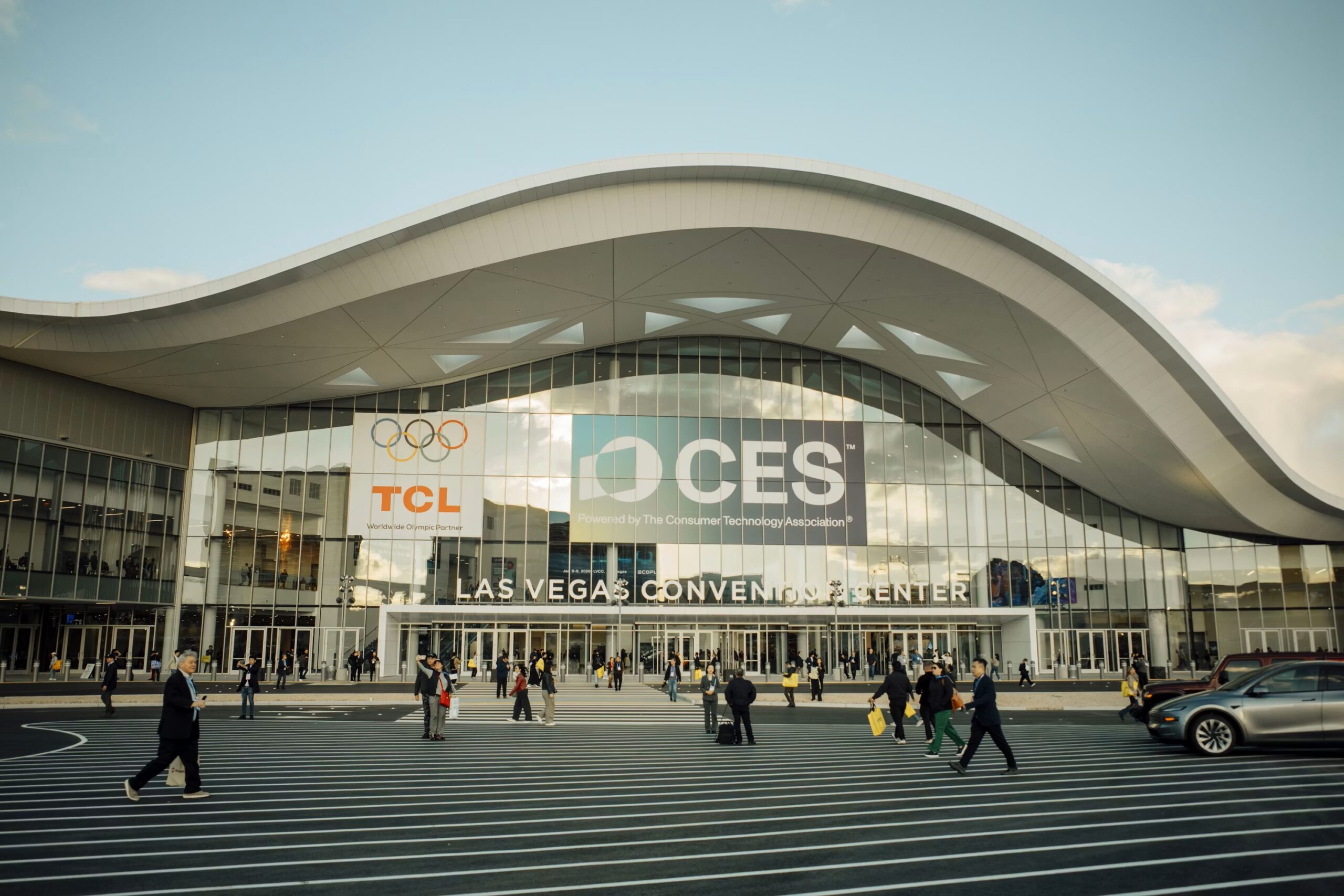
    Las Vegas Convention Center - Image credit: Florian Schindler
    Las Vegas Convention Center – Image credit: Florian Schindler

    OLED Televisions
    The organic light-emitting diode (OLED) remains the most visually appealing display technology for screen sizes up to 97 inches – the largest OLED panels currently available. The emissive pixels of an OLED screen create an image with a practically infinite contrast ratio and captivatingly vibrant color saturation, which LCD TVs and monitors have struggled to match. LG Display and Samsung Display (not to be confused with their consumer electronics counterparts, LG Electronics and Samsung Electronics) remain the primary manufacturers of OLED displays for home theater and computer applications. Practically every OLED display sold today, from any brand, uses an LG or Samsung panel, and even some of Samsung’s OLED televisions use LG modules.48-inch Samsung S95H OLED television - Image credit: CTA

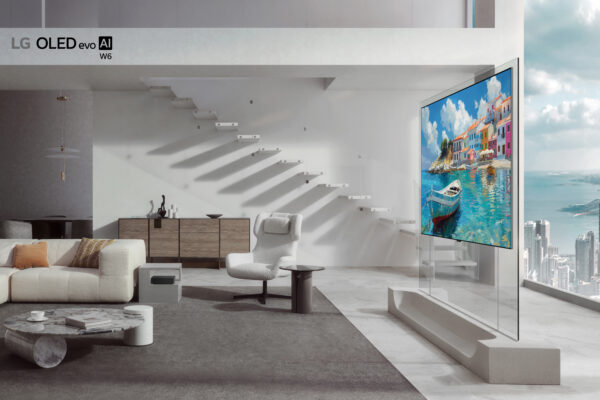
    48-inch Samsung S95H OLED television – Image credit: CTAOne of the most significant improvements in OLED displays for 2026 is their ability to mitigate reflections and glare. The latest OLED panels featured in LG Electronics’ new flagship G6 and W6 model televisions are a prime example, claiming an ambient light reflectance of 0.3% – approximately a third that of the company’s 2025 flagship TVs. Even with a contrast-enhancing glossy finish, these screens are the best yet at producing a watchable picture in less-than-ideal room lighting.

    LG OLED evo W6 television - Image credit: LG Electronics
    LG OLED evo W6 television – Image credit: LG Electronics

    Enhanced efficiency driven by optimized engineering and software, rather than breakthrough chemistries, is fueling the latest improvements in brightness. These OLED efficiency gains should also lead to a longer lifespan, as the panels do more with less electricity and waste heat. The incremental increase in OLED television brightness is another trend we’ll likely see continue over the next few years.

    2026 QD-OLED television - Image credit: Samsung Display
    2026 QD-OLED television – Image credit: Samsung Display

    In the lab, LG and Samsung are claiming an impressive 4,500 nits of peak luminance from their latest OLED panels, but the premium consumer versions will probably not surpass a still-brilliant 3,000 nits with a color-calibrated picture setup when displaying a standard 10% test window – we might see measurements over 3,000 nits with a smaller 2-3% test window. Still, we’re seeing a usable peak brightness increase of about 500 nits on the best 2026 OLED televisions compared to last year, along with roughly an 18% increase in full-field (full screen) brightness overall. Keep in mind that most value TVs are unable to reach 500 nits of peak brightness, let alone a few thousand nits!

    OLED Monitors
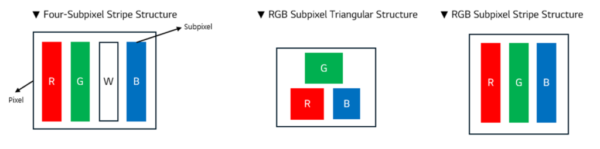
    There is a distinct difference between LG and Samsung in how each company has designed the layout of its OLED display’s subpixels. LG’s OLED panels have historically used a striped four-subpixel design that adds a white channel to the standard red, green, and blue (RGB) elements – sometimes referred to as RGWB in reference to its current design. Samsung’s quantum dot (QD) OLED panels have eschewed a traditional striped layout in favor of a triangular subpixel orientation. At CES 2026, both companies introduced new OLED monitor modules with a “pure” RGB-striped subpixel configuration that more closely resembles that of traditional LCD screens.

    OLED subpixel configurations - Image credit: LG Display
    OLED subpixel configurations – Image credit: LG Display

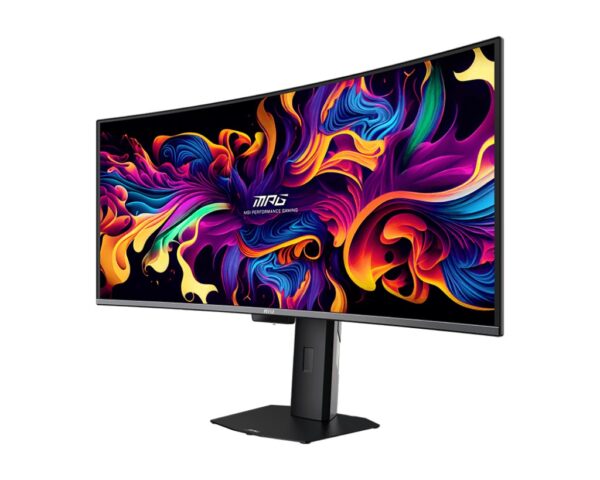
    The primary benefit of the RGB-striped subpixel configuration is that it can produce razor-sharp text, especially when properly optimized with a subpixel rendering technology like Microsoft’s ClearType. Samsung is not completely abandoning the triangular subpixel layout, but the new panel featured in upcoming displays like the ultra-wide (21:9 aspect ratio) MSI MPG 341CQR QD-OLED X36 can offer LCD-like text quality for enhanced productivity while providing a 360Hz refresh rate and the fastest pixel response times gamers desire.

    QD-OLED font-rendering comparison - Image credit: MSI
    QD-OLED font-rendering comparison – Image credit: MSI

    This panel also marks Samsung’s introduction of an updated anti-glare/anti-reflection layer that also reduces the appearance of contrast-degrading elevated black levels resulting from the quantum dots’ interaction with ambient light. The magenta-ish hue of reflections on past QD-OLED screens appeared less pronounced, and the overall color-shift artifact was significantly reduced. This new layer also boasts increased scratch resistance.

    MSI MPG 341CQR QD-OLED X36 - Image credit: MSI
    MSI MPG 341CQR QD-OLED X36 – Image credit: MSI

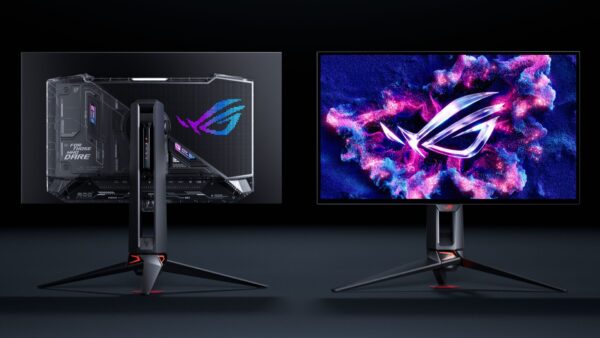
    LG’s goal with its three-stripe subpixel layout is to eliminate the white subpixel for improved color saturation, especially at high luminance levels, at the expense of some overall peak brightness. The ASUS ROG Swift OLED PG27UCWM is a 27-inch 4K monitor, due in the second half of 2026, featuring LG’s new RGB-striped subpixel design. The pixel density of the PG27UCWM delivers a detailed 166 pixels per inch (PPI) while still producing up to 1,000 nits of peak brightness in HDR highlights – compared to 1,300-1,500 nits from the latest non-RGB-striped designs.

    Asus ROG Swift PG27UCWM 4K monitor - Image credit: Asus
    Asus ROG Swift PG27UCWM 4K monitor – Image credit: Asus

    LCD Televisions
    The pixel performance of OLED TVs often makes liquid crystal display (LCD) devices seem like a second choice, given OLED’s practically infinite contrast and supremely saturated colors. All LCD television manufacturers on this year’s CES show floor were quick to point out new screens sporting the latest iteration of RGB micro LED backlighting technology – not to be confused with direct-view LED (DVLED) display technology used in super-premium large-format displays and eye-catching digital signage. The use of RGB LEDs as a backlighting system enables an LCD to surpass the color saturation of current OLED TVs, with measurements expected to exceed 90% of the vast BT.2020 colorspace that’s incorporated into the HDR specs – the best quantum dot OLEDs currently top out at about 85% coverage of BT.2020.

    2026 Samsung Micro RGB TV - Image credit: Samsung
    2026 Samsung Micro RGB TV – Image credit: Samsung

    In the last quarter of 2025, Samsung introduced its first micro-LED-backlit TV with a 115-inch screen and a $30K price tag. For 2026, Samsung is expanding its micro LED backlit LCD TV lineup with more size options, starting at 55 inches and scaling up to a new record-breaking 130-inch model (R95H) that incorporates a Timeless Frame system, enabling an easel-like stance for the supersized TV suspended within, for a more artistic appearance.

    130-inch Samsung Micro RGB TV - Image credit: Samsung
    130-inch Samsung Micro RGB TV – Image credit: Samsung

    Considering that Samsung sourced the 130-inch panel from another manufacturer, it seems likely we’ll see similarly sized offerings from other manufacturers before the year’s end. It is possible to carve even larger screens from the giant sheets of mother glass used to create LCD panels, but about 150 inches is pushing the practical (and logistical) limits.

    Also, many questions remain about the micro LED LCD TV’s performance in backlight zone control and artifact management, including color bleed and desaturation when displaying real-world content. Video processing a multi-color RGB backlight system is not trivial, and color crosstalk may make micro LED TVs more suitable for signage than cinema. There was a noticeable lack of human faces in the demo videos playing on the micro LED LCD TV shown on the CES show floor.

    A Quantum Favorite
    The display-crafting masters at TCL have introduced what may be the most exciting LCD TV of 2026: the X11L Series. Currently available for preorder in 75-, 85-, and 98-inch screen sizes, this beast of a TV claims to deliver up to 10,000 nits of peak brightness and up to 20,000 backlight zones. 10,000 nits is the maximum luminance defined in HDR video specifications, and the X11L could potentially display any HDR video without tone mapping the output to a lower luminance level – albeit very, very few (any?) HDR videos are mastered for 10,000 nits.

    TCL X11L Series 4K UHD TV - Image credit: TCL
    TCL X11L Series 4K UHD TV – Image credit: TCL

    The quantum dots featured in the X11L are a product of Nanosys, and they earn their “super” status through precision manufacturing that enables improved wavelength precision and purity – the company claims +/- 1nm peak wavelength is now achievable at mass production scale! Combine this with TCL’s ability to create a new color filter for the X11L that is highly optimized for the output of these QD materials. Realistically, the X11L should cover over 90% of the BT.2020 color space and make it the display to beat in 2026 for its ability to render the full range of perceivable colors.

    Quantum dot materials - Image credit: Nanosys
    Quantum dot materials – Image credit: Nanosys

    The Future Looks Bright
    You are not imagining that TVs are steadily getting larger – the motivation for profit (and bragging rights) is certainly in play on the manufacturers’ supersized offerings. It wasn’t that long ago that the only practical option for a 100-inch or larger screen was projection, and increasingly affordable large-format televisions are providing a compelling alternative that truly shines, especially in multi-use rooms with typical ambient lighting. While OLED continues to enjoy its status as a premium picture option, LCD TVs are scaling ever larger at a fraction of the cost, closing the gap in color quality and offering unmatched brightness.

  • OpEd: Higher Ed Is Not Wasting Money on AV, But We Are Tired of Being Talked Down To

    OpEd: Higher Ed Is Not Wasting Money on AV, But We Are Tired of Being Talked Down To

    HETMA Board of Directors

    There was a time not too long ago when being an “end user” meant being pushed aside and ignored for other “more important” channel partners. Trust us, we saw it, we felt it. And some of us still harbor the resentment from it. Yet, over the past decade, that social ladder has changed significantly. Overwhelmingly, end users have become welcome and catered to through an industry recognition that a direct connection to the voice-of-the-customer is vital in organizational success.

    Occasionally, however, we are reminded that we’re not quite there yet. In a recent AVNation AVWeek episode (Ep: 743), a discussion between Tim Albright, Gina Sansivero, Michelle Loret, and Brock McGinnis, centered around an article from AV Magazine titled, “Are educational institutions wasting their money on AV?” by guest author Zoran Visnjic of Mason Technologies. The premises is that we, educational end users, “fall into the trap of buying whatever is popular in the education technology landscape instead of what their educators can use in practice.”

    To summarize, the article paints a bleak picture of classroom AV spending in K–12 and higher ed, arguing that institutions routinely waste money by chasing whatever’s trendy instead of what teaching actually requires. It claims purchasing decisions are too often made by people without the technical or instructional context to judge long-term value, warped by “use it or lose it” grant deadlines, and undermined by siloed planning between IT, faculty, facilities, and administrators which results in flashy, complex systems that don’t fit real workflows and end up underused because educators aren’t properly trained. It criticizes schools for clinging to outdated legacy gear and for falling short on true equity and neurodiversity support, while warning that many are unprepared for the near-future hits of AI, rising student-data security risks, and the infrastructure and staffing demands of VR/AR/IoT, leaving campuses stuck with fragile, unmanageable systems that turn AV from an asset into a recurring drain.

    The write-up riled up the guests to challenge the premise of the article, standing up for the higher ed vertical and the progress that has been made. As Gina Sansivero rightly points out, the article is “clickbaity” and that any higher ed individual who read it should be “infuriated.” Yes, Gina, we’re triggered and it “got us” too. The article did show that clickbait works, and it is “offensive” as Michelle Loret pointed out. The article is wrapped around an outdated outlook to gain attention. And yes, Michelle, indeed, we do “live in this world,” day-in and day-out, face-to-face with our customers, the faculty and staff. Brock McGinnis, gave the rightful insight that there has been a “sea change” and we are “no longer cart-pushers.” We are “highly educated, [with] a great association, HETMA, that ensures that even smaller places … have access to the same resources as the other [elite] schools.” He even points out that in Canada more CTS-I and CTS-D holders are held by higher ed professionals than corporate employees.

    The problem with this clickbait is that it also collapses nuance, erases institutional complexity, and frames an entire profession as naïve buyers chasing shiny objects. That framing is not just wrong, it is dismissive of the practitioners who design, deploy, and sustain learning environments at scale. HETMA, as the official industry organization leading the charge for the advocacy of the higher ed vertical, has one goal: focusing on developing our professional acumen. And the entire industry has come together up-and-down the channel line to accomplish this together.

    So, after you all “checked the date,” and confirmed that, yes, this article did actually get released in 2026, HETMA would like to offer the counterargument, starting with the foundational problem.

    K–12 and Higher Education Are Not the Same Conversation: Lumping K–12 and higher education together is analytically lazy. K–12 environments are typically centralized, standardized, curriculum-driven, and often state-mandated in technology selection. Higher ed is decentralized by design. Faculty governance, donor-funded spaces, research requirements, legacy infrastructure, accreditation pressures, and institutional autonomy fundamentally change how technology decisions are made. Yes, both educate students. That is where the similarity ends. Higher ed institutions are cities within themselves with complex systems that center around community development. When an article treats them as interchangeable, without recognition of the intrinsically different missions, every conclusion that follows is built on sand.

    Decision Makers in Higher Ed Are Not Technically Illiterate: The assertion that “limited technical knowledge at the decision-making level” drives waste reveals more about the author’s distance from higher education than it does about higher education itself. Universities employ CIOs, AV directors, classroom technology governance committees, instructional designers, accessibility officers, facilities engineers, and faculty advisory boards. Many of these professionals have spent decades in AV, IT, and learning space design. Administration controls funding. Faculty define pedagogical needs. IT and AV teams translate those needs into architecture and operational reality. That is not dysfunction. That is governance. Could alignment always be better? Absolutely. But, framing higher ed leadership as technically naïve is lazy analysis that lacks the understanding that tech managers at R1 institutions area actually making financial and technical decisions for multi-billion-dollar corporations. Yeah, that’s more money than the valuation of any integrator on the current Top 50 list.

    “Use It or Lose It” Funding Is Not a Shopping Spree: Grant-driven spending pressure exists. But higher education procurement is not a frantic cart checkout. Major AV investments go through capital planning, architectural design, RFP processes, accessibility and security review, enterprise integration, and lifecycle costing. You cannot impulse-purchase a campus-wide collaboration platform or a standardized classroom ecosystem. Higher ed moves deliberately because failure is expensive, visible, and mission-impacting. What some may see as ivory towers, red tape, and preferential buying, we call due diligence to deliver the right products and services to our end users, the campus community.

    Training Is Not Ignored, It Is a Strategic Investment: The critique that technology fails without training is true. But, the implication that higher ed treats training as an afterthought is not. Just HETMA itself hosts an annual virtual conference, monthly Lunch-&-Learns, the Educational Summit at InfoComm, the signature Approved Program, weekly Advisory Councils, HEx Credential, Prism Scholarship, and not to mention all the other higher ed AV conferences that happen nearly weekly throughout the globe. Training and certification is the core of who we are… C’mon, we’re literally in the education industry. Training in higher ed is not a one-time workshop. It is an ongoing institutional effort shaped by faculty turnover, adjunct models, evolving pedagogy, and constantly changing platforms. Universities invest heavily in onboarding, faculty development centers, embedded instructional designers, documentation, and hands-on support.

    We’re Casting a HEx: This is also where professional development for AV and IT practitioners matters. HETMA is addressing this directly with the HETMA Credentialed Professional (HEx) program. HEx is not a single course or vendor certification. It is a curated pathway that recognizes higher education, providing relevant training from across the industry. Professionals earn the credential by completing a defined set of courses and meeting required training hours. The initial HEx offering is an entry-level credential focused on foundational knowledge for higher ed AV and instructional technology. Additional HEx pathways in areas such as project management, programming, instructional design, AV system design, and more are already in development. Higher ed does not just need better tools. It needs shared professional standards, common language, and recognized pathways for growth. HEx is designed to formalize that ecosystem. The challenge is not that higher ed ignores training. The challenge is that modern campuses demand training models that match their complexity and diversity of roles.

    Brock’s Counterpoints Deserve a Deeper Look: The AVWeek panel did the community a service by pushing back on the framing of the original article. That discussion was necessary and appreciated. However, several counterpoints deserve more nuance when applied to higher education. Brock’s comments on over-specification, boutique solutions, and high-end gear reflected a common integrator concern: gold-plating rooms instead of solving instructional needs. That is a real risk. It is also something higher ed AV teams actively fight. Most universities today are aggressively standardizing classrooms, reducing customization, and driving down per-room cost through repeatable design. The era of every classroom being a snowflake is ending because institutions cannot scale it operationally.

    The Camera Example: The discussion around a hypothetical $1,000 camera is a useful illustration of where integrator logic and institutional reality diverge. Yes, you can buy a $1,000 camera, but higher education is not filming YouTube creators. We are capturing instruction for accessibility compliance, research documentation, global distribution, and legal recordkeeping. Reliability, remote management, vendor support, and third-party integrations matter. More importantly, the market has matured. There are excellent purpose-built educational cameras that deliver high-quality imaging, auto-tracking, USB and IP workflows, and enterprise manageability at education-appropriate price points. The conversation should not be “$1,000 camera versus junk.” The conversation should be “right tool for instructional intent, at institutional scale.” That to say, cost is only one dimension. Total cost of ownership, support burden, integration complexity, and lifecycle planning matter more than the sticker price.

    “Just Buy Simpler Gear” Is Not a Strategy: Another implicit counterpoint was that institutions should simply buy simpler technology. That advice ignores the regulatory, accessibility, and operational requirements of higher ed. Lecture capture, hybrid instruction, remote participation, assistive listening, recording retention policies, and enterprise identity integration are not optional. Simplicity for the user often requires complexity in the backend. Higher ed AV teams do not chase complexity for fun. They engineer complexity away from faculty and students.

    Integrators See Projects. Higher Ed Sees Ecosystems: Integrators often encounter the worst examples, like donor-driven rooms, executive boardrooms, showcase classrooms. That can create the impression that higher ed is addicted to boutique AV. The fact is, our business model is to support as much from design to install as we can internally in order to both lower the total cost of ownership and ensure appropriate support SLAs. Niche projects are often the ones that get bid out, because that’s a better business decision for us. What is often invisible is the hundreds or thousands of standardized classrooms built quietly with tight budgets, lifecycle planning, and centralized management. Higher ed is not a collection of showrooms. It is an ecosystem of learning spaces.

    Legacy Gear, Accessibility, AI, and Security Are Not Revelations: The article correctly points out that analog legacy gear, unmanaged devices, and outdated formats should be retired. Higher ed AV teams have been standardizing on IP-based management and digital workflows for years. Are there some schools still “living in the past?” Sure, but with cybersecurity and accessibility regulations that govern our institutions, IP technologies are-and-have-been our method for compliance. Accessibility and neurodiversity are not emerging concerns in higher ed. They are legal requirements, institutional values, and active design criteria. Captioning, assistive listening, flexible environments, lighting control, and multiple interaction models are part of modern learning space design. AI integration, data security, and infrastructure strain are not theoretical risks. They are daily agenda items for CIOs and AV leadership teams operating networks that rival enterprise and research institutions in scale and complexity.

    What Articles Like This Actually Signal to Higher Ed: This is the part that matters. When a company publishes an article framing higher education as trend-chasing and technically naïve, it does not position that company as a trusted partner. It signals a misunderstanding of the sector and a willingness to talk down to practitioners. If the goal was thought leadership, the result was the opposite. It read as a lecture from the sidelines, not insight from inside the field. For many of us, it answered a simple question about who understands higher education and who does not.

    Buying Intentionally Is Already the Goal: Higher education is not perfect. No sector is. We over-spec spaces. We pilot tools that fail. We inherit donor-driven decisions. We negotiate governance. We compromise. But the narrative that universities are blindly wasting money on AV is tired, simplistic, and disconnected from reality. The future of instructional technology is not about buying less. It is about designing intentionally, aligning governance, investing in people, and partnering with vendors who understand the complexity of our mission.

    The Industry Has Spoken: One additional item of note is the industry recognition that higher ed projects and people have received over the past decade from every major AV-industry publication including top projects to professionals and teams of the year. From invited speaking engagements to tradeshow presence, to advisory board consulting, and thought leadership, the influence and advocacy higher ed provides has become essential in product road-mapping and business development. The weight and power of the higher ed vertical united is unmatched in any other vertical sector within the AV-industry.

    In conclusion, higher ed does not need lectures about shiny objects. We need partners who recognize that classrooms are infrastructure, not gadgets. Our campuses are businesses that make strategic decisions that impact our living communities. That’s the responsibly we bear, day-in, day-out.

  • AV Over IP in Control Rooms: Where It Wins, Where It Adds Risk, and How Teams Decide

    AV Over IP in Control Rooms: Where It Wins, Where It Adds Risk, and How Teams Decide

    Control Rooms Are Not Enterprise AV Spaces, and Never Will Be

    Control rooms in energy and utilities environments exist for one purpose: sustained operational awareness under all conditions. Unlike corporate boardrooms or higher-education AV deployments, these spaces are not designed for collaboration, presentation, or convenience. They are engineered environments where audio and video systems function as operational instruments, directly supporting decision-making that affects safety, reliability, and regulatory compliance.

    This distinction matters because AV over IP technologies originated largely from enterprise and broadcast use cases, where flexibility and scalability often outweigh deterministic behavior. In a control room, that tradeoff looks very different. The promise of AV over IP, routing anything anywhere over standard networks, comes with a corresponding increase in dependency on network behavior. For teams responsible for grid stability, pipeline monitoring, or real-time incident response, importing network-based failure modes into the visual layer is not a theoretical concern; it is an operational risk that must be deliberately engineered around.

    Why AV Over IP Gained Traction in Mission-Critical Environments

    Despite those risks, AV over IP has gained real traction in control rooms, and not without reason. The drivers are operational, not aesthetic.

    Signal Agnosticism and Format Flexibility at Scale

    Modern control rooms ingest an expanding range of visual sources: SCADA dashboards, EMS and DMS systems, GIS mapping platforms, security camera feeds, legacy serial data visualizations, and increasingly, IP-native analytics platforms. Traditional baseband architectures struggle to scale gracefully across this diversity without frequent hardware changes.

    AV over IP abstracts transport from signal type, allowing teams to move video and graphics regardless of resolution, frame rate, or source format. For operations environments that evolve faster than capital refresh cycles, this flexibility reduces re-cabling, minimizes physical disruption, and simplifies expansion planning.

    Centralized Management Across Distributed Operations

    Utilities rarely operate from a single location. Control rooms, backup centers, regional substations, and remote operations hubs all require access to shared visual resources. AV over IP enables centralized signal distribution and management across geographically dispersed facilities, allowing operators to view the same data sets without duplicating source hardware.

    From an operations standpoint, this capability aligns well with the move toward centralized command structures and disaster recovery planning, where visual consistency across sites is critical.

    The Network Becomes the System, and That Changes the Risk Profile

    The moment AV moves onto the network, the network is no longer a transport layer, it becomes the system.

    Latency, Jitter, and Packet Loss as Operational Threats

    In control rooms, even minor delays can alter operator perception. A few hundred milliseconds of latency between data updates and visual confirmation may not matter in a conference room, but in grid operations or pipeline monitoring, it can degrade situational awareness. Jitter-induced artifacts or dropped frames can mask alarms, distort trend analysis, or create false confidence.

    AV over IP systems operating on shared or poorly engineered networks inherit all the behaviors of those networks. Without deterministic delivery guarantees, AV becomes subject to congestion, microbursts, and transient failures that are unacceptable in mission-critical environments.

    Multicast Dependence and the Cost of Network Misconfiguration

    Most AV over IP platforms rely heavily on multicast for efficient distribution. While multicast is powerful, it is also unforgiving. Misconfigured IGMP snooping, queriers, or PIM routing can result in flooded networks, intermittent signal loss, or cascading failures across unrelated systems.

    These failure modes are often unfamiliar to traditional AV teams and, critically, may not surface during commissioning. They appear later, during peak load, firmware updates, or network changes, when the system is already operational.

    Reliability Expectations in Energy and Utilities Control Rooms

    Control rooms are designed around assumptions that do not align neatly with best-effort networking.

    Five-Nines Uptime and Deterministic Behavior

    Energy and utilities operations often require uptime targets approaching five nines. More important than raw uptime, however, is predictability. When failures occur, operators need to understand how systems fail and how they recover.

    Many AV over IP systems rely on dynamic discovery, software-based routing, and management planes that introduce nondeterministic behavior. While acceptable in enterprise environments, this clashes with the expectations of operations teams accustomed to fixed signal paths and known failure states.

    Redundancy Beyond the Encoder

    Redundancy in control rooms cannot stop at dual encoders or backup sources. True resilience requires redundancy across switching fabric, power supplies, network paths, control processors, and management systems. A redundant signal path is meaningless if both paths converge on the same switch stack or management controller.

    AV over IP designs that do not explicitly model end-to-end failure scenarios often provide a false sense of resilience.

    Where AV Over IP Clearly Wins in Control Room Architectures

    When engineered correctly, AV over IP delivers tangible advantages.

    Scalability Without Physical Rebuilds

    Adding operator positions, expanding video walls, or integrating new data sources traditionally required physical reconfiguration. AV over IP allows these changes to occur logically, reducing downtime and preserving operational continuity, an essential benefit in facilities with limited maintenance windows.

    Interoperability With IT Monitoring and Cybersecurity Tools

    Unlike traditional AV systems, IP-based platforms can integrate with SNMP monitoring, syslog servers, and cybersecurity frameworks. This visibility allows operations teams to monitor AV performance alongside network health, power, and environmental conditions, aligning AV with existing operational oversight practices.

    Where AV Over IP Introduces Non-Trivial Risk

    The same characteristics that enable flexibility also amplify risk.

    Shared Infrastructure and Fault Propagation

    In converged environments, AV failures can propagate beyond the visual layer. Network congestion caused by misbehaving endpoints or firmware bugs can affect unrelated systems sharing the same infrastructure. The blast radius of failure increases significantly compared to isolated baseband systems.

    Firmware, Patch Cycles, and Configuration Drift

    Large AV over IP deployments involve dozens or hundreds of endpoints. Maintaining firmware consistency, configuration alignment, and compatibility across these devices becomes an ongoing operational task. In regulated environments, unscheduled updates or undocumented changes can introduce compliance issues alongside technical risk.

    How Mission-Critical Teams Actually Decide

    Control room teams are pragmatic. Adoption decisions are rarely ideological.

    Segmented Networks Versus Full Convergence

    Many organizations adopt hybrid models, using physically or logically segmented networks for AV traffic while still leveraging IP transport. This approach balances flexibility with containment, limiting fault propagation while retaining centralized management benefits.

    When Baseband Still Makes Sense

    In scenarios where predictability, simplicity, or regulatory clarity outweigh flexibility, baseband architectures remain viable. SDI, fiber, and matrix switching provide deterministic behavior with minimal configuration overhead, qualities still valued in high-risk operational environments.

    Operational Ownership and the AV–IT Boundary

    Technology choices are inseparable from organizational structure.

    Who Owns Troubleshooting at 3 a.m.?

    When a system fails outside business hours, ambiguity around ownership becomes a liability. Clear delineation between AV and IT responsibilities, or formalized shared ownership, is essential to timely resolution.

    Documentation and Runbooks as System Components

    In mission-critical environments, documentation is not ancillary. Network diagrams, recovery procedures, escalation paths, and configuration records are part of the system itself. AV over IP deployments that lack disciplined documentation increase operational risk regardless of technical capability.

    Designing AV Over IP for Extreme and Remote Environments

    Energy and utilities operations frequently operate outside controlled environments.

    Environmental Hardening and Network Edge Considerations

    Temperature extremes, vibration, dust, and unreliable connectivity influence device selection, topology, and redundancy strategy. AV over IP systems deployed at the network edge must account for these conditions without assuming enterprise-grade infrastructure.

    The Long-Term ROI Question in Mission-Critical Deployments

    Return on investment extends well beyond initial deployment.

    Operational Cost, Training, and Lifecycle Management

    AV over IP systems require skilled personnel, ongoing training, monitoring infrastructure, and lifecycle planning. ROI calculations that ignore these factors underestimate total cost of ownership and overstate long-term value.

    AV Over IP Demands Engineering Discipline, Not Blind Adoption

    In control rooms, technology is judged by how it behaves under stress, not by feature lists or flexibility claims. AV over IP offers real advantages, but only when deployed with deliberate architecture, clearly defined ownership, and realistic failure modeling. The most successful teams are not asking whether AV over IP is the future. They are asking whether it is the right tool for this operational moment, in this environment, with this risk profile.