Category: Article

  • My First InfoComm India Experience – Discovering the Future of AV in India

    My First InfoComm India Experience – Discovering the Future of AV in India

    Attending InfoComm India 2025 for the first time was a milestone in my professional journey. As someone working in marketing within the AV/IT space, I’ve long researched products, studied case studies, and followed trends online. Yet, nothing compares to walking the show floor, seeing technologies in action, and experiencing firsthand how innovation is shaping the future of our industry.

    This was more than just an exhibition, it was an immersive learning experience that combined technology, education, and networking, all under one roof.

    From Screen to Show Floor: Technology Comes Alive

    Researching products online can only take you so far. At InfoComm India, I had the opportunity to experience a wide range of innovations, from Shure, Biamp, Kramer, Sennheiser, and Samsung, along with several other leading brands showcasing the future of AV.

    Seeing these innovations in person, from advanced audio systems to cutting-edge displays, offered insights that no specification sheet could provide. The clarity of professional microphones, the scale of video walls, and the seamless integration of AV solutions highlighted how far the industry has advanced, particularly in the Indian market.

    For me as a marketer, the experience reinforced an important truth: technology must be experienced, not just explained. The way these brands brought their products to life on the show floor was a lesson in the power of storytelling and engagement.

    Immersive Technology: Experiencing the Future

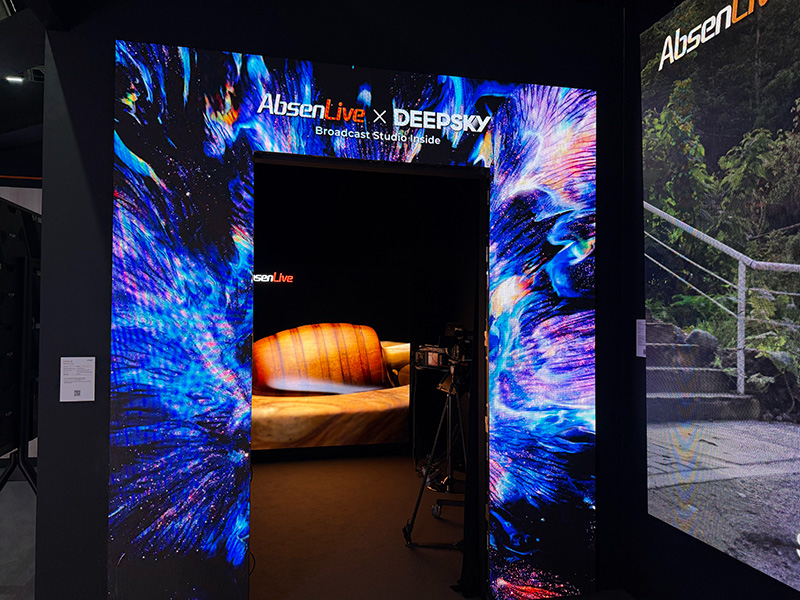
    One of the most striking aspects of the show was the presence of immersive solutions large-format LED walls, ultra-high-definition displays, and spatial audio systems that transported audiences into new realities.

    These experiences weren’t about passive viewing; they were about active participation. Standing in front of an immersive installation, I realized that the future of AV lies in experiences that engage multiple senses simultaneously.

    From a marketing perspective, this underlined the need for campaigns that go beyond information. In a world where customers seek experiences, immersive AV is a powerful tool not only for organizations but also for those of us tasked with communicating their value.

    Educational Opportunities: Beyond the Booths

    InfoComm India is equally about learning as it is about technology. On Day 1, I attended Dave Hatz from CTI’s session, “From AI Hype to Organizational Value: Building an AI-Enabled Organization That Scales.”

    What stood out was his reminder that the questions we ask shape the outcomes we get. Instead of asking “How do we use AI?”, organizations should ask “Where can we work better?”. He emphasized that AI isn’t just about automation, it’s about building systematic capabilities that help teams work faster while maintaining quality. And just as importantly, adoption depends on trust and culture; when people fear how AI is used, they resist instead of embracing it.

    For me, this was a powerful lesson in how to move beyond hype and focus on delivering measurable value. Sessions like this not only expand our knowledge but also give us the language to communicate innovation more effectively to diverse audiences.

    Professional Networking: Listening and Learning from Leaders

    I also had the opportunity to hear from Sarah Joyce and TS Gopalakrishnan of AVIXA, who shared their perspectives on the Future of AV. Their discussion underscored the importance of having a neutral forum for AV end users in India, a space where professionals can come together to exchange ideas, share experiences, and collectively address the challenges shaping our industry.

    They touched on the realities of hybrid work, the pressure of rapid technological change, and the growing need for solutions that are both scalable and sustainable. But more importantly, they framed these challenges as opportunities: a chance for AV professionals in India to reimagine workflows, embrace innovation, and build systems that are truly future-ready.

    For me, it was a valuable reminder that our industry isn’t just about technology; it’s about people and innovation working hand in hand. Leaders like Sarah and Gopalakrishnan bring clarity to how collaboration and community can drive progress. Conversations like these reaffirmed why building networks, listening to diverse voices, and staying open to new ideas are critical for both individual growth and the growth of the AV industry as a whole.

    As a first-time attendee, I found it invaluable to listen to such senior leaders articulate their vision. Their perspectives reinforced the importance of human connection and collaboration in driving technological progress.

    Networking at InfoComm India extended beyond formal sessions, every conversation, whether at a booth or in the hallway, offered fresh insights into how different stakeholders perceive the opportunities and challenges within the AV industry.

    Marketing Insights: Observations from the Show Floor

    As a marketing professional, I naturally paid attention not only to the technologies but also to how brands presented themselves. Some exhibitors transformed their booths into immersive storytelling spaces, drawing visitors into interactive experiences. Others relied on clarity and direct communication, emphasizing performance and reliability.

    A few takeaways stood out to me:

    • Experience outshines specifications – Demonstrations that showed real-world use cases resonated more than technical data.
    • Engagement creates memory – Interactive booths left a lasting impact, proving that participation builds stronger connections.
    • Consistency is credibility – The most effective brands projected a unified identity across their visuals, messaging, and interactions.

    For marketers in AV, these observations serve as valuable reminders. Our role goes beyond promotion; it is about creating meaningful narratives that connect innovation to real-world outcomes.

    Exploring Innovation: Emerging Trends

    InfoComm India also provided a window into emerging AV trends that will shape the industry in the years ahead. Among the most notable:

    • AI-powered solutions that enable automation and smarter analytics.
    • Sustainable technologies designed with efficiency and environmental responsibility in mind.
    • Collaboration platforms that are redefining hybrid work and learning.
    • Immersive displays and audio systems that blur the line between physical and digital experiences.

    For India, these innovations represent significant opportunities, not only in enterprise and education but across entertainment, retail, and public spaces.

    Key Reflections from My First InfoComm India

    Looking back, my first InfoComm India was not just an event, it was an experience that deepened my appreciation for the industry I work in.

    As a marketer, I returned with renewed insights into how technology can be positioned and communicated more effectively. As a professional, I walked away inspired by the pace of innovation, the value of continuous learning, and the importance of building connections within the AV community. Most importantly, this experience reaffirmed why I am proud to be part of an industry that is dynamic, collaborative, and future-focused.

    Embracing the Future of Technology

    InfoComm India India 2025 gave me more than knowledge; it gave me perspective. The combination of immersive technology, educational sessions, networking opportunities, and marketing insights created an experience I will carry forward into my career. I look ahead with excitement, for future InfoComm India events, for the growth of the AV industry in India, and for the opportunities we have as professionals to shape how technology connects people and ideas.

    Finally, a personal note of gratitude: thank you to CTI, AVNation Media, Tobi Tungl, Tim Albright, and Allison Hall for contributing to an experience that was both meaningful and inspiring.

  • Troubleshooting Common Sound System Issues in Churches

    Troubleshooting Common Sound System Issues in Churches

    Sound systems play a vital role in shaping the worship experience. In churches, synagogues, and other houses of worship, audio isn’t just about technology, it’s about connection. A sermon that can’t be heard clearly, a choir that gets lost in muddy sound, or a worship band drowned out by feedback all break that connection between leaders and the congregation.

    For many worship leaders, church sound system troubleshooting can feel like an uphill battle. Budgets are often tight, volunteers may lack technical training, and acoustics can be unpredictable. Meanwhile, AV and IT professionals face the challenge of designing, maintaining, and supporting reliable systems that deliver clarity and consistency week after week. In this blog, we’ll unpack the most common sound system issues in churches and offer practical solutions that bridge the gap between professional AV standards and real-world church operations.

    Understanding the Challenges of Church Sound Systems

    Acoustics in Worship Spaces
    Unlike traditional performance venues, churches weren’t always built with sound reinforcement in mind. High vaulted ceilings, wide seating arrangements, and reflective surfaces create acoustical challenges such as echo, reverb, and uneven sound coverage. This makes speech intelligibility and balanced music reproduction harder to achieve.

    Budget Constraints
    Many worship leaders dream of crystal-clear audio but are working with limited resources. Churches often prioritize cost-effective AV systems that balance performance with long-term value. For AV integrators, this means designing scalable solutions that won’t require complete overhauls every few years.

    Volunteers as Operators
    In most houses of worship, Sunday morning sound systems are run not by full-time engineers, but by dedicated volunteers. Some are highly skilled, while others may have minimal technical background. Because of this, volunteer-friendly systems that are intuitive, easy to operate, and well-documented are critical.

    Common Sound System Issues in Churches

    Microphone Feedback
    Feedback is one of the most frequent complaints in worship spaces. It happens when sound from a speaker loops back into a microphone, creating that familiar squeal. This often comes from microphones placed too close to loudspeakers, excessive gain, or poor EQ management. The fix usually involves better microphone and monitor placement, applying notch filters to problem frequencies, and teaching volunteers how to manage gain before pushing faders too far.

    Inconsistent Volume Levels
    Another common frustration is when the pastor is too quiet, the choir is too loud, or instruments overpower the vocals. Without consistent levels, congregations lose focus and engagement. Tools like compression and limiting can help smooth out dynamics, while proper gain staging ensures input levels are balanced across the system. Digital mixers also make it possible to save presets for different types of services, whether spoken word, choir, or full band.

    Poor Speech Intelligibility
    When sermons sound muffled or unclear, the congregation may miss the message entirely, an especially big challenge for older audiences. Improving intelligibility requires a mix of strategies: adding acoustic treatment such as sound panels to reduce reflections, placing speakers for even coverage across seating areas, and using EQ adjustments to boost the mid frequencies (2–5 kHz) where speech clarity lives.

    Distorted or “Muddy” Sound
    A worship band can easily overwhelm the room if the system isn’t tuned properly. Muddy mixes often come from mismanaged EQ, poor gain staging, or too much low-end energy. Balancing EQ across instruments, checking for amplifier clipping, and applying high-pass filters to remove rumble can help restore a clean, inspiring sound.

    Equipment Reliability & Connectivity Problems
    Loose cables, outdated gear, and unstable power sources can all cause dropouts or complete audio failure, derailing a service in seconds. A proactive maintenance schedule for cables and connectors, timely upgrades of aging gear, and built-in redundancy for critical audio paths are all safeguards. Power conditioning also helps stabilize voltage and protect valuable equipment.

    Troubleshooting Checklist for AV Teams

    When audio issues arise mid-service, time is critical. A structured approach helps volunteers and AV teams resolve problems quickly:

    1. Identify the symptom: Is it feedback, distortion, or silence?
    2. Check the signal path: Follow the chain from microphone to speaker.
    3. Isolate components: Test each piece of equipment individually.
    4. Adjust for the room: Consider acoustic issues as part of the problem.

    Providing volunteers with a laminated troubleshooting checklist ensures problems are handled systematically and without panic.

    Training and Empowering Volunteers

    Church volunteers are the unsung heroes of worship AV. They ensure the message is heard week after week, often with limited training. Supporting them means simplifying interfaces, such as digital mixers with presets and clear labeling, while offering regular training sessions on basics like gain staging, EQ, and troubleshooting. Easy-to-follow guides or cheat sheets give them confidence in the moment, while cloud-based monitoring tools allow AV pros to step in remotely when needed.

    Long-Term Solutions & Best Practices

    Troubleshooting fixes immediate problems, but long-term strategies keep church audio reliable and scalable. Investing in systems that can grow with the congregation, integrating new technology thoughtfully into existing infrastructure, and planning for ongoing maintenance all reduce service-day surprises. Partnering with experienced AV integrators ensures that churches benefit from proven solutions tailored to worship environments.

    From Troubleshooting to Transformation

    For churches, sound is more than technology, it’s ministry. A reliable, clear, and consistent audio system ensures the message of faith, music, and community reaches every listener. By addressing common issues like feedback, inconsistent levels, or poor speech clarity, worship leaders can create meaningful, distraction-free services. For AV and IT professionals, the goal is to design and support systems that are budget-friendly, volunteer-friendly, and future-ready.

    Troubleshooting isn’t just about fixing problems; it’s about stewardship. A well-maintained, scalable, and integrated sound system ensures every voice is heard and every song inspires. If you’re ready to take your worship audio to the next level, partner with an AV integrator who understands the unique balance of budget, reliability, and simplicity that houses of worship require.

  • Higher Education AV Funding: Big Grants vs Standards

    Higher Education AV Funding: Big Grants vs Standards

    When COVID relief funds poured into higher education, many institutions seized the opportunity to upgrade their AV infrastructure. Entire campuses were retrofitted for hybrid learning almost overnight. But as the panelists on AVNation’s AVWeek 733 reminded us, one-time higher education AV funding creates as many long-term questions as it solves.

    “Occasionally higher education will get what I call a big pot of money,” said host Tim Albright. “You can do 10 new rooms, maybe a lecture hall. But in five to seven years, when the refresh cycle comes along, that big pot is gone. How do you manage that?”

    The Sustainability Challenge

    For Ryan Gray, from Yavapai College, the challenge has no neat answer. “It really is different from place to place, and we live at the mercy of the values of the institution,” he explained. Some universities view a grant or gift through a sustainability lens, tying it to longer-term upkeep. Others take a more immediate approach: you don’t look a gift horse in the mouth.

    The tension between urgency and sustainability defines much of higher education AV funding. Gray noted that the institutions who fare better often “tie AV upgrades into facilities management or other standards that are already valued across campus. A heat pump may have a 25-year lifespan, AV equipment only five to seven, but if you can hitch your technology planning to those existing processes, you stand a better chance.”

    To listen to the full AVWeek episode, go here

    When Standards Save Budgets

    Chris Kelly, of Creighton University, illustrated the stakes with a story from his campus. “We’ve got this big fancy video wall. Someone tossed out a bunch of money, but now one of the screens is going bad. They don’t make the screens anymore, it’s not under warranty, and we’ve got a major event coming up. There’s no pot of money sitting there to replace it.”

    His team’s stopgap solution: moving displays around to hide the failing unit. But the deeper lesson was clear. “If we’d standardized on displays we already use across campus, we’d have had spares on hand. Standardization gives you breathing room when the funding cycle runs dry.”

    Even in the best-funded environments, refresh cycles pile up. “The more buildings you get, the more five- and seven-year cycles overlap,” Kelly said. “Without budgets growing at the same pace, something eventually has to give.”

    Planning for Day 1,000, Not Day One

    The panelists agreed that while one-time dollars are tempting, higher ed decision-makers must resist the urge to build beyond their ability to refresh. Gray summed it up bluntly: “If there were a great answer, we’d all have it solved. The best thing we can do is anchor AV to processes the institution already understands and plan for day 1,000, not just day one.”

    When it comes to higher education AV funding, institutions should resist the temptation to let one-time grants dictate their standards. Instead, new technology investments should be aligned with existing campus refresh policies to ensure consistency and long-term viability. Standardization plays a crucial role in this process, as relying on common equipment makes it easier and far more cost-effective to replace or repair systems when budgets tighten. Ultimately, one-time funding is best applied to scalable, repeatable solutions that can support sustainability over the long term, rather than flashy, bespoke projects that are difficult to maintain once the initial money runs out.


  • Open AV in Higher Education: The Future of Campus AV Systems

    Open AV in Higher Education: The Future of Campus AV Systems

    Walk into any campus AV department today, and you’ll see a patchwork of platforms: one for monitoring, another for control, and maybe a third for scheduling. Each tool operates in its own silo, creating complexity for IT and AV teams already stretched thin. That’s why the higher ed AV community is rallying around a new concept: Open AV in higher education.

    On the latest episode of EdTech, panelists explored what open AV could mean for universities and why the push for cloud-based monitoring and management is gaining traction.

    “Sixty percent of people surveyed said they use some kind of cloud-based monitoring,” noted Scott Tiner of Bates College. “What are the other 40% doing? … It’s very clear that those of us who build and use these systems really want this open AV, single pane of glass.” For higher ed institutions balancing thousands of classrooms, consolidation isn’t just convenient, it’s critical to academic continuity.


    Home Grown Solutions

    Ernie Bailey from UAMS highlighted how open systems directly support proactive service. “We’re developing our own single pane of glass for our classrooms right now. Not only can we see what’s going on, we can touch it right there and solve problems before the instructor knows there’s an issue.” Preventative maintenance like this ensures technology never becomes the barrier to teaching and learning.

    At large, decentralized universities, the challenge is even greater. “At Ohio State, we’re decentralized,” explained Andy Vogel. “What we use doesn’t necessarily mean what Arts and Sciences uses. It would be great to have an open thing that still allows us to be decentralized but also have a common tool. That allows us to have a common language and ultimately deliver white glove service all across the board.” In other words, open AV in higher education is about consistency, even across fragmented organizations.

    Still, there are hurdles. “Anytime we purchase pretty much any product that has cloud in it, our networking team has an extra set of questions,” said Erin Maher-Moran of Johns Hopkins University. “I get that, because when you introduce a cloud system into campus infrastructure, it raises red flags. But the demand is there, and end users are getting more vocal about it.”

    Demand for Open AV in Higher Education

    That demand could be the catalyst higher ed needs. For manufacturers, the message is clear: the walled garden approach is running up against its limits. As more universities adopt cloud-first strategies, decision-makers will look for AV partners who can integrate seamlessly, respect data governance, and empower IT/AV teams to deliver reliable classroom experiences.

    As Bailey summed it up: “They insist that everyone else let them touch their things, but they don’t want anyone touching theirs.” That tension may well determine whether the next decade of higher education AV is defined by silos or by open, interoperable ecosystems that truly serve students and faculty alike.

    To listen to the full episode of EDTech 133 click here.


  • Cyber and AV Come Together with Pearl Technology Showcase

    Cyber and AV Come Together with Pearl Technology Showcase

    In today’s enterprise landscape, the lines between cyber and AV technology are blurring. From video collaboration platforms to digital signage networks, AV systems are increasingly IP-based and increasingly targeted. That’s why events like the Central Illinois Cyber & AV Technology Showcase matter. Hosted by Pearl Technology, this year’s showcase will bring together IT and AV professionals from across the region to preview emerging innovations, explore hands-on solutions, and connect with peers facing the same challenges.

    The 2025 showcase marks a unique opportunity for corporate IT and security leaders in Central Illinois: a chance to see firsthand how AV and cybersecurity intersect, without leaving their backyard.

    Why Cyber and AV Come Together

    For corporate security teams, AV used to be a separate world of projectors, sound systems, and conference room control. Today, every one of those devices runs on the network. That means new vulnerabilities, new monitoring requirements, and new expectations for interoperability with enterprise IT standards.

    At the Showcase, attendees will find vendors and experts addressing exactly those intersections. From penetration testing for AV endpoints to AI-driven monitoring tools, the event will highlight practical ways to strengthen an organization’s overall security posture while embracing new AV capabilities.

    Innovation on Display

    Pearl Tech Show Avocor
    Pearl Tech Show Avocor

    The Showcase is more than an exhibit hall it’s designed as a working lab for Central Illinois professionals. Attendees can expect live demonstrations of unified communications platforms, secure remote collaboration systems, digital asset management tools, and automation technologies that promise to streamline workflows without sacrificing compliance.

    Hands-on interaction is central to the experience. Rather than hearing about solutions in abstract terms, corporate IT and security leaders will be able to see them in action, ask vendors direct questions, and evaluate how they might apply to their own organizations.

    Regional Impact & Networking

    While major technology conferences often take place in Chicago, Las Vegas, or overseas, Pearl’s Showcase provides a unique advantage to the Central Illinois community: access. Decision-makers don’t have to travel far to meet national vendors, test new products, and connect with fellow professionals.

    “The Pearl Technology Showcase is on its fifth year and we are combining it with Central Illinois Cyber. This year, we’re bringing together the brightest minds in AV and cybersecurity to explore hands-on solutions, tackle real-world challenges, and spark meaningful connections all in an environment designed to inspire and empower,” said Jeremy Caldera of Pearl Technology.

    The event also serves as a networking hub. IT and security leaders from healthcare, higher education, corporate, and government organizations will be able to trade insights, compare strategies, and build relationships that extend beyond the day of the showcase.

    What to Expect This Year

    This year’s program includes keynote sessions, breakout panels, and an expanded exhibitor floor. Highlights include sessions on risk management, demonstrations of next-generation collaboration platforms, and discussions on how AI is reshaping both cybersecurity defense and AV automation.

    For corporate IT and security professionals, the Showcase is designed to deliver value on two fronts: exposure to the latest tools and a chance to forge connections with peers and experts who understand the unique pressures of the Midwest market.

    What’s ahead for Cyber and AV

    Pearl Tech Show Panasonic
    Pearl Tech Show Panasonic

    Now entering its fifth year, the Central Illinois Cyber & AV Technology Showcase has grown into a regional anchor for professionals balancing innovation and protection. For IT and AV leaders alike, it’s a chance to step away from day-to-day fire drills and consider what’s next with an eye toward both opportunity and security.

    Registration is open now, and if last year’s attendance is any indication, spots will go quickly. For those looking to stay ahead of the curve in both AV and cybersecurity, Pearl’s showcase offers an essential stop on the fall calendar.

  • Absen at IBC 2025: Virtual Production for All

    Absen at IBC 2025: Virtual Production for All

    At IBC 2025, LED manufacturers were in the spotlight for how they are enabling immersive environments such as virtual sets, XR stages, and curved backdrops. For higher education institutions investing in media labs or corporate organizations looking to enhance brand communication, those capabilities are increasingly relevant. Absen, led in Europe by General Manager Emma Liu, arrived with a clear message: virtual production is not one-size-fits-all. Each application has unique requirements, and the difference between success and frustration comes down to matching technology, budget, and people to the right use case.

    Absen at IBC 2025

    Absen at IBC 2025 Virtual Production
    Absen at IBC 2025 Virtual Production

    Absen has built its global reputation by providing LED solutions across rental staging, fixed installation, and high-end virtual production. At IBC 2025, the company showcased its PR Series, designed specifically for the demanding world of virtual production. These panels are engineered to deliver the brightness, color fidelity, and refresh rates needed for XR and AR environments where content must look flawless on camera. Alongside the PR line, Absen displayed its Saturn (SA) Series in a curved configuration, demonstrating how flexible designs can create immersive environments for live events, theatres, or university performance centers.

    The booth itself was structured to guide visitors through distinct applications. One area highlighted virtual production, complete with LED backdrops and ceilings; another focused on rental and staging environments; and a third showcased conference and fixed installation options. The variety reinforced Liu’s point that different sectors and applications demand different specifications. What works for a corporate conference room will not be the same as what is required for a broadcast studio or an XR training environment.

    Education and Training

    One of the strongest themes in Absen’s IBC messaging was the role of education. Liu emphasized that installing LED walls is only the beginning. To unlock the full potential of virtual production, institutions must also invest in training students and staff to operate the systems effectively. Producing in XR or AR requires a professional level of expertise, spanning calibration, camera tracking, lighting design, and media content preparation. Without skilled people, even the most advanced technology will underperform. For universities, this challenge doubles as an opportunity: building LED-based production environments can prepare students for careers in rapidly growing sectors of media and entertainment.

    Budgeting Beyond Hardware

    Another reality that Liu raised is the complexity of budgeting for virtual production. The LED panels themselves are only one part of the investment. Institutions must also account for control systems, rigging, cooling, power infrastructure, and safety considerations, especially when working with curved or ceiling installations. In higher education settings, these costs must be weighed alongside the educational and reputational benefits of immersive facilities. For corporate AV teams, the return often comes in the form of more engaging content, stronger brand storytelling, and the ability to host events that feel world-class.

    Implications for Higher Ed and Corporate AV

    For decision makers, Absen’s IBC presence underscored several key insights. Virtual production technology must be carefully matched to the needs of the application; over-specifying wastes resources, while under-specifying leads to disappointing results. Success also requires ongoing investment in skills and training, as professional operators and content creators are the ones who will turn an LED volume into a functioning production environment. Infrastructure planning cannot be an afterthought, since issues like cooling, power, and structural support often determine whether projects succeed or stall. Finally, immersive LED environments carry value beyond pure functionality. For a university, a state-of-the-art XR stage can attract students and partnerships. For a corporation, it can elevate internal communications and external brand presence.

    Looking Ahead

    What remains to be seen is how quickly institutions adopt technologies like the PR Series in Europe and beyond. The decisive factor may be whether manufacturers like Absen can support training and integration programs that help organizations go from demonstration to real-world deployment. Questions about total cost of ownership will be critical in the months ahead. For now, Absen’s showcase at IBC 2025 made one thing clear: virtual production is maturing rapidly, and for those willing to budget appropriately and build professional teams, the rewards can be transformative.

  • Vizrt at IBC 2025 Powering Broadcast and Meeting Experiences

    Vizrt at IBC 2025 Powering Broadcast and Meeting Experiences

    Vizrt presented new tools and enhancements that make high-quality corporate production, virtual meetings, and hybrid presentations more accessible, especially for organizations with limited technical staff or budgets. Their product updates, workflow simplifications, and cloud-enabled features are squarely aimed at houses of worship, higher education, corporate communications teams, and any group that runs frequent, viewer-facing virtual or in-person events. Vizrt at IBC 2025 used their hardware history and software skills to increase broadcast and meeting experiences.

    Rev Up the Engine

    Vizrt IBC 2025 virtual production setup
    Vizrt IBC 2025 virtual production setup

    A central announcement was Viz Engine 5.4, which introduces several capabilities that reduce duplication of work and streamline output across multiple platforms. Corporate communicators often need to deliver content to internal town halls, external investor presentations, social media, and webinars, all with consistent branding. Viz Engine 5.4 allows “adaptive design,” so a graphic created once will adjust its aspect ratio automatically for mobile, web, broadcast, or large video walls, saving time and avoiding the need to rebuild assets for each output.

    HDR is now natively supported in Viz Artist, meaning that high-spec displays (LED walls, large corporate auditoria) can show richer visuals. The engine also includes Unreal Engine 5.4 / 5.5 support for virtual sets, which enables more immersive backdrops with realistic lighting and reflections useful in delivering polished environments for leader addresses, product launches, or virtual meetings.

    Automating Vizrt at IBC 2025

    Vizrt also emphasizes production automation and simplified workflows. Their “Automated Live Events” capability combines switching, graphics, and control of screens in a unified interface. A corporate comms manager at IBC told Vizrt that this helps “produce high-impact shows” with fewer resources. For virtual meetings or hybrid events, this means fewer live switching errors, more consistency, and less dependency on large production crews.

    Tools like TriCaster continue to play a role, especially in corporate settings. TriCaster-branded solutions are being positioned not just for broadcast studios but for enterprises that host webinars, executive announcements, and remote contributor setups. Integration with remote conferencing tools like Zoom and Teams is a feature Vizrt promoted at their stand. This enables hybrid meeting presenters to marry slides, video feeds, virtual sets, and real-time graphics in a more seamless way.

    Higher ED Production

    For higher education, where lecture capture, hybrid learning, and broadcasting of guest lectures are now standard, Vizrt’s cloud and remote workflows offer big benefits. Their platforms allow lecture rooms or halls to leverage virtual sets or AR overlays, create branded content, and publish to multiple platforms (university websites, streaming services, and social media), all from a central workflow. This reduces technical complexity and staffing load.

    Houses of worship, likewise, can benefit from these tools. Many congregations need engaging visuals, often volunteer-run studios, and frequently stream services or produce content for multiple platforms. Adaptive graphics, AR/virtual set integration, automation of switching and graphics, and remote control over media assets mean these organizations can produce more polished services without large crews. Vizrt’s messaging at IBC was clear: you can deliver branded, immersive, visually rich content even with minimal resources.

    Consistent Experiences

    Perhaps most importantly for corporate end users, Vizrt is addressing scalability and consistency. Features like HTML5 graphics pulled directly into real-time overlays, unified switching, and remote contributor workflows are all about reducing manual overhead and technical risk.

    Vizrt at IBC 2025 reinforced the idea that high-production value is no longer reserved for broadcast giants. Corporate institutions, educational bodies, and worship organizations can all now afford to raise their visual game, conduct virtual meetings that feel more engaging, and deliver live or prerecorded video that holds up visually across platforms, with fewer people in the control room.

    To see all of AVNation’s IBC 2025 coverage, go here.

  • Mavis at IBC 2025

    Mavis at IBC 2025

    At IBC 2025 in Amsterdam, Mavis made a strong case that mobile devices are no longer second-class participants in production workflows. With certified NDI (Network Device Interface) support, integrations with cloud platforms, and new monitoring tools, Mavis is positioning itself as an enabler for corporate teams, educational institutions, and live-event groups who need professional-grade video output without large crews or complex setups.

    NDI 6 Update

    One of the headline announcements is that the Mavis Camera app now supports NDI 6, including full NDI and the more bandwidth-efficient NDI HX3 when receiving streams. Users can send and receive NDI over their device, using broadcast-ready codecs such as H.264, HEVC, and 10-bit HEVC. The app can also handle up to eight audio channels via NDI, each recorded with timecode, providing more precise control for producers in post-capture workflows.

    This also means that Mavis Camera can act as an on-the-go NDI converter, bridging into existing cloud or streaming workflows via SRT, RTMP, or content-management platforms like Adobe Frame.io or Mavis’s own Camera-to-Cloud (C2C) tools.

    Ninja Mavis at IBC 2025

    Another important development is the integration with the Atomos Ninja Phone and with Grass Valley’s AMPP/Framelight X cloud/MAM systems. The Ninja Phone acts as a co-processor, letting mirrorless or DSLR cameras feed into the Mavis ecosystem over HDMI, which means higher image fidelity and support for 10-bit ProRes capture or other formats, while the mobile device also captures proxies or backups. From there, content can stream live (via 5G or WIFI) into AMPP’s cloud environment for switching, asset management, or distribution.

    For corporate production, this is especially relevant. Executives or communications teams who run webinars, all-hands meetings, virtual product launches, or branded internal content often want better video and audio fidelity, multiple sources, consistent branding, and sometimes remote presenters. Mavis reduces the barrier: rather than renting or deploying expensive cameras and switching rigs, organizations can invest in a small number of mirrorless or DSLR cameras plus mobile devices and leverage: NDI for source switching, cloud for remote participants, and mobile network/WIFI for field capture. Less hands needed on technical operation, because the app takes care of many of the signal, codec, monitoring, and transport details. The latency, flexibility, and audio-channel support are vital here.

    Volunteer Power

    In houses of worship and higher education settings, many of the same constraints appear: limited technical staff, reliance on volunteers, and multiple platforms (in-building screens, livestream, and archiving). Mavis’s approach lets a classroom or chapel capture multi-channel audio, combine different video sources, and feed them into existing IP/NDI-based infrastructure or into the cloud. A professor or worship leader can move away from fixed camera zones; monitoring can be handled via Apple tablets or screens, with scope tools and overlays (false color, waveform, etc.) to ensure signal/exposure/framing quality.

    One-time pricing (e.g. unlocking full NDI functionality via in-app purchase) keeps things transparent and accessible, which helps smaller organizations budget without surprises.

    Mobile Mavis at IBC 2025

    There are trade-offs: mobile devices still have limits in dynamic range, lens options, control, and stability, so while Mavis plus Ninja Phone gives a strong hybrid solution, it doesn’t entirely remove the need for good optics or lighting. But for many corporate, education, and worship use cases, the balance of cost, flexibility, and needed quality is shifting decisively in favor of mobile + NDI + cloud workflows.

    Overall, at IBC 2025 Mavis showed that for teams with constrained staffing or budgets, NDI isn’t just for big studios—it’s something corporate, educational, and worship groups can use now to elevate their virtual meetings, livestreams, and internal/external content with better audio, better visuals, more sources, and fewer complications.

    To see all of AVNation’s IBC 2025 coverage go here.

  • Telos Alliance at IBC 2025: Smarter Audio

    Telos Alliance at IBC 2025: Smarter Audio

    Audio is often the most overlooked part of media production, until it fails. At IBC 2025, Telos Alliance made the case that audio deserves to be front and center, whether for streaming broadcasters, lecture halls, or corporate events. Their booth emphasized tools that make dialogue clearer, metadata more useful, and compliance more manageable, all while reducing the footprint of the equipment required. For higher-ed and enterprise AV decision makers, Telos showed how professional-grade audio processing is becoming more compact, more intelligent, and more future-proof.

    Shifting Models for Broadcast and Streaming

    Telos framed their presence around the changing economics of TV and streaming. Traditional broadcast is still important, but streaming models dominate growth, and they bring with them new technical requirements. Live mixing, file-based media workflows, and personalized audio experiences are converging. According to your interview notes, Telos executives stressed that the key is adaptability: systems that can run in real time for events or process assets later in the chain without forcing operators to choose one or the other.

    Smarter Tools for Intelligibility

    One of the major themes was dialogue intelligibility. In both broadcast and streaming, audiences complain when voices get buried under effects or background noise. Telos highlighted solutions to “clean up the narrative track,” improving clarity automatically. Their systems also allow for metadata ingestion, where what a guest says can be auto-logged and stored. That capability has obvious implications for universities recording guest lectures or corporations producing panel discussions. Suddenly archives become searchable, and content can be repurposed far more easily.

    Studio Essentials: Power in a Small Package

    A big focus of the booth was Studio Essentials, which puts multiple Telos products into a micro-PC form factor. For around $3,500 (USD), including the software core, users can deploy a system on a small NUC device that can handle mixing, codec functions, and audio processing at once. This makes it possible to run several production tools simultaneously without racks of gear. In your conversation, Telos emphasized that Studio Essentials Live is already available, making it an attractive option for schools or corporate teams needing broadcast-level sound without broadcast-level infrastructure.

    Live Events and Next-Gen Audio

    For live events, Telos showed how their solutions could handle different audio processing tasks simultaneously, making it easier for small teams to manage complex productions.

    Telos Alliance IBC 2025 streaming PC
    Telos Alliance IBC 2025 streaming PC

    They also talked about the growing role of next-generation audio formats such as Dolby Atmos. Broadcasters are increasingly expected to deliver immersive sound, and Telos is positioning itself as the partner who can help manage those mixes without overwhelming engineers. For higher ed, that could translate into richer experiences for performing arts centers or hybrid events. For corporate AV, it could mean more engaging town halls or brand activations.

    To see all AVNation’s coverage of IBC 2025 go here

    Compliance on the Horizon

    One of the most pragmatic parts of the conversation was about compliance. California has already set a July 1, 2026, deadline for a “Calm Act”-style regulation on streaming and advertising loudness. That means producers of all sizes need tools that can keep levels consistent. That can be a broadcaster, a university media team, or a corporate communications department. Telos’s loudness management and file-based QC systems are designed to address that need now, rather than leaving users scrambling later.

    Telos in Corp or Higher ED

    Taken together, Telos Alliance’s IBC showcase demonstrated how audio workflows are evolving in ways that directly affect universities and enterprises. Real-time automixing reduces the pressure on small AV teams managing multiple microphones in a lecture hall or corporate boardroom. File-based media asset management tools mean that once a class or event is captured, it can be cleaned, logged, and archived in ways that make it more valuable later. Compact systems like Studio Essentials lower the barrier to entry, offering broadcast-quality tools in affordable, manageable packages. And on top of it all, compliance deadlines are coming that will make consistent loudness not just a preference but a legal requirement.

    At IBC 2025, Telos Alliance underscored that great audio is more than just amplification it’s about intelligibility, efficiency, and trust. By blending real-time processing with file-based workflows, shrinking products into micro-PCs, and preparing for regulatory changes, they showed a roadmap that aligns with both professional broadcasters and AV/IT teams in education and enterprise. For decision makers, the message was clear: the time to modernize audio workflows is now, before compliance deadlines and audience expectations catch up.

  • Zero Density at IBC 2025

    Zero Density at IBC 2025

    In Amsterdam, Zero Density at IBC 2025 underscored its commitment to transforming not only broadcast workflows but also corporate communications. The company used the show as a stage to spotlight Reality 5.6 and its new Lino workflow—tools that promise to give internal and external communications teams greater flexibility, speed, and control over their messaging. With many organizations aiming to produce more video content without simply increasing budget or headcount, Zero Density’s offerings speak directly to what corporate decision makers want: high impact, low friction.

    To see all AVNation’s IBC 2025 coverage, go here

    Reality 5.6 consolidates on-air graphics, virtual studios, augmented reality (AR), extended reality (XR) and video wall content into a single, template-based environment. According to their recent press release, “With Reality 5.6, we’re delivering a solution that simplifies operations, speeds up graphics design and unlocks creative freedom for broadcasters everywhere.” Baris Zavaroglu, CEO of Zero Density, emphasised that this is “the first platform that enables users to work seamlessly with on-air graphics, AR, video walls and any other type of visual content broadcast productions require.” Those same capabilities are increasingly relevant to corporate settings, where presentations, webinars, internal town-halls or product showcases often demand high-quality visuals and versatile layouts but without the specialised technical teams of a large broadcast outfit.

    UnReal with Zero Density at IBC 2025

    In corporate case studies, the benefits are already visible. Ryan Fitzgerald, Production Manager at Toyota North America, said, “Zero Density came out to kind of be the leader on what we were looking for as far as an internal video studio goes, and checked off all of our boxes.” The appeal lies not only in reliability but also in usability: Frank Arens, Head of Public Relations at RWE, explained, “We do not have a trained studio or sound technician. We use our standardized system with various presets like board meeting chat or presentation for employees. Operating the studio should be simple and standardized. This was a very important aspect to us.”

    Dominik Stoecker, Executive Producer at ifm Group, reflected on how visual freedom in the corporate space matters: “Our experience with the virtual studio has been really great because you’re just limited by your imagination. Whatever you want to visualize you can do it with a studio like this, and that’s a huge advantage.” That kind of flexibility means a corporate comms team no longer needs to book expensive crews or settle for static slides when communicating with stakeholders.

    Zero Density’s presence in Amsterdam also showcased more than just software workflows. Their booth (7.B01) featured live demos on both green screen and LED stages; showed off the Traxis camera tracking and continuous recalibration tools; demonstrated how the Reality Hub web-based control UI integrates with automation, newsroom and multi-channel playout; and exhibited templates for video walls and AR/XR graphics that corporate teams could adapt on short notice.

    Broadcast to Corporate Communications

    For corporate decision makers looking to scale their communications infrastructure, the case for investing in virtual production tools like Reality 5.6 is strengthening strongly. Zero Density already reports over three million live hours produced on Reality by broadcasters, demonstrating reliability under demanding live workflows. That track record, paired with features aimed at reducing technical complexity—template-based design, standardised presets, reliable keying, integrated tracking—means companies can accelerate production, maintain brand consistency across channels and reduce dependency on external vendors.

    In short, at IBC 2025 Zero Density didn’t just roll out new tools: it presented a compelling vision for what corporate video communications could be when equipped with broadcast-grade virtual studio power, but with the usability and cost efficiency that corporate users demand.