Category: Display

  • Nanolumens’ Elliptical LED Experience at George Bush Intercontinental Airport Immerses Houston Travelers

    Nanolumens’ Elliptical LED Experience at George Bush Intercontinental Airport Immerses Houston Travelers

    George Bush Intercontinental Airport in Houston is Southeast Texas’ primary international gateway, welcoming millions of travelers each year. As part of a significant transformation of Terminal E’s International Central Processor, Houston Airports set out to create a unique architectural digital signage feature that would introduce passengers to the city while operating reliably in a bright, high-traffic environment.

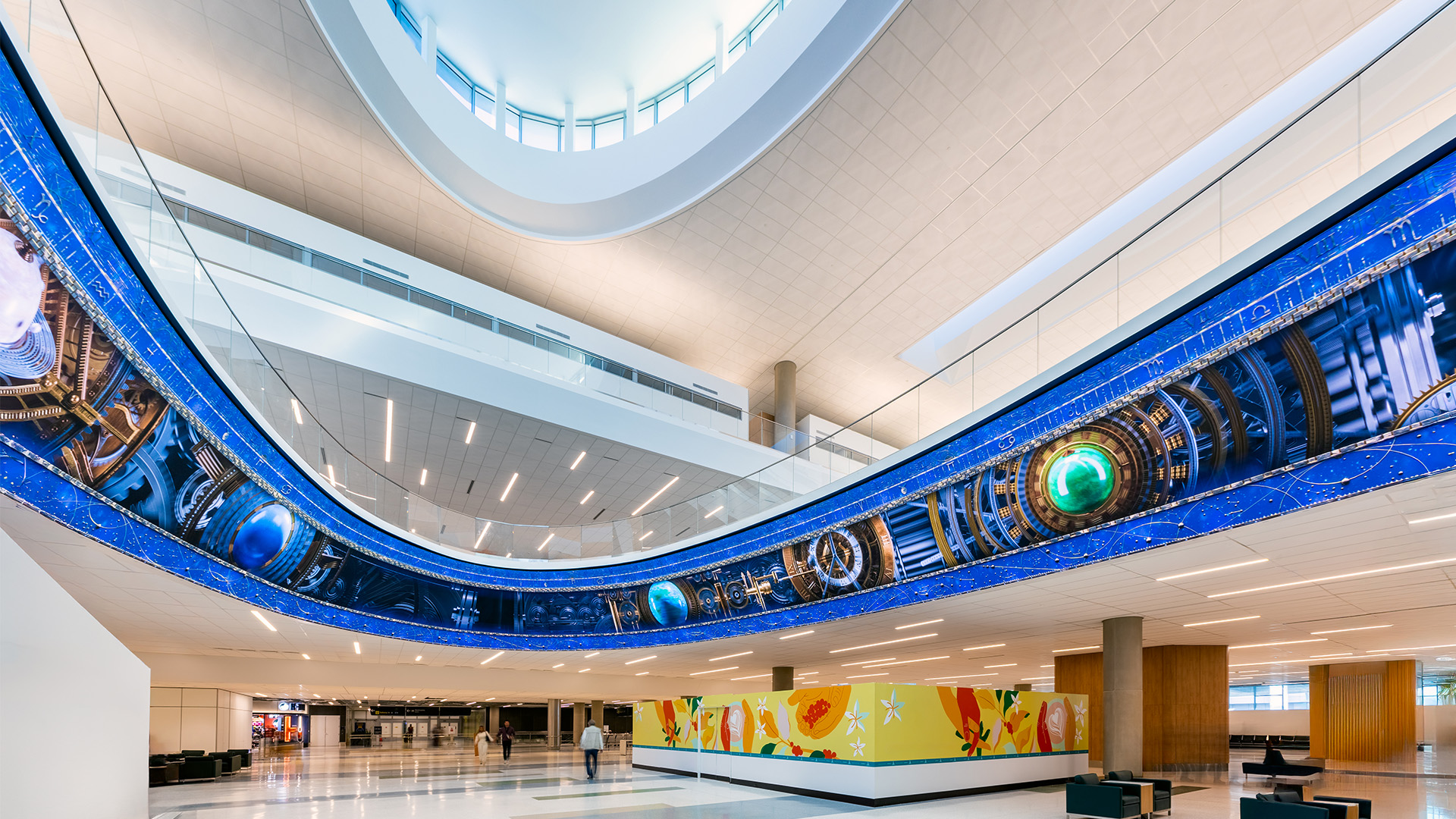
    The vision called for a 220-foot rounded, continuous LED structure suspended at a 60-degree angle between the Arrivals and Departures levels. The display would be visible from both floors and positioned directly above passenger circulation, and function as a media canvas and architectural element.

    “It is 100% meant to be an element that shares the sense of place for the city of Houston,” said Darryl Daniel, chief technology officer at Houston Airports. “For many, this is their first experience of Houston and for others, it’s the last thing they see before they leave.”

    Ford AV, who led system integration for the project and was responsible for installation, content systems and commissioning, selected Nanolumens’ LED displays and services due to their history and expertise in engineering nonstandard geometries. Over several years leading up to the project’s introduction, Nanolumens’ Special Projects Group developed 3D models, structural concepts and performance specifications in coordination with HOK, Burns Engineering and other project stakeholders. The design consultation was led by Dan Rossborough, director of strategic projects, and pre-contracting services were led by Todd Alan Green, global director of transportation and transit, for Nanolumens. Following the award, Nanolumens’ research and development and mechanical engineering teams engineered the custom componentry required to achieve the design intent.

    Unlike conventional flat LED video walls constructed from uniform rectangular cabinets, the curved installation, dubbed “Oculus,” forms a truncated elliptical cone composed of smooth, connected arcs. Every surface required precise curvature and standard display modules could not achieve the required geometry. More than 2,000 Nanolumens Nixel Series LED modules were custom-fabricated and positioned within millimeter tolerances. Each module is slightly trapezoidal to preserve the oval form and maintain continuous radii across the structure.

    “Nothing about this was off-the-shelf. Every LED cabinet, every pixel alignment, and every curve had to be engineered for this exact shape,” explained Ford AV’s Project Team.

    To make the complex geometry constructible and maintainable, the design team translated the form into eight arc sections, each built from 36 custom polygonal LED modules. Nanolumens developed nine unique Nixel Series LED frame shapes and fabricated 84 discrete frames to create the seamless sculptural surface. The display measures 93 feet in length and 16 feet in height, with a total linear span of 226.5 feet and approximately 1,955 square feet of LED surface. The modular Nixel system allows front-service access, so individual panels can be replaced without disturbing adjacent sections, a critical requirement in an active international terminal.

    The performance requirements were equally demanding. The Oculus delivers a resolution of 34,584 by 1,416 pixels, totaling nearly 49 million pixels, with pixel pitch ranging from 2.0 millimeters to 1.4 millimeters to support close viewing distances within the concourse. The brightness is calibrated to 800 nits to ensure clarity in the well-lit terminal environment. Each LED module was factory color-matched to maintain uniformity across the curved surface, and Nanolumens engineered and integrated passive and active thermal management systems to support reliable operation in Houston’s hot and humid climate.

    Before full production began, Nanolumens constructed a full-scale factory mockup at its Georgia headquarters to validate mounting systems, panel alignment and image performance. After initial approval, Ford AV rebuilt the mockup in Houston so airport stakeholders could evaluate the installation in-person and the field team could rehearse the precise assembly process required for final deployment.

    Beyond its physical form, the Oculus functions as an interactive storytelling platform. Designed by immersive experience studio Gentilhomme, the installation presents 27 content sequences that interpret Houston’s identity through motion graphics, environmental imagery and references to the city’s role in human spaceflight. As passengers move beneath the structure, occupancy sensors capture motion data, which is processed through Pixera’s real-time rendering engine and mapped to the curved LED surface. The result is content that responds dynamically to passenger flow and evolves throughout the day.

    “It was a magical moment. When the panels were installed and we lit them up for the first time, it shifted from being a complicated construction project to an impressive final product,” said Ford AV’s Project Team.

    The system operates with Pixera media servers and is controlled through Smart Monkeys’ ISSAC platform and Nanolumens’ NanoSuite display control. NanoSuite provides centralized monitoring, scheduling and diagnostics, enabling remote oversight and long-term performance management.

  • Samsung Spatial Signage Redefines Immersive Experiences

    Samsung Spatial Signage Redefines Immersive Experiences

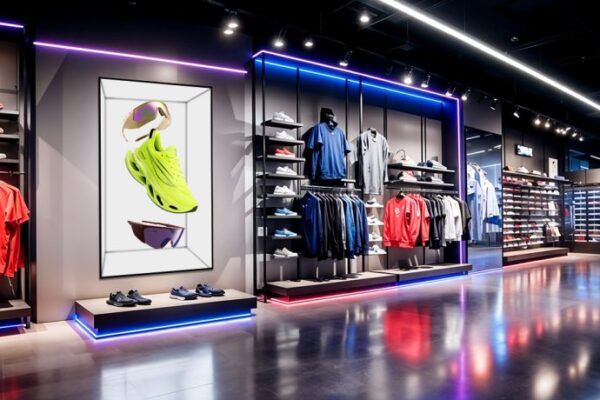
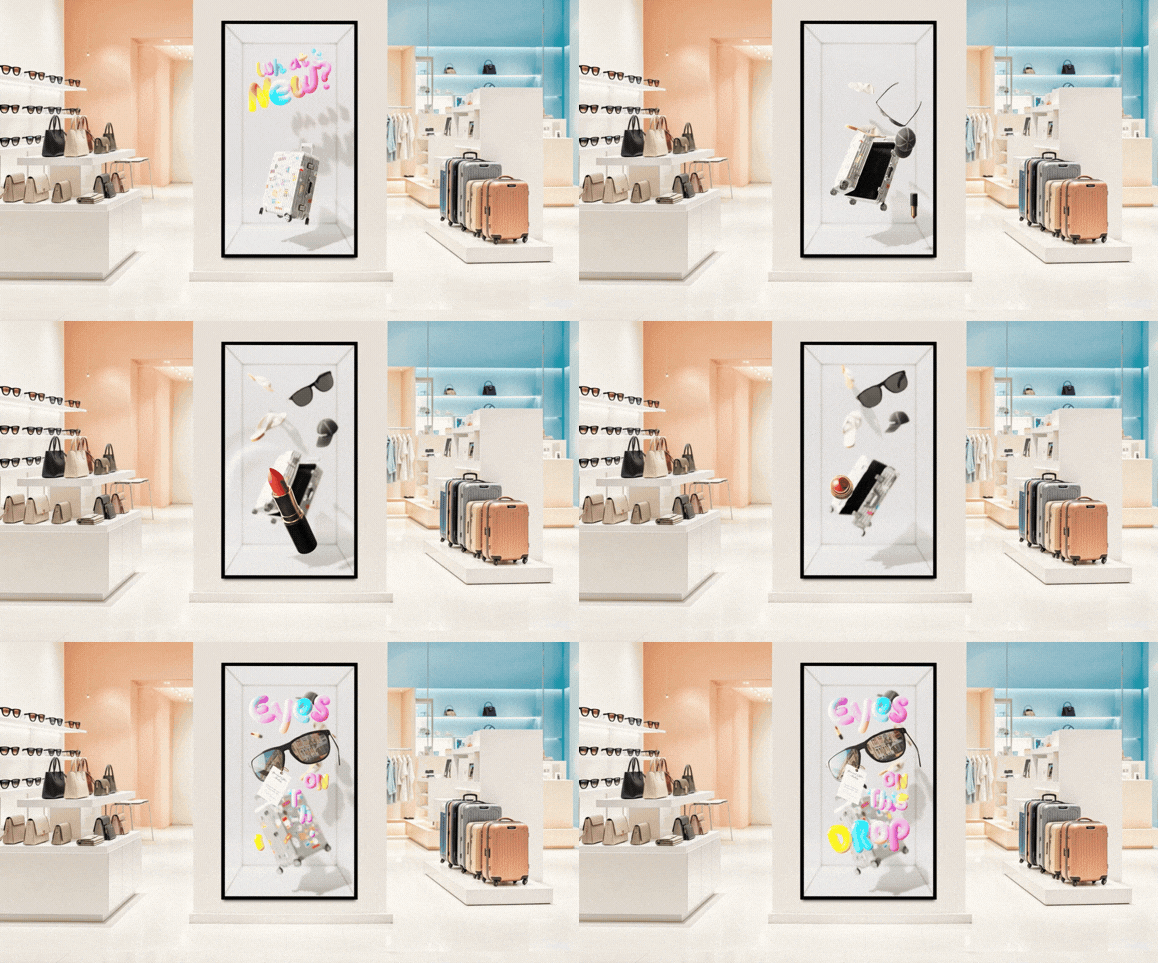
    Samsung Electronics America has introduced Spatial Signage, a new glasses-free 3D commercial display designed to create immersive visual experiences in retail, corporate and public environments. Built with Samsung’s patented 3D Plate technology, the display produces depth directly within the panel, eliminating the need for bulky enclosures commonly used in traditional 3D solutions. The result is a slim two-inch display that delivers multidimensional visuals while fitting seamlessly into modern spaces such as retail stores, museums and stadiums.

    The 85-inch model features 4K UHD resolution in a 9:16 portrait format and is powered by Samsung’s Quantum Processor for improved clarity, HDR refinement and 16-bit color mapping. Integrated with Samsung’s Visual eXperience Transformation (VXT) platform and AI Studio, the system allows organizations to easily convert static images into optimized 3D signage content and manage displays remotely. Samsung says the new Spatial Signage display, first shown at IFA 2025 and recognized at CES 2026 and ISE 2026, aims to help businesses deliver more engaging digital experiences.

    Samsung Electronics America today announced the U.S. launch of Spatial Signage, a new glasses-free 3D commercial display designed to transform how organizations create captivating visual experiences.

    Consumers increasingly expect environments that feel engaging and visually dynamic. In fact, research shows that 57% of Gen-Z buyers rank seamless, experiential engagement as highly important to their shopping journey. Yet 65% of retailers say their current technology can’t meet modern expectations. This gap is accelerating the need for display solutions that can elevate the in-store experience.

    “Physical spaces are becoming strategic platforms for engagement, storytelling and brand connection,” said David Phelps, Head of Display Solutions, Samsung Electronics America. “As consumer expectations rise, organizations need to do more than showcase content — they need to create presence and impact. Spatial Signage reflects the next evolution of commercial displays, helping businesses differentiate and create meaningful connections that drive results.”

    Bringing spatial depth to flat-panel displays

    Conventional 3D displays often depend on large, box-like enclosures that limit installation flexibility and interrupt the clean aesthetic expected in premium spaces.

    Spatial Signage takes a different approach to traditional digital displays by using Samsung’s patented 3D Plate technology. It is powered by a custom optical layer that bends light and generates depth perception directly within the image panel. The result is multidimensional depth delivered in a slim two-inch panel for seamless placement in design-conscious environments, from big-box chains and luxury stores to museums and even stadiums.

    Engineered for impact in commercial spaces

    Spatial Signage delivers consistent image quality in high-traffic environments. Powered by Samsung’s advanced Quantum Processor, the display maintains sharp detail and accurate contrast across a wide range of content.


    Integrated 4K upscaling, HDR refinement and 16-bit color mapping enhance clarity and depth, ensuring visuals are crisp and lifelike. An anti-glare panel helps preserve brightness and definition under varying indoor lighting conditions.

    The 85-inch model (SM85HX) features 4K UHD resolution (2,160 x 3,840) in a 9:16 portrait format, supporting bold, large-scale storytelling that brings brands to life.

    Seamless content optimization with Samsung VXT

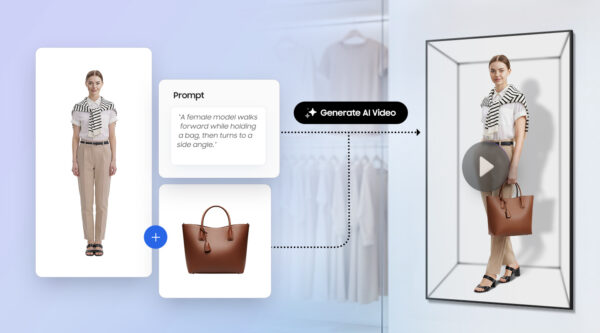
    With Samsung Visual eXperience Transformation (VXT) built-in capabilities, organizations can create and deploy immersive content at scale. AI Studio, Samsung’s new AI-powered content app within VXT, transforms static images into signage-ready video without the need for external tools or manual setup.

    Content created through AI Studio is automatically optimized for Spatial Signage. The system refines shadows, adjusts margins and enhances background treatments to strengthen depth perception and more balanced, realistic visuals across a range of commercial environments. This streamlined workflow allows teams to update campaigns remotely, manage multiple displays and present 3D content without additional production expertise.

    Since its introduction at IFA 2025, Spatial Signage’s ability to make moments unforgettable has been reinforced with numerous industry recognitions. The display was named a CES 2026 Innovation Award Honoree in the newly introduced Enterprise Technology category and received multiple Best of Show distinctions at ISE 2026, underscoring Samsung’s innovation and leadership in the commercial display industry.

    Samsung’s 85-inch Spatial Signage display is now available in the U.S., with additional 32-inch and 55-inch formats to follow later this year.

  • Samsung Launches Premium Interactive Displays to Advance Student Engagement and Learning

    Samsung Launches Premium Interactive Displays to Advance Student Engagement and Learning

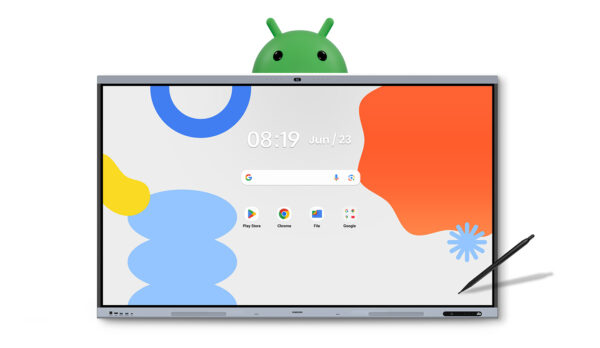
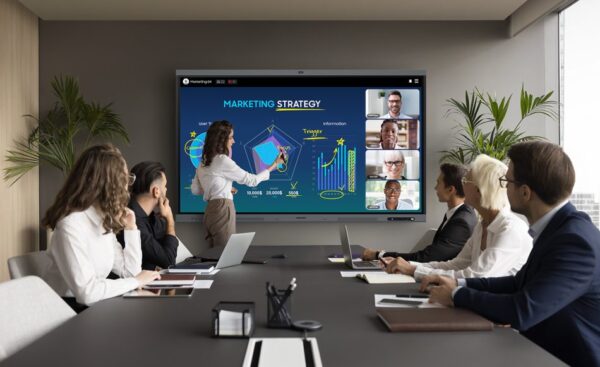
    Samsung Electronics America has introduced the WAFX-P, a premium interactive display designed for both education and enterprise environments. Powered by Android 15 and an Octa-Core CPU, the display combines a built-in 4K camera, microphones, dual 20W speakers, and Live Caption support to enable seamless hybrid collaboration. With integrated AI tools such as Circle to Search, AI Summary, and Live Transcript, the WAFX-P helps educators and professionals streamline content sharing, capture insights in real time, and enhance engagement across classrooms and meeting spaces.

    Available in 65-, 75-, and 86-inch sizes, the WAFX-P supports up to 50 touchpoints and dual-pen functionality for collaborative writing and brainstorming. It integrates with widely used tools like Google Classroom and Google Drive, while Samsung’s on-premise Device Management Solution (DMS) enables centralized control and content updates across campuses or offices. With multi-device screen sharing and USB-C connectivity, the display is positioned as a flexible, AI-powered solution for modern learning and workplace environments.

    Samsung Electronics America today launched the WAFX-P, its new premium Interactive Display model, into market. The WAFX-P is tailored for education and enterprise environments, offering a new set of built-in features and the Samsung AI Assistant to enhance communication and collaboration.

    “Participation in hands-on activities remains one of the strongest indicators of student engagement, with recent research showing that 71% of K–12 educators rank it as a key measure of active learning,” said Dr. Micah Shippee, Director of Education, Display Solutions, Samsung Electronics America. “The WAFX-P is designed to foster active collaboration in group settings, delivering smarter, more intuitive experiences that drive greater connections and productivity wherever ideas take shape.”

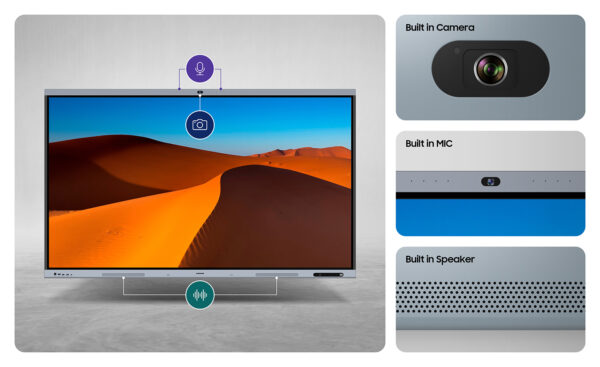
    To promote in-class participation, the WAFX-P introduces a built-in 4K camera that makes it easy to connect with other classrooms, remote participants or virtual guest speakers. Integrated microphones and dual 20-watt speakers ensure clear communication during discussions and presentations. Built-in Live Caption also improves accessibility by generating on-screen captions for audio and video content. Powered by Android™ 15 and Octa-Core CPU, the display enables educators to move effortlessly between trusted classroom tools, apps and multitasking without disrupting the lesson flow.

    Building on these collaborative capabilities, the WAFX-P provides AI-powered tools aligned with the evolving needs of teaching and learning. Research shows 66% of students believe AI can help them learn faster, while 53% of teachers are excited about its potential to save them time and support more personalized learning experiences. With AI Assistant features such as Circle to Search, AI Summary and Live Transcript, educators can guide exploration, organize key points and capture insights in real time to reinforce understanding and keep students actively engaged.

    Seamless integration with trusted classroom tools

    Educators had the opportunity to preview the WAFX-P earlier this year at the Texas Computer Education Association (TCEA), where they saw how it integrates into existing workflows. Available in 65-, 75- and 86-inch sizes, the display adapts to a variety of classroom layouts and learning environments. Like earlier models in Samsung’s Interactive Display lineup, the WAFX-P provides educators with access to their favorite tools, such as Google Classroom and Google Drive, allowing them to incorporate the display into their existing lessons and materials.

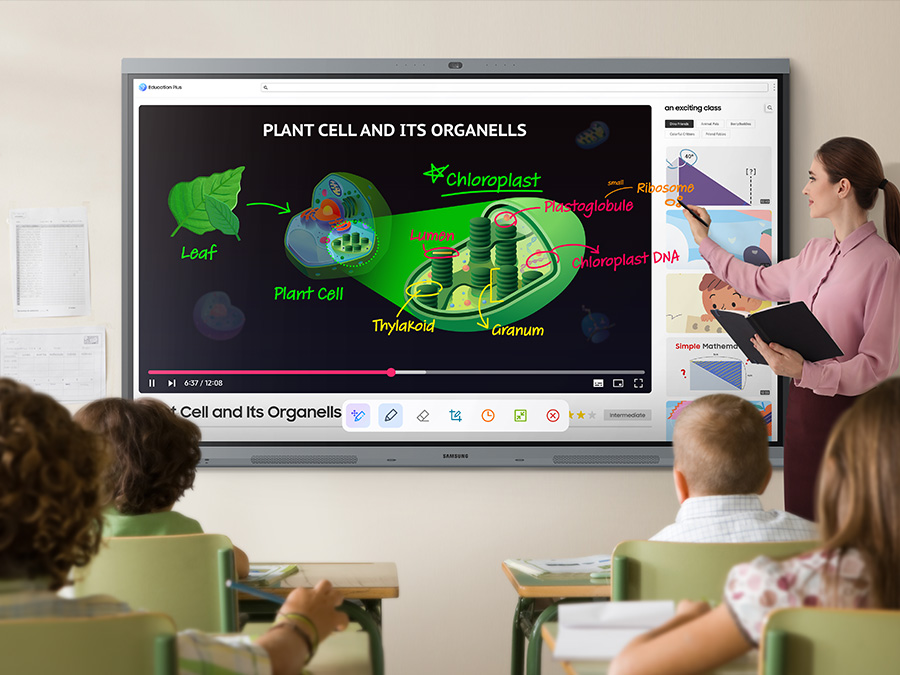
    On the screen, dual-pen functionality fosters peer learning and problem-solving by enabling multiple students to write, annotate and brainstorm simultaneously. With 450-nit brightness, multimedia-rich content remains clear and visible for all participants in the classroom. Further, WAFX-P offers a smart, paper-like writing experience, accurately capturing writing styles — from quick strokes to subtle pressure — while responsive multi-touch technology supports participation from up to 50 users.

    Configured for a modern workplace

    With more businesses enforcing return-to-office mandates, over one in five U.S. workers say they’re back in-person full-time. The WAFX-P elevates collaboration by accommodating corporate teams wherever they may be. Simultaneous screen sharing from up to nine devices allows content to be passed between the main display and personal devices, maximizing inclusivity, especially for those joining meetings from home or another office. With greater connectivity features, including the 3-in-1 USB-C port, businesses can transform meetings to become active spaces for idea-sharing through touch control, screen connection and device charging.

    Operate efficiently with content and device management

    The WAFX-P provides a centralized management system for remotely controlling devices and app settings across academic and corporate campuses. Using Samsung’s on-premise Device Management Solution (DMS) built for local networks, organizations can instantly refresh on-screen content across their fleet of Interactive Displays. The DMS ensures schools and offices can instantly feature announcements or emergency alerts on-screen, maximizing visibility of time-sensitive messages and promoting campus safety.

  • Alfalite installs Slovenia’s largest indoor LED wall at Ljubljana Exhibition & Convention Centre

    Alfalite installs Slovenia’s largest indoor LED wall at Ljubljana Exhibition & Convention Centre

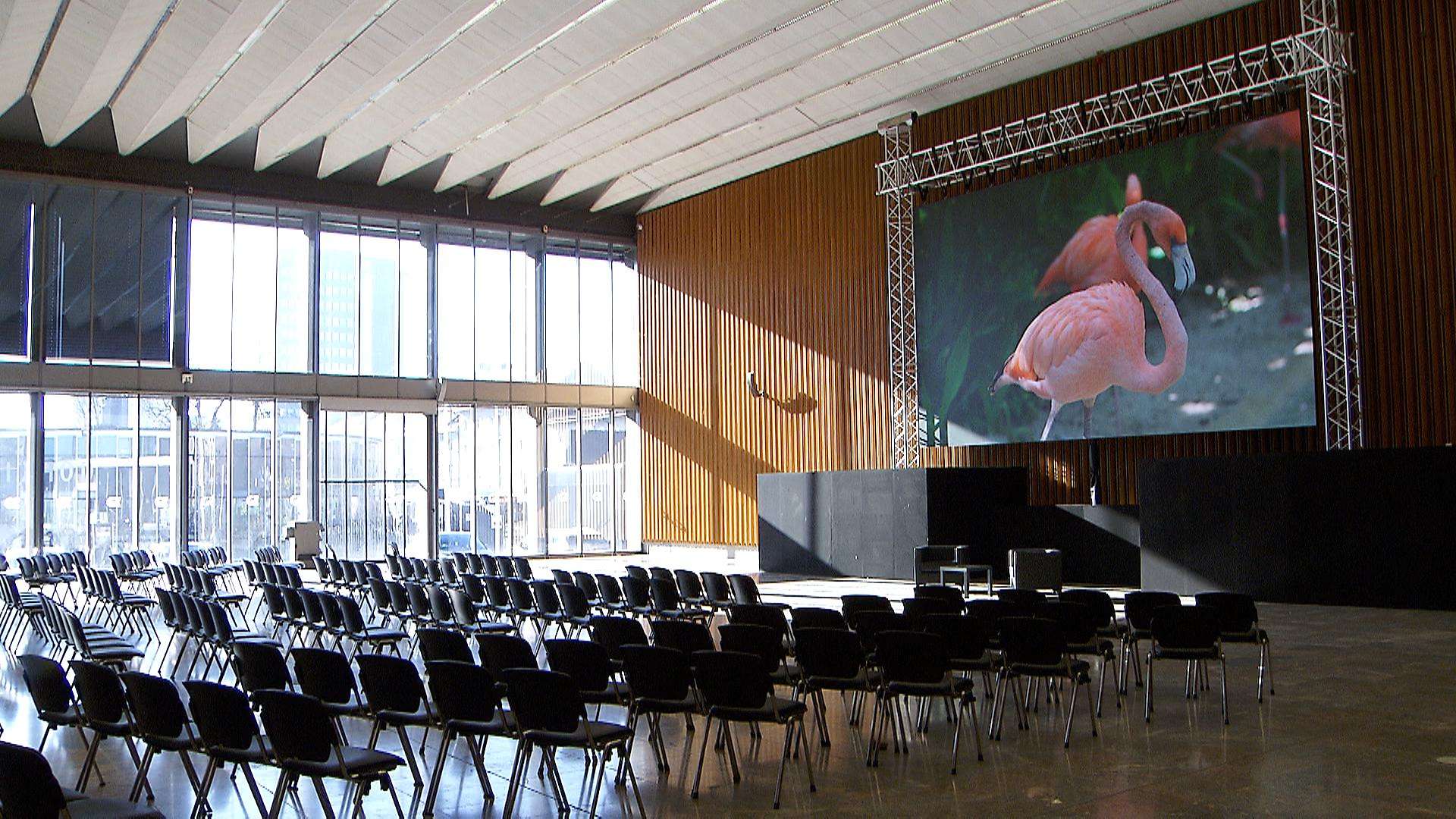
    Ljubljana Exhibition & Convention Centre, Slovenia’s leading trade fair and congress venue, has upgraded its main hall with the country’s largest fixed indoor LED screen. The installation, located in the iconic Marmorna Hall, features 40 m² of Alfalite LED technology and sets a new benchmark for large-scale event presentation in the Slovenian MICE sector.

    The new LED wall measures 8.40 × 4.72 metres and replaces a previous projection-based system. It is powered by Alfalite’s UHD Finepix MATIX 1.8 AlfaCOB solution, comprising 196 cabinets with a 1.8 mm pixel pitch. The result is high brightness, precise colour reproduction and consistent image performance, even under strong natural daylight conditions.

    Alfalite, headquartered in Spain, is currently the only European manufacturer of LED screens, designing and producing its panels entirely in Europe. This European origin was a key requirement for the client, who prioritised local manufacturing standards, operational security and long-term technical support for a venue hosting hundreds of international events each year.

    The Ljubljana Exhibition & Convention Centre hosts around 250 events annually, welcoming up to 500,000 visitors, including major international congresses and high-profile gatherings such as the NATO Parliamentary Assembly. In this context, visual reliability and image clarity are critical.

    According to Iztok Bricl, CEO of the Ljubljana Exhibition & Convention Centre: “We organise large congresses with 1,300 to 2,000 participants. The quality of the LED screen and its straightforward maintenance were decisive factors for us. We needed a solution that guarantees performance and immediate technical support if required. With a European partner, we have that assurance.”

    The project was delivered in collaboration with the Austrian integrator WALLERIE, part of LANNER Media, with installation carried out jointly with Alfalite’s technical team under the direction of Sebastián Cabrera, CTO of Alfalite. The complete mounting process was finalised in just two days, ensuring minimal disruption to the venue’s event schedule.

    For the client, the choice of manufacturer was clear from the outset. European origin was a mandatory requirement. “The customer explicitly requested a European LED manufacturer,” explains Sebastián Cabrera, CTO of Alfalite. “Beyond compliance and security standards, they were looking for long-term reliability, image quality and ease of maintenance. Our

    MATIX AlfaCOB technology offers high durability, excellent thermal performance and simplified servicing, which are essential in permanent installations operating year-round. The Ljubljana installation reflects a broader shift from traditional projection systems to direct-view LED solutions capable of delivering higher brightness, better contrast and consistent performance regardless of ambient light conditions.”

    Sebastian Lanner, Managing Director of WALLERIE, adds: “For an international congress centre, fast first-level support and operational security are crucial. Combining European-manufactured LED modules with regional technical presence gives the venue confidence and long-term stability.”

    The installation incorporates redundant signal control to ensure uninterrupted operation during live events. Its fine 1.8 mm pixel pitch enables detailed content display, particularly relevant for medical congresses and data-driven presentations where precision is essential.

    “This project shows how European collaboration can deliver technical excellence,” concludes Cabrera. “It is not only about installing a large screen. It is about providing a future-proof visual infrastructure for one of the region’s most important congress venues.”

  • Versatility Unleashed: ATEN Scales Video Wall Processor Series for Diverse Mission-Critical Environments

    Versatility Unleashed: ATEN Scales Video Wall Processor Series for Diverse Mission-Critical Environments

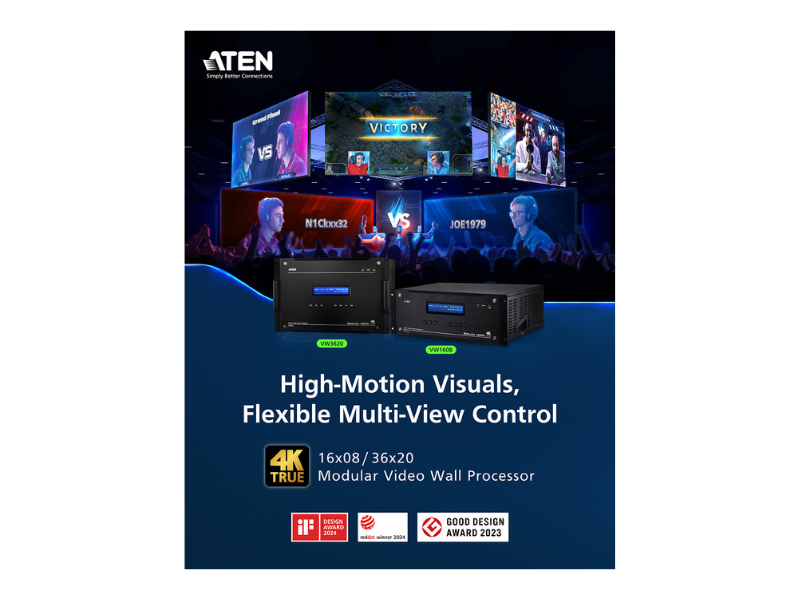
    ATEN International has expanded its professional video wall processor portfolio with the launch of the VW1608 16×8 Modular Video Wall Processor. Designed for mission-critical environments, the compact 4U system delivers True 4K at 60Hz performance powered by FPGA architecture and FrameSync technology, ensuring tear-free, low-latency visuals during rapid source switching. It supports up to 16 input sources and 8 displays, with scalability up to 24 outputs through daisy-chaining, making it suitable for corporate war rooms, control centers, transportation hubs, and disaster response facilities.

    Built for 24/7 operational stability, the VW1608 includes redundant power supplies, hot-swappable modules, and high-availability clustering with automatic failover. An intuitive Web GUI with drag-and-drop control and live HDMI preview simplifies layout management, while independent multi-canvas support enhances content flexibility. With the addition of the VW1608 alongside the VW3620, ATEN now offers scalable video wall processing solutions tailored for environments requiring reliability, precision, and continuous uptime.

    ATEN International, the leading provider of KVM, AV/IT connectivity, and management solutions, today announced the strategic expansion of its professional video wall series with the launch of the VW1608 16×8 Modular Video Wall Processor. By integrating flagship power into a compact 4U chassis, ATEN now offers a comprehensive range of visual solutions for any professional challenge. With a lineup featuring both the high-capacity VW3620 (36×20) and the compact VW1608 (16×8), ATEN ensures organizations can deploy the ideal processor for any environment, from corporate decision making war rooms, venue and auditoriums to transportation hubs and disaster response centers, delivering absolute precision and reliability for mission-critical decision-making at every scale.

    To address the complexity of modern visual data, the VW1608 features a high-performance FPGA-based hardware architecture combined with FrameSync technology. This synergy ensures tear-free, latency-free visuals even during rapid source switching, delivering seamless motion and absolute precision for critical viewing. Supporting True 4K resolution, the processor delivers crystal-clear detail and accurate color reproduction while intelligently upscaling and optimizing content. This ensures every pixel achieves maximum clarity across video walls of any display type or size.

    To meet the demands of bezel-free LED displays, the VW1608 is engineered to leverage the limitless potential of seamless video walls. By removing the constraints of physical borders, it enables flexible overlapping and cross-screen windowing that allows content to flow freely across the entire display area to maximize screen real estate. This versatility is enhanced by an intuitive Web GUI for real-time drag-and-drop layout management. Operators can utilize the local HDMI output for live previews to verify adjustments such as repositioning feeds or fine-tuning window overlays with absolute precision before pushing them live to the main LED wall.

    The VW1608 features a modular 4U chassis supporting 16 sources and 8 displays, with daisy-chaining capability to expand up to 24 display outputs. Built for 24/7 stability, it includes redundant power and hot-swappable modules for effortless upgrades and maximum uptime. For high-stakes environments, the VW1608 supports high-availability clustering with real-time mirroring and automatic failover, while automatic configuration backup protects against system failures to ensure uninterrupted mission-critical operations.

    “By pairing exceptional 4K fidelity with a scalable modular design in a compact form factor, the debut of the VW1608 empowers our customers to visualize critical data with total confidence,” said Nicholas Lin, Senior Vice President of ATEN International. “Whether deployed in corporate war rooms, auditoriums, transportation hubs, or disaster response centers, the demand for 24/7 stability and absolute reliability is universal. With this addition, ATEN now provides a comprehensive portfolio of video wall processors, ensuring a precision-engineered solution for any scenario, regardless of scale or complexity.”

    Key Features of the VW1608 16×8 4K Modular Video Wall Processor:

    Superior 4K Visual Performance: Delivers True 4K at 60Hz clarity with FPGA-powered FrameSync technology to eliminate screen tearing and ensure near-zero latency visuals.

    Scalable Modular Architecture: Features a compact 4U chassis with four input and two output slots that support up to 16 sources and 8 displays, with scalability up to 24 displays through daisy-chaining.

    Intuitive Control and Preview: Provides the freedom to manage any source to any window via a drag-and-drop Web GUI for real-time remote monitoring. A local HDMI output enables live previews of layouts, logos, and scrolling text to verify precision before going live.

    Independent Multi-Canvas Support: Supports up to four independent canvases on a single video wall, each utilizing unique layouts and source configurations to maximize screen real estate and operational efficiency.

    Mission-Critical Reliability: Engineered for 24/7 situational awareness with hot-swappable modules and high-availability mirroring to ensure maximum uptime. Automatic configuration backup and recovery protect against system or network failures to maintain stability in demanding environments.

  • Oregon State University Leverages Scalable Display Technologies to Bring Oregon’s Forests to Life with Immersive Visualization

    Oregon State University Leverages Scalable Display Technologies to Bring Oregon’s Forests to Life with Immersive Visualization

    Nestled in the heart of the Pacific Northwest, Oregon State University (OSU) is the state’s largest public research institution. Since its founding in 1868, OSU has grown into a thriving academic community with more than 36,000 students and over 272,000 alumni worldwide. With a legacy built on innovation and discovery, the university is renowned for its excellence in engineering, forestry, agriculture and marine sciences. Within OSU lies the School of Electrical Engineering and Computer Science (EECS), a hub known for its contributions to research and education. The school champions industry-focused learning for undergraduates, while its groundbreaking online programs have placed OSU among the nation’s leaders in distance education.

    One of the most visionary projects to emerge from EECS comes from the lab of Associate Professor Raffaele de Amicis. Using advanced geographic datasets and LiDAR scans, de Amicis and his team have created a digital twin of Oregon’s Elliott State Forest – a stunning, immersive recreation of one of the Pacific Northwest’s vast wilderness areas. In this virtual landscape, users become participants in the environment. They can easily manipulate time and weather, traverse rugged terrain and teleport to any point in the forest. The simulation allows users to model the effects of selective logging or full-scale clear-cutting, offering new insights into environmental impact and forest management.

    Currently, the high-fidelity virtual forest encompasses a detailed rendering of 26,000 trees across a section of the Elliott State Forest. Ultimately, de Amicis aims to scale this digital twin to encompass the entire 2.8 million-tree forest and beyond. The creation of the digital forest began with detailed survey data provided by the Oregon Department of Forestry, later expanded with datasets from the Oregon State University College of Forestry. This information was processed through geographic information system (GIS) software to analyze and map environmental features in real-world coordinates. From there, game engines like Unity and Unreal were deployed to generate the forest’s striking visual fidelity, allowing for highly interactive and realistic representations.

    To bring these virtual environments to life in physical spaces, de Amicis selected Scalable Display Technologies for its cutting-edge projection mapping and edge blending capabilities, ensuring a seamless, immersive display experience. “After doing some research, specifically when I came across technical documentation while working with Unreal Engine, I became curious about Scalable’s technical capabilities,” de Amicis recalled. “That was the first time I encountered their software, and it prompted me to explore it further. A key benefit of Scalable’s technology is the integration with multiple platforms, like Unreal and Unity, which is essential for our use case.”

    Scalable, combined with platforms like Unreal and Unity, enhances the realism of the simulation and empowers the research team to engage with the digital forest in the same dynamic way gamers interact with virtual worlds by navigating terrain, triggering environmental changes, and modeling complex ecological scenarios in real-time.

    What followed was not only a successful technical integration but also a positive and collaborative experience. “I found Scalable easy to use – it is definitely user-friendly. I was especially impressed with its technical performance, particularly in terms of color calibration and geometric calibration. Those aspects worked quite well,” de Amicis said. “What really stood out to me, though, was my interaction with Scalable’s team. The people I was in contact with were responsive and helpful, and that human connection made a big difference. It was one of the main reasons I ultimately decided to go with Scalable.”

    From de Amicis’ perspective, the value of Scalable’s technology goes well beyond visuals. “I’m primarily using the product for educational and research purposes, and in that context, strong customer support and human connection were key factors in my decision,” he said. “Support for educational institutions is incredibly important. The more accessible this technology is to us, the more we can leverage it for educational purposes. Our students can become familiar with the technology, gain hands-on experience, and engage with real-world applications.”

    Scalable’s software is revolutionizing the way virtual content is experienced. By leveraging Scalable’s powerful software, de Amicis’ lab is transformed from an ordinary surface into a dynamic, interactive display – enabling immersive visualizations and engaging storytelling. Scalable’s intuitive software simplifies this sophisticated setup for students, faculty and researchers through a streamlined, one-touch calibration process, which eliminates the need for complex manual adjustments and significantly reduces downtime, making it easy to maintain optimal display performance with minimal effort.

    Founded in 2004, Scalable is the original inventor and patent holder of camera-based automatic warp and blend technology. The technology originated from pioneering research at the Massachusetts Institute of Technology (MIT) by Dr. Rajeev Surati and Dr. Tom Knight. Today, Scalable holds 12 patents covering edge blending, geometric warping, and color calibration. Today, Scalable continues to lead the industry with innovative solutions across various sectors, including higher education, virtual production, military and maritime simulation, architecture, design and the arts. Using advanced machine vision algorithms, Scalable offers a cost-effective and user-friendly platform for creating seamless, high-resolution displays of any shape or size. The software automatically calibrates image geometry, brightness, and color from multiple projectors – resulting in one continuous, unified display.

  • ADI Launches New SunBrite Veranda 4 Series, Extending Outdoor Entertainment in North America

    ADI Launches New SunBrite Veranda 4 Series, Extending Outdoor Entertainment in North America

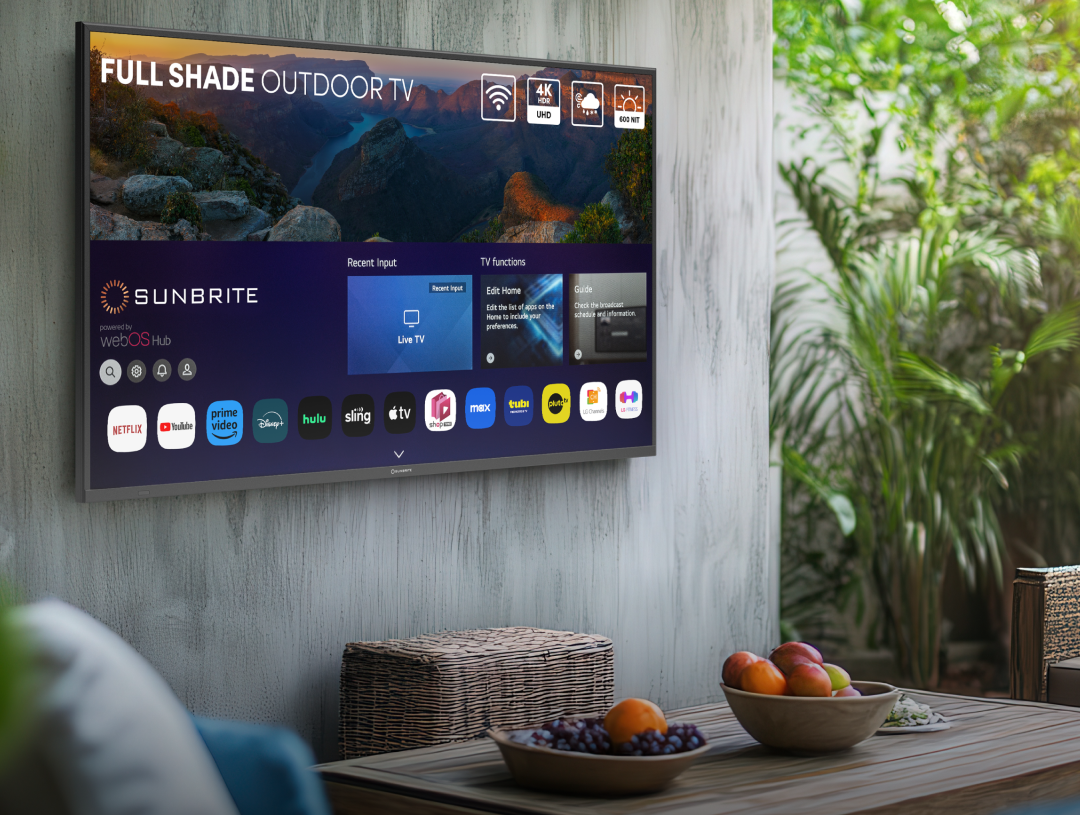
    ADI has introduced the new SunBrite Veranda 4 series for the North American market, expanding its portfolio of outdoor entertainment solutions. Designed for full-shade and partially shaded environments, the 4K60 HDR10-compliant TVs deliver 600-nit brightness, improved durability, and enhanced energy efficiency. With up to 58% more brightness than previous models and 36% lower power consumption, the Veranda 4 series is built to provide reliable, high-quality viewing experiences on covered patios, porches, and hospitality spaces.

    Built for real-world outdoor conditions, the IP55-rated TVs feature conformal-coated components, Eco Bright Outdoor Technology, anti-glare protection, and support for temperatures up to 50°C. The series integrates webOS smart functionality, Wi-Fi, Bluetooth 5.0, IP control, and compatibility with ADI’s OvrC Pro platform for remote management. Available in 65-inch and 75-inch models at launch, with additional sizes planned for 2026, the Veranda 4 series strengthens ADI’s growing ecosystem of outdoor AV and networking solutions.

    ADI has unveiled the new SunBrite Veranda 4 series, a range of smart, energy-efficient HDR10-compliant, 4K60 TVs designed for outdoor environments in full shade for the North American market. Designed to deliver enhanced image quality, better durability, and improved connectivity, SunBrite boldly launched its first models more than 20 years ago and has continued to innovate and expand its offering.

    “Outdoor living is an exciting and fast-growing market in North America,” said Brandon Eshelman, Director of Product Management at ADI. “This new line of TVs is designed for shaded and partially shaded outdoor spaces, delivering a bright, clear picture on covered patios, porches, and outdoor living areas. Moving forward, we plan to expand our product pipeline, helping customers unlock new business opportunities while maximizing efficiency and conserving valuable resources.”

    The Veranda 4 series redefines full-shade outdoor entertainment, delivering industry-leading 600-nit 4K60 HDR10 brightness for vibrant viewing in covered patios, alfresco spaces, and hospitality environments. Powered by an advanced RGB-W pixel configuration and direct LED backlight, the display achieves up to 2–4x the brightness of many indoor TVs (58% brighter than previous models) while using 36% less power and generating less heat for greater efficiency and longevity.

    Built to perform in real-world outdoor conditions, Veranda 4 features an IP55 rating, UL certification, and conformal coating on internal components to protect against humidity, heat, and storms. Eco Bright Outdoor Technology prevents backlight failure in extreme temperatures up to 50°C, while the anti-glare screen with Quarter Wave Plate Polarizer (QWP) ensures clear visibility. The result is consistent, premium picture quality through the hottest summer days and beyond, backed by a two-year warranty and in-house customer support.

    Designed with installers in mind, Veranda 4 includes a redesigned media bay with improved mounting points for clean, discreet integration of streaming devices and media players. The platform supports webOS smart functionality, making content selection and customization simple, while also allowing users to connect nearly any third-party streaming device of their choice.

    Connectivity and control are seamless, with built-in Wi-Fi, Bluetooth 5.0, voice control, and full IP control. Integration with ADI’s OvrC Pro platform enables remote monitoring, diagnostics, and system management, complemented by third-party control system drivers and flexible IP or IR remote options. Two built-in 8-watt speakers provide integrated audio for everyday viewing.

    “SunBrite’s new Veranda 4 series represents a significant step forward in outdoor entertainment,” concluded Eshelman. “By offering these high-performing, durable, and innovative products, we enable our customers to deliver exceptional value to end-users while maximizing profitability, whether for residential or commercial projects. ADI remains committed to investing in solutions that provide better performance and enhanced experiences for every outdoor installation.”

    The new product introductions complement ADI’s increasingly robust offering of outdoor solutions including lighting, audio, networking and more, to help customers create highly customizable and functional outdoor entertainment experiences.

    The Veranda 4 series launches in 65″ and 75″ sizes, with 49″ and 55″ models arriving mid-2026, offering a scalable solution for both residential and commercial full-shade outdoor applications.

  • Institut Pasteur injects new sustainable display capabilities inside Paris HQ with a network of Philips ePaper and EcoDesign digital signage

    Institut Pasteur injects new sustainable display capabilities inside Paris HQ with a network of Philips ePaper and EcoDesign digital signage

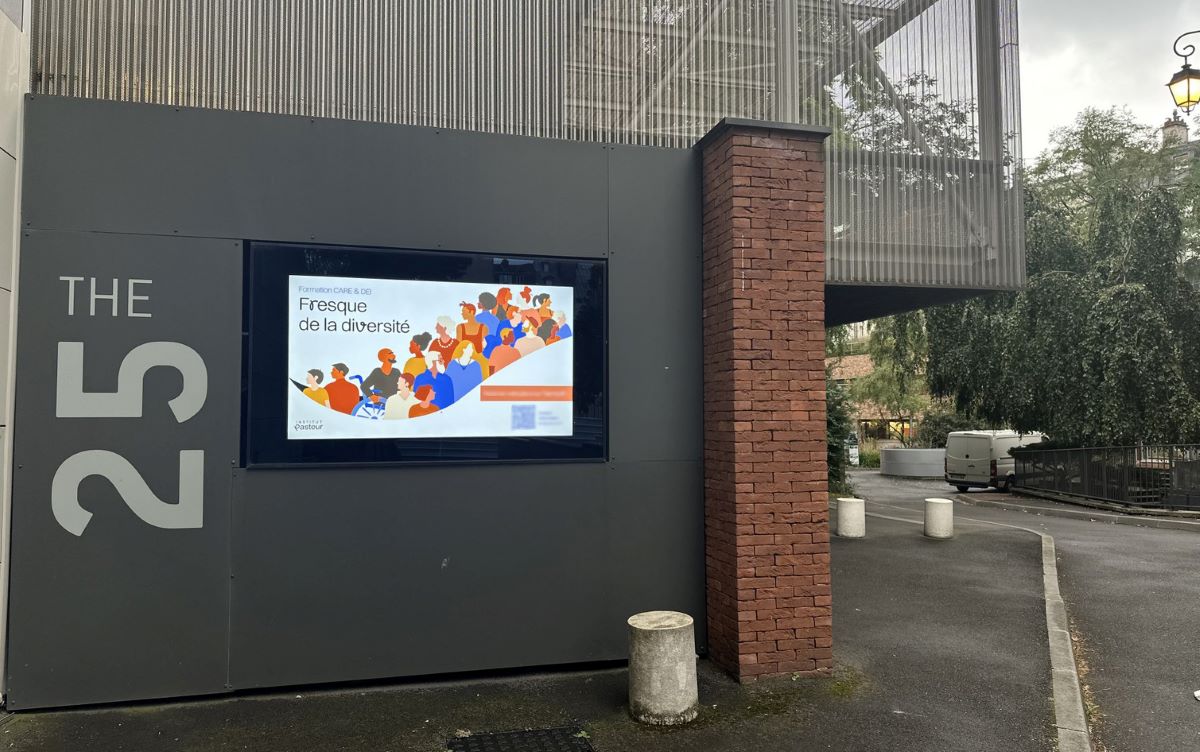
    PPDS, the exclusive global provider of Philips Professional Displays, is excited to announce that its Tableaux ePaper and 3000 Series EcoDesign digital signage displays have been selected to deliver a perfect tonic of high performance, low energy visual capabilities to Institut Pasteur’s 538,000 ft² biomedical research campus in Paris.

    Founded by Louis Pasteur in 1887, the Institut Pasteur is an internationally acclaimed not for profit research and education institute committed to the fight against infectious diseases in France and around the world. A recipient of 10 Nobel Prizes and employing over 3,000 staff, the Institut’s colossal five hectare campus features 39 separate buildings, including a conference centre, and a total of 48,000 m2 of laboratory space.

    Future proofed planning

    With such a vast campus and visual technology playing an increasingly important role in its day to day activities and communications, Institut Pasteur’s AV/IT management team sought to modernise its ageing display infrastructure. Concluding an extensive site review, the project would include a fleet of 20x dynamic displays, strategically placed to support a variety of needs, settings, and light environments, including reception halls, meeting rooms, laboratories, and more.

    The project presented a number unique challenges. As a site of historical significance – containing several listed buildings – retaining the aesthetics during any modernisation, while ensuring minimal disruptions to staff, was imperative. Furthermore, displays would need to meet the Institut Pasteur’s strict standards for electrical safety and durability, while providing greater energy efficiency to reduce its carbon footprint.

    Romain Gentile, Key Account Manager at PPDS, commented: “Performance, readability, and energy efficiency were all key, with the displays disseminating scientific, institutional, and logistical information. For Institut Pasteur, and the invaluable work they do, there can be absolutely no compromise.”

    Effective communication

    Working with AV/IT integration specialists, Exaprobe, PPDS’ multi award winning ‘zero power’ 32” Philips Tableaux ePaper and 55” Philips Signage 3000 Series EcoDesign displays were immediately identified as the only solutions capable of meeting – and ultimately surpassing – the Institut’s high expectations.

    Signalling a new era of visual communications and sustainability, the introduction of Philips Tableaux ePaper displays was selected primarily – but not exclusively – to provide wayfinding information, such as mapping, campus information, and other instructions, to help visitors navigate around the site.

    Fully portable and able to be used entirely unplugged – ideal for use in Institut’s older buildings and in spaces with limited power sources – each Philips Tableaux is capable of displaying full colour, static imagery for days, weeks, months, or even years without using a single kilowatt of energy. The only time Philips Tableaux displays require power is during content updates, with one image change using just 0.0025 kWh.

    The Gold standard

    For the institute’s more advanced and detailed visual needs on a grander scale, including for presentations, corporate videos, and other internal communications, the future proof Philips Signage 3000 Series EcoDesign was the standout choice, ticking all boxes for both performance and sustainability.

    In addition to delivering high impact 4K Ultra HD visual quality, with picture perfect performance down to the smallest detail – be that videos, pictures or numbers – the Philips Signage 3000 Series EcoDesign enables the screens to use less than 50 per cent of the power compared to other digital signage models in the market, without compromising on performance.

    The Philips Signage 3000 Series EcoDesign display is also the industry’s first EPEAT Climate+ Gold certified display of its kind, which measures the social and environmental impacts of products from extraction to end of life. The Philips Signage 3000 EcoDesign meets the most demanding set of criteria for sustainability leadership in electronics.

    24/7 management

    Both the Philips Tableaux and Philips Signage 3000 Series EcoDesign are also members of PPDS’ growing portfolio of integrated Android SoC displays, offering a vast range of features and benefits, including secure and seamless remote management capabilities with trusted partners.

    Enabling centralised management of the new fleet, PPDS partner, Telelogos’ Media4Display solution was selected and integrated, providing round-the-clock monitoring and management. This also allows the Pasteur technical team to schedule content in real time without having to travel or manually update, further reducing their carbon footprint and costs.

    The full integration proceeded successfully and without disrupting research activities. Connectivity and content management tests were carried out on site, ensuring a seamless transition.

    Franck Fromet, AV Manager, Institut Pasteur, commented: “The integration of our new Philips Professional Displays has enabled us to modernise our communication while respecting our environmental commitment. The PPDS teams understood our constraints and proposed a solution that is understated, elegant, and effective.”

    Romain Gentile concluded: “The Institut Pasteur now benefits from a modern, sustainable display system that is fully adapted to its scientific environment. Information is disseminated more effectively, content is updated instantly, and energy consumption has been significantly reduced.”

  • Nanolumens Expands Aurora Video Processing Platform with Active Directory Integration and Eye Guard

    Nanolumens Expands Aurora Video Processing Platform with Active Directory Integration and Eye Guard

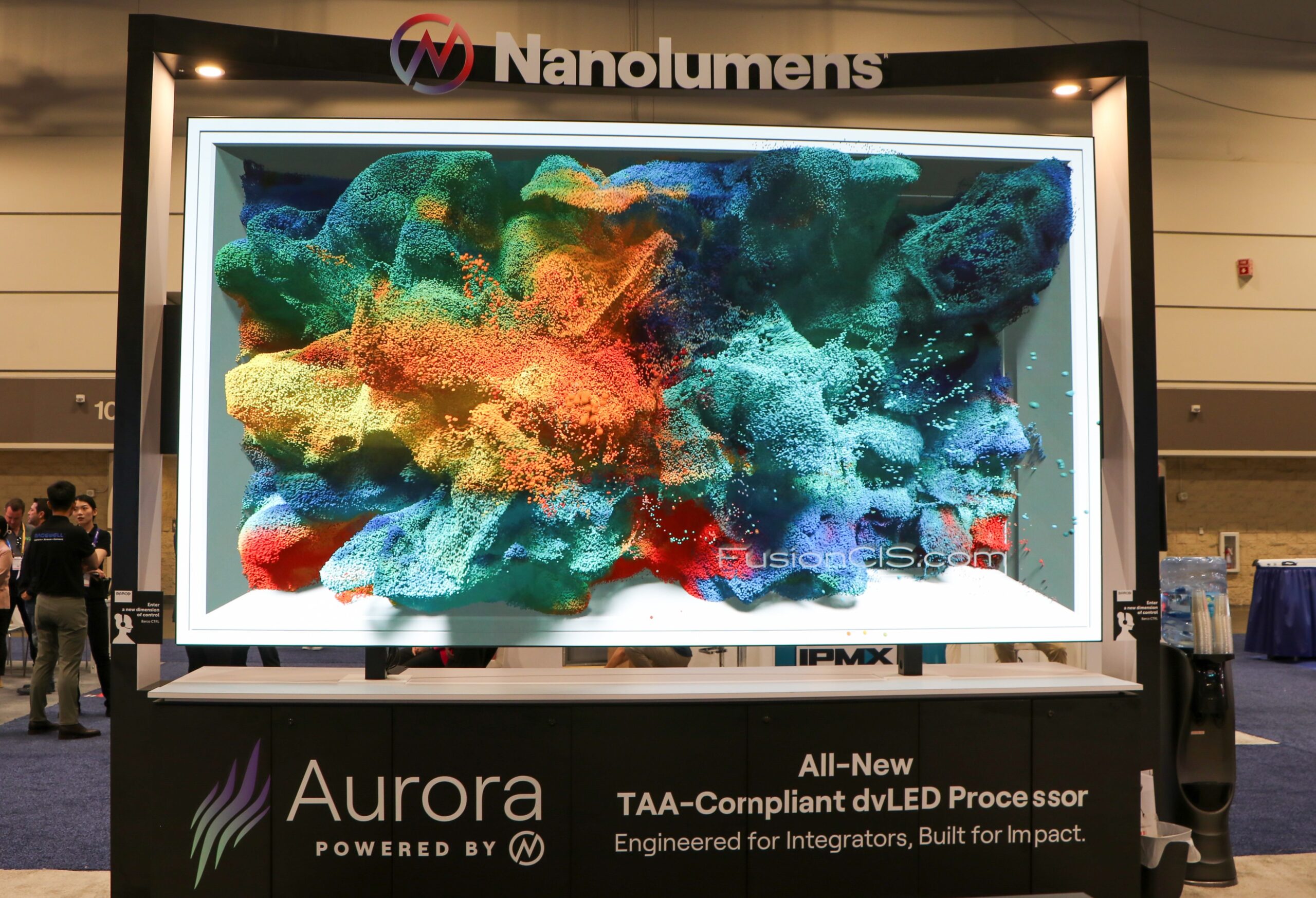
    Nanolumens has expanded its Aurora video processing platform with new features designed for secure, large-scale IT environments. The update introduces LDAP compatibility for Active Directory systems, allowing organizations to manage user authentication and access permissions through their existing network security infrastructure. This integration simplifies credential management, strengthens security, and supports centralized control across distributed networks such as airports, enterprise campuses, and operations centers.

    The release also adds Eye Guard, a proprietary feature developed to reduce eye fatigue for operators who monitor displays for extended periods. Built exclusively for Nanolumens displays, Aurora continues to evolve as a TAA-compliant, enterprise-ready solution focused on reliability, usability, and administrative control for control rooms, network operations centers, and other mission-critical environments.

    Nanolumens, an industry-leading manufacturer and designer of cutting-edge LED displays and video wall solutions, announces new enhancements to its Aurora video processing platform with Lightweight Directory Access Protocol (LDAP) compatibility for Active Directory-based systems, and the addition of Eye Guard, a proprietary algorithm designed to reduce eye fatigue during extended viewing periods. The latest updates expand Aurora’s capabilities for large networks and highly secure environments where centralized control and operator performance are critical.

    Aurora now integrates with Active Directory infrastructure, enabling organizations to manage user authentication and permissions through existing network security frameworks. The capability allows IT staff and network managers to control access from a centralized directory, simplifying credential management while strengthening system security across large corporations and distributed networks such as airports.

    Eye Guard is designed to support personnel who monitor displays for long durations by helping reduce eye fatigue without compromising visual clarity. The new feature benefits control room operators, managers and systems designers working in environments such as network operations centers and security operations centers where continuous viewing is required.

    “With Active Directory support and Eye Guard, Aurora continues to mature to meet the operational needs of secure and large-scale deployments,” said Brice McPheeters, vice president of product and planning at Nanolumens. “It’s critical that we solve video processing challenges from the user’s perspective. Aurora’s LDAP feature, which is unique in the video processing industry, does just that by removing the single sign-on barriers operators currently experience. These enhancements give organizations greater administrative control and security while better supporting the teams responsible for monitoring and managing critical visual systems.”

    Originally introduced in June 2025, Aurora was purpose-built to work exclusively with Nanolumens displays, providing an integrated video processing platform for applications that require dependable performance and streamlined system management. The TAA-compliant device’s new capabilities reflect Nanolumens’ continued investment in expanding the platform to address the security, usability and operational requirements of enterprise and control room environments.

    Designed for deployments where reliability and oversight are essential, Aurora supports centralized administration while helping organizations maintain consistent performance across complex display networks. The platform is suited to a range of commercial and institutional settings that require secure access and continuous visual monitoring.

  • Avocor Unveils the B Series: Future-Ready 4K Digital Signage for Modern Spaces

    Avocor Unveils the B Series: Future-Ready 4K Digital Signage for Modern Spaces

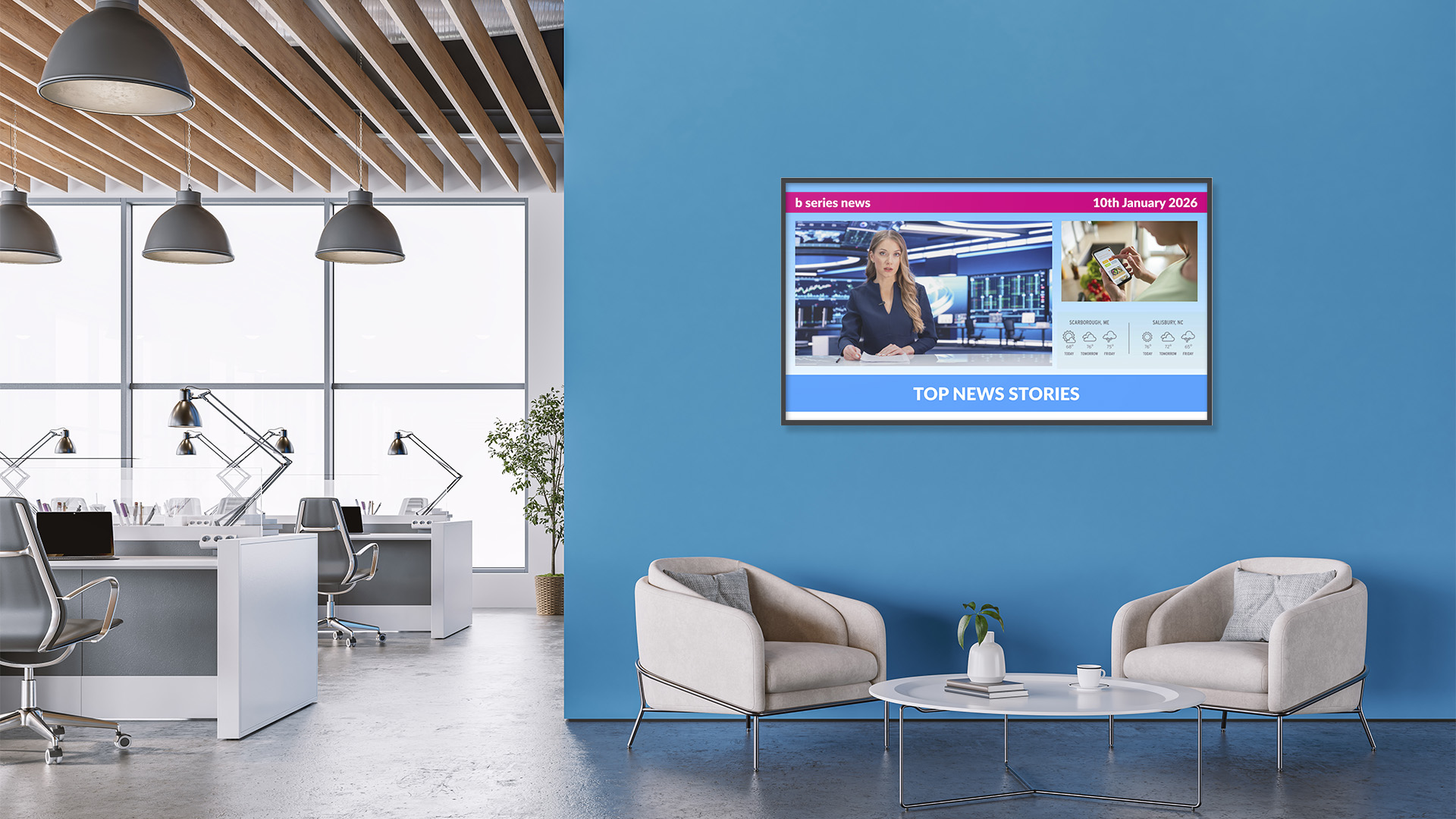
    Avocor has launched the B Series, a new lineup of professional 4K digital signage displays built for modern commercial environments. Available in six sizes from 43” to 86”, the B Series delivers 700-nit brightness, anti-glare panels, and reliable 24/7 performance, making it well-suited for corporate offices, education, retail, transportation, and hospitality settings. Its slim, ADA-compliant, branding-free design ensures seamless integration into high-traffic spaces while maintaining a clean, professional look.

    Powered by Android 14 with 8GB RAM and 32GB storage, the B Series supports smooth content delivery and flexible connectivity, including HDMI 2.0, OPS slots, and USB-A. IT teams benefit from remote management via Avocor FUSE, RS232, and IP control, along with zero-touch provisioning for scalable deployments. Designed for easy CMS integration and long-term compatibility, the B Series offers a future-ready digital signage solution that balances performance, security, and operational efficiency.

    Avocor, a leading provider of innovative collaboration and communication solutions, proudly announces the launch of the B Series – a versatile, high-performance family of professional 4K displays designed to elevate visual communications across a wide range of environments, including corporate offices, educational institutions, transportation hubs, retail spaces and hospitality settings.

    “The Avocor B Series brings performance, reliability, and design together in a powerful 4K display built to elevate digital experiences throughout the modern workplace,” says Dana Corey, SVP & GM at Avocor. “Whether engaging employees and guests, informing travellers or captivating shoppers, the B Series is built to empower your messaging and future-proof your signage strategy.”

    Available in six diagonal sizes from 43” to 86”, the B Series delivers brilliant 4K UHD resolution and ultra-bright 700 nit visuals, ensuring every message is clear, vibrant, and impactful, even in the most challenging interior lighting conditions. Its anti-glare panel, with 25% haze, enhances readability and colour fidelity, making every message engaging from any angle.

    Engineered for continuous 24/7 operation, the B Series is built for demanding commercial settings where reliability is essential. Its sleek, symmetrical design features even 12.8mm bezels, slim ADA-compliant construction, and a branding-free front panel to blend seamlessly into any space while meeting the needs of high-traffic public environments.

    Under the hood, the B Series features a powerful Android 14 operating system with increased security, 8GB RAM, and 32GB ROM for smooth, responsive performance for even the most demanding signage content. The B Series is built for flexible connectivity and features dual HDMI 2.0 inputs, HDMI output, OPS slot, and USB-A ports. The B Series also offers effortless integration with media players, content management systems, and peripheral devices while stereo 10W rear-facing speakers deliver clear, balanced sound, without the need for additional hardware.

    The Avocor FUSE dashboard can also be used to remotely install and remove popular CMS Apps on the B Series UiQ interface. Professional-grade management features include remote control via RS232 or networked IP, Avocor FUSE DMS for full remote management and real-time device diagnostics. For large deployments, Zero-touch provisioning enables a seamless, custom-tailored out-of-box experience for partner CMS providers, streamlining setup and operations for signage networks of any size.

    Key Features of the Avocor B Series:

    –    Brilliant 4K UHD visuals with 700 nit brightness and anti-glare panel
    –    Reliable 24/7 operation for professional environments
    –    Flexible portrait and landscape orientation
    –    Powerful Android platform, upgradeable for long-term compatibility
    –    Seamless integration with media players and CMS
    –  OPS compute options for Windows, Chrome OS and Google EDLA
    –    ADA-compliant, branding-free design for any setting
    –    Remote management and zero-touch provisioning

    Transform your spaces with the Avocor B Series, combining performance, reliability, and design to deliver exceptional digital signage solutions for any environment.