A compelling visual can significantly enhance audience engagement and help a presentation effectively convey its message or key details. Advertisers and educators have long recognized the importance of transforming information into eye-catching and memorable content that can be quickly absorbed. Similarly, faith-based organizations are increasingly adopting modern display systems as essential tools to make their messaging more accessible and impactful.
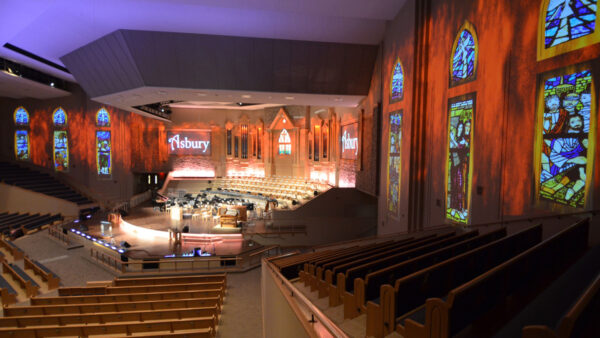
Projection tech in a house of worship – Image credit: Digital Projection
One advantage of modern display hardware and content creation equipment is that it is now more accessible across all budget levels. Churches, synagogues, and temples can easily incorporate video equipment typically found in professional broadcast studios or concert arenas. Additionally, the relatively modest budget required for some video production and streaming options enables smaller congregations to achieve professional-looking results with ease. Whether participants are attending in person or online, high-quality video production enhances engagement, making it easier for the audience to connect with the presentation and allowing it to reach a wider audience.
A Visual Reference
Modern video production includes the integration of various source devices, including digital cameras and computer-generated content. Having a display that accurately represents the visual characteristics of the delivered material is crucial for a consistent and artistically faithful delivery. What separates a reference video display from everything else is its ability to provide a selectable video preset that enables a resulting picture that conforms to a target standard for luminance and color.

Every piece of video we view, from broadcast television to streaming content, exists within well-defined colorimetry standards that display manufacturers can replicate with their hardware, providing, hopefully, an accurate visual reproduction. Reference-grade monitors typically offer a comprehensive array of picture quality controls, and some enable a calibration technician to directly program them with precisely-tuned adjustments that the user can select based on their workflow.
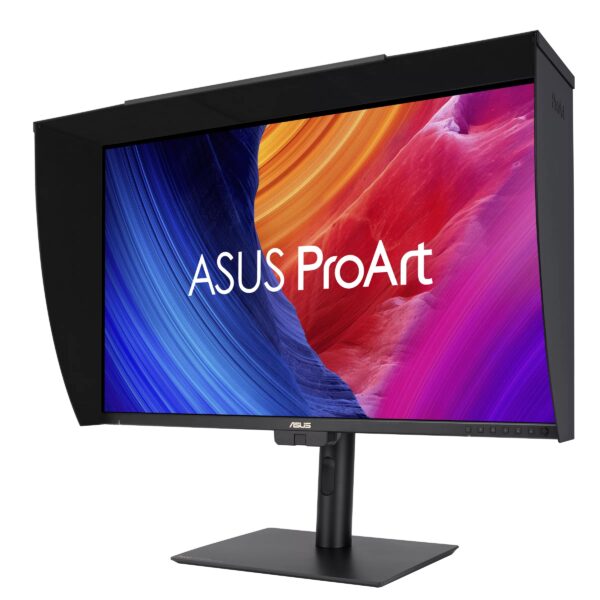
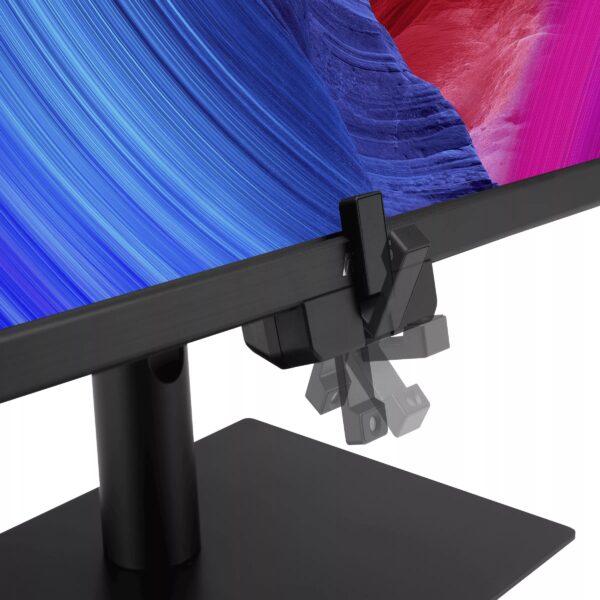
The Asus ProArt PA32UCE 4K monitor ticks many checkboxes that video creators should look for when selecting a professional-grade display. This 31.5-inch viewable IPS LCD offers wide viewing angles and a precise factory calibration for excellent color accuracy right out of the box. A built-in motorized colorimeter can be activated to contact the screen and perform calibration checks and self-calibration as needed to keep image accuracy on target. The PA32UCE’s LED backlit screen can generate up to 600 nits of peak light output. An integrated backlight measurement system enables the display to compensate for variations in image quality during its warm-up process and throughout use. The PA32UCE’s screen features anti-glare and low-reflectivity treatments to minimize distracting artifacts. An included detachable monitor hood further reduces the interference of nearby light sources, especially in a production environment.
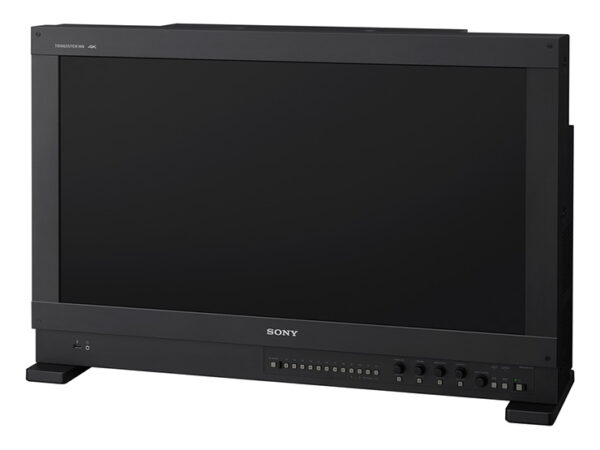
If there is one reference display universally praised (and desired) by content creators worldwide, it would be the flagship Sony BVM-HX3110. The BVM-HX3110 is the company’s latest 4K reference monitor, featuring a “true 4K” screen resolution of 4,096 x 2,160 pixels and a dual LCD panel design – one layer handles local dimming of the LED backlight system, while the other controls color. The precise light management of this dual-layer LCD system enables the HX3110 to deliver up to 4,000 nits of peak brightness (measured on a 10% white HDR window) with practically no blooming artifacts. The Sony BVM-HX3110’s precise factory calibration also makes it an ideal tool for visual comparisons against other displays. Saying that a particular display compares well with identical source material displayed on a Sony pro monitor is high praise indeed.
Audience Engagement
Faith venues of all sizes can benefit from the addition of audience-facing displays. Strategically placed display systems can provide attendees with pertinent information, including scheduling reminders, related visuals to enhance the presenter’s audience engagement, and improved visibility for guests seated in larger spaces or those with visual impairments.
LCD
The humble liquid crystal display (LCD) is a compelling display technology due to its ability to produce detailed and bright imagery with good contrast, even in well-lit environments. LCDs are also relatively budget-friendly compared to other display types, and they are available in a wide range of screen sizes. While a consumer-oriented LCD television could find its way into use within a faith venue, commercial-grade panels are a better choice for improved durability, device control options, and signage-related features.
The LG UP5Q-E Series LCD is an example of a commercial-grade flat-panel display that features UHD resolution (3,840 x 2,160 pixels), 500 nits of light output, and ADS/IPS LCD technology, which offers wider viewing angles without apparent image degradation compared to other LCD panel technologies, such as VA. Available in screen sizes ranging from 43 to 86 inches, the LG UP5Q-E Series can operate 24/7 and claims a 50,000-hour lifetime. The display features dust ingress protection and conformally coated circuit boards, which help resist humidity and potentially corrosive elements, such as salt air. The UP5Q’s outer casing is also certified to meet international fire safety standards related to resisting fire flame spread – a consideration for use in public spaces. I appreciate the UP5Q’s minimal bezel design, which features no prominent branding to distract from the screen’s content.

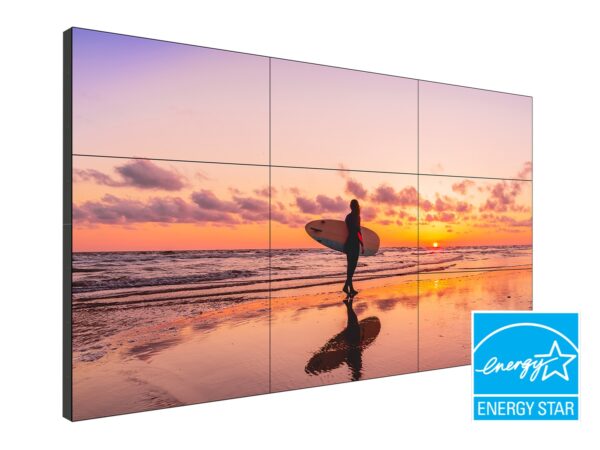
The Planar VM55MX-M2 is an LCD well-optimized for video wall applications. The specs for the VM55MX include an IPS panel for wide viewing angles, 24/7 fanless operation, and a typical brightness of 700 nits, making it ideal for even brightly lit environments. My favorite feature of this Planar panel design is its uniform 0.44mm bezel width on all sides. This results in a tiled bezel width of 0.88mm, less than a millimeter wide, for a more seamless appearance. The VM55MX series scales up to a 10 x 10 panel video system, with optional mounts and trim pieces to assist with installation completion.
As an effective and cost-saving alternative, I’m increasingly impressed with the quality of some consumer-grade large-format televisions. Available up to about 116 inches, some TVs in the 100-inch size range offer good picture brightness and contrast at street prices well under $2,000. The 98-inch TCL QM7K is an example of a large-format 4K TV that offers decent ambient light reflection handling, generating a well-contrasted and colorful picture that can sustain over 1,600 nits of light output. This kind of picture performance is ideal for bright room environments where any projector with a price tag of less than 5-figures looks washed out and dull.

DVLED
For venues that desire the most visual impact from a video wall system, direct-view LED (DVLED) technology delivers superb peak brightness, color saturation, and picture contrast with no practical screen size limitations beyond the budgetary. Modular in nature, DVLED displays consist of smaller, uniform LED-covered tiles supported by a backplane that also provides power and data. The greater the density of LEDs in each DVLED module, the greater the effective screen resolution for a given size. For example, a DVLED display featuring a 0.7mm pixel pitch, one of the smallest available today, can provide 4K UHD resolution at a screen size of approximately 130 inches. Increasing the pixel pitch to 0.9mm and maintaining the same 4K UHD resolution screen would result in a display approximately 160-ish inches in size.

DVLED displays from the likes of AWALL, Hisense, LG, and Samsung are readily available but still relatively expensive compared to other display technologies. The primary benefits of DVLED systems include OLED-like contrast with per-pixel light control and high brightness, without the risk of permanent image retention (i.e., burn-in). The engineering of most DVLED display systems enables them to withstand the wear and tear of being located in high-traffic environments, and they typically offer lifespan ratings of 100,000 hours.
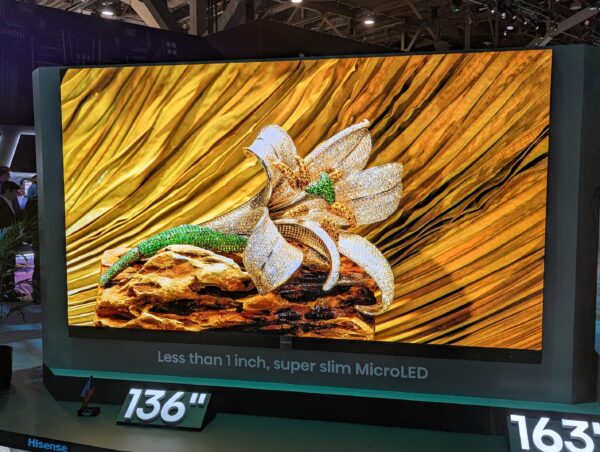
Hisense 136-inch 4K DVLED prototype – Image credit: Robert HeronProjector tech
The modern digital projector remains one of the most cost-effective means of providing a large-format display. Projectors are particularly well-suited for indoor spaces with some control over ambient lighting, which can help produce a well-contrasted image that offers a good viewing experience for the gathered congregation. For larger screen sizes or when room lighting results in a washed-out image, projector options with 3x or more the light output of standard designs are readily available without requiring an electrical upgrade.

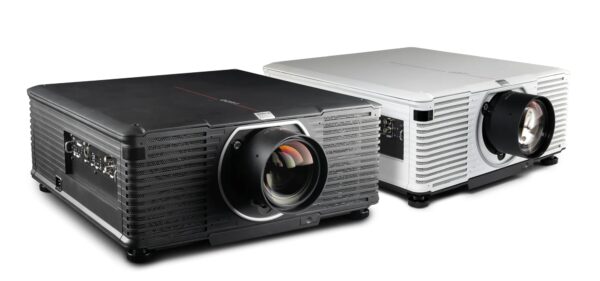
The Barco I600 is a prime example of a feature-rich single-chip DLP projector with 4K resolution (3,840 x 2,400 pixels via pixel shifting), delivering up to 14,000 ISO lumens of light output from its low-maintenance laser-phosphor light engine, rated for 20,000 hours of use. The I600 can accommodate short and long throw distances with its wide assortment of available lens options. Installing an I600 is further eased with its relatively compact footprint, unrestricted orientation, and 14A power circuit requirement.
A Digital Audience
A faith venue’s use of display technology extends beyond simple signage, becoming a tool to aid in message delivery, guidance, and comprehension. As display options are available at practically every price point, the hardware options for driving live content production have reached a similar scope. Online content creators worldwide have led the way in leveraging low-cost tools to produce professional-looking content with minimal overhead.
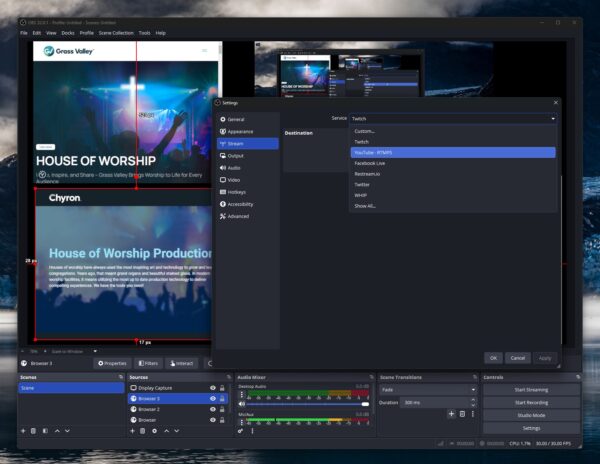
Even the smallest of congregations can experiment with capturing and streaming their services utilizing a free software platform like OBS Studio. Larger, more complex audio-visual productions in a house of worship can effectively deploy broadcast-grade gear, including dedicated video switchers and encoders. Companies like Blackmagic Design have been quick to scale their video products into more compact and affordable offerings that can produce similar results to their pro gear.

The potential uses of display technology within a house of worship are as varied as the venues themselves. These technologies serve as a blank canvas, empowering individuals and organizations to meet the needs of their followers through creative use, and these same technologies make it easier to expand the reach of their messaging beyond its local presence.

Robert is a technologist with over 20 years of experience testing and evaluating consumer electronics devices, primarily focusing on commercial and home theater equipment.
Robert's expertise as an audio-visual professional derives from testing and reviewing hundreds of related products, managing a successful AV test lab, and maintaining continuous education and certifications through organizations such as CEDIA, the Imaging Science Foundation (ISF), and THX.
More recently, Robert has specialized in analyzing audio and video display systems, offering comprehensive feedback, and implementing corrective measures per industry standards. He aims to deliver an experience that reflects the artists' intent and provides coworkers and the public with clear, insightful product information.
- Robert Heron
- Robert Heron

- Robert Heron

- Robert Heron