I’ve spent the last two decades appreciating quality pixels – steadily improving brightness, contrast, and color help maintain my eager anticipation of “what’s next?” The recent trend toward larger screen sizes, particularly driven by increasingly affordable LCD TVs, has some asking if projection’s days are numbered. My short answer is that projection isn’t going anywhere, but rather, the entire large-display market is evolving faster than it has in years.
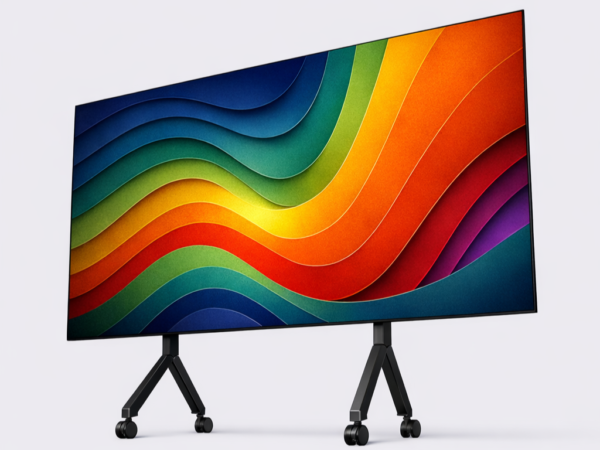
The clearest signal came when Epson, a brand synonymous with three-chip 3LCD projection, recently unveiled its first direct-view LED (DVLED) lineup: the LE-C1 Series in 135-inch and 162-inch all-in-one configurations, with the former available in 1080p and 4K resolutions. When a company known for projection adds an emissive display line, the industry takes notice. But that’s not a retreat from projection. If anything, the opposite. Projection is in the middle of one of its most significant innovation cycles in decades.
Epson’s DVLED Move Matters
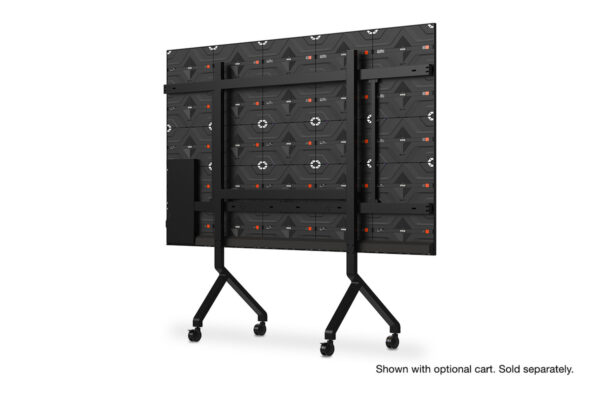
Direct-view LED places millions of individual red, green, and blue LED chips directly on a surface, increasingly using durable chip-on-board (COB) encapsulation. DVLED avoids many compromises of projection: no ambient light washing out the image, no shadows, and no throw-distance math. DVLED has proven itself in demanding professional settings, including outdoor installations and XR broadcast stages. However, consumer and residential applications remain tougher to crack economically due to manufacturing yields that keep it in premium luxury territory.
Trade shows such as InfoComm 2025 and CES 2026 highlighted an expanded range of DVLED products and manufacturers competing for attention. Five-figure options with similar specs are challenging the six-figure DVLED options from a few years ago. Epson’s entry with the all-in-one LE-C1 Series, which integrates consumer-friendly video inputs and image processing, brings Epson’s scale, manufacturing efficiencies, and broader distribution. This is good news for integrators first and for residential buyers eventually.
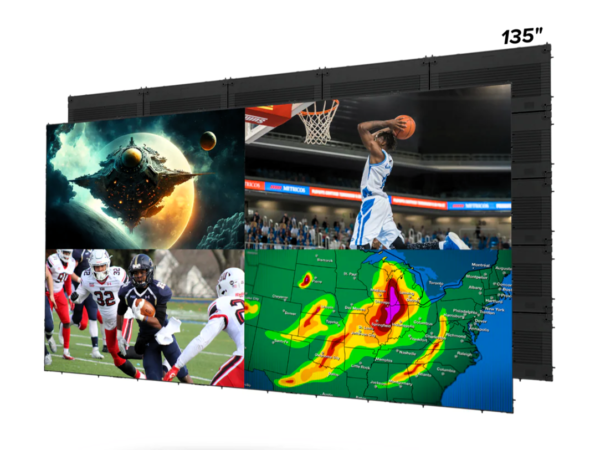
However, DVLED display specialists like AWALL already have competitively priced near-4K video products on the market with twice the luminance of Epson’s offering. Beyond pricing, product reliability and customer support will likely be strong drivers in attracting new owners.
Projection Is (Finally) Solving Old Problems
Projection manufacturers always look for ways to increase brightness and efficiency. They have also realized the need to address frustrations that have limited projection outside dedicated theaters.
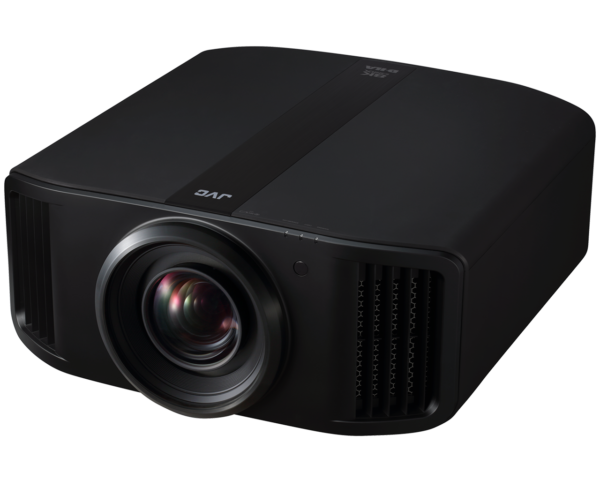
Amid the current high-end consumer landscape, JVC’s flagship 3-chip D-ILA laser models remain an exercise in pure visual bliss. I recently sat in a room built around JVC’s NZ900, projecting onto a 175-inch Stewart StudioTek 130 G4 screen, with a madVR Envy Extreme handling reference-level video processing. In a properly light-controlled room, that combination delivers native contrast and frame-by-frame dynamic HDR tone mapping that’s exceptionally difficult to match.
That pinnacle still requires a windowless room and a serious budget. The room above, with its full JBL Synthesis surround system, dual SVS subwoofers, and Marantz separates running through a custom-optimized Dirac ART filter, easily reached six figures. Fortunately, that’s no longer the only path to exceptional projection. A new generation of consumer flagship projectors leverages advances in RGB laser illumination, DLP silicon, and image processing to deliver dramatic improvements in brightness, color, HDR performance, and gaming responsiveness, all at prices within reach of more enthusiasts.
Contrast, Color, and Gaming Catch Up
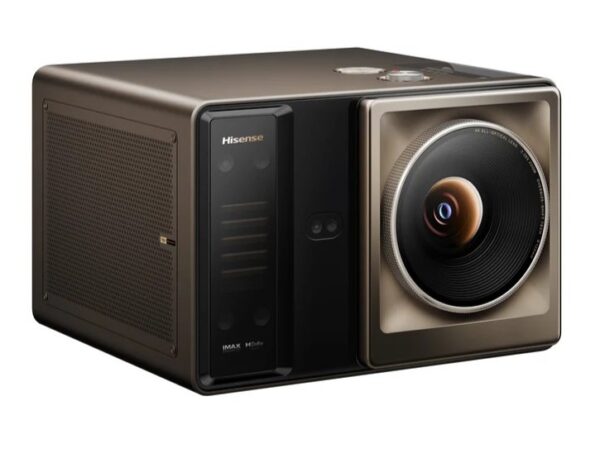
For years, projector dynamic contrast relied on coarse global iris and light-source adjustments, which could produce visible brightness pumping in challenging scenes. The newest generation of consumer laser projectors, both ultra-short-throw (UST) and front-projector designs, offers more refined light control. Hisense’s XR10, a standard-throw home theater projector, pairs a six-blade dynamic iris with seven levels of laser modulation. AWOL’s Aetherion Max, a UST model, combines a seven-level iris with its Enhanced Black Level (EBL) laser-dimming system. XGIMI’s Titan Noir Max, another front-projection design, features a dual-iris system with five manual aperture settings and a continuously variable automatic mode. None of these systems performs true spatial or zone-based dimming like a premium Mini-LED LCD television. Instead, they coordinate a dynamic iris aperture with content-adaptive laser output. The result is more convincing black levels, fewer visible brightness artifacts, and dynamic contrast performance reaching 6,000:1 in some models and up to 10,000:1 on the Titan Noir Max.
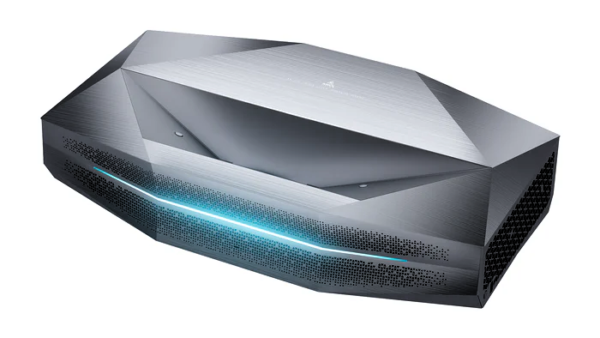
Laser illumination has matured, too. Discrete RGB triple-laser systems generate independent red, green, and blue primaries rather than filtering a single blue source, covering the demanding BT.2020 color space rather than the narrower DCI-P3. The Hisense PT1 and the brighter PX3-Pro are prime examples of refined RGB laser technology.
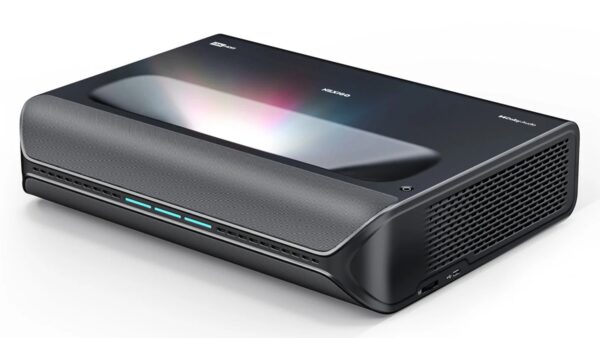
The NexiGo Aurora Pro MKII pairs a motorized iris with a laser-LED hybrid light source to deliver deep blacks that are especially apparent in a light-controlled environment. That pairing may preview where the light-engine conversation is headed. Appotronics, whose optical platforms power a large share of the industry’s laser projectors, has begun marketing laser-LED combinations as complementary rather than competing: lasers contribute brightness and a wide color gamut, while LEDs contribute a wider emission angle with virtually no speckle or color fringing. Blending the two lets manufacturers retain a laser engine’s punch while removing its most distracting artifacts.
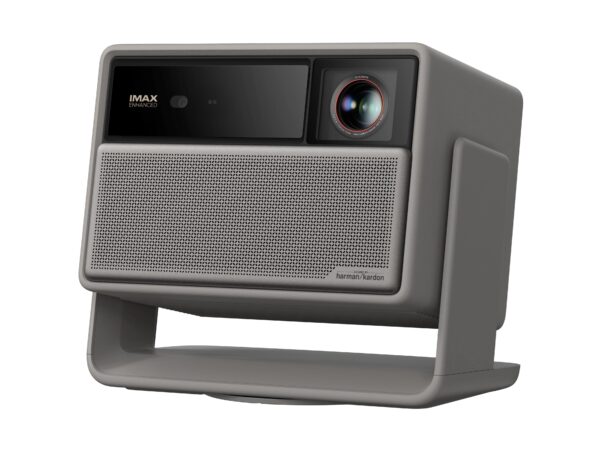
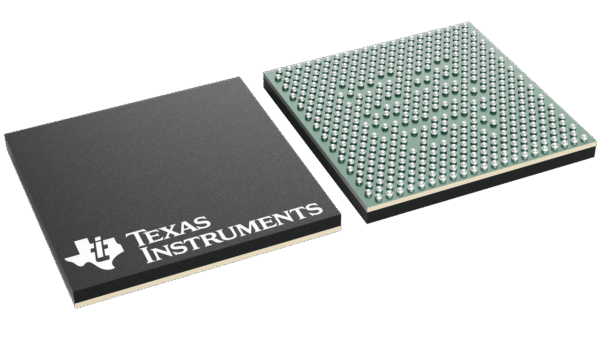
Gaming has caught up, too. Traditional consumer projectors relied on double-buffer architectures that added 16 to 30 milliseconds of input lag. The new Texas Instruments DLPC84-series controller, which drives the XGIMI Horizon 20 Max (the first projector to use TI’s new controller) and the AWOL Aetherion Max, replaces that with a rolling, line-by-line buffer that rasterizes pixels almost as fast as the source delivers them. The controller’s specs are exactly what’s needed for gaming on the latest consoles and PCs: native 1ms input lag, variable refresh rate (VRR), and AMD FreeSync support, with up to 240Hz refresh rates. Examining the Hisense PX4 Pro’s published specs, which include 1ms response time and FreeSync VRR, it likely features a controller from the same family, though Hisense hasn’t named the chip outright. For gamers used to instant response from a flat panel, projecting a 120-inch image no longer means a performance penalty.
Better Engineering, Smarter Processing
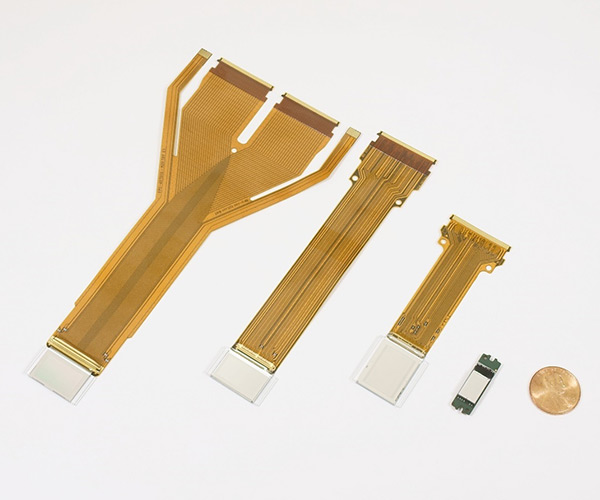
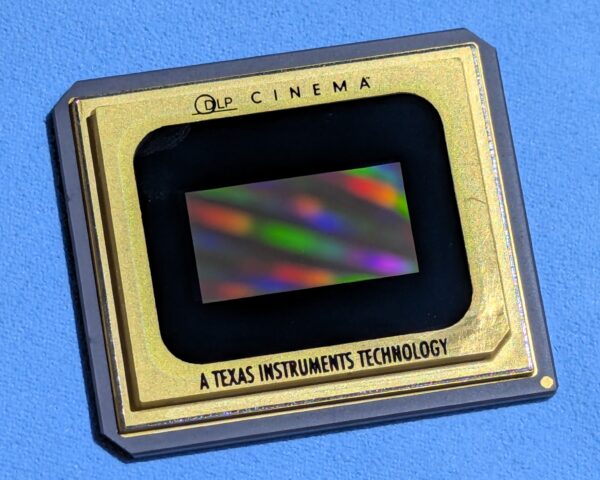
While the DLPC84-series controller delivers processing and latency improvements, TI’s new Single Spring Tip Torsional (SST) micromirror architecture physically reinforces the mirrors. This updated pixel design enables smaller, consumer-grade DMDs (digital micromirror devices) to withstand the intense thermal and optical loads of pure RGB laser engines. By tolerating this extra energy, the chipsets allow compact living room projectors to safely break through the 5,000- to 8,000-lumen barrier without requiring massive industrial-sized chassis or loud cooling fans.
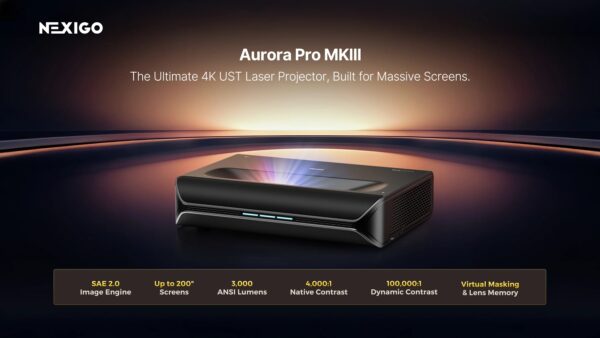
Processing has gotten smarter, too. NexiGo’s Scene Adapt Engine 2.0, debuting on the upcoming Aurora Pro MKIII, is a machine-learning model trained on tens of thousands of hours of movie footage to predict how a scene’s brightness will evolve frame by frame, rather than reacting after the fact. That predictive step enables its Subtitle Optimization feature to prevent bright captions from triggering brightness pumping, which has historically disrupted dynamic dimming in dark scenes. Its companion Virtual Masking feature shifts letterboxed content to the top or bottom of the frame to pair with drop-down or floor-rising ambient light-rejecting (ALR) screens, boosting perceived contrast without a mechanical masking system.
Large-Format LCD and OLED: The Middle Ground
Flat panels haven’t been sitting still either. As I covered in my 2026 Display Tech Preview, CES 2026 brought a wave of large-format LCD and OLED TVs in the 97- to 130-inch range, with significantly better color volume, luminance, and HDR than the category has ever offered.
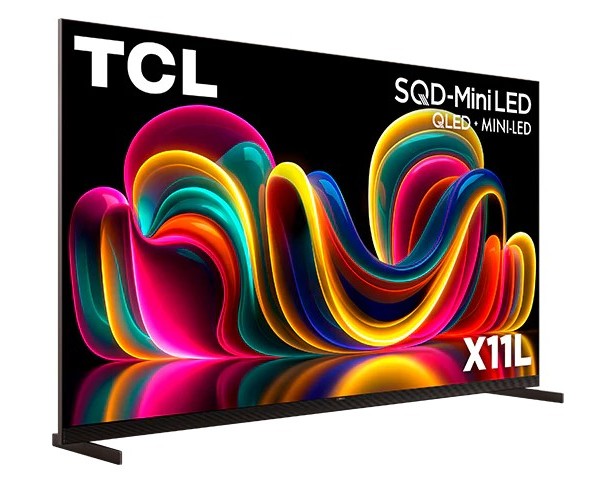
These panels don’t match DVLED’s bezel-free scale and can’t compete with projection on cost for screens larger than roughly 100 inches. But for buyers who want a large, bright, plug-and-play display without the architectural planning of a DVLED wall or the light-control requirements of a projector, these screens are becoming a compelling, lower-complexity option.
More Choices, Better Displays
Epson’s DVLED move isn’t a sign that projection has reached the end of its runway. Instead, it’s proof that the large-display market has become more diverse than ever. DVLED will continue to gain ground in applications that require robust, high-performance pixels or in locations with zero tolerance for throw distance. Projection keeps closing the gap in contrast, color, gaming latency, brightness, noise, and everyday usability. And large-format LCD/OLED for 100-inch and smaller displays offers a tempting balance of increasingly impressive performance for the price.
I see no signs of one display technology completely replacing the other. Our options for large-format displays are increasingly complementary, each excelling in different conditions. We no longer have to ask which one wins. The question is which one fits the room.

Robert is a technologist with over 20 years of experience testing and evaluating consumer electronics devices, primarily focusing on commercial and home theater equipment.
Robert's expertise as an audio-visual professional derives from testing and reviewing hundreds of related products, managing a successful AV test lab, and maintaining continuous education and certifications through organizations such as CEDIA, the Imaging Science Foundation (ISF), and THX.
More recently, Robert has specialized in analyzing audio and video display systems, offering comprehensive feedback, and implementing corrective measures per industry standards. He aims to deliver an experience that reflects the artists' intent and provides coworkers and the public with clear, insightful product information.
- Robert Heron
- Robert Heron

- Robert Heron

- Robert Heron