A $600 flat panel goes dark eighteen months after installation. The warranty covers parts, but not the loaner unit. The manufacturer discontinued the replacement model two product cycles ago. The room sits unusable for eleven days. That scenario opened a recent piece by Tim Albright on AVNation.tv. It sparked a debate on a recent episode of AVWeek.
The question is simple. Should AV teams buy commercial-grade displays, or does cheaper consumer gear get the job done? Host Patrick Norton put that question to panelists BC Hatchett and George Tucker.
“Have either of you ever had to justify buying commercial gear in place of consumer gear?” Norton asked.
Listen to the full episode of AVWeek 778 – Click Here
The fiscal year-end problem
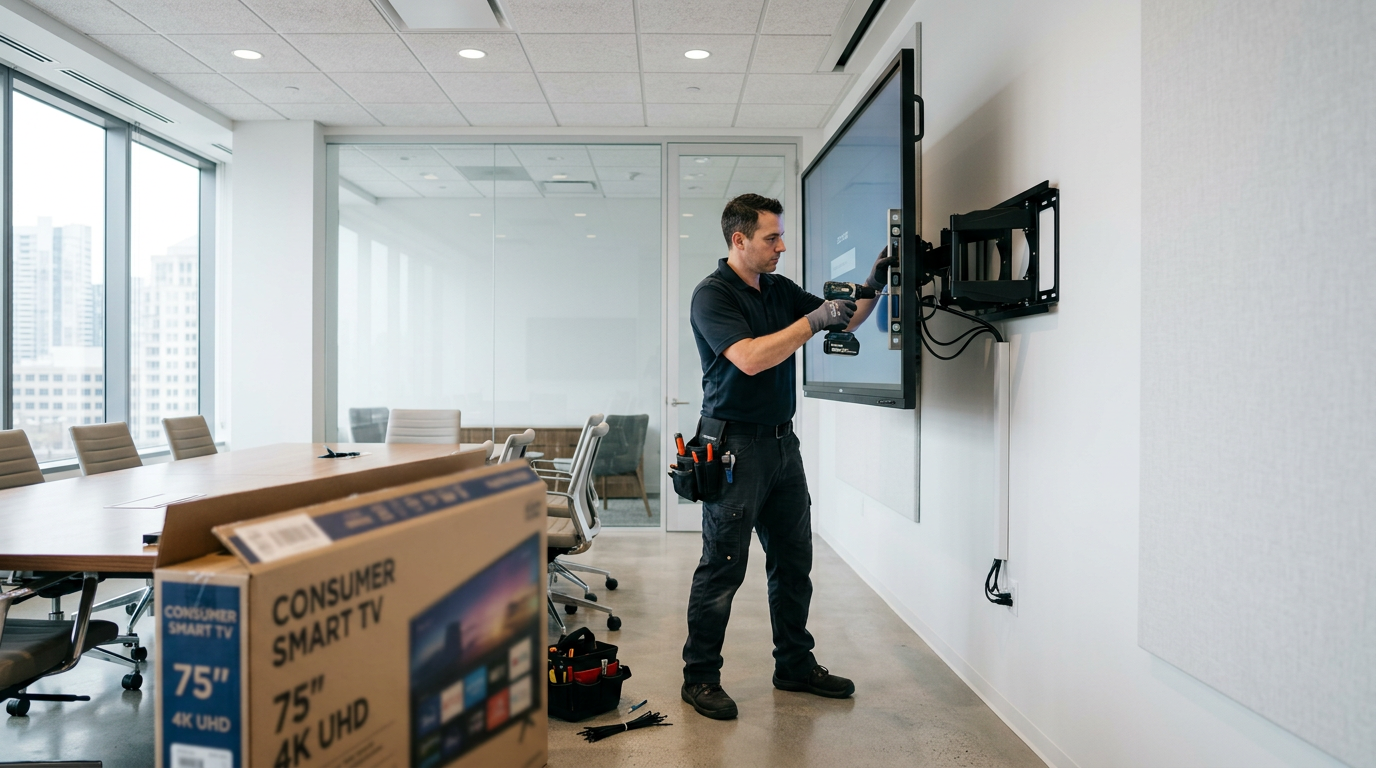
BC Hatchett is director of classroom technology at Vanderbilt University. He faces this problem every year, especially near the end of the fiscal year. Departments rush to spend leftover funds before they expire. Some buy a budget flat panel from a big-box store and ask his team to mount it. Hatchett has to explain that the panel is not commercial-rated and cannot go up.
The pushback often centers on price. A department might balk at an $800 commercial panel when a similar-looking model costs $250 at retail. “There’s a reason you can get it for $250,” Hatchett said.
Vanderbilt’s AV team has built a reputation for pushing back, and most project managers now expect the answer. Even so, the request comes up constantly.
When consumer gear actually wins
However, George Tucker takes a different view. He is an event staging technical specialist at Corporate Audiovisual Services. His company runs commercial-grade projectors and audio gear at every show. Large-format displays are the exception.
For screens in the 86-inch and 96-inch range, Tucker often buys retail models instead. Repairability drives the decision. Retail panels use parts that Tucker can source and swap himself, sometimes from a laptop-style screen kit. Commercial units resist wear, but they’re harder to fix and harder to move.
“My need isn’t that it fits some ISO standard,” Tucker said. “It needs to be bright, clean, and easy to replace.”
His team also buys duplicate units up front. He can’t always match spare parts once a model changes. For screens that only face overflow rooms or green rooms, the tradeoff makes sense. “I buy a lot of my TVs from retail outlets, and they last a good long time,” Tucker said.
The lifecycle math
Scale changes the math again. Vanderbilt will have about 550 classrooms once this summer’s projects finish. As a result, Hatchett’s team tries to cycle spare stock every three or four years so nothing goes to waste. Still, some rooms run equipment for seven years before an upgrade.
By the time the team reaches the last classroom, the earliest installs are already aging out. “You’re building a wall, and by the time you finish, the beginning has started to crumble,” Hatchett said.
What buyers should take away
Albright’s original point still holds. A cheap panel can become expensive once it fails at the wrong time. Hatchett and Tucker’s answers show the flip side. Context decides the right purchase, not a blanket rule.
A classroom running eight hours a day for years needs different gear. A screen in a green room used twice a month does not. In the end, buyers who model total cost, not just sticker price, make the better call.
- AVNation Staff
- AVNation Staff
- AVNation Staff

- AVNation Staff