Ask any AV manager how they found out about their last major outage, and you’ll get one of two answers. The first is a phone call: someone walked into a room, the display didn’t come up, and now the phone is ringing. The second is a notification that arrived before the room was ever occupied. The gap between those two answers says less about the equipment sitting in the rack and more about how the industry around it has changed.
Hardware is still the foundation, and it always will be. Better displays, better amplification, better mounts, better cameras: that innovation matters, and it’s still what earns a manufacturer a seat at the table. What’s evolved is what happens after the sale. A well-built device used to be the finish line. Now it’s the starting point for an ongoing relationship: monitoring it, maintaining it, understanding how it’s performing, and stepping in before a problem becomes a call. The importance of the equipment hasn’t gotten smaller. The work around it has gotten bigger.
Uptime Became Measurable, So It Became Expected
Every organization running AV at scale has always cared about reliability. What changed is that reliability stopped being a feeling and became a number. A university can now tell you exactly how many classroom hours were lost to AV failures last semester. A retail chain can tell you how many storefronts had a signage outage during a promotional window. Once something is measurable, it becomes an expectation, and that expectation now extends to everyone in the chain, from manufacturers to integrators. Customers still want the right hardware for the job. Increasingly, they also want a partner who can tell them how that equipment is performing, and step in before it fails.
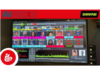
Remote monitoring and management, RMM, is how the industry is answering that expectation. Live device health, predictive alerts, remote configuration, automated scheduling: none of it exists without strong hardware underneath it. What it adds is a layer of intelligence and support that turns a great product into an ongoing service. A rack full of well-built equipment that can also tell you when something needs attention is doing more for a customer than the same rack ever could on its own.
Interoperability Is the Real Test
Here’s where it gets harder than a product conversation. Almost no real AV environment is homogeneous. A corporate campus is running a decade of equipment from a half
dozen manufacturers. A university is standardizing on new infrastructure in some buildings while managing legacy rooms that won’t be touched for years. Supporting that reality well means building management tools that work across a mixed environment, not just the piece of hardware you sold.
That’s why the more interesting conversation in our industry right now is about open APIs, cloud-to-cloud integrations, and whether systems are willing to talk to hardware they didn’t manufacture. The industry initiatives pushing toward shared standards for device management exist because customers want both things at once: the right hardware for every application, and a single place to see and support all of it. Manufacturers who can deliver strong products and plug into that broader picture are the ones building real, lasting trust with their customers.
A Deeper Way of Supporting the Customer Relationship
The part of this shift that gets talked about least is what it does to the relationship between a manufacturer or integrator and the customer. Design, sell, and install used to be the entire engagement. The equipment shipped, the crew left, and the next conversation happened when something broke. RMM extends that relationship into the space in between. Being able to see the health of every system in the field, catch a failing component before it fails, and back that up with a real uptime commitment is a way of supporting a customer that goes well beyond the sale.
For manufacturers and integrators, that’s an expansion of what we offer, not a replacement for what we’ve always done. It’s still our job to build and deliver great hardware. Increasingly, it’s also our job to stand behind it once it’s in the field, in a way customers can see and measure.
What This Changes
The organizations getting the most value out of AV right now aren’t choosing between good hardware and good support. They’re getting both from the same partner, and they’re starting to expect it as standard, not as an upgrade. For the professor who needs the projector to work without a backup plan, or the executive walking into a boardroom five minutes before a client call, reliability was never really about the device on the wall. It’s about everyone behind that device doing their part to keep it running, and increasingly, being able to prove it.
That’s the shift worth paying attention to. Hardware got the industry here. How we support it is what carries us forward.

Steven Hoenig
Steven Hoenig, PMP, is a senior engineering and strategy leader who drives innovation, transformation, and cross-functional program execution at Legrand | AV. As Senior Director of Portfolio Expansion Program Management, he leads enterprise-level initiatives that accelerate product innovation and support long-term growth. His work spans Remote Monitoring & Management (RMM), connected device enablement, smart infrastructure modernization, and Joint Design Manufacturing (JDM) partnerships, assuring new technologies and product investments align with evolving market opportunities.
Previously, Steven served as Engineering Director for Legrand | AV’s Middle Atlantic Products, where he oversaw the full lifecycle of the brand’s electrical portfolio, including AC and DC power distribution, battery backup systems, PCB assemblies, and firmware-integrated solutions. In this role, he shaped strategic direction, strengthened global technical partnerships, and led compliance, sustainability, and system integration efforts across U.S., Europe, and Asia-Pacific teams. Steven’s leadership on technical councils and his work developing internal and external engineering partnerships helped advance Legrand | AV’s technical capabilities and organizational alignment.
Before joining Legrand, Steven held engineering and business leadership roles at BAE Systems and Bloomy. His experience includes managing multi-site engineering organizations, leading turnkey test solution programs, and directing business units focused on automated test, battery
simulation, and advanced measurement systems. His earlier technical roots were shaped at Honeywell and the Port Authority of NY/NJ, where he developed deep expertise in embedded systems, digital design, and control systems.
Steven holds an M.S. in Electrical Engineering from Columbia University and a B.S. in Electrical Engineering from The Cooper Union. A certified Project Management Professional, he is known for his strategic thinking, collaborative leadership style, and ability to translate complex technical challenges into scalable, high-impact business outcomes.