Last summer my wife Erica starting taking pottery classes from Heather at Talking Rock Pottery. After seeing the joy on her face and stopping by the pottery studio to see what she was working on, I had to give this a shot. I jumped into the introductory class, excited and full of anticipation. Heather was going to teach me to make my own mugs, plates and what ever else I could think of on a pottery wheel. While this was the root of the class, it turns out there was a much bigger lesson waiting for me in the studio.
Day one of the class was a lot of discussion of the basics with a little bit of hands on. I learned the process to take raw clay and create a finished product is relatively simple yet it takes time for each step. Wheel to final product could take over a week! I eagerly watched as Heather demonstrated the first step of the process where she took a ball of clay and turned it into a small mug on the pottery wheel. Truly a work of art. Now it was our turn. Magically I made my own first “thing” that I really couldn’t describe. It wasn’t really a mug, definitely wasn’t a bowl but it was mine and I was amazed that I built it. Over the next few weeks, I continued learning new skills. I also had the opportunity to use the studio freely to practice on my own. That is when things changed.
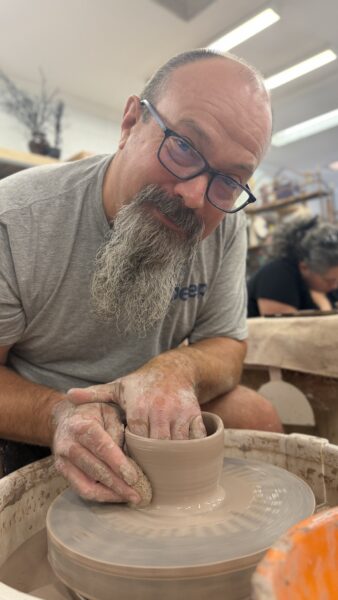
My amazement turned to frustration. I was able to build a “thing” on the first day and now I still couldn’t build the perfect mug weeks later? Pound after pound of clay, I kept trying. Mugs in progress kept tilting, collapsing and even flying off the wheel to the floor! Clay was all over me, the floor and even made it to the inside of my Jeep. It was a mess. I was wasting clay and simply making terrible pottery. At least thats what I thought. One day while working on the wheel I had a mildly successful mug like thing come together. Finally there was success. As I lifted it off the wheel so it could dry, I pressed too hard on one side with my right hand which left some odd shaped ridges on the side. It was now ruined. I hated it! I was about to crush it and put it back into the clay bag to reuse later when I was stopped by both Erica and Heather. I didn’t understand. I sat there, quietly looking at this ugly mug I just made. What where they seeing that I couldn’t? Did they not see how messy this was?
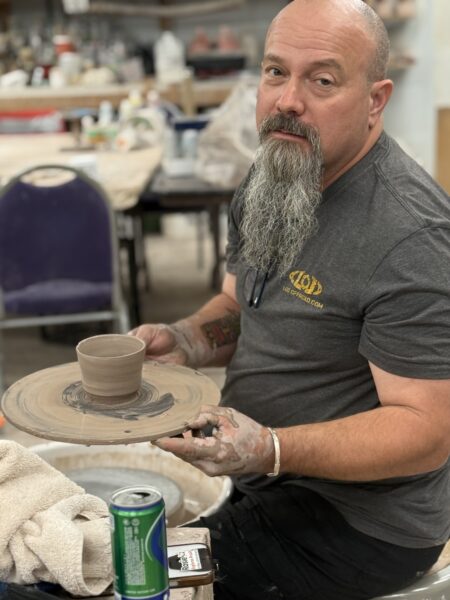
On to step two of the process. Once the mug was ready the next day I spent some time trimming the clay to clean up the bottom and the ridges I accidentally added the day before. Little by little I carefully adjusted some of the mugs details, smoothed out some of the rough edges and added my own decorative personality. This is where the lesson started to kick in for me. I was refining the art I was working on. What I first made was not perfect yet others around me could see there was potential. I took a second look. It was the same ugly mug yet I could see that maybe, just maybe Erica and Heather were on to something. This really may not be a complete loss. Lets keep rolling with this. Firing makes the work done up to this point permanent. You are essentially start converting the
clay into stone in this stage by exposing it to extreme temperatures in a kiln. Sounds risky because it is. There is a chance it could crack or even explode due to a variety of reasons, none of which you are able to control once you close the kiln door. Now we Wait. During this period of ultimate stress on me and on the mug, I reflected on the process so far. I spent most of my energy planning the colors I would glaze the mug WHEN it survives. Wait a minute, was I getting excited about how this may turn out? You bet I was.
The last few steps. We made it through the the firing successfully! I now had the chance to sand off a few bumps and head in to the final steps of finishing my mug. I chose some bright colored glazes, think of the Robert Graham shirts I love, brushed them on the mug with care and sent it off to the kiln for another firing. My work is done.
A few days later I walked into the studio and approached my shelf. To put this in perspective , imagine yourself as a treasure hunter walking into a pyramid. As you walk into a dark room you see a singular beam of light focus on a pedestal in the center of the room and the world goes into slow motion. Close your eyes an take a dramatic pause here….. now envision in your mind the the jewel on top of that pedestal, that is my mug. Sitting on my shelf in the studio was the most beautiful mug I have ever seen.
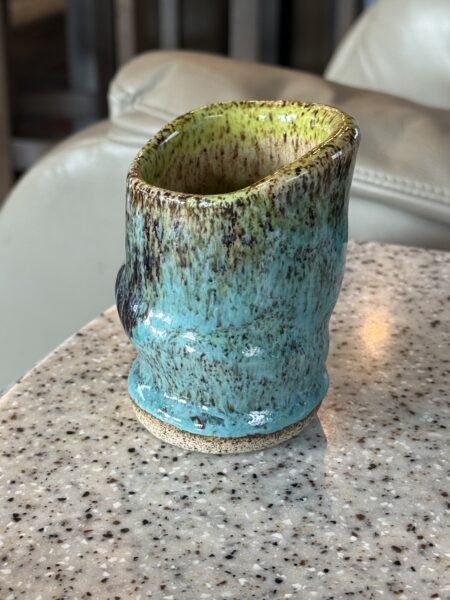
I love this mug. The feel in my hands due to the ridges I mistakenly added, the bright colors of the glaze, all the refinements along the way makes it perfect. What I learn each day when I am throwing pottery is not new or novel yet its something I often forget. Many of us do.
My ugly mug became beautiful over time. Each step of the process allowed for tweaking and refining until I got to a respectable end product. The time it took between each step allowed for the refinements to be purposeful and thought out and allowed for change. The end product, it has flaws and thats ok. If I allowed myself to throw the mug away to early I would not have had the opportunity to get see what it was meant to be. Any flaws left can be refined in the next version.
In our push to fail fast, are we sometimes calling the work a failure before it has had time to take shape? Think about what you are working on today. Is it a new product or feature that needs more refinement, or a customer relationship that deserves more time and a different approach? Pause long enough to determine what you are actually looking at so you don’t confuse unfinished work with failed work.
Your pottery wheel is sitting right in front of you. Is the muddy mess sitting on it finished yet? I bet if you take a second look you will see it still has a ways to go.

Joel Carroll
With more than 25 years of experience in Pro AV and collaboration technology, Joel Carroll is a customer-focused sales leader passionate about helping the AV industry grow through better user experiences. He connects customer and channel partner needs with sales, product, and business strategy to turn complex technology into practical value. Joel believes innovation moves the industry forward when it is intuitive, earns trust, and drives adoption.